Introduction/Overview
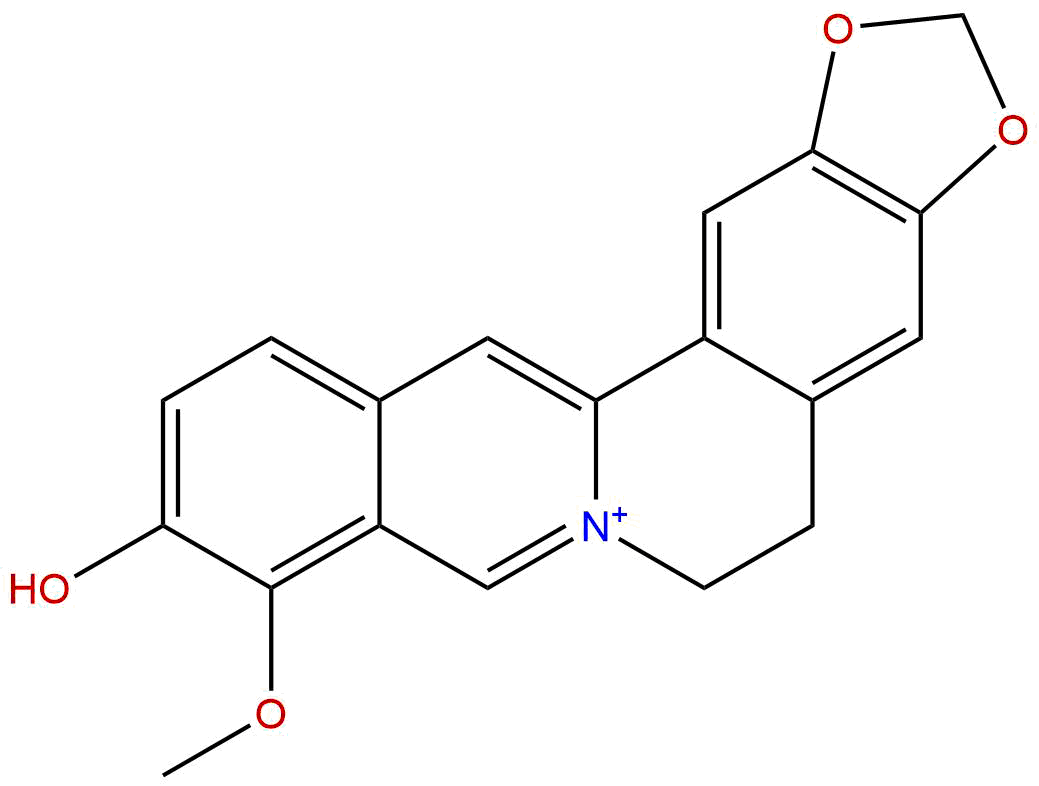
Natural products have always been an important source of innovative drug discovery, and their structural diversity and wide range of biological activities provide unique molecular frameworks and lead compounds for the treatment of various complex diseases. Isoquinoline alkaloids, as one of the important active ingredients, are widely distributed in various plants such as Ranunculaceae, Papaveraceae, and Menispermaceae, exhibiting various pharmacological activities including anti-tumor, anti-inflammatory, antibacterial, and cardiovascular protection. Thalifendine (CAS number: 18207-71-1) is a compound derived from various species of Thalictrum(Thalictrum The benzylisoquinoline alkaloids of plants (spp.) have attracted much attention in recent years due to their multi-target and multi pathway effects in the field of anti-tumor activities. Research has shown that Tangsongcao fending can exhibit inhibitory activity against various malignant tumor cells by regulating cell apoptosis, inhibiting tumor invasion and metastasis, interfering with tumor cell signaling, and other mechanisms. Its effects involve multiple key targets such as MCL1, BCL2, STAT3, MMP2, TOP1, HIF1A, TOP2A, MAPK1, ESR1, and CYP19A1. This article aims to provide a systematic review of the chemical structure, plant origin, pharmacological activity, molecular mechanism of action, pharmacological characteristics, and clinical application potential of Tangsongcao fending, in order to provide comprehensive scientific references for the in-depth research and future development of this compound.
Chemical structure and physicochemical properties
Tangsongcao fending is a benzylisoquinoline alkaloid, with the chemical name 5,6-dihydro-1,7-dimethoxy-2-methyl-6-oxo-isoquinoline-3-ol. Its molecular formula is C18H19NO4 and its molecular weight is 322.3400. Structurally, its core is a partially hydrogenated isoquinolone ring, with methoxy (- OCH3) groups attached at positions 1 and 7, methyl (- CH3) groups attached at position 2, and phenolic hydroxyl (- OH) groups at position 3. This structure endows it with a certain polarity and hydrogen bonding ability.
The theoretical calculation of the lipid water partition coefficient (LogP) is approximately 0.2134, indicating that the compound has relatively balanced lipophilic and hydrophilic properties, which is beneficial for its distribution and transmembrane transport in organisms. The topologically polar surface area (TPSA) is 51.8000 Å ², which is at a moderate level, indicating that it has good membrane permeability potential. The predicted value of water solubility is about 0.3575 mg/mL, which belongs to the category of slight solubility. This is a factor that needs to be considered in actual formulation development. It is worth noting that, based on its physicochemical properties, Tangsongcao Phenol Ding has a high blood-brain barrier permeability, which provides a structural basis for its potential application in central nervous system related tumors or diseases. In early safety screening, the compound did not show significant hERG potassium channel inhibitory activity (predicted as' no '), reducing the likelihood of causing QT interval prolongation in the heart. The predicted value of Ames test is 2.4, indicating a low risk of mutagenicity, but further confirmation through experiments is still needed.
Plant sources and extraction methods
Tangsongcao phenol is mainly found in the Tangsongcao genus of the Ranunculaceae family(Thalictrum)Among various plants. This genus of plants is widely distributed worldwide, and many species have been recorded in traditional medicine in Asia, Europe, and North America. Common species rich in phenolic compounds of Pinus thunbergii include but are not limited to: branched Pinus thunbergii(Thalictrum squarrosum)East Asian Tang Song Grass(T. thunbergii)Petal stamen Tang pine grass(T. petaloideum)And the golden ponytail tie(T. glandulosissimum)Wait. In these plants, catechol often coexists with other structurally similar alkaloids such as berberine, palmatine, and jatrorrhizine.
The extraction of paeoniflorin from plant materials usually follows the conventional process of natural product chemistry. Firstly, the dried plant roots, stems, or whole plants are crushed and subjected to leaching or reflux extraction using a suitable solvent (such as methanol, ethanol, or acidified alcohol water solution) to fully dissolve the alkaloids. After filtration and concentration, the crude extract is preliminarily enriched by utilizing the characteristics of alkaloids, such as using acid water dissolution, alkalization, and organic solvent extraction (such as chloroform, ethyl acetate). Further purification relies on column chromatography technology, often using silica gel, alumina, or macroporous resin as the stationary phase, and separating with solvent systems of different polarities (such as chloroform methanol gradient elution). High performance liquid chromatography (HPLC), especially preparative HPLC, is a key step in obtaining high-purity paeoniflorin. Modern technologies such as high-speed countercurrent chromatography (HSCCC) have also been applied for the separation and purification of such alkaloids due to their high efficiency and avoidance of losses caused by solid adsorbents. The optimization of extraction process usually focuses on solvent type, concentration, extraction temperature and time, as well as chromatographic conditions, aiming to improve the yield and purity of the target compound.
Pharmacological activity research
The most notable pharmacological activity of Tangsongcao fending is its extensive anti-tumor effects. Numerous in vitro studies have confirmed that it exhibits significant proliferation inhibition and apoptosis induction activity against various human tumor cell lines.
-
Antitumor activity: Studies have shown that Thalicoline can effectively inhibit the growth of human breast cancer cells (such as MCF-7, MDA-MB-231), liver cancer cells (such as HepG2, SMMC-7721), lung cancer cells (such as A549), colon cancer cells (such as HCT-116, SW480) and leukemia cells (such as HL-60) in a concentration and time-dependent manner. In addition to directly inhibiting proliferation, Tang Song Cao Fen Ding can also block the cell cycle, with many reports blocking it in the G0/G1 or G2/M phase, thereby preventing cells from entering the DNA synthesis or mitotic stage.
-
Inducing cell apoptosis Tangsongcao fending is an effective inducer of cell apoptosis. It can upregulate the expression of pro apoptotic proteins (such as Bax, Bad) and downregulate the expression of anti apoptotic proteins (such as Bcl-2, Bcl xL, MCL1), leading to a decrease in mitochondrial membrane potential, release of cytochrome C, and activation of the caspase cascade reaction, ultimately triggering programmed cell death.
-
Anti invasion and anti metastasis The invasion and metastasis of tumors are the main reasons for treatment failure. Tangsongcao fending has been shown to inhibit the migration and invasion ability of various cancer cells. This effect is closely related to its downregulation of the expression and activity of matrix metalloproteinases (such as MMP-2, MMP-9), which are key enzymes that degrade extracellular matrix and promote tumor cell infiltration.
-
Other potential activities: In addition to anti-tumor, based on its structural characteristics (similar to some known aromatase inhibitors), Thalicoline may have an intervention effect on estrogen dependent diseases (such as some breast cancer). In addition, some studies suggest that it may have anti-inflammatory and antioxidant activities, which may synergize with its anti-tumor effects.
Mechanism of action and molecular targets
The anti-tumor effect of Tangsongcao fending is not achieved through a single pathway, but involves a complex multi-target and multi pathway network. Existing research has revealed its interactions with multiple key target proteins:
-
Regulating apoptosis balance (targeting MCL1, BCL2)Tangsongcao phenol can directly or indirectly affect members of the Bcl-2 protein family. It significantly downregulates the expression of anti apoptotic proteins MCL1 and BCL2, while possibly upregulating pro apoptotic proteins, disrupting the balance in the mitochondrial apoptosis pathway, which is one of its core mechanisms for inducing tumor cell apoptosis.
-
Inhibition of signal transduction pathways (targeting STAT3, MAPK1)Signal transducer and activator of transcription factor 3 (STAT3) is an important oncogenic transcription factor that is continuously activated in various tumors. Tangsongcao phenol can inhibit the phosphorylation (activation) of STAT3, block its nuclear translocation, and inhibit the transcription of downstream target genes (such as Cyclin D1, Bcl-2, MMP-2). In addition, it can also affect the MAPK/ERK pathway (involving MAPK1/ERK2), which regulates cell proliferation and survival.
-
Interference with DNA metabolism and hypoxia response (targeting TOP1, TOP2A, HIF1A)As a potential inhibitor of topoisomerase I (TOP1) and topoisomerase II alpha (TOP2A), sophocarpine may interfere with DNA replication, transcription, and repair processes, leading to DNA damage and cell death. Meanwhile, it can inhibit the stability and activation of hypoxia inducible factor 1 alpha (HIF1A). HIF1A is a core regulatory factor for tumors to adapt to hypoxic microenvironment, promote angiogenesis and metastasis. Inhibiting its function can cut off the energy supply and diffusion pathways of tumors.
-
Inhibition of extracellular matrix degradation (targeting MMP2)Tangsongcao fending directly weakens the ability of tumor cells to degrade the basement membrane and extracellular matrix by inhibiting the gene expression and enzyme activity of MMP-2, thereby inhibiting invasion and metastasis.
-
Intervention in estrogen related pathways (targeting ESR1, CYP19A1)Tangsongcao fending may act as a regulator of estrogen receptor alpha (ESR1) and interfere with estrogen signaling. More importantly, it has been predicted or preliminarily studied to potentially inhibit the activity of aromatase (CYP19A1). CYP19A1 is a key enzyme for estrogen synthesis in vivo, and its inhibition is an important strategy for the treatment of estrogen receptor positive breast cancer.
These targets do not exist in isolation, they interweave with each other and together form the molecular network of the anti-tumor effect of Tang Song Cao phenol Ding. For example, inhibition of STAT3 can lead to downregulation of BCL2 and MMP2; The inhibition of HIF1A may be associated with the reduction of MMP2. This multi-target characteristic makes it possible for Tang Song Cao Fending to overcome the resistance problem caused by single target drugs.
Evaluation of drug properties and pharmacokinetics
Based on calculations and preliminary experimental data, Tangsongcao Phenol has shown certain potential as a drug, but there are also areas that need to be optimized.
-
Physicochemical and ADME properties Moderate LogP and TPSA values indicate good oral absorption and cell membrane permeability. The higher predicted value of blood-brain barrier penetration is its characteristic advantage. However, its water solubility is relatively low, which may affect the dissolution and bioavailability of the formulation. In the future, improvements may need to be made through methods such as salt formation, preparation of nano formulations, solid dispersions, or prodrugs.
-
pharmacokinetics At present, there are relatively limited research reports on the pharmacokinetics of Tangsongcao fending system. Based on the pattern of similar benzylisoquinoline alkaloids, it is speculated that their absorption after oral administration may be affected by first pass effects, and they may undergo extensive metabolism in the body, such as demethylation, oxidation, glucuronic acid binding, or sulfation. Its distribution may be widespread, and whether it can effectively reach tumor tissue concentration is key. The main pathways of excretion may be through the kidneys and bile. The detailed parameters of ADME (absorption, distribution, metabolism, excretion) in vivo need to be elucidated through standardized animal pharmacokinetic experiments.
-
Preliminary Safety Assessment The calculated toxicology prediction shows that there is no significant risk of hERG channel inhibition, and the risk of Ames mutagenicity is low, which is a positive signal. However, comprehensive preclinical safety evaluation, including acute toxicity, long-term toxicity, genetic toxicity, reproductive toxicity and other experiments, is an indispensable step in promoting its development.
-
Potential for drug interactions As a compound containing phenolic hydroxyl groups and nitrogen atoms, sophocarpine may be a substrate or inhibitor of certain drug metabolizing enzymes (such as CYP450 isoenzymes), and there is a possibility of interaction with other drugs, which requires attention and research in development.
Clinical application prospects and prospects
As a multi-target anti-tumor natural lead compound, the clinical application prospects of Tangsongcao fending are broad, but the road is long and requires interdisciplinary collaboration for in-depth exploration.
-
As a lead compound for novel anti-tumor drugs Its most direct prospect is to serve as a lead compound for structural optimization and modification. Pharmaceutical chemists can modify their structures based on their water solubility, metabolic stability, target selectivity, etc., in order to obtain derivatives or analogues with stronger activity and better drug properties. For example, modifying its phenolic hydroxyl, methoxy, or methyl groups may alter its affinity or pharmacokinetic properties with specific targets.
-
Combination therapy strategy Given its unique multi-target mechanism, the combination of Tang Song Cao Fending with existing chemotherapy drugs (such as topoisomerase inhibitors, microtubule inhibitors) or targeted drugs may produce synergistic effects, enhance efficacy, and potentially reverse some drug resistance. Its anti invasive and anti metastatic properties also make it a potential adjuvant treatment option for preventing tumor recurrence and metastasis.
-
Targeting specific tumor subtypes Because of its potential intervention on estrogen pathway (ESR1, CYP19A1), Thalicoline and its derivatives may have special value in the treatment of hormone receptor positive breast cancer. Meanwhile, its excellent blood-brain barrier permeability provides the possibility for the development of drugs for the treatment of glioblastoma or brain metastases.
-
Challenges and Future Directions Faced:
- Deep analysis of the mechanism of action More research is needed to accurately elucidate its direct binding mode, affinity, and detailed map of downstream signaling networks with various targets such as MCL1 and TOP1/2.
- In vivo pharmacological effects and PK/PD research It is urgent to validate its in vivo anti-tumor activity in tumor bearing animal models and systematically study its pharmacokinetic/pharmacodynamic (PK/PD) relationship to determine an effective dosing regimen.
- Formulation development To solve its water solubility problem and develop stable and efficient formulations suitable for oral or injection use.
- System security evaluation Complete a complete preclinical toxicology study and evaluate its therapeutic window.
- clinical translation On the basis of completing the above research, gradually promote standardized clinical trials to explore their safety, tolerability, and preliminary efficacy in humans.
Conclusion
Tangsongcao fending is a benzylisoquinoline alkaloid derived from traditional medicinal plants. With its unique chemical structure and multi-target mechanism of action, it has shown great potential in the field of anti-tumor drug development. It synergistically exerts anti-tumor proliferation, induces apoptosis, and inhibits metastasis by regulating apoptosis related proteins (MCL1, BCL2), inhibiting oncogenic signaling pathways (STAT3, MAPK), interfering with DNA metabolism and hypoxia adaptation (TOP1/2A, HIF1A), inhibiting extracellular matrix degradation (MMP2), and potentially intervening in estrogen synthesis and signaling (CYP19A1, ESR1) through multiple pathways. Although there are some aspects that need to be optimized in terms of drug formulation, such as water solubility, its good blood-brain barrier permeability and preliminary safety prediction are significant advantages. In the future, through in-depth mechanism research, rational structural modification, systematic pharmacokinetic and toxicological evaluation, and innovative formulation development, Tang Song Cao Fen Ding is expected to gradually move from a potential natural lead compound to clinical practice, providing new multi-target intervention strategies and drug choices for tumor treatment. The continuous research on Tang Song Cao phenol Ding not only contributes to the development of new drugs, but also enriches our scientific understanding of the complex biological activities of natural products.