Introduction/Overview
Malignant tumors are a major disease that seriously threatens human health, and the exploration and innovation of their treatment strategies are at the forefront and core of pharmacological research. Among numerous anti-tumor drugs, natural products and their derivatives have always been an important source for discovering new drug lead compounds due to their unique chemical structures and diverse biological activities. Camptothecin, an indole alkaloid isolated from the Chinese endemic plant Camptotheca acuminata, exhibits strong anti-tumor activity by specifically inhibiting Topoisomerase I (TOP1), opening a new chapter in cancer chemotherapy. However, the poor water solubility, unstable lactone ring, and high toxicity of camptothecin itself limit its clinical application. Therefore, structural modification of camptothecin to improve its pharmacological properties has become a continuous hot topic in the field of medicinal chemistry.
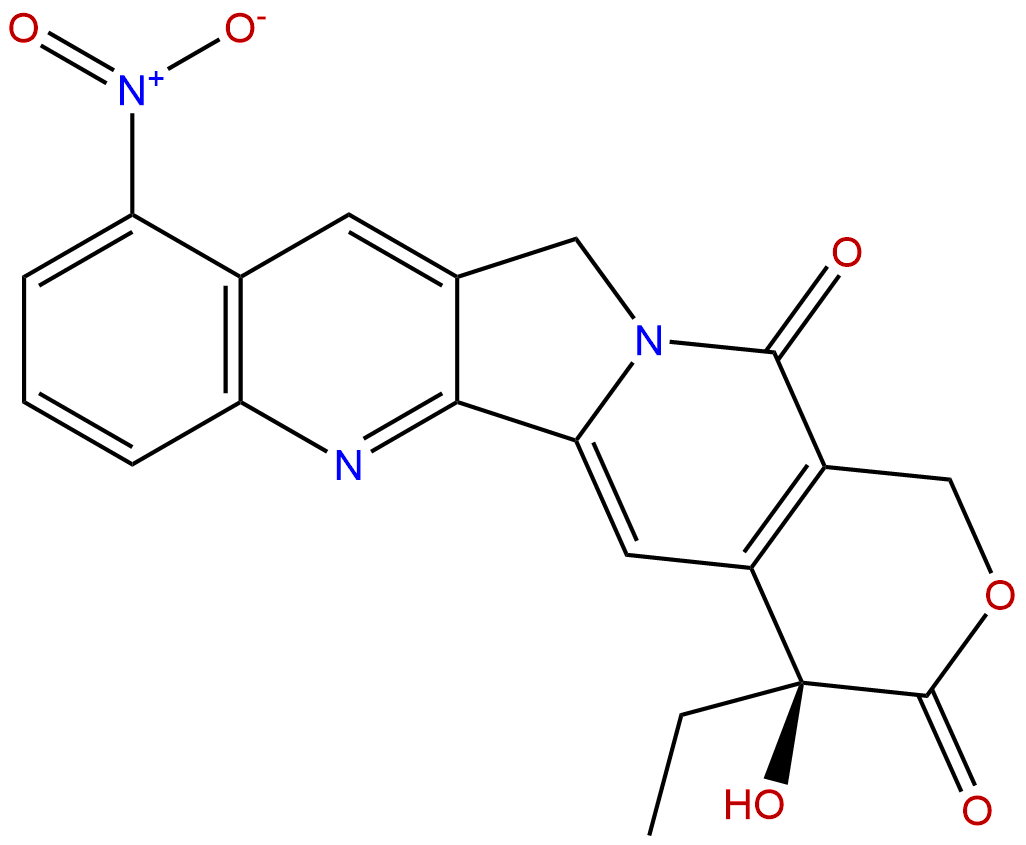
Rubitecan (R&D code RFS 2000, CAS number: 91421-42-0) is an orally active derivative of camptothecin that was born in this context. As an oral formulation of 9-Nitro-camptothecin (9-NC), Rubinotecan significantly improves the convenience of administration while retaining and optimizing the anti-tumor activity of the mother nucleus. Its core mechanism of action is still as a TOP1 inhibitor, which stabilizes the DNA-TOP cleavable complex, induces protein linked DNA single strand breaks, thereby blocking DNA replication and transcription, and ultimately leading to tumor cell apoptosis. Preclinical and clinical studies have shown that ruptecan has therapeutic potential for pancreatic cancer, ovarian cancer, lung cancer, hematological tumors and other malignant tumors. This article aims to systematically review the chemical structure, pharmacological activity, multi-target mechanism of action, pharmacological characteristics, and clinical application prospects of Rubinotecan, in order to provide comprehensive academic references for the in-depth research and development of this compound.
Chemical structure and physicochemical properties
The chemical name of Rubinotecan is (S) -4-ethyl-4-hydroxy-11-nitro-1H-pyrano [3 ', 4': 6,7] azoindeno [1,2-b] quinoline-3,14 (4H, 12H) - dione. Its molecular formula is C20H15N3O6, with a molecular weight of 393.3550 g/mol. Structurally, Rubinotecan retains the classic five ring skeleton structure of camptothecin: A, B, C, D, and E rings. The most critical modification is the introduction of a nitro (- NO2) substituent at position 9 of the C ring, which is the core feature that distinguishes it from other camptothecin derivatives such as topotecan and irinotecan. In addition, its E ring is a lactone ring, which is an essential structure for its pharmacological activity, but it is easily hydrolyzed to form an inactive carboxylate form under physiological pH conditions.
Based on its chemical structure, Rubinotecan exhibits typical physicochemical properties of camptothecin compounds. The calculated lipid water partition coefficient (LogP) is 1.7321, indicating that the compound has a certain degree of lipophilicity but is not highly hydrophobic. The topological polar surface area (TPSA) is 124.5600 Å ², reflecting the presence of multiple hydrogen bond acceptors (nitro, lactone carbonyl, hydroxyl, etc.) in the molecule. The water solubility data (0.0084 mg/mL) shows that it belongs to poorly soluble drugs, which poses a challenge for its formulation development, usually requiring the use of solid dispersions, nanocrystals, or cyclodextrin inclusion techniques to improve its oral bioavailability. These physicochemical parameters are the basis for its subsequent pharmacokinetic behavior and formulation design.
Plant sources and extraction methods
Rubinotecan is not directly extracted from plants, but is prepared through a semi synthetic pathway using natural product camptothecin as the starting material. Therefore, its origin can be traced back to the plant source of camptothecin.
Camptothecin was initially isolated from the bark, root bark, and seeds of Camptotheca acuminata Decne, a plant in the Gongtong family. Camptotheca acuminata is a rare tree species unique to China, mainly distributed in the Yangtze River Basin and southern provinces. As demand grows, direct extraction from plants is no longer sufficient and is limited by factors such as season and place of origin. At present, the main ways to obtain camptothecin are as follows:
1. Plant Extraction and Separation The traditional method is to extract pure camptothecin from the tissue of Camptotheca acuminata (especially young fruits and leaves) using organic solvents such as methanol and ethanol, and then purify it through separation and purification techniques such as silica gel column chromatography and high performance liquid chromatography (HPLC). This method has high cost and limited yield.
2. Plant cell culture The production of camptothecin and its analogues using camptothecin cell suspension culture technology is an environmentally friendly and highly controllable alternative method, but industrial scaling up and yield improvement are still technical difficulties.
3. Chemical Total Synthesis Multiple synthetic routes for camptothecin have been reported, which involve lengthy steps but provide flexibility for structural modification.
4. Microbial Fermentation and Synthetic Biology In recent years, the use of microbial (such as yeast) engineering strains to achieve heterologous biosynthesis of camptothecin by introducing key enzyme genes in the biosynthesis pathway of camptothecin has shown great potential for industrialization.
After obtaining camptothecin, nitration reaction can be carried out at the 9th position of its C ring through chemical synthesis method to obtain the key intermediate of 9-nitrocamptothecin. Subsequently, through purification, salt formation (such as hydrochloride) and other steps, raw materials suitable for drug development are produced. Therefore, the preparation of Rubinotecan is a model of combining natural product chemistry with medicinal chemistry.
Pharmacological activity research
Numerous preclinical studies have shown that Rubinotecan has a wide range of in vitro and in vivo anti-tumor activities.
In vitro anti-tumor activity Rubinotecan exhibits significant cytotoxicity against various human tumor cell lines, with IC50 values typically in the nanomolar (nM) range. It has a strong inhibitory effect on leukemia cells (such as HL-60), pancreatic cancer cells (such as MIA PaCa-2, PANC-1), ovarian cancer cells (such as SK-OV-3), lung cancer cells (such as A549), and breast cancer cells (such as MCF-7). Its activity intensity is equivalent to or better than topotecan, and it is still effective against certain cell lines that are resistant to traditional chemotherapy drugs.
In vivo anti-tumor activity: In nude mice transplanted tumor models (such as human pancreatic cancer, ovarian cancer, lung cancer transplanted tumor), oral administration of ruptecan can significantly inhibit tumor growth, and even induce tumor regression. The convenience of oral administration is its outstanding advantage compared to many chemotherapy drugs that require intravenous injection. The study also found that the combination of Rubinotecan with other chemotherapy drugs (such as gemcitabine, cisplatin) or targeted drugs can produce synergistic anti-tumor effects.
Other pharmacological activities In addition to its direct cytotoxic effects, research also suggests that Rubinotecan may have anti angiogenic and anti metastatic activities. This is related to its potential inhibitory effects on matrix metalloproteinases (such as MMP2) and hypoxia inducible factor (HIF1A).
Mechanism of action and molecular targets
The core target of Rubinotecan is Topoisomerase I (TOP1)TOP1 is responsible for alleviating the supercoiled tension of DNA during DNA replication, transcription, and repair processes. Its mechanism is to temporarily cleave a DNA strand, forming a "DNA-TOP" cleavable complex, which is then reconnected after the DNA strand rotates and relaxes. As a TOP1 inhibitor, the mechanism of action of Rubinotecan is to "poison" rather than "inhibit" the enzyme: it can specifically embed into the "DNA-TOP" cleavable complex, stabilize this intermediate, and prevent the reconnection of DNA broken single strands. This stable complex is called the "TOP1-DNA drug" ternary complex.
When the DNA replication fork encounters this stable ternary complex, a 'replication fork collision' occurs, leading to irreversible DNA double strand breaks. This severe DNA damage triggers the intracellular DNA damage response (DDR) pathway. If the damage cannot be repaired, it will eventually be activated Apoptotic program Rubinotecan induced apoptosis is associated with multiple signaling pathways:
* BCL2 family protein regulation Rubinotecan treatment can downregulate the expression of anti apoptotic proteins BCL2 and MCL1, while possibly upregulating pro apoptotic proteins such as BAX and BAK, leading to increased mitochondrial outer membrane permeability, release of cytochrome C, and activation of caspase cascade reaction.
* STAT3 signaling pathway STAT3 is an important transcription factor for tumor survival and proliferation signaling. Rubinotecan can inhibit the phosphorylation activation of STAT3, thereby downregulating the expression of downstream target genes such as MCL1 and Cyclin D1, promoting cell cycle arrest and apoptosis.
* MAPK/ERK pathway Rubinotecan may affect the activity of MAPK1 (ERK2), a pathway closely related to cell proliferation and survival, and its dysregulation can affect drug sensitivity.
* Hypoxia and Angiogenesis By inhibiting the activity or expression of HIF1A, Rubinotecan may interfere with the adaptive ability of tumor cells in hypoxic environments and reduce the production of angiogenic factors such as vascular endothelial growth factor (VEGF). The potential inhibition of MMP2 may affect the invasion and metastasis ability of tumor cells.
* Hormone related targets: The potential effects on ESR1 (estrogen receptor α) and CYP19A1 (aromatase) suggest that ruptecan may have additional effects on hormone dependent tumors (such as some breast cancer).
It is worth noting that Rubinotecan has also been reported to inhibit at higher concentrations Topoisomerase II alpha (TOP2A)This may contribute to some of its cytotoxicity, especially in certain TOP1 low expression or drug-resistant tumor cells.
In summary, the anti-tumor effect of Rubinotecan is a synergistic result of multiple targets and pathways. It centers around TOP1 and triggers DNA damage, thereby disrupting multiple critical survival, proliferation, and stress signaling networks within tumor cells, ultimately leading to cell apoptosis.
Evaluation of drug properties and pharmacokinetics
Based on the provided parameters and existing research, the pharmacological evaluation of Rubinotecan is as follows:
Absorption, distribution, metabolism, excretion (ADME):
* absorb As an oral preparation, the absorption of Rubinotecan in the gastrointestinal tract is the first step towards its therapeutic effect. Its moderate LogP value is beneficial for transmembrane absorption, but low water solubility may limit its dissolution rate in gastrointestinal fluids, becoming the limiting step for oral absorption. The optimization of formulation technology is crucial.
* distribution Rubinotecan has High blood-brain barrier (BBB) penetration ability This is a characteristic of camptothecin compounds, indicating their potential therapeutic value for primary brain tumors or brain metastases, but also suggesting that they may cause central nervous system related side effects.
* Metabolism Camptothecin compounds are mainly metabolized through the liver. The E-ring lactone of Rubinotecan maintains a pH dependent dynamic equilibrium with its carboxylate form in vivo, with only the closed ring lactone form exhibiting activity. Its nitro group may be reduced to an amino group in the body. The cytochrome P450 enzyme system (CYP) may be involved in its metabolism, but the specific metabolic profile needs further clarification.
* excretion Mainly excreted through bile and kidneys.
Safety Pharmacology:
* HERG inhibition The data shows' no ', which is a positive signal indicating that the likelihood of Rubinotecan causing cardiac QT interval prolongation (a serious risk of arrhythmia) at therapeutic concentrations is low.
* Genotoxicity The Ames test result is 1.8 (usually expressed as the ratio of the number of revertant mutant colonies to the control, greater than 2 is generally considered to have mutagenic risk). This value suggests that under standard Ames test conditions, Rubinotecan did not show clear mutagenicity, but as a DNA damaging agent, it still needs to be comprehensively evaluated in combination with other in vitro and in vivo genetic toxicity tests.
Main challenges:
1. Stability of lactone ring Like all camptothecin analogues, the active lactone ring of Rubinotecan is easily hydrolyzed into inactive carboxylate salts at human blood pH (~7.4), resulting in a decrease in the concentration of its active form in the body and fluctuations in its efficacy. This is a common issue with this type of medication.
2. myelosuppression The dose limiting toxicity is mainly manifested by neutropenia and thrombocytopenia, which are typical manifestations of its inhibition of rapidly dividing cells (including bone marrow hematopoietic cells).
3. Gastrointestinal toxicity Diarrhea, nausea, and vomiting are common adverse reactions, some of which are related to the damage of intestinal mucosal cells caused by the medication itself.
Clinical application prospects and prospects
The clinical development process of Rubinotecan is full of twists and turns. Early clinical trials (especially Phase II) have shown encouraging efficacy in indications such as advanced pancreatic cancer and ovarian cancer, especially the convenience of oral administration, which provides important treatment options for advanced patients. However, the subsequent critical Phase III clinical trials did not fully meet the expected endpoints, resulting in its marketing application not being approved in regions such as the United States. However, the research value of Rubinotecan has not disappeared, and its future development direction may focus on the following aspects:
- Repositioning for specific populations Using biomarkers (such as tumor tissue TOP1 expression levels, DNA damage repair defect status, etc.) to screen patient subgroups that are most likely to benefit from treatment with Rubinotecan, achieving precision medicine.
- Optimization of Combination Therapy Strategy Explore the combination therapy of Rubinotecan with other mechanism of action drugs such as PARP inhibitors, immune checkpoint inhibitors, and anti angiogenic drugs. For example, the DNA damage caused by Rubinotecan may enhance the sensitivity of tumors to PARP inhibitors; The induced immunogenic cell death may improve the tumor microenvironment and synergize with immunotherapy.
- Development of new drug delivery systems and formulations To address issues such as poor water solubility and unstable lactone rings, new nano formulations (such as liposomes and polymer micelles), prodrug strategies, or targeted delivery systems are developed to enhance tumor targeting, reduce systemic toxicity, and improve pharmacokinetic properties.
- Expand the exploration of indications Based on its excellent BBB penetration, in-depth research has been conducted in fields such as glioma and brain metastases. Meanwhile, explore its value in hematological tumors such as leukemia and lymphoma.
- Deep exploration of the mechanism of action In addition to the classic TOP1 inhibition, a systematic study of its network effects on multiple targets such as STAT3, HIF1A, MCL1 may reveal new resistance mechanisms and combination therapy targets.
Conclusion
As a representative of oral camptothecin derivatives, the development process of Rubinotecan reflects a typical path from natural products to modern drugs. It exerts anti-tumor effects by efficiently inhibiting TOP1, causing extensive DNA damage and downstream signal network disturbances. Despite facing challenges in comprehensive clinical promotion, its clear core mechanism, significant advantages in oral administration, and potential multi-target effects still hold a place in the field of tumor drug development. The future research focus should shift towards overcoming its drug weakness, exploring precise combination therapy strategies, and developing new formulations using advanced technology. With the deepening understanding of tumor biology and advances in drug delivery technology, Rubinotecan is expected to bring new clinical benefits to specific tumor patient populations under optimized treatment modes, continuing the vitality of natural products and their derivatives in the treasure trove of anti-tumor drugs.