Introduction/Overview
Natural products, as an important source of drug discovery, play an indispensable role in the long history of human struggle against diseases. Among numerous natural products with novel structures and diverse activities, isoquinoline alkaloids have attracted much attention due to their extensive pharmacological activities. Protopine hydrochloride is one of the representative isoquinoline alkaloids, and its parent nucleus structure, protopine, is widely present in many plants such as Papaveraceae, Berberidaceae, and Ranunculaceae. As the hydrochloride form of the original opioid base, hydrochloric acid blue violet base not only retains the core biological activity of the parent compound, but also exhibits unique pharmacological value due to the improvement of physicochemical properties after salt formation.
The chemical structure of hydrochloric acid blue violet alkaloid is characterized by its unique ten membered nitrogen heterocyclic system, which is relatively rare in natural alkaloids and endows it with the potential to interact with various biological targets. Early research mainly focused on its role as an acetylcholinesterase (AChE) inhibitor, and found that it can specifically, reversibly, and competitively inhibit the activity of the enzyme, thereby affecting the function of the cholinergic nervous system. This discovery provides a theoretical basis for the therapeutic application of berberine hydrochloride in neurodegenerative diseases, especially Alzheimer's disease (AD).
With the deepening of research, the pharmacological activity spectrum of hydrochloric acid blue violet alkaloids continues to expand. In addition to its classic AChE inhibitory activity, numerous studies have confirmed its significant anti-inflammatory, antimicrobial, anti angiogenic, and anti-tumor activities. Especially in the field of analgesia, hydrochloric acid blue violet alkaloids exhibit multimodal analgesic characteristics by acting on multiple targets such as transient receptor potential vanillic acid subtype 1 (TRPV1), cannabinoid receptor 1 (CNR1), opioid receptors (such as OPRM1, OPRD1, OPRK1), and dopamine receptor D2 (DRD2), providing new ideas for the development of novel non addictive analgesic drugs. In addition, its regulatory effects on cyclooxygenase (PTGS1/PTGS2) and serotonin transporter (SLC6A4) further reveal its potential anti-inflammatory and antidepressant mechanisms.
This review aims to systematically review the research status of hydrochloric acid blue violet alkaloid, starting from its chemical structure and physicochemical properties, deeply explore its plant origin and extraction process, comprehensively summarize its pharmacological activities such as anti-inflammatory, analgesic, and anti-tumor, and clarify its mechanism of action and molecular targets based on molecular docking, signal pathway analysis, and other methods. At the same time, based on the evaluation of drug properties and pharmacokinetic parameters, objectively evaluate its potential as a lead compound or candidate drug, and look forward to its prospects and challenges in clinical applications, in order to provide reference for the in-depth development and transformation research of this natural product.
Chemical structure and physicochemical properties
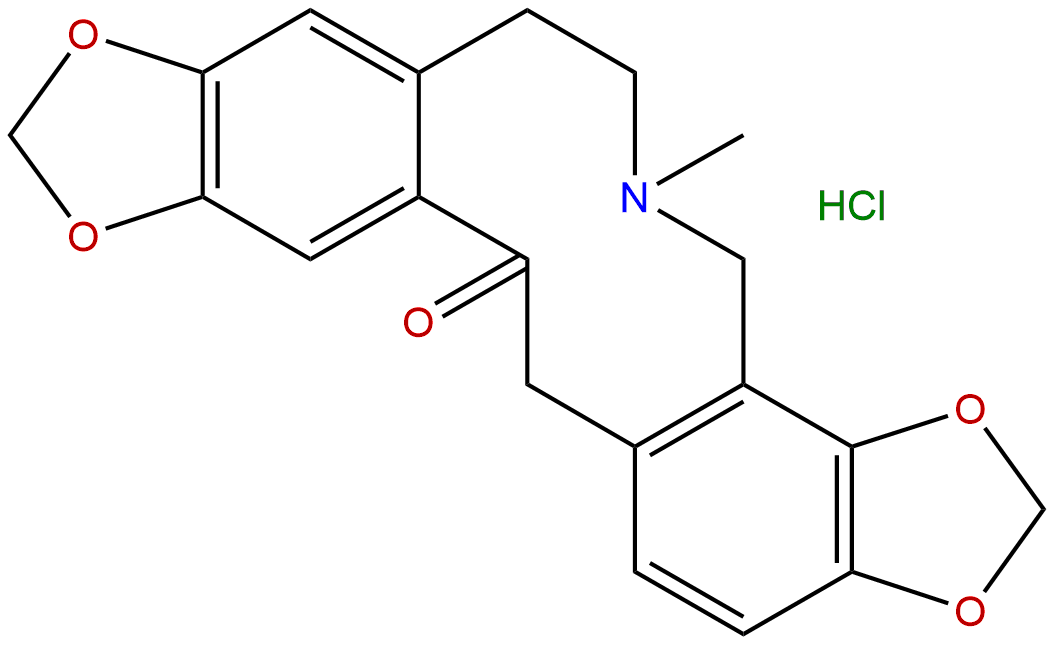
The chemical name of hydrochloric acid blue violet base is 5,6,13,13a-tetrahydro-2,3:9,10-bis (methylenedioxy) -8H-dibenzo [a, g] quinolone hydrochloride, with the molecular formula C ₂ ₀ H ₁ ₉ NO ₅ · HCl and a molecular weight of 353.3740 g/mol. Structurally speaking, the parent nucleus of protoopioids belongs to the protoberberine class of isoquinoline alkaloids, but differs from typical quaternary ammonium alkaloid structures such as berberine. The backbone of protoopioids is a ten membered nitrogen heterocyclic system containing a carbonyl group, specifically a dibenzo [a, g] quinazine-8-one structure. This structure contains two methylenedioxy (- O-CH ₂ - O -) substituents located at C-2 and C-3 positions on the A ring and C-9 and C-10 positions on the D ring, which are crucial for its biological activity. The only nitrogen atom in the molecule exists in the form of a tertiary amine. In the hydrochloride state, this nitrogen atom protonates to form an ammonium salt, thereby increasing the water solubility of the compound.
In terms of physicochemical properties, the oil-water partition coefficient (LogP) of hydrochloric acid blue violet base is 2.2174, indicating its moderate lipophilicity, which facilitates its penetration through biological membranes, including the blood-brain barrier (BBB). In fact, its blood-brain barrier penetration is evaluated as "high", which is of decisive significance for its central nervous system (CNS) activity, such as analgesic and anti AD effects. Its topological polar surface area (TPSA) is 57.23 Å ², which is lower than the recommended upper limit of 140 Å ² for oral drugs, indicating its good oral absorption potential. The water solubility data (0.0226 mg/mL) shows that its solubility in water is limited, but compared to its free base form, the introduction of hydrochloride has significantly improved its water solubility. In addition, the hERG inhibition test result was negative, indicating a low risk of cardiac toxicity, which is an important safety advantage. The Ames test result (1.8) suggests that it may have a slight genetic toxicity risk, but this value is within a critical range and requires further toxicological evaluation.
The chemical stability of hydrochloric acid blue violet base is good, and it can maintain stability under conventional storage conditions (avoiding light, drying, low temperature). The methylenedioxy group in its structure may undergo hydrolysis under strong acid or strong base conditions, so pH environment should be taken into account in formulation development. The characteristic peaks of its ultraviolet absorption spectrum are usually around 290 nm and 330 nm, which provides convenience for quantitative analysis using high-performance liquid chromatography (HPLC) or ultraviolet spectrophotometry. Overall, the chemical structure of hydrochloric acid blue violet base endows it with unique biological activity, while its physicochemical properties provide favorable conditions for its development as an oral drug, especially its high BBB penetration, making it an ideal candidate molecule for treating CNS diseases.
Plant sources and extraction methods
As the hydrochloride form of protopine, hydrochloric acid blue violet alkaloid is widely distributed in multiple plant families and genera from its natural source. The main source is Papaveraceae plants, such as Corydalis, Papaver, Roemeria, and Dicranostagma. Among them, Corydalis yanhusuo, as a traditional Chinese medicine, is one of the most famous sources of protopine. In addition, the compound is also present in the Mahonia genus of the Berberidaceae family and the Coptis genus of the Ranunculaceae family. It is worth noting that there are significant differences in the content of opioids among different plant species, production areas, harvest seasons, and medicinal parts (such as tubers, rhizomes, and whole plants). For example, the content in the tubers of Corydalis yanhusuo is relatively high, while the content in poppy shells is relatively low.
The traditional method for extracting hydrochloric acid blue violet alkaloids is mainly based on the acid-base properties of alkaloids. The classic extraction process usually includes the following steps: first, the dried plant material is crushed and soaked in an acidic aqueous solution (such as 0.5% -1% hydrochloric acid or sulfuric acid) to dissolve the alkaloids in salt form. Subsequently, the acidic extract is alkalized (usually adjusted to pH 9-10 with ammonia or sodium hydroxide) to precipitate free alkaloids, and then extracted with organic solvents such as chloroform, ether, or ethyl acetate. After concentration, the extraction solution is separated and purified by column chromatography (such as silica gel column, alumina column), and finally purified by recrystallization to obtain the pure original opiate base. Dissolve pure opiate alkaloids in anhydrous ethanol, introduce dry hydrogen chloride gas or add hydrochloric acid ethanol solution to prepare hydrochloric acid blue violet alkaloids.
With the development of modern separation technology, more efficient and environmentally friendly extraction methods are widely used. Ultrasound assisted extraction (UAE) and microwave-assisted extraction (MAE) can significantly shorten extraction time and improve extraction efficiency. For example, using 70% ethanol as the solvent and extracting Corydalis yanhusuo under ultrasound power of 300W and temperature of 50 ℃ for 30 minutes, the extraction rate of the original opioid alkaloids can be increased by more than 20% compared to traditional reflux extraction. In addition, high-speed counter current chromatography (HSCCC) technology has been successfully used for the rapid separation and purification of opioids due to its advantages such as no need for a solid stationary phase, high separation efficiency, and good sample recovery rate. In recent years, solid-phase extraction methods based on molecular imprinting technology (MIT) have also demonstrated high selective adsorption capacity for target alkaloids, providing a new strategy for targeted enrichment of protoopioids from complex plant extracts.
In terms of quality control, high-performance liquid chromatography (HPLC) combined with mass spectrometry (LC-MS) has become the standard method for determining the content and fingerprint analysis of opioids. By optimizing the chromatographic conditions, such as using a C18 reverse phase column and acetonitrile water (containing 0.1% formic acid) as the mobile phase for gradient elution, baseline separation of protopine and other coexisting alkaloids (such as berberine and berberine) can be achieved within 15 minutes. The UV detection wavelength is usually set at 290 nm. For the finished product of hydrochloric acid blue violet alkali, routine quality control items such as content determination, drying loss, ignition residue, heavy metal and arsenic salt inspection need to be carried out to ensure that it meets pharmaceutical standards.
Pharmacological activity research
The pharmacological activity research of hydrochloric acid blue violet alkaloid has expanded from the initial acetylcholinesterase inhibition to multiple disease fields, exhibiting pleiotropic characteristics. Its core pharmacological activities can be summarized as follows:
1. Acetylcholinesterase inhibitory activity
Cyanine hydrochloride is one of the first natural isoquinoline alkaloids reported to have specific, reversible, and competitive acetylcholinesterase (AChE) inhibitory activity. The half maximal inhibitory concentration (IC ₅₀) is usually in the micromolar range (about 2-10 μ M), and the specific value varies depending on the detection system. Compared with AChE inhibitors used in clinical practice (such as donepezil and rivastigmine), the inhibitory activity of berberine hydrochloride is slightly lower, but its unique chemical structure provides different binding modes. Molecular docking studies have shown that the methylenedioxy and carbonyl groups in its molecule can form hydrogen bonds and π - π stacking interactions with key amino acid residues at the active site of AChE (such as Trp86, Tyr337, Phe338), while the protonated nitrogen atom undergoes electrostatic interactions with His447 in the catalytic triad. This reversible competitive inhibition mode means that its side effects may be relatively low, as the recovery of enzyme activity is relatively rapid.
2. Analgesic activity
Analgesia is one of the most notable pharmacological activities of berberine hydrochloride. Multiple animal model experiments have confirmed that berberine hydrochloride (administered intraperitoneally or orally) can significantly alleviate pain reactions caused by hot plates, formalin, acetic acid writhing, and chronic sciatic nerve compression (CCI). Its analgesic mechanism involves multiple targets: firstly, it can activate the cannabinoid receptor CB1 (CNR1), inhibit adenylate cyclase through Gi/o protein coupling, reduce cAMP production, and thus suppress neuronal excitability. Secondly, it can act on opioid receptors (μ - opioid receptor OPRM1, δ - opioid receptor OPRD1, κ - opioid receptor OPRK1), exerting analgesic effects similar to classical opioid drugs, but with potentially lower addictive potential. In addition, berberine hydrochloride can also inhibit the transient receptor potential channels TRPV1 and TRPA1, blocking the transmission of nociceptive stimuli. The regulatory effect on dopamine receptor D2 (DRD2) may be related to its improvement in pain related emotions and cognition. This multi-target synergistic mode of action gives it unique advantages in treating chronic pain and neuropathic pain.
3. Anti inflammatory activity
The anti-inflammatory effect of berberine hydrochloride has been confirmed in various inflammatory models. In the macrophage model stimulated by lipopolysaccharide (LPS), it can significantly inhibit the release of pro-inflammatory cytokines such as TNF - α, IL-6, IL-1 β, and reduce the production of nitric oxide (NO) and prostaglandin E2 (PGE2). The mechanism is mainly related to the inhibition of the nuclear factor kappa B (NF - κ B) signaling pathway. Specifically, berberine hydrochloride can block the phosphorylation and degradation of I κ B α, thereby preventing the nuclear translocation of NF - κ B p65 subunit and downregulating the expression of cyclooxygenase-2 (PTGS2/COX-2) and inducible nitric oxide synthase (iNOS). In addition, it can also upregulate the expression of antioxidant enzymes such as HO-1 and NQO1 by activating the nuclear factor E2 related factor 2 (Nrf2) pathway, thereby reducing oxidative stress-induced inflammatory damage. Moderate inhibition of cyclooxygenase-1 (PTGS1/COX-1) may be related to its gastrointestinal protective effect.
4. Antitumor activity
Cyanodine hydrochloride has a proliferation inhibitory effect on many tumor cell lines (such as HepG2, breast cancer MCF-7, lung cancer A549, colon cancer HT-29, etc.), and the IC ₀ value is usually within the range of 10-50 μ M. Its anti-tumor mechanism is complex and diverse: on the one hand, it can induce cell apoptosis through the mitochondrial pathway, manifested as a decrease in mitochondrial membrane potential, release of cytochrome c, and activation of caspase-9 and caspase-3. On the other hand, it can also induce cell cycle arrest, mainly blocking the cell cycle in the G2/M phase, which may be related to its inhibition of microtubule protein polymerization. In addition, the anti angiogenic activity of berberine hydrochloride has also received much attention. In chicken embryo chorioallantoic membrane (CAM) and Matrigel plug models, it can significantly inhibit the formation of new blood vessels. The mechanism involves downregulating the expression of vascular endothelial growth factor (VEGF) and its receptor VEGFR2, as well as inhibiting the PI3K/Akt and MAPK/ERK signaling pathways.
5. Other activities
In addition to the main activities mentioned above, hydrochloric acid blue violet alkaloids also exhibit antimicrobial activity (with certain inhibitory effects on Staphylococcus aureus, Escherichia coli, etc.), antidepressant like effects (possibly related to the regulation of serotonin transporter SLC6A4), and hepatoprotective effects. These activities together form the pharmacological basis for its multifunctional natural product.
Mechanism of action and molecular targets
The pharmacological effects of berberine hydrochloride are not derived from a single target, but are achieved through the synergy of multiple targets and pathways. Based on existing research, its core molecular mechanism can be summarized as follows:
1. Regulation of cholinergic system
As a reversible and competitive AChE inhibitor, berberine hydrochloride inhibits the hydrolysis of acetylcholine (ACh) by occupying the catalytic site of the AChE active center, thereby increasing the concentration of ACh in the synaptic cleft and enhancing cholinergic neurotransmission. This mechanism is the theoretical basis for improving cognitive function. Molecular simulation shows that the methylenedioxy group in its structure forms hydrophobic interactions with Phe295 and Phe297 in the acyl binding pocket of AChE, while the carbonyl oxygen group forms hydrogen bonds with the NH backbone of Gly121. This binding pattern is different from classical inhibitors and may explain its lower toxicity and side effects.
2. Regulation of pain signaling pathways
The analgesic effect of berberine hydrochloride involves multiple pain related targets:
- Opioid receptor system It can act as a partial agonist of μ, δ, and κ opioid receptors, activate Gi/o proteins, inhibit voltage-gated calcium channels (VGCC), reduce the release of presynaptic neurotransmitters (such as glutamate and substance P), and activate inward rectifying potassium channels to hyperpolarize postsynaptic neurons, thereby inhibiting pain signal transmission.
- Cannabinoid receptor system By activating CB1 receptors, it regulates pain perception and emotional responses. The activation of CB1 receptors can also inhibit the activity of TRPV1, producing a synergistic analgesic effect.
- Transient receptor potential channel Directly inhibit TRPV1 and TRPA1, block harmful signals caused by thermal, chemical, and mechanical stimuli.
- Dopamine system Regulation of DRD2 may improve pain related anhedonia and depressive mood by affecting the midbrain limbic pathway.
3. Inflammation and oxidative stress pathways
- NF - κ B pathway Hydrochloric acid blue violet alkaloids inhibit the activity of I κ B kinase (IKK), prevent the phosphorylation and degradation of I κ B α, thereby blocking the nuclear translocation of NF - κ B and downregulating the expression of pro-inflammatory genes such as COX-2, iNOS, TNF - α, etc.
- Nrf2 pathway It can activate Nrf2, causing it to dissociate from Keap1 and translocate into the nucleus, bind to antioxidant response elements (ARE), initiate the expression of phase II detoxifying enzymes and antioxidant enzymes such as HO-1, NQO1, GST, etc., thereby clearing reactive oxygen species (ROS) and reducing oxidative stress damage.
- MAPK pathway Inhibits the phosphorylation of p38 MAPK and JNK, further reducing the production of inflammatory mediators.
4. Regulation of cell proliferation and apoptosis
- Apoptotic pathway Through the mitochondrial pathway, upregulate the Bax/Bcl-2 ratio, promote cytochrome c release, activate caspase-9 and caspase-3, and induce tumor cell apoptosis. In addition, it can activate death receptor pathways (such as Fas/FasL) and enhance exogenous apoptotic signals.
- cell cycle regulation By inhibiting the activity of Cyclin B1/CDK1 complex, the cell cycle is arrested in the G2/M phase. This may be related to its interference with microtubule protein polymerization.
- Angiogenesis inhibition By inhibiting the VEGF/VEGFR2 signaling axis and blocking the activation of PI3K/Akt and ERK1/2 pathways, the proliferation, migration, and luminal formation of endothelial cells are inhibited.
5. Regulation of neurotransmitter transporters
The inhibitory effect on the 5-hydroxytryptamine transporter (SLC6A4) can increase the concentration of 5-HT in the synaptic cleft, which may be the molecular basis of its antidepressant like effect. Meanwhile, there may also be regulatory effects on dopamine transporter (DAT) and norepinephrine transporter (NET), but research is not yet sufficient.
Evaluation of drug properties and pharmacokinetics
The evaluation of drug properties is a crucial step in determining whether natural products can be converted into clinical drugs. Based on the provided parameters, hydrochloric acid blue violet base exhibits certain potential for drug development, but there are also some challenges.
1. Physical and chemical properties and drug like properties
According to the Lipinski Five Rules, the molecular weight of hydrochloric acid blue violet base (353.37 Da) is less than 500 Da, LogP (2.22) is less than 5, and the number of hydrogen bond donors (1 from NH ⁺) and hydrogen bond acceptors (6, including 5 O and 1 N) meet the requirements. Its TPSA (57.23 Å ²) is also lower than 140 Å ², indicating its good oral bioavailability potential. Therefore, from the perspective of physical and chemical properties, hydrochloric acid blue violet alkaloid fully meets the criteria for drug likeness.
2. Safety evaluation
The hERG inhibition test result was negative, which is an important safety advantage indicating a lower risk of inducing QT interval prolongation and apical torsion ventricular tachycardia in the heart. The Ames test result (1.8) is within the critical range (usually bounded by 2), indicating that it may have weak genetic toxicity, but this result needs to be comprehensively evaluated in combination with in vivo micronucleus test and chromosome aberration test. In addition, as an AChE inhibitor, peripheral cholinergic side effects such as nausea, vomiting, and diarrhea are potential risks, but due to its reversible inhibitory characteristics, the risk may be lower than that of irreversible inhibitors.
3. Pharmacokinetic characteristics
Pharmacokinetic studies are a weak link in the development of berberine hydrochloride, and existing data mainly comes from animal experiments
- absorb After oral administration, berberine hydrochloride is well absorbed in the gastrointestinal tract. Its LogP is moderate, which is conducive to passive diffusion through intestinal epithelial cells. But the first pass effect may be significant, leading to a lower absolute bioavailability (oral bioavailability in rats is about 15-25%).
- distribution Due to its high BBB penetration, it is widely distributed in brain tissue, which is the basis of its central activity. A large apparent volume of distribution (Vd) indicates a high tissue binding rate.
- Metabolism The main metabolic pathways include ring opening of methylenedioxyl (generating catechol derivatives), O-demethylation, N-demethylation, and the binding reaction of glucuronic acid and sulfuric acid. The cytochrome P450 enzyme system (especially CYP3A4 and CYP2D6) may be involved in its metabolism. Metabolites may retain some activity or produce toxicity.
- excretion Mainly excreted in the form of metabolites through urine and bile. The excretion of the prototype drug is relatively low. The half-life (t ₁/₂) in rats is approximately 2-4 hours, indicating the need for multiple daily administrations.
4. Formulation and delivery challenges
Although the water solubility of hydrochloric acid blue base (0.0226 mg/mL) has been improved compared to free base, it is still a poorly soluble drug, which limits its oral bioavailability. The use of solid dispersions, cyclodextrin inclusion complexes, lipid nanoparticles, or phospholipid complexes can significantly improve their solubility and dissolution rate. For example, after preparing hydroxypropyl - β - cyclodextrin inclusion complexes, their solubility can be increased by more than 10 times. In addition, developing intranasal drug delivery formulations or brain targeted nano delivery systems to meet its CNS targeting needs is expected to further increase the concentration of drugs in the brain and reduce peripheral side effects.
Clinical application prospects and prospects
Due to its multi-target pharmacological activity and good safety characteristics, hydrochloric acid blue violet alkaloids have shown broad application prospects in multiple therapeutic fields, but also face many challenges.
1. Application prospects in the field of analgesia
Chronic pain, especially neuropathic pain, is currently a difficult point in clinical treatment. Existing drugs, such as opioids and gabapentins, have issues with addiction, tolerance, or significant side effects. Hydrochloric acid blue violet alkaloids provide a multimodal analgesic strategy by simultaneously acting on opioid receptors, cannabinoid receptors, TRP channels, and dopamine receptors. Its non addictive potential (preliminary studies have shown that its reward effect is lower than morphine) makes it an ideal lead for developing new analgesic drugs. Future research should focus on evaluating its long-term efficacy and safety in chronic pain models, and exploring its synergistic effects with existing analgesics.
2. Treatment of neurodegenerative diseases
As an AChE inhibitor, berberine hydrochloride has potential value in the treatment of Alzheimer's disease (AD). Compared with existing AChE inhibitors, its unique chemical structure may bring different side effect profiles. More importantly, its anti-inflammatory and antioxidant activities may have multiple beneficial effects on the pathological process of AD, rather than just improving symptoms. In addition, its regulatory effect on dopamine receptors also suggests its potential in the treatment of Parkinson's disease (PD). However, its clinical translation still faces challenges: it needs to be proven that its clinical efficacy is superior to existing drugs, and the safety of long-term use (especially the impact on the liver and heart) needs to be fully validated.
3. Anti inflammatory and immune regulation
The anti-inflammatory activity of berberine hydrochloride, especially its dual regulation of NF - κ B and Nrf2 pathways, makes it promising for the treatment of chronic inflammatory diseases such as inflammatory bowel disease (IBD) and rheumatoid arthritis (RA). It is convenient for oral administration and may have lower gastrointestinal side effects (due to its weaker inhibition of COX-1). The development of topical preparations (such as cream and gel) for the treatment of dermatitis or psoriasis is also a direction worth exploring.
4. Anti tumor adjuvant therapy
Although the direct anti-tumor activity of hydrochloric acid blue violet base (IC ₅₀ at 10-50 μ M) is not sufficient as a single chemotherapy drug, its anti angiogenic and immunomodulatory activities make it a candidate molecule for adjuvant therapy of tumors. Combined with chemotherapy drugs such as cisplatin and paclitaxel, it may enhance chemotherapy efficacy and reduce drug resistance by inhibiting tumor angiogenesis and reversing the immunosuppressive state of the tumor microenvironment. In addition, its regulatory effect on multidrug resistance (MDR) - related proteins such as P-gp is also worth studying.
5. Challenges and Future Directions Faced
Despite its broad prospects, the clinical translation of hydrochloric acid blue violet alkaloids still faces the following challenges:
- Pharmacokinetic optimization Low oral bioavailability and short half-life are the main bottlenecks. Improvements need to be made through prodrug design, nano formulations, or structural modifications.
- Target selectivity and off target effects The multi-target characteristic is both an advantage and a risk. It is necessary to systematically evaluate its affinity, efficacy, and safety towards different targets, and clarify its therapeutic window.
- Comprehensive toxicological assessment The critical results of Ames test require further genetic toxicity studies, including in vivo micronucleus test and comet assay. Long term toxicity, reproductive toxicity, and carcinogenicity studies are also essential.
- Lack of clinical evidence Currently, all activity data comes from in vitro and animal experiments, lacking human clinical trial data. Phase I clinical trials are needed to evaluate its safety, tolerability, and pharmacokinetic characteristics in humans.
Future research directions should include: utilizing computer-aided drug design (CADD) technology to design novel derivatives with higher selectivity and better pharmacokinetic properties based on their binding patterns with multiple targets; Comprehensively analyze its functional network using omics techniques such as transcriptomics and proteomics; Developing brain targeted delivery systems to increase central drug concentration; And explore its synergistic effect in traditional Chinese medicine formulas, providing scientific basis for the modernization of traditional Chinese medicine.
Conclusion
As an isoquinoline alkaloid derived from traditional medicinal plants, hydrochloric acid blue violet alkaloid occupies a unique position in the field of natural product drug development due to its unique chemical structure and multi effect pharmacological activity. From its initial discovery as an acetylcholinesterase inhibitor to its enormous potential in various therapeutic fields such as pain relief, anti-inflammatory, and anti-tumor, its research process fully demonstrates the important value of natural products as lead compounds.
This review systematically summarizes the chemical structure, plant origin, pharmacological activity, molecular mechanism, and pharmacological characteristics of hydrochloric acid blue violet alkaloid. Its high blood-brain barrier penetration, multi-target synergistic mode of action, and low risk of hERG inhibition give it unique advantages in the treatment of chronic pain, neurodegenerative diseases, and inflammatory diseases. However, low oral bioavailability, short half-life, and potential genetic toxicity risks remain the main obstacles on its clinical translation path.
Looking ahead to the future, research on hydrochloric acid blue violet base should focus on the following key directions: firstly, optimizing its pharmacokinetic properties through structural modification or advanced drug delivery systems; The second is to use systems pharmacology methods to thoroughly elucidate its multi-target action network, clarify its therapeutic window and potential side effects; Thirdly, accelerate preclinical toxicology research, especially long-term toxicity and genotoxicity assessments, to lay the foundation for entering clinical trials; The fourth is to explore its synergistic application with traditional Chinese medicine formulas or other modern drugs, and to leverage its multi effect advantages.
In short, hydrochloric acid blue violet alkaloid is a promising but still needs further development as a natural product. With the continuous advancement of modern medicinal chemistry, pharmacology, and pharmaceutical technology, this ancient alkaloid is expected to shine with new vitality in the era of precision medicine and contribute to human health.