Introduction/Overview
Depression is a highly prevalent mental disorder worldwide, with a complex pathological mechanism involving multiple factors such as imbalance of monoamine neurotransmitters, impaired neuroplasticity, inflammatory response, and dysfunction of the hypothalamic pituitary adrenal axis. Although traditional antidepressants, represented by selective serotonin reuptake inhibitors, are widely used in clinical practice, they generally suffer from delayed onset, limited efficacy, and significant side effects. Therefore, exploring lead compounds with novel structures and diverse mechanisms of action from natural products has always been an important direction for the development of new antidepressant drugs.
Camel thorn alkaloids are a class of β - carboline alkaloids mainly derived from plants in the genus Camelthorn in the family Cirsiumaceae. They have attracted much attention due to their unique chemical structure and wide range of neuropharmacological activities. Harmalane(CAS: 525-41-7), As a member of this family, it is a relatively simple tetrahydro - β - carboline. Compared to its homologs, Harmalane, which are potent monoamine oxidase inhibitors, Harmalane has received relatively less early research. However, with the advancement of modern pharmacology and molecular biology techniques, more and more evidence suggests that Harmalane exhibits unique and multi-target antidepressant potential, which is not limited to monoamine oxidase inhibition, but also involves multiple levels such as neurotransmitter receptor regulation and activation of neurotrophic signaling pathways. This article aims to systematically review the chemical properties, plant origin, pharmacological activity, multi-target mechanism of action, pharmacological characteristics, and clinical translation prospects of Harmalane, in order to provide comprehensive scientific basis for the deep development of this natural product.
Chemical structure and physicochemical properties
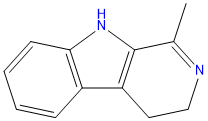
Harmalane, The chemical name is 1-methyl-1,2,3,4-tetrahydro - β - carboline, which is a tetrahydro β - carboline alkaloid. Its molecular formula is C12H14N2 and its molecular weight is 184.2420 g/mol.
Structurally, Harmalane is formed by the combination of an indole ring and a partially saturated pyridine ring, forming its core tetrahydro - β - carboline skeleton. There is a methyl group attached to the nitrogen atom at position 1. This structure is between fully aromatic β - carbolines (such as Halman) and fully saturated 1,2,3,4-tetrahydro - β - carbolines, giving it a certain degree of planarity and lipophilicity while retaining the conformational flexibility of partially saturated rings. This structural feature is the basis for its interaction with various enzyme and receptor targets.
According to the pharmacological parameters calculated based on its chemical structure, Harmalane's lipid water partition coefficient (LogP) is 2.5549, indicating its moderate lipophilicity, which is beneficial for penetrating biological membranes, especially the blood-brain barrier. Its topological polar surface area (TPSA) is relatively low, at 28.15 Å ², further supporting its excellent membrane permeability. The predicted data shows that its blood-brain barrier permeability is "high", which is crucial for it as a central nervous system active drug. However, its water solubility is poor, about 0.0340 mg/mL, which may pose challenges in formulation development. In the preliminary safety screening, Harmalane did not show significant hERG potassium channel inhibitory activity (predicted as' no '), indicating a low potential risk of cardiac toxicity. The Ames test predicted a value of 0.9, indicating a low risk of mutagenicity, but further confirmation through experiments is needed.
Plant sources and extraction methods
Harmalane mainly exists in plants of the genus Camelthorn in the family Cirsiumaceae, especially Common peganum and peganum multisectum These plants have long been recorded in traditional medical systems, such as folk medicine in Central Asia, the Middle East, and North Africa, for the treatment of mental stress, insomnia, and rheumatic pain. Their active basis is rich in various β - carboline alkaloids.
In the plant body, Harmalane often coexists with other structurally similar alkaloids such as harmabine, hamalline, dehydrocamelbine, etc., but its content is usually lower than the latter major alkaloids. Its biosynthetic pathway originates from the Pictet Spengler condensation reaction between tryptophan and aldehydes (such as acetaldehyde), producing a 1-methyl-1,2,3,4-tetrahydro - β - carboline skeleton, which may subsequently undergo varying degrees of oxidative modification to generate other β - carbolines.
The extraction of Harmalane from plant materials usually follows the classic process of alkaloid extraction and separation:
1. Extract Grind the dried camel seed or aboveground part, and extract or reflux it with polar organic solvents (such as methanol, ethanol) or acidified water/alcohol solutions. Acid water extraction helps to convert alkaloids into salts for dissolution.
2. Enrichment and Coarse Separation After concentration, the extract is adjusted to alkaline with a base (such as ammonia water) to free the alkaloids, and then extracted with organic solvents such as chloroform and dichloromethane to obtain the total alkaloid fraction.
3. Separation and purification Due to the similar physicochemical properties of Harmalane and other β - carboline alkaloids, separation and purification are key steps. Silica gel column chromatography is commonly used, with gradient elution using chloroform methanol or dichloromethane methanol mixed solvents in different ratios. High performance liquid chromatography, especially preparative reverse phase HPLC, is currently the most effective method for obtaining high-purity Harmalane standards or research samples. C18 columns are commonly used, with methanol water or acetonitrile water (often containing small amounts of trifluoroacetic acid or formic acid to adjust pH) as the mobile phase.
4. appraisal The purified compound was structurally confirmed by nuclear magnetic resonance (1H NMR, 13C NMR), mass spectrometry (MS), and chromatographic behavior compared to standard samples.
Pharmacological activity research
Harmalane's core pharmacological activity focuses on antidepressant and related neuroprotective effects, and its effectiveness has been confirmed through numerous preclinical studies using various animal models.
1. Antidepressant activity:
In classic behavioral despair models such as forced swimming and tail suspension experiments in mice, intraperitoneal injection or gavage of Harmalane can significantly shorten the immobility time of animals, and the effect is comparable to classical antidepressants such as amiodarone or fluoxetine, and is dose-dependent. This effect suggests that it can quickly improve the state of 'behavioral despair'. In the chronic unpredictable mild stress model, long-term administration of Harmalane not only reverses the CUMS induced decrease in sucrose preference (core symptom of anhedonia), but also improves the reduction of spontaneous activity and inhibition of exploratory behavior caused by stress.
2. Anti anxiety activity:
In the elevated cross maze and light dark box experiments, Harmalane can increase the dwell time and number of entries of mice in the open arm or the activity time in the open box, showing a clear anti anxiety effect. Its anti anxiety effect may be related to the regulation of 5-HT1A receptors and GABAergic system.
3. Neuroprotective and Cognitive Improvement Effects:
In chronic stress or chemically induced depression models, Harmalane treatment can alleviate atrophy and apoptosis of hippocampal neurons. In addition, in some models of learning and memory impairment, it has also shown the potential to improve cognitive function, which may be related to its ability to increase brain-derived neurotrophic factor levels and promote synaptic plasticity.
4. Other activities:
Some studies suggest that β - carboline compounds may have anti-inflammatory and antioxidant activities, which may indirectly contribute to their antidepressant effects, as neuroinflammation and oxidative stress are considered important pathological processes in depression.
Mechanism of action and molecular targets
Harmalane's antidepressant effect is not achieved through a single pathway, but exhibits the characteristics of multi-target and multi pathway synergy, which provides the possibility for it to overcome the shortcomings of traditional drugs.
1. Inhibition of monoamine oxidase:
Harmalane has a certain reversible inhibitory effect on monoamine oxidase A and B, but its inhibitory intensity is weaker than that of Hamming base and hamalline. By inhibiting MAO-A, it can reduce the degradation of monoamine neurotransmitters such as serotonin and norepinephrine, and increase synaptic cleft concentration. This is one of the fundamental mechanisms for its rapid generation of behavioral effects.
2. Monoamine neurotransmitter system regulation:
* Inhibition of 5-hydroxytryptamine reuptake transporter Harmalane can mildly inhibit SLC6A4 and reduce the reuptake of 5-HT, which is similar to the effect of SSRIs but may have different intensities.
* 5-HT1A receptor activation Research has shown that Harmalane is a partial agonist of the 5-HT1A receptor. The desensitization of 5-HT1A self receptors and the activation of postsynaptic receptors are key factors in the effectiveness of many antidepressants, closely related to improving mood and alleviating anxiety.
* Inhibition of catechol-O-methyltransferase Harmalane can reduce the metabolism of dopamine and norepinephrine in the peripheral and central nervous system by inhibiting COMT, indirectly enhancing dopaminergic and norepinephrine neurotransmission.
3. Regulation of GABAergic system:
Harmalane can bind to the benzodiazepine site on GABAA receptors as a positive allosteric modulator, enhancing GABA mediated chloride ion influx and producing anti anxiety and sedative effects. This explains its anti anxiety activity demonstrated in behavioral experiments.
4. Activation of neurotrophic signaling pathways:
This is an important mechanism that distinguishes Harmalane from classical monoamine drugs.
* BDNF/CREB pathway Long term administration of Harmalane can significantly upregulate the expression of brain-derived neurotrophic factor in the hippocampus and prefrontal cortex. BDNF activates its receptor TrkB, thereby initiating downstream cell survival and plasticity pathways, in which phosphorylation activation of the key transcription factor CREB is crucial. The increase of p-CREB can promote the transcription of various genes related to neural plasticity.
* GSK-3 β inhibition Glycogen synthase kinase-3 β is a key negative regulator of the Wnt/β - catenin signaling pathway, and its overactivity is associated with decreased neural plasticity and depression. Harmalane has been shown to inhibit the activity of GSK-3 β (possibly by phosphorylating its Ser9 site), thereby relieving the inhibition of β - catenin and promoting the expression of neurotrophic and neurogenesis related genes.
5. Hypothesis of networked effects:
In summary, Harmalane's mechanism of action can be seen as a network: in the short term, it rapidly increases monoamine levels by inhibiting MAO, SLC6A4, and COMT, and activates 5-HT1A receptors, regulates GABAA receptors, and produces preliminary antidepressant and anti anxiety effects. Under long-term effects, by inhibiting GSK-3 β, activating CREB, and continuously upregulating neurotrophic factors such as BDNF, it fundamentally promotes neuronal survival, synaptic remodeling, and hippocampal neurogenesis, achieving stable and long-lasting therapeutic effects and potentially improving cognitive symptoms.
Evaluation of drug properties and pharmacokinetics
Based on calculations and limited experimental data, a preliminary evaluation of Harmalane's pharmacological properties is conducted
Pharmacokinetic characteristics(Mainly based on speculation and preliminary research of similar substances):
* Absorption and distribution Its moderate LogP and small TPSA indicate good oral absorption and efficient penetration of the blood-brain barrier, reaching effective concentrations in the central nervous system.
* Metabolism As a β - carboline alkaloid, its metabolism may mainly be catalyzed by the liver cytochrome P450 enzyme system, undergoing reactions such as hydroxylation and demethylation. The interaction between it and CYP enzymes (substrate, inhibitor, or inducer) needs to be clarified, as it relates to potential drug drug interactions.
* excretion Metabolites may be excreted through the kidneys or bile.
Advantage:
1. Multi-target effect The mechanism is diverse and may produce synergistic effects, which is expected to be effective in treating refractory depression.
2. Potential for effectiveness Combining the mechanism of rapidly increasing monoamine levels with long-term neurotrophic effects, it may shorten the onset time.
3. High blood-brain barrier permeability Ensure sufficient exposure of central targets.
4. The preliminary safety signal is still acceptable: Unpredictable hERG inhibition and significant mutagenic risk.
Challenges and Shortcomings:
1. Poor water solubility The impact on its formulation development may require improvement through techniques such as salt formation, solid dispersion, and nanoformulation.
2. Metabolism and interactions are unclear Detailed in vivo metabolic pathways, activity and toxicity of major metabolites, and their impact on CYP enzymes urgently require systematic research.
3. Selectivity needs to be optimized Its inhibitory strength and selectivity towards MAO, SLC6A4, etc. may not be superior to classical drugs, and structural modifications are needed to improve target selectivity and efficacy.
4. Lack of systematic toxicology data A comprehensive preclinical toxicology study is required, including acute toxicity, long-term toxicity, reproductive toxicity, etc.
Clinical application prospects and prospects
As a natural product with multi-target antidepressant potential, Harmalane's future development may revolve around the following directions:
1. As a novel antidepressant lead compound:
Its unique dual mechanism mode of "rapid monoamine regulation+long-term neurotrophic" is very in line with the research and development concept of the new generation of antidepressants. Through systematic structural optimization By modifying its carboline ring, N-methyl group, etc., it is expected to obtain derivatives with stronger activity, higher selectivity, and better pharmacokinetic properties. For example, enhancing its selectivity towards 5-HT1A or GSK-3 β while reducing the intensity of MAO inhibition may help reduce adverse reactions associated with MAOI, such as the cheese effect.
2. Develop compound preparations or multi-component drugs:
Considering that natural products often have synergistic effects of multiple components, it is possible to explore the combination of Harmalane with other natural active ingredients with complementary mechanisms (such as other plant extracts with anti-inflammatory or neuroprotective effects) to form a fixed compound for the synergistic treatment of depression from multiple systems and pathways.
3. Expand the field of treatment:
Based on GSK-3 β inhibition and neurotrophic effects, research on Harmalane and its derivatives can be extended to other fields of neurological and psychiatric disorders, such as Anxiety disorder, post-traumatic stress disorder, neurodegenerative diseases (such as Alzheimer's disease) Wait, these diseases also suffer from impaired neuroplasticity and dysregulation of neurotrophic signals.
4. Technological innovation in formulation:
Develop a new drug delivery system to address the issue of poor water solubility, such as Nanocrystals, liposomes, polymer micelles To improve its oral bioavailability, or to explore transdermal, nasal, and other administration routes to achieve more stable blood drug concentrations and reduce first pass effects.
5. Path towards clinical research:
Before advancing to clinical research, it is necessary to complete:
* Comprehensive preclinical pharmacodynamics Validate in animal models that are more closely related to human disease characteristics, such as social frustration stress.
* Research on ADMET System Clarify the entire process of absorption, distribution, metabolism, and excretion, as well as the main toxic target organs.
* Deep analysis of the mechanism of action Using techniques such as gene knockout animals and chemical probes, accurately elucidate the contribution of each target in the overall pharmacological effect.
Conclusion
Harmalane, This tetrahydro - β - carboline alkaloid derived from traditional medicinal plants is gradually shifting from an early chemical focus to a star lead molecule with clear multi-target antidepressant pharmacological activity. It breaks the limitations of the traditional monoamine hypothesis and extends drug action from simple neurotransmitter level regulation to fundamental regulation of intracellular neurotrophic signaling pathways and neural plasticity. Although it faces challenges in drug formulation such as water solubility and selectivity, these challenges are precisely the directions that modern pharmaceutical chemistry and pharmacy can focus on optimizing. With the continuous deepening of understanding of the pathological mechanism of depression and the rise of multi-target drug design concepts, Harmalane and its structurally optimized products are expected to provide important source innovation and material basis for the development of a new generation of antidepressant drugs with faster onset, more comprehensive efficacy, and fewer side effects. Future research needs to integrate multidisciplinary approaches such as computational chemistry, structural biology, and neuropharmacology to promote the magnificent transformation of this ancient natural molecule into modern drugs, ultimately benefiting a large number of depression patients.