Introduction/Overview
Osteoporosis is a systemic bone disease characterized by reduced bone mass, destruction of bone microstructure, and increased bone fragility, leading to a significantly increased risk of fractures. With the acceleration of global population aging, osteoporosis has become a serious public health challenge. At present, first-line clinical drugs such as bisphosphonates, selective estrogen receptor modulators, and RANKL inhibitors can effectively inhibit bone resorption, but their effect in promoting bone formation is limited, and long-term use may be accompanied by adverse reactions such as mandibular necrosis and atypical femoral fractures. Therefore, exploring multi-target active molecules from natural products that can both inhibit bone resorption and promote bone formation has become an important direction for new drug development.
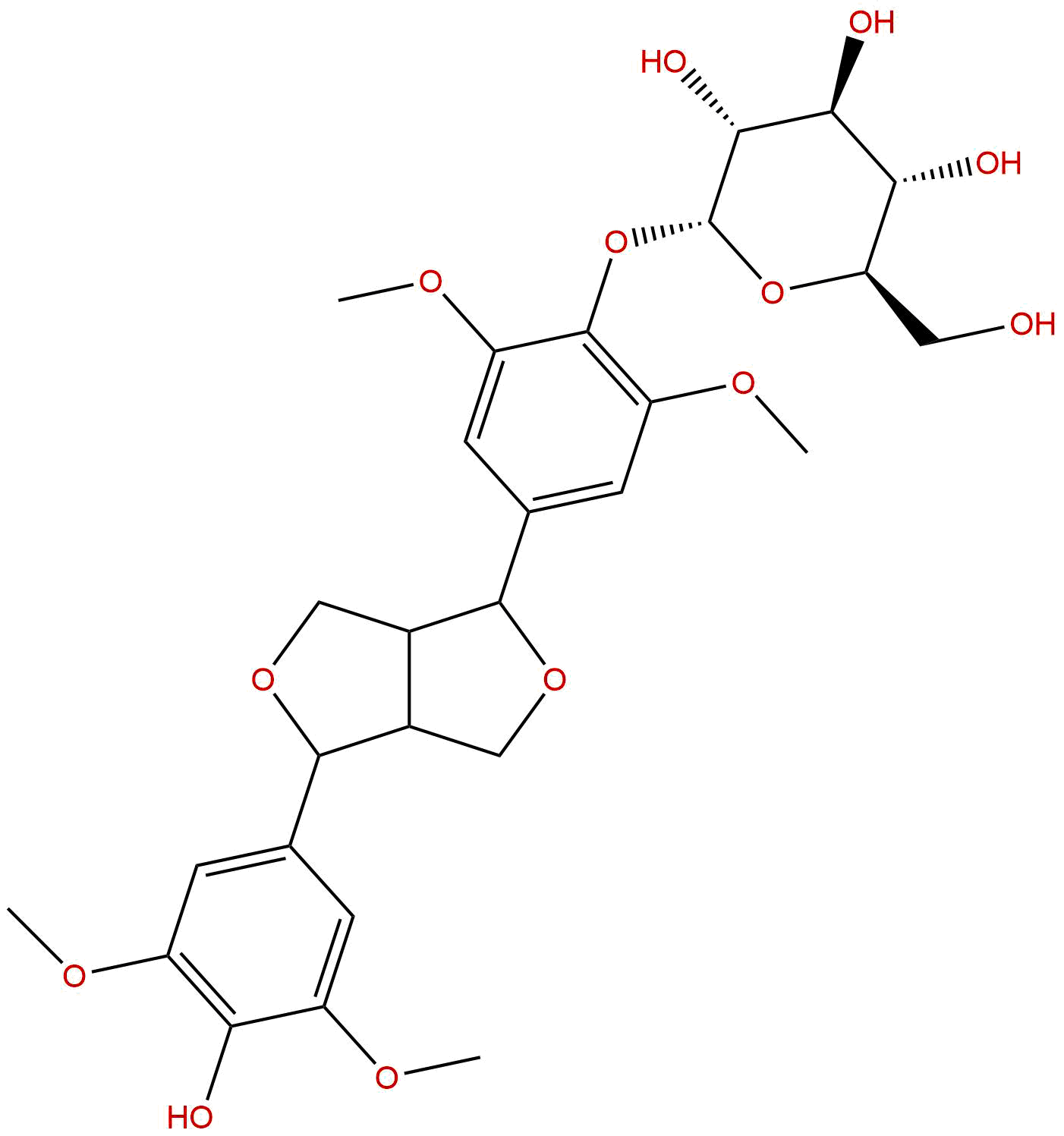
Lignin compounds are a class of phenylpropanoid dimer natural products widely present in the plant kingdom, which have attracted much attention due to their diverse chemical structures and extensive biological activities. Among them, syringaresinol and its glycoside derivatives have shown significant potential in anti-inflammatory, antioxidant, neuroprotective, and metabolic regulation aspects. Episyringaresinol 4 '- O - β - D-glucoside (ESG), as a typical furan type lignan glycoside, has a CAS number of 137038-13-2. In recent years, multiple studies have revealed that it plays a key role in regulating bone metabolism balance. By acting on multiple molecular targets related to osteoblast differentiation, osteoclast apoptosis, and bone matrix synthesis, it has shown broad prospects for preventing and treating osteoporosis. This article aims to systematically review the chemical properties, plant sources, pharmacological activities, molecular mechanisms, and medicinal properties of ESG, in order to provide comprehensive scientific basis for in-depth research and drug development of this natural product.
Chemical structure and physicochemical properties
The molecular formula of (-) - syringaresinol-4-O - β - D-glucoside is C28H36O13, with a molecular weight of 580.5830. Its core structure is the classic furan type lignin skeleton, consisting of two phenylpropanoid units (C6-C3) connected by a β - β 'bond and forming a tetrahydrofuran ring. Specifically, the compound is a monoglycoside formed by connecting the 4 '- phenolic hydroxyl group of syringaresinol with one molecule of β - D-glucose through an O-glycosidic bond. Its absolute configuration is (-) - enantiomer, and the introduction of glycosidic bonds significantly changes the polarity and bioavailability of the parent nucleus.
From the analysis of physical and chemical properties, the calculated lipid water partition coefficient (LogP) of this compound is 0.6285, indicating that it has moderate lipophilicity but overall leans towards hydrophilicity. Its topological polar surface area (TPSA) is as high as 174.99 Å ², mainly attributed to the presence of multiple ether bonds, hydroxyl groups, and a large number of oxygen atoms on glucose units in the molecule, which determine its strong polarity. The predicted water solubility value is 2.0093 (usually expressed in log mol/L or related units), indicating that it has a certain solubility in water, which is beneficial for its formulation development in aqueous media. Based on the comprehensive LogP and TPSA values, ESG meets the Rule of Five, indicating that it has good oral absorption potential. In addition, it is predicted that its ability to pass through the blood-brain barrier is low, which may help reduce central nervous system related side effects for drugs that mainly act on the peripheral skeletal system. The prediction of key safety parameters for drug development shows that there is no risk of hERG potassium channel inhibition (low potential for arrhythmia), and the Ames test prediction result is negative (0.0), indicating a low risk of genetic toxicity.
Plant sources and extraction methods
ESG is widely present in various medicinal plants, especially abundant in plants such as Magnoliaceae, Oleaceae, and Eucommia ulmoides. Common sources include but are not limited to: bark and leaves of Eucommia ulmoides Oliv., rhizomes of Acanthopanax senticosus, and fruits of Forsythia suspensa. These plants are often used in traditional medicine to strengthen tendons and bones, nourish the liver and kidneys, which forms an interesting association with the potential anti osteoporosis activity of ESG.
The extraction of ESG from plant materials is usually carried out using organic solvent extraction method. Due to ESG being a highly polar glycoside compound, methanol, ethanol, or ethanol water mixed solvents are often used for reflux extraction or ultrasound assisted extraction. For example, using 70% ethanol for hot reflux extraction of Eucommia ulmoides bark can effectively extract the lignin glycoside components from it. After filtration and concentration, the crude extract needs to be further separated and purified using column chromatography technology. Large pore adsorption resins (such as D101, AB-8) are often used for preliminary enrichment to remove impurities such as polysaccharides and proteins. Subsequently, fine separation was performed using methods such as silica gel column chromatography, reverse phase silica gel column chromatography (such as ODS-C18), and high performance liquid chromatography (HPLC). Semi preparative or preparative HPLC, using acetonitrile water or methanol water as the mobile phase, is a key step in obtaining high-purity ESG monomers. In recent years, modern separation techniques such as high-speed countercurrent chromatography have also been applied to the efficient preparation of such natural products. The optimization of extraction and separation processes aims to improve the yield and purity of ESG, laying the foundation for subsequent pharmacological activity research and quality control.
Pharmacological activity research
Numerous in vitro and in vivo pharmacological studies have confirmed that ESG has multifaceted activities in the prevention and treatment of osteoporosis.
1. Promote osteoblast activity and differentiation: At the cellular level, ESG can significantly promote the proliferation, differentiation, and mineralization of pre osteoblast cell lines such as MC3T3-E1 and hFOB1.19. Research has shown that ESG treatment can upregulate the expression and activity of key markers of osteogenic differentiation, such as alkaline phosphatase (ALP), osteocalcin (OCN), and type I collagen (COL1A1). ESG also exhibits a positive inducing effect during the differentiation of bone marrow mesenchymal stem cells (BMSCs) into osteoblasts.
2. Inhibit osteoclast generation and function: Overactivation of osteoclasts is the core of hyperactive bone resorption. ESG can inhibit the differentiation of osteoclast precursor cells (such as RAW264.7 cells) into mature osteoclasts induced by receptor activator of nuclear factor kappa B ligand (RANKL). Specifically, it manifests as reducing the formation of multinucleated osteoclasts, decreasing the activity of tartrate resistant acid phosphatase (TRAP), and inhibiting the formation of bone resorption cavities. Its function is related to inducing osteoclast apoptosis.
3. In vivo anti osteoporosis effect: The efficacy of ESG has been validated in animal models. Oral or intraperitoneal administration of ESG can effectively alleviate bone loss in a postmenopausal osteoporosis rat or mouse model induced by ovariectomy (OVX). Micro CT analysis shows that ESG therapy can significantly increase bone density (BMD) and improve bone microstructural parameters, such as an increase in the number of bone trabeculae (Tb. N) and a decrease in bone trabecular separation (Tb. Sp). Further biomechanical testing confirms that ESG can enhance the mechanical properties of bones, such as maximum load and elastic modulus. In addition, ESG has also shown a certain protective effect in glucocorticoid induced or age-related osteoporosis models.
4. Other related activities: In addition to directly regulating bone metabolism, ESG also has antioxidant and anti-inflammatory activities. It can eliminate free radicals and alleviate oxidative stress damage to osteoblasts; Simultaneously inhibiting the production of pro-inflammatory cytokines such as TNF - α, IL-1 β, IL-6, while chronic inflammation is an important environmental factor that accelerates bone loss. These auxiliary activities collectively contribute to its overall bone protective effect.
Mechanism of action and molecular targets
The anti osteoporosis effect of ESG is not achieved through a single pathway, but involves a complex multi-target regulatory network, mainly focusing on promoting osteogenesis and inhibiting osteoclastogenesis.
1. Regulating osteogenic targets and pathways:
* Activate RUNX2/SP7 axis: RUNX2 is the main regulator of osteoblast differentiation, and SP7 (Osterix) is its downstream key transcription factor. ESG can significantly upregulate the protein and mRNA expression of RUNX2 and SP7, thereby initiating the osteogenic differentiation program and driving the synthesis of bone matrix proteins such as COL1A1.
* Affects Wnt/β - catenin pathway: This pathway is crucial for bone formation. Research has shown that ESG may stabilize β - catenin protein, promote its nuclear translocation, and activate downstream osteogenic gene transcription by inhibiting the activity of glycogen synthase kinase-3 β (GSK-3 β).
* Regulating apoptosis related proteins: In osteoblasts, ESG upregulates the expression of anti apoptotic proteins BCL2 and BCL2L1 (Bcl xL), while potentially downregulating certain functional forms of pro apoptotic proteins such as MCL1 (note: MCL1 is often considered an anti apoptotic protein and its regulation is complex), to inhibit osteoblast apoptosis and prolong its lifespan and functional period.
* Acting on ESR1 (estrogen receptor alpha): Lignin compounds often exhibit phytoestrogenic activity. ESG may act as a weak agonist of estrogen receptors, partially mimicking the protective effect of estrogen on bones, promoting osteogenesis and inhibiting osteoclasts.
2. Regulating osteoclast related targets and pathways:
* Inducing osteoclast apoptosis: ESG induces mitochondrial pathway apoptosis by regulating BCL2 family proteins (such as affecting the balance of MCL1 and BCL2), thereby clearing overactivated osteoclasts.
* Inhibiting osteoclast energy metabolism: Osteoclast bone resorption requires a large amount of energy and relies on glycolysis. ESG may interfere with the glycolysis process of osteoclasts and weaken their bone resorption function by inhibiting the activity of lactate dehydrogenase A (LDHA).
* Impact on RANKL/RANK/OPG systems: ESG may upregulate the expression of osteoprotegerin (OPG), encoded by the TNFRSF11B gene. OPG, as a soluble "bait" receptor, can competitively bind to RANKL and block its binding to RANK receptors on osteoclast precursors, thereby inhibiting osteoclast differentiation.
* Inhibition of AKR1B1 (aldose reductase): AKR1B1 is involved in the formation of advanced glycation end products (AGEs) and inflammatory responses. Inhibiting AKR1B1 can alleviate oxidative stress and inflammation damage to bones, indirectly protecting bone tissue. ESG may be a potential inhibitor of AKR1B1.
In summary, ESG works synergistically on multiple targets such as RUNX2, SP7, BCL2 family, LDHA, AKR1B1, ESR1, and TNFRSF11B to promote bone formation, inhibit bone resorption, resist apoptosis, regulate energy metabolism, and alleviate oxidative stress/inflammation, collectively maintaining stable bone metabolism.
Evaluation of drug properties and pharmacokinetics
Based on its physical and chemical properties, ESG exhibits preliminary good drug like properties. Its molecular weight is moderate, and the LogP value shows good membrane permeability potential. The moderate water solubility and high TPSA suggest that it may be absorbed through a combination of passive diffusion and active transport. The absence of hERG inhibition and prediction of Ames mutagenicity risk provide early positive signals for its safety.
However, the pharmacokinetic behavior of natural product glycosides is usually complex, and ESG is no exception. At present, there are insufficient reports on the pharmacokinetic research of its system, but it can be inferred based on its structural characteristics and similar compounds:
* Absorption: After oral administration, the glycosidic bond may undergo hydrolysis under the action of β - glucosidase secreted by gut microbiota, partially converted into aglycones (eugenol). Glycosides have higher lipid solubility and may be more easily absorbed by the intestine. The prototype drug ESG may also be partially absorbed through glucose transporters (such as SGLT1) in intestinal epithelial cells.
* Distribution: Predicting low blood-brain barrier permeability indicates that it is mainly distributed in peripheral tissues and organs, including bones, liver, kidneys, etc. Whether it can achieve effective therapeutic concentration in bone tissue is the key to determining its efficacy, and further bone targeting studies are needed to confirm.
* Metabolism: ESG and its aglycones undergo phase II metabolic reactions in the body, such as glucuronidation and sulfation, forming more polar metabolites that are excreted through bile and urine. The liver cytochrome P450 enzyme system may be involved in the I-phase metabolism of its glycosides, such as demethylation and hydroxylation.
* Excretion: Mainly excreted through the kidneys in the form of metabolites.
The challenges include: low oral bioavailability (affected by first pass effects and gut microbiota metabolism); The half-life of the prototype drug in the body may be relatively short. Future pharmaceutical research may consider using nanocrystals, liposomes, phospholipid complexes, or prodrug strategies to improve their solubility, stability, and bioavailability. Meanwhile, exploring its binding with carriers that promote bone targeting, such as bisphosphonate modified nanoparticles, may achieve more precise drug delivery.
Clinical application prospects and prospects
ESG, as a multi-target and multifunctional natural lead compound for anti osteoporosis, has promising clinical application prospects, but also faces a series of challenges and directions that need to be further explored.
Potential advantages:
1. Multi target synergistic effect: Compared with traditional drugs with a single mechanism of action, ESG intervention in both osteogenesis and osteoclastogenesis processes may produce synergistic effects and more comprehensively reverse bone metabolism imbalances.
2. Dual activity potential: Combining the characteristics of "promoting formation" and "anti absorption", it has unique value especially for severe osteoporosis patients who need to stimulate new bone formation.
3. Good security foundation: Derived from traditional medicinal plants, the predicted early toxicity risk is low, and the safety of long-term use may be better than some chemically synthesized drugs.
4. Widely sourced: It can be obtained from various renewable plant resources, providing raw material guarantee for sustainable development.
Challenges and future research directions:
1. In depth preclinical development: Urgent need to complete the pharmacological, pharmacokinetic, and toxicological evaluations of the system. Clarify its effective dosage, long-term toxicity, reproductive toxicity, etc. in different animal models, especially large animals.
2. Refinement of mechanism of action: At present, the understanding of targets is mostly based on association analysis and preliminary verification, which requires the use of gene knockout, chromatin immunoprecipitation (ChIP), surface plasmon resonance (SPR) and other technologies to directly verify the interaction mode and precise regulatory mechanism between ESG and key targets (such as RUNX2, LDHA, AKR1B1).
3. Structural optimization and derivative development: Using it as the parent nucleus for structural modification, such as modifying the sugar moiety and benzene ring substituents, aims to enhance its activity, metabolic stability, oral bioavailability, and bone targeting.
4. Pharmaceutical research: Develop advanced delivery systems suitable for oral or injectable administration to overcome its drug weakness.
5. Clinical translational studies: After completing sufficient preclinical research, gradually advance human clinical trials to evaluate its efficacy and safety in patients with osteoporosis.
Looking ahead, ESG is not only expected to be developed as a new type of anti osteoporosis drug (monotherapy or combination therapy), but its unique molecular framework also provides valuable templates for designing new bone metabolism regulators. In addition, its potential application in metabolic diseases (such as complications of diabetes, involving AKR1B1) and inflammatory related bone diseases is also worth expanding research.
Conclusion
(-) - Syriac resin phenol-4-O - β - D-glucoside is a furan type lignan glycoside isolated from various medicinal plants. Based on existing research, this compound exhibits significant anti osteoporosis potential by promoting osteoblast differentiation and function, inhibiting osteoclast generation and activity, and reducing oxidative stress and inflammation through a multi-target and multi pathway mechanism of action. Its good drug like prediction and low safety risk prediction have laid the foundation for its further development. Although a lot of in-depth work is still needed in terms of systematic pharmacokinetics, precise mechanism of action, and clinical translation, ESG is undoubtedly a highly valuable natural lead compound for anti osteoporosis research. With the cross integration of modern pharmacology, medicinal chemistry, and pharmaceutical technology, ESG and its derivatives are expected to provide new strategies and drug choices for the prevention and treatment of osteoporosis, while also demonstrating the enormous potential of exploring modern therapeutic drugs from the treasure trove of traditional medicinal plants.