Introduction/Overview
Gout is a crystal related joint disease caused by the deposition of monosodium urate salts, directly related to hyperuricemia caused by purine metabolism disorders and/or reduced uric acid excretion. As a common type of inflammatory arthritis, the severe pain during acute attacks and potential joint and kidney damage during chronic phases seriously affect the quality of life of patients. Traditional anti gout drugs, such as nonsteroidal anti-inflammatory drugs, colchicine, and glucocorticoids, are effective in controlling acute inflammation, but often come with side effects such as gastrointestinal reactions, bone marrow suppression, or metabolic disorders. Therefore, exploring efficient and low toxicity new anti gout drugs has always been an important direction for drug development. Colchicine, as a classic alkaloid extracted from plants of the genus Colchicine, has been used since ancient times to treat acute attacks of gout. Its core mechanism of action is to inhibit microtubule polymerization by binding to microtubule proteins, thereby interfering with cell mitosis and cytoskeleton function, and thereby inhibiting neutrophil chemotaxis and inflammatory activity. However, its treatment window is narrow, the therapeutic dose is close to the toxic dose, and severe gastrointestinal toxicity and bone marrow suppression limit its widespread application. In this context, structural modification of colchicine in order to obtain derivatives with comparable or better activity and significantly reduced toxicity has become an important strategy for optimizing the structure of natural products. 3-Demethylcolchicine (CAS: 7336-33-6) is a key structural analogue of colchicine. It removes the methoxy group at position 3 of the C-ring of colchicine, which may significantly alter its interaction mode, physicochemical properties, and biological activity spectrum with the target. This article aims to systematically review the chemical properties, plant sources, pharmacological activities, mechanisms of action, medicinal properties, and application prospects of 3-demethylated colchicine in the field of gout resistance, in order to provide comprehensive academic references for the in-depth research and potential development of this compound.
Chemical structure and physicochemical properties
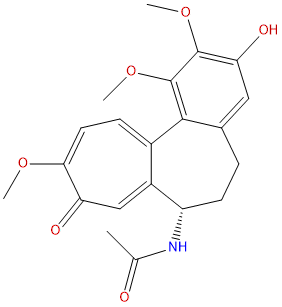
The molecular formula of 3-demethylated colchicine is C ₂₁ H ₂∝ NO ₆, with a molecular weight of 385.4160. Its core structure is highly similar to colchicine, both belonging to the colchicine alkaloid class, with a tricyclic skeleton structure: a seven membered A ring (tropolone ring) is connected to a seven membered B ring through a bridge bond, and the B ring is fused with a six membered C ring (nitrogen-containing aromatic ring). The key difference between 3-demethylated colchicine and colchicine (with the structure of (-) - N - (5,6,7,9-tetrahydro-1,2,3,10-tetramethoxy-9-oxobenzo [a] hepteno-7-yl) acetamide) is that 3-demethylated colchicine lacks a methoxy group (- OCH ∝) at the 3rd position of the C ring, retaining only hydroxyl (- OH) or hydrogen (depending on the specific tautomer), and its system is named (-) - N - (5,6,7,9-tetrahydro-1,2,110-trimethoxy-9-oxobenzo [a] hepteno-7-yl) acetamide. This demethylation modification has a direct impact on its physicochemical properties.
The parameters related to drug properties calculated and experimentally determined show that its lipid water partition coefficient (LogP) is 1.4590, indicating that the compound has moderate lipophilicity, between hydrophilic and lipophilic, which is beneficial for its penetration of cell membranes but avoids the distribution and metabolic problems caused by excessive lipid solubility. The topological polar surface area (TPSA) is 94.0900 Å ², reflecting the degree to which polar atoms (such as oxygen and nitrogen) in the molecule are exposed to solvents. This value suggests that the molecule has moderate polarity, which may affect its membrane permeability and solubility. The water solubility value is 0.1641 mg/mL, which belongs to the category of slight solubility. This may be a potential limiting factor for its oral bioavailability, but with the assistance of formulation technology (such as making salts or using solubilizers), it is expected to improve. The blood-brain barrier permeability is predicted to be 'low', which may be an advantage for anti gout drugs that primarily target peripheral immune cells, as it reduces the potential risk of central neurotoxicity. The key toxicity warning indicators show that it has no significant inhibitory effect on hERG potassium channels (hERG inhibition: No), indicating a low risk of causing QT interval prolongation and apical torsion type ventricular tachycardia in the heart. The Ames test result is 0.6 (usually expressed as the ratio of the number of revertant mutant colonies to the control, less than 2 is considered negative), indicating a low risk of mutagenicity, but further in vivo genetic toxicity testing is needed to confirm. These physicochemical and preliminary toxicological parameters together outline a potential lead compound profile with development value.
Plant sources and extraction methods
3-demethylated colchicine is not an independent and abundant component widely present in nature. It mainly exists as a biosynthetic precursor or metabolite of colchicine in plants, and may also be obtained through chemical or biological transformation after extraction of colchicine.
-
Plant-based Its main natural source is the same as colchicine, concentrated in plants of the lily family and the genus Colchicine, especially in the autumn water fairy. The biosynthetic pathway of colchicine involves a series of methylation, oxidation, and cyclization steps in tissues such as the bulbs of Autumn Water Fairy. 3-demethylated colchicine is considered an intermediate in this pathway. Therefore, a small amount of this compound can be detected in fresh plant extracts. In addition, other plants in the same family such as Jialan and Shanci mushroom (Lijiangshan Cigu) may also contain trace amounts of analogues.
-
Extraction and Separation Methods:
- Traditional extraction Organic solvents such as methanol, ethanol, and chloroform are commonly used for leaching or reflux extraction of dried and crushed plant materials. After concentration, the crude extract can be extracted using acidic water (such as dilute hydrochloric acid or acetic acid) to exploit the weak alkalinity of colchicine alkaloids. After alkalization, organic solvents can be used for back extraction to preliminarily enrich the total alkaloids.
- Separation and purification Due to the close physical and chemical properties of 3-demethylated colchicine and other structurally similar compounds such as 2-demethylated and 10 demethylated derivatives, separation and purification are key technical challenges. The conventional methods include:
- column chromatography Silica gel column chromatography is the most commonly used method, which uses gradient elution (such as chloroform methanol mixed solvent) for preliminary separation. Reverse phase silica gel (such as C18) column chromatography is more effective in separating colchicine derivatives with similar polarity.
- Preparation type high-performance liquid chromatography This is the most effective way to obtain high-purity 3-demethylated colchicine. Typically, a reverse phase C18 chromatography column is used, with methanol water or acetonitrile water (often containing small amounts of buffer salts such as phosphate or ammonium formate to improve peak shape) as the mobile phase for gradient elution. The target fraction is monitored and collected using a UV detector (colchicine has characteristic absorption at~350 nm).
- Chemical synthesis and semi synthesis Considering the low yield and high cost of direct isolation from plants, selective removal of the 3-methyl group from abundant colchicine raw materials through chemical semi synthesis is a more feasible large-scale preparation approach. The method may involve selective protection of other functional groups, followed by treatment with strong demethylation reagents (such as BBr ∝, AlCl ∝, and other Lewis acids), and finally deprotection to obtain the target product. Biocatalytic demethylation is also a promising green synthesis method.
Pharmacological activity research
The pharmacological activity research of 3-demethylated colchicine mainly focuses on its anti-inflammatory and anti gout effects, and compares it with the parent compound colchicine.
-
anti-inflammatory activity Numerous in vitro and in vivo studies have shown that 3-demethylated colchicine retains the core anti-inflammatory properties of colchicine. In acute inflammation models such as carrageenan induced rat paw swelling and acetic acid-induced increased intra-abdominal capillary permeability in mice, this compound exhibits significant inhibitory effects on swelling and exudation. Compared with colchicine, there are different literature reports on its anti-inflammatory strength. Some studies have shown that its activity is comparable or slightly lower. However, it is worth noting that the toxic reactions (such as diarrhea incidence) at its effective dose are often lower than those of colchicine, indicating that its therapeutic index may be improved.
-
Anti gout activity This is its most distinctive and promising pharmacological activity. In the classic rat or mouse model of acute gouty arthritis induced by microcrystalline sodium urate, 3-demethylcolchicine can dose dependently reduce joint swelling, decrease the infiltration of inflammatory cells (mainly neutrophils), and inhibit the levels of pro-inflammatory cytokines (such as IL-1 β, TNF - α) in synovial tissue. Its intervention effect is significant during the acute inflammation phase, which is consistent with the clinical positioning for the treatment of acute gout attacks. Research has shown that its anti gout effect is closely related to the inhibition of NALP3 inflammasome activation and the reduction of IL-1 β mature release (see next chapter for details).
-
Other potential activities:
- Anti mitotic/anti-tumor activity As a microtubule binding agent, 3-demethylated colchicine can also inhibit microtubule polymerization, block the cell cycle in the M phase, and thus inhibit tumor cell proliferation. However, its anti microtubule activity is usually weaker than that of colchicine, which may be due to the loss of the 3-methoxy group affecting its affinity with microtubule binding pockets. The 'attenuation' of this activity may actually translate into lower cytotoxicity in anti gout applications, which is a favorable characteristic.
- immunomodulation In addition to inhibiting neutrophil chemotaxis, it may also affect the functions of other immune cells, such as macrophage activation and T cell response, but these effects require further research.
Mechanism of action and molecular targets
The anti gout mechanism of 3-demethylated colchicine is multi-target and multi link, centered around inhibiting the activation of NALP3 inflammasome and downstream inflammatory cascade reactions. Its mechanism of action is similar to that of colchicine in its mother nucleus, but there may be slight differences.
-
Core mechanism: Inhibition of NALP3 inflammasome activation The initiating factor of acute gout attack is the formation of urate microcrystals in the joint cavity. These MSU crystals can be recognized by innate immune cells such as macrophages, activate intracellular pattern recognition receptors through various pathways, and assemble into a multi protein complex called NALP3 inflammasome. The target of 3-demethylated colchicine is not directly targeted at a single protein, but rather affects the assembly and activation of inflammasomes by interfering with microtubule dynamics.
- Target interaction Research has shown that colchicine and its active derivatives can bind to the beta subunit of microtubule proteins, inhibit microtubule polymerization, and disrupt the cytoskeleton. The disturbance of this microtubule network may prevent its complete activation by affecting intracellular transport, ion channel activity (such as inhibiting P2X7 receptor-mediated K ⁺ efflux), or directly interfering with the spatial aggregation of NALP3 inflammasome components (such as NLRP3, ASC, pro-caspase-1).
- Downstream effects Activated NALP3 inflammasome will cleave pro-caspase-1 and generate active ones CASP1 Activated CASP1 further cleaves inactive precursor cytokines pro-IL-1 β and pro-IL-18 into their mature, highly pro-inflammatory forms IL-1βAnd IL-18. 3-demethylated colchicine significantly reduces inflammasomes by inhibiting them upstream IL-1βThe generation and release of gouty inflammation are key links in its control. In addition,IL1B The expression of genes is also regulated by MSU crystals and early inflammatory signals (such as TNF - α), and colchicine compounds may indirectly inhibit this.
-
Related targets and pathways:
- XDH Xanthine oxidoreductase is a key enzyme involved in uric acid production. Although uric acid lowering drugs such as allopurinol directly inhibit XDH, colchicine and its derivatives mainly act on the inflammatory process and have no direct inhibitory effect on XDH. However, by controlling inflammation, it may indirectly improve the local environment, but this is not its main target of action.
- P2RX7 Purinergic receptor P2X7 is one of the important upstream signals for MSU crystal activation of inflammasomes. Extracellular ATP activates P2RX7, causing K ⁺ efflux and triggering inflammasome assembly. There is evidence to suggest that colchicine may indirectly inhibit the microtubule dependent P2RX7 receptor pathway by affecting its distribution or function on the membrane.
- NLRP3 and MEFV NLRP3 is the core sensor protein of inflammasomes. The MEFV gene encodes the pyrin protein, which can also form inflammasomes under certain conditions. Colchicine is a first-line treatment for familial Mediterranean fever (associated with MEFV mutations), indicating its ability to regulate pyrin inflammasomes. 3-demethylated colchicine is likely to inherit this function and has regulatory abilities on NALP3 and pyrin inflammasomes.
In summary, 3-demethylated colchicine inhibits the entire gout inflammatory pathway from MSU crystal recognition (affecting P2RX7, etc.) to inflammasome assembly (affecting NLRP3, microtubule dependent aggregation), to key inflammatory factor maturation (inhibiting CASP1, reducing IL-1 β) through its unique "microtubule interference" core function, targeting multiple pathways.
Evaluation of drug properties and pharmacokinetics
Based on its physicochemical parameters and preliminary pharmacological and toxicological data, a comprehensive evaluation of the pharmacological properties of 3-demethylcolchicine was conducted, and its possible pharmacokinetic characteristics were explored.
-
Absorption, distribution, metabolism, and excretion prediction:
- absorb Moderate LogP and TPSA values suggest that it has a certain potential for oral absorption. But the characteristic of slight solubility may limit its dissolution rate in the gastrointestinal tract, becoming the rate limiting step of absorption. Optimization of formulations (such as nanocrystals, solid dispersions, cyclodextrin inclusion complexes) is key to improving their oral bioavailability.
- distribution Moderate molecular weight, acceptable lipid solubility, expected to be widely distributed in the body to the site of inflammation. The low blood-brain barrier permeability makes it mainly distributed in peripheral tissues, which is in line with the positioning of anti peripheral joint inflammation and reduces the risk of central side effects.
- Metabolism As a derivative of colchicine, its metabolic pathway may be similar. Mainly metabolized by the liver cytochrome P450 enzyme system (especially CYP3A4), demethylation, oxidation and other reactions occur. The absence of methyl groups in the three positions may alter their metabolic profile and produce metabolites different from colchicine, which requires experimental verification. Co administration with strong CYP3A4 inhibitors such as clarithromycin and ketoconazole may significantly slow down their metabolism and increase the risk of toxicity.
- excretion The prototype drug and its metabolites may be mainly excreted through bile and kidneys. Patients with renal insufficiency should be cautious as slow excretion may lead to accumulation.
-
safety evaluation:
- Advantage Compared with colchicine, the most anticipated improvement of 3-demethylated colchicine is its potential increased safety. Structural modifications may reduce its strong inhibition of mitosis in gastrointestinal smooth muscle cells, thereby potentially alleviating severe diarrhea and vomiting reactions. A negative hERG result indicates a low risk of cardiac toxicity. The negative Ames test preliminarily supports that the genetic toxicity risk is controllable.
- challenge Its core mechanism of action is still related to microtubule binding, so bone marrow suppression (affecting rapidly dividing hematopoietic cells) remains a risk that requires close attention. Although its activity may be weaker than that of colchicine, its effects on white blood cells and platelets still need to be evaluated in detail in dose escalation and long-term toxicity tests. Hepatotoxicity also needs to be fully investigated in preclinical studies.
-
Treatment window In theory, the therapeutic window (range between effective dose and toxic dose) of 3-demethylated colchicine is expected to be wider than that of colchicine, as its anti-inflammatory activity may be retained while its cytotoxicity may be reduced. This is one of the decisive factors in whether it can successfully replace or supplement existing colchicine therapy.
Clinical application prospects and prospects
3-demethylated colchicine, as a promising structural optimization product of colchicine, has clinical application prospects mainly focused on gout and related inflammatory diseases, but also faces challenges.
-
Main application directions:
- Alternative treatment for acute gout attacks If it can be confirmed in clinical trials that it has anti-inflammatory and analgesic effects equivalent to or slightly better than low-dose colchicine, and has significantly better gastrointestinal tolerance, it is expected to become a first-line or second-line choice for acute gout, especially for patients who cannot tolerate traditional colchicine or nonsteroidal anti-inflammatory drugs.
- Prevention of Gout Inflammation In the early stages of uric acid lowering treatment, low-dose colchicine is often needed to prevent the onset of "crystal pain" caused by fluctuations in blood uric acid. If 3-methylcolchicine is safer, it may be more suitable for use in preventive scenarios that require long-term use for weeks to months.
- Other NALP3 inflammasome related diseases In view of its mechanism of action, this compound may have therapeutic potential for diseases related to the over activation of NALP3 or pyrin inflammasome, such as familial Mediterranean fever, some types of periodic fever syndrome, atherosclerosis (inflammatory component), and expand its application range.
-
Development Challenges and Strategies:
- challenge:① Synthesis and Cost A large-scale, high-purity, and low-cost synthesis process is a prerequisite for industrialization. ② Confirmatory pharmacological and toxicological data Systematic preclinical studies are required, including standardized pharmacology (multiple gout models), long-term toxicity, reproductive toxicity, complete genotoxicity package, safety pharmacology, etc., to comprehensively evaluate the risk benefit ratio. ③ Clinical trial design How to prove the safety advantage rather than just non inferiority in a head to head comparison with existing effective drugs (colchicine) is a difficult point in clinical trial design. ④ Patents and Markets Colchicine is an ancient medicine, and the novelty, creativity, and practicality of its derivatives require strong intellectual property protection.
- Strategy:① Exploration of combination therapy Study the synergistic effect of its combination with uric acid lowering drugs (such as febuxostat and benzbromarone), develop fixed dose compound formulations, and provide a comprehensive solution for the management of acute and chronic phases of gout. ② New delivery system Using nanotechnology, targeted agents, etc. to improve the targeting of inflammatory sites, further reducing systemic exposure and side effects. ③ Biomarker guided therapy Explore biomarkers that can predict its efficacy or toxicity, and achieve personalized medication.
Conclusion
3-demethylated colchicine, as a key structural modifier of colchicine, represents an important research direction for improving its therapeutic index through rational structural optimization starting from classical natural products. Existing evidence suggests that the compound retains the core pharmacological activity of colchicine in combating gouty inflammation by interfering with microtubule dynamics and inhibiting NALP3 inflammasome activation. At the same time, it exhibits potential safety advantages in preliminary pharmacological parameters, such as lower hERG inhibition risk and possible better therapeutic window. However, there is still a long road to explore from lead compounds to candidate drugs and ultimately to marketed drugs. The exact efficacy toxicity balance relationship, detailed pharmacokinetic characteristics, large-scale preparation process, and final clinical validation all require in-depth and rigorous research in the future to clarify. If these challenges can be successfully overcome, 3-demethylated colchicine is expected to provide a safer and more effective treatment option for gout patients, and may benefit other inflammasome driven diseases, demonstrating the sustained vitality of natural product structural modifications in modern drug development.