Introduction/Overview
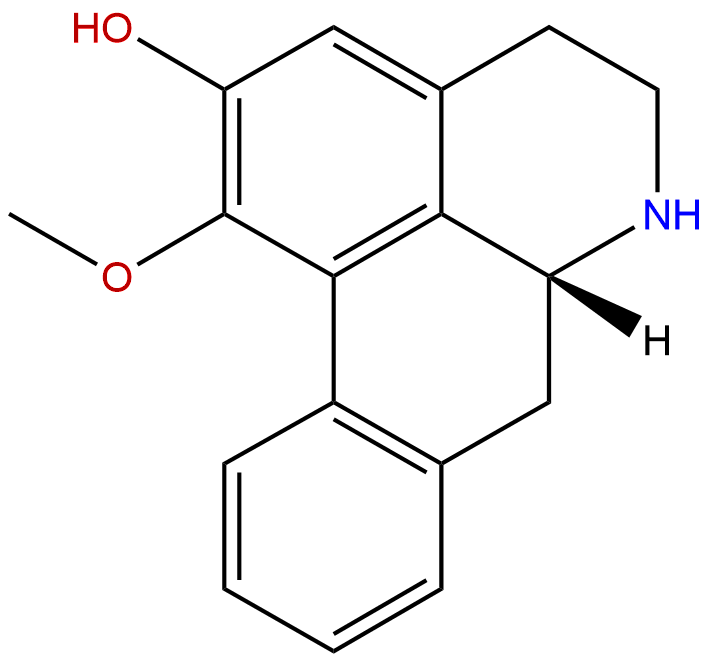
Natural products have long been an important treasure trove for the discovery and development of new drugs, among which alkaloid compounds have attracted much attention due to their structural diversity and significant biological activity. As an important subtype of alkaloids, aporphine type isoquinoline alkaloids are widely distributed in various plants such as Magnoliaceae, Annonaceae, and Papaveraceae, exhibiting various pharmacological activities including neuroprotection, anti-inflammatory, and anti-tumor effects. Asimilobine (CAS number: 6871-21-2) is one of the representative tetracyclic aporphine alkaloids. Since its first isolation and identification, baptine has entered the field of researchers due to its unique chemical structure and inhibitory effect on the dopamine biosynthesis pathway. Subsequent studies have continuously revealed its broader pharmacological activity spectrum, including serotonin receptor antagonism, anti malaria, anti-cancer, and anti-inflammatory effects that have received much attention in recent years. Its target involves multiple key signaling pathways and molecules, such as IL-6/STAT3, NF - κ B, TRP channels, etc., indicating its potential application value in the treatment of inflammation related diseases and cancer. However, as a natural active molecule, its pharmacological properties also face challenges such as potential cardiac toxicity (hERG inhibition). This article aims to provide a systematic review of the chemical properties, plant sources, pharmacological activities, mechanisms of action, pharmacological evaluation, and clinical application prospects of baptine, in order to provide comprehensive scientific references for the in-depth research and development of this compound.
Chemical structure and physicochemical properties
The chemical name of Baba alkaloid is 1,2-dimethoxy-6a β - aporphin-10-ol, with a molecular formula of C17H17NO2 and a molecular weight of 267.3280. Its core structure is the aporphine nucleus, which is a four ring system formed by a benzylisoquinoline skeleton connected by C-C bonds. Specifically, BaPo alkaloid is connected to a methoxy group (- OCH3) at the 1st and 2nd positions of the A ring, and a hydroxyl group (- OH) at the 10th position of the D ring. This specific substitution pattern has a decisive impact on its physicochemical properties and biological activity.
From the analysis of physical and chemical properties, the lipid water partition coefficient (LogP) of BaPo alkaloid is 2.7274, indicating that the compound has moderate lipophilicity, which is beneficial for its penetration into cell membranes. Its topological polar surface area (TPSA) is 41.49 Å ², relatively small, which is related to its molecule containing only two methoxy groups and one hydroxyl group as hydrogen bond acceptors/donors. Low water solubility (approximately 0.275 mg/mL) is a typical characteristic of it as a natural alkaloid, which may affect its formulation development and in vivo bioavailability. These basic physicochemical parameters provide preliminary basis for its subsequent pharmacokinetic behavior and drug efficacy evaluation.
Plant sources and extraction methods
BaPo alkaloid is mainly found in Magnoliaceae plants and is one of the characteristic secondary metabolites of this family. Common plant sources include Magnolia officinalis, Magnolia biondii, Magnolia coco, and certain species in the Annonaceae family such as Annona squamosa. In these plants, baptine often coexists with other structurally similar aporphine alkaloids, such as hesperidine and camptothecin.
Its extraction and separation usually follow the conventional process of natural product chemistry. Firstly, the dried plant materials (such as bark, root bark, or seeds) are crushed and subjected to cold soaking or heating reflux extraction using polar organic solvents (such as methanol, ethanol, or chloroform methanol mixture) to fully extract the alkaloid components. Due to the presence of free alkaloids in the form of alkaloids, the extract can be concentrated and dissolved in acidic water (such as dilute hydrochloric acid or dilute sulfuric acid) to convert the alkaloids into salts and transfer them to the aqueous phase for separation from non alkaline impurities. The aqueous phase is further alkalized (such as ammonia or sodium hydroxide) to alkalinity, allowing the alkaloids to dissociate and precipitate again, and then back extracted with organic solvents (such as chloroform, ethyl acetate). The crude alkaloid mixture obtained needs to be further purified by column chromatography, often using silica gel, alumina or reverse phase silica gel (such as C18) as the stationary phase, and gradient elution with different ratios of petroleum ether ethyl acetate, chloroform methanol and other solvent systems. High performance liquid chromatography (HPLC) or preparative thin layer chromatography (PTLC) is a key step in obtaining high-purity baptine monomers. Structural identification involves the comprehensive use of spectroscopic techniques such as nuclear magnetic resonance (NMR, including 1H NMR and 13C NMR), mass spectrometry (MS), infrared spectroscopy (IR), and ultraviolet spectroscopy (UV).
Pharmacological activity research
A large number of in vitro and in vivo pharmacological studies have shown that baptine has multiple biological activities, which form the basis of its potential medicinal value.
-
Neuropsychiatric system activity BaPo alkaloid was initially studied for its impact on the dopaminergic system. Research has shown that it is a competitive inhibitor of tyrosine hydroxylase, which is the rate limiting enzyme that catalyzes the conversion of tyrosine to dopa (L-DOPA), thereby inhibiting dopamine biosynthesis. In addition, baptine has been shown to be an antagonist of serotonin receptors, particularly the 5-HT2A and 5-HT2C subtypes. These effects suggest that baptine may have regulatory potential for diseases associated with dysfunction of the dopamine and serotonin systems, such as Parkinson's disease, schizophrenia, depression, etc., but further research is needed.
-
anti-inflammatory activity This is one of the most active pharmacological directions in recent years for the study of palmatine. In various inflammatory cell models (such as macrophages stimulated by lipopolysaccharide LPS) and animal models (such as carrageenan induced paw swelling in rats and acetic acid-induced increased peritoneal capillary permeability in mice), baptine has shown significant anti-inflammatory effects. It can effectively inhibit pro-inflammatory mediators (such as prostaglandin E2, PGE2) and cytokines (such as tumor necrosis factor - α, TNF - α); The production of interleukin-6 and IL-6.
-
Antimalarial activity BaPo alkaloid exhibits certain in vitro inhibitory activity against Plasmodium falciparum. Its mechanism of action may be different from traditional artemisinin or chloroquine, involving interference with the metabolism or membrane function of malaria parasites, but the specific mechanism is not fully understood, and its activity intensity is usually weaker than first-line antimalarial drugs.
-
anticancer activity Preliminary studies have shown that baptine has growth inhibitory and apoptosis inducing effects on certain cancer cell lines. For example, in hepatocellular carcinoma, breast cancer and other cell lines, barbarine can inhibit cell proliferation, accompanied by the activation of caspase family proteins and changes in apoptosis related protein expression. Its anti-cancer activity may be related to its anti-inflammatory effect and induction of cell cycle arrest.
-
Other activities There are also reports that baptine has antioxidant and analgesic effects (possibly related to anti-inflammatory and TRP channel effects).
Mechanism of action and molecular targets
The multiple pharmacological activities of BaPo alkaloid stem from its regulatory effects on multiple key signaling pathways and molecular targets, especially in the field of anti-inflammatory, and its network of action is relatively clear.
-
Inhibition of NF - κ B signaling pathway Nuclear factor kappa B (NF - κ B) is the core transcription factor in inflammatory response. BaPo alkaloid can inhibit the activation of I κ B kinase (IKK, encoded by the IKBKB gene) induced by inflammatory stimuli such as LPS, thereby preventing the phosphorylation and degradation of I κ B α protein, resulting in the retention of NF - κ B dimers (such as p65/RELA) in the cytoplasm, which cannot enter the nucleus to initiate the transcription of many pro-inflammatory genes such as TNF - α, IL-6, and inducible nitric oxide synthase (iNOS/NOS2). This is one of the main mechanisms by which it downregulates key inflammatory factors such as TNF, IL-6, and NOS2.
-
Intervention on JAK/STAT signaling pathway After binding to its receptor, interleukin-6 (IL-6) activates downstream JAK kinase, which in turn phosphorylates and activates signal transducer and activator of transcription factor 3 (STAT3). Activated STAT3 promotes the expression of genes related to inflammation and cell survival by entering the nucleus. BaPo alkaloids can inhibit the production of IL-6 and interfere with the phosphorylation or nuclear translocation of STAT3, thereby blocking this important pro-inflammatory and pro cancer pathway.
-
The impact on inflammasome activation The assembly and activation of inflammasomes (such as NLRP3 inflammasome) can lead to self splicing activation of caspase-1 (CASP1), thereby mediating the maturation and release of IL-1 β and IL-18. Studies have shown that baptine may alleviate inflammasome driven inflammatory responses by inhibiting the assembly of NLRP3 inflammasomes or the activity of caspase-1.
-
Inhibition of cyclooxygenase (COX)BaPo alkaloids exhibit inhibitory activity against prostaglandin endoperoxide synthase 1 (PTGS1/COX-1). COX-1 is a constitutive expression isoform involved in maintaining physiological functions and mediating some inflammatory responses. Inhibition of COX-1 may contribute to its anti-inflammatory and analgesic effects, but it may also pose a risk of gastrointestinal side effects.
-
Regulation of Transient Receptor Potential (TRP) Channels BaPo alkaloid has been reported as a modulator/antagonist of TRPV1 and TRPA1 channels. These two channels are important sensors for pain and neurogenic inflammation. By antagonizing these channels, palmatine may directly inhibit the activation of nociceptive sensory neurons, thereby producing analgesic and anti neuroinflammatory effects.
In summary, the anti-inflammatory effect of baptine is exerted through multiple targets and pathways, which provides potential advantages for its treatment of complex inflammatory diseases.
Evaluation of drug properties and pharmacokinetics
Despite its diverse biological activities, the evaluation of drug likelihood as a candidate drug reveals both its advantages and challenges.
According to the provided parameters, the molecular weight of baptine (267.33) meets the Lipinski "Five Rules" requirement for oral drug molecular weight (<500). A moderate LogP value (2.73) suggests good membrane permeability. Its TPSA value (41.49 Å ²) is much lower than the threshold commonly believed to affect intestinal absorption (>140 Å ²), which theoretically favors its oral absorption. It is worth noting that its "blood-brain barrier permeability" is marked as "high", which is consistent with its moderate lipophilicity and small polar surface area, and also provides the possibility for it to act on central nervous system targets such as the dopaminergic and serotonergic systems.
However, its medicinal properties face several key challenges:
1. Poor water solubility The water solubility of 0.275 mg/mL belongs to the category of slight solubility, which may lead to low solubility after oral administration and become the main factor limiting its bioavailability. Formulation strategies such as making solid dispersions, cyclodextrin inclusion complexes, or nanocrystals may be necessary means to improve their solubility and absorption.
2. Potential cardiac toxicity The data shows that BaPo alkaloid has "hERG inhibition" activity. The hERG potassium channel is crucial for maintaining action potential repolarization in myocardial cells. Inhibiting this channel can lead to QT interval prolongation and increase the risk of causing apical torsion type ventricular tachycardia (TdP), which is a serious side effect that needs to be strictly avoided in drug development. This characteristic is a major obstacle to the development of baptine as a systemic drug (especially for long-term use), which requires in-depth in vitro and in vivo cardiac safety assessments and consideration of structural modifications to eliminate this toxicity.
3. Genetic toxicity risk The Ames test result is 0.6 (usually expressed as the ratio of the number of revertant mutant colonies to the control, which is generally considered negative if the ratio is less than 2 and there is no dose dependence). Although this value does not clearly exceed the conventional positive threshold (usually 2 times), it is close to 1, indicating the need for more comprehensive genetic toxicity testing (such as micronucleus test, chromosome aberration test) to clarify its potential risks.
The pharmacokinetic research on bababine is currently relatively limited. Based on its physicochemical properties, it can be inferred that it may be absorbed in the small intestine after oral administration, but its bioavailability may not be high due to first pass effects and metabolism. Its metabolic pathway in the body may involve II binding reactions such as oxidation, demethylation, and glucuronic acid binding or sulfation of the liver cytochrome P450 enzyme system. The detailed absorption, distribution, metabolism, and excretion (ADME) parameters need to be elucidated through standardized pharmacokinetic experiments.
Clinical application prospects and prospects
The clinical application prospects of baptine are mainly based on its solid multi-target anti-inflammatory and potential anti-cancer activities, but its development path needs to be carefully planned.
- Inflammatory related diseases Given its inhibitory effect on multiple key inflammatory pathways such as NF - κ B, JAK/STAT, and inflammasomes, baptine is expected to be developed for the treatment of chronic inflammatory diseases such as rheumatoid arthritis, inflammatory bowel disease, neuroinflammation (such as inflammatory components in Alzheimer's disease and Parkinson's disease), asthma, and dermatitis. Its multi-target characteristics may bring better therapeutic effects or overcome the problem of single target drug resistance.
- pain management By antagonizing the TRPV1/TRPA1 channel and inhibiting COX and inflammatory mediators, baptine may become a novel analgesic, particularly suitable for inflammatory pain and neuropathic pain.
- neoadjuvant therapy Its anti-cancer activity and inhibition of inflammatory signals in the tumor microenvironment make it possible to use it as an adjuvant drug in combination with chemotherapy, radiotherapy, or immunotherapy to enhance anti-tumor efficacy or reduce treatment-related side effects.
- Neurological disorders Its ability to regulate the dopamine and serotonin systems provides theoretical possibilities for its application in diseases such as Parkinson's disease and depression, but more precise targeting is needed to avoid side effects.
However, to achieve its clinical application, it is necessary to overcome the aforementioned pharmaceutical bottleneck:
- Security optimization The primary task is to address the issue of hERG inhibition. A feasible strategy is to modify the structure of baptine through medicinal chemical methods, while preserving its core pharmacophore and altering its interaction with the hERG channel lumen region. At the same time, a comprehensive assessment of its genetic toxicity and long-term toxicity is required.
- Formulation development Develop advanced delivery systems, such as nano formulations, liposomes, or prodrug strategies, to improve their bioavailability and targeting in response to their low water solubility.
- In depth mechanism research It is necessary to more accurately elucidate its mechanism of action and main contribution targets in specific disease models, and distinguish the different mechanism pathways of its therapeutic effects and potential side effects.
- Explore local administration: In view of the possible cardiotoxicity risk of its systematic administration, priority should be given to the development of topical preparations (such as gel or patches for skin inflammation and arthritis) or local injections, which may be a faster and safer transformation path.
Conclusion
As a type of aporphine alkaloid derived from Magnoliaceae plants, baptine has become an attractive molecule in natural product pharmacology research due to its unique chemical structure and extensive pharmacological activity, especially its multi-target anti-inflammatory effect. It demonstrates the potential for treating various inflammatory diseases by inhibiting key inflammatory nodes such as NF - κ B, STAT3, inflammasomes, and regulating functions such as TRP channels. However, its poor solubility, especially the potential inhibition of hERG channels, poses a risk of cardiac toxicity that must be overcome on its path to drug development. Future research should focus on optimizing its safety profile through rational structural modifications, improving its pharmaceutical properties using modern formulation technology, and exploring its therapeutic window and mechanism of action in depth with precise disease models. Only by comprehensively addressing these scientific and technological challenges can BaPo alkaloid be truly promoted from a potential natural active molecule to a new drug candidate compound with clinical application value, thus realizing its medical value as an active ingredient in traditional medicinal plants.