Emodin-1-O - β - Gentianacide: A Systematic Review from Natural Anthraquinone Glycosides to Functional Molecules
Introduction/Overview
Natural products, as an important source of drug discovery, play an irreplaceable role in human health maintenance and disease treatment. Anthraquinone compounds, as a class of secondary metabolites widely present in nature, have attracted much attention due to their diverse biological activities. Emodin, as a typical hydroxy anthraquinone, has been proven to have various pharmacological effects such as diarrhea, anti-inflammatory, anti-tumor, and antibacterial properties for a long time. However, anthraquinone compounds in the natural world often exist in the form of glycosides, and glycosylation modification not only changes the physicochemical properties of molecules, but also profoundly affects their bioavailability, targeting, and metabolic pathways.
Emodin-1-O - β - gentiopicroside (CAS number: 849789-95-3) is an anthraquinone glycoside isolated and identified from traditional medicinal plants. Its structural feature is that a gentiobiose unit is connected to the hydroxyl group at position 1 of the emodin nucleus, which is a disaccharide formed by two glucose molecules linked by a β -1,6 glycosidic bond. This unique glycosylation pattern endows the compound with pharmacological properties that distinguish it from daidzein. In recent years, with the deepening of research on the relationship between gut microbiota and host health, as well as the increasing demand for the treatment of digestive system diseases such as functional constipation, emodin 1-O - β - gentiopicroside has gradually become a research hotspot in the field of natural product pharmacology due to its potential to promote motility, regulate the intestinal microenvironment, and multi-target regulatory ability.
This article aims to systematically review the chemical properties, natural sources, pharmacological activities, molecular mechanisms, and pharmacological characteristics of emodin 1-O - β - gentiopicroside, and explore its application prospects in the treatment of constipation and other diseases, in order to provide scientific basis for the further development and transformation of this natural product.
Chemical structure and physicochemical properties
structural characteristics
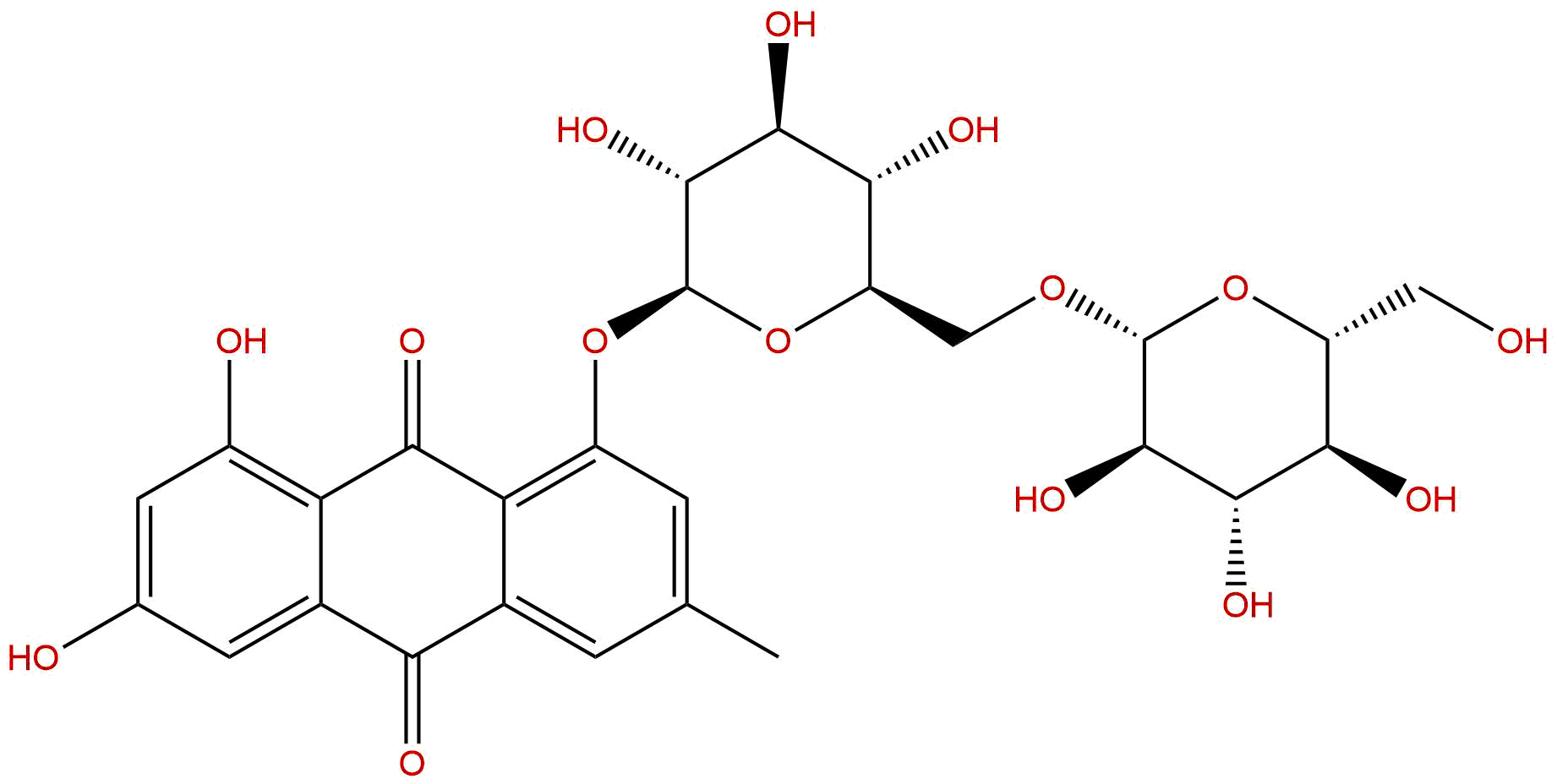
The chemical structure of emodin 1-O - β - gentiopicroside consists of a glycoside moiety and a glycosyl moiety. The aglycone is emodin (1,3,8-trihydroxy-6-methylanthraquinone), and its parent nucleus structure is composed of three fused benzene rings, with hydroxyl groups attached at positions 1, 3, and 8, and methyl substitution at position 6. The sugar moiety is gentian disaccharide, which is a disaccharide composed of two D-glucose molecules connected by a β -1,6 glycosidic bond. The disaccharide is connected to the phenolic hydroxyl group at position 1 of emodin through a β - glycosidic bond, forming a complete glycoside molecule.
From the perspective of structural chemistry, this compound belongs to the O-glycoside class, and the connecting bond between the sugar group and the aglycone is in the β configuration. The introduction of gentian disaccharides significantly increased the polarity and hydrophilicity of the molecule, while altering the spatial conformation of the entire molecule. The molecular formula is C ₂₇ H ∝₀ O ₁₅, and the molecular weight is 594.5220 Da, which is in the medium to large range of natural products, indicating that it may have low membrane permeability.
Physical and chemical property parameters
The physicochemical properties of emodin 1-O - β - gentiopicroside provide important references for its drug development. Its lipophilic water partition coefficient (LogP) is -0.3278, indicating that the compound has strong hydrophilicity and its distribution in the aqueous phase is better than that in the lipid phase. This characteristic is closely related to the presence of multiple hydroxyl and sugar structural units in its molecule. The topologically polar surface area (TPSA) is as high as 253.1300 Å ², far exceeding the recommended upper limit of 140 Å ² for oral medications, suggesting that the compound may have difficulty diffusing through biofilms through passive diffusion.
The water solubility parameter is 6.7028 (expressed in logS), indicating that the compound has good solubility in water, which is beneficial for its dissolution and dispersion in the gastrointestinal tract. The blood-brain barrier permeability assessment is' low ', which is consistent with high TPSA and low LogP values, indicating that the compound is less likely to enter the central nervous system and may reduce central related side effects. The risk assessment of hERG inhibition is' no ', indicating a low risk of cardiac toxicity. It is worth noting that the Ames test result is 1.2 (usually considered negative if it is less than 2), indicating that the compound did not show significant mutagenicity in the bacterial recovery mutation test and has a low risk of genetic toxicity.
Overall, the physicochemical properties of emodin 1-O - β - gentiopicroside exhibit typical glycoside compound characteristics: high polarity, high water solubility, low membrane permeability, and low blood-brain barrier permeability. These properties determine that after oral administration, it may mainly act on the local gastrointestinal tract rather than systemic distribution, which is highly consistent with its traditional medication route for treating constipation.
Plant sources and extraction methods
Main plant sources
Emodin-1-O - β - gentiopicroside is mainly found in Polygonaceae plants, especially in the Rheum genus(Rheum)And the Tiger Staff genus(Polygonum)Plants. Traditional Chinese medicine rhubarb(Rheum palmatum L.、Rheum tanguticum Maxim. ex Balf. or Rheum officinale The roots and rhizomes of Baill. are one of the most abundant sources of anthraquinone compounds. Research has shown that rhubarb not only contains free anthraquinones such as emodin, rhein, and emodin, but also various anthraquinone glycosides, among which emodin -1- O - β - gentiopicroside is one of the important glycoside components.
In addition, Polygonum multiflorum(Polygonum multiflorum Thunb.'s tubers and staffs(Polygonum cuspidatum The rhizome of Sieb. et Zucc. and Rheum palmatum(Rheum palmatum)The compound has also been reported to be present in plants. Different plant sources, production areas, harvesting periods, and processing methods can all affect the content of this compound. Generally speaking, the content of glycosides in fresh medicinal herbs is relatively high, and after long-term storage or high-temperature treatment, glycosides may hydrolyze into aglycones.
Extraction and purification methods
The extraction of emodin 1-O - β - gentiopicroside is usually carried out using solvent extraction method. Due to its high polarity, commonly used extraction solvents include methanol, ethanol, water, or their mixed solvents. Traditional methods often use an ethanol water system (such as 70% ethanol) for reflux extraction, with the extraction temperature controlled at 60-80 ℃ to avoid hydrolysis of glycosidic bonds. In recent years, modern technologies such as ultrasound assisted extraction and microwave-assisted extraction have also been applied to the extraction of this compound, which can significantly improve extraction efficiency and shorten extraction time.
After concentration, the extraction solution is usually purified through liquid-liquid extraction. Due to the good solubility of glycosides in n-butanol, water saturated n-butanol extraction is commonly used to enrich glycosides. Further separation and purification require the use of chromatographic techniques. Silica gel column chromatography is the most commonly used method, usually using a chloroform methanol water system for gradient elution. In addition, macroporous adsorption resins such as D101 and AB-8 are commonly used for the preliminary separation of anthraquinone glycosides, utilizing their adsorption desorption properties to achieve enrichment of target components.
Modern separation techniques such as high-performance liquid chromatography (HPLC) and high-speed countercurrent chromatography (HSCCC) are used for the preparation of high-purity samples. Reverse phase C18 column is a commonly used separation medium, with methanol water or acetonitrile water as the mobile phase. Due to the characteristic absorption of emodin 1-O - β - gentiopicroside at 254 nm and 280 nm, UV detector can effectively monitor its elution peak. Structural identification usually combines mass spectrometry (MS) and nuclear magnetic resonance (NMR) techniques, where the connection positions and configurations of sugar groups can be confirmed by two-dimensional NMR (such as HMBC, NOESY).
Pharmacological activity research
Diarrhea and prokinetic effects
The most classic pharmacological activity of emodin 1-O - β - gentiopicroside is its laxative effect, which is also the pharmacological basis for the use of Rheum plants as laxatives. Research has shown that this compound can promote intestinal peristalsis, increase fecal water content, and shorten intestinal transit time. Compared with free emodin, the laxative effect of glycosidic form is milder and more persistent, which may be related to its gradual hydrolysis into aglycones in the intestine.
In animal models, emodin -1- O - β - gentiopicroside can significantly increase the frequency of defecation and fecal weight in mice, while reducing fecal hardness. Its mechanism of action involves multiple steps: on the one hand, the compound can directly stimulate the intestinal mucosa and increase intestinal secretion; On the other hand, its metabolites can affect the contractile activity of intestinal smooth muscle. It is worth noting that the glycoside form may remain relatively stable before reaching the colon, allowing it to reach the site of action in its original form and exert local effects.
Anti inflammatory and antioxidant activity
In addition to its laxative effect, emodin 1-O - β - gentiopicroside also exhibits certain anti-inflammatory activity. In vitro experiments have shown that the compound can inhibit lipopolysaccharide (LPS) - induced macrophage inflammatory response and reduce the release of pro-inflammatory factors such as tumor necrosis factor - α (TNF - α) and interleukin-6 (IL-6). Its antioxidant activity is reflected in clearing free radicals, inhibiting lipid peroxidation, and enhancing antioxidant enzyme activity.
These anti-inflammatory and antioxidant properties are of great significance for intestinal health. In a constipated state, the intestinal environment is often accompanied by low-grade inflammation and oxidative stress. The multiple effects of emodin -1- O - β - gentiopicroside may help improve the intestinal microenvironment and promote intestinal function recovery.
Regulating effect of gut microbiota
Recent studies have revealed the interactions between anthraquinone glycosides and gut microbiota. Emodin-1-O - β - gentiopicroside, as a highly polar glycoside, is difficult to be directly absorbed in the small intestine after oral administration. Most of it will enter the colon and interact with the gut microbiota. β - glucosidase in the gut microbiota can hydrolyze glycosidic bonds, releasing aglycone emodin, which further exerts pharmacological effects.
Meanwhile, the compound itself may also have an impact on the composition of the gut microbiota. Research has shown that emodin components can regulate the structure of gut microbiota, increase the abundance of beneficial bacteria such as lactobacilli and bifidobacteria, and inhibit the growth of potential pathogenic bacteria. This microbial regulation may indirectly promote intestinal peristalsis and secretion function, forming a positive regulatory cycle.
Mechanism of action and molecular targets
Multi target network regulation
The pharmacological effects of emodin 1-O - β - gentiopicroside involve multiple molecular targets and exhibit typical multi-target regulatory characteristics. According to existing research, its target network mainly involves bile acid signaling pathways, ion channels, neurotransmitter receptors, and inflammation related enzymes.
Bile acid receptor signaling pathway
NR1H4 (farnesol X receptor, FXR) and GPBAR1 (G protein coupled bile acid receptor 1, also known as TGR5) are key receptors in the bile acid signaling pathway. Research has shown that emodin and its glycoside derivatives can affect intestinal function by regulating the activity of FXR and TGR5. The activation of FXR can inhibit bile acid synthesis, while the activation of TGR5 can promote intestinal secretion and motility. Emodin-1-O - β - gentiopicroside may exert prokinetic and secretory effects by regulating the balance of these two receptors.
Ion channels and transporters
The balance of intestinal secretion and absorption functions depends on the synergistic action of multiple ion channels and transporters. CFTR (cystic fibrosis transmembrane conductance regulator) is a key channel for chloride ion secretion, and its activation can promote intestinal fluid secretion. The potassium ion channel encoded by KCNQ1 is closely related to CFTR function, jointly regulating ion transport in epithelial cells. CACNA1C (L-type calcium channel α 1C subunit) is involved in the regulation of smooth muscle contraction. SLC5A1 (sodium glucose co transporter 1) and SLC9A3 (sodium hydrogen exchanger 3) participate in the absorption of glucose and sodium ions, respectively.
Emodin-1-O - β - gentiopicroside may affect the water electrolyte balance and peristaltic function of the intestine by regulating the activity of these ion channels and transporters. For example, activating CFTR can increase chloride ion secretion, thereby promoting passive transport of water and sodium ions, increasing fluid content in the intestinal lumen, and softening feces.
Neurotransmitter receptors and enzymes
CHRM3 (M3 muscarinic acetylcholine receptor) is an important receptor in the parasympathetic nervous system, and its activation can cause intestinal smooth muscle contraction. Emodin-1-O - β - gentiopicroside may enhance intestinal peristalsis by directly or indirectly activating the CHRM3 receptor. In addition, NOS2 (inducible nitric oxide synthase) and PTGS2 (cyclooxygenase-2) are key enzymes in the inflammatory response, and their overexpression is associated with intestinal inflammation and dysfunction. The inhibitory effect of this compound on these two enzymes may help alleviate intestinal inflammation and improve the constipation related intestinal microenvironment.
Metabolic activation and mode of action
It is worth noting that the action of emodin 1-O - β - gentiopicroside may involve prodrug mechanisms. After oral administration, the glycoside gradually hydrolyzes under the action of β - glucosidase in the gut microbiota, releasing emodin glycoside. Glycosides have stronger lipid solubility and membrane permeability, and can be absorbed by intestinal epithelial cells, enter the systemic circulation, or act on local targets. However, glycoside forms themselves may also have specific biological activities, especially in interactions with gut microbiota and intestinal epithelial cells.
This "glycoside glycoside" conversion mode endows the compound with unique pharmacokinetic characteristics: the glycoside form serves as a carrier to deliver the glycoside to the colon, achieving local high concentration release while reducing the absorption and systemic exposure of the glycoside in the upper gastrointestinal tract, which may reduce systemic side effects.
Evaluation of drug properties and pharmacokinetics
Analysis of Medicinal Characteristics
Based on the aforementioned physicochemical properties, the pharmacological properties of emodin 1-O - β - gentiopicroside exhibit a clear "double-edged sword" characteristic. Its high water solubility (logS=6.7028) and low LogP value (-0.3278) facilitate dissolution and dispersion in the gastrointestinal tract, making it suitable for oral administration. Low blood-brain barrier permeability and negative hERG inhibition result in reduced risk of central nervous system and cardiac toxicity, with good safety. The negative result of Ames test also indicates a low risk of genetic toxicity.
However, high TPSA (253.1300 Å ²) and low fat solubility also mean that the compound is difficult to passively diffuse through intestinal epithelial cell membranes, and oral bioavailability may be low. This characteristic determines that after oral administration, it is mainly limited to the gastrointestinal tract and difficult to enter the systemic circulation to exert systemic effects. For the treatment of constipation, this may actually become an advantage - drugs are concentrated at the site of action, reducing systemic exposure and side effects.
Pharmacokinetic characteristics
At present, there is insufficient systematic research on the pharmacokinetics of emodin 1-O - β - gentiopicroside, but based on its structural characteristics and related compound studies, its basic pharmacokinetic behavior can be inferred.
In terms of absorption: After oral administration, the absorption of this glycoside in the small intestine may be very limited. Its high polarity and large molecular weight make it difficult to be absorbed through cross cellular pathways, while paracellular pathways are also limited due to their large molecular size. Therefore, most drugs will enter the colon in their prototype form.
Distribution: Due to low blood-brain barrier permeability, the distribution of this compound in the central nervous system is limited. Its apparent distribution volume may be small, mainly distributed in intestinal tissue and blood.
Metabolism: The metabolism of this compound mainly occurs in the intestine. β - glucosidase in the gut microbiota can hydrolyze glycosidic bonds, gradually releasing glucose and emodin. The released emodin can be further metabolized, including II phase metabolic reactions such as glucuronidation and sulfation. The liver may also be involved in metabolism, but the amount entering the systemic circulation is limited.
In terms of excretion, the prototype drug and its metabolites are mainly excreted through feces. The small amount absorbed may be excreted in the form of urine through the kidneys.
Formulation Strategy and Optimization
Given the physicochemical properties of emodin 1-O - β - gentiopicroside, a rational formulation design can further optimize its efficacy. For example, using colon targeted delivery systems (such as pH sensitive or time-dependent coatings) can ensure drug release in the colon and increase local concentration. The combination use with prebiotics or probiotics may enhance their microbiota regulatory effects. In addition, prodrug design strategies can also be used to improve its pharmacokinetic properties, such as preparing ester prodrugs to increase membrane permeability.
Clinical application prospects and prospects
The therapeutic potential of functional constipation
Functional constipation is a common digestive system disease that seriously affects the quality of life of patients. The existing therapeutic drugs include volumetric laxatives, osmotic laxatives, irritant laxatives, and prokinetic drugs, but they all have certain limitations, such as short-lived efficacy, significant side effects, and long-term use tolerance. Emodin-1-O - β - gentiopicroside, as a natural anthraquinone glycoside, has potential advantages such as multi-target regulation, mild action, strong local effect, and minimal systemic side effects. It is expected to become a new candidate drug for the treatment of functional constipation.
Its characteristic of action is complementary to existing drugs: compared with stimulant laxatives (such as Bisoprolol), its effect is milder, less likely to cause abdominal pain and electrolyte imbalance; Compared with osmotic laxatives such as polyethylene glycol, it has multiple effects of promoting motility and regulating microbiota; Compared with prokinetic drugs (such as Praucapride), its mechanism of action is more comprehensive, involving multiple links such as secretion, movement, and microbiota.
The application prospects of intestinal microbiota regulation
With the deepening of research on gut microbiota, regulating gut microbiota has become a new strategy for treating various diseases. Emodin-1-O - β - gentiopicroside has unique application value as a substrate and regulator of gut microbiota. It can not only act as a prebiotic to promote the growth of beneficial bacteria, but also exert antibacterial effects and regulate the structure of bacterial communities by releasing emodin. This "dual effect regulation" model has the potential to maintain the balance of gut microbiota.
In addition, the compound may have specific therapeutic effects on subtypes such as constipated irritable bowel syndrome (IBS-C) and chronic transit constipation. Future research needs to further clarify the differences in therapeutic efficacy among different subtypes of constipation, as well as the synergistic effects with other drugs.
Security considerations and risk control
Although the preliminary safety assessment of emodin 1-O - β - gentiopicroside is good, the potential risks of long-term use still need to be addressed. Long term use of anthraquinone compounds may lead to melanosis coli, although this condition is generally considered benign and reversible, caution should still be exercised. In addition, the large flavonoid glycosides released after glycoside hydrolysis have the potential for liver toxicity. Although the systemic exposure of glycoside forms is low, long-term extensive use still requires monitoring of liver function.
Reasonable dosage design and medication cycle are key to controlling risks. It is recommended to use the lowest effective dose and avoid long-term continuous use. If necessary, an intermittent dosing regimen should be adopted. For special populations (such as pregnant women, children, and those with liver and kidney dysfunction), caution should be exercised when using or avoiding it.
Future research directions
The research on emodin 1-O - β - gentiopicroside is still in its early stages, and further exploration is needed from the following aspects in the future:
-
Pharmacokinetic system research Establish sensitive biological sample analysis methods, systematically study the absorption, distribution, metabolism, and excretion characteristics of the compound in vivo, clarify its metabolic pathways and active metabolites.
-
In depth analysis of the mechanism of action Using molecular biology and pharmacology methods, elucidate the interaction patterns between the compound and various targets, particularly its regulatory relationship with the FXR/TGR5 signaling pathway.
-
Pharmacological effects mediated by gut microbiota Using sterile animal models and microbiota transplantation experiments, verify the key role of gut microbiota in the pharmacological effects of the compound, and identify the key strains and enzymes involved in glycoside hydrolysis.
-
Clinical translational research Conduct standardized preclinical toxicology studies and clinical trials to evaluate their safety, efficacy, and tolerability, and determine the optimal dosage and administration regimen.
-
Structural modification and structure-activity relationship By chemical modification or biotransformation, obtain derivatives with stronger activity and higher selectivity, explore structure-activity relationships, and provide guidance for drug optimization.
Conclusion
Emodin-1-O - β - gentiopicroside, as an active ingredient in traditional Chinese medicine rhubarb, has shown potential in treating digestive system diseases such as functional constipation due to its unique chemical structure and multi-target pharmacological effects. Its high polarity and low membrane permeability determine that it mainly acts on the gastrointestinal tract after oral administration, exerting a comprehensive effect of promoting motility, secretion, and anti-inflammatory by regulating bile acid signaling pathways, ion channels, neurotransmitter receptors, and gut microbiota. The drug efficacy evaluation shows that it has good safety characteristics, but its oral bioavailability is low and suitable for local treatment.
The journey from natural products to clinical drugs is full of challenges. The study of emodin 1-O - β - gentiopicroside not only provides new candidate molecules for the treatment of constipation, but also provides an example for understanding the pharmacological characteristics and development strategies of anthraquinone glycosides. In the future, with a deeper understanding of its mechanism of action and pharmacokinetic characteristics, as well as advances in formulation technology, this natural product is expected to move from the laboratory to clinical practice, bringing new treatment options for patients with functional constipation. Meanwhile, its multi-target regulation and microbiota regulation characteristics also provide scientific basis for the development of intestinal health products based on natural products. In the process of modernization and internationalization of natural medicine, the research on emodin 1-O - β - gentiopicroside undoubtedly has important scientific significance and application value.