Storage conditions:Short-term storage at 2~8℃, long-term storage at -20 ~ -80℃
109.3600
1.7981
1.6382
.1354
3.8648
8.9198
Low
84.9065
2.6342
Yes
No
Yes
No
Yes
No
1.2
Yes
No
Yes
No
Natural products, as an important source of drug discovery, play an irreplaceable role in the long history of human struggle against diseases. From classic aspirin and paclitaxel to artemisinin in recent years, countless active molecules derived from plants, microorganisms, and marine organisms have provided the core skeleton and therapeutic inspiration for modern pharmaceutical systems. Among the diverse natural product families, Xanthone compounds have attracted much attention due to their unique chemical structures and extensive biological activities. Koushanketone is a class of phenolic compounds with a dibenzo - γ - pyranone core. Its structural framework allows for the substitution of hydroxyl, methoxy, glycosides, and other compounds at multiple sites, resulting in members with diverse properties and activities. These compounds are widely distributed in the plant kingdom, especially in the plants of Clusiaceae, Gentianaceae, and Polygalaceae, showing a variety of pharmacological potential, such as antioxidant, anti-inflammatory, anti-tumor, antibacterial, and anti diabetes.
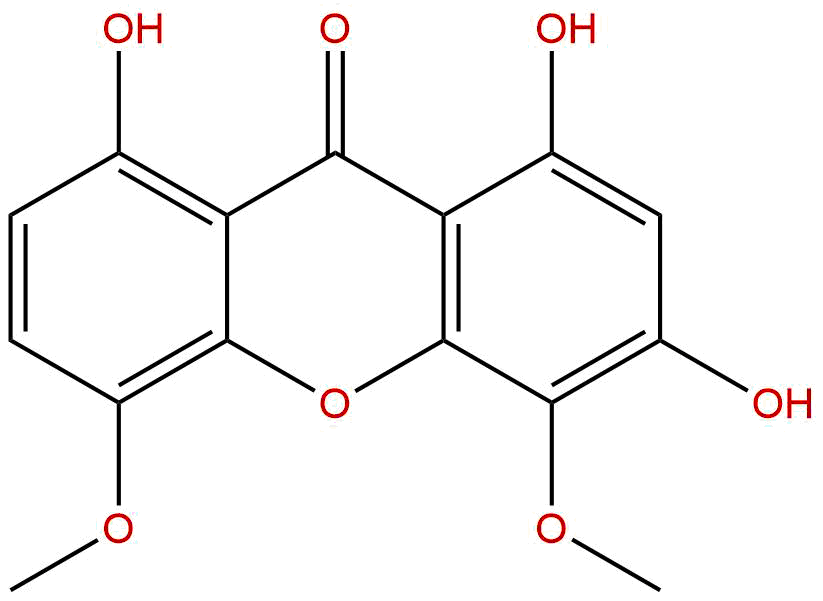
Among numerous derivatives of coumarin, 1,3,8-trihydroxy-4,5-dimethoxycoumarin (Corymbiferin) is a representative with unique structural features and significant biological activity. Its name "Corymbiferin" comes from its original plant origin, which may have been specific species of plants. The molecular formula of this compound is C ₁₅ H ₁₂ O ₇, with a molecular weight of 304.2540. Its structural core is the ketogenic nucleus, and it has three hydroxyl groups at positions 1, 3, and 8, and two methoxy groups at positions 4 and 5. This specific substitution pattern endows it with unique chemical properties and biological activity spectrum. Early studies mainly focused on its antibacterial activity. However, in recent years, more and more evidence shows that Corymbiferin has shown remarkable potential in the field of metabolic diseases, especially in the aspect of anti diabetes. The research indicates that Corymbiferin can significantly improve the antioxidant defense ability of diabetes rats, regulate carbohydrate metabolism disorder, protect damaged liver and pancreatic β cells, and improve their histopathological status. This discovery not only reveals the possibility of Corymbiferin as a new anti diabetes candidate molecule, but also provides a scientific basis for its application in more extensive metabolic syndrome related diseases.
The purpose of this review is to comprehensively review the research status of Corymbiferin, explore its plant origin and extraction methods from its chemical structure and physical and chemical properties, systematically describe its pharmacological activities, especially its research progress in anti diabetes, antibacterial, etc., and deeply analyze its potential mechanism and molecular target. On this basis, combined with the drug parameters and pharmacokinetic characteristics, the clinical application prospects and challenges faced are discussed. Through a comprehensive review of Corymbiferin, it is expected to provide a comprehensive and in-depth reference for researchers in the fields of natural product chemistry, pharmacology, and drug development, and to stimulate further research interest in this compound and its derivatives.
The chemical structure of Corymbiferin is the basis of its biological activity. Its core skeleton is 9H-xanthen-9-one, which is formed by the fusion of two benzene rings through a central γ - pyranone ring. Specifically, the substitution mode of Corymbiferin is: 1,3,8-trihydroxy-4,5-dimethoxychalcone. This means that one hydroxyl group (- OH) is attached to each of the 1st, 3rd, and 8th carbon atoms of the Koushanketone parent nucleus, while one methoxy group (- OCH ∝) is attached to each of the 4th and 5th carbon atoms. This coexistence mode of multiple hydroxyl and methoxy groups is common in ketones, but the specific combination of substitution positions determines their unique electron distribution, hydrogen bonding ability, and molecular shape.
From the perspective of physical and chemical properties, the molecular weight of Corymbiferin is 304.2540 g/mol, belonging to the category of small molecule compounds, which provides convenience for its binding with biomolecules such as proteins and DNA. Its lipophilic water partition coefficient (LogP) is 1.7981, indicating that the compound has a certain degree of lipophilicity, but at the same time retains a certain degree of hydrophilicity. This moderate LogP value is usually beneficial for the transmembrane transport and oral absorption of compounds. The topological polar surface area (TPSA) is 109.3600 Å ², which is relatively high and mainly attributed to multiple hydroxyl and methoxy groups in the molecule. TPSA is an important parameter for predicting the oral absorption and blood-brain barrier penetration ability of compounds. It is generally believed that compounds with TPSA greater than 140 Å ² have poor oral absorption, while compounds with TPSA less than 60-70 Å ² are more likely to penetrate the blood-brain barrier. The TPSA value of Corymbiferin (109.36 Å ²) is between the two, indicating that it may have some oral bioavailability, but its ability to penetrate the blood-brain barrier is low, which is consistent with the conclusion of "blood-brain barrier: low" in subsequent drug evaluation. Its water solubility (LogS) is 0.1354 mg/mL, indicating limited solubility in water and belonging to the category of slightly soluble or poorly soluble. This may be a challenge that needs to be overcome when developing it as an oral medication, such as improving its dissolution and bioavailability through formulation techniques such as nanocrystals, liposomes, and cyclodextrin inclusion complexes.
In terms of chemical stability, the phenolic hydroxyl group in Corymbiferin molecules gives it a certain degree of reducibility, making it easily oxidized in air, especially under alkaline conditions. Meanwhile, methoxy groups may undergo hydrolysis under strong acid or strong base conditions. Therefore, in the process of extraction, separation, purification, and formulation, it is necessary to control the pH value and avoid high temperature and strong light irradiation to maintain the integrity of its chemical structure. Its UV visible absorption spectrum usually shows characteristic absorption peaks in the range of 240-260 nm and 300-350 nm, which can be used for its qualitative and quantitative analysis. In infrared spectroscopy, the stretching vibration of hydroxyl groups (~3400 cm ⁻¹), the stretching vibration of carbonyl groups (~1650 cm ⁻¹), and the skeleton vibration of aromatic rings (~1600, 1500 cm ⁻¹) are its main characteristics. Nuclear magnetic resonance hydrogen and carbon spectra can provide detailed structural information, such as chemical shifts of hydroxyl and methoxy groups, coupling constants of hydrogen atoms on aromatic rings, etc., which are important means of identifying their structures.
Corymbiferin, as a natural product, mainly exists in certain specific genera of plants. Although its name "Corymbiferin" implies its association with "Corymbifer" (possibly referring to a plant species additive), more extensive research suggests that the compound belongs to the Clusiaceae family of plants, particularly the Primulaceae genus(Hypericum)The genus Hedyotis(Garcinia)Secondary metabolites of certain species. For example, there are literature reports on the use of Osmanthus altissima var. mongolica(Hypericum perforatum)Or Corymbiferin can be isolated from certain plants of the Primula genus. In addition, certain plants in the Gentianaceae family may also contain this compound. These plants usually grow in temperate and tropical regions and have a long history of folk medicine. They are commonly used to treat inflammation, infections, digestive system diseases, and metabolic disorders.
Extracting Corymbiferin from plants usually follows the classic process of natural product chemistry. Firstly, dry plant materials such as whole grass, roots, stems, leaves, or fruits are crushed to increase surface area and improve extraction efficiency. Then, select an appropriate solvent for extraction. Due to the presence of multiple phenolic hydroxyl groups in Corymbiferin molecules and their polarity, polar organic solvents such as methanol, ethanol, acetone, or their aqueous solutions are often used for extraction. Cold soaking, percolation, or reflux extraction are commonly used methods. Among them, methanol or ethanol reflux extraction is the most commonly used due to its high efficiency and easy operation. The crude extract is obtained by filtering and concentrating the extract under reduced pressure.
The crude extract contains a large amount of impurities such as chlorophyll, wax, sugars, and other phenolic compounds, which require further separation and purification. Liquid liquid extraction is a commonly used method for preliminary purification, which utilizes the difference in distribution coefficients between different solvents (such as petroleum ether, chloroform, ethyl acetate, n-butanol) and the aqueous phase to enrich the target compound in a specific solvent layer. Due to its LogP of 1.8, Corymbiferin may be enriched in the ethyl acetate or n-butanol layers. Subsequently, chromatographic technology became the core of separation and purification. Silica gel column chromatography is the most classic method, which uses gradient elution systems with different ratios of chloroform methanol, petroleum ether ethyl acetate, etc. Due to its specific polarity, Corymbiferin will be eluted at a specific elution ratio. In addition, Sephadex LH-20 gel column chromatography is also commonly used to separate xanthones, which can effectively remove pigments and low molecular weight impurities by separating according to molecular size. Reverse phase silica gel column chromatography (such as ODS, C18) is more effective in separating compounds with similar polarities. Preparation type high-performance liquid chromatography (Pre HPLC) is commonly used for final purification to obtain high-purity Corymbiferin monomers.
During the extraction process, it is important to control the conditions to avoid degradation of the compound. For example, avoid prolonged high temperature heating, use light shielded containers, and operate under inert gas (such as nitrogen) protection. In addition, modern extraction techniques such as ultrasound assisted extraction, microwave-assisted extraction, or supercritical fluid extraction can be used to achieve higher yields. These methods typically shorten extraction time, improve extraction efficiency, and reduce solvent usage. The isolated pure Corymbiferin is usually structurally confirmed by methods such as nuclear magnetic resonance spectroscopy, mass spectrometry, ultraviolet spectroscopy, infrared spectroscopy, and optical rotation determination.
The pharmacological activity research of Corymbiferin is a hot spot in this field at present, and its activity spectrum covers many aspects, among which the anti diabetes and antibacterial activities are the most prominent.
1. Anti diabetes activity
This is currently the most highly anticipated pharmacological activity of Corymbiferin. A number of in vitro and in vivo studies have confirmed its anti diabetes potential. In vitro experiments have shown that Corymbiferin can inhibit the activity of α - glucosidase and α - amylase. These two enzymes are key enzymes in carbohydrate digestion, and inhibiting them can delay carbohydrate absorption, thereby reducing postprandial blood glucose peak. This mechanism of action is similar to the commonly used hypoglycemic drug acarbose in clinical practice. In addition, Corymbiferin can also promote insulin secretion. In studies on pancreatic beta cell lines such as INS-1 cells or MIN6 cells, Corymbiferin significantly increases insulin release under glucose stimulation, indicating its ability to directly act on beta cells and improve insulin secretion function.
In vivo studies further verified its anti diabetes effect. In the streptozotocin (STZ) or alloxan induced diabetes rat model, oral or intraperitoneal injection of Corymbiferin can significantly reduce fasting blood glucose and postprandial blood glucose levels. More importantly, Corymbiferin can improve the antioxidant capacity of diabetes rats. In the state of diabetes, hyperglycemia will cause oxidative stress, leading to a large number of reactive oxygen species (ROS), which will damage cells. In the serum and liver of rats treated with Corymbiferin, the activities of antioxidant enzymes such as superoxide dismutase (SOD), glutathione peroxidase (GSH Px), and catalase (CAT) were significantly increased, while the levels of lipid peroxidation product malondialdehyde (MDA) were significantly reduced. This indicates that Corymbiferin alleviates oxidative stress damage by enhancing the body's antioxidant defense system.
In addition to improving blood glucose and antioxidant status, Corymbiferin also has a protective effect on organs related to complications of diabetes. Histopathological examination showed that the liver of diabetes rats had obvious steatosis, inflammatory cell infiltration and hepatocyte necrosis. Corymbiferin treatment could significantly alleviate these pathological changes and improve liver function indicators (such as ALT, AST). Similarly, for pancreas, islet atrophy, decrease in the number of β cells, and structural damage in diabetes rats, Corymbiferin treatment can effectively protect the structure of islets, increase the number of β cells, and promote the synthesis and secretion of insulin. These results together show that Corymbiferin exerts its anti diabetes effect through multiple mechanisms - inhibiting carbohydrate digestion, promoting insulin secretion, antioxidant stress, and protecting pancreatic islet and liver function.
2. Antibacterial activity
The antibacterial activity of Corymbiferin is one of its earliest studied pharmacological effects. Research has shown that Corymbiferin has inhibitory effects on various bacteria and fungi. In terms of bacteria, it is effective against Gram positive bacteria such as Staphylococcus aureus Staphylococcus aureus Bacillus subtilis Bacillus subtilis)And Gram negative bacteria (such as Escherichia coli) Escherichia coli Pseudomonas aeruginosa Pseudomonas aeruginosa)All showed certain inhibitory activity. Its minimum inhibitory concentration (MIC) is usually in the range of tens to hundreds of micrograms per milliliter, demonstrating moderate antibacterial activity. In terms of fungi, Corymbiferin is effective against Candida albicans(Candida albicans)Pathogenic fungi also have inhibitory effects. It is worth noting that its antibacterial mechanism may involve multiple targets, including inhibition of bacterial DNA gyrase (GyrA/GyrB), cell division protein FtsZ, fatty acid synthase FabI, dihydrofolate reductase DHFR, as well as action on bacterial resistance related proteins such as MecA (associated with methicillin resistance) and PenA (associated with penicillin resistance). In fungi, their targets may include lanosterol 14 α - demethylase (ERG11/CYP51A1) and resistance related protein CDR1. This multi-target mode of action may make it less likely to develop drug resistance, but it also increases the complexity of its toxicological evaluation.
3. Other activities
In addition to the two main activities mentioned above, Corymbiferin may also have other pharmacological effects. For example, based on its antioxidant activity, it may have anti-inflammatory potential and be able to inhibit the production of inflammatory mediators. In addition, some ketogenic compounds have been reported to have anti-tumor activity. It is worth further exploring whether Corymbiferin also has similar cytotoxic effects. However, current research on these aspects is not sufficient and requires further exploration.
The pharmacological activity of Corymbiferin stems from its interaction with specific biomolecules. Its polyphenol structure enables it to bind to target proteins through various non covalent bonding forces such as hydrogen bonding, hydrophobic interactions, and π - π stacking, thereby regulating its function.
1. Anti diabetes mechanism
The anti diabetes effect of Corymbiferin involves a complex network rather than a single mechanism.
Inhibit carbohydrate digestive enzymes Corymbiferin reduces postprandial blood glucose by competitively or non competitively inhibiting the activity of alpha glucosidase and alpha amylase, delaying the breakdown of carbohydrates and absorption of glucose in the intestine. Molecular docking studies may reveal the formation of hydrogen bonds and hydrophobic interactions with key amino acid residues (such as aspartic acid, glutamic acid, histidine) at the active sites of these enzymes.
Promote insulin secretion Corymbiferin may promote insulin secretion by acting on glucose receptors or ion channels on pancreatic beta cells. For example, it may cause depolarization of the cell membrane by activating the glucagon like peptide-1 receptor (GLP-1R) or inhibiting the ATP sensitive potassium channel (KATP channel), thereby triggering calcium influx and insulin granule exocytosis. In addition, it may also promote the proliferation and function of beta cells by enhancing the activity of glucokinase (GK) or upregulating the expression of pancreatic duodenal homeobox factor-1 (PDX-1).
Antioxidant and anti-inflammatory effects The phenolic hydroxyl group of Corymbiferin is its powerful free radical scavenger. It can directly neutralize ROS and reactive nitrogen species (RNS), thereby protecting cells from oxidative damage. Meanwhile, it may upregulate the expression of a series of antioxidant enzymes (such as SOD, CAT, GSH Px) and phase II detoxifying enzymes by activating the nuclear factor E2 related factor 2 (Nrf2) pathway. In addition, Corymbiferin may also reduce the production of proinflammatory cytokines (such as TNF - α, IL-6, IL-1 β) by inhibiting the nuclear factor kappa B (NF - κ B) pathway, thus reducing chronic low-grade inflammation associated with diabetes.
Protect beta cells and liver Through the aforementioned antioxidant and anti-inflammatory mechanisms, Corymbiferin can protect pancreatic beta cells from apoptosis and functional impairment induced by high glucose, high lipid, and oxidative stress. In the liver, it can improve insulin resistance, inhibit gluconeogenesis, promote glycogen synthesis, and alleviate steatosis, thereby improving overall glucose and lipid metabolism.
2. Antibacterial mechanism
The antibacterial activity of Corymbiferin is multi-target, making it a potential candidate molecule for combating drug-resistant strains.
To move Corymbiferin from laboratory research to clinical application, a systematic evaluation of its pharmacological properties is necessary. Drug likelihood is a comprehensive indicator for evaluating whether a compound has the potential to become an oral medication, typically including physicochemical properties, pharmacokinetics (ADME), and toxicological characteristics.
According to the provided parameters, the pharmacological characteristics of Corymbiferin are as follows:
- Molecular weight (304.2540)Meets the requirement of molecular weight less than 500 in the Lipinski Five Rules, which is beneficial for oral absorption.
- LogP (1.7981)Meeting the requirement of LogP less than 5 indicates that it has suitable lipophilicity and is conducive to transmembrane transport.
- TPSA (109.3600)Although it is greater than 60 Å ², it is less than 140 Å ², indicating that its oral absorption may be moderate and not easily able to penetrate the blood-brain barrier. This may be an advantage for anti diabetes drugs that need to act on peripheral tissues (such as liver, pancreas and intestine), which can avoid side effects of the central nervous system.
- Water solubility (0.1354 mg/mL)Poor water solubility is its main weakness. Low water solubility may lead to poor dissolution and low bioavailability after oral administration. This needs to be improved through formulation methods such as solid dispersions, lipid nanoparticles, phospholipid complexes.
- Blood brain barrier (low)Consistent with TPSA prediction, it indicates that it is less likely to enter the central nervous system, reducing the risk of neurotoxicity.
- HERG inhibition (No)The hERG potassium channel is a key target for assessing cardiac toxicity. Corymbiferin does not inhibit hERG channels, which is an important safety advantage, indicating a lower risk of causing QT interval prolongation and arrhythmia.
- Ames test (1.2)Ames test is used to detect the mutagenicity of compounds. The value of "1.2" may indicate that it did not show significant mutagenicity at the tested concentration (usually considered a positive Ames test result greater than 2 times the background value), suggesting a low risk of genetic toxicity.
Regarding pharmacokinetics, there is currently relatively limited in vivo ADME research data on Corymbiferin. Based on its physical and chemical properties, it can be inferred that:
- absorb Oral absorption may be poor, mainly due to its low water solubility. Its LogP is moderate, theoretically beneficial for passive diffusion, but dissolution rate is the limiting step. Possible efflux mediated by intestinal transporters such as P-glycoprotein also needs to be considered.
- distribution Due to its high TPSA and low blood-brain barrier penetration, its distribution volume may mainly be concentrated in peripheral tissues such as plasma, liver, kidney, and intestine. The binding rate with plasma proteins (such as albumin) may be high.
- Metabolism The phenolic hydroxyl and methoxy groups of Corymbiferin are the main metabolic sites. In the liver, it may undergo phase II metabolism, such as glucuronidation, sulfation, or methylation, to generate more water-soluble metabolites that are easier to excrete. Methoxy may also undergo O-demethylation through cytochrome P450 enzymes (such as CYP450).
- excretion Metabolites and small amounts of prototype drugs may be mainly excreted through bile and urine.
Overall, Corymbiferin has some advantages in drug development, such as appropriate molecular weight, LogP, no hERG inhibition, and low mutagenic risk, but also faces significant challenges, particularly low oral bioavailability due to poor water solubility. The future research focus should be on how to improve its water solubility and oral absorption through prodrug design, formulation technology, or structural modification, while maintaining or enhancing its pharmacological activity.
As a natural product with multiple pharmacological activities, Corymbiferin has broad clinical application prospects, especially in the field of metabolic diseases and infectious diseases.
1. Development of anti diabetes drugs
The most attractive application prospect of Corymbiferin is as a new anti diabetes drug or functional food ingredient. Through the multiple mechanisms of inhibiting α - glucosidase, promoting insulin secretion, antioxidation and protecting β cells, it is expected to provide a more comprehensive treatment option for patients with type 2 diabetes. Compared to existing drugs, it may have the following advantages:
- Multi-target effect Simultaneously acting on multiple pathological processes may produce synergistic effects and reduce common side effects of single target drugs.
- Organ protection function Its antioxidant and anti-inflammatory properties enable it not only to control blood sugar, but also to prevent or delay the occurrence and development of complications of diabetes (such as liver disease, kidney disease, neuropathy).
- Security potential Preliminary pharmacological evaluation shows that it has no hERG inhibition and low mutagenic risk, providing a good safety basis for subsequent development.
However, developing it into a drug still requires overcoming many challenges. The primary issue is to improve its oral bioavailability. Future research directions include:
- Structural modification On the basis of maintaining the pharmacophore, hydrophilic groups (such as phosphate groups, amino acid esters) are introduced or designed as prodrugs to improve water solubility and oral absorption.
- Formulation development Using nanotechnology (such as lipid nanoparticles, nanoemulsions, solid lipid nanoparticles) or cyclodextrin inclusion technology to improve their solubility and bioavailability.
- combination therapy Combined use with existing hypoglycemic drugs such as metformin and DPP-4 inhibitors may achieve synergistic effects and dose reduction.
2. Antimicrobial drug development
Given the severe situation of global antibiotic resistance, the multi-target antibacterial mechanism of Corymbiferin makes it a promising lead compound for the development of new antibiotics. Its targets include multiple key pathways such as bacterial DNA replication, cell division, fatty acid synthesis, and folate metabolism, and can act on resistance related proteins, making it less likely to develop resistance and potentially restoring the sensitivity of resistant strains to existing antibiotics. Future research can focus on:
- structural optimization Optimize the structure of specific targets such as GyrA and FtsZ to enhance their antibacterial efficacy and selectivity.
- Collaborative effect research Explore the synergistic effects of Corymbiferin with existing antibiotics such as beta lactams and quinolones, and develop combination therapies.
- Antifungal applications In depth study of its activity against drug-resistant fungi such as Candida albicans and Aspergillus, particularly its potential to inhibit ERG11 and CDR1.
3. Other potential applications
Based on its antioxidant and anti-inflammatory activities, Corymbiferin also has potential application value in oxidative stress and inflammation related diseases such as neurodegenerative diseases (such as Alzheimer's disease, Parkinson's disease), cardiovascular diseases (such as atherosclerosis) and inflammatory bowel disease. However, its low blood-brain barrier penetration limits its application in neurological diseases unless brain targeting is achieved through special delivery systems such as nanocarriers or nasal administration.
prospect
Research on Corymbiferin is still in its early stages. The following key tasks need to be carried out in the future:
- In depth pharmacokinetic research Systematically study its absorption, distribution, metabolism, and excretion characteristics in animal bodies, clarify its bioavailability, metabolic pathways, and potential active metabolites.
- Comprehensive toxicological evaluation Conduct acute and chronic toxicity tests to evaluate its potential toxicity to important organs such as the liver, kidneys, and heart, and determine its safe dosage range.
- Accurate authentication of the mechanism of action Using gene knockout, proteomics, metabolomics and other technologies, the key targets and signal pathways of its anti diabetes and antibacterial effects are precisely clarified at the molecular level.
- Preclinical pharmacodynamic studies: To verify its efficacy in a variety of animal models (such as db/db mice, STZ induced diabetes models, drug-resistant bacteria infection models), and to explore the best administration scheme.
Corymbiferin, a member of 1,3,8-trihydroxy-4,5-dimethoxy oridonin family, has attracted extensive interest of researchers due to its unique chemical structure and various pharmacological activities, especially its significant anti diabetes and antibacterial potential. This article systematically reviews its chemical structure, physicochemical properties, plant origin, extraction methods, pharmacological activity, mechanism of action, evaluation of drug properties, and clinical application prospects. Research shows that Corymbiferin plays an anti diabetes role through multiple mechanisms such as inhibiting carbohydrate digestive enzymes, promoting insulin secretion, antioxidant stress, and protecting pancreatic β cells and liver; Meanwhile, it exhibits broad-spectrum antibacterial activity by acting on multiple bacterial and fungal targets. Its pharmacological evaluation shows that the compound has appropriate molecular weight and lipid solubility, without significant hERG inhibition and genetic toxicity, but poor water solubility is the main bottleneck for its oral development.
Although research on Corymbiferin has made some progress, there is still a long way to go from a natural active molecule to a clinical drug. Future research needs to focus on addressing its solubility issues, thoroughly elucidating its pharmacokinetic characteristics and toxicological safety in vivo, and enhancing its pharmacological properties through structural modifications or advanced formulation techniques. We have reason to believe that with the deepening of research, Corymbiferin and its derivatives are expected to provide new ideas and candidate drugs for the treatment of major diseases such as diabetes and drug-resistant bacterial infections, and make contributions to human health.
Batch can search by a CAS number,one per line