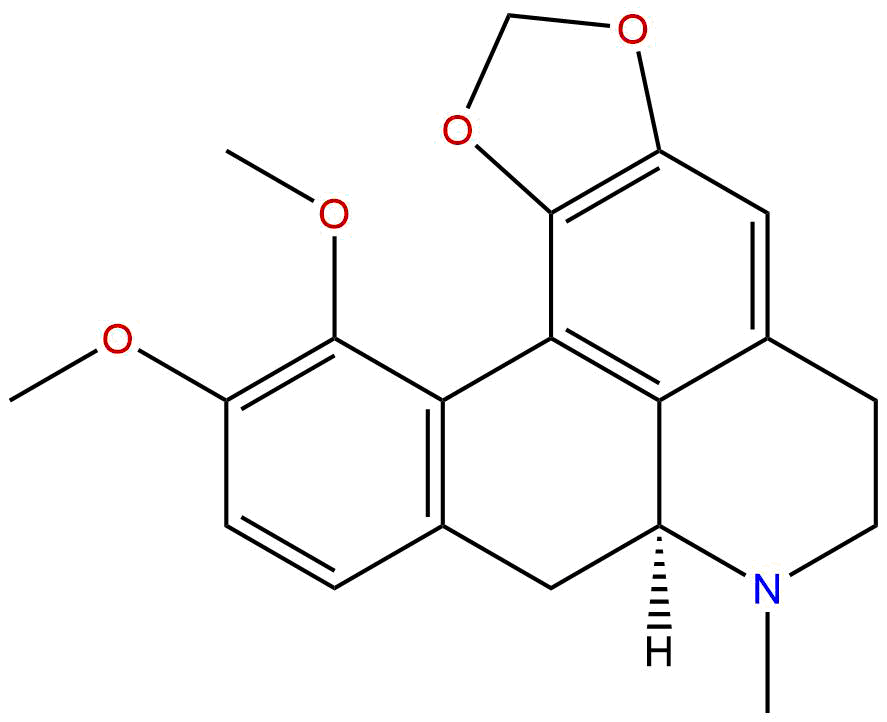


Product name: O-Methylbulbocapnine
Synonym name: (+)-O-Methylbulbocapnine; Bulbocapnine methyl ether
Catalogue No.: BP4685
Cas No.: 2490-83-7
Formula: C20H21NO4
Mol Weight: 339.391
Botanical Source:
Type of Compound: Alkaloids
Purity: 95%~99%
Analysis Method: HPLC-DAD or/and HPLC-ELSD
Identification Method: Mass, NMR
Packing: Brown vial or HDPE plastic bottle
Storage: Store in a well closed container, protected from air and light. Put into refrigerate or freeze for long term storage.
Whenever possible, you should prepare and use solutions on the same day. However, if you need to make up stock solutions in advance, we recommend that you store the solution as aliquots in tightly sealed vials at -20℃. Generally, these will be useable for up to two weeks.
The product could be supplied from milligrams to grams
Inquire for bulk scale.
For Reference Standard and R&D, Not for Human Use Directly.
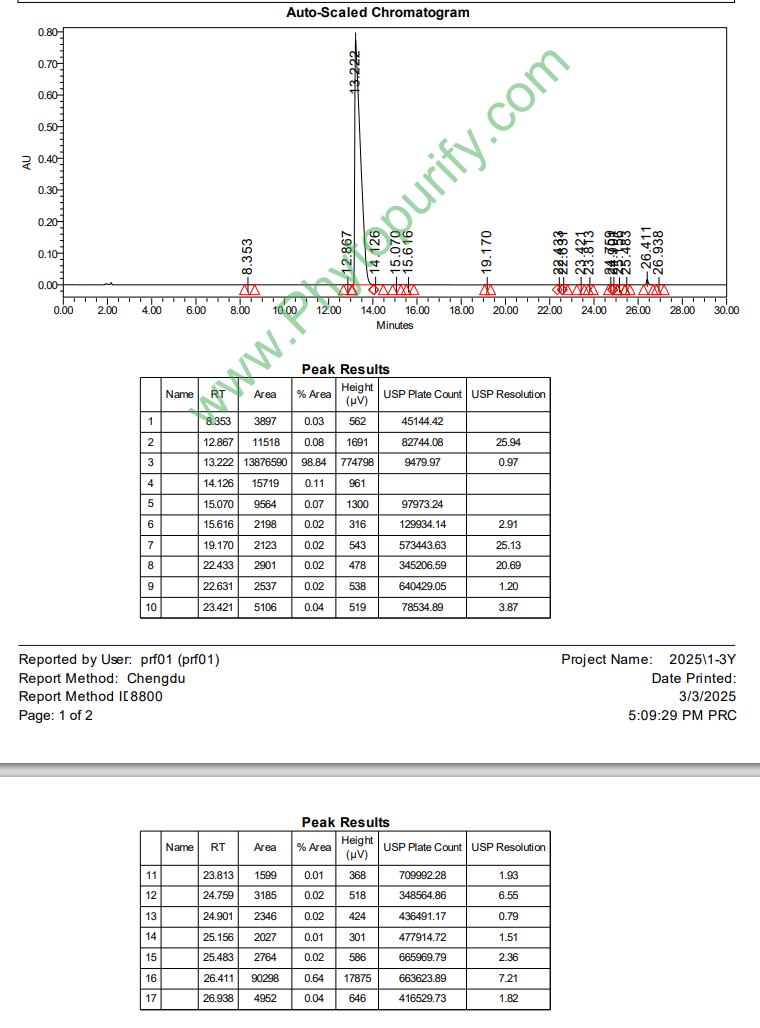
HPLC of O-Methylbulbocapnine
Storage conditions:Short-term storage at 2~8℃, long-term storage at -20 ~ -80℃
O-Methylbulbocapine (CAS number: 2490-83-7) is a natural alkaloid compound with significant pharmacological activity, belonging to the family of isoquinoline alkaloids. As an important active ingredient in traditional Chinese medicine plants, O-methylbulbous alkaloids have shown broad research value in the fields of analgesia and neural regulation due to their unique chemical structure and multi-target mechanism of action. In recent years, with the in-depth exploration of pharmacology of natural products, the pharmacological activity and target of O-methylbulbous alkaloids have gradually been revealed, especially in the potential application of pain management, which has attracted widespread attention.
This article aims to systematically review the chemical structure and physicochemical properties, plant sources and extraction methods, pharmacological activity and mechanism of action, pharmacological evaluation and pharmacokinetic characteristics of O-methylbulbous violet alkaloid, and explore its clinical application prospects and research prospects, providing theoretical basis and research direction for subsequent drug development and clinical translation.
The molecular formula of O-methylbulbous violet alkaloid is C20H21NO4, with a molecular weight of 339.3910, belonging to the isoquinoline alkaloids. Its structural features include a typical four ring skeleton containing methoxy substituents, giving it a unique spatial configuration and chemical reactivity. The LogP value of the compound is 3.1471, indicating its moderate lipophilicity, which facilitates its penetration of cell membranes and the blood-brain barrier. The polar surface area (TPSA) is 40.16 Å ², indicating that its molecular polarity is low, further supporting its good membrane permeability.
Low water solubility (0.0308 mg/mL) suggests that there may be solubility limitations in vivo, and appropriate formulation techniques are needed to improve bioavailability. The high permeability of the blood-brain barrier indicates that the compound can effectively enter the central nervous system and exert neuroregulatory effects. However, O-methylbulbous alkaloids exhibit hERG channel inhibitory activity, indicating potential risks in terms of cardiac toxicity and requiring special attention in drug development. The Ames test value is 1.2, indicating a low risk of genotoxicity and a certain level of safety.
O-Methyl Corydalis alkaloids are mainly found in the root and stem parts of the poppy family plant Corydalis spp., especially in the genus Corydalis. In traditional Chinese medicine, Paeonia lactiflora is widely used for promoting blood circulation, removing blood stasis, relieving pain, and anti-inflammatory effects. Its active ingredients include various quinoline alkaloids, among which O-methyl Paeonia lactiflora alkaloids are an important representative.
The extraction method usually uses organic solvent extraction technology. Common steps include:
In recent years, the application of ultrasound assisted extraction and microwave-assisted extraction technologies has improved extraction efficiency and purity, reduced solvent usage, and complied with the principles of green chemistry.
The pharmacological activity of O-methylbulbous violet alkaloids mainly focuses on analgesic effects and nervous system regulation. Multiple in vitro and in vivo experiments have shown that this compound has significant relief effects on various pain models, including inflammatory pain, neuropathic pain, and acute pain.
Experimental studies have shown that O-methylbulbous violet alkaloids can significantly reduce pain responses in mice during hot plate and acetic acid writhing tests, exhibiting good central and peripheral analgesic activity. Its analgesic effect is similar to classical opioid drugs, but with mild side effects, demonstrating good safety.
In addition, O-methylbulbous alkaloid has a regulatory effect on dopamine D2 receptor (DRD2), which may affect the release of neurotransmitters and neural excitability, suggesting its potential application value in neurodegenerative and psychiatric diseases.
By inhibiting the activity of cyclooxygenases (PTGS1 and PTGS2), O-methylbulbous alkaloids exhibit certain anti-inflammatory effects, reducing the release of inflammatory mediators and assisting in the analgesic effect.
The analgesic effect of O-methylbulbous alkaloids involves multi-target synergistic regulation, with the main targets including:
TRPV1 (Transient receptor potential vanillic acid receptor 1)As a key ion channel for pain perception, TRPV1 is involved in the transmission of inflammation and thermal pain signals. O-Methylphthalocyanine can regulate the activity of TRPV1 and reduce the excitability of pain nerves.
TRPA1 (Transient receptor potential vanillic acid receptor subtype A1)Similar to TRPV1, TRPA1 plays a role in chemical pain and inflammatory pain, and O-methylbulbous alkaloids alleviate pain signaling by regulating TRPA1 channels.
Opioid receptors (OPRD1, OPRM1, OPRK1)Including three subtypes: δ, μ, and κ, opioid receptors are classic targets of analgesic drugs. O-Methylphthalocyanine has a certain affinity for these receptors and may exert analgesic effects by activating the endogenous opioid system.
CNR1 (cannabinoid receptor 1)Involved in regulating pain, emotions, and inflammatory responses, O-methylbulbous alkaloid's regulatory effect on CNR1 contributes to its analgesic and anti-inflammatory effects.
PTGS1 and PTGS2 (cyclooxygenase 1 and 2)Catalyze prostaglandin synthesis, mediate inflammation and pain response. O-methylbulbous violet alkaloid inhibits the activity of these two enzymes and reduces the release of inflammatory mediators.
SLC6A4 (5-hydroxytryptamine transporter)Regulating the reuptake of neurotransmitter 5-hydroxytryptamine, affecting mood and pain perception, O-methylbulbous alkaloids may improve pain related emotional disorders by regulating SLC6A4.
DRD2 (dopamine D2 receptor)Regulating neural excitability and reward mechanisms, participating in pain regulation and maintaining mental state.
Overall, O-methylbulbourine exerts a comprehensive analgesic effect by synergistically regulating the excitability and inflammatory response of the nervous system through multiple targets and pathways.
The LogP value (3.1471) and TPSA (40.16) of O-methylbulbous violet alkaloid both comply with Lipinski's rule, indicating its good oral bioavailability potential. Its low water solubility (0.0308 mg/mL) may limit the absorption rate and degree, which needs to be improved through formulation optimization.
The high permeability of the blood-brain barrier supports its development as a central analgesic drug. The inhibition of hERG channel activity suggests a potential risk of cardiac toxicity, which needs to be closely monitored in drug safety assessments. The Ames test results showed a low risk of genotoxicity and a good safety foundation.
At present, there is limited systematic pharmacokinetic research on O-methylbulbous alkaloids. Preliminary data indicates that the compound is absorbed rapidly after oral administration, with a moderate plasma half-life, and can effectively distribute to the central nervous system. Its metabolic pathway may involve the liver cytochrome P450 enzyme system, and the metabolites need further identification.
Excretion is mainly through the renal and biliary pathways, with a low risk of accumulation in the body. In the future, it is necessary to combine internal and external models, conduct in-depth research on their pharmacokinetic parameters and metabolic mechanisms, and provide a basis for clinical dose design.
O-Methylphthalocyanine, as a natural analgesic active ingredient with multi-target effects, has significant analgesic and anti-inflammatory activities, and can penetrate the blood-brain barrier, making it suitable for central pain management. Its low genotoxicity and good pharmacokinetic parameters lay the foundation for clinical translation.
Future research should focus on the following aspects:
In summary, O-methylbulbous alkaloids have the potential to become a novel central analgesic drug and are worthy of further development and clinical research.
O-Methyl Corydalis alkaloid, as an isoquinoline natural alkaloid derived from plants of the Corydalis genus, has shown wide application prospects in the fields of analgesia and neural regulation due to its unique chemical structure and multi-target mechanism of action. Its excellent blood-brain barrier permeability and multi-target synergistic effect provide a new therapeutic approach for pain management.
Although there is a preliminary understanding of its pharmacological activity and mechanism of action, systematic pharmacokinetic, safety, and preclinical studies are still needed to address issues such as poor water solubility and potential cardiac toxicity, and promote its clinical translation. In the future, through interdisciplinary collaboration and technological innovation, O-methylbulbous violet alkaloid is expected to become an important candidate for the development of natural analgesic drugs, bringing new treatment options for pain patients.
