Introduction/Overview
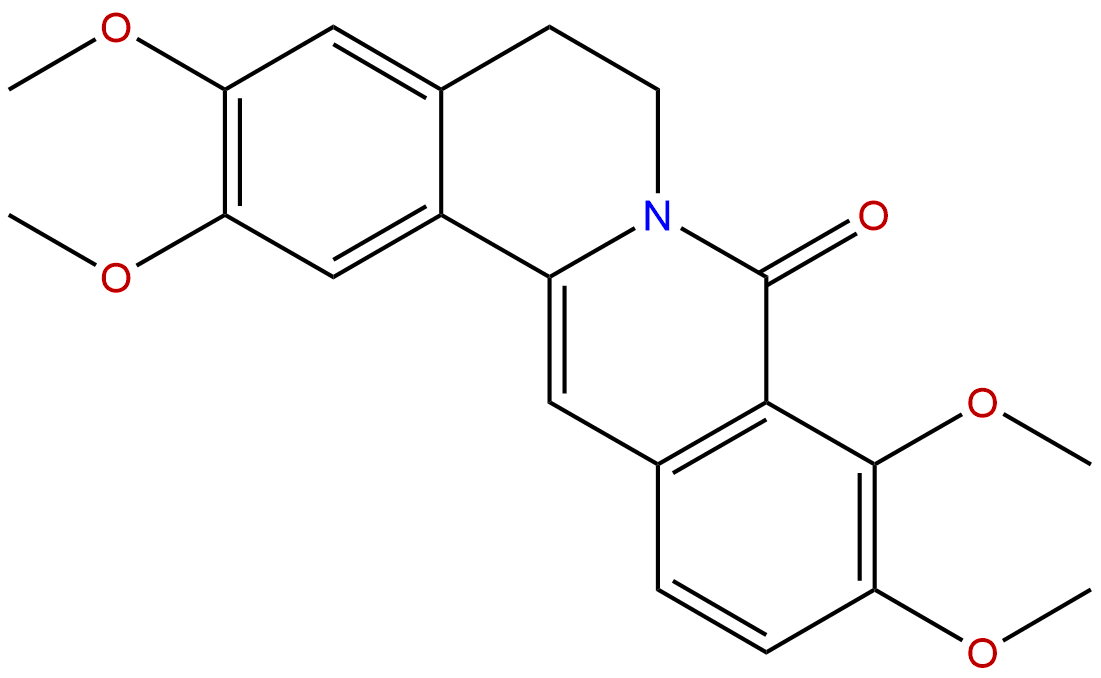
Natural products, as an important treasure trove for drug discovery and development, play an irreplaceable role in the long history of human fight against diseases. Isoquinoline alkaloids have always been a hot topic in medicinal chemistry and pharmacology research due to their structural diversity and wide range of biological activities. Among them, Palmatine and its derivatives have attracted much attention due to their significant pharmacological effects such as anti-inflammatory, antibacterial, and anti-tumor effects. 8-oxopalmatine (CAS number: 19716-59-7), as a structural modification of palmatine, introduces a key carbonyl group through oxidation at the C-8 position in its molecule. This subtle structural change may significantly alter its physicochemical properties, biological activity spectrum, and mechanism of action. In recent years, with the deepening understanding of the molecular mechanisms of tumor occurrence and development, especially the analysis of cell apoptosis, cell cycle, and signal transduction pathway regulation, the development of anti-tumor drugs targeting specific molecular targets has become mainstream. Preliminary studies have shown that 8-oxopalmatine has potential therapeutic value in hematological malignancies such as lymphoma, and its effects involve multiple key targets such as MCL1, BCL2, STAT3, TP53, suggesting that it may exert anti-tumor effects through multi-target and multi pathway synergy. This article aims to systematically review the chemical structure, plant origin, pharmacological activity, mechanism of action, pharmacological properties, and application prospects of 8-oxopalmatine in the treatment of lymphoma, in order to provide comprehensive scientific references for the in-depth research and development of this compound.
Chemical structure and physicochemical properties
8-Oxcarbantine is a quaternary ammonium alkaloid of the tetrahydroisoquinoline class, with the chemical name 2,3,9,10-tetramethoxy-8-oxo-5,6-dihydroisoquinolino [2,1-b] isoquinoline-7-ium. Its molecular formula is C21H22NO5+and its molecular weight is 367.4010. Compared with the parent compound palmatine, the most significant feature of 8-oxopalmatine is the presence of a carbonyl group (C=O) at the C-8 position of the isoquinoline ring. This structural modification transforms it from a typical berberine type alkaloid to a derivative with an oxidized form.
The physicochemical properties of the compound have a decisive impact on its biological activity and pharmacokinetic behavior. Calculations and experimental data indicate that the lipid water partition coefficient (LogP) of 8-oxopalmatine is approximately 3.5008, demonstrating moderate lipophilic properties that facilitate its penetration through cell membranes but may also affect its water solubility. Its topological polar surface area (TPSA) is 58.9200 Å ², which is relatively low, further supporting its good membrane permeability. However, its water solubility is poor, at around 0.0113 mg/mL, which may be one of the challenges that need to be overcome in its oral administration or formulation development. As a quaternary ammonium salt, 8-oxopalmatine usually exists in the form of a salt, which improves its solubility to some extent. It is worth noting that the predictive model shows a high blood-brain barrier permeability, which provides the possibility for the treatment of potential central nervous system related diseases, such as central invasion of certain lymphomas or neurodegenerative diseases. In addition, preliminary drug screening showed a negative risk of hERG inhibition and an Ames test result of 0.9 (usually considered negative if less than 1.5), indicating a low potential risk of arrhythmia and genetic toxicity, laying a preliminary safety foundation for its further development.
Plant sources and extraction methods
8-Oxypalmatine is not a common alkaloid widely present in the plant kingdom, and its reports mainly come from several traditional medicinal plants, especially poppy and Berberidaceae plants. Research has shown that it can be derived from certain poppy species(Papaver)Plants and Corydalis yanhusuo(Corydalis yanhusuo)Separate it from the medicinal herbs. In these plants, 8-oxopalmatine is usually present as a secondary metabolite or oxidized derivative of berberine alkaloids such as palmatine, with relatively low levels.
The extraction and separation methods follow the conventional process of natural product chemistry, but need to be optimized for their structure and properties. The typical extraction process begins with the crushing of dried plant materials, followed by extraction using appropriate solvents. Due to the polarity and quaternary ammonium salt properties of 8-oxopalmatine, acidic aqueous solutions (such as 1% hydrochloric acid or citric acid solutions) or mixed solutions of polar organic solvents (such as methanol, ethanol) and water are often used for percolation, reflux, or ultrasound assisted extraction. Acidic conditions help to convert alkaloids into water-soluble salt forms, improving extraction efficiency.
After concentration, the extract is adjusted to pH (usually alkalized to pH 9-10) to allow free precipitation of alkaloids, or extracted using organic solvents such as chloroform and ethyl acetate. Further purification is a key step in obtaining high-purity 8-oxopalmatine. Conventional chromatographic techniques are widely used, including:
1. column chromatography Silica gel, alumina, or reverse phase silica gel (such as C18) is commonly used as the stationary phase, and elution is carried out using chloroform methanol ammonia solution or other polar gradient solvent systems.
2. High performance liquid chromatography Preparation HPLC, especially reverse phase HPLC (RP-HPLC), is the most effective means of obtaining high-purity monomers, commonly using acetonitrile water (containing a small amount of buffer salts such as ammonium formate or trifluoroacetic acid) as the mobile phase.
3. Other Technologies Thin layer chromatography (TLC) can be used for rapid detection and preliminary separation, while high-speed countercurrent chromatography (HSCCC), as a liquid-liquid distribution chromatography, is also suitable for the separation of such alkaloids due to its advantages of irreversible adsorption and high recovery rate.
Due to the limited content of natural sources, chemical synthesis or semi synthesis is also an important way to obtain 8-oxopalmatine. One feasible synthetic strategy is to selectively oxidize the C-8 methyl group using Abamatine as the starting material, which provides a stable material basis for pharmacological research and subsequent development.
Pharmacological activity research
Although the pharmacological activity research of 8-oxopalmatine is currently in its early stages, it has shown multiple biological effects, among which anti-tumor activity, especially targeting lymphoma, is currently the focus of research.
1. Antitumor activity
In vitro studies have shown that 8-oxopalmatine has significant inhibitory effects on proliferation and induces apoptosis in various lymphoma cell lines, such as diffuse large B-cell lymphoma and T-cell lymphoma cells. Its half maximal inhibitory concentration (IC50) is typically at the micromolar level, demonstrating potential superior to or similar to certain traditional chemotherapy drugs. In addition to directly inhibiting cell growth, studies have also found that it can induce cell cycle arrest, such as blocking cells in the G2/M phase, thereby preventing cell division. In animal models, the administration of 8-oxopalmatine can inhibit the growth of lymphoma xenografts, prolong the survival of tumor bearing animals, and may produce synergistic effects when combined with certain chemotherapy drugs, enhancing efficacy or reversing drug resistance.
2. Anti inflammatory and immune regulatory activity
Inflammation is closely related to the occurrence and development of tumors. As a derivative of palmatine, 8-oxopalmatine may inherit certain anti-inflammatory properties. Preliminary research suggests that it can inhibit the excessive production of pro-inflammatory cytokines (such as TNF - α, IL-6) induced by lipopolysaccharides (LPS) and other factors in macrophages. By regulating immune cell function and related signaling pathways, it may improve the tumor microenvironment and indirectly exert anti-tumor effects.
3. Other potential activities
Based on its structural similarity with similar alkaloids, 8-oxopalmatine may also have potential activities such as antibacterial, antiviral, and cardiovascular protection, but these aspects still need experimental confirmation.
Mechanism of action and molecular targets
The anti lymphoma effect of 8-oxopalmatine involves a complex molecular network, and its multi-target properties are an important basis for its efficacy. According to existing information, its mechanism of action mainly revolves around inducing cell apoptosis, blocking the cell cycle, and inhibiting survival signaling pathways, involving the following key targets:
1. Apoptosis pathway targets: MCL1 and BCL2
Apoptosis escape is an important characteristic of tumor cells. B-cell lymphoma 2 (BCL2) family proteins are the core regulators of endogenous apoptotic pathways. 8-Oxbamatine has been predicted or confirmed to potentially interfere with the functions of survival promoting proteins MCL1 and BCL2. By downregulating the expression of these proteins or inhibiting their interaction with pro apoptotic proteins such as BAX and BAK, 8-oxopalmatine may promote increased mitochondrial outer membrane permeability, release cytochrome c, activate the caspase cascade reaction, and ultimately induce tumor cell apoptosis.
2. Cell cycle regulatory targets: CDC25B and CDKN2A
The uncontrolled cell cycle is the driving force behind tumor proliferation. CDC25B phosphatase is a key positive regulatory factor in the G2/M phase transition of the cell cycle. 8-Oxbamatine may inhibit the activity of CDC25B, causing the CDK1/Cyclin B1 complex to maintain an inhibitory phosphorylation state, thereby blocking cells in the G2/M phase. Meanwhile, it may participate in regulating the G1/S checkpoint of the cell cycle by affecting the expression or function of the tumor suppressor gene CDKN2A (encoding p16INK4a).
3. Signal transduction pathway targets: STAT3, NF - κ B, and PTPRC
Signal transducer and activator of transcription factor 3 (STAT3) and nuclear factor kappa B (NF - κ B) are two important pro survival and pro-inflammatory signaling pathways that are often continuously activated in lymphoma. 8-Oxbamatine may inhibit cell proliferation and promote apoptosis by suppressing the phosphorylation (activation) of STAT3 or blocking the nuclear translocation of NF - κ B, downregulating the expression of downstream target genes such as BCL2, survivorin, cyclin D1, etc. Protein tyrosine phosphatase receptor type C (PTPRC, CD45) is a key regulatory molecule for lymphocyte activation and signal transduction, and its potential regulation may affect the survival and immune response of lymphoma cells.
4. Other important targets: TP53, MAPT, and RXRB
The tumor suppressor protein p53 (encoded by the TP53 gene) is the guardian of the genome. 8-Oxbamatine may activate p53 dependent apoptosis and cell cycle arrest pathways by stabilizing p53 protein or enhancing its transcriptional activity. The abnormality of microtubule associated protein tau (MAPT) is related to cytoskeletal disorder and certain tumor progression, and its significance as a target remains to be explored. Retinol X receptor beta (RXRB) is a member of the nuclear receptor family, involved in cell differentiation, metabolism, and apoptosis, and may become another node in the regulation of cell fate by 8-oxopalmatine.
In summary, 8-oxopalmatine may form a synergistic network by simultaneously acting on multiple targets mentioned above, disrupting the proliferation, survival, and anti apoptotic mechanisms of lymphoma cells, ultimately leading to tumor cell death. This multi-target mode of action may help overcome the resistance problem that single target drugs are prone to.
Evaluation of drug properties and pharmacokinetics
Although 8-oxopalmatine has shown promising pharmacological activity, its successful development as a drug largely depends on its pharmacological properties, namely "drug like" and pharmacokinetic characteristics.
1. Analysis of pharmacological parameters
As mentioned earlier, its molecular weight (367.4) conforms to the general rules for small molecule drugs (<500). Moderate LogP values (~3.5) and lower TPSA (~59) indicate good membrane permeability and oral absorption potential, but poor water solubility (0.0113 mg/mL) is its main drawback, which may affect its dissolution and absorption in the gastrointestinal tract, leading to low oral bioavailability. The absence of hERG inhibition and Ames negative results provide support for its early safety. High blood-brain barrier permeability prediction is a unique advantage, especially for central nervous system lymphomas.
2. pharmacokinetics (prediction and challenge)
At present, there is a lack of pharmacokinetic research data on the 8-oxopalmatine system. Based on its structural characteristics and research on similar alkaloids such as palmatine and berberine, its PK behavior can be preliminarily predicted
* absorb As a quaternary ammonium alkaloid, its oral absorption may be limited by its water solubility and intestinal permeability. It may be a substrate for efflux transporters such as P-glycoprotein (P-gp), which further limits its intestinal absorption and increases bile excretion.
* distribution Its lipophilicity is beneficial for tissue distribution, and the predicted high BBB permeability suggests that it may reach effective concentrations in the central nervous system. The degree of binding to plasma proteins is unknown, but may be high, affecting their free drug concentration.
* Metabolism The isoquinoline ring may undergo oxidative metabolism by the liver cytochrome P450 (CYP) enzyme system, and the carbonyl group at C-8 may affect its metabolic site and rate. Methyl and methoxy groups may also undergo demethylation reactions. The clear metabolic profile needs to be determined through in vitro liver microsomal experiments and in vivo studies.
* excretion The prototype drug and its metabolites may be primarily excreted through the kidneys and/or bile.
3. Optimization strategy for drug properties
Possible strategies to improve its medicinal properties include:
* Prodrug design Esterify or form salts of quaternary ammonium nitrogen or phenolic hydroxyl groups (if present) to enhance oral absorption and hydrolyze into active active active ingredients in the body.
* Formulation technology By utilizing techniques such as nanocrystals, liposomes, solid dispersions, or cyclodextrin inclusion, its solubility and dissolution rate can be significantly improved.
* Structural modification Reasonably modify the molecule while maintaining the core pharmacophore, optimizing its solubility, metabolic stability, and target selectivity.
Clinical application prospects and prospects
8-Oxbamatine has shown unique potential in the treatment of lymphoma, but its clinical application still faces opportunities and challenges.
1. Clinical application potential
* Multi targeted therapeutic agents It acts on multiple key nodes such as apoptosis, cycle, and signaling pathways, and may have a broader therapeutic effect on heterogeneous lymphoma populations, and may delay or overcome drug resistance.
* Joint treatment partner When used in combination with existing chemotherapy drugs (such as CHOP regimen), targeted drugs (such as BCL2 inhibitor Vinaclat), or immunotherapy, it may produce synergistic effects, reducing their respective doses, minimizing toxic side effects, and improving efficacy.
* Central nervous system lymphoma Its high BBB permeability makes it a potential candidate drug for the treatment of primary or secondary central nervous system lymphoma, which is an unmet clinical need.
** * beyond lymphoma * *: Since its targets (such as STAT3, TP53, NF - κ B) are also crucial in a variety of solid tumors, its anti-tumor research is expected to expand to breast cancer, lung cancer, liver cancer and other fields.
2. Challenges faced
* The mechanism of action needs to be further elucidated Currently, most target associations are based on prediction or preliminary validation, requiring the use of techniques such as gene knockout/knockdown, co crystallization, and surface plasmon resonance to clarify their direct target and precise molecular interaction patterns.
* The pharmacokinetic properties urgently need to be improved A comprehensive preclinical pharmacokinetic study (ADME) must be conducted to clarify its in vivo processes and provide a basis for formulation design and dosing regimens.
* Water solubility and formulation development Addressing its poor water solubility is a prerequisite for advancing its preclinical and clinical research.
* Comprehensive evaluation of safety Systematic preclinical toxicology studies are required, including acute toxicity, chronic toxicity, reproductive toxicity, etc., to comprehensively evaluate their safety.
* Intellectual Property and Development Path Clear patent layout and clear clinical development strategy are required.
3. Future research directions
Future research should focus on: 1) using multi omics techniques (transcriptome, proteome, metabolome) to comprehensively reveal its functional network; 2) Verify its efficacy using more clinically relevant models such as patient derived xenograft (PDX) models; 3) Strengthen structure based optimization design to obtain derivatives with better drug properties; 4) Explore its tool value as a chemical probe for studying the biological functions of related targets.
Conclusion
As a structurally novel natural quinoline alkaloid derivative, 8-oxopalmatine has emerged in the development of anti lymphoma drugs due to its potential regulatory ability against multiple key lymphoma targets such as MCL1, BCL2, STAT3, TP53, etc. Its multi-target mode of action provides new ideas for addressing complex tumor signaling networks and drug resistance issues. Although some understanding has been gained in terms of chemical structure, plant origin, and preliminary pharmacological activity, the precise mechanism of action, systematic pharmacokinetic properties, and the urgent need to improve water solubility remain the core scientific issues that need to be overcome in future research. Through in-depth molecular pharmacology research, rational drug chemical modification, and advanced formulation technology development, 8-oxopalmatine is expected to gradually develop from a promising lead compound into a candidate new drug for the treatment of lymphoma and other malignant tumors, contributing new strength to the modernization research of natural products and the field of tumor treatment. The exploration process once again confirms that discovering and optimizing active molecules from traditional medicinal plants remains a promising path for innovative drug discovery.