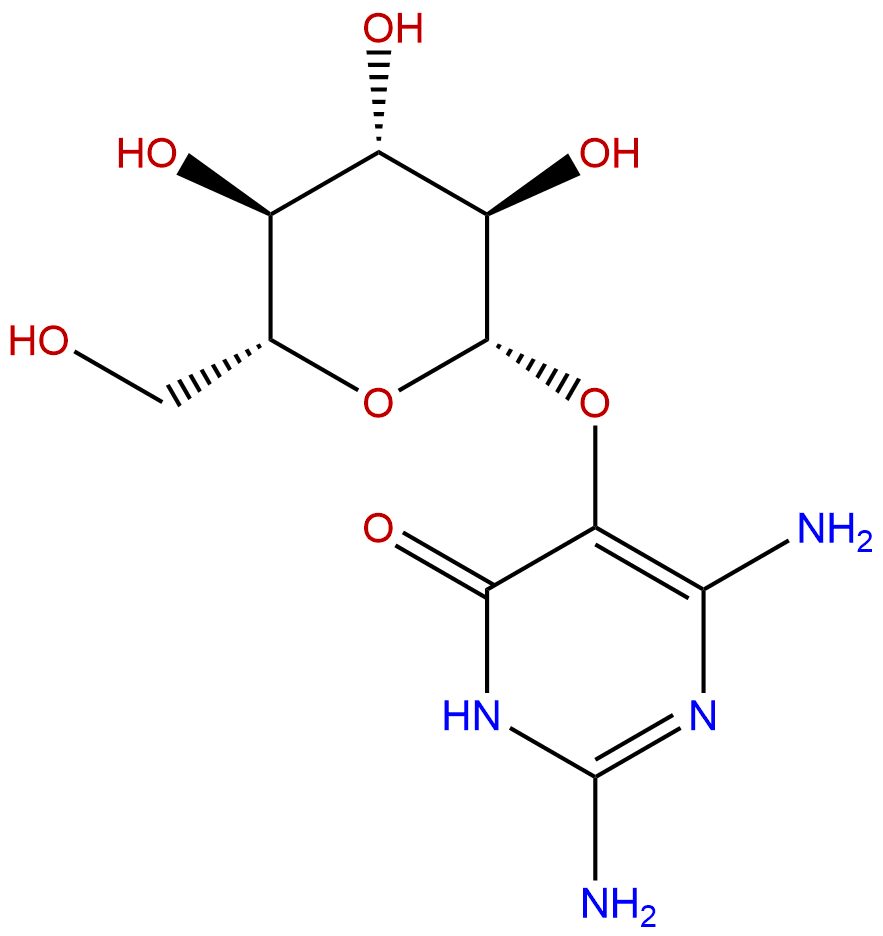


Product name: Vicine
Synonym name: Divicine β-D-glucopyranoside
Catalogue No.: BP3639
Cas No.: 152-93-2
Formula: C10H16N4O7
Mol Weight: 304.259
Botanical Source:
Physical Description:
Type of Compound:
Purity: 95%~99%
Analysis Method: HPLC-DAD or/and HPLC-ELSD
Identification Method: Mass, NMR
Packing: Brown vial or HDPE plastic bottle
The product could be supplied from milligrams to grams. Inquire for bulk scale.
We provide solution to improve the water-solubility of compounds, thereby facilitating the variety of activity tests and clinic uses.
For Reference Standard and R&D, Not for Human Use Directly.
Description:
Vicine is important natural fungicide. "High levels" of vicine or convicine or both might have shortened the birds' survival time by enhancing the neurotoxicity induced by "lower levels" of beta-cyanoalanine.
References:
J Sci Food Agric. 1978 Feb;29(2):136-40.
Favism-inducing toxins in broad beans (Vicia faba). Determination of vicine content and investigation of other non-protein nitrogenous compounds in different broad bean cultivars.
Vicine contents of seed coats and cotyledons of 58 cultivars of broad beans are reported.
METHODS AND RESULTS:
Seed coats contained up to 0.07% and cotyledons between 0.23 and 0.61 % a Vicine. Non-protein nitrogenous compounds in broad beans were analysed by thin-layer chromatography. Five compounds other than Vicine were isolated from broad bean extracts. These are, in order of increasing RF value, FLG, B1, D1, B2 and D2. The possibility of existence of these compounds in different cultivars was investigated. Their ultra-violet absorption spectra in three different pH conditions are reported.
Rostlinna Vyroba, 2002, 48(12):543-547.
Fungitoxicity of natural heterocycle glucoside vicine obtained from Vicia faba L. against selected microscopic filamentous fungi
Vicine and conVicine were isolated from mature seeds of Vicia faba L.
METHODS AND RESULTS:
These compounds were separated from the relevant fractions by HPLC and identified by IR, MS and NMR. Obtained Vicine was used for all bioassays. Vicine in concentra-tion of 25 μg in 1 ml of medium had significant toxic effect. The concentration of 5 μg of Vicine in 1 ml of medium had significant fungistatic effect for fungi Fusarium culmorum and Alternaria alternata. The concentration of 500 ng of Vicine in 1 ml of medium had significant fungistatic effect for fungi Cladosporium herbarum and Botrytis cinerea. The effective concentration of Vicine in our test was significantly lower than is the concentration of Vicine in seeds and pods of V. faba. The toxicity of Vicine comparing with the toxicity of insecticide Actellic was higher by one order. Also, the fungicide Impact had a lower toxicity than Vicine. Fungitoxic and fungistatic effect of Vicine was comparable with some other test-ed fungicides and with the plant saponin digitonin.
CONCLUSIONS:
Our results confirmed that Vicine is important natural fungicide.
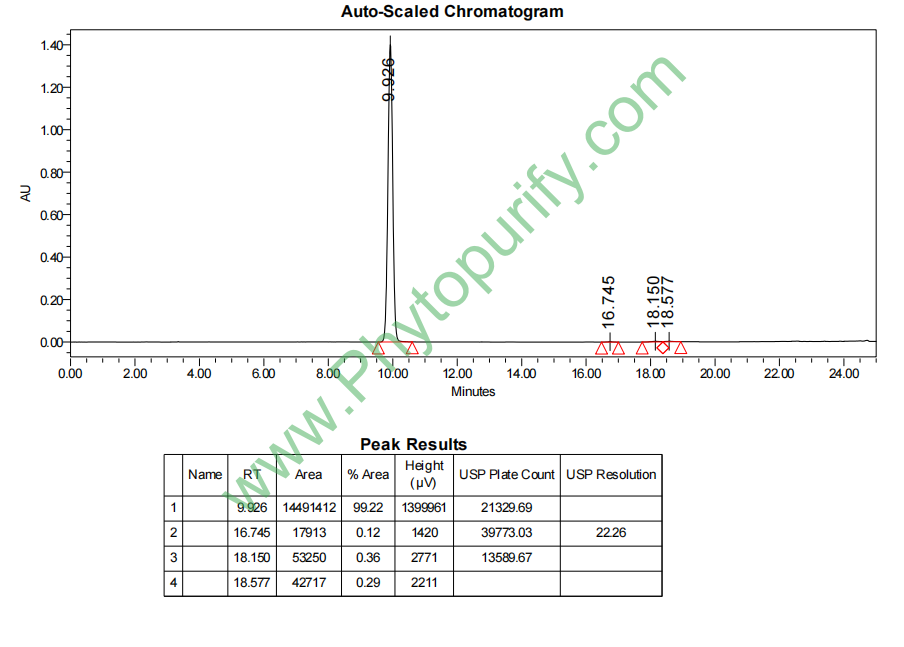
HPLC of Vicine
Storage conditions:Short-term storage at 2~8℃, long-term storage at -20 ~ -80℃
197.1700
-2.5195
-2.5203
6.9258
.3684
.0592
Low
21.0612
4.0581
Yes
No
No
No
Yes
No
1.2
Yes
No
Yes
Yes
Vicine (CAS number: 152-93-2) is a naturally occurring alkaloid glycoside in Vicia faba, which has attracted widespread attention due to its unique biological activity and toxicological properties. As an inactive precursor compound, favioside is hydrolyzed by the human gut microbiota to produce an active metabolite with high free radical generation ability - aglycone di favioside. This active metabolite can induce oxidative stress, especially in patients with hereditary glucose-6-phosphate dehydrogenase (G6PD) deficiency, causing hemolytic anemia and becoming an important risk factor in the prevention and treatment of genetic diseases in clinical practice. In recent years, with the in-depth study of the pharmacological mechanisms of natural products, the potential therapeutic effects of favioside in neurodegenerative diseases, especially Parkinson's disease (PD), have aroused great interest in the scientific research community. It exhibits certain neuroprotective potential by regulating various neurotransmitter related targets, including monoamine oxidase B (MAOB), dopamine receptors (DRD1, DRD3), and alpha synuclein (SNCA).
This article aims to systematically review the chemical structure and physicochemical properties, plant sources and extraction methods, pharmacological activity and mechanism of action, pharmacological evaluation and pharmacokinetic characteristics of favioside, and explore its clinical application prospects and future development directions in the field of anti Parkinson's disease research. It provides theoretical basis and research reference for natural product pharmacology and related drug development.
The molecular formula of favioside is C14H18N4O7, with a molecular weight of 304.2590, and it belongs to the class of alkaloid glycosides. Its structural characteristics mainly include a pyrimidine alkaloid core connected to a glycoside moiety. The presence of glycosidic bonds endows it with high hydrophilicity and strong molecular polarity. The calculated topological polar surface area (TPSA) is 197.1700, indicating its strong polarity and potential hydrogen bond donor/acceptor ability.
In terms of physicochemical properties, the LogP value of favioside is -2.5195, indicating its strong hydrophilicity and difficulty in passing through lipid membranes. Its blood-brain barrier (BBB) permeability is low, suggesting that its direct action in the central nervous system may be limited. The water solubility is 6.9258, indicating good solubility in aqueous phase, which is beneficial for absorption and distribution in vivo. The negative result of hERG channel inhibition experiment indicates a low risk of cardiac toxicity. The Ames test value is 1.2, indicating a low risk of genotoxicity and relatively good safety.
Structurally, the glycoside portion of favioside releases active aglycone after hydrolysis by gut microbiota, which can exert biological effects through the production of free radical mediated oxidative stress. This metabolic process is the key to its toxicity and pharmacological activity.
Vicioside is mainly present in the seeds of Vicia faba L., and its content is greatly affected by variety, maturity, and planting environment. As an important grain and feed crop, fava beans are rich in various bioactive components in their seeds. Among them, fava bean glycosides, as one of the main alkaloid glycosides, have high research and application value.
The common methods for extracting fava bean glycosides include water extraction, alcohol extraction, and their combination techniques. Traditional processes usually use hot water extraction combined with ultrasound assisted extraction or microwave-assisted extraction to improve extraction efficiency. The extraction solution can be concentrated, cooled and crystallized to obtain high purity favinolide crystals. Modern separation techniques such as high-performance liquid chromatography (HPLC), counter current chromatography, and membrane separation have also been applied to the purification and quantitative analysis of fava bean glycosides.
The optimization of extraction process mainly revolves around the selection of extraction solvent, temperature, time, solid-liquid ratio and other parameters to maximize the recovery rate and purity of fava bean glycoside, while reducing the generation of impurities and degradation products.
The most well-known toxicological effect of favioside is its hemolytic anemia in G6PD deficient patients. This pathological process originates from the free radical product aglycone released by the hydrolysis of favioside in the gut microbiota, leading to increased oxidative stress in red blood cells, membrane lipid peroxidation, and ultimately causing red blood cell rupture. The study of this toxic effect not only reveals the mechanism of interaction between genetic metabolic defects and natural products, but also provides a theoretical basis for clinical prevention of fava bean disease.
In recent years, the potential pharmacological activity of favioside in neurodegenerative diseases has gradually been discovered. Parkinson's disease is a disease characterized by degenerative loss of dopaminergic neurons. MAOB, as a key enzyme in dopamine metabolism, is overactive, leading to increased oxidative stress and neurotoxicity. Faboside and its metabolites have been found to regulate MAOB activity, alleviate oxidative stress damage, and thus demonstrate certain anti Parkinson's disease potential.
In addition, the regulatory effect of favioside on targets such as dopamine receptors DRD1, DRD3, and alpha synuclein (SNCA) may further exert neuroprotective effects by improving neurotransmitter balance and inhibiting abnormal protein aggregation. In vitro and animal model studies have shown that favioside can alleviate motor disorders and delay the progression of neurodegenerative diseases.
In addition to the nervous system, the antioxidant, anti-inflammatory, and immunomodulatory effects of favioside have gradually been reported. It may have adjuvant therapeutic value for various chronic diseases by regulating intracellular redox status and inflammatory cytokine expression.
The biological effects of favioside mainly depend on the free radical generation ability of its metabolite aglycone. This free radical induces oxidative stress within cells, affecting various signaling pathways and molecular targets. The specific mechanism is as follows:
MAOB inhibition MAOB is a key enzyme in dopamine metabolism and oxidative stress in Parkinson's disease. Faboside metabolites directly or indirectly inhibit MAOB activity, reduce harmful hydrogen peroxide and free radical production, and protect dopaminergic neurons.
Dopamine receptor regulation (DRD1, DRD3)Vicioside affects the expression and function of dopamine receptors, regulates neurotransmitter signaling, improves motor function and neuronal survival.
Regulation of alpha synuclein (SNCA)Abnormal aggregation of SNCA is an important link in the pathogenesis of Parkinson's disease. Faboside may slow down neurotoxicity by regulating SNCA expression or inhibiting its aggregation.
The effect of tyrosine hydroxylase (TH) activity TH is the rate limiting enzyme for dopamine synthesis, and the regulation of its expression and activity by favioside helps maintain stable dopamine levels.
Oxidative stress and inflammatory signaling pathway Faboside alleviates neuroinflammation and oxidative damage by regulating the Nrf2/ARE antioxidant pathway and NF - κ B inflammatory pathway.
In summary, favioside exerts its neuroprotective and regulatory functions through multi-target and multi-path synergistic effects.
The pharmacological evaluation of favioside shows that it has good safety and water solubility, but its blood-brain barrier permeability is low, which limits its ability to directly act on the central nervous system. Its molecular weight (304.2590) is moderate, with strong hydrophilicity (LogP-2.5195), meeting certain requirements for drug physicochemical properties.
The hERG channel inhibition test was negative, indicating a low risk of cardiac toxicity. The Ames test results show that the risk of genotoxicity is relatively low and the safety is good. Its high TPSA (197.1700) and low blood-brain barrier permeability suggest that improving the bioavailability of the central nervous system by modifying molecular structures or using drug delivery systems such as nanocarriers and liposomes is a future research direction.
In terms of pharmacokinetics, after oral administration, favioside is mainly hydrolyzed by the gut microbiota to produce the active metabolite aglycone, which is then absorbed into the bloodstream. Further systematic research is needed on its distribution, metabolism, and excretion in the body, especially on the interaction between metabolic kinetics and metabolic enzymes.
As a natural product, favioside faces both challenges and opportunities in clinical applications due to its unique toxicological properties and potential neuroprotective effects. For patients with G6PD deficiency, the intake of favioside should be strictly controlled to prevent hemolytic anemia, and there are clear dietary contraindications in clinical practice.
On the other hand, the research on favioside in the field of anti Parkinson's disease provides a theoretical basis for the development of new neuroprotective drugs. In the future, through structural modification, drug delivery technology improvement, and combination therapy strategies, it is expected to overcome the limitations of poor blood-brain barrier permeability and enhance the efficacy of the central nervous system.
In addition, the antioxidant and anti-inflammatory effects of favioside also provide possibilities for its application in other neurodegenerative and chronic inflammatory diseases. Combining modern drug screening techniques and multi omics research, in-depth analysis of its mechanism of action and target network will help promote the clinical translation of fava bean glycoside related drugs.
Faboside, as an important alkaloid glycoside in fava beans, has significant research value in the fields of genetic G6PD deficiency and neurodegenerative diseases due to its unique chemical structure and biological activity. The active free radical products generated through intestinal microbiota metabolism are not only the source of toxicological risks, but also the basis for potential pharmacological activities.
This article provides a systematic review of the chemical and physicochemical properties, plant sources, extraction methods, pharmacological activities, mechanisms of action, and pharmacological evaluation of favioside, with a focus on its multi-target regulatory role in anti Parkinson's disease. In the future, by combining molecular modification with advanced drug delivery technology, favioside is expected to become an important candidate molecule in the development of natural product drugs.
With the in-depth study of its pharmacokinetic characteristics and clinical efficacy, the safety and efficacy of favioside will be more comprehensively evaluated, laying a solid foundation for its clinical application and new drug development. The continuous development of pharmacology of natural products will further promote the innovative application of favioside and its derivatives in modern medicine.
