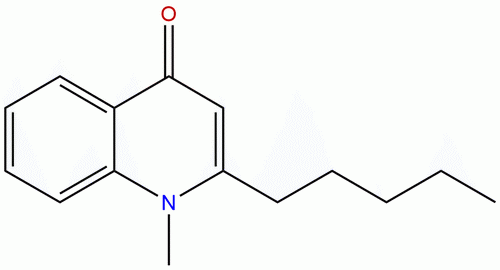
1-Methyl-2-pentyl-4 (1H) - Quinolone: Research progress and prospects for drug properties of a multi-target antibacterial natural product
Introduction/Overview
Natural products, as an important source of drug discovery, play an irreplaceable role in the long history of human fight against diseases. Among them, quinolone alkaloids have attracted much attention due to their structural diversity and wide range of biological activities. 1-Methyl-2-pentyl-4 (1H) - quinolone (MPQ) is a representative natural product of quinolone, whose chemical structure consists of a quinolone core, a pentyl side chain at C-2 position, and a methyl substituent at N-1 position. This compound was initially isolated and identified from Rutaceae plants, and has become a research hotspot in the field of natural product pharmacology in recent years due to its significant antibacterial activity.
Quinolone compounds are widely distributed in nature, especially abundant in Rutaceae, Rubiaceae, and leguminous plants. These compounds typically exhibit various pharmacological activities such as antibacterial, anti-inflammatory, anti-tumor, and anti malaria. As one of them, MPQ's unique structural features endow it with a distinct biological activity spectrum from other quinolone compounds. Of particular note is that MPQ exhibits broad-spectrum antibacterial activity against various clinical pathogenic bacteria, including methicillin-resistant Staphylococcus aureus (MRSA) and other resistant strains, making it of significant research value in today's increasingly severe antibiotic resistance.
In recent years, with the continuous emergence and spread of multidrug-resistant strains, the development of antibacterial drugs with novel mechanisms of action has become an urgent need in the global public health field. MPQ, as a naturally derived antibacterial lead compound, provides a new approach to overcome traditional antibiotic resistance due to its multi-target properties. This article will provide a systematic review of the research progress of MPQ from the aspects of chemical structure, plant origin, pharmacological activity, mechanism of action, pharmacological evaluation, and clinical application prospects, in order to provide reference for the further development and utilization of this compound.
Chemical structure and physicochemical properties
The chemical structure of MPQ belongs to 4 (1H) - quinolone alkaloids, and its core skeleton is quinolin-4 (1H) - one, which has a carbonyl group at the 4th position of the quinoline ring, and the nitrogen atom is located at the 1st position and replaced by a methyl group. Specifically, the structural features of the compound include: a n-pentyl side chain (- C5H11) is connected to the C-2 position of the quinolone parent nucleus, and the N-1 position is replaced by a methyl group (- CH3). This structural modification significantly affects the lipophilicity, intermolecular interactions, and biological activity of the compound.
From the molecular formula, the chemical formula of MPQ is C15H19NO, with a molecular weight of 229.3230 g/mol. Its LogP value is 3.5677, indicating that the compound has moderate to high lipophilicity, which is closely related to the presence of its pentyl side chain. A higher LogP value is beneficial for compounds to penetrate biological membranes, including bacterial cell membranes and the blood-brain barrier, but it may also lead to poor water solubility. In fact, the water solubility of MPQ is only 0.0234 mg/mL, which is a poorly soluble compound, which to some extent limits its formulation development and in vivo bioavailability.
The topological polar surface area (TPSA) is 22.0000 Å ², which is relatively low, indicating limited exposure of polar groups (such as carbonyl groups) in the molecule. Low TPSA values are usually associated with good membrane permeability, which is consistent with the efficient penetration of the blood-brain barrier by MPQ. It is worth noting that the blood-brain barrier penetration of MPQ has been evaluated as "high", indicating that the compound may have potential application value in central nervous system infections or related diseases, but at the same time, attention should also be paid to its possible central nervous system side effects.
From the perspective of structure-activity relationship, the antibacterial activity of MPQ is closely related to its quinolone core and side chain substituents. The length and configuration of the pentyl side chain at C-2 position have a significant impact on activity, and an appropriate length of alkyl chain helps to enhance hydrophobic interactions with the target protein. The substitution of N-1 methyl groups may affect the electronic distribution and spatial conformation of the molecule, thereby regulating its binding ability to the target. In addition, the carbonyl group at position 4 is a key pharmacophore involved in hydrogen bonding and electron transfer processes, which is crucial for maintaining antibacterial activity.
Plant sources and extraction methods
MPQ was initially isolated from Rutaceae plants, which are an important source of quinolone alkaloids. At present, the plants reported to contain MPQ mainly include: Dictamnus plants, such as Dictamnus dasycarpus; Clausena plants, such as Clausena excovata; And plants of the Toddalia genus, such as the Flying Dragon Palm Blood. These plants are often used in traditional medicine to treat infectious diseases, inflammation and skin diseases. Their pharmacological activities are closely related to the quinolinones contained in them.
Dictamnus dasycarpus is one of the most extensively studied MPQ source plants. The root bark (white fresh bark) of this plant has the effects of clearing heat and dampness, dispelling wind and detoxifying in traditional Chinese medicine, and is commonly used to treat diseases such as damp heat sores, scabies, and skin itching. Modern research has shown that the quinolone components in white fresh skin are the main material basis for its antibacterial and anti-inflammatory activities. Clausena excovata, as a traditional medicinal plant in Southeast Asia, has its leaves and roots used to treat dysentery, colds, and skin diseases, with a high content of MPQ.
The extraction method of MPQ is mainly based on its physicochemical properties, usually using organic solvent extraction combined with chromatographic separation technology. The classic extraction process includes crushing dried plant materials, cold soaking or reflux extraction with ethanol or methanol, and concentrating the extract to obtain crude extract. Subsequently, liquid-liquid extraction (using different polar solvents such as petroleum ether, chloroform, ethyl acetate, etc.) is used for preliminary separation, and MPQ is usually enriched in the moderately polar extraction sites. Further purification can be achieved through techniques such as silica gel column chromatography, reverse phase column chromatography (such as ODS), and preparative high-performance liquid chromatography (Prep HPLC). Due to its UV absorption properties, MPQ exhibits strong absorption at 254 nm or 280 nm, making it suitable for online monitoring through UV detectors.
In recent years, with the promotion of green chemistry concepts, some new extraction techniques have also been applied to the extraction of MPQ, such as ultrasound assisted extraction, microwave-assisted extraction, and supercritical fluid extraction. These technologies can improve extraction efficiency, shorten extraction time, and reduce the use of organic solvents. For example, ultrasound assisted extraction utilizes cavitation effect to destroy plant cell walls and promote the dissolution of target compounds; Supercritical CO2 extraction achieves selective extraction by adjusting pressure and temperature, making it particularly suitable for the enrichment of lipophilic components.
It is worth noting that the content of MPQ in plants is usually low and often coexists with other structurally similar quinolone compounds, which poses certain challenges for high-purity separation. Therefore, establishing an efficient and specific extraction and purification process is of great significance for the large-scale preparation and subsequent research of MPQ.
Pharmacological activity research
The pharmacological activity research of MPQ mainly focuses on the antibacterial field, but recent studies have also revealed its other biological activities such as anti-inflammatory, anti-tumor, and antiparasitic.
Antibacterial activity
MPQ exhibits inhibitory activity against various Gram positive and Gram negative bacteria. Of particular note is that MPQ exhibits significant antibacterial activity against methicillin-resistant Staphylococcus aureus (MRSA), with a minimum inhibitory concentration (MIC) typically ranging from 2-16 μ g/mL, comparable to commonly used clinical antibiotics such as vancomycin. In addition, MPQ also exhibits good activity against Gram positive bacteria such as Staphylococcus epidermidis, Enterococcus faecalis, and Streptococcus. MPQ has relatively weak activity against Gram negative bacteria such as Escherichia coli, Pseudomonas aeruginosa, and Klebsiella pneumoniae, but still has a certain inhibitory effect.
The antibacterial spectrum of MPQ also extends to fungi, and has inhibitory effects on clinically common pathogenic fungi such as Candida albicans and Aspergillus fumigatus. Research has shown that the MIC value of MPQ against Candida albicans is 8-32 μ g/mL, and its antifungal activity may be related to the inhibition of ergosterol synthesis or the disruption of fungal cell membrane integrity.
anti-inflammatory activity
In addition to its antibacterial effect, MPQ also exhibits significant anti-inflammatory activity. In vitro experiments have shown that MPQ can inhibit the production of nitric oxide (NO) and prostaglandin E2 (PGE2) in macrophages induced by lipopolysaccharide (LPS), and its mechanism may be related to the inhibition of the expression of inducible nitric oxide synthase (iNOS) and cyclooxygenase-2 (COX-2). In addition, MPQ can also reduce the levels of pro-inflammatory cytokines such as tumor necrosis factor - α (TNF - α), interleukin-6 (IL-6), and interleukin-1 β (IL-1 β). These anti-inflammatory activities suggest that MPQ may have a dual role in treating infection related inflammatory responses, namely direct antibacterial and reducing inflammatory damage.
Antitumor activity
Preliminary studies have shown that MPQ has cytotoxic effects on certain tumor cell lines. For example, MPQ can inhibit the proliferation of human liver cancer cell HepG2, human breast cancer cell MCF-7 and human lung cancer cell A549, with IC50 value in the range of 10-50 μ M. Mechanism studies suggest that MPQ may exert anti-tumor effects by inducing cell cycle arrest and apoptosis, specifically involving the activation of mitochondrial pathways and caspase cascade reactions. However, current research on the anti-tumor activity of MPQ is still relatively limited, and its in vivo anti-tumor efficacy and safety still need further validation.
Other activities
MPQ also exhibits antiparasitic activity and has a certain inhibitory effect on Plasmodium falciparum and Leishmania spp. In addition, studies have reported that MPQ has antioxidant activity and can scavenge DPPH free radicals and ABTS cationic free radicals, but its antioxidant capacity is relatively weak and may not be the main pharmacological characteristic of the compound.
Mechanism of action and molecular targets
The antibacterial mechanism of MPQ has the characteristic of multi-target action, which is an important advantage that distinguishes it from traditional single target antibiotics. The potential targets identified so far include DNA gyrases (GyrA, GyrB), cell division protein FtsZ, acetyl ACP reductase (FabI), dihydrofolate reductase (DHFR), penicillin binding protein (PBP2a, encoded by the mecA gene), penicillin binding protein (PBP, encoded by the penA gene), lanosterol 14 α - demethylase (Erg11/CYP51A1), and resistance associated efflux pump (Cdr1).
Inhibition of DNA gyrase and topoisomerase IV
DNA gyrase (composed of GyrA and GyrB subunits) and topoisomerase IV are key enzymes in bacterial DNA replication. MPQ inhibits bacterial DNA replication by binding to the GyrA and GyrB subunits, suppressing the formation of DNA supercoiled structures and chromosome segregation. Molecular docking studies have shown that the quinolone core of MPQ can form π - π stacking and hydrogen bonding interactions with the active site of GyrA, while the pentyl side chain is embedded in a hydrophobic pocket to enhance binding stability. Unlike fluoroquinolone drugs, the inhibitory effect of MPQ on GyrA does not depend on the stabilization of DNA cleavage complexes, which may explain its continued activity against fluoroquinolone resistant strains.
Inhibition of cell division protein FtsZ
FtsZ is a crucial protein in bacterial cell division, which aggregates to form a Z-ring, guiding cell wall synthesis and cell division. MPQ can bind to the GTPase domain of FtsZ, inhibiting its polymerization activity and GTP hydrolysis, thereby preventing the formation of the Z ring and bacterial division. This mechanism of action has special significance in drug-resistant strains, as FtsZ is highly conserved in bacteria and is not prone to developing drug-resistant mutations.
Inhibition of fatty acid synthesis pathway
FabI (acyl ACP reductase) is a key enzyme in the bacterial fatty acid synthesis pathway, catalyzing the final reduction reaction of fatty acid chain elongation. MPQ competitively inhibits the activity of FabI by interacting with its NADH or NADPH cofactor binding sites, thereby blocking the synthesis of bacterial cell membrane phospholipids. This mechanism of action is similar to triclosan, but MPQ still maintains activity against certain triclosan resistant strains, suggesting that its binding mode may differ.
Inhibition of dihydrofolate reductase (DHFR)
DHFR is a key enzyme in the folate metabolism pathway, catalyzing the reduction of dihydrofolate to tetrahydrofolate, which is an essential cofactor for nucleic acid synthesis. MPQ competitively inhibits the activity of DHFR by binding to its folate binding site, thereby blocking the synthesis of bacterial DNA and RNA. Compared with traditional DHFR inhibitors such as trimethoprim, MPQ still has inhibitory effects on certain drug-resistant DHFR mutants.
Inhibition of Penicillin Binding Proteins (PBP2a and PBP)
PBP2a is a penicillin binding protein encoded by the mecA gene, which is the main mechanism of MRSA resistance to beta lactam antibiotics. MPQ can bind to the transpeptidase domain of PBP2a, inhibit its catalytic activity, and restore the sensitivity of β - lactam antibiotics to MRSA. In addition, MPQ also has an inhibitory effect on PBP encoded by the penA gene, which is related to its activity against Gram negative bacteria.
Antifungal target
In terms of antifungal activity, MPQ interferes with ergosterol synthesis by inhibiting lanosterol 14 α - demethylase (Erg11/CYP51A1), disrupting the integrity and function of fungal cell membranes. In addition, MPQ can inhibit the activity of fungal efflux pump Cdr1, increase the intracellular drug concentration of fungi, and enhance the efficacy of other antifungal drugs. This dual mechanism of action gives MPQ potential advantages in antifungal therapy.
Multi target synergistic effect
The multi-target mechanism of action of MPQ is an important characteristic of its antibacterial activity. By acting on multiple key targets simultaneously, MPQ can effectively inhibit multiple metabolic pathways of bacteria and reduce the probability of drug resistance. In addition, the synergistic effect between different targets may lead to enhanced antibacterial activity, allowing MPQ to exert significant antibacterial effects at lower concentrations. This multi-target mode of action provides important insights for the development of new antibacterial drugs.
Evaluation of drug properties and pharmacokinetics
The pharmacological evaluation of MPQ involves multiple aspects, including physicochemical properties, pharmacokinetic characteristics, safety, and toxicity. According to existing data, MPQ exhibits certain potential for drug development, but there are also some shortcomings that need to be optimized.
Physical and chemical properties and drug like properties
The molecular weight of MPQ is 229.3230, which meets the requirement of Lipinski's five rules for molecular weight less than 500. Its LogP value is 3.5677, which is within the ideal range (2-5), indicating good lipid water distribution balance. The TPSA is 22.0000 Å ², far below the threshold of 140 Å ², indicating good oral absorption potential. However, the water solubility of MPQ is poor (0.0234 mg/mL), which may lead to limited oral bioavailability. According to the Biopharmaceutical Classification System (BCS), MPQ may belong to Class II drugs (low solubility, high permeability), and its dissolution and bioavailability need to be improved through formulation techniques such as solid dispersions, lipid nanoparticles, cyclodextrin inclusion complexes, etc.
Pharmacokinetic characteristics
The blood-brain barrier penetration of MPQ is evaluated as' high ', consistent with its low TPSA and high LogP values. This characteristic makes MPQ potentially advantageous in treating central nervous system infections such as meningitis and brain abscess, but also increases the risk of central nervous system toxicity. At present, there is insufficient research on the pharmacokinetics of MPQ in animals, lacking systematic absorption, distribution, metabolism, and excretion (ADME) data. Preliminary studies suggest that MPQ may be metabolized in the liver through cytochrome P450 enzyme systems (such as CYP3A4, CYP2D6), and the main metabolic pathways may include side chain oxidation and N-demethylation.
safety evaluation
The hERG inhibition assessment showed that MPQ does not have hERG potassium channel inhibitory activity, indicating a low risk of cardiac toxicity. The Ames test result is 0.9, indicating that the compound does not exhibit significant mutagenicity. However, these data are mainly based on computer predictions and preliminary in vitro experiments, and the safety of MPQ still needs to be comprehensively evaluated through systematic in vivo toxicology studies (including acute toxicity, subchronic toxicity, reproductive toxicity, and genetic toxicity). In addition, the high blood-brain barrier penetration of MPQ suggests that special attention should be paid to its central nervous system toxicity, such as neurotoxicity and decreased seizure threshold.
Optimization strategy for drug properties
In response to the shortcomings in the pharmacological properties of MPQ, optimization can be achieved through structural modification and formulation techniques. Structural modification strategies include: introducing hydrophilic groups (such as hydroxyl, carboxyl, amino) to improve water solubility; Adjusting the length of the pentyl side chain or introducing heteroatoms to regulate lipid solubility and metabolic stability; Introducing substituents on the quinoline ketone nucleus to enhance target selectivity and reduce toxicity. In terms of formulation technology, carrier systems such as liposomes, nanoemulsions, phospholipid complexes, etc. can be used to improve the solubility and bioavailability of MPQ, or its pharmacokinetic properties can be improved through prodrug design.
Clinical application prospects and prospects
MPQ, as a natural product with multi-target antibacterial activity, has shown broad prospects in clinical applications, especially for the treatment of drug-resistant bacterial infections. However, there are still many challenges in transitioning from laboratory research to clinical translation.
Application potential in antibacterial therapy
The significant activity of MPQ against resistant Gram positive bacteria such as MRSA and vancomycin resistant Enterococcus (VRE) makes it a powerful candidate drug for the treatment of resistant bacterial infections. Its multi-target mechanism of action reduces the probability of drug resistance, which is of great significance for addressing the increasingly severe antibiotic resistance crisis. In addition, the synergistic effect of MPQ with existing antibiotics such as beta lactams and fluoroquinolones suggests that it may be used as part of a combination therapy regimen to enhance efficacy and reduce drug dosage and toxicity.
Application prospects in antifungal therapy
The activity of MPQ against pathogenic fungi such as Candida albicans and its inhibitory effect on efflux pump Cdr1 give it unique advantages in antifungal therapy. Especially for azole resistant fungal infections, MPQ may restore fungal sensitivity to azole drugs by inhibiting efflux pumps, providing a new strategy for treating refractory fungal infections.
The therapeutic potential of central nervous system infections
The high blood-brain barrier penetration of MPQ makes it potentially valuable for the treatment of central nervous system infections such as bacterial meningitis and brain abscess. However, this characteristic also increases the risk of central nervous system toxicity, and its therapeutic index and safety window need to be carefully evaluated in subsequent studies.
Challenges faced and future research directions
Although MPQ has many advantages, its clinical translation still faces the following challenges: firstly, the low oral bioavailability caused by poor water solubility is the main obstacle, which needs to be improved through formulation technology or structural modification; Secondly, there is a lack of systematic pharmacokinetic and toxicological data, especially for the safety assessment of long-term use; Thirdly, the activity against Gram negative bacteria is relatively weak, which limits the breadth of their antibacterial spectrum; Fourth, the output of MPQ from natural sources is limited, and efficient chemical synthesis or biosynthesis methods need to be developed to meet the needs of large-scale production.
Future research directions should include: optimizing the antibacterial activity and drug formation of MPQ through structure-activity relationship studies; Conduct systematic in vivo pharmacological and pharmacokinetic studies; Evaluate the synergistic effect and combination therapy of MPQ with existing antibiotics; Explore the potential application of MPQ in other fields such as anti-inflammatory and anti-tumor diseases; Develop efficient and economical synthetic processes to provide sufficient compound sources for preclinical and clinical research.
Conclusion
1-Methyl-2-pentyl-4 (1H) - quinolone, as a naturally occurring quinolone alkaloid, occupies an important position in the field of natural product pharmacology due to its unique chemical structure and multi-target antibacterial mechanism. The significant activity, multi-target action characteristics, and good blood-brain barrier penetration of this compound against drug-resistant strains make it an ideal lead compound for the development of new antibacterial drugs. However, poor water solubility, lack of pharmacokinetic data, and potential toxicity issues remain the main bottlenecks restricting its clinical translation.
With the increasingly severe problem of antibiotic resistance, the development of antibacterial drugs with novel mechanisms of action has become an urgent need in the global public health field. The multi-target mode of action of MPQ provides a new approach to overcome traditional antibiotic resistance, and its research value lies not only in the compound itself, but also in providing important structural templates and mechanism of action references for designing new multi-target antibacterial drugs. In the future, through systematic structural optimization, formulation development, and comprehensive pharmacological evaluation, MPQ and its derivatives are expected to play an important role in the field of antibacterial therapy and contribute to human health.