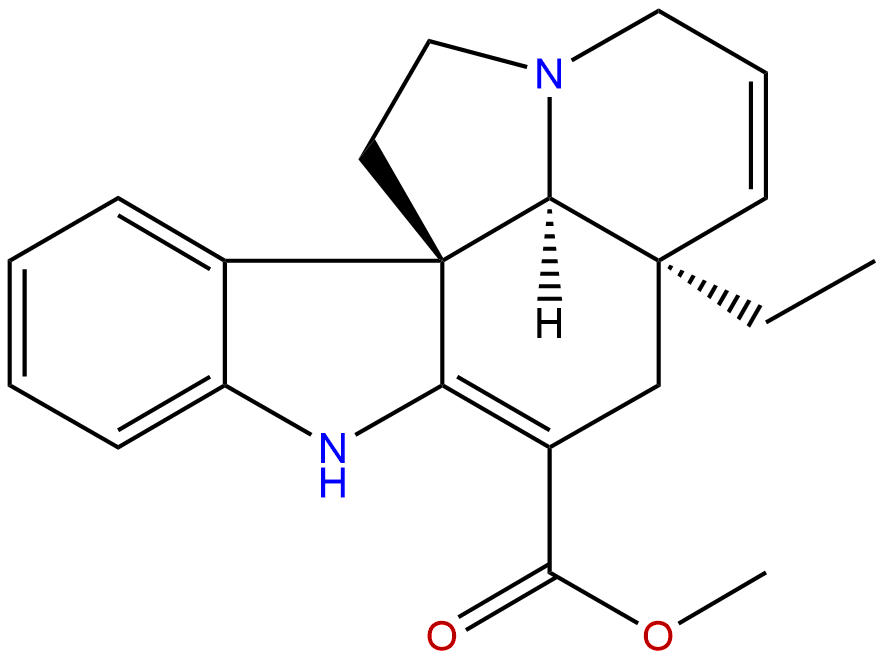


Product Name: Tabersonine
Synonym name: Tabersonine Chrolide, 29479-00-3
Catalogue No.: BP1357
Cas No.: 4429-63-4
Formula: C21H24N2O2
Mol Weight: 336.435
Botanical Source: Alkaloid from Amsonia tabernaemontana, Amsonia angustifolia, Voacanga africana and v. many other spp. in the Apocynaceae
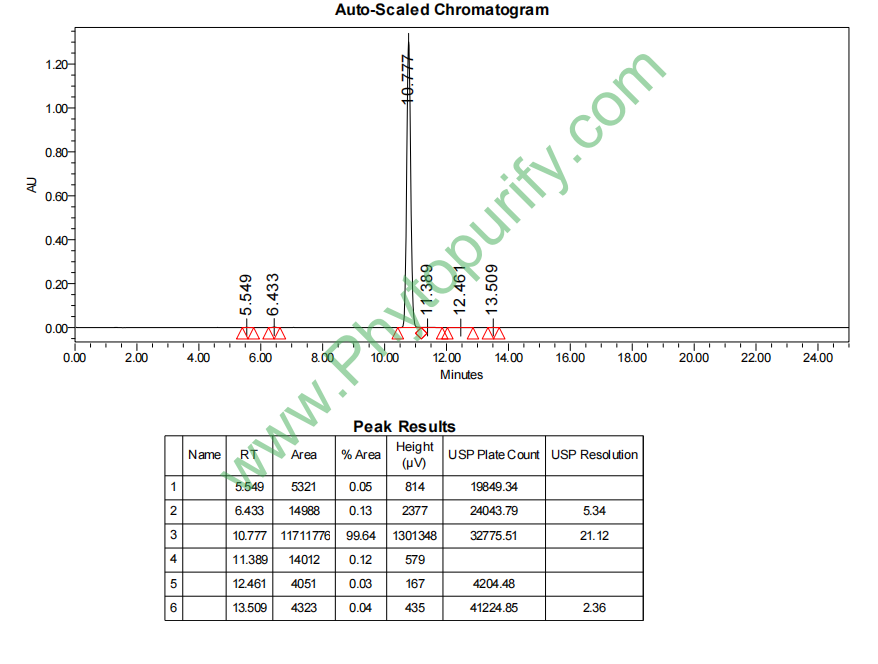
Purity: 95%~99%
Analysis Method: HPLC-DAD or/and HPLC-ELSD
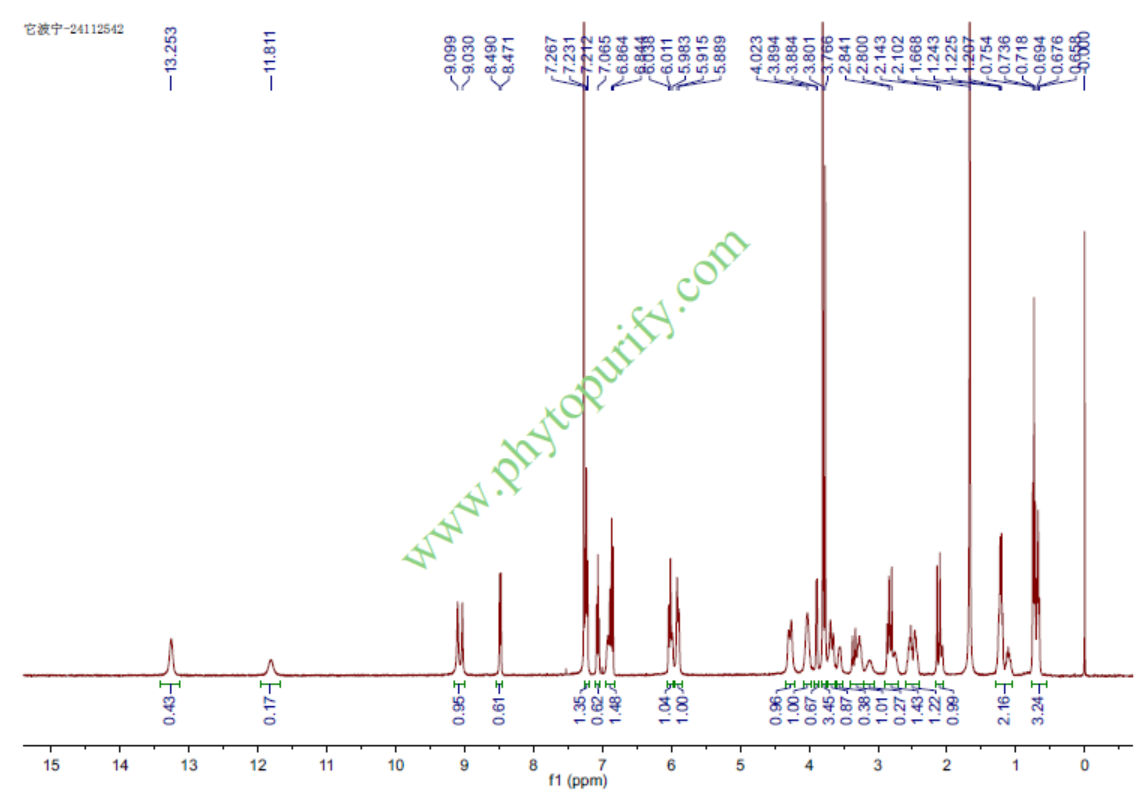
Identification Method: Mass, NMR
Packing: Brown vial or HDPE plastic bottle
Can be supplied from milligrams to grams.
For Reference Standard and R&D, Not for Human Use Directly.
Inquire for bulk scale.
Description:
Tabersonine is a precursor for vincristine used in cancer chemotherapy, the biocompatibility and small size essential for permeating the blood-brain barrier make it a potential therapeutic drug candidate for treating AD.
References:
ACS Chem Neurosci. 2015 Jun 17;6(6):879-88.
Tabersonine Inhibits Amyloid Fibril Formation and Cytotoxicity of Aβ(1-42).
The misfolding and aggregation of amyloid beta (Aβ) peptides into amyloid fibrils are key events in the amyloid cascade hypothesis for the etiology of Alzheimer's disease (AD).
METHODS AND RESULTS:
Using thioflavin-T (ThT) fluorescence assay, atomic force microscopy, circular dichroism, size exclusion chromatography, surface plasmon resonance (SPR), and cytotoxicity tests, we demonstrate that Tabersonine, an ingredient extracted from the bean of Voacanga africana, disrupts Aβ(1-42) aggregation and ameliorates Aβ aggregate-induced cytotoxicity. A small amount of Tabersonine(e.g., 10 μM) can effectively inhibit the formation of Aβ(1-42) (e.g., 80 μM) fibrils or convert mature fibrils into largely innocuous amorphous aggregates. SPR results indicate that Tabersonine binds to Aβ(1-42) oligomers in a dose-dependent way. Molecular dynamics (MD) simulations further confirm that Tabersonine can bind to oligomers such as the pentamer of Aβ(1-42). Tabersoninepreferentially interact with the β-sheet grooves of Aβ(1-42) containing aromatic and hydrophobic residues. The various binding sites and modes explain the diverse inhibitory effects of Tabersonineon Aβ aggregation.
CONCLUSIONS:
Given that Tabersonine is a natural product and a precursor for vincristine used in cancer chemotherapy, the biocompatibility and small size essential for permeating the blood-brain barrier make it a potential therapeutic drug candidate for treating AD.
Phytochemistry. 2003 Sep;64(2):401-9.
Jasmonate-induced epoxidation of tabersonine by a cytochrome P-450 in hairy root cultures of Catharanthus roseus.
Methyl jasmonate, a chemical inducer of secondary metabolism, was shown to promote Tabersonine 2 biosynthesis in hairy root cultures of Catharanthus roseus.
METHODS AND RESULTS:
Tabersonine 6,7-epoxidase activity was detected in total protein extract of jasmonate-induced hairy root cultures using labeled 14C-Tabersonine 2. This enzyme converted Tabersonine 2 to lochnericine 3 by selective epoxidation at positions 6 and 7 via a reaction dependent on NADPH and molecular oxygen. Carbon monoxide, clotrimazole, miconazole, and cytochrome C were shown to be strong inhibitors of the enzyme.
CONCLUSIONS:
The activity was found in microsomes, indicating that Tabersonine 6,7-epoxidase was a cytochrome P-450-dependent monooxygenase.
HPLC of Tabersonine
HNMR of Tabersonine
Storage conditions:Short-term storage at 2~8℃, long-term storage at -20 ~ -80℃
41.5700
3.4143
3.3252
.1288
4.0879
18.6809
High
80.0215
4.5671
No
Yes
No
Yes
No
Yes
1.2
Yes
Yes
Yes
Yes
Inflammatory response is an important defense mechanism for the body to respond to stimuli such as infection and injury, and its precise regulation is crucial for maintaining internal environmental stability. However, when the inflammatory response is excessive or out of control, it can become a common pathological basis for various acute and chronic diseases, such as sepsis, acute lung injury, neurodegenerative diseases, and various cancers. The NOD like receptor heat protein domain associated protein 3 (NLRP3) inflammasome, as a core pattern recognition receptor complex of the innate immune system, is activated upon sensing pathogen associated molecular patterns (PAMPs) and damage associated molecular patterns (DAMPs), driving the maturation and release of IL-1 β and IL-18 mediated by caspase-1. It is a key hub connecting immune activation and inflammatory damage. Therefore, targeting NLRP3 inflammasome has become a highly promising strategy for treating inflammation related diseases.
Among numerous natural products, Taberonine (also known as Taberonine), a monoterpene indole alkaloid isolated from oleander plants, has attracted much attention in recent years due to its excellent and selective NLRP3 inhibitory activity. Unlike many broad-spectrum anti-inflammatory compounds, it has been proven that Daphnin can directly target the NLRP3 protein, efficiently inhibit its assembly and activation, and simultaneously regulate multiple downstream signaling pathways. What is even more remarkable is that it exhibits selective pro apoptotic effects on liver cancer cells, revealing its dual pharmacological potential of "anti-inflammatory anti-tumor". This article aims to systematically review the chemical properties, plant sources, pharmacological activities, molecular mechanisms of action, pharmacological evaluation, and application prospects of Daphnin in related diseases, especially neuroinflammatory diseases such as Alzheimer's disease, in order to provide a comprehensive scientific perspective for the deep development and clinical transformation of this natural product.
The molecular formula of Tabonin (CAS number: 4429-63-4) is C21H24N2O2, with a molecular weight of 336.4350. Its core structure belongs to monoterpenoid indole alkaloids, which are composed of an indole ring system (serotonin moiety) fused with a complex polycyclic terpenoid structure (split cyclohexane type). This rigid multi ring skeleton provides the structural basis for its specific binding to target proteins. There are multiple chiral centers in a molecule, and their absolute configuration is crucial for its biological activity.
Based on the analysis of physicochemical parameters related to drug properties, the lipid water partition coefficient (LogP) of Daphnin is 3.4143, indicating its moderate lipophilicity, which facilitates its penetration of cell membranes and binding to targets. The topologically polar surface area (TPSA) is 41.5700 Å ², which is relatively low, further confirming its good membrane permeability. Its water solubility is 0.1288 mg/mL, which is slightly soluble. This suggests that in the development of formulations, it may be necessary to improve its solubility through salt formation or the use of solubilizers. It is particularly crucial that the computational model predicts its high blood-brain barrier (BBB) permeability, which provides an important prerequisite for its application in the treatment of central nervous system diseases such as Alzheimer's disease. However, safety warnings indicate that there may be a risk of hERG potassium channel inhibition (arrhythmogenic potential), and the Ames test value is 1.2, suggesting the need for rigorous experimental evaluation of its genetic and cardiac toxicity in subsequent development.
It mainly exists in plants of the Apocynaceae family, especially in the Changchun flower genus(Catharanthus)Water licorice genus(Amsonia)Plants. Initially, it was made from willow leaf water licorice(Amsonia tabernaemontana)It is named Liuye Water Glycyrrhizine because of its separation and identification. In addition, Changchun flower, which has important medicinal value(Catharanthus roseus)Among them, it is a key precursor substance for synthesizing various dimeric indole alkaloids with anticancer activity, such as vinblastine and camptothecin.
Organic solvent extraction is commonly used to extract it from plant materials. The common process includes: extracting or percolating dried and crushed plant materials (such as leaves and root bark) with polar solvents (such as methanol, ethanol) or mixed solvents. After vacuum concentration of the extraction solution, crude extract is obtained, which is then dissolved in acidic water (such as dilute hydrochloric acid), alkalized (such as ammonia water), and back extracted with organic solvents such as chloroform or dichloromethane to enrich total alkaloids. Further purification relies on column chromatography techniques, often using silica gel, alumina, or reverse phase silica gel (such as C18) as the stationary phase, and gradient elution with solvent systems such as petroleum ether ethyl acetate and chloroform methanol in different ratios. High performance liquid chromatography (HPLC) or preparative thin layer chromatography (PTLC) can be used to obtain high-purity terbulin monomers. In recent years, based on plant cell culture and metabolic engineering strategies, regulating the expression of key enzymes in its biosynthetic pathway (such as STR, T16H, etc.) has become a research hotspot for sustainable and efficient production of Tabonin and its derivatives.
The pharmacological activity research of Daphnin mainly focuses on its powerful anti-inflammatory and anti-tumor effects.
In terms of anti-inflammatory effects, it has shown significant protective effects in various NLRP3 driven inflammatory disease models. In a mouse model of acute lung injury induced by lipopolysaccharide (LPS), oral administration of daphnin can dose dependently alleviate lung tissue edema, inflammatory cell infiltration, and alveolar structural damage, significantly reducing the levels of IL-1 β, IL-18, and TNF - α in bronchoalveolar lavage fluid. In sepsis models induced by cecal ligation and puncture (CLP) and peritonitis models induced by ATP or monosodium urate crystals, pretreatment with Daphnin can effectively inhibit systemic or local inflammatory storms and improve animal survival rates. These effects are attributed to its direct inhibition of NLRP3 inflammasome activation.
In terms of anti-tumor activity, it has shown significant proliferation inhibition and pro apoptotic activity against various liver cancer cell lines (such as HepG2, Huh7), and relatively low toxicity to normal liver cells. Its pro apoptotic effect involves mitochondrial dysfunction (such as decreased membrane potential, cytochrome c release) and activation of the death receptor pathway. In addition, the study suggests that it may indirectly exert anti-tumor effects by inhibiting the tumor associated inflammatory microenvironment. In addition to liver cancer, its impact on other types of cancer cells is also being explored.
Of particular note is that, given its excellent blood-brain barrier permeability and multi-target properties, its potential value in neurodegenerative diseases such as Alzheimer's disease (AD) is being preliminarily revealed. The pathological process of AD is closely related to neuroinflammation, deposition of β - amyloid protein (A β), and excessive phosphorylation of Tau protein. The NLRP3 inflammasome has been confirmed to be a key link connecting A β/Tau and neuroinflammation. It not only inhibits NLRP3, but its action network also involves multiple AD related targets, such as regulating APP processing, affecting BACE1 activity, regulating pathways related to cell survival (BCL2, MCL1), autophagy (AMPK), lipid metabolism (ABCA1), and neural differentiation (NOTCH1), demonstrating the potential for multidimensional intervention in the pathological process of AD.
The study of its mechanism of action has delved into the molecular and signaling pathway levels, with its core being the specific inhibition of NLRP3 inflammasome and extensive regulation of related networks.
1. Directly inhibit NLRP3 inflammasome assembly and activation:
It has been identified as a selective, orally effective NLRP3 inhibitor. Its direct binding target is the NACHT domain of NLRP3 protein. The NACHT domain has ATPase activity, and its conformational changes and oligomerization are key steps in NLRP3 inflammasome activation. It competitively inhibits the ATPase activity of NLRP3 by occupying the ATP binding pocket of the NACHT domain, thereby preventing oligomerization of NLRP3. This process further blocks the recruitment of adaptor protein ASC and the formation of "spotted" aggregates, ultimately inhibiting the activation of caspase-1. Activated caspase-1 is responsible for cleaving pro-IL-1 β and pro-IL-18 into mature cytokines with strong pro-inflammatory activity. Therefore, it intercepts the NLRP3 inflammasome dependent IL-1 β/IL-18 release pathway at its source.
2. Inhibit the TRAF6 mediated signaling pathway:
In addition to directly targeting NLRP3, it can also inhibit K63 linked ubiquitination of tumor necrosis factor receptor associated factor 6 (TRAF6). TRAF6 is a key adaptor protein downstream of the TLR/IL-1R signaling pathway, and its ubiquitination activation is crucial for the initiation of NF - κ B and MAPK pathways. By inhibiting TRAF6, it can:
- Blocking the NF - κ B pathway Reduce the transcription of inflammation related genes (such as TNF - α, IL-6, NLRP3 itself), and decrease the expression levels of NLRP3 and pro-IL-1 β upstream, achieving dual inhibition.
- Inhibition of PI3K/Akt pathway This pathway is closely related to cell survival and proliferation, and its inhibition helps to enhance the pro apoptotic effect.
- Inhibition of p38 MAPK pathway This pathway is involved in stress response and the production of inflammatory factors.
3. Dual pathways inducing tumor cell apoptosis:
In liver cancer cells, it induces apoptosis through the following mechanisms:
- Mitochondrial (endogenous) pathway It induces a decrease in mitochondrial membrane potential and an increase in membrane permeability, leading to the release of cytochrome c from mitochondria into the cytoplasm. Cytochrome c forms apoptotic bodies with Apaf-1 and caspase-9, which in turn activate downstream effector caspases (such as caspase-3/7) to execute the apoptotic program. This process is regulated by the BCL2 family proteins (such as BCL2, MCL1), and its balance may be affected by its presence.
- Death receptor (exogenous) pathway It may also activate caspase-8 by upregulating the expression of death receptor (such as Fas) ligands or promoting receptor aggregation, thereby directly or by cleaving Bid proteins to amplify mitochondrial signals and jointly induce apoptosis.
4. Potential associations with Alzheimer's disease-related targets:
Based on network pharmacology and preliminary research, the effect of Daponin may intersect with multiple targets of AD: inhibiting NLRP3 and TLR4 can directly alleviate neuroinflammation; Potential regulation of APP and BACE1 may affect A β production; Activation through AMPK may promote autophagy to clear A β and phosphorylate Tau; Intervention with NOTCH1 may affect neural stem cell differentiation and synaptic function; The regulation of RARA and ABCA1 may involve lipid metabolism and A β clearance. These multi-target characteristics make it a potential candidate molecule for intervening in the complex pathological network of AD.
As a promising lead compound, its pharmacological evaluation has made initial progress, but still faces challenges.
Pharmacokinetic (PK) characteristics: Existing studies have shown that oral administration of Tabonil has good bioavailability in mice, which is consistent with its moderate LogP value and good membrane permeability. It can be quickly absorbed and distributed to various tissues, including crossing the blood-brain barrier into the central nervous system, which is crucial for treating brain diseases. Further systematic research is needed to elucidate its specific metabolic pathways, major metabolites, elimination half-life, and tissue distribution details in the body. Its metabolism may involve the liver cytochrome P450 enzyme system, and potential drug drug interactions require attention.
Safety (toxicology) warning:
- HERG inhibition The predictive model suggests that it may inhibit hERG potassium channels, which is a common mechanism leading to severe cardiac toxicity such as QT interval prolongation and tip twisting ventricular tachycardia. This is a key risk point that must be rigorously validated through experiments and structurally optimized on its clinical translation path to avoid.
- Genotoxicity The Ames test value is 1.2 (usually considered positive for>1.5 and negative for<1.0), located in the gray area, indicating the need for further in vitro chromosomal aberration testing and in vivo micronucleus testing to clarify its genetic toxicity risk.
- Other The non clinical safety evaluation of acute toxicity, long-term toxicity, reproductive toxicity and other standards has not been systematically reported yet, which is an indispensable part of future development.
Formulation development considerations: Due to its poor water solubility, it may be necessary to develop suitable formulation techniques to improve oral absorption efficiency and dosage accuracy, such as making nanocrystals, liposomes, cyclodextrin inclusion complexes, or solid dispersions.
Its unique mechanism of action has outlined broad prospects for its application in various disease fields.
1. NLRP3 related inflammatory diseases: This is the most direct application direction of its Boning. including:
- Urgent and severe illness Like sepsis, acute lung injury/acute respiratory distress syndrome (ALI/ARDS), acute kidney injury, peritonitis, etc., Daphnin can provide organ protection by inhibiting inflammatory storms.
- Chronic inflammation and self inflammatory diseases For example, gouty arthritis, type 2 diabetes, non-alcoholic steatohepatitis (NASH), atherosclerosis, inflammatory bowel disease (IBD), etc. It may be used to control chronic low-grade inflammation for a long time.
2. Tumor treatment: Especially in the adjuvant or combination therapy of liver cancer, it can directly induce tumor cell apoptosis and inhibit tumor promoting inflammation in the tumor microenvironment, with the effect of "killing two birds with one stone". Its combination with existing chemotherapy drugs or immune checkpoint inhibitors is worth exploring.
3. Neurodegenerative diseases: This is a highly attractive new direction. Neuroinflammation plays a central role in diseases such as Alzheimer's disease, Parkinson's disease, and multiple sclerosis. Its high BBB penetration and strong NLRP3 inhibition ability make it a promising new therapeutic agent for alleviating neuroinflammation and protecting neurons. Its multi-target characteristics may have a synergistic intervention effect on the complex pathological network of AD.
Future research prospects:
- Structural optimization and derivative development Based on its core skeleton, structural modification is carried out through medicinal chemical methods to improve its efficacy, selectivity, water solubility, and metabolic stability, while minimizing the risk of hERG inhibition and genetic toxicity. This is a key pathway for obtaining better clinical candidate compounds.
- In depth study on the mechanism of action In particular, the specific effects in neurological disease models such as AD, direct evidence of action on the listed AD related targets (AMPK, NOTCH1, etc.), and upstream and downstream pathways need to be further validated.
- Complete preclinical development package The system completes pharmacokinetic, safety pharmacology, and toxicology studies that meet regulatory requirements, providing solid data for its clinical trial application (IND).
- Explore combination therapy strategies Studying the synergistic effect of Daphnin with existing standard therapies such as A β antibodies in AD and targeted drugs in tumors may lead to the discovery of more effective treatment options.
As a plant derived monoterpene indole alkaloid, Liuye Water Glycyrrhizine (Taponin) has become a star molecule in the pharmacological research of natural products due to its core mechanism of selective inhibition of NLRP3 inflammasome, as well as its powerful anti-inflammatory, anti-tumor, and potential neuroprotective activities derived from it. It can not only directly target NLRP3 protein, but also form a multi-level pharmacological action network by regulating multiple signaling pathways such as TRAF6, NF - κ B, PI3K/Akt, etc. Its significant therapeutic effects in acute lung injury, sepsis, and liver cancer models have been confirmed, and its good penetration of the blood-brain barrier has opened the door for its entry into the field of neurodegenerative disease treatment, especially in Alzheimer's disease, a multifactorial disease, demonstrating unique potential for multi-target intervention.
Although it still faces challenges such as water solubility, potential cardiac toxicity, and genetic toxicity in terms of drug development, these are not insurmountable obstacles. Through a comprehensive strategy of modern medicinal chemistry, formulation, and toxicology, rational structural optimization and in-depth preclinical evaluation, it is entirely possible to develop it into a novel therapeutic drug for treating NLRP3 driven inflammatory diseases, as well as some tumors and neurological diseases. The research process of its application once again highlights the enormous value of discovering modern disease treatment lead compounds from traditional medicinal plants, and provides an important example for the development of immune inflammation regulators based on natural products. Future research will continue to focus on its clinical translation, and we hope that its Bonin or optimized derivatives can bring new breakthroughs to human health.
