| Catalog No | Package | Original Price | Price | Inventory | Quantity | Operating |
|---|---|---|---|---|---|---|
| SBP01467-100mg | 100mg | $20.00 | Sign in |
|


Product name: Allantoin
Synonym name:
Catalogue No.: SBP01467
Cas No.: 97-59-6
Formula: C4H6N4O3
Mol Weight: 158.117
Botanical Source:
Physical Description:
Type of Compound: Alkaloids
Purity: 95%~99%
Analysis Method: HPLC-DAD or/and HPLC-ELSD
Identification Method: Mass, NMR
Packing: Brown vial or HDPE plastic bottle
Storage: Store in a well closed container, protected from air and light. Put into refrigerate or freeze for long term storage.
Whenever possible, you should prepare and use solutions on the same day. However, if you need to make up stock solutions in advance, we recommend that you store the solution as aliquots in tightly sealed vials at -20℃. Generally, these will be useable for up to two weeks.
The product could be supplied from milligrams to grams
Inquire for bulk scale.
For Reference Standard and R&D, Not for Human Use Directly.
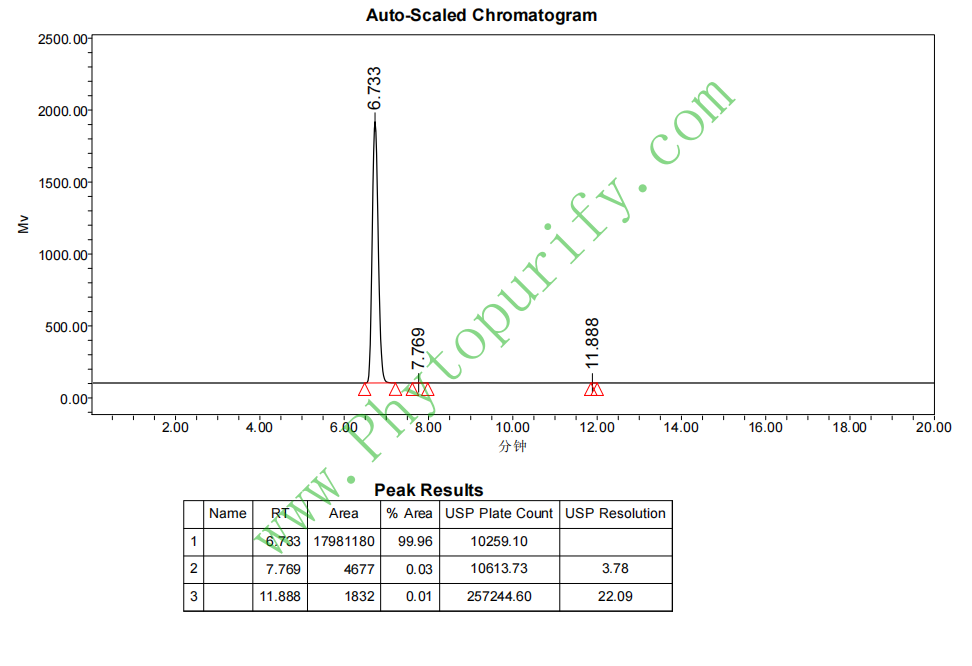
HPLC of Allantoin
Storage conditions:Short-term storage at 2~8℃, long-term storage at -20 ~ -80℃
113.3200
-2.0299
-2.0293
5.0132
.5235
1.8350
Low
12.1576
3.5011
Yes
Yes
No
No
Yes
No
0.9
Yes
Yes
Yes
Yes
Allantoin, also known as 5-aminoformyl-2,4-dioxoimidazolidine, is a small molecule heterocyclic compound widely found in nature. Since its first isolation and identification from plants in the family Verbenaceae in the late 19th century, allantoin has attracted sustained attention in the fields of dermatology and wound repair due to its unique promotion of tissue regeneration and anti-inflammatory properties. As one of the final products of purine metabolism, uracil is generated by uricase catalysis from uric acid in mammals. However, in humans and primates, due to mutations and inactivation of uricase genes, uracil mainly relies on exogenous intake.
The biological significance of allantoin goes far beyond simple metabolic waste. In recent years, with a deeper understanding of the molecular mechanisms of skin repair, it has been discovered that allantoin can exert multiple pharmacological activities such as promoting wound healing, anti-inflammatory, moisturizing, and stratum corneum softening by regulating multiple signaling pathways and gene expression. Its targets include key molecules such as the matrix metalloproteinase family (MMP2, MMP1, MMP9), epidermal growth factor receptor (EGFR), fibroblast growth factor 2 (FGF2), transforming growth factor beta 1 (TGFB1), collagen genes (COL3A1, COL4A1), vascular endothelial growth factor A (VEGFA), and integrin beta 1 (ITGB1), forming a complex regulatory network.
This article aims to systematically review the chemical structural characteristics, natural sources, pharmacological activities, mechanisms of action, pharmacological evaluation, and clinical application prospects of allantoin, in order to provide comprehensive academic references for the in-depth research and development of this classic natural product.
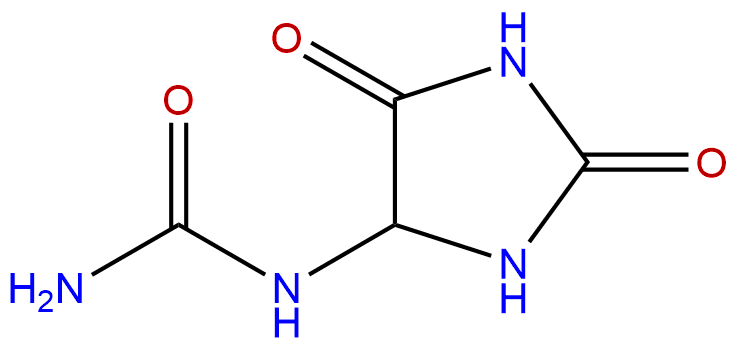
The chemical name of allantoin is (2,5-dioxo-4-imidazolidinyl) urea, with a molecular formula of C ₄ H ₆ N ₄ O3 and a molecular weight of 158.1170 g/mol. Its core structure is imidazolidine-2,4-dione (i.e. hydantoin), which is connected to a carbamoyl group (- CONH ₂) at the 5th carbon atom. From a chemical classification perspective, allantoin belongs to the derivatives of imidazolidine-2,4-dione and also has the characteristics of urea compounds.
It is worth noting that there is a phenomenon of tautomerism in allantoin. Its main tautomer is 1- (5-hydroxy-2-oxo-2,3-dihydroimidazol-4-yl) urea, which affects the hydrogen bond donor and acceptor abilities of the molecule, thereby affecting its interaction with biological targets. Crystal structure analysis shows that there is a wide range of hydrogen bonding networks within the uracil molecule, which has a significant impact on its solid-state stability and dissolution behavior.
Allantoin is a white crystalline powder, odorless and tasteless, with the following key physicochemical parameters:
These physicochemical properties determine the biopharmaceutical characteristics of allantoin: high water solubility facilitates the formulation of local formulations and uniform distribution on the skin surface, but low fat solubility limits its passive diffusion ability through the stratum corneum. However, it is precisely this hydrophilic property that forms a moisturizing film on the surface of the skin, exerting a softening effect on the stratum corneum.
Allantoin is widely distributed in nature and mainly exists from the following sources:
Plant-based The roots and leaves of plants in the family Verbenaceae, such as Lithospermum erythrorhizon and Symphytum officinale, are traditional sources of allantoin, with a content ranging from 0.6% to 1.5% of dry weight. In addition, leguminous plants (such as soybean Glycine max), Asteraceae plants (such as Calendula officinalis), and certain ferns also contain allantoin.
Microbial source Allantoin is a metabolic product of microorganisms such as Saccharomyces cerevisiae and Escherichia coli. During microbial fermentation, uric acid in the purine metabolism pathway is catalyzed by uricase to produce allantoin.
Animal source Except for humans and primates, most mammals are capable of endogenous synthesis of allantoin. The urine and placenta of ruminant animals such as cows and sheep have higher levels.
The classic extraction of allantoin uses an ethanol water mixed solvent system. Taking purple grass roots as an example, the process includes: drying and crushing plant materials with 70% ethanol for 2-3 times of reflux extraction at 60 ° C, combining the extracts, concentrating under reduced pressure, defatting with petroleum ether, decolorizing the aqueous phase with activated carbon, cooling and crystallizing to obtain crude products. The crude product can be recrystallized with ethanol water to obtain uric acid crystals with a purity of>98%.
Ultrasound assisted extraction Under the condition of 40-50 ℃, using 200-400 W ultrasonic treatment for 15-30 minutes can significantly improve the extraction efficiency, shorten the extraction time, and avoid the damage of high temperature to the active ingredients.
Microwave assisted extraction By utilizing the body heating effect of microwaves and extracting at 60-80 ℃ for 10-15 minutes in a closed system, the extraction rate of allantoin can be increased by 30% -50% compared to traditional methods.
Enzyme assisted extraction Pre treatment of plant materials with cellulase and pectinase can disrupt cell wall structure and facilitate the release of allantoin. The enzymatic hydrolysis conditions are usually pH 4.5-5.5, temperature 45-50 ℃, and enzyme dosage of 0.5% -1.0%.
Modern purification processes often use macroporous adsorption resins (such as HPD-100, D101) combined with preparative high-performance liquid chromatography. Resin column chromatography with water ethanol gradient elution can effectively remove pigments and carbohydrate impurities. The final product was vacuum dried or spray dried to obtain high purity allantoin (>99.5%).
The most notable pharmacological activity of allantoin is its ability to promote wound healing. In vitro cell experiments have shown that allantoin (10-100 μ M) can significantly promote the proliferation of human skin fibroblasts and keratinocytes, and accelerate cell migration. In animal models, local application of allantoin can shorten wound closure time, increase the formation of new granulation tissue, and enhance wound tensile strength.
It is worth noting that allantoin not only promotes acute wound healing, but also shows therapeutic potential for chronic refractory wounds (such as diabetes ulcer and pressure ulcer). Studies have confirmed that allantoin can improve the microcirculation of wound surface in diabetes rats, increase the density of new blood vessels, and promote collagen deposition.
Allantoin has clear anti-inflammatory activity. In the carrageenan induced rat plantar swelling model, local application of allantoin (1% -5% concentration) can significantly inhibit inflammatory response, with an effect comparable to 1% hydrocortisone but without hormone like side effects. Mechanism studies have shown that allantoin can inhibit the release of inflammatory mediators such as prostaglandin E2 (PGE2), interleukin-1 β (IL-1 β), and tumor necrosis factor - α (TNF - α).
In addition, allantoin has a regulatory effect on immune cell function. It can inhibit excessive infiltration and activation of neutrophils, reduce the production of reactive oxygen species (ROS), and promote macrophage polarization towards M2 anti-inflammatory phenotype, thereby creating a microenvironment conducive to tissue repair.
Allantoin is widely used as a moisturizer and keratin softener in the cosmetics industry. Its moisturizing mechanism is different from traditional glycerol or hyaluronic acid: multiple hydrogen bond donor/acceptor sites in the allantoin molecule can bind to keratin in the stratum corneum, increasing the hydration ability of the stratum corneum. Meanwhile, allantoin can promote the orderly arrangement of lipids between keratinocytes and improve skin barrier function.
Clinical studies have shown that cream containing 0.5% -2% allantoin can increase the moisture content of the stratum corneum by 15% -25% and reduce the transepidermal water loss (TEWL) by 20% -30% after continuous use for 4 weeks, with a dose-dependent effect.
Allantoin has a certain free radical scavenging ability and can inhibit UV induced skin photoaging. In a human skin fibroblast model irradiated with UVB, pretreatment with allantoin can reduce intracellular ROS levels, inhibit the expression of matrix metalloproteinases (MMP-1, MMP-9), and reduce collagen degradation. Long term local application of allantoin can alleviate the photoaging symptoms of mouse skin, including reducing wrinkle formation and improving skin elasticity.
The promoting effect of allantoin on skin repair is closely related to its regulation of MMP expression. MMP-1 (collagenase-1), MMP-2 (gelatinase A), and MMP-9 (gelatinase B) are key enzymes involved in extracellular matrix (ECM) remodeling. Moderate MMP activity is beneficial for clearing damaged ECM and cellular debris in the early stages of wound healing; However, in chronic wounds, overexpression of MMPs leads to excessive degradation of ECM, hindering the healing process.
Allantoin can bidirectionally regulate the expression of MMPs: in acute wounds, it moderately upregulates the expression of MMP-1 and MMP-2 by activating the EGFR signaling pathway, promoting cell migration and neovascularization; In a chronic inflammatory environment, the overexpression of MMP-9 is reduced by inhibiting the NF - κ B pathway to prevent excessive degradation of ECM. This sophisticated regulatory mechanism enables allantoin to adapt to the microenvironment requirements of different healing stages.
Allantoin exerts a reparative effect by activating various growth factor receptors and their downstream signaling pathways:
EGFR signaling pathway Allantoin can directly bind to and activate the epidermal growth factor receptor (EGFR), thereby activating the RAS-RAF-MEK-ERK and PI3K-AKT signaling cascades, promoting the proliferation and migration of keratinocytes and fibroblasts.
FGF2/FGFR signaling Allantoin upregulates the expression of fibroblast growth factor 2 (FGF2), activates FGFR through autocrine/paracrine mechanisms, and promotes angiogenesis and granulation tissue formation.
TGF - β 1/Smad pathway Allantoin induces the expression of transforming growth factor beta 1 (TGFB1), activates Smad2/3 signaling, promotes the differentiation of fibroblasts into myofibroblasts, and upregulates the expression of collagen (COL3A1, COL4A1) and integrin beta 1 (ITGB1), accelerating ECM deposition and wound contraction.
Vascular endothelial growth factor A (VEGFA) is a key driver of angiogenesis. Allantoin upregulates VEGFA expression through two pathways: HIF-1 α - dependent and non dependent. On the one hand, Allantoin can stabilize HIF-1 α protein and enhance its transcriptional activity; On the other hand, it directly promotes the translation of VEGFA mRNA through the PI3K AKT mTOR pathway. The newly formed capillaries provide oxygen and nutrients for repairing tissues, while also carrying away metabolic waste, which is an important guarantee for wound healing.
Integrin β 1 (ITGB1) is a key molecule involved in the interaction between cells and ECM. Allantoin upregulates the expression of ITGB1, enhances the adhesion of keratinocytes and fibroblasts to ECM, and promotes cell migration and spreading on the wound bed. In addition, ITGB1 signaling is also involved in regulating cell proliferation, differentiation, and survival, playing an important role in maintaining tissue homeostasis.
The pharmacological evaluation based on Lipinski's five rules and Veber's rules shows that:
Overall, allantoin conforms to the basic pharmacological rules of oral medication, but its extremely low LogP value suggests that oral bioavailability may be limited. The Ames test result is 0.9 (negative), indicating no genetic toxicity risk; HERG inhibition prediction is negative, indicating a low risk of cardiac toxicity.
The oral absorption of allantoin is poor, with an estimated absolute bioavailability of less than 20%. This is mainly attributed to its high hydrophilicity and low permeability (BCS Class III). When administered locally, allantoin can penetrate the stratum corneum and enter the epidermal layer, but the amount that penetrates the dermis layer is limited. Transdermal absorption studies have shown that the absorption rate of allantoin by intact skin is about 1% -3%, while in damaged skin (such as wounds), the absorption rate can be increased to 10% -20%.
Allantoin is widely distributed in the body, but mainly stays in the extracellular fluid. Due to its small molecular weight and strong hydrophilicity, it is not easily able to cross the blood-brain barrier (BBB permeability is low), which reduces the risk of central nervous system toxicity. The plasma protein binding rate is low (<10%).
Allantoin is metabolically stable in the body and is mainly excreted in its original form through the kidneys. After intravenous administration, about 80% -90% of the urinary bladder hormone is excreted from the urine within 24 hours. A small amount is excreted through bile into the intestine and can be further metabolized by gut microbiota.
Allantoin has good safety. Acute toxicity experiments showed that oral LD ₅₀>5000 mg/kg in rats belongs to the actual non-toxic level. The skin irritation and sensitization tests were both negative. In long-term toxicity studies, rats were orally administered 200 mg/kg/day continuously for 90 days, and no significant toxic reactions were observed. The allowable concentration in cosmetics is usually 0.1% -2%, and can reach up to 5% in pharmaceuticals.
Dermatology preparations Allantoin is the active ingredient of a variety of topical preparations (cream, ointment, gel), used to treat dry skin, chaps, mild burns, sunburn and diaper rash. Its compound preparations with ingredients such as vitamin E and panthenol are widely available in the market.
Wound care products: Allantoin containing dressings and sprays are used for the treatment of chronic wounds (such as diabetes foot ulcers and pressure ulcers), which can promote the growth of granulation tissue, reduce exudation and shorten the healing time.
oral care Allantoin is used for the treatment of oral ulcers, gingivitis, and periodontitis. Its anti-inflammatory and mucosal repair promoting properties help alleviate pain and accelerate healing.
cosmetics As a moisturizing and cutin softening ingredient, allantoin is added to face cream, essence, shampoo and shaving products.
Scar prevention and treatment Based on the ability of allantoin to regulate collagen metabolism and MMP activity, it has potential in the prevention and treatment of hypertrophic scars and keloids. Preliminary studies have shown that allantoin can inhibit excessive proliferation and collagen synthesis of fibroblasts, and promote remodeling of scar tissue.
Hair loss treatment Allantoin may promote the proliferation and differentiation of hair follicle stem cells and improve the hair follicle microenvironment by activating EGFR and FGF2 signaling. Animal experiments have shown that local application of allantoin can promote hair growth in mice, but clinical evidence still needs to be accumulated.
Anti-skin aging The antioxidant and MMPs inhibitory activities of allantoin make it an ideal candidate ingredient for anti-aging skincare products. Nanoformulation technology can improve its skin permeability and enhance anti-aging effects.
Mucosal repair The repairing effect of allantoin in gastrointestinal mucosal injury, oral mucosal inflammation, and vaginal mucosal injury is worth exploring. Its high safety and low irritation characteristics are suitable for mucosal administration.
To overcome the limitations of poor skin permeability of allantoin, new formulation technologies are being developed:
Liposome/Nanoliposome Carrier Encapsulating allantoin in phospholipid bilayers can increase the permeability of the stratum corneum by 2-3 times and achieve a sustained release effect.
microneedle patch Soluble microneedle array directly delivers allantoin to the epidermis and dermis, significantly improving bioavailability, especially suitable for scar and hair loss treatment.
Hydrogel/Smart Response Materials: Allantoin delivery system based on temperature sensitive or pH sensitive hydrogel can realize responsive release of wound microenvironment and improve treatment effect.
Eutectic/Eutectic Amorphous Technology Co forming molecular complexes with nicotinamide, urea, etc. can improve the solubility and permeability of allantoin, while enhancing its pharmacological activity.
As a classic natural metabolite, allantoin has been studied for over a hundred years, and its scientific significance in promoting skin repair and anti-inflammatory activity is gradually being revealed. From a chemical structure perspective, the unique combination of its imidazolidine-2,4-dione core and amino formyl side chain endows it with diverse biological activities; From a pharmacological perspective, it constructs a precise tissue repair regulatory network by regulating multiple targets such as MMPs, growth factor signaling, angiogenesis, and cell adhesion; From the perspective of drug development, its high safety, low toxicity, and clear pharmacological activity make it an ideal candidate drug for dermatology and wound repair.
However, in-depth research on uracil still faces many challenges: its direct binding mode with key targets such as EGFR has not been clearly confirmed through crystallography or molecular docking; The efficacy in complex diseases such as chronic wounds and scars requires larger scale clinical research verification; The development of new formulation technology requires a balance of multiple factors such as drug loading, stability, and permeability.
Looking ahead to the future, with the development of systems biology and network pharmacology, the multi-target regulatory mechanism of allantoin will be more comprehensively elucidated. Combining modern formulation technology and precision medicine concepts, this ancient and classic natural product is expected to bring new vitality to the fields of skin repair, anti-aging, and regenerative medicine, making greater contributions to human health.
