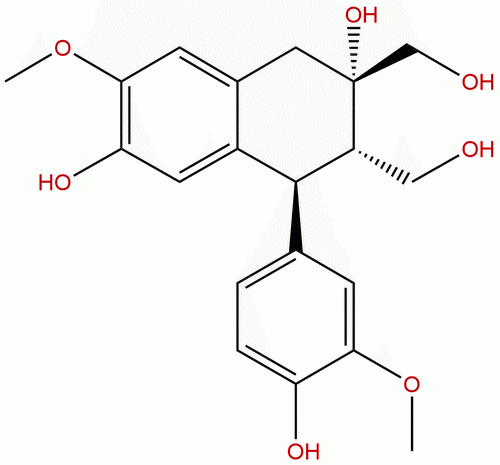


Product name: Isoolivil
Synonym name: Cycloolivil
Catalogue No.: SBP02993
Cas No.: 3064-05-9
Formula: C20H24O7
Mol Weight: 376.405
Botanical Source:
Physical Description:
Type of Compound: Lignans
Purity: 95%~99%
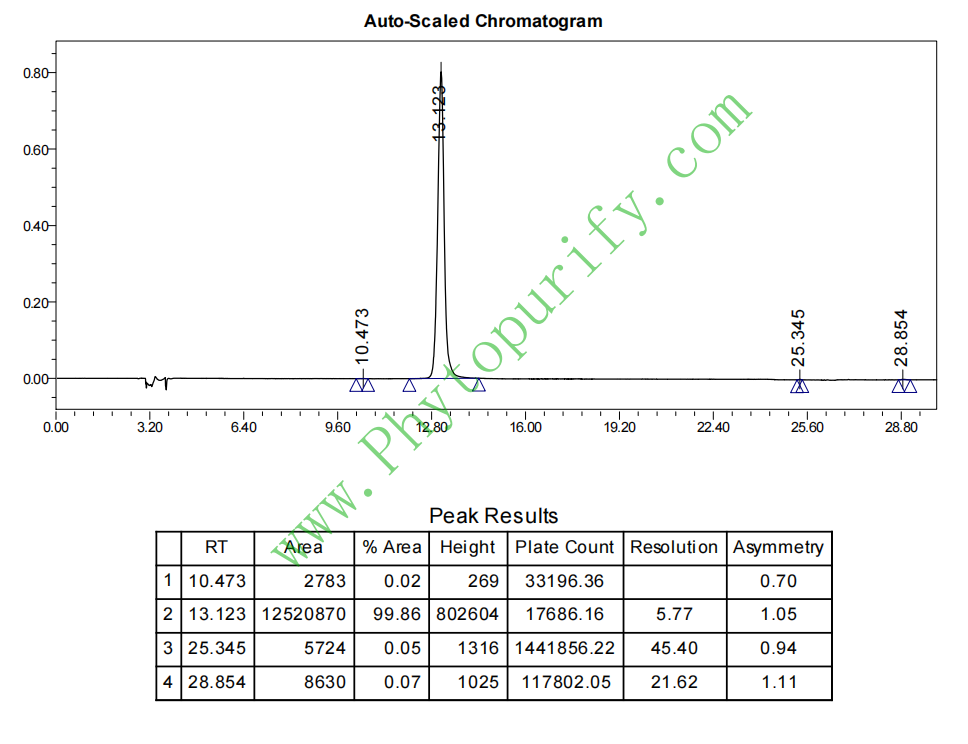
Analysis Method: HPLC-DAD or/and HPLC-ELSD
Identification Method: Mass, NMR
Packing: Brown vial or HDPE plastic bottle
The product could be supplied from milligrams to grams
Inquire for bulk scale.
For Reference Standard and R&D, Not for Human Use Directly.
HPLC of Isoolivil
Storage conditions:Short-term storage at 2~8℃, long-term storage at -20 ~ -80℃
127.3400
2.0000
No
No
No
Unknown
Unknown
No
Unknown
No
Isoolivine (CAS number: 3064-05-9) is an important natural lignan compound widely present in various plants. As a secondary metabolite of plants, lignans have received high attention in the field of natural product pharmacology in recent years due to their diverse biological activities and potential medicinal value. Isooleoresin, as the representative of cycloolivine lignans, shows significant neuroprotective, anti-inflammatory, anti-tumor, anti diabetes and cardiovascular protective effects. This article will systematically review the chemical structure and physicochemical properties, plant sources, and extraction methods of isoolivine resin, with a focus on analyzing its pharmacological activity and mechanism of action, evaluating its pharmacological and pharmacokinetic characteristics, and looking forward to its clinical application potential. The aim is to provide theoretical basis and scientific guidance for further research and development of this natural product.
Isoolivine resin belongs to the lignin class compounds, with a molecular formula of C20H24O7 and a molecular weight of 376.40. Its structural feature is a typical diphenylpropane skeleton, containing multiple phenolic hydroxyl and methoxy substituents, endowing it with strong antioxidant capacity. Its LogP value is about 2.0, indicating moderate lipophilicity that facilitates membrane penetration. However, its high polar surface area (TPSA=127.34 Å ²) and seven hydrogen bond receptors limit its ability to pass through the blood-brain barrier. The physicochemical properties of isoolivine resin limit its distribution in the body, but it may also reduce the risk of toxic side effects in the central nervous system.
Olea europaea resin mainly exists in plants of the olive family, especially in the resin and xylem of olive trees (Olea europaea) and related species. Traditional extraction methods often use solvent extraction combined with column chromatography separation technology, with commonly used solvents including methanol, ethanol, and ethyl acetate. In recent years, the application of ultrasound assisted extraction and microwave-assisted extraction technologies has significantly improved the extraction efficiency and purity of isoolivine resin. Controlling temperature and pH during the extraction process is crucial for maintaining its structural stability and biological activity. In addition, liquid chromatography-mass spectrometry (LC-MS) technology has been widely used for qualitative and quantitative analysis of isooleoresin, providing a reliable means for its quality control.
Research in the field of neuroprotection has shown that isoolivine resin can regulate various targets associated with neurodegenerative diseases, including anti apoptotic protein BCL2, amyloid precursor protein (APP), β - secretase BACE1, microtubule associated protein tau (MAPT), deacetylase SIRT1, mitogen activated protein kinase MAPK1, acetylcholinesterase ACHE, caspase CASP3, α - synuclein SNCA, and antioxidant transcription factor NRF2. By regulating these targets, isoolivine resin can alleviate oxidative stress, inhibit neuroinflammation, and reduce neuronal apoptosis, thereby exhibiting significant neuroprotective effects in neurodegenerative disease models such as Alzheimer's disease and Parkinson's disease.
The therapeutic potential of isoolivine resin for inflammatory diseases is mainly reflected in its inhibitory effect on key inflammatory mediators such as cyclooxygenase-2 (PTGS2), nuclear factor kappa B (NFKB1), tumor necrosis factor alpha (TNF), interleukin-6 (IL6), and inducible nitric oxide synthase (NOS2). Both in vitro and in vivo experiments have shown that isoolivine resin can significantly reduce the expression of inflammatory factors, inhibit the activation of inflammatory signaling pathways, alleviate inflammatory reactions, and has potential anti rheumatic, anti-inflammatory, and immunomodulatory effects.
In the field of cancer treatment, isoolivine exerts anti proliferative, pro apoptotic, and anti tumor invasion and metastasis effects by regulating key molecules such as epidermal growth factor receptor (EGFR), mitogen activated protein kinase 1 (MAPK1), phosphatidylinositol 3-kinase (PIK3CA), BCL2, and tumor suppressor protein p53 (TP53). Multiple experiments on tumor cell lines have shown that isoolivine resin can induce cell cycle arrest, activate apoptosis pathways, inhibit tumor related signaling pathways, and exhibit good anti-tumor activity.
The mechanism of isoolive resin in the treatment of diabetes mainly involves insulin receptor (INSR), glucose transporter 4 (SLC2A4), AMP activated protein kinase (PRKAA1) and protein tyrosine phosphatase 1B (PTPN1) and other targets. By enhancing insulin signaling, promoting glucose uptake and metabolism, activating energy metabolism regulatory pathways, isoolivine resin can help improve insulin resistance, regulate blood glucose levels, and demonstrate potential hypoglycemic effects.
The protective effect of oleoresin on the cardiovascular system is mainly achieved by regulating targets such as angiotensin-converting enzyme (ACE), calcium channel protein (CACNA1C), endothelial nitric oxide synthase (NOS3), and low-density lipoprotein receptor (LDLR). It can dilate blood vessels, improve hemodynamics, reduce blood pressure, inhibit the progression of atherosclerosis, reduce myocardial damage, and has significant cardiovascular protection potential.
The multi-target mechanism of action of isoolivine resin is the basis for its broad pharmacological activity. In terms of neuroprotection, isoolivine activates the NRF2 signaling pathway, enhances antioxidant defense, inhibits CASP3 mediated cell apoptosis, and regulates BCL2 family proteins to maintain cell survival. Its inhibitory effect on APP and BACE1 helps to reduce the production of β - amyloid protein and slow down the pathological progression of Alzheimer's disease.
The anti-inflammatory mechanism mainly involves blocking the NFKB signaling pathway, reducing the release of pro-inflammatory factors such as TNF and IL6, inhibiting the expression of PTGS2 and NOS2, and alleviating the inflammatory response. The anti-tumor mechanism is achieved by blocking the EGFR-MAPK and PI3K-AKT signaling pathways, regulating cell cycle proteins and apoptosis related proteins, and inhibiting tumor cell proliferation and metastasis.
In the field of diabetes, isoolive resin promotes glucose metabolism and lipid oxidation by activating AMPK pathway, while inhibiting PTPN1, enhancing insulin signal transduction and improving insulin sensitivity. The cardiovascular protective effect relies on its inhibition of ACE, reducing vascular constriction, while activating NOS3 to promote nitric oxide production, improve endothelial function, lower blood lipid levels, and prevent arteriosclerosis.
The molecular weight and LogP value of isoolivine resin conform to the ideal range of drug design, demonstrating good cell membrane permeability. However, its high polar surface area and number of hydrogen bond receptors limit its ability to pass through the blood-brain barrier, suggesting that its neurological effects may mainly be achieved through peripheral pathways or local administration. There is currently a lack of research on its hepatotoxicity, cardiotoxicity, and hERG channel inhibition effects, and further systematic evaluation of its safety is needed.
In terms of pharmacokinetics, the absorption, distribution, metabolism, and excretion (ADME) characteristics of isoolivine resin have not been fully elucidated. Preliminary studies indicate that its oral bioavailability is limited and may decrease due to first pass effects and the action of metabolic enzymes. In the future, it is necessary to strengthen the analysis of its metabolic pathways in the body, optimize the administration method and dosage form design, in order to enhance its clinical application potential.
Given the significant pharmacological activity exhibited by isoolivine resin in various disease models, its potential for development as a candidate molecule for novel natural medicines is enormous. Especially in the fields of neurodegenerative diseases, chronic inflammation, tumors, and metabolic diseases, isoolivine resin is expected to become an important component of multi-target therapy strategies.
Future research should focus on in-depth analysis of its mechanism of action, systematic evaluation of pharmacokinetics and toxicology, and validation of preclinical animal models. In addition, the development of chemical modifications and drug delivery systems based on its structural characteristics will help overcome the limitations of its bioavailability and targeting, and enhance its clinical translational value. Multidisciplinary collaboration will drive the transition of isooleoresin from laboratory research to clinical applications.
As a natural lignans with multiple biological activities, isoolive resinin shows a wide range of pharmacological potential, covering neuroprotection, anti-inflammatory, anti-tumor, anti diabetes, cardiovascular protection and other fields. Its multi-target and multi pathway mechanism of action provides new ideas for the comprehensive treatment of complex diseases. Although further research is needed on its pharmacological properties and pharmacokinetic characteristics, with the development of modern natural medicine research technology, isoolivine resin is expected to become an important candidate molecule for future natural medicine development. The in-depth research of the system will lay a solid foundation for its clinical application and promote its practical application in disease prevention and treatment.
