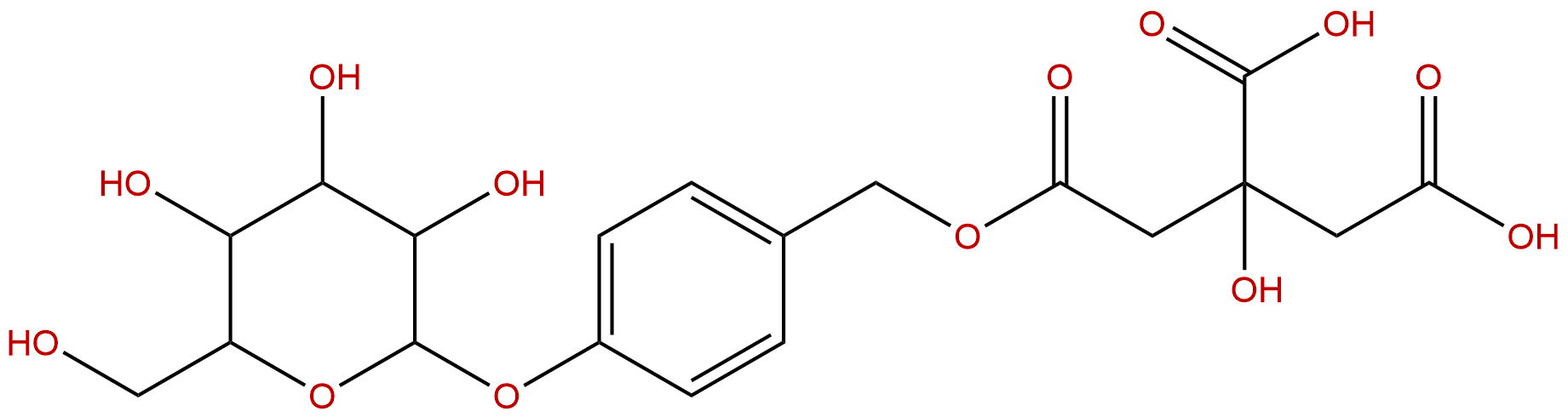


Product name: Parishin E
Synonym name:
Catalogue No.: BP1648
Cas No.: 952068-57-4
Formula: C19H24O13
Mol Weight: 460.388
Botanical Source: Gastrodia elata
Physical Description:
Type of Compound: Aliphatics
Purity: 95%~99%
Analysis Method: HPLC-DAD or/and HPLC-ELSD
Identification Method: Mass, NMR
Packing: Brown vial or HDPE plastic bottle
The product could be supplied from milligrams to grams. Inquire for bulk scale.
We provide solution to improve the water-solubility of compounds, thereby facilitating the variety of activity tests and clinic uses.
For Reference Standard and R&D, Not for Human Use Directly.
Description:
Parishin E is a natural product from Gastrodia elata.
References:
J Asian Nat Prod Res. 2012;14(5):457-62.
Two new phenolic glycosides from the rhizome of Gastrodia elata.
Two new phenolic glycosides, named parishins F-G (1-2), together with known Parishin E, were isolated from the rhizome of Gastrodia elata. The new structures were established as 1,3-di-[4-O-(β-D-glucopyranosyl) benzyl]-2-{4-O-[β-D-glucopyranosyl-(1 → 6)-β-D-glucopyranosyl] benzyl} citrate (1) and 2-[4-O-(β-D-glucopyranosyl)benzyl] citrate (2), by means of MS, 1D, and 2D NMR spectral analyses, as well as chemical methods.
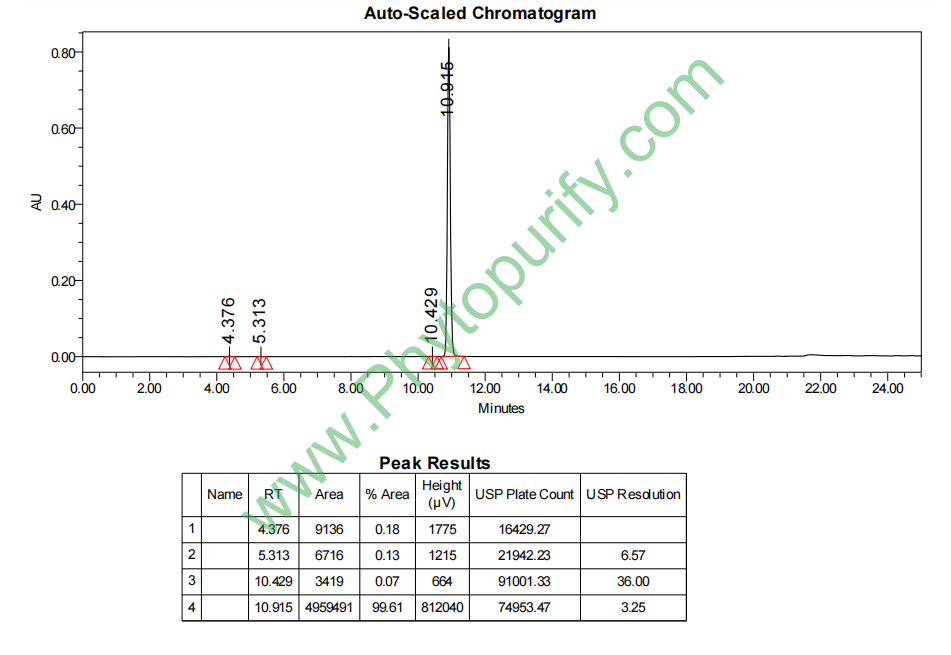
HPLC of Parishin E
Storage conditions:Short-term storage at 2~8℃, long-term storage at -20 ~ -80℃
220.5100
-.7867
-2.7983
18.8683
.4589
.0688
Low
57.4091
3.9190
Yes
No
No
No
No
No
0.0
Yes
Yes
No
Yes
Natural products, as an important treasure trove for drug discovery, play an irreplaceable role in the long history of human fight against diseases. Among them, the medicinal plant Tianma(Gastrodia elata Blume, as a traditional precious Chinese medicine, has the effects of relieving wind and spasms, calming liver yang, and clearing wind and collaterals. The research on its active ingredients has always been a hot topic in the field of natural product pharmacology. The main active substances in gastrodia elata include gastrodin and its derivatives, among which Parishin compounds, which are structurally unique and composed of gastrodin and organic acids linked by glycosidic bonds, have gradually attracted the attention of researchers. Parishin E (CAS number: 952068-57-4) is one of the important members of this family.
Palisenoside E is a derivative of Parishin isolated from fresh gastrodia elata. Preliminary research suggests that it may have significant antioxidant activity, laying a theoretical foundation for further exploration of its pharmacological effects. In recent years, with the in-depth study of the pathogenesis of tumors, especially the gradual analysis of the complex signal network of liver cancer, the search for new therapeutic drugs that can intervene with multiple targets and have high efficacy and low toxicity has become an urgent task. The potential pharmacological activity of Palisadin E, especially its potential anti-tumor effect by acting on multiple key targets closely related to the occurrence and development of liver cancer such as BCL2, STAT3, HIF1A, PIK3CA, makes it a candidate molecule of great research value.
This article aims to provide a systematic review of the chemical structure, plant origin, extraction methods, pharmacological activity, mechanism of action, medicinal properties, and clinical application prospects of Palisadin E, in order to provide comprehensive scientific references for the in-depth research and development of this compound.
The chemical structure of Palisenoside E belongs to the Parishin class of compounds. The core skeleton of this type of compound is usually composed of a molecule of gastrodin (4-hydroxybenzyl alcohol - β - D-glucopyranoside) esterified with one or more organic acids (such as citric acid, 4-hydroxybenzoic acid, etc.) through different hydroxyl groups on its glucose group. The specific structure of Palisenoside E is a derivative formed by ester bonding between gastrodin and a molecule of p-hydroxybenzoic acid. Its molecular formula is C20H28O13 and its molecular weight is 460.3880.
From the analysis of physical and chemical properties, Balisenoside E exhibits typical polar compound characteristics. The calculated lipid water partition coefficient (LogP) is -0.7867, indicating that the compound has strong hydrophilicity and weak hydrophobicity. The topologically polar surface area (TPSA) is as high as 220.5100 Å ², mainly attributed to the presence of multiple polar groups such as hydroxyl, glycosidic, and ester bonds in the molecule, which provide a large number of hydrogen bond acceptor and donor sites. High TPSA values are usually associated with poor cell membrane permeability. The predicted water solubility value is 18.8683 mg/L, which belongs to moderate to upper solubility, which is beneficial for its distribution in biological fluids.
These basic physicochemical parameters preliminarily outline the pharmacological profile of Palisadin E: it is a highly polar and water-soluble molecule, but may face challenges in transmembrane absorption, especially with limited ability to penetrate lipid bilayers through passive diffusion. Its lower LogP value also suggests that its ability to pass through the blood-brain barrier (BBB) may be weaker, which is consistent with the prediction in the subsequent drug evaluation that "blood-brain barrier: low".
Balisenoside E is specifically derived from the orchid plant Tianma(Gastrodia elata Blume's dried tubers. It is worth noting that Parishin compounds, including balisenoside E, have relatively high levels in fresh gastrodia elata, while their levels may significantly decrease or be converted into other components such as gastrodin during traditional processing (such as steaming, drying) and storage due to enzymatic or chemical degradation. Therefore, the acquisition and preservation of Palisadin E have specific requirements for the freshness of the raw materials and the extraction process.
At present, the main steps for extracting and isolating Palisenoside E from Tianma are as follows:
1. Extract Solvent extraction method is usually used. Due to its polarity, water, methanol, ethanol, or alcohol water mixed solvents with different ratios are commonly used for extraction. In order to inhibit enzyme activity and prevent degradation of Parishin compounds, the extraction process is often carried out at low temperatures or using fresh materials for rapid processing. Technologies such as ultrasound assisted extraction and microwave-assisted extraction have also been applied to improve extraction efficiency.
2. Separation and purification After filtration and concentration, the crude extract needs to be separated and purified through a series of chromatographic techniques. Due to the structural similarity between Palisenoside E and other Parishin homologs (such as Parishin A, B, C, etc.), separation is difficult. Large pore adsorption resin column chromatography is commonly used for preliminary enrichment to remove highly polar impurities such as sugars and proteins. Subsequently, fine separation was performed using silica gel column chromatography, reverse phase silica gel column chromatography (such as ODS C18), and high-performance liquid chromatography (HPLC) or preparative liquid chromatography. In recent years, high-speed countercurrent chromatography (HSCCC), as a liquid-liquid distribution chromatography technique, has shown promising application prospects in the separation of Gastrodia elata Parishin compounds due to its high separation efficiency and irreversible adsorption of samples.
3. appraisal The isolated monomeric compound needs to be structurally identified through modern spectroscopic techniques, including mass spectrometry (MS) for determining molecular weight and fragment information, nuclear magnetic resonance hydrogen spectroscopy (¹ H NMR), and carbon spectroscopy (¹ C NMR) for analyzing the chemical environment and connection mode of hydrogen and carbon atoms in the molecule, ultimately determining it as Palisadin E.
Optimizing the extraction and separation process to achieve efficient and large-scale preparation of Palisadin E is a prerequisite for its subsequent pharmacological research and development.
Although there are not yet abundant direct and systematic pharmacological research reports on Palisadin E, extensive activity studies based on its parent nucleus structure (gastrodin and Parishin compounds), as well as preliminary activity screening data, suggest that it has multifaceted pharmacological potential.
antioxidant activity This is an important characteristic that has been preliminarily identified as Palisadin E. The phenolic hydroxyl groups in its molecules (derived from the gastrodin and para hydroxybenzoic acid parts) are potential hydrogen donors that can scavenge free radicals such as superoxide anions (O ₂⁻ ·), hydroxyl radicals (· OH), and peroxyl radicals (ROO ·), thereby reducing oxidative stress damage to cells. Oxidative stress is a common pathological basis for various chronic diseases, including neurodegenerative diseases, cardiovascular diseases, and cancer. Therefore, antioxidant activity is a possible starting point for its neuroprotective, cardiovascular protective, and even anti-tumor effects.
Potential anti-tumor activity (focusing on liver cancer)Although direct anti liver cancer cell experimental data needs to be supplemented, based on its association with multiple key liver cancer targets, it can be reasonably inferred that Palisadin E may have anti liver cancer potential. Parishin compounds and gastrodin have been reported to exhibit inhibitory effects on proliferation and induce apoptosis in various tumor models. For example, studies have shown that gastrodin can inhibit the proliferation of liver cancer cells HepG2. Balisenoside E, as a potentially more active derivative, is expected to play a role in inhibiting the growth, invasion, and metastasis of liver cancer cells by acting on multiple targets that will be described in detail below.
Neuroprotective effect Parishin compounds are one of the important material bases for Tianma to exert central nervous system effects. Research has shown that Parishin A and others can improve memory impairment, protect neurons from ischemia-reperfusion injury, beta amyloid toxicity, and more. Palisadin E may alleviate oxidative damage to neurons through its antioxidant properties, and may regulate signaling pathways related to neuroinflammation and cell apoptosis, thus potentially being applied in the prevention and treatment of diseases such as Alzheimer's disease, Parkinson's disease, and stroke.
Cardiovascular protective effect Tianma extract has the effects of lowering blood pressure and improving myocardial ischemia. Palisadin E may have a protective effect on the cardiovascular system through similar mechanisms, such as antioxidant, anti-inflammatory, and regulation of endothelial function.
At present, the pharmacological activity research of Palisadin E is still in its infancy, and there is an urgent need for more in-depth and systematic efficacy verification at the cellular and animal model levels, especially for empirical research on its most promising anti liver cancer activity.
Balisenoside E may exert pharmacological effects through multiple targets and pathways, especially in the treatment of liver cancer. Based on the provided target information, the potential mechanism of action network can be summarized as follows:
Regulating cell apoptosis and survival:
Intervention in cell proliferation and signal transduction:
Impact on tumor microenvironment and stress adaptation:
Interference with DNA metabolism and replication:
In summary, Palisadin E may have constructed a multidimensional functional network that induces apoptosis, inhibits proliferation, interferes with survival signals, and disrupts tumor microenvironment adaptation and DNA stability. This multi-target characteristic may help overcome the resistance problem of single target drugs and provide new strategies for the treatment of liver cancer. However, the above mechanisms are mostly based on reasonable speculation of target association, and the specific interaction modes (such as direct binding or indirect regulation), intensity of action, and dominant pathways need to be verified and elucidated one by one through experimental methods such as molecular docking, surface plasmon resonance, gene knockdown/overexpression, and reporter gene detection.
Based on computational chemistry and preliminary in vitro experimental data, the pharmacological properties of Palisadin E can be preliminarily evaluated
Absorption and distribution:
Metabolism and excretion:
Preliminary Safety Assessment:
Challenges and Strategies in Drug Development:
At present, there is almost no pharmacokinetic research on the Palisadin E system (such as the ADME process in different animal models), which is a key data gap that must be filled for its development.
The clinical application prospects of Palisadin E mainly depend on the depth and results of its subsequent pharmacological and safety studies.
Potential application directions:
Future research prospects:
Balisenoside E, as a unique Parishin derivative isolated from Tianma, has demonstrated pharmacological value worthy of further exploration due to its potential antioxidant activity and association with multiple key targets such as liver cancer. From a chemical structure perspective, it is a highly polar and water-soluble ester glycoside, which not only endows it with certain bioavailable forms, but also brings challenges to drug development such as poor oral absorption, fast metabolism, and low BBB penetration. In terms of its mechanism of action, it may exert multi-target effects by intervening in the complex network composed of BCL2, STAT3, PIK3CA, HIF1A, etc., in inhibiting liver cancer cell proliferation, inducing apoptosis, and disrupting the tumor microenvironment.
However, current research on Palisadin E is still in its early stages, and a large amount of fundamental and translational research work urgently needs to be carried out. From experimental verification of the mechanism of action, confirmation of in vitro and in vivo efficacy, to comprehensive pharmacokinetic and toxicological evaluation, to formulation optimization or structural modification targeting its shortcomings, every step is a necessary path for it to move from a "potential active compound" to a "candidate drug". With the continuous development of modern pharmacology, medicinal chemistry, and pharmaceutical technology, Palisadin E is expected to be developed into a new drug or adjuvant therapy for the treatment of liver cancer and other diseases on the basis of clarifying its scientific connotation, providing another example for the modern research and utilization of natural products.
