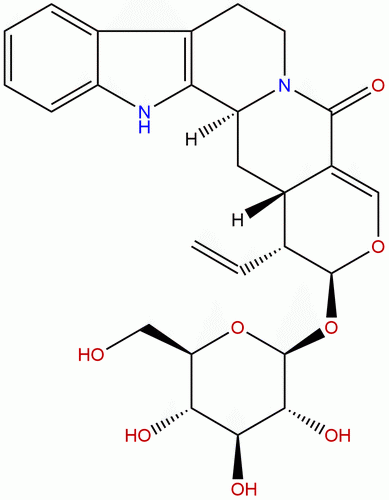
Strictosamide: Research progress from natural products to multi-target drugs
Introduction/Overview
Natural products, as an important source of drug discovery, play an irreplaceable role in the long history of human fight against diseases. From the miracle of artemisinin's anti malaria effect to the breakthrough of paclitaxel's anti-cancer effect, plant secondary metabolites have always been an important lead compound library for modern drug development. Among numerous natural products with biological activity, monoterpenoid indole alkaloids (MIA) have attracted much attention due to their structural diversity and extensive pharmacological activities. Strictosamide, as an important member of this class of alkaloids, has gradually become a hot molecule in natural product pharmacology research in recent years.
Strictosamide (CAS number: 23141-25-5) is a compound derived from the madder family plant Ulbergia(Nauclea officinalis)Monoterpenoid indole alkaloid glycosides isolated from the middle. As a traditional Chinese medicinal herb, ebony is commonly used in folk medicine to treat diseases such as fever, inflammation, pain, and wound infections. Modern pharmacological research has confirmed that isovinca glycosides have various biological activities such as anti-inflammatory, analgesic, antiparasitic, antifungal, and wound healing promoting effects, especially showing remarkable potential in the field of anti-tumor.
With the development of systems pharmacology and network pharmacology methods, researchers have gradually revealed the multi-target action characteristics of isovinca glycosides. This compound can simultaneously act on multiple molecular targets closely related to tumor occurrence and development, such as MCL1, BCL2, STAT3, MMP2, TOP1, HIF1A, TOP2A, MAPK1, ESR1, CYP19A1, etc., exhibiting typical multi-target drug characteristics. This multi-target mode of action not only provides new ideas for tumor therapy, but also provides important examples for understanding the overall regulatory role of natural products in complex diseases.
This article will provide a comprehensive and systematic review of the research progress on isovinca glycoside lactam from the aspects of chemical structure, plant origin, pharmacological activity, mechanism of action, pharmacological evaluation, and clinical application prospects, in order to provide reference for the in-depth research and development of this natural product.
Chemical structure and physicochemical properties
Chemical structural characteristics
Isovinca glycoside lactam belongs to the monoterpene indole alkaloid glycoside class, and its chemical structure consists of three main parts: indole ring system, monoterpene lactam skeleton, and sugar moiety. Specifically, the compound has strictosidine as its core skeleton and forms its unique four ring system through intramolecular cyclization. The sugar moiety is glucose, which is connected to the aglycone through β - glycosidic bonds. This glycosylation modification not only increases the water solubility of the molecule, but also affects its biological activity and pharmacokinetic characteristics.
From the perspective of stereochemistry, isovinca glycosides have multiple chiral centers, and their absolute configuration is crucial for their biological activity. The indole ring system in the molecule endows it with UV absorption properties, while the lactam ring provides hydrogen bond donor and acceptor sites for interaction with biological targets. This structural feature enables specific interactions between isovinca glycosides and various protein targets, thereby exerting pleiotropic pharmacological activity.
Physical and chemical property parameters
According to the results of computational chemistry and experimental measurements, the key physicochemical properties of isovinca glycoside lactam are as follows:
- molecular weight:498.5320 Da, Belonging to medium molecular weight natural products, it conforms to the general characteristics of drug like molecules.
- Lipid water partition coefficient (LogP)0.1860 indicates that the compound has lower fat solubility and is more likely to be distributed in aqueous environments. This characteristic is consistent with its glycosylation structure, indicating that its oral absorption may be limited to some extent.
- Polarized surface area (TPSA)The high polar surface area of 144.7100 Å ² suggests that the molecule contains multiple hydrogen bond donor and acceptor groups, which facilitate hydrogen bond interactions with target proteins, but may also affect its transmembrane transport ability.
- Water solubility:1.8667 mg/mL, It exhibits good water solubility, which provides convenience for its distribution and administration in organisms.
- Blood-brain barrier penetrability Low, according to calculations and predictions, isovinca glycosides are not easily able to penetrate the blood-brain barrier, which to some extent limits their application in central nervous system diseases, but also reduces the risk of central nervous system toxicity.
- HERG inhibition Negative indicates that the compound does not have a significant hERG potassium channel inhibitory effect and has a low risk of cardiac toxicity.
- Ames test: 0.0, indicating that the compound did not exhibit mutagenicity in the bacterial recovery mutation test and has a low risk of genetic toxicity.
Overall, the physicochemical properties of isovinca glycosides exhibit typical natural product glycoside characteristics: good water solubility, moderate molecular weight, low lipid solubility, and good safety prediction. These properties provide favorable conditions for its use as a lead compound in drug development, but also suggest the need to pay attention to pharmacokinetic issues such as its oral bioavailability.
Plant sources and extraction methods
Main plant sources
Isovinca glycoside lactam was originally derived from the Rubiaceae plant Ulbergia(Nauclea officinalis)Separation and identification in the middle. Ebony, also known as gall wood or ebony, is mainly distributed in southern China (such as Hainan, Guangdong, Guangxi, etc.) and Southeast Asia. In traditional medicine, the bark and root bark of ebony are used to treat fever, inflammation, dysentery, malaria, and promote wound healing.
In addition to ebony, isovinca glycoside lactam has also been found in other plants of the Rubiaceae family, including:
- Gouteng genus(Uncaria)Like hooked vine(Uncaria rhynchophylla)Large leaved hooked vine(Uncaria macrophylla)These plants are used in traditional Chinese medicine to treat hypertension, headaches, and seizures.
- Ebony genus(Nauclea)Other ebony plants such as Nauclea latifolia、Nauclea diderrichii It has also been reported to contain this compound.
- Chicken shit vine genus(Paederia)The presence of isovinca glycoside lactam has also been detected in some plants of the Caryophyllum genus.
It is worth noting that the content of isovinca glycosides varies greatly in different plants and is influenced by factors such as growth environment, harvest season, and plant location. Generally speaking, ebony has a higher content in its bark and root bark, while its content is relatively lower in its leaves and stems.
Extraction and Separation Purification Methods
Traditional extraction methods
The traditional method of extracting isoanthocyanins and lactams mainly uses solvent extraction. Due to its good water solubility and certain alcohol solubility, commonly used extraction solvents include methanol, ethanol, water, or their mixed solvents. The specific process usually includes:
- Raw material pretreatment Crush dry plant material (usually bark or root bark) to an appropriate particle size.
- Solvent extraction Using methods such as cold soaking, hot reflux, or ultrasound assisted extraction, using 70% -95% ethanol or methanol as the extraction solvent, the extraction time is generally 2-4 hours, and repeated 2-3 times.
- Concentration and preliminary purification Combine the extraction solutions, concentrate under reduced pressure to obtain a paste, and then perform liquid-liquid extraction (usually using solvents such as petroleum ether, ethyl acetate, n-butanol for fractional extraction) to enrich isovinca glycoside lactam in the n-butanol extraction site.
- chromatographic separation: Silica gel column chromatography, ODS reverse phase column chromatography, Sephadex LH-20 gel column chromatography and other methods were used for further separation and purification. Finally, high-purity compounds were obtained by preparative high performance liquid chromatography (HPLC).
Modern extraction techniques
In recent years, various modern extraction techniques have been developed to improve extraction efficiency and purity
- Ultrasound assisted extraction Using the cavitation effect of ultrasound to destroy plant cell walls, accelerate solvent permeation and solute diffusion, can significantly shorten extraction time (usually 15-30 minutes) and improve extraction efficiency.
- Microwave assisted extraction By microwave heating, the internal water of plants evaporates to generate pressure, promoting cell rupture, and suitable for extracting compounds with good thermal stability.
- Supercritical fluid extraction Using supercritical CO ₂ as the extraction solvent, selective extraction can be achieved by adjusting pressure and temperature, which has the advantages of green environmental protection and no solvent residue, but the equipment cost is relatively high.
- High-speed countercurrent chromatography Based on the liquid-liquid distribution principle, there is no need for a solid stationary phase, which can avoid irreversible adsorption and is suitable for preparation grade separation and purification.
Quality Control and Analysis Testing
The qualitative and quantitative analysis of isovinca glycosides mainly relies on high-performance liquid chromatography (HPLC) and liquid chromatography-mass spectrometry (LC-MS) techniques. Common chromatographic conditions include: C18 reversed-phase chromatographic column, mobile phase is acetonitrile water or methanol water system (0.1% formic acid or acetic acid is often added), and detection wavelength is 254 nm or 280 nm. Mass spectrometry detection usually uses electrospray ionization source (ESI) to conduct quantitative analysis of multiple reaction monitoring (MRM) in positive ion mode.
Pharmacological activity research
anti-inflammatory activity
Isovinca glycosides have shown significant anti-inflammatory effects in various inflammatory models. In vitro studies have shown that this compound can inhibit the production of nitric oxide (NO), prostaglandin E ₂ (PGE ₂), and pro-inflammatory cytokines (such as TNF - α, IL-1 β, IL-6) in macrophages stimulated by lipopolysaccharide (LPS). Its anti-inflammatory mechanism is closely related to the inhibition of nuclear factor kappa B (NF - κ B) signaling pathway and mitogen activated protein kinase (MAPK) signaling pathway.
In animal models, isovinca glycoside lactam can alleviate carrageenan induced toe swelling in rats, xylene induced ear swelling in mice, and cotton ball induced granuloma formation in rats. It is worth noting that the anti-inflammatory activity of this compound exhibits a dose-dependent pattern, and no significant gastrointestinal damage or other common side effects of nonsteroidal anti-inflammatory drugs were observed within the effective dose range.
Analgesic activity
The analgesic effect of isovinca glycoside lactam has been validated in various pain models. In the acetic acid writhing test, the compound was able to significantly reduce the number of writhing events in mice, indicating its peripheral analgesic effect. In both hot plate and formalin tests, the inhibitory effect of isovinblastin on pain response suggests that it may have both central and peripheral analgesic mechanisms.
Further research has found that the analgesic effect of isovinca glycosides may be related to the inhibition of the release of inflammatory mediators such as PGE ₂ and bradykinin, as well as the regulation of the opioid receptor system. Compared with classic analgesics such as morphine, isovinblastin did not show significant tolerance and dependence, suggesting that it may have better safety.
Anti malaria activity
Given that ebony is used in traditional medicine to treat malaria, researchers have conducted a systematic evaluation of the antiparasitic activity of isovinca glycoside lactam. In vitro anti malarial activity tests showed that the compound was effective against chloroquine sensitive strain (3D7) and chloroquine resistant strain (Dd2) of Plasmodium falciparum(Plasmodium falciparum)All showed inhibitory activity, with a half maximal inhibitory concentration (IC ₅₀) at the micromolar level.
Research on the mechanism of action suggests that isovinca glycosides may exert anti malarial effects by inhibiting the heme detoxification pathway of malaria parasites or interfering with their nucleic acid metabolism. Compared with artemisinin based drugs, the mechanism of action of isoleucine glycosides is different, which provides a potential candidate molecule for the development of antimalarial combination therapies.
Antifungal activity
Isovinca glycoside lactam exhibits inhibitory effects on various pathogenic fungi, including Candida albicans(Candida albicans)Cryptococcus neoformans(Cryptococcus neoformans)And some skin fungi. Its antifungal mechanism may be related to the disruption of fungal cell membrane integrity, inhibition of ergosterol synthesis, or interference with fungal mitochondrial function.
It is worth noting that isovinca glycosides have low toxicity to mammalian cells and exhibit good selectivity, which provides favorable conditions for their use as lead compounds for antifungal drugs.
Promoting wound healing activity
In traditional applications, ebony is used to promote wound healing, and modern research has confirmed that isovinca glycoside lactam does indeed have wound healing promoting activity. In vitro cell experiments have shown that the compound can promote the proliferation and migration of fibroblasts and keratinocytes, while upregulating the expression of collagen I, III, and vascular endothelial growth factor (VEGF).
In animal skin injury models, local application of isovinca glycoside lactam can accelerate wound closure, increase granulation tissue formation, promote angiogenesis, and reduce scar formation. These effects may be related to the regulation of the transforming growth factor - β (TGF - β) signaling pathway and the activity of matrix metalloproteinases (MMPs).
Antitumor activity
The anti-tumor activity of isovinca glycoside lactam is one of its most concerned pharmacological effects. A large number of studies have shown that this compound has the effect of inhibiting proliferation and inducing apoptosis on a variety of tumor cell lines, including breast cancer (MCF-7, MDA MB-231), lung cancer (A549, H1299), liver cancer (HepG2, Huh7), colorectal cancer (HCT116, SW480), prostate cancer (PC3, DU145) and leukemia (HL-60, K562).
The anti-tumor mechanism of isovinca glycoside lactam involves multiple aspects:
- Inducing apoptosis By activating the mitochondrial apoptosis pathway, upregulating the Bax/Bcl-2 ratio, releasing cytochrome c, and activating the caspase cascade reaction.
- cell cycle arrest Block tumor cells in G0/G1 or G2/M phase to inhibit cell proliferation.
- Inhibit invasion and metastasis Inhibiting the migration and invasion ability of tumor cells by downregulating the expression of MMP-2 and MMP-9.
- Angiogenesis inhibition Inhibit the expression of HIF-1 α and VEGF, and block tumor angiogenesis.
- Reverse multidrug resistance Downregulate the expression of P-glycoprotein (P-gp) and increase the sensitivity of drug-resistant tumor cells to chemotherapy drugs.
Mechanism of action and molecular targets
Multi target action characteristics
Systems pharmacology and network pharmacology studies have revealed the multi-target action characteristics of isovinca glycosides. Through molecular docking, molecular dynamics simulations, and in vitro target validation experiments, researchers have identified that the compound can interact with multiple protein targets closely related to tumor occurrence and development.
Anti apoptotic protein targets
Isovinca glycosides can directly bind to anti apoptotic proteins such as MCL1 and BCL2, inhibiting their anti apoptotic function. MCL1 and BCL2 are important members of the Bcl-2 family, overexpressed in various tumors, and closely related to tumor occurrence, development, and chemotherapy resistance. Molecular docking studies have shown that isovinca glycosides can embed into the BH3 binding grooves of MCL1 and BCL2, competitively inhibiting their binding to pro apoptotic proteins such as Bim and Bid, thereby releasing pro apoptotic signals and inducing tumor cell apoptosis.
Signal transduction targets
STAT3 (Signal Transduction and Transcription Activation Factor 3) is one of the important targets of isovinca glycosides. This compound can inhibit the phosphorylation activation of STAT3, block its nuclear translocation, and inhibit the transcription of downstream target genes (such as Cyclin D1, Survivor, VEGF). In addition, isovinca glycoside lactam can regulate the activity of MAPK1 (ERK2) and affect the conduction of the RAS-RAF-MEK-ERK signaling pathway.
Nuclear receptors and metabolic enzyme targets
The regulation of vinblastin lactam on ESR1 (estrogen receptor α) and CYP19A1 (aromatase) makes it potentially valuable in the treatment of hormone dependent tumors (such as breast cancer). This compound can competitively bind to ESR1 and inhibit estrogen signaling; Simultaneously inhibiting the activity of CYP19A1 and reducing the conversion of androgens to estrogens, thereby lowering estrogen levels in the body.
Epigenetics and transcriptional regulatory targets
HIF1A (hypoxia inducible factor 1 α) is one of the important targets of isovinca glycosides. Under hypoxic conditions, this compound can promote the degradation of HIF1A, inhibit its transcriptional activity, thereby reducing the expression of hypoxia responsive genes such as VEGF and GLUT1, and exerting anti angiogenic and anti metabolic reprogramming effects.
DNA Topoisomerase Target
The inhibitory effect of icariin on TOP1 and TOP2A is similar to that of classical topoisomerase inhibitors such as camptothecin and etoposide. By stabilizing the topoisomerase DNA cleavage complex, this compound can induce DNA damage, activate the DNA damage response pathway, and ultimately lead to tumor cell death.
Mechanism of action from the perspective of network pharmacology
From the perspective of network pharmacology, isovinca glycoside lactam exerts synergistic anti-tumor effects by acting on multiple targets and interfering with multiple signaling networks within tumor cells. This multi-target mode of action has the following advantages:
- Overcoming drug resistance Simultaneously acting on multiple signaling pathways, reducing the likelihood of tumor cells developing drug resistance through mutations in a single pathway.
- Reduce toxicity A lower dose acting on multiple targets may have a better therapeutic index than a higher dose acting on a single target.
- Overall adjustment It can simultaneously regulate multiple processes in the tumor microenvironment, including tumor cell proliferation, apoptosis, angiogenesis, immune escape, etc.
Evaluation of drug properties and pharmacokinetics
Drug Evaluation
Based on Lipinski's Rule of Five and Veber's Rule, evaluate the drug properties of isovinca glycoside lactam:
-The molecular weight (498.53 Da) is slightly higher than the threshold of 500 Da, but still within an acceptable range.
-LogP (0.186) is much lower than 5, which meets the requirements.
-The number of hydrogen bond donors (approximately 6-7) is slightly higher than the threshold of 5.
-The number of hydrogen bond acceptors (approximately 11-12) is slightly higher than the threshold of 10.
-The number of rotatable keys is moderate and meets the requirement of no more than 10 according to the Veber rule.
Overall, the pharmacological parameters of isovinca glycosides are generally consistent with the characteristics of drug like molecules, but the high number of hydrogen bond donors and acceptors may affect their oral absorption and membrane permeability.
Pharmacokinetic properties
absorb
Due to the presence of a sugar moiety in the molecule, isovinca glycosides have good water solubility but low lipid solubility, which may limit their oral absorption. Research has shown that the compound has low permeability in the small intestine and may belong to BCS (Biopharmaceutical Classification System) Class III or IV drugs. Strategies to improve oral bioavailability include: preparing prodrugs, using absorption enhancers, designing nano delivery systems, etc.
distribution
The distribution volume of isovinca glycosides is moderate, mainly distributed in extracellular fluid. Due to the low penetration of the blood-brain barrier, the distribution of the central nervous system is limited. The binding rate of this compound to plasma proteins still needs further investigation.
Metabolism
Preliminary studies have shown that isovinca glycosides undergo mainly glycosidic bond hydrolysis and oxidative metabolism in vivo. The gut microbiota may be involved in the cleavage of glycosidic bonds, releasing glycosidic components. The liver cytochrome P450 enzyme system (especially CYP3A4) may be involved in its oxidative metabolism. The biological activity of metabolites and their relationship with parent compounds deserve further exploration.
excretion
Isovinca glycosides and their metabolites are mainly excreted through bile and urine. Due to its large molecular weight and polar functional groups, bile excretion may be its main clearance pathway.
safety evaluation
As mentioned earlier, isovinca glycoside lactam was negative in the Ames test and had a low risk of hERG inhibition, indicating a low risk of genetic and cardiac toxicity. Acute toxicity studies have shown that the compound has a high LD50 (LD50) and a wide safety window. Long term toxicity studies are not yet sufficient, and further repeated administration toxicity tests and reproductive toxicity tests are needed.
Clinical application prospects and prospects
Prospects of anti-tumor applications
Based on the multi-target anti-tumor activity of isovinca glycoside lactam, it has potential application value in the following tumor types:
- breast cancer: By simultaneously acting on ESR1, CYP19A1, MCL1, STAT3 and other targets, vinblastin lactam may be effective against hormone receptor positive and triple negative breast cancer.
- liver cancer By inhibiting the HIF1A, STAT3, and MAPK1 signaling pathways, this compound may suppress the proliferation, invasion, and angiogenesis of liver cancer cells.
- colorectal cancer By inducing apoptosis and inhibiting TOP1/TOP2A activity, isovinca glycoside lactam may have therapeutic effects on colorectal cancer.
- leukemia By regulating Bcl-2 family proteins and STAT3 signaling, this compound may be effective against hematological malignancies such as acute myeloid leukemia.
Combination therapy strategy
Given the multi-target action characteristics of isovinca glycoside lactam, its combination with existing chemotherapy drugs or targeted drugs may produce synergistic effects. For example:
-Combined use with paclitaxel may enhance anti-tumor effects by simultaneously acting on microtubules and apoptotic pathways.
-Combined use with cisplatin may overcome drug resistance by inhibiting DNA repair and inducing apoptosis.
-Combined use with immune checkpoint inhibitors may enhance the efficacy of immunotherapy by regulating the tumor microenvironment.
Development direction of formulations
To overcome the pharmacokinetic limitations of isovinca glycoside lactam, the following formulation strategies are worth exploring:
- liposome Improve the solubility and bioavailability of drugs to achieve targeted delivery.
- polymeric nanoparticles Extend the circulation time of drugs in the body and increase tumor tissue accumulation.
- Phospholipid complex Improve the lipid solubility of drugs and promote oral absorption.
- Prodrug design Improve membrane permeability or achieve targeted release through chemical modification.
Structural modification and structure-activity relationship
Structural modification of isovinca glycoside lactam is expected to obtain derivatives with stronger activity and better pharmacokinetic properties. Possible modification sites include:
- Glycosyl portion Remove or replace sugar groups to alter water solubility and metabolic stability.
- Lactam ring Introducing substituents to regulate the binding affinity with the target.
- Indole ring Perform modifications such as halogenation and methylation to improve metabolic stability.
Conclusion
As a monoterpene indole alkaloid glycoside derived from the traditional medicinal plant ebony, isovinca glycoside has shown great potential as a natural drug lead compound due to its multiple pharmacological activities such as anti-inflammatory, analgesic, antimalarial, antifungal, wound healing promoting, and anti-tumor effects. Especially its multi-target anti-tumor activity characteristics provide a unique molecular template for the development of new anti-tumor drugs.
From a chemical structure perspective, the glycosylation modification of isovinca glycosides endows them with good water solubility and safety characteristics, but also brings about pharmacokinetic challenges such as low oral bioavailability. Future research should focus on the following aspects: firstly, to deeply elucidate the molecular mechanisms of its interactions with various targets, providing a theoretical basis for structural optimization; Secondly, develop new drug delivery systems to improve their pharmacokinetic properties; Thirdly, conduct systematic in vivo pharmacological and toxicological evaluations to lay the foundation for clinical trials; Fourthly, explore its synergistic effects with other drugs and develop combination therapy plans.
With the continuous development of systems biology and network pharmacology methods, the research paradigm of multi-target natural products such as isovinca glycosides will provide important insights for modern drug discovery. Extracting active molecules with multi-target regulatory effects from traditional medicinal plants, combined with modern medicinal chemistry and pharmacology techniques for optimized development, is expected to provide new solutions for the treatment of complex diseases. The research process of isovinca glycoside lactam is a vivid practice of this concept, and its future transformation and application are worth looking forward to.