Introduction/Overview
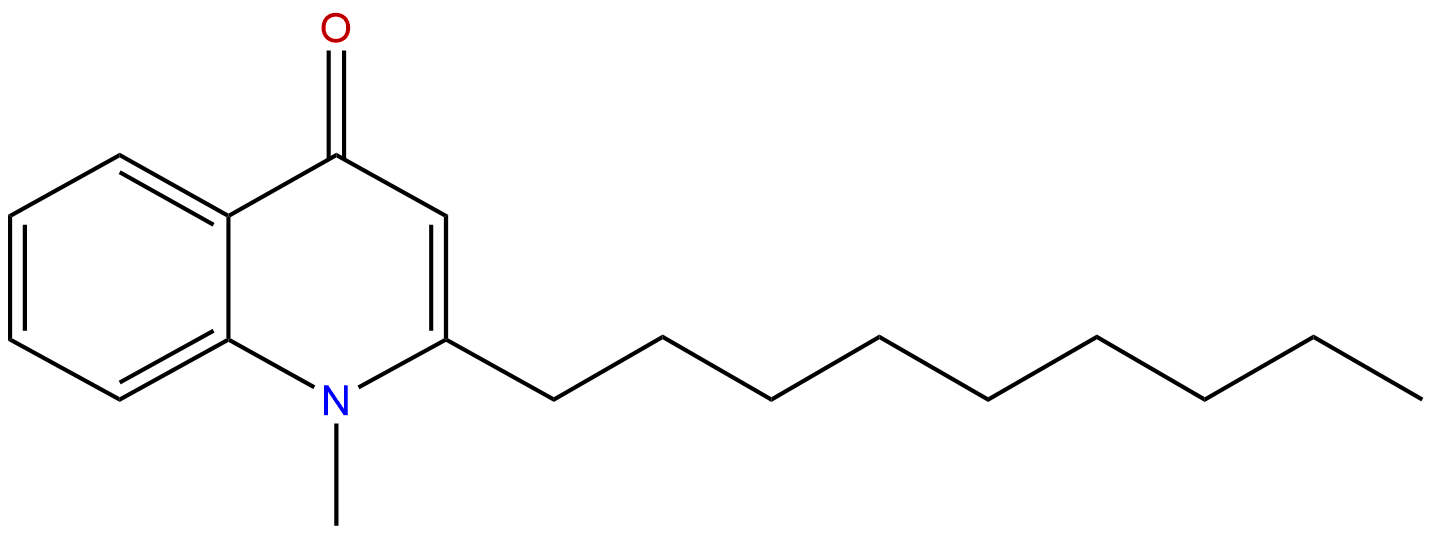
Natural products have always been an important source of drug discovery and development, with their unique chemical structures and diverse biological activities providing countless lead compounds for modern medicine. Among numerous natural product frameworks, quinolone compounds have attracted much attention due to their broad pharmacological activities. 1-Methyl-2-nonylquinolin-4 (1H) - one (1-methyl-2-nonyl-4 (1H) - quinolone) is a representative quinolone alkaloid, characterized by the substitution of a methyl group at position 1 of the quinoline nucleus and a nine carbon linear alkyl group (nonyl) at position 2. This unique structure endows it with significant lipophilicity and the potential to interact with biofilms and various protein targets.
In recent years, with the increasingly severe problem of antibiotic resistance, the search for antibiotics with novel mechanisms of action has become an urgent need in the global public health field. 1-Methyll-2-nonylquinolin-4 (1H) - one, as a naturally occurring quinolone derivative, exhibits inhibitory activity against various pathogenic bacteria, especially drug-resistant strains. Its targets are extensive, involving multiple key pathways such as bacterial DNA replication, cell division, fatty acid synthesis, and folate metabolism, demonstrating the characteristics of multi-target action, which to some extent reduces the risk of drug resistance. In addition, the compound exhibits affinity for fungal targets such as ERG11 and CYP51A1, suggesting its potential antifungal activity. This review aims to systematically summarize the chemical structure, physicochemical properties, plant origin, extraction methods, pharmacological activity, mechanism of action, and pharmacological evaluation of 1-Methyl-2-nonylquinolin-4 (1H) - one, in order to provide comprehensive references for the in-depth research and development of this natural product.
Chemical structure and physicochemical properties
The chemical structure of 1-Methyll-2-nonylquinolin-4 (1H) - one is based on a 4 (1H) - quinolone skeleton. The skeleton is composed of a benzene ring fused with a pyridone ring, where the 4th position of the pyridone ring is a carbonyl group, the 1st nitrogen atom is methylated, and the 2nd position is connected to a saturated nine carbon alkyl chain (nonyl). Its molecular formula is C ₁₉ H ₂₇ NO, and its molecular weight is 285.4310. Structurally, the molecule consists of a polar quinolone head (containing carbonyl and methylated nitrogen atoms) and a non-polar long alkyl tail, exhibiting typical amphiphilic characteristics.
Physical and chemical properties are key factors determining the biological activity and pharmacokinetic behavior of compounds. According to the calculated chemical parameters, the lipid water partition coefficient (LogP) of 1-Methyll-2-nonylquinolin-4 (1H) - one is 5.4811, which is a high value indicating that the compound has strong lipophilicity. High lipophilicity facilitates its penetration through cell membranes, including bacterial cell walls and membranes, as well as the blood-brain barrier of eukaryotes. In fact, its blood-brain barrier penetration has been evaluated as' high ', suggesting that the compound may have central nervous system activity but may also pose related neurotoxic risks. Its topological polar surface area (TPSA) is only 22.0000 Å ², far below the recommended upper limit of 140 Å ² for oral drugs, further supporting its good membrane permeability. However, high LogP also brings the problem of poor water solubility, with a water solubility of only 0.0033 mg/mL. This low water solubility is one of the main obstacles in oral drug development, which may lead to low bioavailability and uneven distribution in the body. In addition, the prediction result of hERG inhibition was "no" (0.0), which is a positive signal indicating that the compound has a low risk of cardiac toxicity. The Ames test result is 0.0, indicating that it may not have significant mutagenicity. Overall, 1-Methyll-2-nonylquinolin-4 (1H) - one has excellent membrane permeability and potential low cardiac and genetic toxicity, but its extremely poor water solubility is the key bottleneck restricting its drug development.
Plant sources and extraction methods
1-Methyll-2-nonylquinolin-4 (1H) - one is not a widely distributed common plant metabolite, and its source is relatively specific. It is currently known that it mainly exists in Rutaceae plants, especially in certain citrus genera(Citrus)The Blood Genus of the Flying Dragon Palm(Toddalia)Plants. For example, in traditional Chinese medicine, two faced needles(Zanthoxylum nitidum)In the roots and stem bark, as well as the blood of the dragon's paw(Toddalia asiatica)There are reports of separation in the roots. These plants are often used in traditional medicine to treat inflammation, pain and infectious diseases, and quinolinones are considered as one of their important active ingredients.
The extraction of such compounds usually follows the classical process of natural product chemistry. Due to the significant lipophilicity of 1-Methyl-2-nonylquinolin-4 (1H) - one, organic solvent extraction is preferred. The specific steps are as follows: First, crush the dried plant materials (such as roots and stem bark), and then soak or reflux extract them using organic solvents with lower polarity. Common solvents include petroleum ether, n-hexane, dichloromethane, ethyl acetate, or their mixed solvents. The extract is filtered and concentrated under reduced pressure to obtain the total extract. Subsequently, the total extract was preliminarily separated using liquid-liquid extraction method, usually using solvents of different polarities (such as petroleum ether, ethyl acetate, n-butanol) for sequential extraction, and the target compound was enriched in the extraction sites of moderately polar ethyl acetate or dichloromethane.
Further separation and purification mainly rely on various chromatographic techniques. Silica gel column chromatography is the most commonly used method, typically using mixed solvents such as petroleum ether ethyl acetate or petroleum ether acetone for gradient elution. Due to the presence of a conjugated system, the compound exhibits strong absorption under ultraviolet light (254 nm or 365 nm), making it easy to track by thin layer chromatography (TLC). For complex samples with many structural analogues, it may be necessary to combine other chromatographic techniques, such as Sephadex LH-20 gel column chromatography (used to remove pigments and separate compounds with different molecular weights) and preparative high-performance liquid chromatography (Pre HPLC) to obtain high-purity monomer compounds. Finally, the isolated compounds were structurally identified using spectroscopic methods such as nuclear magnetic resonance (NMR) and mass spectrometry (MS).
Pharmacological activity research
The pharmacological activity research of 1-Methyll-2-nonylquinolin-4 (1H) - one mainly focuses on its antibacterial effect, and there are also preliminary reports on its anti-inflammatory and anti-tumor activities.
Antibacterial activity This is the most studied area of this compound. Research has shown that 1-Methyll-2-nonylquinolin-4 (1H) - one exhibits inhibitory effects on various Gram positive and Gram negative bacteria. It is effective against Staphylococcus aureus(Staphylococcus aureus)Methicillin resistant Staphylococcus aureus (MRSA), including methicillin-resistant Staphylococcus aureus (MRSA), exhibits significant antibacterial activity with a minimum inhibitory concentration (MIC) typically in the micromolar range. In addition, for Staphylococcus epidermidis(S. epidermidis)Bacillus subtilis(Bacillus subtilis)Waiting for Gram positive bacteria is also effective. For Gram negative bacteria such as Escherichia coli(Escherichia coli)And Pseudomonas aeruginosa(Pseudomonas aeruginosa)The activity is relatively weak, which may be related to the low permeability of the outer membrane of Gram negative bacteria. It is worth noting that this compound has an effect on Mycobacterium tuberculosis(Mycobacterium tuberculosis)It also showed a certain inhibitory effect, indicating its potential value in the development of anti tuberculosis drugs.
Antifungal activity Given that its target list includes fungal ERG11 (lanosterol 14 α - demethylase) and CYP51A1, as well as efflux pump CDR1, this compound is likely to have antifungal activity. Preliminary research confirms that it has an effect on Candida albicans(Candida albicans)And Cryptococcus neoformans(Cryptococcus neoformans)It has inhibitory effects on pathogenic fungi. Its mechanism of action may be related to inhibiting ergosterol synthesis (by targeting ERG11) and/or inhibiting fungal efflux pumps (by targeting CDR1), thereby reversing fungal drug resistance.
Other activities In addition to its antibacterial effect, some studies have also found that the compound has anti-inflammatory activity and can inhibit the production of nitric oxide (NO) and prostaglandin E2 (PGE2) in macrophages induced by lipopolysaccharide (LPS), which is related to its inhibition of cyclooxygenase (COX) or inducible nitric oxide synthase (iNOS) activity. In addition, it has also been reported that it has cytotoxicity to some tumor cell lines (such as human hepatoma cell HepG2, human breast cancer cell MCF-7), but its activity is relatively weak and its selectivity is not high.
Mechanism of action and molecular targets
The antibacterial mechanism of 1-Methyll-2-nonylquinolin-4 (1H) - one exhibits multi-target characteristics, which are closely related to its structural features. Its long alkyl chain may facilitate insertion into the cell membrane, disrupting membrane integrity, while the quinolone core may interact with various enzyme proteins. According to the provided target information, its mechanism of action can be summarized as follows:
-
Inhibit DNA replication The targets GYRA and GYPB encode the A and B subunits of DNA gyrase, respectively. DNA gyrase is a key topoisomerase in bacteria, responsible for introducing negative supercoils during DNA replication to alleviate the tension generated by unwinding. 1-Methyll-2-nonylquinolin-4 (1H) - one may inhibit the activity of DNA gyrase by mimicking substrates or binding to enzyme DNA complexes, thereby blocking DNA replication and leading to bacterial death. This is similar to the mechanism of action of classical quinolone antibiotics such as ciprofloxacin, but with a different structural basis.
-
Inhibit cell division The target FTSZ is a key protein for bacterial cell division, equivalent to the microtubule protein in eukaryotes. The FtsZ protein aggregates at the cell division site to form a Z loop, which is the initial step of cell division. This compound may interfere with the polymerization or GTPase activity of FtsZ by binding to it, thereby inhibiting the formation of the Z ring and bacterial division process.
-
Inhibit fatty acid synthesis The target FABI is a key enzyme in the bacterial fatty acid synthesis pathway, namely acyl ACP reductase. This enzyme catalyzes the final reduction reaction of fatty acid chain elongation. Inhibiting FABI can block the production of fatty acids necessary for bacterial cell membrane phospholipid synthesis, leading to damage to cell membrane integrity and bacterial death. This is an emerging target in the development of antimicrobial drugs in recent years.
-
folic acid metabolism The target DHFR is dihydrofolate reductase, which is a key enzyme in the folate metabolism pathway. Folic acid is an essential cofactor for DNA and RNA synthesis. Inhibiting DHFR will block the production of tetrahydrofolate, thereby affecting the synthesis of nucleotides and amino acids, ultimately inhibiting bacterial growth and reproduction. This is the target of action for sulfonamide drugs and trimethoprim.
-
Anti drug resistance mechanism The target MECA encodes penicillin binding protein 2a (PBP2a), which is the main mechanism of MRSA resistance to β - lactam antibiotics. This compound may restore the sensitivity of β - lactam drugs to MRSA by directly or indirectly affecting the function of PBP2a. In addition, the target PENA (penicillin binding protein) is also a target for β - lactam drugs. In fungi, the target CDR1 is an important ABC transporter protein in the Candida genus, responsible for pumping drugs out of the cell and is one of the main mechanisms of fungal drug resistance. Inhibition of CDR1 can reverse fungal resistance to azole antifungal drugs.
In summary, 1-Methyll-2-nonylquinolin-4 (1H) - one exhibits the potential for multi-target synergistic effects by acting on multiple essential bacterial pathways such as DNA replication, cell division, fatty acid synthesis, folate metabolism, and possibly simultaneously inhibiting drug resistance mechanisms in both bacteria and fungi. This multi-target characteristic is an important reason for its strong antibacterial activity and slow development of drug resistance.
Evaluation of drug properties and pharmacokinetics
Based on the provided pharmacological parameters and structural features, a comprehensive evaluation of the pharmacological properties of 1-Methyll-2-nonylquinolin-4 (1H) - one is conducted.
Advantage:
* Good membrane permeability High LogP (5.48) and low TPSA (22.0) indicate excellent cell membrane penetration ability, which can effectively enter the interior of target cells (such as bacteria and fungi) through passive diffusion or other means.
* Low risk of cardiac toxicity HERG inhibition prediction is negative, which is an important safety signal that reduces the risk of arrhythmia caused by QT interval prolongation during development.
* Low genetic toxicity risk The Ames test result is negative, indicating that it is unlikely to cause genetic mutations and reduce the risk of cancer.
* Multi-target effect Acting on multiple key targets is beneficial for improving drug efficacy and delaying the development of drug resistance.
Disadvantages and Challenges:
* Extremely poor water solubility The water solubility of 0.0033 mg/mL is the biggest pharmaceutical barrier. Low water solubility not only leads to poor oral absorption and low bioavailability, but also brings great difficulties to the development of formulations, such as difficulty in preparing them into injections. This may result in insufficient exposure in the body to achieve effective therapeutic concentrations.
* Problems caused by high lipophilicity Although high LogP is beneficial for penetration, it may also lead to the accumulation of compounds in adipose tissue, prolong half-life, and increase toxicity risk. Meanwhile, highly lipophilic compounds typically have low metabolic clearance rates and are easily highly bound to plasma proteins, thereby reducing free drug concentrations.
* Blood-brain barrier penetrability Although high penetration is advantageous for treating central nervous system infections, it may lead to unnecessary neurotoxic side effects such as dizziness, drowsiness, and even seizures when treating peripheral infections.
Prediction of pharmacokinetic characteristics:
* absorb Oral absorption may be extremely poor and have low bioavailability. Special formulation technologies such as liposomes, nanoemulsions, solid dispersions, etc. may need to be developed to improve their water solubility and dissolution rate.
* distribution The distribution volume may be large and tends to be distributed in fat rich tissues and organs such as the brain, liver, and adipose tissue. The plasma protein binding rate may be high.
* Metabolism The main metabolic pathways may include oxidation of alkyl chains (ω - oxidation and β - oxidation) and hydroxylation or glucuronidation of quinolone rings. The cytochrome P450 enzyme system (such as CYP3A4) in the liver may be involved in its metabolism.
* excretion Due to its high lipophilicity, the amount of prototype drug excreted through the kidneys may be minimal, mainly through bile excretion or in the form of metabolites.
Structural optimization direction To overcome the above disadvantages, future structural modifications should mainly focus on improving water solubility and reducing lipophilicity. For example, introducing polar groups (such as hydroxyl, carboxyl, amino) on the nonyl chain, or replacing long-chain alkyl groups with chains containing heteroatoms, or introducing water-soluble groups (such as phosphate esters, amino acid esters) on the quinolone ring. At the same time, it is necessary to balance the improvement of water solubility with the maintenance of activity, in order to avoid a decrease in membrane permeability due to increased polarity.
Clinical application prospects and prospects
1-Methyl-2-nonylquinolin-4 (1H) - one, as a natural product with multi-target antibacterial activity, has the following clinical application prospects:
-
Anti drug resistant bacterial infection Given its activity against drug-resistant bacteria such as MRSA and Mycobacterium tuberculosis, as well as its potential mechanism for reversing drug resistance (targeting MECA, CDR1), this compound or its derivatives have the potential to be developed as a novel drug for treating drug-resistant bacterial infections. Especially in the post antibiotic era, it is crucial to develop drugs with novel mechanisms of action or those that can overcome existing resistance mechanisms.
-
Combination therapy strategy Due to its multi-target nature, this compound is highly suitable for combination use with other antibiotics. For example, when used in combination with beta lactam antibiotics to treat MRSA infections, it may restore sensitivity to beta lactam drugs by inhibiting PBP2a. Combined with azole antifungal drugs, it may reverse fungal resistance by inhibiting CDR1. This synergistic effect can reduce the dosage of a single drug, minimize toxic side effects, and delay the development of drug resistance.
-
Local medication Given its potential low oral bioavailability and neurotoxicity, this compound is more suitable for development as a topical formulation, such as topical ointments, creams, or eye drops, for the treatment of skin and soft tissue infections, acne, eye infections, etc. Local administration can avoid the risks associated with systemic exposure, while utilizing its high lipophilicity to achieve effective concentrations in local skin or mucosal tissues.
-
As a lead compound The structural framework of this compound is an ideal starting point for pharmaceutical chemical optimization. Through systematic structure-activity relationship (SAR) studies, a series of derivatives can be synthesized with the aim of improving water solubility, reducing toxicity, enhancing selectivity towards specific targets, and optimizing pharmacokinetic properties. For example, by shortening or modifying the nonyl chain, or introducing heteroatoms, its lipophilicity and antibacterial spectrum can be adjusted.
Future research directions:
* In depth mechanism research It is necessary to use techniques such as molecular docking, surface plasmon resonance (SPR), and isothermal titration calorimetry (ITC) to clarify the specific binding modes and affinities of the compound with various targets (such as FtsZ, Fabi, DHFR).
* In vivo pharmacological and toxicological evaluation Establish appropriate animal infection models (such as mouse skin infection models and peritonitis models), systematically evaluate their in vivo efficacy, pharmacokinetic characteristics, and acute/chronic toxicity.
* Study on Structure Activity Relationship Systematically synthesize a series of structurally similar compounds, investigate the effects of different substituents (such as alkyl chain length, ring substitution) on activity, selectivity, water solubility, and toxicity, and search for the best candidate compounds.
* Formulation development Explore various solubilization techniques, such as cyclodextrin inclusion complexes, liposomes, nanocrystals, etc., to solve the problem of poor water solubility and evaluate the in vivo behavior of different formulations.
Conclusion
1-Methyl-2-nonylquinolin-4 (1H) - one is a naturally occurring quinolone alkaloid with unique structure and significant pharmacological activity. It exhibits broad-spectrum antibacterial potential, especially against drug-resistant bacteria, by acting on multiple essential bacterial targets such as DNA gyrase, FtsZ, Fabi, DHFR, and may reverse drug resistance by affecting drug-resistant proteins such as MECA and CDR1. Its physical and chemical properties exhibit high lipophilicity and low water solubility, which is not only the advantage of its membrane penetration effect, but also the main bottleneck for its drug development. Despite facing challenges in drug development, this compound, as a lead compound, still has the potential to be developed into a novel antibacterial drug through rational structural modifications and advanced formulation techniques, especially in response to the increasingly severe crisis of antibiotic resistance. Future research should focus on elucidating its detailed mechanism of action, optimizing its pharmacokinetic properties, and conducting comprehensive in vitro and in vivo efficacy and safety evaluations to promote its transformation from natural products to clinical candidate drugs.