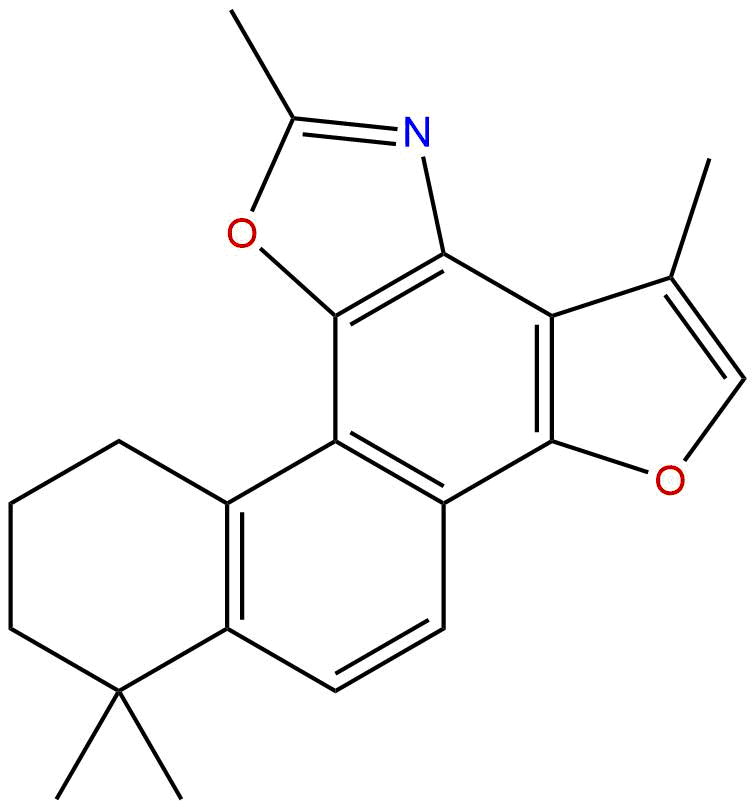


Product name: Neosalvianen
Synonym name:
Catalogue No.: BP5001
Cas No.: 790673-00-6
Formula: C21H21NO2
Mol Weight: 319.404
Botanical Source:
Type of Compound: Alkaloids
Purity: 95%~99%
Analysis Method: HPLC-DAD or/and HPLC-ELSD
Identification Method: Mass, NMR
Packing: Brown vial or HDPE plastic bottle
Storage: Store in a well closed container, protected from air and light. Put into refrigerate or freeze for long term storage.
Whenever possible, you should prepare and use solutions on the same day. However, if you need to make up stock solutions in advance, we recommend that you store the solution as aliquots in tightly sealed vials at -20℃. Generally, these will be useable for up to two weeks.
The product could be supplied from milligrams to grams
Inquire for bulk scale.
For Reference Standard and R&D, Not for Human Use Directly.
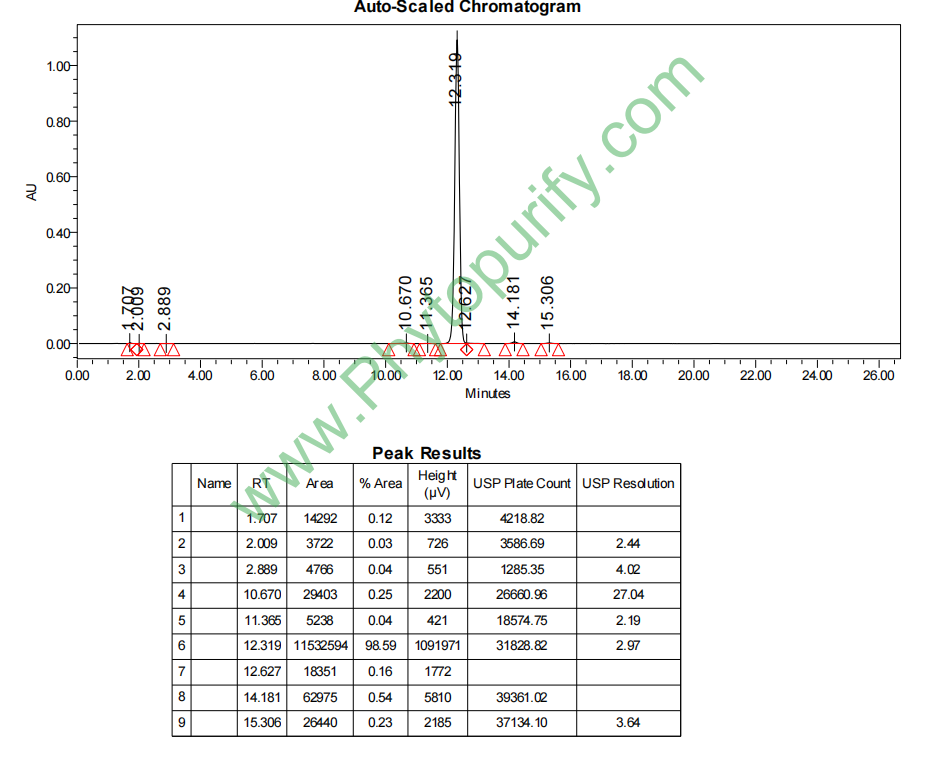
HPLC of Neosalvianen
Storage conditions:Short-term storage at 2~8℃, long-term storage at -20 ~ -80℃
39.1700
5.7137
5.7142
.0001
6.0988
18.1785
High
93.2637
3.2295
No
No
No
No
Yes
Yes
0.9
Yes
No
Yes
No
Natural products, as an important source of drug discovery, play an irreplaceable role in the long history of human fight against diseases. From classic aspirin and paclitaxel to artemisinin in recent years, countless natural compounds and their derivatives derived from plants, microorganisms, and marine organisms have become a core component of modern drug libraries. In the field of anti-tumor and anticoagulant therapy, natural products and their structural modifications play a crucial role. However, with the emergence of multidrug resistance and the increasing demand for higher selectivity and lower toxicity drugs, mining active molecules with novel skeletons and unique mechanisms of action from traditional medicinal plants remains a cutting-edge hotspot in medicinal chemistry and pharmacology research.
Among numerous biologically active natural products, Neosalvianen, as a structurally unique nitrogen-containing compound, has attracted the attention of researchers in recent years. This compound was originally derived from the Salvia miltiorrhiza plant in the family Lamiaceae(Salvia miltiorrhiza Bunge was isolated and identified in related studies, and its name implies a potential structural association with the classic active ingredients in Danshen, such as tanshinone and tanshinone IIA, while also possessing unique nitrogen-containing substitution characteristics. Preliminary biological evaluation shows that Neosalvianen exhibits moderate cytotoxic activity against multiple human tumor cell lines, including cervical cancer cells (HeLa), liver cancer cells (HepG2), and ovarian cancer cells (OVCAR-3), with half maximal inhibitory concentrations (IC50) of 63.9 µ M, 59.2 µ M, and 74.6 µ M, respectively. This finding suggests that it may have broad-spectrum anti-tumor potential.
More notably, based on modern computational biology methods such as network pharmacology and molecular docking, Neosalvianen may exhibit potential anticoagulant activity by acting on multiple targets closely related to the coagulation cascade, such as SERPINE1 (plasminogen activator inhibitor-1), F3 (tissue factor), F2 (prothrombin), VKORC1 (vitamin K epoxide reductase complex subunit 1), as well as multiple coagulation factors (F7, F9, F10) and von Willebrand factor (VWF). This prediction opens up a new direction for its pharmacological research, suggesting that Neosalvianen may be a natural molecule with dual functions of anti-tumor and anticoagulant. Given the complex biological link between tumors and thrombosis (i.e. Trousseau syndrome), the development of compounds with multi-target regulatory effects has important clinical significance.
This article will provide a systematic and in-depth review of Neosalvianen, a natural product, from multiple dimensions including chemical structure, physicochemical properties, plant origin, pharmacological activity, mechanism of action, evaluation of drug properties, and clinical application prospects. The aim is to provide comprehensive scientific basis and theoretical reference for the subsequent research and development of this compound.
The chemical structure of Neosalvianen is the basis of its biological activity. Although its complete stereochemical configuration and detailed nuclear magnetic resonance spectroscopy data have not been fully disclosed in public literature, based on its name and known tanshinone compound skeleton, it is speculated that Neosalvianen likely retained the core skeleton of tanshinone compounds - a phenanthrenequinone nucleus with an ortho quinone or para quinone structure, and introduced nitrogen-containing functional groups (such as amino, imine, or nitrogen-containing heterocycles) on this basis. This type of structural modification is very common in natural product chemistry, aimed at altering the electronic distribution, polarity, and binding ability of molecules to biological targets. The introduction of nitrogen-containing groups often significantly affects the alkalinity, hydrogen bond donor/acceptor ability, and metal ion chelation properties of compounds, potentially endowing them with novel pharmacological activities different from the prototype molecules.
From the perspective of physical and chemical properties, Neosalvianen has a molecular weight of 319.4040 Da, belonging to the category of small molecule compounds and meeting the basic requirement for molecular weight in Lipinski's Rule of Five (<500 Da). Its lipid water partition coefficient (LogP) is 5.7137, which is much higher than the recommended LogP range for traditional oral medications (usually 0-3), indicating that Neosalvianen has extremely high lipid solubility. A high LogP value means that the compound is highly permeable to biological membranes, including cell membranes and the blood-brain barrier (BBB). In fact, its blood-brain barrier permeability is predicted to be "high", which provides a structural basis for its potential central nervous system activity, but may also bring unexpected risks of central neurotoxicity.
The topological polar surface area (TPSA) is 39.1700 Å ², which is below the threshold of 140 Å ² and is generally considered a favorable indicator for good oral absorption and cell membrane permeability. However, the water solubility of Neosalvianen is extremely poor, only 0.0001 mg/mL. The extremely low water solubility is a typical bottleneck problem in drug development, which severely limits the bioavailability of compounds, especially in oral administration routes. The combination of high LogP and low water solubility makes Neosalvianen highly prone to aggregation, precipitation, or high binding to plasma proteins in physiological environments, thereby affecting its effective concentration to reach target tissues.
In terms of safety prediction, the risk assessment of hERG (human ether - à - go related gene) potassium channel inhibition is' no ', which is a positive signal as hERG inhibition is closely associated with drug-induced long QT syndrome and fatal arrhythmias. In addition, the predicted result of the Ames test is 0.9, which is usually interpreted as having potential mutagenic risk (Ames test positivity is usually bounded by a recovery mutation rate greater than twice the background, and 0.9 may indicate weak positivity or be at a critical value). This result suggests that strict experimental verification of the genetic toxicity of Neosalvianen is necessary in subsequent toxicological evaluations.
In summary, the chemical structure of Neosalvianen combines a lipophilic parent nucleus and polar nitrogen-containing groups, exhibiting typical "amphiphilic" characteristics. Its physical and chemical properties exhibit high lipid solubility, low water solubility, and potential blood-brain barrier penetration ability, which are both advantages for its specific pharmacological activity and huge challenges it faces in drug development.
The discovery of Neosalvianen and Salvia miltiorrhiza, a plant in the family Lamiaceae(Salvia miltiorrhiza)Closely related. Danshen is one of the most widely used blood activating and stasis removing medicines in traditional Chinese medicine, first recorded in the "Shennong Bencao Jing" and listed as a top-grade medicine. Its dry roots and rhizomes are commonly used to treat cardiovascular diseases, menstrual disorders, dysmenorrhea, pathological accumulation, and swelling and pain in sores. Modern pharmacological research has confirmed that the main active ingredients of Salvia miltiorrhiza include lipophilic tanshinones (such as tanshinone IIA, cryptotanshinone, tanshinone I) and water-soluble salvianolic acids (such as salvianolic acids A, B, C). Tanshinone compounds are known for their significant anti-inflammatory, antioxidant, anti-tumor, and cardiovascular protective effects.
Neosalvianen, as a nitrogen-containing derivative found in Danshen, is usually present in extremely trace amounts in natural plants and belongs to the category of "trace components". Its biosynthetic pathway may involve the condensation reaction of tanshinone precursors (such as cryptotanshinone or tanshinone IIA) with nitrogen-containing small molecules (such as amino acids or amines) catalyzed by specific enzymes. Due to its low content, traditional solvent extraction methods often struggle to obtain sufficient amounts of pure product for in-depth biological research.
For trace lipophilic components such as Neosalvianen, a systematic plant chemistry method is usually used for their extraction, separation, and purification. The typical process is as follows: Firstly, the dried roots and stems of Salvia miltiorrhiza are crushed and subjected to cold soaking or hot reflux extraction using highly polar organic solvents (such as methanol, ethanol, or acetone) to fully dissolve lipid soluble components including tanshinones and Neosalvianen. After the extraction solution is concentrated under reduced pressure, the total extract is obtained. Subsequently, using liquid-liquid extraction method, such as extracting with petroleum ether, ethyl acetate, and n-butanol in sequence, the total extract was preliminarily classified according to polarity. Neosalvianen is usually enriched in petroleum ether or ethyl acetate extraction layers due to its high lipid solubility.
Further separation and purification mainly rely on various modern chromatographic techniques. Silica gel column chromatography is the most commonly used preliminary separation method, which can separate Neosalvianen from other structurally similar tanshinone compounds through gradient elution (such as petroleum ether ethyl acetate or chloroform methanol systems). For isomers with extremely similar structures, it may be necessary to use high-performance liquid chromatography (HPLC), especially a reverse phase C18 column, combined with a UV detector (usually with absorption at 270-290 nm) for purification. In recent years, high-speed countercurrent chromatography (HSCCC) and preparative thin layer chromatography (PTLC) have also been used for rapid separation of trace components. Finally, the purified compound was structurally identified as Neosalvianen through methods such as nuclear magnetic resonance (NMR), high-resolution mass spectrometry (HR-MS), and circular dichroism (CD).
It is worth noting that due to the extremely low content of Neosalvianen in Danshen, the traditional strategy of "separating from natural products" is inefficient and costly. Therefore, future in-depth research on this compound is likely to rely on fully synthetic or semi synthetic methods to obtain sufficient samples. A feasible approach to obtain Neosalvianen and its analogues is to chemically modify and introduce nitrogen-containing groups using inexpensive tanshinone IIA or cryptotanshinone as starting materials.
At present, research on the pharmacological activity of Neosalvianen is still in its early stages, and publicly reported data mainly focuses on its cytotoxic activity, while its potential anticoagulant activity is mainly based on computational predictions.
Existing research clearly indicates that Neosalvianen exhibits dose-dependent cytotoxicity against three human tumor cell lines. Specifically, its IC50 values for HeLa (human cervical cancer cells), HepG2 (human liver cancer cells), and OVCAR-3 (human ovarian adenocarcinoma cells) were 63.9 µ M, 59.2 µ M, and 74.6 µ M, respectively. These values indicate that Neosalvianen has moderate anti proliferative activity, but its efficacy is much lower than classical chemotherapy drugs used clinically (such as paclitaxel, cisplatin, etc., with IC50 values typically in the nanomolar to micromolar range). However, for natural products, this level of activity still has research value, especially in the context of finding lead compounds for structural optimization.
It is worth noting that Neosalvianen exhibits activity against tumor cells from three different tissue sources, suggesting that it may act on one or more conserved targets co expressed in multiple tumors, rather than targeting a specific driver gene mutation. Its activity towards HepG2 cells is slightly higher than that towards HeLa and OVCAR-3 cells, suggesting that liver cancer cells may be more sensitive to it. The specific mechanism of this difference is not yet clear, and may be related to certain metabolic enzymes or signaling pathways that are highly expressed in liver cancer cells.
The most interesting pharmacological activity of Neosalvianen is its potential anticoagulant effect. This hypothesis is not derived from direct in vitro coagulation experiments, but from predictions based on network pharmacology and computer-aided drug design (CADD). Researchers have discovered potential interactions between Neosalvianen and multiple coagulation related proteins by constructing a compound target network.
Specific targets include:
1. SERPINE1 (PAI-1)Fibrinogen activator inhibitor-1 is the main inhibitor of the fibrinolytic system. Inhibiting PAI-1 can promote fibrinolysis and dissolve blood clots.
2. F3 (Tissue Factor)Organizational factors are the initiating factors of exogenous coagulation pathways. Inhibiting F3 can block the initiation of the coagulation cascade reaction.
3. F2 (Thrombin)Thrombin is the core enzyme in the coagulation cascade, responsible for converting fibrinogen into fibrin and activating platelets. Inhibition of F2 is the mechanism of action of classic anticoagulants such as dabigatran etexil.
4. VKORC1 Vitamin K epoxide reductase complex subunit 1 is a direct target of warfarin. Inhibition of VKORC1 will block the circulation and regeneration of vitamin K, thereby inhibiting the synthesis of vitamin K-dependent coagulation factors (F2, F7, F9, F10).
5. F7, F9, F10 These are coagulation factors VII, IX, and X, all of which are key serine proteases in the coagulation cascade reaction.
6. VWF Von Willebrand factor mediates platelet adhesion and aggregation.
7. PROC, PROS1 Protein C and protein S are important natural anticoagulant proteins in the body, whose function is to negatively regulate coagulation.
Neosalvianen is predicted to act on both procoagulant targets (such as F2, F3, VKORC1) and anticoagulant targets (such as PROC, PROS1) simultaneously, making its ultimate anticoagulant effect complex. In theory, if its inhibitory effect on procoagulant targets is dominant, it manifests as anticoagulant; On the contrary, if the anticoagulant system is inhibited, it may manifest as procoagulant. This multi-target mode of action requires rigorous experimental validation to elucidate its net effect. However, from the perspective of network pharmacology, this multi-target regulation may lead to a more balanced anticoagulant effect and reduce the risk of bleeding caused by single target inhibition.
A deep understanding of the mechanism of action of Neosalvianen is key to advancing it to preclinical research. At present, its exact mechanism of action has not been fully elucidated through experimental methods, but based on its cytotoxic activity and predicted anticoagulant targets, we can propose several reasonable hypotheses.
Inducing oxidative stress Tanshinone compounds (such as tanshinone IIA) have been proven to be effective oxidative stress inducers, capable of selectively killing tumor cells by producing excess reactive oxygen species (ROS). Neosalvianen retains the core structure of phenanthrene quinone, which has redox activity and may generate superoxide anions and hydrogen peroxide through the redox cycle, thereby disrupting the redox balance within tumor cells, leading to mitochondrial dysfunction, DNA damage, and cell apoptosis. Its higher activity towards HepG2 cells may be related to the relatively lower levels of antioxidant enzymes in liver cancer cells.
Inhibition of Topoisomerase Many natural products with planar aromatic ring structures, such as camptothecin and podophyllotoxin, are inhibitors of topoisomerase I or II. The planar polycyclic structure of Neosalvianen makes it possible to embed between DNA double helices or bind to topoisomerase DNA complexes, thereby blocking DNA replication and transcription, inducing cell cycle arrest and apoptosis.
Regulating cellular signaling pathways Neosalvianen may exert anti-tumor effects by interfering with multiple signaling pathways closely related to tumor occurrence and development. For example, it may inhibit the PI3K/Akt/mTOR pathway (promoting cell survival and proliferation), NF - κ B pathway (regulating inflammation and anti apoptotic gene expression), or Wnt/β - catenin pathway (regulating cell stemness and proliferation). The introduction of nitrogen-containing groups may result in specific interactions with the ATP binding pockets of key kinases in these pathways.
Based on predicted targets, the anticoagulant mechanism of Neosalvianen may involve the following aspects:
Directly inhibit thrombin (F2)This is the most direct way of action. Neosalvianen may bind to the active site of thrombin through its hydrophobic core, blocking its ability to catalyze the conversion of fibrinogen to fibrin. Similar to dabigatran etexilate, this direct inhibition works quickly and does not rely on antithrombin III.
Inhibition of Vitamin K Cycle (VKORC1)Similar to warfarin, Neosalvianen may block the reduction and regeneration of vitamin K by inhibiting the activity of VKORC1. This will result in the inability of glutamate residues of vitamin K-dependent coagulation factors (FII, FVII, FIX, FX) in the liver to be carboxylated, leading to the synthesis of "de gamma carboxy" proteins lacking coagulation activity. This mechanism of action takes effect slowly (waiting for the metabolism of coagulation factors in the body to clear), but the effect is long-lasting.
Inhibition of tissue factor (F3) pathway By inhibiting the expression or activity of F3, Neosalvianen may block the initiation of exogenous coagulation pathways at the source, which is particularly important for preventing and treating thrombosis associated with vascular injury.
Regulating the fibrinolytic system (SERPINE1)By inhibiting PAI-1, Neosalvianen can enhance the activity of tissue type plasminogen activator (t-PA), promote the conversion of plasminogen into plasmin, and accelerate the dissolution of formed thrombi. This mechanism gives it the dual potential of anticoagulation and thrombolysis.
It should be emphasized that the above mechanisms are all hypotheses based on structural or computational predictions. Future research must be validated through a series of classic pharmacological experiments, including surface plasmon resonance (SPR) or microcalorimetry (MST) experiments to detect direct binding to target proteins; Enzyme activity inhibition experiments (such as thrombin, FXa, VKORC1 activity assays); Cell based coagulation time determination (such as PT, APTT, TT); And in vivo thrombus formation experiments in animal models.
Drug efficacy evaluation is a bridge connecting lead compounds with clinical candidate drugs. The physicochemical properties and predicted pharmacokinetic characteristics of Neosalvianen exhibit a significant "double-edged sword" effect.
Based on its physicochemical properties, the pharmacokinetic characteristics of Neosalvianen can be predicted as follows:
- absorb Oral absorption may be rapid, but due to poor water solubility, the degree of absorption is very limited and varies greatly among individuals. Its absorption may depend on the fat content in the food.
- distribution Manifested as a large cloth volume (Vd), indicating its widespread distribution in tissues, especially adipose tissue and the brain.
- Metabolism The main metabolic pathways may include CYP450 mediated oxidation (such as hydroxylation, dehydrogenation) and nitrogen-containing group binding reactions. May form multiple metabolites.
- excretion The amount of prototype drug excreted through the kidneys will be very small, mainly excreted through bile or metabolism.
To overcome these barriers to drug formation, future pharmaceutical chemistry research must focus on structural modifications. For example, in prodrug strategies, water-soluble groups such as phosphate esters, amino acid esters, or semi succinates can be introduced onto nitrogen-containing groups to release the prototype drug through enzymatic interpretation in vivo; Alternatively, polar groups such as hydroxyl, carboxyl, and sulfonic acid groups can be introduced onto the mother nucleus to reduce LogP and increase solubility; It can also be considered to prepare it into nano formulations, liposomes, or cyclodextrin inclusion complexes to improve its delivery efficiency.
The unique chemical structure and predicted dual pharmacological activity of Neosalvianen paint a hopeful but thorny picture for its clinical application.
Antitumor therapy Despite its moderate cytotoxic activity, Neosalvianen can serve as a lead compound for the development of novel anti-tumor drugs through structural optimization, such as introducing more cytotoxic groups or ligands targeting specific tumor antigens. Its broad-spectrum activity suggests that it may be suitable for the treatment of various solid tumors, especially liver cancer and ovarian cancer. In addition, if its anticoagulant activity is confirmed, Neosalvianen may achieve a "two birds with one stone" effect in the treatment of hypercoagulable tumors (such as advanced cancer patients), directly inhibiting tumor growth and preventing the common complication of thromboembolism.
Anticoagulant therapy This is the most promising application direction for Neosalvianen. If it can exert anticoagulant effects through multiple targets (such as simultaneously inhibiting F2 and VKORC1), it may provide a more balanced and lower bleeding risk anticoagulant regimen than existing drugs (such as warfarin or direct oral anticoagulants). Especially, its potential inhibitory effect on PAI-1 gives it unique advantages in treating venous thromboembolism (VTE) or preventing in stent restenosis.
Ischemic stroke Given its high BBB penetration, Neosalvianen may be used for the treatment of ischemic stroke. In the acute phase, it may prevent further enlargement of blood clots through anticoagulant action; During the recovery period, its potential anti-inflammatory and neuroprotective effects (based on the known activity of tanshinone compounds) may help promote neurological function recovery.
In order to push Neosalvianen from the laboratory to clinical practice, future research must focus on the following key directions:
Confirming pharmacological mechanisms It is necessary to verify its anti-tumor and anticoagulant activities through rigorous in vitro experiments (enzyme activity, binding affinity, cell signaling pathway analysis) and in vivo pharmacological models (such as mouse xenograft tumor model, rat arteriovenous bypass thrombosis model), and clarify its exact mechanism of action and molecular targets.
Addressing the issue of drug formation This is the core that determines the fate of Neosalvianen. Pharmaceutical chemists need to design and synthesize a series of Neosalvianen analogs, systematically study structure-activity relationships (SAR), with the aim of improving water solubility, reducing LogP, eliminating genetic toxicity risks, while maintaining or enhancing their pharmacological activity. Pre drug design and nanoformulation technology are important directions worth exploring.
Comprehensive toxicological evaluation In addition to genetic toxicity, comprehensive safety evaluations are also required for acute toxicity, subchronic toxicity, reproductive toxicity, as well as effects on the cardiovascular system (especially on blood pressure and heart rate) and central nervous system (due to its high BBB penetration).
In depth pharmacokinetic research Establish a sensitive LC-MS/MS analysis method for determining the concentration of Neosalvianen in biological samples. Systematically study its oral bioavailability, tissue distribution, metabolic pathways, and excretion characteristics on animal models.
Explore combination therapy Study the synergistic effect of Neosalvianen with existing chemotherapy drugs (such as cisplatin, paclitaxel) or anticoagulant drugs (such as low molecular weight heparin, rivaroxaban) in order to achieve increased efficacy and reduced toxicity.
Neosalvianen, as a nitrogen-containing natural product derived from the traditional Chinese medicine Danshen for promoting blood circulation and removing blood stasis, provides a fascinating case for natural product drug research with its unique chemical structure and predicted dual pharmacological activities - anti-tumor and anticoagulant. Preliminary cytotoxic activity data indicate its broad-spectrum anti-tumor potential, while target prediction based on network pharmacology opens up new possibilities for its application in the field of anticoagulation.
However, the path from "nascent compounds" to "clinical candidate drugs" is full of challenges. The extremely low water solubility, potential genetic toxicity, and pharmacokinetic defects caused by high lipid solubility of Neosalvianen are the three major obstacles to its drug development. The future research focus should not only be on verifying its existing activity, but should shift more towards in-depth structure-activity relationship studies, innovative drug delivery system development, and comprehensive toxicological evaluations.
The story of Neosalvianen reminds us that natural products are not only direct sources of drugs, but also valuable libraries of lead compounds. Through the meticulous refinement of modern medicinal chemistry and overcoming its naturally occurring defects, we have the potential to transform molecules with unique skeletons and multiple pharmacological potentials into innovative drugs that can truly benefit humanity. The in-depth study of Neosalvianen not only helps to reveal the modern scientific connotation of Danshen, an ancient Chinese medicine, but also may bring new dawn to the fields of anti-tumor and anticoagulant therapy.
