Introduction/Overview
Natural products have long been an important source of innovative drug discovery, among which alkaloid compounds have attracted much attention due to their structural diversity and significant biological activity. As a traditional Chinese medicinal herb, Fritillaria has the effects of clearing heat, moistening lungs, stopping cough, and resolving phlegm. One of its core active ingredients is Fritillaria steroid alkaloids. Ebeiedinone (CAS number: 25650-68-4), as a member of the alkaloid family, has gradually become a hot topic in pharmacological research in recent years due to its unique chemical structure and multi-target pharmacological activity, especially its potential in the field of anti-tumor. Early studies have revealed that dehydroepidine alkaloids exhibit significant inhibitory ability on human whole blood cholinesterase (ChE) in vitro (inhibition rate of 69.0% at a concentration of 0.1 mM), suggesting its potential value for neurological related diseases. However, further research has found that its pharmacological effects go far beyond this, especially in regulating cell apoptosis, inhibiting tumor invasion and metastasis, and exhibiting multi-target action characteristics in multiple key tumor biological processes. This article aims to systematically review the chemical properties, plant sources, pharmacological activities, molecular mechanisms of action, pharmacological evaluation, and clinical application prospects of dehydroepidine alkaloids, in order to provide comprehensive scientific references for the in-depth research and development of this compound.
Chemical structure and physicochemical properties
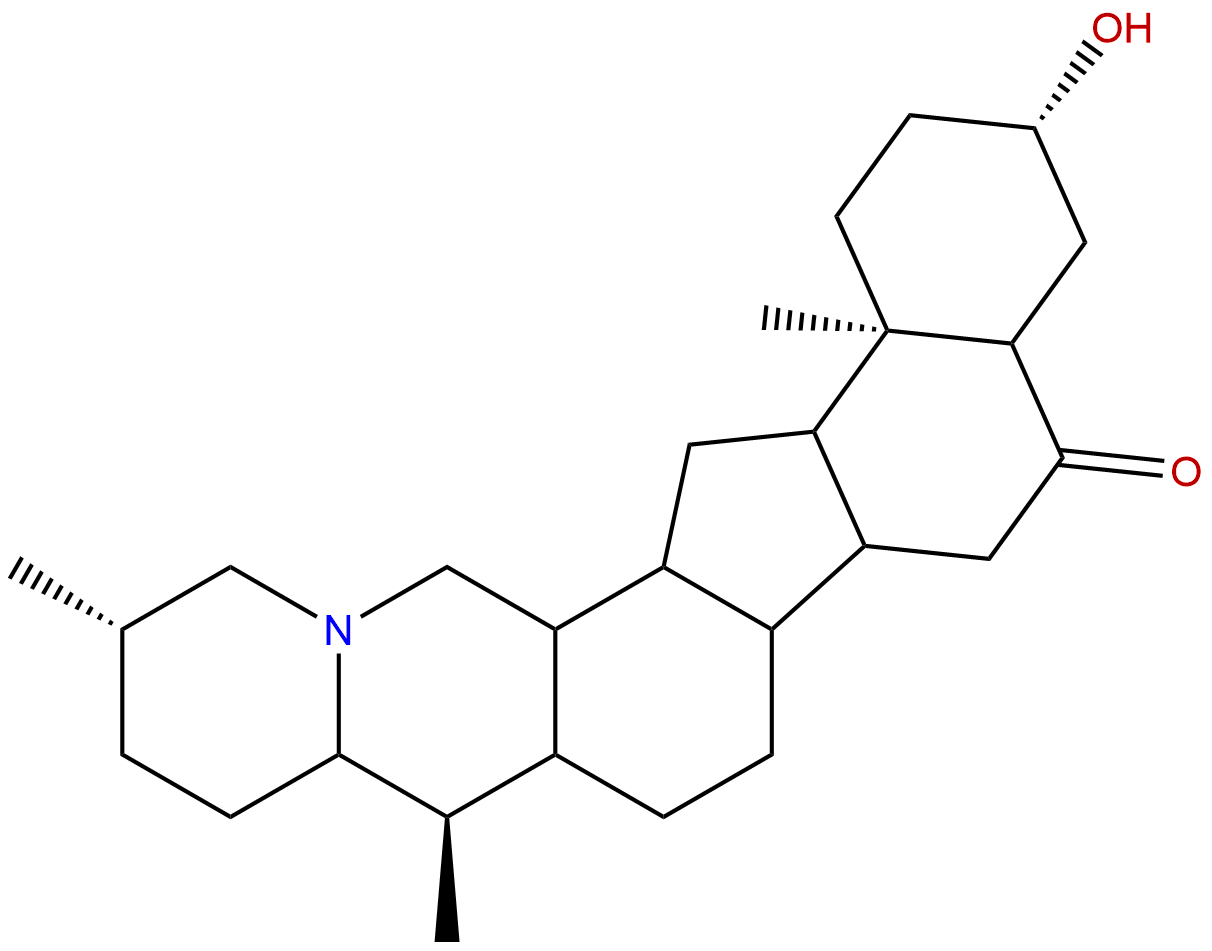
Dehydroepidine is a typical steroid alkaloid with a molecular formula of C27H39NO2 and a molecular weight of 413.6460. Its core structure is based on the steroid skeleton of cyclopentane and phenanthrene, which shares similarities with common steroid hormones such as cholesterol in terms of basic skeleton. However, through the introduction of nitrogen atoms and specific functional group modifications (such as dehydrogenation, hydroxyl, etc.), it forms unique alkaloid characteristics. This structure combines the rigid hydrophobic core of steroid molecules with the alkaline and biologically active characteristics of alkaloids.
Its physicochemical properties have a decisive impact on its biological activity and pharmacokinetic behavior. Calculation and experimental data indicate that the lipid water partition coefficient (LogP) of dehydroepidine base is 4.0581, which belongs to a typical lipophilic compound. This suggests that it is easy to penetrate cell membranes, but may also lead to poor water solubility (approximately 0.0581 mg/mL). Its topological polar surface area (TPSA) is 40.5400 Å ², which is relatively small and further supports its good membrane permeability. These properties collectively explain its predicted "high" blood-brain barrier permeability, indicating that the compound has the potential to act on central nervous system targets. In addition, preliminary drug safety screening showed that the hERG inhibition risk was "no", and the Ames test result was 0.0 (negative), indicating a low potential risk of arrhythmia and gene mutations, laying a preliminary safety foundation for its further development.
Plant sources and extraction methods
Dehydroerbidine alkaloids mainly come from the bulbs of various Fritillaria plants, such as Fritillaria cirrhosa, Fritillaria thunbergii, Fritillaria ebeiensis, etc. These plants are widely used in traditional Chinese medicine, and their bulbs are rich in various steroid alkaloids, among which dehydroepidine is one of the representative active ingredients.
The extraction and separation of dehydroberberine from plant materials usually follow the following process: first, dry Fritillaria bulb is crushed, and suitable solvents (such as methanol, ethanol, or acid water solution) are used for leaching or reflux extraction, utilizing the characteristic of alkaloids and acid salts soluble in water for preliminary enrichment. Subsequently, by adjusting the pH value and extracting with organic solvents such as chloroform, dichloromethane, or ethyl acetate, the free alkaloids are transferred to the organic phase. The crude extract is repeatedly separated and purified using modern chromatographic techniques such as silica gel column chromatography, reverse phase column chromatography (such as ODS), and high performance liquid chromatography (HPLC). Thin layer chromatography (TLC) and high-performance liquid chromatography-mass spectrometry (HPLC-MS) are commonly used for tracking and identifying target compounds. In recent years, preparative separation techniques such as high-speed countercurrent chromatography have also been applied to improve separation efficiency and yield. Due to the usually low content of this component in plants, total synthesis or semi synthesis research is of great significance for ensuring stable drug sources and structural modification. However, the complete synthesis of its complex steroid alkaloid skeleton is still challenging at present.
Pharmacological activity research
Dehydroerbidine alkaloids exhibit a wide range of pharmacological activities, with the most prominent being their anti-tumor potential.
1. Antitumor activity:
A large number of in vitro studies have shown that dehydroberbidine can inhibit the proliferation and induce apoptosis of many human tumor cell lines, including lung cancer, breast cancer, liver cancer, colon cancer, etc. Its activity is not limited to cytotoxicity, but also involves inhibiting the migration and invasion of tumor cells, indicating its potential for anti metastasis.
2. Acetylcholinesterase inhibitory activity:
As shown in the initial data, dehydroepidine alkaloids have inhibitory activity on human whole blood acetylcholinesterase (including acetylcholinesterase and butyrylcholinesterase). This characteristic links it to the treatment of neurodegenerative diseases such as Alzheimer's disease, as cholinesterase inhibitors are currently the first-line treatment strategy for this disease. However, its in-depth research in this field is relatively limited, and its selectivity (for AChE or BuChE) and central effects need further clarification.
3. Other potential activities:
Based on the structural characteristics of its steroid skeleton, it is speculated that it may have regulatory effects on pathways related to steroid metabolism (such as estrogen synthesis through the target CYP19A1) or inflammatory pathways, but these activities need to be experimentally confirmed.
Mechanism of action and molecular targets
The anti-tumor effect of dehydroepidine involves a complex regulatory network of multiple targets and pathways, which is consistent with its characteristics as a natural product. Current research suggests that its mechanism of action mainly revolves around the following aspects:
1. Inducing cell apoptosis and regulating Bcl-2 family proteins:
Dysregulation of apoptosis is one of the hallmarks of tumors. Dehydroerbidine alkaloids have been shown to upregulate pro apoptotic proteins (such as Bax) and downregulate anti apoptotic proteins, particularly MCL1 and BCL2 MCL1 and BCL2 are key negative regulatory factors in the intracellular apoptotic pathway, and their overexpression is closely related to tumor cell drug resistance. Dehydrobentine inhibits the expression or function of these proteins, reduces mitochondrial membrane potential, promotes cytochrome C release, activates caspase cascade reaction, and ultimately induces tumor cell apoptosis.
2. Inhibit signal transduction and transcription activator 3 (STAT3):
STAT3 It is an important oncogenic transcription factor that is continuously activated in various tumors, promoting cell proliferation, survival, angiogenesis, and immune escape. Research has shown that dehydroepidine can inhibit the phosphorylation (activated form) of STAT3, block its nuclear translocation and the transcription of downstream target genes (such as Cyclin D1, Bcl-2, VEGF), thereby inhibiting tumor growth.
3. Inhibit matrix metalloproteinases (MMPs) and invasion and metastasis:
Tumor metastasis is the main cause of treatment failure.MMP2 and MMP9 It is a key enzyme for degrading extracellular matrix. Dehydrobentine can significantly downregulate the expression and activity of MMP2, while possibly upregulating the expression of its tissue inhibitor (TIMP), thereby inhibiting the invasion and migration ability of tumor cells.
4. Affects the activity of DNA topoisomerase (TOP):
TOP1 and TOP2A It is a key enzyme that regulates DNA topology and is a target of many chemotherapy drugs, such as irinotecan and etoposide. Preliminary research suggests that dehydroepidine may interfere with the function of these enzymes, leading to DNA damage and replication disorders, but its specific mode of action (whether it is a "toxin" or an inhibitor) needs to be further investigated.
5. Regulating other key targets:
- HIF1A(Hypoxia inducible factor 1 alpha): Stable in the hypoxic microenvironment of tumors, promoting angiogenesis and metabolic adaptation. Dehydroerbidine alkaloids may exert anti angiogenic effects by inhibiting the accumulation or activity of HIF1A.
- MAPK1(ERK2): The MAPK/ERK pathway regulates cell growth and differentiation. Dehydrobentine may regulate this pathway and affect tumor cell proliferation.
- ESR1(Estrogen receptor alpha) and CYP19A1(Aromatase): These two targets are closely related to hormone dependent tumors (such as breast cancer). Dehydroerbidine alkaloids may exert anti estrogen dependent tumor effects by antagonizing ER signaling or inhibiting estrogen synthase CYP19A1.
In summary, dehydroepidine alkaloids form a networked anti-tumor effect by synergistically acting on multiple targets mentioned above, which helps overcome the problem of drug resistance that may arise from single target drugs.
Evaluation of drug properties and pharmacokinetics
Based on its physical and chemical parameters and preliminary biological data, a preliminary evaluation of the pharmacological properties of dehydroepidine alkaloids is conducted
Advantage:
1. Clear activity and multi-target effect Has clear in vitro anti-tumor activity, and its mechanism of action involves multiple key oncogenic targets, with enormous potential.
2. Good membrane permeability and BBB permeability A higher LogP and lower TPSA indicate that its oral absorption may be better and it can penetrate the blood-brain barrier, which has special value for the treatment of brain tumors or neurological diseases.
3. Preliminary safety is good There is no significant risk of hERG channel inhibition and genotoxicity (Ames test negative), reducing the early development of cardiovascular toxicity and cancer risk.
Challenge:
1. Poor water solubility The extremely low water solubility (0.0581 mg/mL) may seriously affect its oral bioavailability and the development of formulations for intravenous administration. This is the primary obstacle to its clinical application.
2. Lack of pharmacokinetic (PK) data Currently, there is very limited systematic research on its in vivo absorption, distribution, metabolism, and excretion (ADME). The key PK/PD parameters such as metabolic stability (whether easily metabolized by CYP450 enzymes), plasma protein binding rate, in vivo half-life, major metabolites, and toxicity are all unknown.
3. Potential selectivity issues As a multi-target compound, its therapeutic index for normal and tumor cells requires strict in vitro and in vivo experimental validation to avoid off target toxicity.
4. Plant source restrictions The low yield and complex chemical synthesis route of extracting from plants have constrained large-scale pharmaceutical research.
improvement strategy To improve its medicinal properties, future research can focus on: ① Structural modification By synthesizing derivatives, such as introducing hydrophilic groups to prepare prodrugs or salt forms, water solubility and pharmacokinetic properties can be improved while maintaining activity. ② New drug delivery system Using nano drug delivery systems such as nanoparticles, liposomes, and micelles to encapsulate dehydroepidine alkaloids, improving their solubility, targeting, and stability. ③ Preclinical PK/PD study of the system Comprehensively evaluate its ADME characteristics in appropriate animal models to provide a basis for dosage form design and dosing regimens.
Clinical application prospects and prospects
The clinical application prospects of dehydroepidine alkaloids mainly revolve around the field of anti-tumor, but may also be expanded to other directions.
1. Anti tumor therapy:
- Single therapy As a multi-target inhibitor, it has the potential to be developed into a novel small molecule anti-tumor drug, especially suitable for malignant tumors that develop resistance to single target drugs or have complex signaling pathways.
- Combination therapy Combining with existing chemotherapy drugs (such as topoisomerase inhibitors, BCL-2 inhibitors like Venetoclax), targeted drugs, or immune checkpoint inhibitors may result in synergistic effects, reducing dosage and toxicity, and overcoming drug resistance. Its ability to inhibit STAT3 may help improve the tumor immune microenvironment and enhance the efficacy of immunotherapy.
- Anti tumor metastasis It inhibits the activity of MMP2 and HIF1A, making it uniquely valuable in inhibiting tumor invasion and metastasis, and may be used for adjuvant therapy or prevention of metastasis.
2. Neurological disorders Its cholinesterase inhibitory activity and high BBB penetration provide theoretical possibilities for its application in cognitive impairment diseases such as Alzheimer's disease, but extensive research is needed to verify its efficacy and selectivity.
3. Other fields: Based on the potential effect on ESR1 and CYP19A1, we may explore their application in hormone related diseases (such as breast cancer and endometriosis).
Future research priorities should include:
- In depth mechanism research Clarify its direct binding to various targets (especially MCL1, TOP1/2), binding sites, and downstream signaling networks.
- lead optimization Conduct systematic structure-activity relationship research, optimize its structure through medicinal chemistry methods, and balance activity, selectivity, and drug properties.
- Comprehensive preclinical development Complete a complete preclinical study including pharmacodynamics, pharmacokinetics, and toxicology, and clarify its treatment window.
- Explore new formulations Vigorously develop advanced delivery systems suitable for this insoluble compound.
Conclusion
As a steroid alkaloid discovered from traditional medicinal plants, dehydroepidine has become a promising candidate molecule in the research of natural anti-tumor drugs due to its unique chemical structure and multi-target pharmacological activity. The study of its mechanisms in inducing apoptosis, inhibiting STAT3 signaling, and resisting invasion and metastasis has revealed its multidimensional anti-tumor potential. Despite facing challenges such as poor water solubility and missing pharmacokinetic data, these obstacles are expected to be overcome through the intervention of modern medicinal chemistry, pharmacology, and pharmacology. In the future, in-depth research on dehydroepidine alkaloids may not only give rise to a new class of multi-target anti-tumor drugs, but also provide important examples for a deeper understanding of the scientific connotation of Fritillaria medicinal materials and promoting the modernization of traditional Chinese medicine. The transformation path from traditional to modern, from laboratory to clinical, deserves continuous attention and exploration.