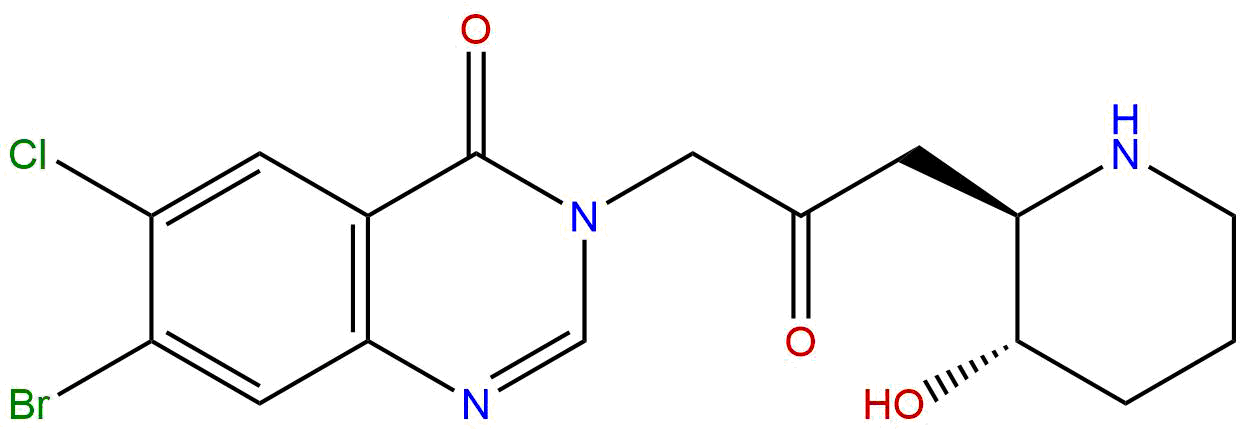


Product name: Halofuginone
Synonym name:
Catalogue No.: BP4353-1
Cas No.: 55837-20-2
Formula: C16H17BrClN3O3
Mol Weight: 414.684
Botanical Source:
Type of Compound: Alkaloids
Purity: 95%~99%
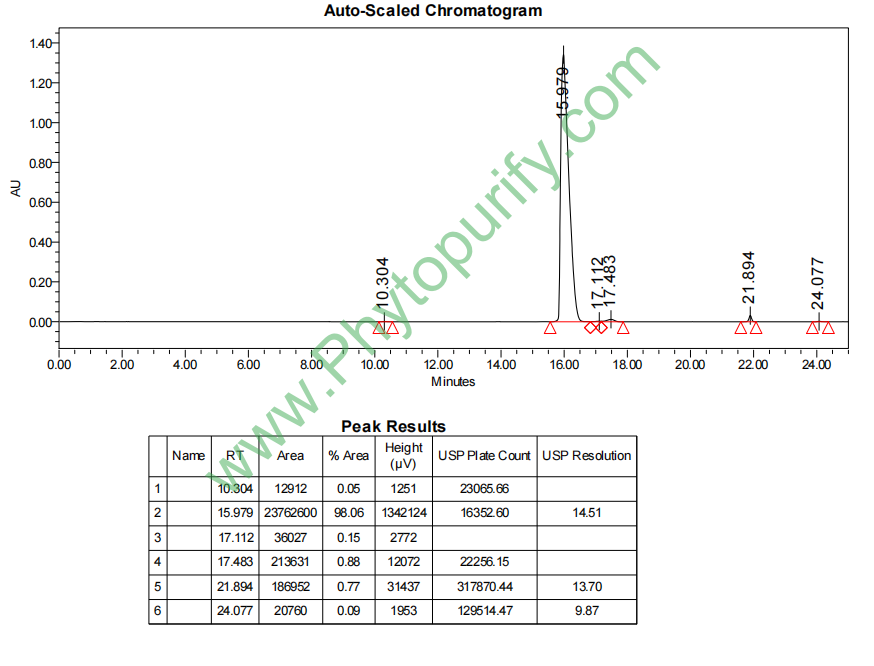
Analysis Method: HPLC-DAD or/and HPLC-ELSD
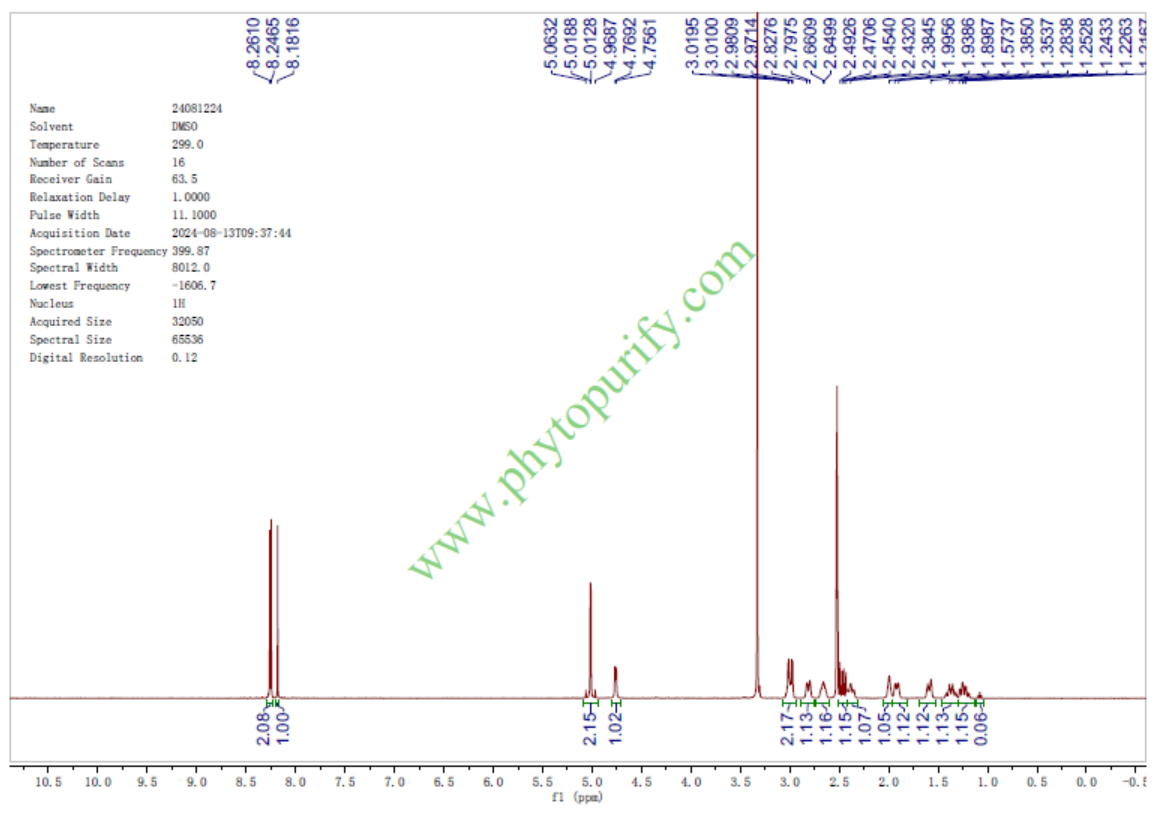
Identification Method: Mass, NMR
Packing: Brown vial or HDPE plastic bottle
Storage: Store in a well closed container, protected from air and light. Put into refrigerate or freeze for long term storage.
Whenever possible, you should prepare and use solutions on the same day. However, if you need to make up stock solutions in advance, we recommend that you store the solution as aliquots in tightly sealed vials at -20℃. Generally, these will be useable for up to two weeks.
The product could be supplied from milligrams to grams
Inquire for bulk scale.
For Reference Standard and R&D, Not for Human Use Directly.
HPLC of Halofuginone
HNMR of Halofuginone
Storage conditions:Short-term storage at 2~8℃, long-term storage at -20 ~ -80℃
Halofuginone (CAS number: 55837-20-2) is a small molecule compound derived from the active ingredient Febrifugine in the traditional Chinese medicine Dichroa Febrifuga Lour. As a competitive inhibitor of prolyl tRNA synthase (ProRS), fisetin has attracted widespread attention in the field of natural product pharmacology. Its unique biological activities include multiple effects such as anti malaria, anti-inflammatory, anti-cancer, anti fibrosis, and pulmonary vasodilation, demonstrating great potential for drug development. In recent years, with the in-depth analysis of molecular mechanisms, the mechanism of action of Changshan ketone in collagen synthesis regulation, TGF - β signaling pathway inhibition, ion channel regulation, and other aspects has gradually become clear, promoting its research progress in fields such as osteoarthritis, fibrosis diseases, and pulmonary vascular diseases.
This review aims to systematically summarize the chemical structure and physicochemical properties, plant sources and extraction methods, pharmacological activity and mechanism of action of Changshan ketone, and explore its clinical application prospects and future research directions based on drug evaluation and pharmacokinetic data, providing theoretical basis and reference for natural product pharmacology and new drug development.
The chemical structure of Changshan ketone is based on the framework of Febrifugene, and better efficacy and safety are achieved through structural modification. Its molecular formula is C20H23ClN2O3 and its molecular weight is 414.6870. Changshan ketone contains a characteristic quinoline ring and chlorinated substituent, endowing it with unique chemical properties and biological activity.
In terms of physical and chemical properties, the LogP value of Changshan ketone is 1.2794, indicating its moderate lipid solubility, which is beneficial for cell membrane permeation and in vivo distribution. The polar surface area (TPSA) is 84.22 Å ², indicating its affinity in polar environments. The water solubility is 1.7271 (unit not specified, usually in mg/mL or mol/L), indicating good solubility and facilitating the development of drug formulations. The high penetration of the blood-brain barrier suggests its potential role in central nervous system diseases. The negative result of hERG channel inhibition experiment indicates a low risk of cardiac toxicity. The Ames test result is 1.2, indicating a low risk of genotoxicity and a good safety basis.
The structural characteristics and physicochemical properties of Changshan ketone provide a molecular basis for its multi-target and multi mechanism pharmacological activity, and also lay a good foundation for its pharmacokinetic behavior and clinical applications.
The parent compound Febrifugene of Changshan ketone was initially isolated from Dichroa Febrifuga Lour. Changshan is a traditional Chinese medicine mainly distributed in southern China and Southeast Asia. Its rhizome contains abundant dihydroquinoline alkaloids, among which Febrifugene is one of the main active ingredients.
Traditional extraction methods typically use organic solvents such as ethanol and methanol to extract dried rhizomes of Changshan, followed by separation and purification through liquid-liquid distribution, column chromatography, and other methods. With the development of modern separation technology, techniques such as supercritical CO2 extraction, high-performance liquid chromatography (HPLC), and reverse phase chromatography have been introduced to improve extraction purity and efficiency.
Changshan ketone, as a derivative of Febrifugene, is usually obtained through chemical synthesis or semi synthetic methods. The synthetic route starts from Febrifune and undergoes steps such as chlorination, hydroxyl protection, and deprotection to obtain structurally modified Changshanketone. This method not only ensures the purity and batch stability of the product, but also meets the demand for large-scale production in drug development.
The anti malarial activity of Changshan ketone is derived from its parent compound Febrifugene. In vitro and in vivo experiments have shown that Changshan ketone has a significant inhibitory effect on Plasmodium spp. and can effectively reduce parasite load. Its mechanism of action mainly involves inhibiting the protein synthesis and metabolic pathways of malaria parasites, blocking their growth and reproduction.
Changshan ketone, as a specific inhibitor of type-I collagen synthesis, has shown outstanding performance in anti fibrotic research. Fibrosis is a common pathological basis for various chronic diseases such as liver fibrosis, pulmonary fibrosis, and renal fibrosis, where excessive collagen deposition leads to tissue sclerosis and functional impairment. Changshan ketone competitively inhibits prolyl tRNA synthase, reducing protein synthesis of proline and thereby inhibiting excessive collagen production. In addition, Changshan ketone can also inhibit the activity of TGF - β signaling pathway and alleviate fibrosis process.
Changshan ketone has significant anti-inflammatory activity. Research has shown that Changshan ketone can downregulate the expression of various inflammatory mediators, such as tumor necrosis factor alpha (TNF - α), interleukin-6 (IL-6), and nitric oxide synthase (iNOS), to alleviate inflammation. Its anti-inflammatory mechanism is closely related to the inhibition of the nuclear factor kappa B (NF - κ B) signaling pathway, which can block the transmission of inflammatory signals and reduce tissue damage.
Changshan ketone exhibits anti proliferative and pro apoptotic effects in various tumor models. It achieves killing of tumor cells by inducing cell cycle arrest, activating mitochondrial pathways, and regulating apoptosis related proteins. In addition, Changshan ketone can also inhibit collagen deposition in the tumor microenvironment, block tumor cell invasion and metastasis, and demonstrate good anti-tumor potential.
Changshan ketone, as an effective pulmonary vasodilator, can activate voltage-gated potassium ion channels (Kv channels) and block various calcium ion channels (voltage-gated, receptor operated, and storage operated Ca2+channels), thereby reducing pulmonary artery pressure and improving pulmonary hemodynamics. This effect provides new ideas for the treatment of pulmonary vascular diseases such as pulmonary arterial hypertension.
Changshan ketone, as a competitive inhibitor of prolyl tRNA synthase, has a Ki value of 18.3 nM and exhibits high affinity. This enzyme is responsible for linking proline to its corresponding tRNA and is a key step in protein translation. Changshan ketone exerts anti fibrotic and anti-tumor effects by blocking the activity of the enzyme, inhibiting protein synthesis, especially collagen production.
Transforming growth factor beta (TGF - β) is an important regulatory factor in fibrosis and inflammation. Changshan ketone can inhibit the activity of TGF - β, block the phosphorylation and nuclear translocation of downstream Smad proteins, reduce the expression of collagen and other extracellular matrix proteins, and alleviate tissue fibrosis.
Changshan ketone activates Kv channels, promotes potassium ion efflux, causes cell membrane hyperpolarization, and reduces cell excitability. At the same time, Changshan ketone blocks voltage-gated, receptor operated, and storage operated Ca2+channels, reduces intracellular calcium ion concentration, alleviates vascular smooth muscle contraction, and achieves pulmonary vasodilation effect.
Changshan ketone exhibits multi-target effects in the field of antiviral therapy, involving multiple targets such as myeloperoxidase (MPO), herpes virus associated proteins UL42, UL54, ICP27, thymidine kinase (TK), viral glycoprotein gD, CCR5 and CXCR4 chemokine receptors, HIV-1 protease (HIV1-PR) and integrase (INT). These targets cover multiple key steps of virus replication, assembly, and cell invasion, indicating that Changshan ketone has broad-spectrum antiviral potential.
The pharmacological parameters of Changshan ketone show that it has good potential for drug development. Moderate molecular weight and lipid solubility are beneficial for oral absorption and in vivo distribution. The high blood-brain barrier penetration gives it an advantage in the treatment of central nervous system diseases. HERG channel inhibition negative and low mutagenicity in Ames test suggest good safety.
In terms of pharmacokinetics, Changshan ketone exhibits good bioavailability and half-life in vivo, and can maintain effective blood drug concentrations. Its metabolism is mainly carried out through the liver enzyme system, and the activity and toxicity of metabolites still need further research. The drug interaction potential of Changshan ketone is relatively low, which is conducive to combination therapy.
Changshan ketone has shown significant therapeutic effects in various disease models and has broad clinical application potential. Its anti fibrotic effect provides a new treatment strategy for chronic diseases such as liver fibrosis, pulmonary fibrosis, and renal fibrosis. The inhibition of the TGF - β signaling pathway has the potential to alleviate pathological changes in degenerative diseases such as osteoarthritis. The vasodilatory effect of pulmonary blood vessels brings new drug options for the treatment of pulmonary vascular diseases such as pulmonary arterial hypertension.
In addition, the anti malaria, anti-inflammatory, and anticancer activities of Changshan ketone provide diversified directions for the treatment of infectious diseases and tumors. Its multi-target and multi mechanism characteristics help overcome the resistance problem of single target drugs.
Future research should focus on optimizing the pharmacokinetic properties of Changshan ketone, reducing potential toxicity risks, and conducting clinical trials to verify its safety and effectiveness. At the same time, by combining modern drug design technology, we will develop derivatives and nano formulations of Changshan ketone to enhance its targeting and therapeutic efficacy.
Changshan ketone, as a natural derivative derived from traditional Chinese medicine, exhibits a wide range of pharmacological effects and good medicinal properties due to its unique chemical structure and diverse biological activities. Its potential in the fields of anti fibrosis, anti-inflammatory, anti-cancer, and pulmonary vasodilation provides an important example for natural product pharmacology and new drug development. With the in-depth analysis of its mechanism of action and the advancement of drug development technology, Changshan ketone is expected to become an innovative drug for treating various complex diseases. Future research should strengthen clinical translation, promote its transition from laboratory to clinical application, and contribute new strength to human health.
