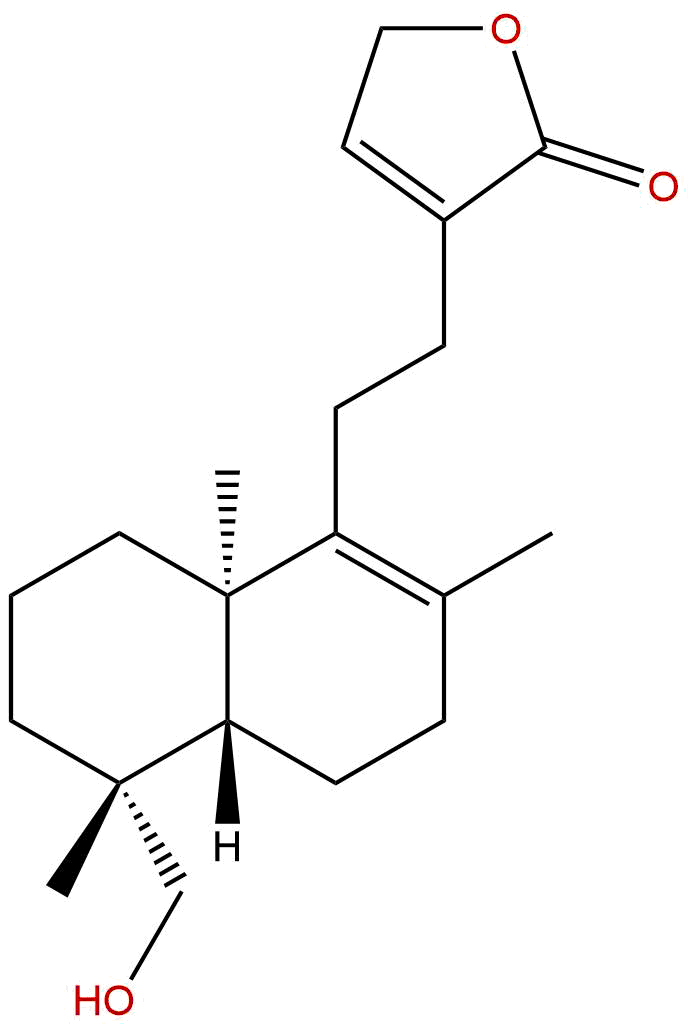


Product name: 8-Methylandrograpanin
Synonym name:
Catalogue No.: BP2415
Cas No.: 21681-03-8
Formula: C20H30O3
Mol Weight: 318.457
Botanical Source:
Type of Compound: Diterpenoids
Purity: 95%~99%
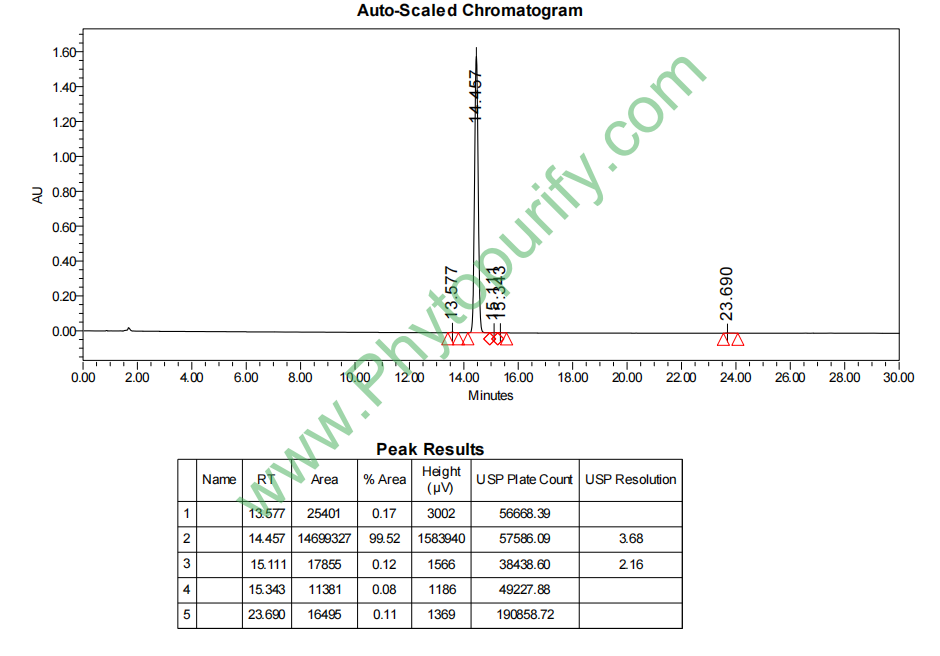
Analysis Method: HPLC-DAD or/and HPLC-ELSD
Identification Method: Mass, NMR
Packing: Brown vial or HDPE plastic bottle
Storage: Store in a well closed container, protected from air and light. Put into refrigerate or freeze for long term storage.
Whenever possible, you should prepare and use solutions on the same day. However, if you need to make up stock solutions in advance, we recommend that you store the solution as aliquots in tightly sealed vials at -20℃. Generally, these will be useable for up to two weeks.
The product could be supplied from milligrams to grams
Inquire for bulk scale.
For Reference Standard and R&D, Not for Human Use Directly.
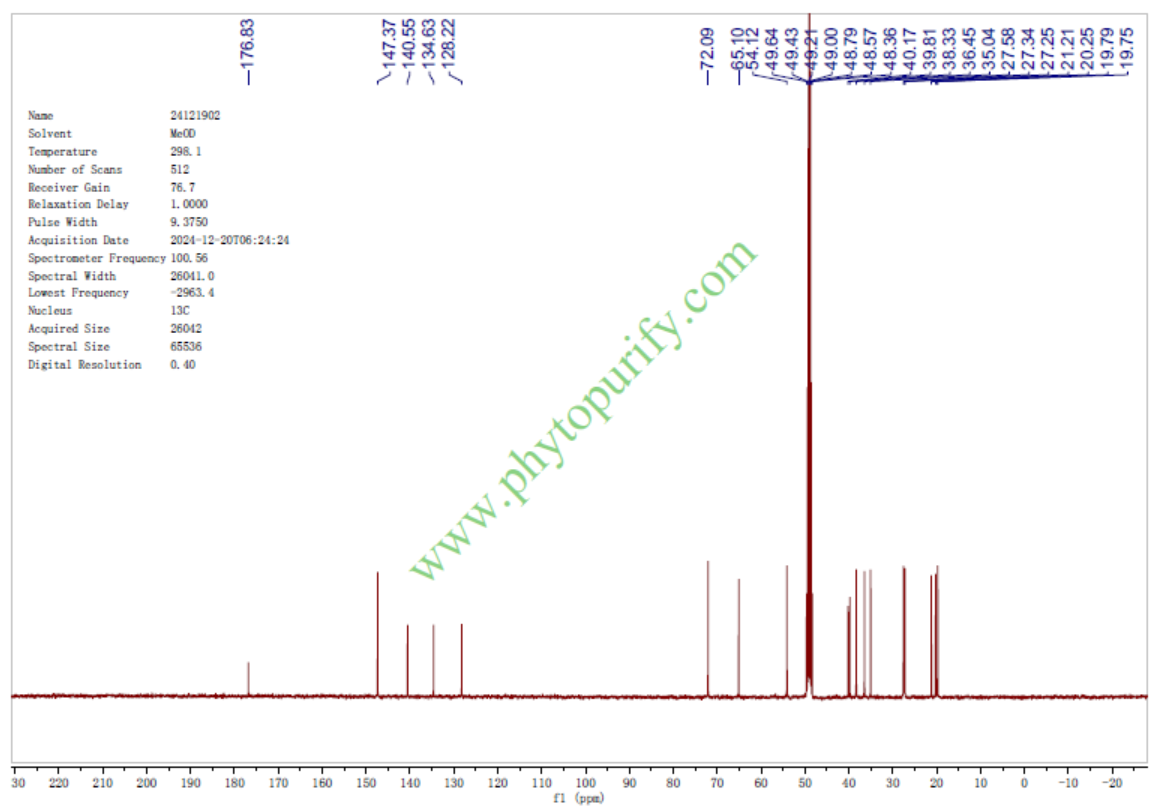
NMR of 8-Methylandrograpanin
HPLC of 8-Methylandrograpanin
Storage conditions:Short-term storage at 2~8℃, long-term storage at -20 ~ -80℃
46.5300
4.2176
4.2170
.0268
5.0869
9.7513
High
89.5716
4.2937
No
No
No
No
No
No
0.0
No
No
No
Yes
Natural products, as an important source of drug discovery, play an irreplaceable role in the long history of human fight against diseases. Heart piercing lotus(Andrographis paniculata (Burm.f.) Nees), As a widely used herb in traditional Asian medicine, its medicinal value has long been recognized by multiple cultural circles. Chuanxinlian has the traditional effects of clearing heat and detoxifying, cooling blood and reducing swelling. It is commonly used in clinical practice to treat upper respiratory tract infections, dysentery, fever and other diseases. Modern pharmacological research has revealed that the extract and active ingredients of Houttuynia cordata have various pharmacological activities such as anti-inflammatory, antiviral, immunomodulatory, hepatoprotective, and anti-tumor effects, making it one of the hotspots in the field of natural product research.
Among the numerous active ingredients contained in Chuanxinlian, diterpenoid lactones are the most important pharmacological substances. Andrographolide, as the most abundant and extensively studied active ingredient, has been widely reported to have significant anti-inflammatory and antiviral activities. However, as research deepens, scientists have discovered that there are also various structurally similar diterpenoid compounds in Houttuynia cordata, which exhibit a different or even better biological activity spectrum than Houttuynia cordata lactone. 8-Methyllandrograpanin (CAS number: 21681-03-8) is a noteworthy member among them.
8-Methylandrographolide is a diterpenoid compound found in the leaves of Andrographis paniculata, and its chemical structure belongs to the derivatives of the andrographolide skeleton. Compared with andrographolide, 8-methylandrographolide contains a methyl substituent at position C-8, which may endow it with unique biological and pharmacological properties. In recent years, with the advancement of separation and purification technology and the improvement of biological activity screening systems, 8-methylandrographis glycosides have gradually attracted the attention of researchers, and their potential application value in anti-inflammatory, anti-tumor, antiviral and other fields is gradually being revealed.
This article aims to provide a systematic review of the chemical structure characteristics, plant sources and extraction methods, pharmacological activity research progress, mechanism of action and molecular targets, pharmacological evaluation and pharmacokinetic properties of 8-methylandrographis glycosides, and to look forward to their clinical application prospects, in order to provide a comprehensive literature basis for the in-depth research and development of this natural product.
8-Methylandrographolide belongs to the diterpenoid class of compounds, and its chemical skeleton is derived from the basic structural units of andrographolide compounds. From a chemical structure perspective, the 8-methylandrographolide has a typical diterpenoid lactone skeleton, consisting of four isoprene units connected to form a polycyclic system containing a gamma lactone ring. Its molecular formula is C20H30O3 and its molecular weight is 318.4570 g/mol. Compared with andrographolide (C20H30O5), the 8-methylandrographolide lacks two oxygen atoms in its structure, indicating that it may lack certain hydroxyl or substituent groups on the lactone ring in the andrographolide molecule.
The most prominent structural feature of this compound is the methyl substituent at the C-8 position. In the basic skeleton of andrographolide compounds, the C-8 position is usually a methylene (- CH2-) or methylene (- CH -) group, while the 8-methyl andrographolide introduces an additional methyl (- CH3) group at this position. This structural modification may significantly affect the three-dimensional conformation, hydrophobicity, and interaction modes with other biomolecules of the molecule. In addition, the compound also contains functional groups commonly found in other diterpenoid compounds, including double bonds, hydroxyl groups, and lactone rings, which provide the structural basis for its biological activity.
In terms of physical and chemical properties, the 8-methylated new glycoside of Hedyotis diffusa exhibits typical lipophilic characteristics. The calculated LogP value is 4.2176, indicating that the compound has strong lipid solubility, which is consistent with its essential characteristics as a diterpenoid compound. A higher lipid solubility means that the compound is easily able to penetrate biological membranes, including cell membranes and the blood-brain barrier, which has a significant impact on its distribution and efficacy in the body. In fact, the analysis of pharmacological parameters shows that 8-methylandrographolide has a high blood-brain barrier penetration ability, which suggests its potential application value in the treatment of central nervous system diseases.
The topological polar surface area (TPSA) of the compound is 46.5300 Å ², which is at a moderate level, indicating that the molecule contains a certain number of polar groups, but the overall polarity is moderate. Compounds with TPSA values in the range of 40-60 Å ² typically exhibit good oral bioavailability and cell membrane permeability. In terms of water solubility, the calculated water solubility of 8-methylandrographolide is 0.0268 mg/mL, which is a poorly soluble compound, consistent with its high lipid solubility characteristics. Poor water solubility is a common challenge faced by many natural products in drug development, which needs to be improved through formulation techniques or structural modifications.
It is worth noting that the pharmacological evaluation results showed that 8-methylandrographolide had no inhibitory effect on hERG potassium channels (hERG inhibition: no), which reduced its risk of causing cardiac toxicity (such as QT interval prolongation). In addition, the Ames test result was 0.0, indicating that the compound did not exhibit mutagenicity in the bacterial recovery mutation test, suggesting a low risk of genetic toxicity. These safety indicators provide favorable conditions for further drug development of the compound.
The main source of the 8-methyl new glycoside of Andrographis paniculata comes from the Euphorbiaceae plant Andrographis paniculata(Andrographis paniculata Leaves of (Burm. f.) Nees. Chuanxinlian is native to India and Sri Lanka, and is now widely distributed in tropical and subtropical regions such as southern China, Southeast Asia, and the Indian subcontinent. In China, Chuanxinlian is mainly cultivated in provinces such as Guangdong, Guangxi, Fujian, and Yunnan, and is an important medicinal plant resource. The various parts of the plant of Houttuynia cordata contain diterpenoids, but the content is most abundant in the leaves, which is also the main source of 8-methyl Houttuynia cordata glycoside.
The content of diterpenoids in Chuanxinlian is influenced by various factors, including variety, growth environment, harvesting time, processing methods, etc. Research has shown that the total content of diterpenoid lactones in the leaves of Houttuynia cordata is usually between 1% and 5% (by dry weight), with Houttuynia cordata lactone as the main component and 8-methyl Houttuynia cordata glycoside as a trace component. Its content is relatively low, usually only accounting for a very small proportion of the total diterpenoid compounds. This low content characteristic poses certain challenges for the separation and purification of the compound, requiring efficient and selective extraction and separation techniques.
The traditional extraction method usually uses organic solvent extraction. Due to the lipophilic characteristics of 8-methylandrographolide, commonly used extraction solvents include ethanol, methanol, ethyl acetate, chloroform, etc. Among them, ethanol, as a green solvent, is widely used in industrial production due to its good extraction efficiency and safety. The extraction process usually includes the following steps: crushing the dried leaves of Houttuynia cordata, soaking them in a certain concentration of ethanol (usually 70% -95%) at room temperature or heating conditions for extraction, and concentrating the extract to obtain the crude extract. In order to improve extraction efficiency, modern extraction techniques such as ultrasound assisted extraction, microwave-assisted extraction, and enzyme assisted extraction can be used. Ultrasound assisted extraction utilizes the cavitation effect of ultrasound to destroy cell walls and promote the dissolution of active ingredients; Microwave assisted extraction utilizes the penetration and selective heating properties of microwaves to accelerate the release of target compounds.
After obtaining the crude extract, further separation and purification are required to obtain high-purity 8-methylandrographis glycosides. Due to the presence of multiple structurally similar diterpenoid compounds in Chuanxinlian, conventional column chromatography methods are difficult to achieve efficient separation. At present, the commonly used separation strategies include the following:
Firstly, solvent extraction method is used for preliminary separation. Based on the polarity difference between the target compound and impurities, liquid-liquid extraction can be carried out using solvents of different polarities (such as petroleum ether, chloroform, ethyl acetate, n-butanol, etc.) to enrich the 8-methylandrographis glycosides in specific polarity ranges. Due to its LogP value of 4.2176, the compound is mainly enriched in moderately polar solvent phases, such as chloroform or ethyl acetate extraction layers.
Secondly, further separation was performed using silica gel column chromatography. The gradient elution with different ratios of chloroform methanol or petroleum ether ethyl acetate system can achieve the preliminary separation of 8-methylandrographolide from other diterpenoid compounds. However, due to the structural similarity between paeoniflorin and 8-methyl paeoniflorin, it is often difficult to obtain high-purity target products solely through silica gel column chromatography.
High performance liquid chromatography (HPLC) is a key technology for obtaining high-purity 8-methylandrographis glycosides. By using a reverse phase C18 chromatography column with acetonitrile water or methanol water system as the mobile phase, combined with UV detection (usually at a detection wavelength of 210-230 nm), efficient separation and purification of the target compound can be achieved. The application of preparative HPLC makes it possible to prepare high-purity samples in milligrams or even grams, providing a material basis for subsequent pharmacological activity research and structural confirmation.
In addition, high-speed countercurrent chromatography (HSCCC), as a liquid-liquid distribution chromatography technique, has also demonstrated unique advantages in the separation of natural products. This technology avoids irreversible adsorption between the sample and the solid stationary phase, and has the characteristics of high recovery rate and good separation efficiency, especially suitable for the separation and purification of diterpenoid compounds in Houttuynia cordata.
In terms of structural confirmation, the isolated 8-methyl new glycoside of Hedyotis diffusa usually requires comprehensive identification using various spectroscopic techniques such as nuclear magnetic resonance spectroscopy (NMR, including 1H-NMR, 13C-NMR, DEPT, COSY, HSQC, HMBC, etc.), high-resolution mass spectrometry (HR-MS), infrared spectroscopy (IR), and ultraviolet spectroscopy (UV). By comparing with known literature data, the chemical structure and stereoconfiguration of the compound can be confirmed.
Although the pharmacological activity research of 8-methylandrographolide is not as in-depth as that of andrographolide, previous studies have revealed its potential therapeutic effects in multiple disease models. Existing evidence suggests that the compound has various biological activities such as anti-inflammatory, anti-tumor, antiviral, and antioxidant properties, demonstrating potential for development as a drug lead compound.
Inflammation is the body's defense response to harmful stimuli, but excessive or sustained inflammation is closely related to the occurrence and development of various diseases. Research has shown that 8-methylandrographolide exhibits significant anti-inflammatory activity in various inflammatory models. In the lipopolysaccharide (LPS) - induced macrophage inflammation model, this compound can significantly inhibit the production of pro-inflammatory cytokines such as tumor necrosis factor - α (TNF - α), interleukin-6 (IL-6), and interleukin-1 β (IL-1 β). In addition, 8-methylandrographolide can also inhibit the release of nitric oxide (NO) and prostaglandin E2 (PGE2), which play a key role in inflammatory response.
In animal models, 8-methylandrographis glycosides exhibit inhibitory effects on both acute and chronic inflammation. In the carrageenan induced rat paw swelling model, this compound can significantly reduce the degree of swelling, and its effect is comparable to that of the positive control drug. In chronic inflammation models, such as adjuvant arthritis models, 8-methylandrographolide can reduce joint swelling and inflammatory cell infiltration, and improve joint pathological damage. These results indicate that 8-methylandrographolide may exert anti-inflammatory effects through multiple targets and pathways.
The anti-tumor activity of 8-methylated Chuanxinlian glycoside is one of its research hotspots. In vitro cell experiments showed that the compound had a proliferation inhibitory effect on a variety of tumor cell lines, including liver cancer cells (HepG2, Huh7), lung cancer cells (A549), breast cancer cells (MCF-7, MDA-MB-231), colon cancer cells (HT-29, HCT116) and cervical cancer cells (HeLa). Its anti-tumor activity exhibits dose and time dependence, with a half maximal inhibitory concentration (IC50) typically at the micromolar level, demonstrating moderate anti-tumor activity.
Further research has shown that 8-methylandrographolide can induce tumor cell apoptosis through various mechanisms. Flow cytometry analysis showed that tumor cells treated with this compound exhibited typical apoptotic features, including cell shrinkage, chromatin condensation, and DNA fragmentation. Meanwhile, the compound can also induce cell cycle arrest, mainly blocking cells in the G0/G1 phase or G2/M phase, thereby inhibiting the proliferation of tumor cells. It is worth noting that the toxicity of 8-methylandrographolide to normal cells is relatively low, and it exhibits certain selective anti-tumor activity, which provides favorable conditions for its development as a lead compound for anti-tumor drugs.
Chuanxinlian is commonly used in traditional medicine to treat viral infections, and its antiviral activity is mainly attributed to Chuanxinlian lactone compounds. As one of the active ingredients of Houttuynia cordata, 8-methyl new glycoside also exhibits certain antiviral activity. Preliminary studies have shown that the compound has inhibitory effects on various viruses, including influenza virus, respiratory syncytial virus (RSV), herpes simplex virus (HSV), etc. In vitro antiviral experiments have shown that 8-methylandrographolide can inhibit virus replication and proliferation, reduce virus titers, and protect host cells from cytopathic effects caused by virus infection.
Research on antiviral mechanisms suggests that 8-methylandrographolide may exert antiviral effects through various pathways, including direct inhibition of viral enzyme activity, interference with virus host cell binding, and regulation of host cell antiviral immune response. However, current research on the antiviral activity of this compound is still relatively limited, and its antiviral spectrum and mechanism of action need further clarification.
Oxidative stress is closely related to the occurrence and development of various diseases, including inflammation, tumors, neurodegenerative diseases, and cardiovascular diseases. Research has shown that 8-methylandrographis glycosides have certain antioxidant activity, which can clear free radicals, inhibit lipid peroxidation, and enhance the activity of antioxidant enzymes. In the chemical system, this compound is capable of scavenging 1,1-diphenyl-2-trinitrophenylhydrazine (DPPH) free radicals, 2,2 '- bis (3-ethylbenzothiazole-6-sulfonic acid) (ABTS) free radicals, and hydroxyl free radicals, exhibiting dose-dependent free radical scavenging ability.
In a cell model, 8-methylandrographolide can reduce intracellular reactive oxygen species (ROS) levels induced by oxidative stress, alleviate oxidative damage, and protect cells from oxidative stress-induced apoptosis. In addition, the compound can upregulate the expression and activity of antioxidant enzymes such as superoxide dismutase (SOD), glutathione peroxidase (GSH Px), and catalase (CAT), enhancing the antioxidant defense ability of cells. These antioxidant activities may partially explain the anti-inflammatory and anti-tumor mechanisms of the compound.
In addition to the main activities mentioned above, 8-methylated Chuanxinlian glycoside also exhibits other potential pharmacological effects. Preliminary studies suggest that the compound may have immunomodulatory activity, regulating the functions of macrophages, T cells, and B cells, and affecting the intensity and direction of immune responses. In addition, the compound also exhibits certain hepatoprotective activity, which can alleviate chemical liver damage, reduce serum transaminase levels, and improve liver pathological changes. In terms of antibacterial activity, 8-methylandrographolide has shown inhibitory effects on certain bacteria and fungi, but its antibacterial spectrum and mechanism still need further research.
A deep understanding of the mechanism of action and molecular targets of 8-methylandrographolide is of great significance for elucidating the molecular basis of its pharmacological activity, guiding structural optimization, and drug development. Current research indicates that the compound exerts its biological activity through multiple targets and pathways, involving multiple signaling pathways and molecular targets.
The anti-inflammatory effect of 8-methylated Chuanxinlian glycoside is mainly related to the inhibition of the nuclear factor kappa B (NF - κ B) signaling pathway. NF - κ B is the core transcription factor of inflammatory response, regulating the expression of various pro-inflammatory cytokines, chemokines, and adhesion molecules. Research has shown that this compound can inhibit the phosphorylation and degradation of I κ B α, prevent nuclear translocation of NF - κ B, and thus suppress its transcriptional activity. In addition, 8-methylated Chuanxinlian glycoside can also inhibit the mitogen activated protein kinase (MAPK) signaling pathway, including the phosphorylation of p38 MAPK, extracellular signal regulated kinase (ERK), and c-Jun N-terminal kinase (JNK), which play important regulatory roles in inflammatory responses.
At the molecular target level, 8-methylandrographolide may directly bind to certain inflammation related proteins and regulate their activity. Molecular docking and surface plasmon resonance (SPR) experiments suggest that this compound may bind to the MD-2 domain of Toll like receptor 4 (TLR4), interfere with the binding of LPS to TLR4, and thus inhibit the activation of downstream inflammatory signals. In addition, the compound may directly inhibit the activity of cyclooxygenase-2 (COX-2) and inducible nitric oxide synthase (iNOS), reducing the production of PGE2 and NO.
The anti-tumor effect of 8-methylandrographolide involves multiple mechanisms, including inducing apoptosis, inhibiting proliferation, blocking cell cycle, inhibiting angiogenesis, and reversing drug resistance.
In inducing apoptosis, this compound exerts a pro apoptotic effect by activating the mitochondrial pathway (endogenous pathway) and the death receptor pathway (exogenous pathway). Research has shown that after treatment of tumor cells with 8-methylandrographolide, mitochondrial membrane potential decreases, cytochrome c is released into the cytoplasm, activating caspase-9 and caspase-3, ultimately leading to cell apoptosis. At the same time, the compound can upregulate the expression of pro apoptotic protein Bax, downregulate the expression of anti apoptotic proteins Bcl-2 and Bcl xL, alter the ratio of Bax/Bcl-2, and promote mitochondrial pathway apoptosis. In addition, the compound can also activate caspase-8, indicating that the death receptor pathway is also involved in its induced apoptosis process.
In terms of inhibiting proliferation, 8-methylandrographolide exerts its effect by interfering with various growth factor signaling pathways. This compound can inhibit the phosphatidylinositol 3-kinase/protein kinase B (PI3K/Akt) signaling pathway, reduce the phosphorylation level of Akt, thereby inhibiting downstream mTOR signaling, reducing protein synthesis and cell proliferation. Meanwhile, the compound can also inhibit the Wnt/β - catenin signaling pathway, reduce the nuclear translocation and transcriptional activity of β - catenin, and suppress the expression of its target genes such as c-Myc and cyclin D1.
In terms of cell cycle regulation, 8-methylandrographolide induces cell cycle arrest by regulating the expression of cyclins and cyclin dependent kinases (CDKs). Research has shown that this compound can upregulate the expression of CDK inhibitors such as p21 and p27, inhibit the activity of cyclin D1/CDK4 and cyclin E/CDK2, and block cells in the G0/G1 phase. In some tumor cells, this compound can also induce G2/M phase arrest, which may be related to the inhibition of cyclin B1/CDK1 activity.
The antiviral mechanism of 8-methylandrographolide is not fully understood, but previous studies suggest that it may exert antiviral effects through multiple pathways. This compound may directly bind to viral proteins, inhibiting the adsorption, invasion, or replication process of the virus. For example, for influenza virus, the compound may inhibit the activity of neuraminidase (NA), preventing the virus from being released from host cells. For respiratory syncytial virus, this compound may interfere with the virus F protein mediated membrane fusion process.
In addition, 8-methylandrographolide may also exert indirect antiviral effects by regulating the host cell's antiviral immune response. Research has shown that this compound can activate interferon regulatory factor 3 (IRF3) and nuclear factor kappa B (NF - κ B), promote the production of type I interferon (IFN - α/β), and enhance the antiviral status of host cells. Meanwhile, the compound can also regulate the expression and signal transduction of pattern recognition receptors such as Toll like receptors (TLRs) and retinoic acid-induced gene I (RIG-I), enhancing innate immune response.
The antioxidant activity of 8-methylandrographolide is closely related to the functional groups in its molecular structure. The compound contains structural units such as hydroxyl and double bonds that can directly scavenge free radicals, provide hydrogen atoms or electrons, and terminate free radical chain reactions. In addition, the compound can enhance the antioxidant defense ability of cells by activating the nuclear factor E2 related factor 2 (Nrf2)/antioxidant response element (ARE) signaling pathway. Research has shown that 8-methylandrographolide can promote nuclear translocation of Nrf2, increase its binding to ARE, and upregulate the expression of downstream antioxidant enzymes such as heme oxygenase-1 (HO-1), quinone oxidoreductase 1 (NQO1), and glutathione S-transferase (GST).
In the process of drug development, the evaluation of drug performance is the key link between the discovery of lead compounds and clinical research. The analysis of the pharmacological parameters of 8-methylandrographolide provides an important reference for its potential as a lead compound in drug development.
According to Lipinski's "Rule of Five", the ideal physicochemical properties of oral drugs should meet the following criteria: molecular weight less than 500 Da, LogP less than 5, number of hydrogen bond donors less than 5, and number of hydrogen bond acceptors less than 10. The molecular weight of 8-methylandrographolide is 318.4570 Da and the LogP is 4.2176, both of which meet the requirements of the "Five Rules". Its TPSA is 46.5300 Å ², indicating that the molecule has good membrane permeability. These physicochemical properties suggest that the compound has good potential for oral bioavailability.
However, the water solubility of the compound is poor (0.0268 mg/mL), which may be the main limiting factor for its oral absorption. Compounds with poor water solubility are difficult to fully dissolve in the gastrointestinal tract, affecting their absorption rate and degree. To improve water solubility, formulation techniques such as solid dispersions, nanoparticles, liposomes, cyclodextrin inclusion complexes, etc. can be used, or hydrophilic groups can be introduced through structural modification.
Pharmacokinetic studies are an important means of evaluating the absorption, distribution, metabolism, and excretion (ADME) processes of candidate drugs in vivo. At present, there is still limited research on the pharmacokinetics of 8-methylandrographolide, but based on its physicochemical properties and structural characteristics, its pharmacokinetic properties can be preliminarily predicted.
In terms of absorption, the high lipid solubility and moderate molecular weight of this compound facilitate its passive diffusion through gastrointestinal epithelial cells for oral absorption. However, its poor water solubility may result in limited dissolution rate, affecting absorption rate and bioavailability. In addition, the compound may be influenced by efflux transporters such as P-glycoprotein (P-gp), further affecting its oral absorption.
In terms of distribution, 8-methylated Chuanxinlian glycoside has high lipid solubility and is easy to distribute in tissues. Its high blood-brain barrier penetration ability suggests that the compound may reach effective concentrations in the central nervous system, providing the possibility for its application in the treatment of central nervous system diseases. Meanwhile, the compound may bind to plasma proteins, affecting its free drug concentration and distribution volume.
In terms of metabolism, as a diterpenoid compound, 8-methylandrographolide may be mainly metabolized by the liver. The cytochrome P450 enzyme system (CYP450) may be involved in its metabolic processes, including phase I metabolic reactions such as oxidation, reduction, and hydrolysis, as well as phase II metabolic reactions such as glucuronic acid binding and sulfate binding. Further research is needed on the activity, toxicity, and pharmacokinetic properties of metabolites.
In terms of excretion, the compound and its metabolites may be mainly excreted through bile and urine. Due to its moderate molecular weight, this compound may be cleared through both renal and hepatic pathways simultaneously.
The analysis of pharmacological parameters shows that 8-methylandrographolide has good safety characteristics. The hERG inhibition assessment result was negative, reducing the risk of cardiac toxicity. The Ames test result is 0.0, indicating that the compound has no mutagenicity. These preliminary safety data provide favorable conditions for further development of the compound.
However, a comprehensive safety evaluation still requires more toxicological studies, including acute toxicity, chronic toxicity, reproductive toxicity, developmental toxicity, immunotoxicity, etc. In addition, the risk of drug drug interactions also needs to be evaluated, especially the inhibitory or inducible effects on CYP450 enzymes.
As an active diterpenoid compound in Houttuynia cordata, 8-methyl new glycoside from Houttuynia cordata exhibits various pharmacological activities and good pharmacological characteristics, with broad clinical application prospects.
Given its significant anti-inflammatory activity and good safety characteristics, 8-methylated Chuanxinlian glycoside is expected to be developed as a novel anti-inflammatory drug. Compared to traditional nonsteroidal anti-inflammatory drugs (NSAIDs), this compound may have different mechanisms of action and lower gastrointestinal side effects. Its anti-inflammatory effect involves multiple signaling pathways such as NF - κ B and MAPK, which may be effective for various inflammatory diseases, including rheumatoid arthritis, inflammatory bowel disease, asthma, dermatitis, etc. In particular, the compound has high blood-brain barrier penetration ability and may have therapeutic potential for neuroinflammatory diseases such as Alzheimer's disease, Parkinson's disease, and multiple sclerosis.
The anti-tumor activity and low toxicity to normal cells of 8-methylandrographolide make it a candidate compound for the development of anti-tumor drugs. This compound exerts anti-tumor effects through multiple targets and pathways, which may overcome the resistance of tumor cells to single target drugs. In the future, the combination application of it with chemotherapy drugs, targeted drugs, or immune checkpoint inhibitors can be explored to improve efficacy and reduce toxic side effects. In addition, the compound may have therapeutic potential for some refractory tumors such as triple negative breast cancer, pancreatic cancer and glioblastoma.
In the context of frequent occurrence of viral infectious diseases, the development of new antiviral drugs has important public health significance. The antiviral activity of 8-methylated Chuanxinlian glycoside, especially its effect on respiratory viruses, suggests that it may be used to treat diseases such as influenza and respiratory syncytial virus infections. In addition, the compound may have broad-spectrum antiviral activity and may also have inhibitory effects on emerging viruses such as SARS-CoV-2, which is worthy of further research.
Although 8-methylandrographolide has various pharmacological activities, its poor water solubility and low bioavailability limit its clinical application. In the future, derivatives with better pharmacokinetic properties and higher activity can be developed through structural modification and medicinal chemistry strategies. The strategy of structural modification includes introducing hydrophilic groups (such as hydroxyl, carboxyl, amino, etc.) into the molecule to improve water solubility; Modify the lactone ring to enhance metabolic stability; Introducing specific substituents to enhance target affinity and selectivity; Design prodrugs to improve oral bioavailability, etc.
In response to the problem of poor water solubility of 8-methyl Chuanxinlian glycoside, modern formulation technology can be used to improve its solubility and bioavailability. Nano delivery systems such as liposomes, nanoparticles, solid lipid nanoparticles, polymer micelles, and cyclodextrin inclusion complexes can improve the water dispersibility and oral absorption of the compound. In addition, non oral administration routes such as transdermal delivery systems and inhalation delivery systems can also be explored to avoid the limitations of oral absorption.
Despite the promising development prospects of 8-methylandrographis glycosides, their conversion from natural products to clinical drugs still faces many challenges. Firstly, the content of this compound in Chuanxinlian is relatively low, making it difficult to prepare high-purity samples on a large scale. Therefore, it is necessary to develop efficient and economical synthetic or semi synthetic methods. Secondly, its pharmacokinetic properties and safety require systematic evaluation, especially the safety of long-term use. In addition, its mechanism of action and molecular targets need to be further elucidated to guide structural optimization and clinical indication selection.
In the future, with the development of technologies such as synthetic biology, combinatorial chemistry, high-throughput screening, and computer-aided drug design, the drug development process of 8-methylandrographolide and its derivatives is expected to accelerate. Multidisciplinary collaboration, including collaborative research in natural product chemistry, medicinal chemistry, pharmacology, toxicology, pharmacy, and clinical medicine, will drive the compound from laboratory research to clinical applications.
As a diterpenoid compound in Houttuynia cordata, 8-methyl new glycoside from Houttuynia cordata has attracted the attention of researchers due to its unique chemical structure and multifaceted pharmacological activities. This article systematically reviews the chemical structure characteristics, plant sources and extraction methods, pharmacological activity research, mechanism of action and molecular targets, drug efficacy evaluation and pharmacokinetic properties of the compound, and prospects its clinical application prospects.
Existing studies have shown that 8-methylandrographolide has various pharmacological activities such as anti-inflammatory, anti-tumor, antiviral, and antioxidant effects. Its mechanism of action involves multiple signaling pathways such as NF - κ B, MAPK, PI3K/Akt, Wnt/β - catenin, and Nrf2/ARE. The pharmacological evaluation shows that the compound has good drug like properties and safety characteristics, but poor water solubility is the main limiting factor for its oral absorption.
Although the research on 8-methylandrographolide is still in its early stages, its potential as a drug lead compound has already been demonstrated. In the future, through structural optimization, formulation development, and in-depth pharmacological research, this compound is expected to develop into a novel drug for treating inflammatory diseases, tumors, and viral infections. As an important source of drug discovery, natural products, and the study of 8-methyl new glycosides in Hedyotis diffusa will further enrich its medicinal value and contribute to human health.
