| Catalog No | Package | Original Price | Price | Inventory | Quantity | Operating |
|---|---|---|---|---|---|---|
| SBP01695-5mg | 5mg | $165.00 | Sign in |
|


Storage conditions:Short-term storage at 2~8℃, long-term storage at -20 ~ -80℃
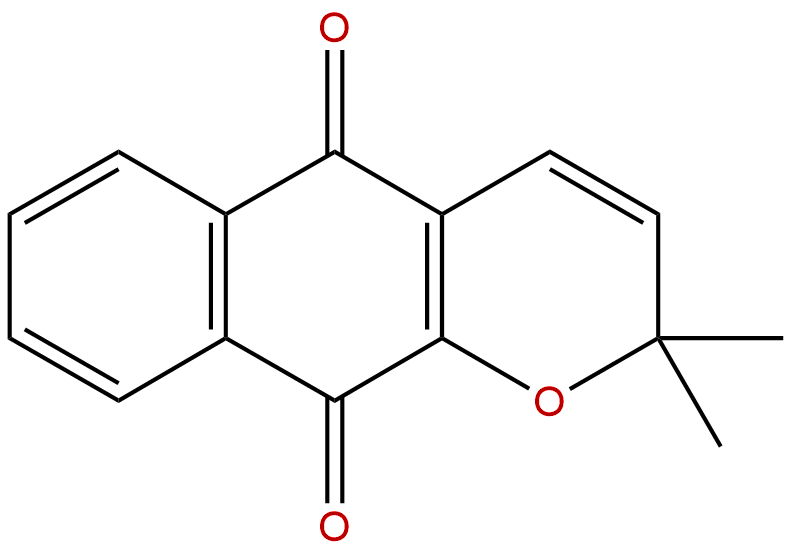
Dehydro - α - lapachone (CAS number: 15297-92-4) is a naphthoquinone compound derived from natural plants. Due to its unique chemical structure and diverse biological activities, it has received widespread attention in the field of natural product pharmacology in recent years. As a dehydrogenated derivative of alpha lapachone, dehydrogenated Alpha lapachone exhibits significant pharmacological activities in anti-tumor, anti-inflammatory, and antimicrobial fields, especially in the field of tumor therapy, demonstrating great potential. Its mechanism of action involves multiple cellular signaling pathways and key molecular targets, covering multiple levels such as apoptosis regulation, cell cycle arrest, and tumor microenvironment regulation.
This article will provide a systematic review of the chemical structure and physicochemical properties, plant sources and extraction methods, pharmacological activity and mechanism of action, pharmacological evaluation and pharmacokinetic characteristics of dehydro alpha rapaoquinone. Finally, it will explore its clinical application prospects and future development directions, aiming to provide theoretical basis and reference for the in-depth research and drug development of this natural product.
Dehydro-Alpha-Rapaqinone belongs to the naphthoquinone class of compounds, with a molecular formula of C15H12O3 and a molecular weight of 240.2580. Its structural core is the naphthoquinone skeleton, and dehydrogenation modification forms a specific double bond structure in the molecule, giving it a unique electronic distribution and spatial configuration. The LogP value of this compound is 2.9125, indicating its moderate lipid solubility, which facilitates cell membrane penetration and in vivo distribution. The polar surface area (TPSA) is 43.37 Å ², indicating that its polarity is moderate and conducive to binding with biomolecules.
Low water solubility (0.0122 mg/mL) suggests limited solubility in aqueous phase, which may affect its bioavailability. The high permeability of the blood-brain barrier indicates its potential to act on central nervous system related diseases. The negative result of hERG channel inhibition experiment indicates a low risk of cardiac toxicity. The Ames test score is 1.5, indicating a low risk of genotoxicity and good safety.
In summary, dehydrogenated alpha rapaoquinone has excellent physicochemical properties and is suitable for further drug development and structural optimization.
Dehydroalpha rapaoquinone mainly comes from the Brazilian endemic plant species of the Wisteriaceae family, Tabebuia spp., especially Tabebuia avellanedae and Tabebuia impetiginosa. The bark and wood of the Lapa tree are rich in various naphthoquinone compounds, among which dehydro alpha Lapa quinone is an important active ingredient.
Traditional extraction methods typically use organic solvents such as ethanol, methanol, or ethyl acetate for multiple extractions of dried and crushed bark, followed by separation and purification through liquid-liquid distribution, column chromatography, and other methods. Modern extraction techniques such as ultrasound assisted extraction, microwave-assisted extraction, and supercritical CO2 extraction have been applied to improve extraction efficiency and purity.
During the purification process, methods such as silica gel column chromatography and reverse phase high performance liquid chromatography (RP-HPLC) are widely used to obtain high-purity dehydro alpha rapaqone. Structural identification mainly relies on techniques such as nuclear magnetic resonance (NMR), mass spectrometry (MS), infrared spectroscopy (IR), and ultraviolet spectroscopy (UV) to ensure the accuracy of the compound's structure.
Dehydroalpha rapaoquinone exhibits significant cytotoxicity and anti proliferative effects in various tumor cell lines. Its anti-tumor activity covers lung cancer, breast cancer, liver cancer, colorectal cancer and other solid tumors. In vitro experiments have shown that the compound can induce apoptosis of tumor cells, block cell cycle progression, and inhibit the migration and invasion ability of tumor cells.
Animal model studies further confirmed the anti-tumor effect of dehydro alpha rapaqone, manifested by a significant reduction in tumor volume and an increase in tumor cell apoptosis rate. In addition, the compound has low toxicity to normal cells and exhibits good selectivity.
In addition to its anti-tumor effect, dehydro alpha rapaoquinone also exhibits certain anti-inflammatory, antioxidant, and antimicrobial activities. Related studies have shown that it can regulate the expression of inflammatory factors, alleviate oxidative stress damage, and have inhibitory effects on some bacteria and fungi. These activities provide a theoretical basis for its potential application in inflammatory diseases and infectious diseases.
The anti-tumor mechanism of dehydro alpha rapaqone is complex and diverse, involving multiple signaling pathways and key molecular targets.
STAT3 This transcription factor is abnormally activated in various tumors, promoting cell proliferation and immune escape. Dehydroalpha rapaoquinone inhibits the phosphorylation and nuclear translocation of STAT3, blocks the expression of downstream target genes, and inhibits tumor progression.
MAPK1 As a key member of the MAPK signaling pathway, MAPK1 is involved in cell proliferation and differentiation. Dehydro-Alpha-Rapaoquinone regulates MAPK1 activity and intervenes in the growth signaling of tumor cells.
In summary, dehydro alpha rapaqone exhibits broad-spectrum anti-tumor activity through multi-target and multi pathway synergistic effects, providing a solid molecular basis for its development as an anticancer drug.
The molecular weight (240.26 Da) of dehydrogenated alpha rapaoquinone meets the Lipinski rule requirement of a molecular weight less than 500 Da. Its LogP value is 2.91, which is within the ideal range of lipid solubility and conducive to cell membrane permeation. The TPSA is 43.37 Å ², and low polarity facilitates oral absorption and intracellular distribution.
Low water solubility (0.0122 mg/mL) may limit its bioavailability, but it can be improved through formulation techniques such as nanoparticles, liposomes, etc. The high permeability of the blood-brain barrier suggests its potential application in central nervous system diseases. The hERG channel has no significant inhibitory effect and reduces the risk of cardiac toxicity. The Ames test results showed a low risk of genotoxicity and good safety.
At present, there is limited research on the pharmacokinetics of dehydro alpha rapaqone. Preliminary in vivo studies have shown that the compound is rapidly absorbed after oral administration, has a moderate plasma half-life, is widely distributed, and can effectively enter tissues, especially tumor tissues. Its metabolic pathway mainly involves liver redox reactions and glucuronic acid binding, with excretion mainly through bile and urine.
Further systematic pharmacokinetic and toxicological studies are needed in the future to clarify its in vivo pharmacokinetic characteristics, metabolites, and safe dose range, providing a basis for clinical application.
Dehydro-Alpha-Rapaqinone has shown broad clinical application prospects due to its multi-target anti-tumor mechanism and good pharmacological parameters. Especially in the field of tumor treatment, this compound is expected to serve as a candidate drug for monotherapy or combination therapy, overcoming the resistance and side effects of traditional chemotherapy drugs.
In addition, its blood-brain barrier permeability provides the possibility for the treatment of brain tumors and neurological related diseases. In the future, the combination of nanotechnology and targeted delivery systems is expected to further enhance its efficacy and safety.
However, the clinical research on dehydro alpha rapaqone is still in its early stages, and there is an urgent need to conduct systematic preclinical safety evaluations and clinical trials to verify its effectiveness and safety. Meanwhile, in-depth analysis of its mechanism of action and pharmacokinetic characteristics will provide a solid foundation for its clinical translation.
Future research should also focus on optimizing its structure, innovating its dosage form, and synergistic effects with other anti-tumor drugs, in order to promote the clinical application of dehydro alpha rapaqone.
Dehydroalpha-rapaoquinone, as a natural plant derived naphthoquinone compound, has become a hot topic in natural product pharmacology research due to its unique chemical structure and multi-target anti-tumor activity. It exhibits good pharmacological activity in various aspects such as anti-tumor and anti-inflammatory, and its mechanism of action covers multiple levels such as cell apoptosis regulation, signal transduction inhibition, and tumor microenvironment regulation.
The drug efficacy evaluation shows that it has good potential for drug development, especially in terms of blood-brain barrier permeability and low risk of cardiac toxicity, which provide advantages for its clinical application. Although clinical research is still in its early stages, the development prospects of dehydro alpha rapaqone as a new anti-tumor drug are broad.
In the future, it is necessary to strengthen its pharmacokinetics, toxicology, and preclinical research, combined with modern drug delivery technology, to promote its clinical application and achieve innovative breakthroughs in natural products in anti-tumor therapy.
