| Catalog No | Package | Original Price | Price | Inventory | Quantity | Operating |
|---|---|---|---|---|---|---|
| BP5059-5mg | 5mg | $650.00 | Sign in |
|


Storage conditions:Short-term storage at 2~8℃, long-term storage at -20 ~ -80℃
58.9200
-.6902
-.6986
.1342
.6440
6.4610
Low
73.9019
3.7722
No
No
No
No
Yes
No
0.0
No
No
No
No
Natural products, as an important source of drug discovery, play an irreplaceable role in the long history of human struggle against diseases. Among the diverse natural product families, isoquinoline alkaloids have attracted much attention due to their significant physiological activity and complex chemical structure. Cylanoline, as a quaternary ammonium berberine alkaloid derived from traditional medicinal plants, has gradually become a hot topic in the field of natural product pharmacology research in recent years due to its unique pharmacological activity spectrum, especially in the neuromuscular and cholinergic systems.
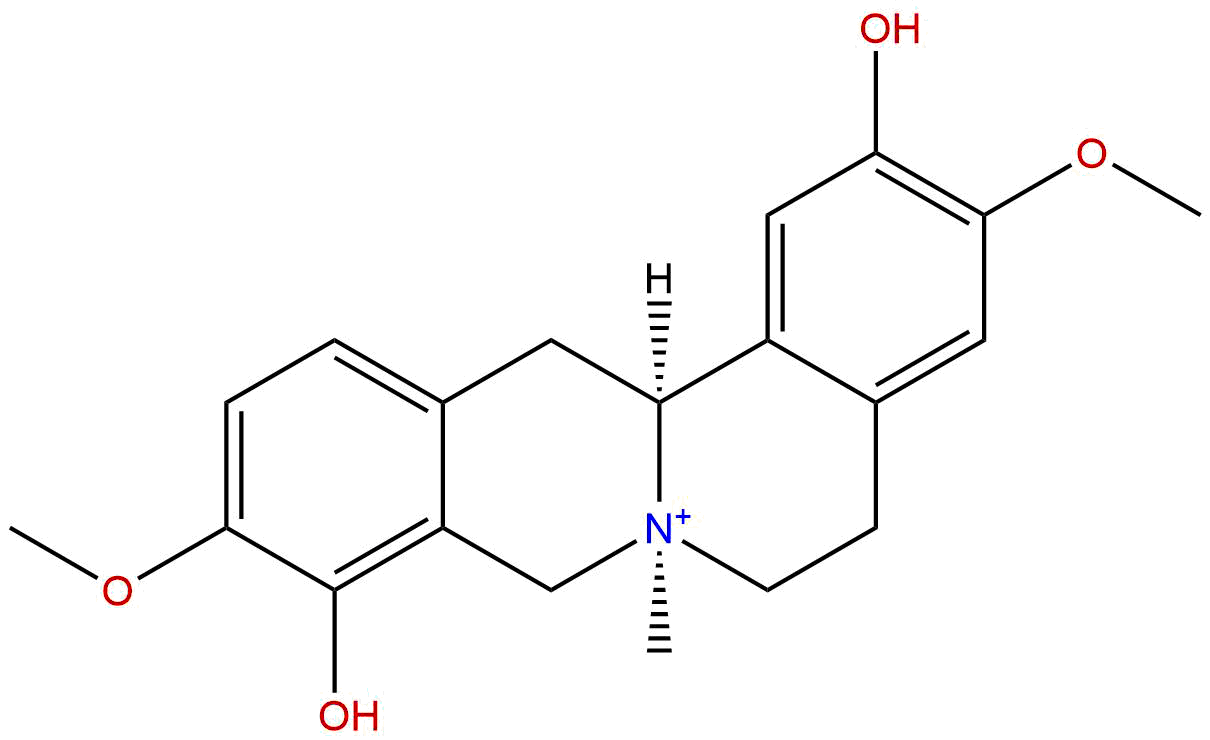
The chemical structure of iridoid alkaloids belongs to the derivative of protoberberine skeleton, and its most significant structural feature is the presence of a quaternary ammonium cation within the molecule. This structural characteristic not only determines its unique physicochemical properties, such as high polarity and water solubility, but also profoundly affects its absorption, distribution, metabolism, and excretion (ADME) processes in organisms. From the perspective of biosynthetic pathways, cyclohexene alkaloids are generated through the N-methylation reaction of (S) - coumarine, which endows the molecule with a permanent positive charge, allowing it to exist mainly in cationic form under physiological pH conditions.
From the perspective of pharmacological activity, iridoid alkaloids exhibit multiple biological effects. Early research mainly focused on its muscle relaxation effect, which is similar to commonly used muscle relaxants in clinical practice, but its mechanism of action may be more complex. Modern pharmacological research further reveals that iridoid alkaloids are effective acetylcholinesterase (AChE) inhibitors. Acetylcholinesterase is a key enzyme in cholinergic nerve conduction, responsible for hydrolyzing the neurotransmitter acetylcholine, thereby terminating the transmission of nerve impulses. Inhibiting the activity of this enzyme can increase the concentration of acetylcholine in the synaptic cleft, thereby enhancing the function of cholinergic nerves. This discovery expands the research on cyclosporine alkaloids from the traditional field of muscle relaxation to explore the therapeutic potential of neurological diseases, especially cognitive dysfunction diseases such as Alzheimer's disease (AD).
In addition, the muscle relaxant effect of matrine is closely related to the interaction of multiple key target proteins, including nicotinic acetylcholine receptor subunits (such as CHRNG, CHRNA1), ryanodine receptor 1 (RYR1), voltage-gated calcium channel subunit (CACNA1S), and voltage-gated sodium channel subunit (SCN4A). These targets together form the core molecular network of excitation contraction coupling in neuromuscular junctions. By acting on these targets, cyclosporine alkaloids may interfere with the transmission of neuromuscular signals from multiple levels, leading to muscle relaxation effects. This multi-target mode of action is not only the basis of its pharmacological activity, but also brings complexity and challenges to its potential clinical applications.
In summary, as a quaternary ammonium alkaloid with both AChE inhibitory activity and muscle relaxant effect, the unique chemical structure and pharmacological activity of iridoid alkaloids make them an important bridge molecule connecting natural product chemistry, neuropharmacology, and muscle physiology. This article aims to systematically review the chemical structure and physicochemical properties, plant sources and extraction methods, pharmacological activity, mechanism of action, pharmacological evaluation, and clinical application prospects of iridoid alkaloids, in order to provide comprehensive academic references for the in-depth research and development of this natural product.
The chemical structure of Lonicera japonica alkaloids belongs to the berberine alkaloids, and its core skeleton is composed of two fused isoquinoline rings, forming a four ring system. Specifically, its structural parent nucleus is 5,6,13,13a-tetrahydro-8H-dibenzo [a, g] quinoline. Unlike many other berberine alkaloids (such as berberine and palmatine), iridoid alkaloids have a chiral center at the C-13a position and an absolute S-shaped configuration. A more critical structural feature is that the nitrogen atoms in its molecule exist in the form of quaternary ammonium salts, forming a permanent positive charge center through N-methylation. This structural feature is the key difference between it and tertiary amine type berberine alkaloids (such as tetrahydropalmatine). The molecular formula of iridoid alkaloid is C20H24NO4 ⁺, with a molecular weight of 342.4150 g/mol. The phenolic hydroxyl and methoxy substitution modes in its structure endow it with specific chemical reactivity.
From the perspective of physical and chemical properties, the quaternary ammonium salt structure of iridoid alkaloids determines their high polarity and good water solubility. The calculated oil-water partition coefficient (LogP) is -0.6902, which is a negative value, indicating that the hydrophilicity of the compound is much stronger than its lipophilicity. This property gives it good solubility and distribution ability in aqueous environments such as blood and extracellular fluid, but it also means that its ability to penetrate biological membranes such as cell membranes and the blood-brain barrier is poor. Its topological polar surface area (TPSA) is 58.9200 Å ², which is lower than many macromolecular drugs, but still a relatively high value for central nervous system targeted drugs, further supporting its expectation of difficulty in crossing the blood-brain barrier. Its water solubility value is 0.1342 mg/mL, although the absolute value is not high, considering its molecular weight, this solubility is already considered good in alkaloids.
The UV visible absorption spectrum characteristics of iridoid alkaloids are closely related to their conjugated system. Due to the presence of a highly conjugated aromatic ring system within its molecule (especially the isoquinoline ring), it exhibits strong absorption in the ultraviolet region. The typical absorption peaks are located around 230 nm, 270 nm, and 340 nm, which can be used for qualitative and quantitative analysis. In terms of fluorescence properties, iridoid alkaloids themselves have a certain fluorescence emission, but their fluorescence quantum yield is usually low and easily affected by solvent polarity and pH value.
In terms of stability, as a quaternary ammonium salt, iridoid alkaloids have relatively high chemical stability. It is relatively stable in acidic or neutral aqueous solutions, but under strong alkaline conditions, the quaternary ammonium salt structure may undergo Hofmann elimination reaction, generating corresponding olefins. In addition, the phenolic hydroxyl groups in its molecules are easily oxidized under alkaline conditions, forming quinone structures that lead to compound degradation. Therefore, during the extraction, separation, purification, and storage processes, it is usually necessary to avoid light, maintain low temperatures, and control the pH value within an appropriate range to maintain its chemical integrity.
Lunhuanteng alkaloids are mainly found in plants of the Menispermaceae family and are a characteristic alkaloid component in this family. Among them, the plants of the genus Cyclea are the most abundant source of phenolic alkaloids in Cyclea. For example, the roots, stems, and leaves of both Cyclea sinensis and Cyclea barbata contain high levels of cyclosporine alkaloids. In addition, plants of the Stephania genus, such as Stephania epigaea and Stephania tetrandra, are also important sources of phenolic alkaloids in the Polygonatum sibiricum. It is worth noting that as a famous traditional Chinese medicine, the main active ingredients of Tetrandrine and Fangchinoline are Tetrandrine and Fangchinoline. However, as a trace or accompanying alkaloid, Celastrol also has a certain content. Other plants in the family Menispermaceae, such as certain species in the genera Cocculus and Tinospora, may also contain cyclosporine, but the content is usually lower.
The extraction method of camptothecin mainly relies on the strong polarity of its quaternary ammonium salt. The traditional extraction methods include acid water extraction and alcohol extraction. The acid water extraction method utilizes the principle of the salt formation and solubility of Celastrol alkaloid in water under acidic conditions. Typically, plant powder is soaked or percolated with dilute hydrochloric acid or sulfuric acid to obtain an acidic extraction solution. Subsequently, the pH is adjusted to alkaline by adding alkaline solutions (such as ammonia water, sodium hydroxide) to precipitate the free base form of iridoid alkaloid, or liquid-liquid extraction is performed using organic solvents (such as chloroform, ethyl acetate). The alcohol extraction method uses methanol or ethanol as solvents, extracts by reflux or cold soaking, then concentrates the extract, dissolves it in acidic water, and purifies it through filtration, extraction, and other steps. Due to the high polarity of iridoid alkaloids, a small amount of acid is often added during the alcohol extraction process to promote their dissolution.
Modern extraction techniques provide more options for the efficient extraction of phenolic alkaloids from Polygonatum sibiricum. Ultrasound assisted extraction (UAE) utilizes the cavitation effect of ultrasound to destroy plant cell walls, accelerate solvent permeation and solute diffusion, significantly shorten extraction time, and improve extraction efficiency. Microwave assisted extraction (MAE) utilizes the body heating effect of microwaves to rapidly increase the internal temperature of plants, increase the internal pressure of cells, and cause cell rupture, thereby promoting the rapid dissolution of target components. In addition, enzyme assisted extraction (EAE) can effectively improve the extraction efficiency of iridoid alkaloids by degrading plant cell walls with cellulases, pectinases, etc., reducing mass transfer resistance.
The crude extract after extraction usually needs to be separated and purified to obtain high-purity celastrol alkaloids. Due to its quaternary ammonium salt, the conventional silica gel column chromatography is not effective due to its strong adsorption properties. Therefore, reverse phase silica gel column chromatography (such as C18), macroporous adsorption resin column chromatography, or ion exchange resin column chromatography are commonly used for separation. Macroporous adsorption resins (such as HPD-100 and D101) can effectively remove impurities such as sugars and proteins from crude extracts through adsorption desorption processes. Ion exchange resins (such as strong acidic cation exchange resins) utilize the quaternary ammonium cation of iridoid alkaloids to undergo ion exchange with functional groups on the resin, achieving selective enrichment. Finally, by using preparative high-performance liquid chromatography (Prep HPLC) technology, methanol water or acetonitrile water systems can be used as the mobile phase, and an appropriate amount of acid or buffer salt can be added to obtain a purity of over 98% for the cyclohexene alkaloid monomer.
The pharmacological activity research of iridoid alkaloids began with their effects on the neuromuscular system. Early studies have confirmed through in vitro nerve muscle specimens (such as rat diaphragm nerve specimens) and whole animal experiments that matrine has a significant muscle relaxation effect. This effect manifests as a dose-dependent inhibition of muscle contraction induced by electrical nerve stimulation, with a strength comparable to classical competitive neuromuscular blockers such as tubocurarine, but the duration of action may differ. Further research has found that the muscle relaxant effect of matrine can be partially antagonized by acetylcholinesterase drugs such as Neostigmine, suggesting that its mechanism of action is closely related to the cholinergic transmission process at the neuromuscular junction. However, unlike tubocurarine, cyclosporine has a relatively small effect on nicotine receptors in autonomic ganglia and parasympathetic nerve endings, demonstrating a certain degree of selectivity.
In the 21st century, the acetylcholinesterase (AChE) inhibitory activity of iridoid alkaloids has become a research focus. Multiple in vitro enzymatic experiments have shown that matrine can inhibit the activity of AChE in a concentration dependent manner, with a half maximal inhibitory concentration (IC50) value in the micromolar range. Compared with AChE inhibitors used clinically to treat Alzheimer's disease, such as donepezil and lismin, although the inhibitory activity of cyclosporine alkaloids is slightly weaker, their unique quaternary ammonium salt structure may give them different binding modes and selectivity. Molecular docking and dynamic simulation studies suggest that the quaternary ammonium cation of iridoid alkaloids can undergo cation - π interactions with anionic sub sites (such as Trp84, Phe330) in the AChE active site, while its aromatic ring forms hydrophobic interactions and π - π stacking with amino acid residues (such as His440, Ser200) in the acyl pocket, thereby stably occupying the active site and hindering the hydrolysis of acetylcholine.
In addition to AChE inhibition and muscle relaxant effects, cyclosporine alkaloids also exhibit various other pharmacological activities. For example, studies have reported that it has certain anti-inflammatory effects and can inhibit the production of nitric oxide (NO) and prostaglandin E2 (PGE2) in macrophages induced by lipopolysaccharide (LPS), which may be related to its inhibition of the nuclear factor kappa B (NF - κ B) signaling pathway. In addition, it has been found that iridoid alkaloids have antioxidant activity, which can clear free radicals and protect cells from oxidative stress damage. In terms of cardiovascular system, preliminary studies have shown that matrine may have negative inotropic and frequency effects, which can reduce myocardial contractility and heart rate, but its specific mechanism is not yet clear. These diverse activities indicate that iridoid alkaloids may be a multi efficient molecule, and their pharmacological spectrum needs further exploration.
It is worth noting that the muscle relaxant effect and AChE inhibitory activity of iridoid alkaloids may seem contradictory, but in fact, they may reflect their differential effects in different tissues or at different concentrations. At the neuromuscular junction, high concentrations of cyclosporine may competitively block nicotinic acetylcholine receptors (nAChR) or interfere with the excitation contraction coupling process, leading to muscle relaxation; In the central nervous system or peripheral cholinergic synapses, lower concentrations of cyclosporine may enhance cholinergic neurotransmission by inhibiting AChE. This "biphasic" or "multi-target" mode of action is a typical manifestation of the complex pharmacological activity of natural products.
The pharmacological mechanism of action of iridoid alkaloids is multi-layered and multi-target, with its core being the interaction with cholinergic system and neuromuscular excitation contraction coupling related proteins.
Firstly, as an acetylcholinesterase (AChE) inhibitor, the mechanism of action of cyclosporine alkaloids has been preliminarily elucidated through molecular simulations and enzyme kinetics studies. The active site of AChE is located at the bottom of a deep and narrow canyon, containing a catalytic triad (Ser200, His440, Glu327) and an anionic sub site composed of multiple aromatic amino acid residues. The quaternary ammonium cation of camptothecin can form cation - π interactions with tryptophan (Trp) and phenylalanine (Phe) residues in the "peripheral anion site" (PAS) at the entrance of the active site canyon and the "central anion site" (CAS) inside the canyon. At the same time, its isoquinoline ring skeleton undergoes π - π stacking and van der Waals forces with hydrophobic regions in the active site. This multiple non covalent interaction enables the stable binding of iridoid alkaloids to the active site of AChE, thereby competitively inhibiting the hydrolysis of acetylcholine. Unlike tertiary amine AChE inhibitors, the permanent positive charge of cyclosporine alkaloids makes their binding to AChE more robust, but also limits their ability to cross the blood-brain barrier.
Secondly, the muscle relaxant mechanism of iridoid alkaloids is more complex, involving multiple targets. The excitation transmission at the neuromuscular junction relies on the release of acetylcholine from motor nerve endings, which binds to nicotinic acetylcholine receptors (nAChRs) on the postsynaptic membrane, triggering endplate potentials and subsequently triggering muscle action potentials. Cynogastrol alkaloids may interfere with this process in the following ways: 1) Competitive blockade of nAChR: Cynogastrol alkaloids' quaternary ammonium structure allows them to mimic the cationic head of acetylcholine and bind to the acetylcholine binding site on nAChR (especially embryonic or adult receptors composed of subunits such as CHRNA1 and CHRNG), but cannot effectively open ion channels, thus competitively inhibiting the function of acetylcholine and leading to neuromuscular transmission blockade. 2) Effects on ion channels: Cynogastrol alkaloids may directly or indirectly act on voltage-gated sodium channels (SCN4A) and voltage-gated calcium channels (CACNA1S). By blocking sodium channels, it can inhibit the generation and propagation of action potentials in the muscle membrane; By blocking calcium channels, it can reduce the influx of calcium ions, thereby inhibiting the excitation contraction coupling process. 3) Interference with calcium release: RyR1 is the main calcium release channel on the sarcoplasmic reticulum of skeletal muscle. Rinpocetine alkaloids may directly or indirectly inhibit the release of calcium ions from the sarcoplasmic reticulum by interacting with RYR1, thereby weakening muscle contractility. This multi-target mode of action enables iridoid alkaloids to comprehensively inhibit muscle contraction from multiple links such as neurotransmitter release, receptor binding, membrane potential generation, and intracellular calcium signaling, resulting in a potent muscle relaxation effect.
In addition, the anti-inflammatory and antioxidant mechanisms of iridoid alkaloids are also related to their molecular structure. Its phenolic hydroxyl group has the ability to provide hydrogen atoms, which can directly scavenge free radicals and exert antioxidant effects. In terms of anti-inflammatory effects, matrine may downregulate the expression of pro-inflammatory cytokines (such as TNF - α, IL-6) and inflammatory mediators (such as NO, PGE2) by inhibiting the activation of the NF - κ B signaling pathway. This effect may be related to its interference with the activity of upstream kinases, such as I κ B kinase.
In summary, the mechanism of action of iridoid alkaloids is a complex network that integrates AChE inhibition, nAChR blockade, ion channel regulation, and intracellular calcium signal interference. This multi-target characteristic is not only the basis for its unique pharmacological effects, but also brings opportunities and challenges for its potential clinical applications.
The evaluation of drug properties is a crucial step in determining whether natural products can be transported from the laboratory to clinical practice. The medicinal properties of iridoid alkaloids are determined by their unique quaternary ammonium salt structure, which presents significant advantages and disadvantages.
According to Lipinski's Rule of Five, the molecular weight of iridoid alkaloids (342.4 Da) is less than 500 Da, the number of hydrogen bond donors (phenolic hydroxyl groups) is 1, and the number of hydrogen bond acceptors (oxygen and nitrogen atoms) is 5, all of which meet the requirements. However, its LogP value is -0.6902, much lower than 5, indicating that its hydrophilicity is too strong. Although the "Five Principles of Generic Drugs" do not set a lower limit for LogP, a low LogP usually means poor membrane permeability and oral bioavailability. In addition, its TPSA is 58.92 Å ², although less than 140 Å ², it is still a disadvantageous factor for central nervous system drugs that need to penetrate the blood-brain barrier. Therefore, the oral absorption and central distribution of iridoid alkaloids face significant challenges.
Pharmacokinetic studies are the core of evaluating the in vivo processes of drugs. Due to its quaternary ammonium salt, the absorption of iridoid alkaloids in the gastrointestinal tract may be poor. After oral administration, most drugs may be excreted in their original form with feces, resulting in extremely low oral bioavailability. Intravenous injection may be a more effective route of administration. Once it enters the bloodstream, due to its high polarity and water solubility, iridoid alkaloids are mainly distributed in the extracellular fluid, and their binding rate to plasma proteins may be low. Its distribution volume (Vd) may be relatively small. In terms of metabolism, the quaternary ammonium structure of iridoid alkaloids makes them difficult to be metabolized by the liver's cytochrome P450 enzyme system, and their main metabolic pathways may include glucuronic acid or sulfate binding reactions of phenolic hydroxyl groups (phase II metabolism). In terms of excretion, due to being a polar cation, cyclosporine alkaloids are mainly excreted through the kidneys in their original form in urine, and may also be excreted into the intestine through bile. Its half-life may be relatively short.
Safety evaluation is another important aspect of drug development. According to the provided pharmacological parameters, the result of the Ames test for cyclosporine alkaloids was 0.0, indicating that they did not show mutagenicity in bacterial reverse mutation tests and had a low risk of genetic toxicity. In addition, the hERG inhibition test result was' no ', indicating a low risk of causing QT interval prolongation and apical torsion type ventricular tachycardia in the heart. These preliminary safety data are encouraging. However, as a muscle relaxant, its potential respiratory depression risk must be highly concerned. The toxicological endpoint that needs to be evaluated in preclinical studies is whether the production of ideal muscle relaxant effects by cyclosporine alkaloids will lead to excessive inhibition of the diaphragm, resulting in respiratory arrest. In addition, its potential impact on the autonomic ganglia and cardiovascular system also needs to be systematically evaluated.
Overall, the pharmacological advantage of iridoid alkaloids lies in their clear pharmacological activity, low genetic toxicity, and cardiotoxicity risk. Its main shortcomings lie in its extremely low lipid solubility and the resulting poor oral absorption and central nervous system penetration ability. Therefore, future drug development strategies may need to focus on: 1) developing non oral routes of administration, such as intravenous, intramuscular, or transdermal administration, to avoid absorption barriers; 2) Using modern medicinal chemistry methods to modify the structure of iridoid alkaloids, such as converting their quaternary ammonium salt structure into prodrugs (such as ester prodrugs), releasing active parent drugs after enzymatic hydrolysis in vivo to improve oral bioavailability; 3) Explore its application as a peripheral selective drug, taking advantage of its difficulty in entering the central nervous system, and develop its potential for treating peripheral cholinergic system related diseases (such as myasthenia gravis and postoperative intestinal obstruction) or as a local muscle relaxant.
Based on the unique pharmacological activity spectrum and pharmacological characteristics of iridoid alkaloids, their clinical application prospects mainly focus on the following directions, while also facing many challenges.
1. As a development of new muscle relaxants: The most direct application prospect of iridoid alkaloids is as muscle relaxants. Compared with existing non depolarizing muscle relaxants in clinical practice (such as rocuronium and vecuronium), cyclosporine alkaloids may have different mechanisms of action, especially their inhibitory activity on AChE, which may enhance cholinergic effects while exerting muscle relaxant effects, thereby reducing the risk of residual muscle relaxation after surgery. In addition, its multi-target mode of action may make it effective for certain muscle types that are insensitive to traditional muscle relaxants. However, the main challenges faced in its development as a systemic muscle relaxant are: 1) the need for precise dosage control to avoid respiratory muscle paralysis; 2) We need to develop dosage forms that are effective quickly and have controllable action times; 3) We need to find effective antagonists. One possible strategy is to develop it as a local muscle relaxant for ophthalmic surgery, plastic surgery, or to relieve local muscle spasms.
2. Exploration as a peripheral cholinergic enhancer: Given that iridoid alkaloids are AChE inhibitors and difficult to enter the central nervous system, they are highly suitable for development as peripheral selective cholinergic enhancers. This type of medication has unique advantages in treating certain peripheral diseases. For example, in the treatment of myasthenia gravis (MG), peripheral AChE inhibitors (such as bromhexidine) are the standard therapy. If iridoid alkaloids can demonstrate better safety and tolerability, they may become a new option for the treatment of MG. In addition, in gastrointestinal motility disorders such as postoperative intestinal obstruction and chronic constipation, enhancing the cholinergic nerve function of the intestine can promote gastrointestinal peristalsis. The quaternary ammonium salt structure of celastrol alkaloid makes it difficult to be absorbed into the systemic circulation. After oral administration, it may mainly act on the local intestinal tract and become an ideal candidate drug for promoting gastrointestinal motility.
3. Potential and limitations in the treatment of Alzheimer's disease: The AChE inhibitory activity of matrine naturally makes it a potential candidate molecule for the treatment of Alzheimer's disease. However, its low blood-brain barrier penetration is the biggest obstacle to its application in central nervous system diseases. Although some studies have attempted to bypass the blood-brain barrier through nanocarriers (such as liposomes, polymer nanoparticles) or nasal delivery routes, these technologies are still in the early stages of development. Another approach is to use iridoid alkaloid as a lead compound and modify its structure to retain AChE inhibitory activity while introducing lipophilic groups or removing quaternary ammonium salt structures (but potentially losing activity) to improve its central distribution. In addition, considering the complex pathological mechanism of Alzheimer's disease, the anti-inflammatory and antioxidant activities of iridoid alkaloids may bring additional therapeutic benefits, but the prerequisite is to address their entry into the brain.
4. As a tool drug and lead compound: In addition to direct clinical applications, cyclosporine alkaloids themselves are also a very valuable pharmacological tool. Its unique quaternary ammonium salt structure and multi-target mode of action make it an ideal probe for studying neuromuscular junction function, cholinergic signal transduction, and the relationship between AChE structure and function. At the same time, it also provides an excellent lead compound skeleton for medicinal chemists. Through systematic structural modification of the A, B, C, and D rings of iridoid alkaloids, it is expected to discover a new generation of AChE inhibitors or muscle relaxants with higher activity, better selectivity, and superior pharmacokinetic properties.
Outlook: In the future, research on the alkaloid of Cynogastrol should focus on the following key directions: 1) In depth mechanism research Using techniques such as cryo electron microscopy and X-ray crystallography, the complex structure of iridoid alkaloids with target proteins such as AChE and nAChR was analyzed, providing accurate templates for structure based drug design. 2) Optimize pharmacokinetics By designing prodrugs, nano formulations, or structural modifications, the system improves its oral absorption and targeted distribution ability. 3) Expand indications Systematically evaluate its therapeutic potential in peripheral diseases such as myasthenia gravis, postoperative intestinal obstruction, and local muscle spasms. 4) Re evaluation of safety Conduct long-term toxicity, reproductive toxicity, and immunotoxicity studies in various animal models to comprehensively evaluate their safety. 5) Synthetic Biology and Green Extraction Exploring the use of synthetic biology techniques to efficiently produce cyclohexene alkaloids in microbial cell factories, in order to solve the problem of limited natural resources; At the same time, develop environmentally friendly and low-cost green extraction processes.
As a quaternary ammonium berberine alkaloid derived from traditional plants in the family Menispermaceae, iridoid alkaloids occupy a special position in the field of natural product pharmacology due to their unique chemical structure and complex pharmacological activities. It is both an effective inhibitor of acetylcholinesterase and a muscle relaxant with multi-target action characteristics. The quaternary ammonium cation in its molecular structure is not only the key pharmacophore for its pharmacological activity, but also the decisive factor determining its high polarity, low fat solubility, and poor biofilm penetration.
The research process of iridoid alkaloids from basic research to application development provides us with a typical example of natural product drug discovery. It demonstrates how to discover active molecules from traditional medicinal plants, elucidate their mechanisms of action through modern pharmacological methods, and evaluate and optimize their pharmacological properties using medicinal chemistry and pharmaceutical strategies. Although it is difficult to directly develop cycloserine as an oral central nervous system drug due to its pharmacokinetic defects, its value as an excellent lead compound and pharmacological tool cannot be ignored.
Looking ahead to the future, with the rapid development of structural biology, computational chemistry, nanomedicine, and synthetic biology, we have reason to believe that research on iridoid alkaloids and their derivatives will continue to deepen. Through in-depth exploration and modern modification of this ancient molecule, it is expected to give birth to novel muscle relaxants, peripheral cholinergic enhancers, or lead structures for neurological diseases with clinical application value. The research process of iridoid alkaloids not only enriches our understanding of the chemical diversity and biological activity of natural products, but also provides valuable experience and inspiration for the future search and development of new drugs from nature.
Batch can search by a CAS number,one per line
