Introduction/Overview
Natural products, as an important source of drug discovery, play an irreplaceable role in the long history of human fight against diseases. From ancient medicinal plants to modern medicinal chemistry, the rich chemical structures found in nature provide valuable lead compounds for treating various complex diseases. Among them, lignin (Quassin), as a classic natural product isolated from the genus Quercus, has long been a hot topic in natural product chemistry and pharmacology research due to its unique chemical skeleton and significant biological activity.
Bitterwood lignin (CAS number: 76-78-8), also known as Nigakilactone D, is a type of lignin primarily derived from bitter wood(Quassia amara L. Bitter triterpenoids extracted from the stem bark of the plant. As a traditional medicinal plant, bitter wood has a long history of application in the Americas, West Africa, and Southeast Asia. It is commonly used to treat digestive disorders, fever, intestinal parasitic infections, and as an insect repellent. As a representative active ingredient, bitter lignin was first isolated and identified in the mid-20th century, and its structure belongs to the highly oxidized triterpenoid family. This family of compounds is known for its complex multi ring structure and significant anti-tumor, anti malaria, antiviral, and anti-inflammatory activities.
In recent years, with the continuous deepening of research on lignin, its pharmacological activity spectrum has been greatly expanded. Especially its anti malaria activity, malignant malaria parasites sensitive and resistant to chloroquine(Plasmodium falciparum)All showed inhibitory effects at the nanomolar level, with IC50 values as low as 0.15 μ M, demonstrating its enormous potential as a lead for novel antimalarial drugs. In addition, bitter lignin exhibits reversible avoidance ability, anti estrogenic activity, and inhibitory effects against various leukemia cell lines. Its mechanism of action involves the regulation of multiple key signaling pathways and molecular targets, such as FLT3, JAK2, BCR-ABL, and other kinases closely related to the occurrence and development of leukemia. However, despite its strong in vitro activity, the in vivo application of lignin is severely limited by issues such as poor water solubility, metabolic instability, and potential toxicity in drug formation. Therefore, a comprehensive and systematic review of the chemical, biological, and pharmacological properties of lignin is of great academic value and practical significance for promoting its structural optimization as a lead compound and its ultimate clinical application. This article aims to review the chemical structure, plant origin, pharmacological activity, mechanism of action, and pharmacological evaluation of bitter lignin, and explore its future clinical application prospects.
Chemical structure and physicochemical properties
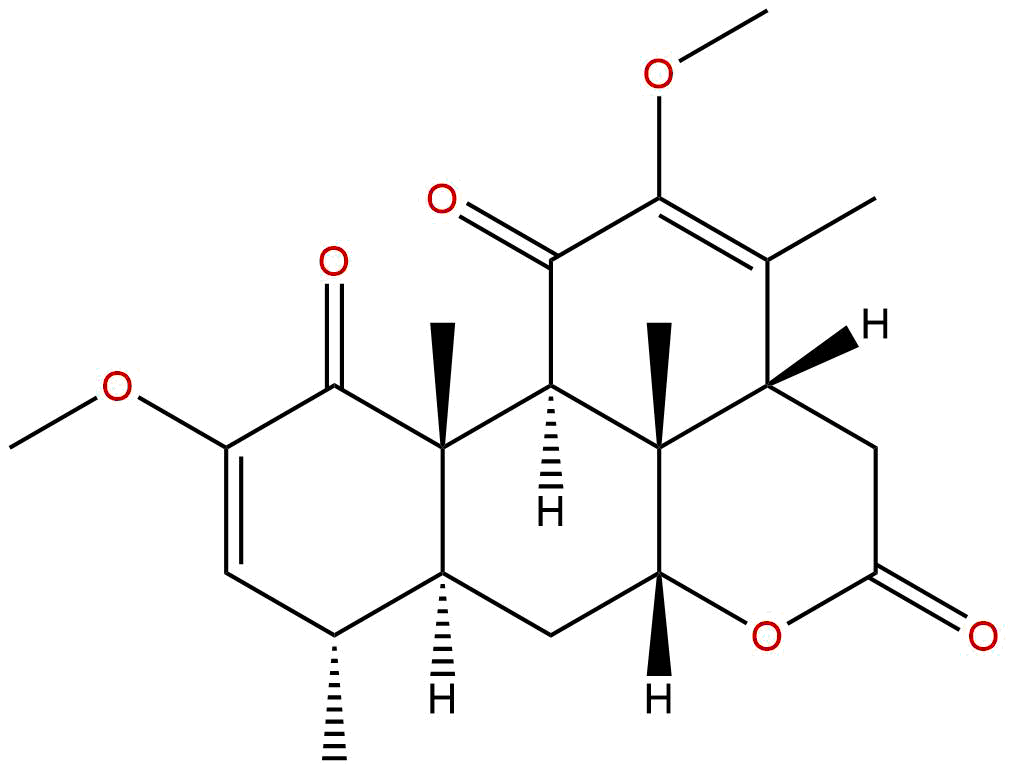
The chemical structure of lignin is the basis of its biological activity. From a chemical classification perspective, bitter lignin belongs to the class of bitter lignin compounds (Quassinoids), which are a type of degraded triterpenoid formed by highly oxidized and skeletal rearrangement of triterpenoid compounds. Its core skeleton is usually composed of 20 carbon atoms (C20 skeleton), with a unique four ring or five ring system, and contains multiple lactone rings, epoxy groups, as well as oxygen-containing functional groups such as hydroxyl and carbonyl groups.
Specifically, the molecular formula of lignin is C22H28O6, with a molecular weight of 388.4600 g/mol. Its structural feature is a highly oxidized Picrasane skeleton, typically containing a trans decalin(trans-The decalin system is connected by a δ - lactone ring and a γ - lactone or furan ring. The dense arrangement and stereochemical configuration of these functional groups endow lignin with unique chemical properties and biological activity. For example, hydroxyl or carbonyl groups at positions C-1, C-2, C-11, C-12, etc. are key active sites involved in hydrogen bonding interactions with target proteins.
In terms of physical and chemical properties, lignin exhibits typical natural product characteristics. Its lipid water partition coefficient (LogP) is 2.3800, indicating that it has a certain lipophilicity, which is beneficial for its penetration of cell membranes, but may also lead to poor water solubility. Its water solubility value is only 0.0468 mg/mL, which is a poorly soluble compound, posing a huge challenge to its oral administration and in vivo bioavailability. The topological polar surface area (TPSA) is 78.9000 Å ², indicating that the molecule contains a certain number of polar atoms (such as oxygen atoms) that can form hydrogen bonds, but it has not exceeded the recommended upper limit of 140 Å ² for oral medications. It is worth noting that the blood-brain barrier (BBB) penetration ability of bitter lignin has been evaluated as "high", indicating that while it exerts central nervous system related pharmacological effects (such as anti brain tumors), it may also pose a risk of central neurotoxicity. In addition, hERG inhibition was evaluated as' no ', indicating a lower risk of causing QT interval prolongation and arrhythmia in the heart. The Ames test result was 0.0, indicating that it did not exhibit significant mutagenicity in the bacterial recovery mutation test, which is a favorable factor for its use as a drug lead.
Plant sources and extraction methods
The main plant source of bitter lignin is the genus Simaroubacheae in the family Simaroubacheae(Quassia)Plants, including bitter wood(Quassia amara L. The most famous. This plant is native to northern South America, Central America, and the Caribbean, and has been introduced and cultivated in West Africa, Southeast Asia, and other regions. In addition, other bitter wood plants, such as Picrasma quassioides The branches and bark of the Chinese toon tree also contain lignin and its analogues. Traditionally, the bark and wood of bitter wood have been used as bitter stomach tonics and insect repellents, and its bitterness is derived from bitter lignin components.
The method of extracting lignin has evolved from traditional solvent extraction to modern green extraction technology. The classic extraction process usually includes the following steps:
1. Raw material pretreatment Crush the dried bark or wood of bitter wood into coarse powder to increase the solvent contact area.
2. Solvent extraction By utilizing the solubility of lignin in organic solvents, ethanol, methanol, or their mixed solvents are often used for cold soaking or hot reflux extraction. Due to the polarity of lignin, high extraction rates can usually be achieved using high concentrations of ethanol (such as 95% ethanol) or methanol. The extraction process can be repeated 2-3 times to fully extract the target components.
3. Concentration and preliminary separation Combine the extraction solutions, recover the solvent under reduced pressure, and obtain the extract. Suspend the extract in water and perform liquid-liquid extraction using solvents of different polarities such as petroleum ether, ethyl acetate, n-butanol, etc. Bitter lignin is mainly enriched in the ethyl acetate extraction layer.
4. Column chromatography purification The ethyl acetate extract was subjected to silica gel column chromatography with gradient elution using mixed solvents such as chloroform methanol or petroleum ether acetone. Combined with thin-layer chromatography (TLC) monitoring, a fraction rich in lignin was obtained. Further high-purity lignin monomers can be obtained through preparative high-performance liquid chromatography (Pre HPLC) or recrystallization techniques.
In recent years, in order to improve extraction efficiency, reduce the use of organic solvents, and protect the environment, some new extraction technologies have also been applied to the extraction of lignin, such as ultrasonic assisted extraction, microwave-assisted extraction, and supercritical fluid extraction (especially supercritical CO2 extraction). These techniques can significantly shorten extraction time, improve the yield of target compounds, and reduce the degradation of thermosensitive components. For example, studies have shown that using ultrasound assisted extraction with ethanol as the solvent, under optimized conditions, the extraction rate of lignin can be increased by more than 20% compared to traditional hot reflux method.
Pharmacological activity research
Kudzu lignin exhibits extensive and significant pharmacological activities, among which anti malaria and anti-tumor activities are the two most deeply studied areas.
Anti malaria activity
Malaria is caused by malaria parasites(Plasmodium The serious parasitic diseases caused by spp. pose a huge threat to human health. Bitter lignin affects malignant malaria parasites(P. falciparum)Exhibiting a strong inhibitory effect. In vitro experimental data shows that the IC50 values of bitter lignin for chloroquine sensitive strains (such as 3D7) and resistant strains (such as Dd2, K1) are both at the nanomolar level, about 0.15 μ M, and its activity is much stronger than traditional antimalarial drug chloroquine. This characteristic of being equally effective against drug-resistant strains makes it a potential candidate molecule to overcome the current problem of antimalarial drug resistance. Its mechanism of action is related to inhibiting the protein synthesis of malaria parasites, interfering with their mitochondrial function, and affecting their nucleic acid metabolism. It is worth noting that bitter lignin has also been reported to have reversible avoidance ability, which may be related to its interference with the development of male malaria parasite gametophytes (sexual reproduction stage), thereby blocking the spread of malaria. This characteristic has unique advantages in the development of antimalarial drugs.
Antitumor activity
Kudzu lignin exhibits significant cytotoxicity towards various tumor cell lines, especially leukemia cells. Research has shown that bitter lignin can inhibit the proliferation of various leukemia cells such as acute myeloid leukemia (AML) and chronic myeloid leukemia (CML), and induce their apoptosis. Its anti leukemia activity is associated with multiple key targets, including:
- FLT3 FLT3 (FMS like tyrosine kinase 3) is one of the most common mutated genes in AML, which leads to sustained kinase activation and drives leukemia cell proliferation. Bitter lignin has been found to inhibit the activity of FLT3, especially against FLT3-ITD (internal tandem repeat) mutants.
- JAK2 JAK2 (Janus kinase 2) is the core kinase of the JAK-STAT signaling pathway, and its V617F mutation is commonly present in bone marrow proliferative tumors. Bitter lignin can inhibit the phosphorylation of JAK2, thereby blocking the activation of downstream STAT3/5 and inhibiting tumor cell growth.
- BCR-ABL BCR-ABL fusion protein is a pathogenic driver of CML. Research has shown that bitter lignin can inhibit BCR-ABL and its downstream signaling pathways, effectively targeting imatinib sensitive CML cells.
- DNMT3A DNMT3A (DNA methyltransferase 3A) is a common epigenetic mutation gene in AML. Kudzu lignin may exert anti leukemia effects by affecting the activity or expression of DNMT3A, reversing abnormal DNA methylation patterns.
- Nucleoside metabolizing enzyme Bitter lignin can also regulate the activity or expression of nucleotide metabolism related enzymes such as DCK (deoxycytidine kinase), CDA (cytidine deaminase), NT5C2 (5 '- nucleotidase II), and RRM1/RRM2 (ribonucleotide reductase subunit), which may affect the sensitivity of tumor cells to chemotherapy drugs.
- KIT KIT (c-Kit) is another receptor tyrosine kinase that mutates in gastrointestinal stromal tumors and some AML. Bitter lignin also has an inhibitory effect on KIT.
In addition to leukemia, bitter lignin also shows certain inhibitory activity on solid tumor cells such as breast cancer, prostate cancer, liver cancer, etc. Its mechanism of action involves inducing cell cycle arrest, activating endogenous and exogenous apoptosis pathways, inhibiting angiogenesis, and reversing epithelial mesenchymal transformation (EMT).
Other activities
Matrine also has anti estrogen activity and can bind to estrogen receptor (ER) to play an antagonistic role, which may be related to its potential application in hormone dependent tumors (such as breast cancer). In addition, there are occasional reports of its anti-inflammatory, antiviral (such as anti HIV, anti dengue virus), and anti ulcer activities.
Mechanism of action and molecular targets
The pharmacological activity of bitter lignin is the result of the combined action of multiple targets and pathways. The core mechanism can be summarized as follows:
-
Inhibit protein synthesis This is one of the most classic mechanisms of action for lignin compounds. Research has shown that bitter lignin can bind to the 60S subunit of eukaryotic ribosomes, inhibit the activity of peptidyl transferase, and thus block the extended stage of protein synthesis. This mechanism is similar to many anti-tumor antibiotics, such as actinomycetes, but the selective toxicity of lignin to eukaryotic cells may be related to its unique binding site.
-
Regulating signal transduction pathways Bitter lignin regulates multiple signaling pathways closely related to cell proliferation, survival, and apoptosis through direct or indirect means.
- JAK-STAT pathway As mentioned earlier, bitter lignin inhibits the activity of tyrosine kinases such as JAK2 and FLT3, blocks the phosphorylation of STAT3 and STAT5, and thus suppresses its downstream target genes (such as...)Bcl-xL、Cyclin D1、c-Myc)Transcription induces apoptosis and cell cycle arrest in tumor cells.
- PI3K/Akt/mTOR pathway Bitter lignin can inhibit the activity of PI3K, leading to a decrease in Akt phosphorylation levels, which in turn inhibits its downstream effector molecule mTOR, thereby suppressing cell growth and metabolism, and inducing autophagic cell death.
- MAPK pathway Bitter lignin can activate stress kinases such as p38 MAPK and JNK, while inhibiting the activity of ERK1/2. This differential regulation of the MAPK pathway ultimately promotes the transmission of pro apoptotic signals.
- NF - κ B pathway Bitter lignin can inhibit the activity of I κ B kinase (IKK), prevent the degradation of I κ B α, and isolate NF - κ B (nuclear factor kappa B) in the cytoplasm, thereby inhibiting its nuclear translocation and transcriptional activity. NF - κ B is a key transcription factor that regulates inflammation, anti apoptosis, and cell proliferation. Its inhibition is one of the important mechanisms by which lignin exerts anti-inflammatory and anti-tumor activities.
-
Inducing oxidative stress and endoplasmic reticulum stress Bitter lignin can increase the level of reactive oxygen species (ROS) in cells, disrupt mitochondrial membrane potential, lead to the release of cytochrome c, activate caspase cascade reaction, and initiate mitochondrial pathway apoptosis. At the same time, sustained oxidative stress and imbalance of endoplasmic reticulum calcium homeostasis can trigger endoplasmic reticulum stress (ERS), activating unfolded protein response (UPR). When ERS exceeds the cell's tolerance, it will turn to pro apoptotic signals, such as activating CHOP (C/EBP homologous protein) and caspase-12.
-
Epigenetic regulation The effect of bitter lignin on DNMT3A suggests that it may be involved in epigenetic regulation. By inhibiting the activity of DNMT3A, bitter lignin may reduce the methylation level of genomic DNA, reactivate silenced tumor suppressor genes, and thus exert anti-tumor effects.
Evaluation of drug properties and pharmacokinetics
Although bitter lignin has excellent in vitro activity, its drug like properties have significant deficiencies, which seriously hinder its direct development as a clinical drug. Based on the provided pharmacological parameters, we can conduct the following analysis:
- Poor water solubility The water solubility of 0.0468 mg/mL is at an extremely low level, which results in extremely low dissolution and absorption rates of the drug in the gastrointestinal tract after oral administration, and is the primary reason for its low oral bioavailability.
- High blood-brain barrier penetrability Although it may be beneficial for treating brain tumors or central nervous system diseases, high BBB penetration also means a higher risk of central neurotoxicity, such as dizziness, drowsiness, and even neurodegenerative changes, which are warning signals that require high vigilance in drug development.
- Metabolic stability Bitter lignin molecules contain multiple hydroxyl and ester bonds, which are easily metabolized by phase I metabolic enzymes (such as cytochrome P450 enzymes) and phase II metabolic enzymes (such as glucuronosyltransferase) in the body. Its rapid metabolic clearance is another key factor leading to a short half-life in the body and difficulty in maintaining drug efficacy.
- Potential toxicity In addition to central toxicity, bitter lignin, as a bitter substance, may cause gastrointestinal irritation, nausea, vomiting and other side effects at high doses. Its anti estrogenic activity may also lead to endocrine disorders.
Pharmacokinetic (PK) studies are the core of drug efficacy evaluation. At present, there are relatively limited reports on the PK data of bitter lignin in vivo, but existing research generally confirms its characteristics of "high clearance rate and low exposure". For example, in rat in vivo experiments, intravenous injection of lignin resulted in high plasma clearance, large distribution volume, and short half-life. After oral administration, its absolute bioavailability is usually less than 5%. These PK defects greatly limit the efficacy of its in vivo drugs.
To overcome these barriers to drug development, medicinal chemists have conducted extensive research on structural modifications and formulation design. The main strategies include:
1. Prodrug design Esterification (such as acetylation, phosphorylation) or etherification of hydroxyl groups in lignin molecules to produce prodrugs, in order to improve their lipid solubility and membrane permeability, and release the original drug through enzymatic interpretation in vivo.
2. nano-formulation Using nanocarriers such as liposomes, polymer micelles, and nanoparticles to encapsulate lignin can significantly improve its water solubility, prolong blood circulation time, achieve targeted delivery, and reduce toxic side effects.
3. Simplification and optimization of structure Based on the pharmacophore of bitter lignin, a series of structurally simplified but active maintaining or enhancing analogues were synthesized, while improving their physicochemical and PK properties. For example, introducing water-soluble functional groups (such as amino and carboxylic acid groups) to enhance water solubility, or replacing unstable functional groups to improve metabolic stability.
Clinical application prospects and prospects
Although lignin itself has a bleak prospect as a clinical drug, its value as a lead compound in the field of drug discovery is immeasurable. The future clinical application prospects are mainly reflected in the following aspects:
-
Antimalarial drugs Given its strong anti malaria activity, especially its effectiveness against drug-resistant strains and potential ability to block transmission, optimizing the structure based on lignin skeleton and developing new anti malaria drugs is a highly attractive direction. The goal is to obtain lignin derivatives with better water solubility, higher oral bioavailability, and lower toxicity through structural modification. For example, combining bitter lignin with known antimalarial drugs such as artemisinin to design dual target drugs is also an innovative strategy.
-
Anti leukemia drugs The inhibitory activity of bitter lignin on multiple key leukemia targets such as FLT3, JAK2, BCR-ABL, makes it a potential leader in the treatment of AML and CML. Especially for patients who develop resistance to existing targeted drugs such as FLT3 inhibitors and BCR-ABL inhibitors, the development of lignin derivatives with novel mechanisms of action is expected to overcome resistance. Future research should focus on improving its selective toxicity to leukemia cells and reducing damage to normal hematopoietic stem cells.
-
Antiestrogenic drugs The anti estrogen activity of bitter lignin makes it have potential value in the treatment of hormone dependent breast cancer. Through structural modification, its binding affinity with estrogen receptor (ER) can be enhanced, and its non-specific toxicity can be reduced, leading to the development of novel selective estrogen receptor modulators (SERMs) or downregulators (SERDs).
-
Chemical biology probe The unique chemical structure and multi-target properties of bitter lignin make it an ideal chemical biology probe for studying biological processes such as cell signal transduction and protein synthesis regulation. By using it as a tool molecule, new drug targets and disease mechanisms can be revealed.
Future research directions should focus on:
- In depth mechanism research Using omics techniques such as proteomics and transcriptomics to systematically elucidate the direct targets and downstream signaling networks of lignin.
- Efficient structural optimization Combining computer-aided drug design (CADD), medicinal chemistry, and pharmacological evaluation, conduct systematic structure-activity relationship (SAR) studies to quickly screen candidate compounds with good drug properties.
- Development of a new delivery system Explore various nano delivery platforms to achieve targeted, efficient, and low toxicity delivery of lignin and its derivatives.
- Combination therapy research Evaluate the synergistic effect of lignin or its derivatives with existing chemotherapy drugs, targeted drugs, or immune checkpoint inhibitors, and explore new combination therapy options.
Conclusion
As an outstanding representative of lignin based natural products, bitter lignin occupies an important position in the field of natural product pharmacology due to its unique chemical structure and strong biological activities such as anti malaria and anti leukemia. It is not only the active ingredient of traditional plant medicine, but also an important precursor for modern drug discovery. However, its inherent drug defects such as poor water solubility, metabolic instability, and potential toxicity are like a double-edged sword, which not only limits its direct application, but also stimulates the enthusiasm of medicinal chemists to modify and optimize it.
Since its discovery, research on bitter lignin has progressed from simple activity screening to detailed analysis of molecular targets and signaling pathways, and has begun to touch the forefront of drug modification and novel delivery systems. Although the road to clinical practice is still long and challenging, the multi-target and multi mechanism modes of action exhibited by bitter lignin provide valuable inspiration for the development of new treatment strategies for complex diseases such as drug-resistant malaria and refractory leukemia. In the future, with the advancement of structural optimization technology, the enrichment of chemical biology methods, and the deepening of understanding of disease biology, we have reason to believe that derivatives or analogues based on lignin skeleton will eventually overcome numerous obstacles and play their due value in human health. The in-depth study of bitter lignin is not only an exploration of a natural product, but also a persistent pursuit to discover new drugs from the natural treasury and solve major human health problems.