Introduction/Overview
Natural products, as an important source of drug discovery, play an irreplaceable role in the long history of human struggle against diseases. Among them, Xanthone compounds derived from Gentianaceae plants have attracted much attention due to their novel structure and diverse activities. Norswertianolin, as a typical natural product of anthraquinone carbon glycosides, has gradually entered the field of pharmacology researchers in recent years. This compound was originally derived from Swertia angustifolia(Gentiana acuta It was isolated from Michx. and identified as an activator of cystathionine gamma lyase (CSE) due to its unique biological activity. CSE is a key enzyme in the synthesis pathway of endogenous gas signaling molecule hydrogen sulfide (H ₂ S), which plays an important physiological regulatory role in the cardiovascular system, liver protection, and inflammation regulation. Therefore, as a potential CSE activator, norepinephrine provides a new chemical entity and pharmacological approach for the treatment of complex diseases such as cardiovascular disease and liver fibrosis.
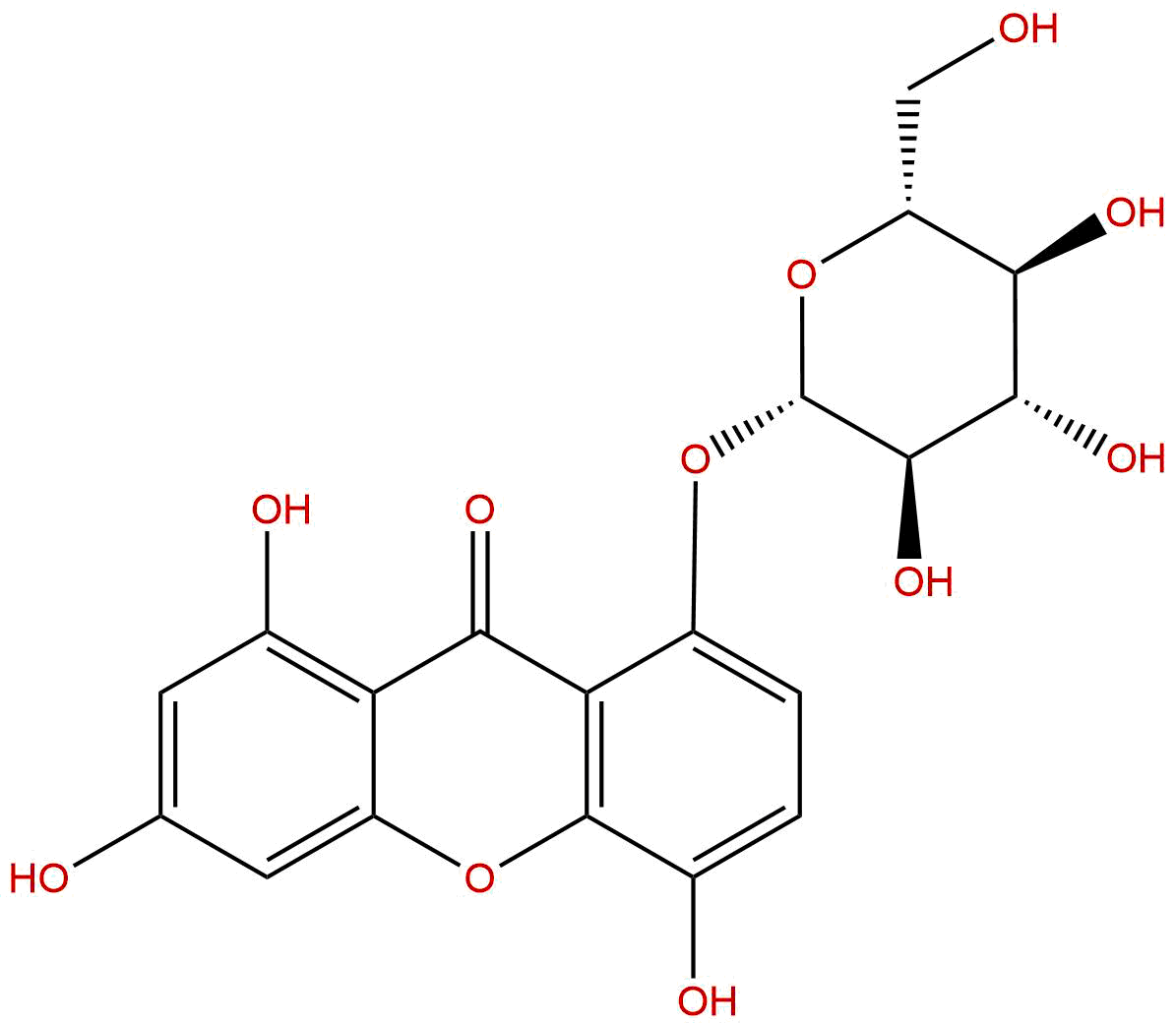
Dexmedetomidine belongs to β - D-glucoside in structure, and its aglycone is Bellidin. The glucose group is connected to the hydroxyl group at position 8 of Bellidin through a β - glycosidic bond. This structure endows it with unique physicochemical properties and biological activity. In addition to being used as a CSE activator, studies have also found that norepinephrine glycosides have acetylcholinesterase (AChE, EC 3.1.1.7) inhibitory activity, indicating their potential application value in the field of neurodegenerative diseases. In addition, studies on liver fibrosis have shown that this compound can exert anti fibrotic effects by regulating multiple key targets, such as AMP activated protein kinase (AMPK), B-cell lymphoma-2 (BCL2), Toll like receptor 4 (TLR4), signal transduction and transcription activator 3 (STAT3), and nuclear factor E2 related factor 2 (NFE2L2). The multi-target regulatory properties of these compounds make norepinephrine glycosides a highly valuable lead compound for research.
This article will provide a systematic review of the research progress of norepinephrine glycosides from the aspects of chemical structure and physicochemical properties, plant sources and extraction methods, pharmacological activity, mechanism of action, evaluation of drug properties, and clinical application prospects, aiming to provide comprehensive scientific basis for the in-depth development and utilization of this compound.
Chemical structure and physicochemical properties
The chemical structure of Norswertianolin belongs to the class of oxanthrone glycosides. Its parent nucleus is 1,3,5,8-tetrahydroxyanthraquinone (i.e. Bellidin), which is connected to a β - D-glucopyranose group at the 8th hydroxyl position. This structural feature allows it to retain the planar aromaticity of the anthraquinone parent nucleus, while increasing its water solubility and bioavailability due to the introduction of sugar groups. Its molecular formula is C ₁₉ H ₁₈ O ₁₁, and its molecular weight is 422.3420 g/mol.
In terms of physical and chemical properties, demethanol glycosides exhibit typical polar natural product characteristics. The calculated lipid water partition coefficient (LogP) is -0.3724, indicating that the compound has strong hydrophilicity and is not easily able to penetrate the lipid bilayer. The topologically polar surface area (TPSA) is as high as 190.2800 Å ², further confirming its high polarity characteristics. A high TPSA value usually means that the compound is restricted in intestinal absorption and is not easily able to pass through the blood-brain barrier (BBB). In fact, the evaluation of pharmacological parameters shows that its blood-brain barrier permeability is "low", which to some extent limits its application in central nervous system diseases. However, for peripheral targets such as the liver and cardiovascular system, it may actually be an advantage in reducing central side effects.
The water solubility of norepinephrine glycoside is good, with a predicted water solubility value of 2.2624 mg/mL, which provides favorable conditions for its dissolution and distribution in vivo. In terms of chemical stability, as a glycoside of polyphenolic hydroxyl groups, this compound may be unstable under alkaline conditions and is prone to oxidation or hydrolysis of glycosidic bonds. In addition, the multiple phenolic hydroxyl groups in its structure endow it with certain antioxidant capacity and the ability to scavenge free radicals, which is also one of the foundations for its various pharmacological activities.
It is worth noting that in the drug efficacy evaluation, the prediction result of hERG (human ether - à - go related gene) inhibition was "no", indicating that the compound has a low risk of causing QT interval prolongation in the heart, which is an important safety advantage. The Ames test result is 1.2, indicating low potential genetic toxicity, but further in vitro and in vivo experiments are needed for verification. Overall, norepinephrine has good water solubility and preliminary safety characteristics, but its high polarity and low fat solubility also suggest that in drug development, it may be necessary to improve its membrane permeability and oral bioavailability through prodrug design or new formulation technologies.
Plant sources and extraction methods
Nortebuconazole is mainly found in Gentianaceae plants, especially in the genus Swertia(Swertia)And Gentiana genus(Gentiana)Plants are a common source. According to literature reports, it is derived from the narrow leaved deer roe plant(Gentiana acuta Also known as Swertia acuta)Separated from the middle. In addition, rapeseed gentian(Gentiana lutea)And German gentian(Gentiana germanica)It also contains this ingredient. Gentianaceae plants are widely distributed in temperate and tropical high-altitude regions around the world. In China, various species of Swertia plants (such as Swertia chuanxi and Swertia chuanxi) are the main source of traditional Tibetan medicine "Zangyinchen" and are commonly used to treat liver and gallbladder diseases. As one of the active ingredients, the content of norepinephrine glycoside is closely related to the type, place of origin, harvest season, and location of the plant.
In terms of extraction methods, polar solvents are usually used to extract glycosides with high polarity, such as demethanol glycosides. The traditional extraction processes include solvent extraction and reflux extraction. The commonly used solvents are methanol, ethanol, or aqueous ethanol (such as 70% ethanol), and the principle of "similar solubility" is used to extract glycosides from plant powders. In order to improve extraction efficiency and purity, modern extraction techniques such as ultrasound assisted extraction (UAE), microwave-assisted extraction (MAE), and enzyme assisted extraction have also been widely used. Ultrasonic extraction utilizes cavitation effect to destroy cell walls, accelerate solvent permeation, significantly shorten extraction time, and improve yield.
After extraction, the crude extract needs to undergo a series of separation and purification steps to obtain high-purity demethylated glycosides. Common separation methods include:
1. Liquid-liquid extraction Use different polar solvents (such as petroleum ether, ethyl acetate, n-butanol) to perform fractional extraction on the crude extract, and enrich the demethanol glycoside in the n-butanol or ethyl acetate layer.
2. Column chromatography method This is the most essential purification method. Silica gel column chromatography, polyamide column chromatography, macroporous adsorption resin column chromatography and Sephadex LH-20 column chromatography are commonly used. Due to the presence of multiple phenolic hydroxyl groups in norepinephrine glycosides, polyamide has a good adsorption and separation effect on them; And macroporous adsorption resin is suitable for preliminary sugar removal and enrichment.
3. High performance liquid chromatography (HPLC)For the fine separation of structurally similar compounds, preparative HPLC is the preferred method for obtaining high-purity monomeric compounds. Usually, a reverse phase C18 chromatographic column is used, with methanol water or acetonitrile water system as the mobile phase for isocratic or gradient elution.
Through the combination of the above methods, it is possible to efficiently isolate demethanol glycosides from Gentianaceae plants, providing a material basis for subsequent pharmacological activity research and pharmacological evaluation.
Pharmacological activity research
The pharmacological activity research of norepinephrine mainly focuses on its protective effects on the cardiovascular system and liver. In addition, its potential in neuroprotection and anti-inflammatory effects is also beginning to emerge.
1. Cardiovascular protective effect
The most notable activity of norepinephrine glycoside is its role as a CSE activator. CSE is one of the key enzymes involved in endogenous H ₂ S generation. H ₂ S, as an important gas signaling molecule, has various cardiovascular protective functions such as vasodilation, inhibition of vascular smooth muscle cell proliferation, anti-inflammatory, antioxidant, and anti myocardial ischemia-reperfusion injury. Research has shown that norepinephrine glycosides can significantly upregulate the expression and activity of CSE, promote the generation of H ₂ S, and thus exert cardiovascular protective effects. This provides new molecular targets and candidate drugs for the treatment of hypertension, atherosclerosis, myocardial ischemia and other diseases.
2. Anti fibrotic effect
Liver fibrosis is a key pathological process in the progression of various chronic liver diseases to cirrhosis, which essentially involves the activation of hepatic stellate cells (HSCs) and excessive deposition of extracellular matrix (ECM). Dexmedetomidine has demonstrated multi-target regulatory ability in the treatment of liver fibrosis. Research has shown that this compound can:
- Regulating the AMPK signaling pathway Activate AMPK, inhibit HSC activation and proliferation, and reduce ECM synthesis.
- Regulating apoptosis and autophagy By regulating BCL2 family proteins, it promotes apoptosis of activated HSCs and may induce autophagy to clear damaged organelles.
- Inhibit inflammatory response Downregulate the expression of TLR4 and STAT3, inhibit the release of inflammatory factors, and alleviate the hepatic inflammatory microenvironment.
- anti-oxidative stress Activate the NFE2L2 (Nrf2) signaling pathway, upregulate the expression of antioxidant enzymes, and alleviate oxidative stress damage to liver cells.
- Inhibit matrix remodeling Regulating the activity of matrix metalloproteinases (MMP2, MMP1) to promote the degradation of ECM.
The synergistic effect of these multi-target drugs makes norepinephrine glycosides show better potential in anti liver fibrosis than single target drugs.
3. Acetylcholinesterase inhibitory activity
Nortebuconazole has been identified as an acetylcholinesterase (AChE) inhibitor. AChE inhibitors are one of the main drug strategies for treating cognitive disorders such as Alzheimer's disease (AD) by inhibiting the hydrolysis of acetylcholine and increasing the level of acetylcholine in synaptic cleft. Although its ability to cross the blood-brain barrier is low, this activity suggests that it may play a role in the field of neurological diseases through peripheral mechanisms or structural modifications.
4. Other activities
Preliminary studies also indicate that norepinephrine glycosides have certain anti-inflammatory and antioxidant activities, which are closely related to their polyphenol hydroxyl structure. These basic activities are important auxiliary mechanisms for its cardiovascular and liver protective effects.
Mechanism of action and molecular targets
The pharmacological mechanism of action of norepinephrine glycosides is complex, involving multiple signaling pathways and molecular targets, exhibiting typical "multi-target, multi pathway" action characteristics.
1. CSE/H ₂ S signaling pathway
This is the core mechanism of action of norepinephrine glycosides. This compound directly or indirectly activates CSE, promoting the conversion of L-cysteine to H ₂ S. H ₂ S subsequently exerts its effects through the following pathways:
- vasodilation Activate ATP sensitive potassium channels (KATP channels), hyperpolarize vascular smooth muscle cells, and cause vasodilation.
- antioxidant Directly eliminate reactive oxygen species (ROS) and upregulate the levels of antioxidant substances such as glutathione (GSH).
- anti-inflammatory Inhibit the activation of nuclear factor kappa B (NF - κ B) and reduce the production of pro-inflammatory cytokines.
- anti-apoptotic Inhibiting cell apoptosis by regulating mitochondrial function and Bcl-2 family proteins.
2. AMPK signaling pathway
In the liver fibrosis model, norepinephrine glycosides activate AMPK and inhibit downstream mammalian rapamycin target protein (mTOR) signaling, thereby suppressing HSC proliferation and collagen synthesis. The activation of AMPK can also promote autophagy and help clear activated HSCs.
3. TLR4/STAT3 signaling pathway
TLR4 is a key receptor that mediates inflammatory responses. Dexmedetomidine can downregulate the expression of TLR4, thereby inhibiting its downstream myeloid differentiation factor 88 (MyD88) dependent and independent pathways, and reducing the release of inflammatory factors. Meanwhile, it can also inhibit the phosphorylation of STAT3 and block the transcription of pro fibrotic genes mediated by STAT3.
4. NFE2L2 (Nrf2)/ARE signaling pathway
NFE2L2 is a core transcription factor in the cellular antioxidant defense system. Nortebuconazole can promote the dissociation of NFE2L2 from Keap1 protein, enter the nucleus and bind with antioxidant response elements (ARE), initiating the transcription of downstream antioxidant enzymes such as heme oxygenase-1 HO-1 and quinone oxidoreductase NQO1, thereby enhancing the antioxidant capacity of cells.
5. Targets related to apoptosis and matrix remodeling
Dexmedetomidine induces apoptosis in activated HSCs by regulating the ratio of BCL2 (anti apoptotic protein) and BAX (pro apoptotic protein). At the same time, it can regulate the activity of MMP2 and MMP1, promote the degradation of abnormally deposited ECM (mainly type I and III collagen), and thus reverse liver fibrosis.
In summary, norepinephrine glycosides activate the CSE/H ₂ S and AMPK pathways, inhibit the TLR4/STAT3 pathway, and activate the NFE2L2 antioxidant pathway, forming a synergistic network regulatory mechanism that jointly exerts anti liver fibrosis and cardiovascular protection effects.
Evaluation of drug properties and pharmacokinetics
The evaluation of drug properties is a key link connecting basic research and clinical translation. According to the provided parameters, the pharmacological characteristics of demethanol glycosides are as follows:
- Molecular weight and LogP The molecular weight is 422.34 Da, slightly higher than the limit of molecular weight less than 500 in the Rule of Five, but still within an acceptable range. LogP is -0.3724, with strong hydrophilicity, which is beneficial for dissolution in aqueous phase but not conducive to transmembrane absorption.
- TPSA and blood-brain barrier The TPSA is 190.28 Å ², much higher than the threshold of 140 Å ², indicating poor oral absorption and almost no ability to cross the blood-brain barrier. This limits its application in CNS diseases, but for liver and cardiovascular targets, low BBB permeability can reduce central side effects.
- Water solubility The water solubility of 2.2624 mg/mL is good, meeting the needs of early in vitro experiments and formulation development.
- HERG inhibition A negative result indicates a low risk of cardiac toxicity, which is an important safety advantage.
- Ames test The result is 1.2, indicating a low risk of genetic toxicity, but a more comprehensive evaluation of genetic toxicity is needed.
Pharmacokinetic characteristics At present, there are few reports on the in vivo pharmacokinetic studies of metformin. Based on its physicochemical properties, it can be inferred that its oral bioavailability may be low, mainly due to poor membrane permeability caused by high polarity and high TPSA. In addition, the glycosidic bonds in its structure may be hydrolyzed by β - glucosidase in the intestine to produce the aglycone berberine, thereby affecting the exposure of its prototype drug. In terms of distribution within the body, due to its strong hydrophilicity, it may mainly be distributed in the blood and extracellular fluid, with the liver and kidneys being its main distribution and metabolic organs. In terms of metabolism, phase II metabolic reactions such as glucuronidation, sulfation, or methylation may occur. The excretion pathway may be mainly through renal excretion.
Optimization strategy for drug properties Given its good activity but poor membrane permeability, future optimization can be achieved through the following strategies:
1. Prodrug design Esterify or etherifie the hydroxyl groups on phenolic or sugar groups to improve lipid solubility, and release the active ingredient after enzymatic hydrolysis in vivo.
2. New formulation technology Using delivery systems such as liposomes, nanoparticles, and phospholipid complexes to improve oral absorption and bioavailability.
3. Structural modification On the basis of retaining the core pharmacophore, modify the sugar moiety or explore the activity of sugar free glycoside derivatives.
Clinical application prospects and prospects
As a natural CSE activator and multi-target regulatory molecule, norepinephrine glycoside has shown broad application prospects in the treatment of complex diseases.
Main application directions:
1. cardiovascular disease As an activator of the CSE/H ₂ S pathway, it can be used to develop new drugs to treat hypertension, pulmonary hypertension, atherosclerosis, myocardial ischemia reperfusion injury. It is expected to overcome the disadvantages of unstable and odorous release of exogenous H ₂ S donors (such as sodium hydrosulfide) by promoting endogenous H ₂ S generation.
2. Liver fibrosis/cirrhosis Given its regulatory role in multiple anti fibrotic key pathways (AMPK, TLR4, Nrf2), norepinephrine glycosides have the potential to become a candidate drug for the treatment of liver fibrosis. Its multi-target properties may be more effective and have fewer side effects than single target drugs.
3. Metabolic diseases: AMPK is the core regulator of energy metabolism. The AMPK activation of demethyl alcohol glycoside suggests that it has potential value in metabolic diseases such as type 2 diabetes, non-alcoholic fatty liver disease (NAFLD), etc.
4. Neurodegenerative diseases Although BBB permeability is low, its AChE inhibitory activity suggests that if the BBB is bypassed through structural modification or nasal administration, it may play a role in the treatment of Alzheimer's disease.
Challenges and Future Directions Faced:
1. Pharmacokinetic optimization The biggest challenge currently is to improve its oral bioavailability and in vivo stability. It is necessary to conduct systematic prodrug design or research on new formulations.
2. In depth mechanism research Although multiple targets have been identified, the direct molecular mechanism of CSE activation and the interaction network between each target still need further clarification. For example, the upstream downstream relationship between CSE activation and AMPK activation is not yet clear.
3. In vivo efficacy verification Currently, most research remains at the cellular and molecular levels. It is necessary to verify its efficacy and safety in vivo in a variety of animal models (such as carbon tetrachloride induced liver fibrosis rats, ApoE -/- atherosclerosis mice).
4. toxicological evaluation Although the preliminary hERG and Ames test results are good, a systematic evaluation of acute and chronic toxicity, reproductive toxicity, and carcinogenicity is needed.
5. Resource sustainability Deoxystrobin is derived from plants and its content is usually low. In the future, it is necessary to develop chemical total synthesis or biosynthetic methods to ensure the supply of raw materials for drug development.
Conclusion
As a type of oxanthrone carbon glycoside derived from Gentianaceae plants, norepinephrine glycoside has shown significant research value in the treatment of cardiovascular diseases and liver fibrosis due to its unique CSE activation activity and multi-target regulatory ability. Its chemical structure is clear, its physical and chemical properties have a certain basis for medicinal properties, and the preliminary safety evaluation results are encouraging. Despite challenges in oral bioavailability and pharmacokinetics, these issues are expected to be addressed through prodrug design, novel formulation technologies, and in-depth structure-activity relationship studies.
In the future, with the in-depth analysis of the pharmacological mechanism and continuous optimization of medicinal chemistry of norepinephrine glycosides, this compound is highly likely to develop from a natural product lead to a new candidate drug for the treatment of liver fibrosis and cardiovascular diseases. The study of it not only enriches the content of natural product pharmacology, but also provides new ideas and directions for drug development based on the CSE/H ₂ S pathway. We have reason to believe that metformin and its derivatives will play a more important role in future drug development.