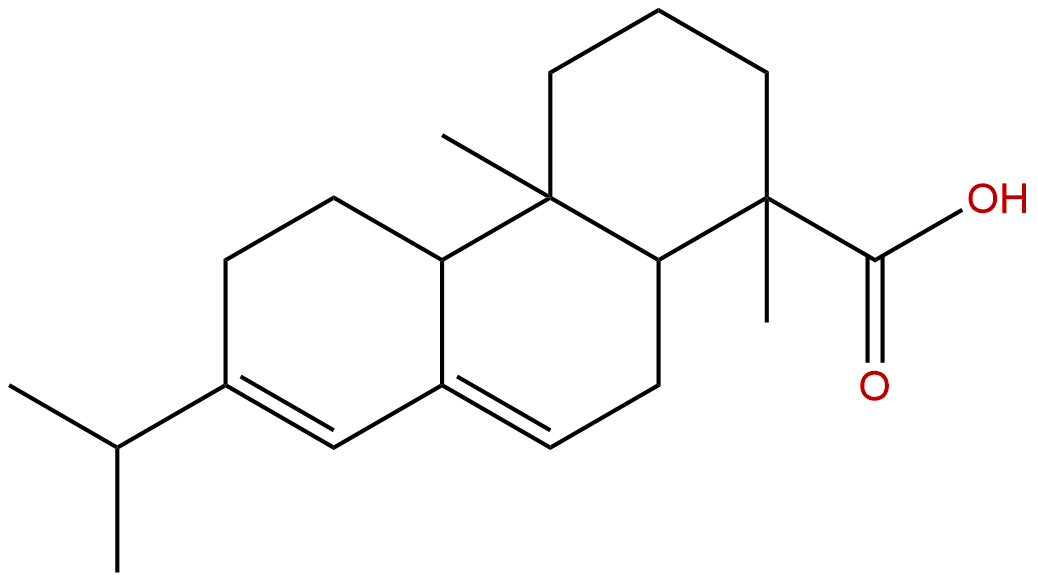


Product name: Abietic acid
Synonym name:
Catalogue No.: BP3051
Cas No.: 514-10-3
Formula: C20H30O2
Mol Weight: 302.458
Botanical Source:
Physical Description:
Type of Compound: Diterpenoids
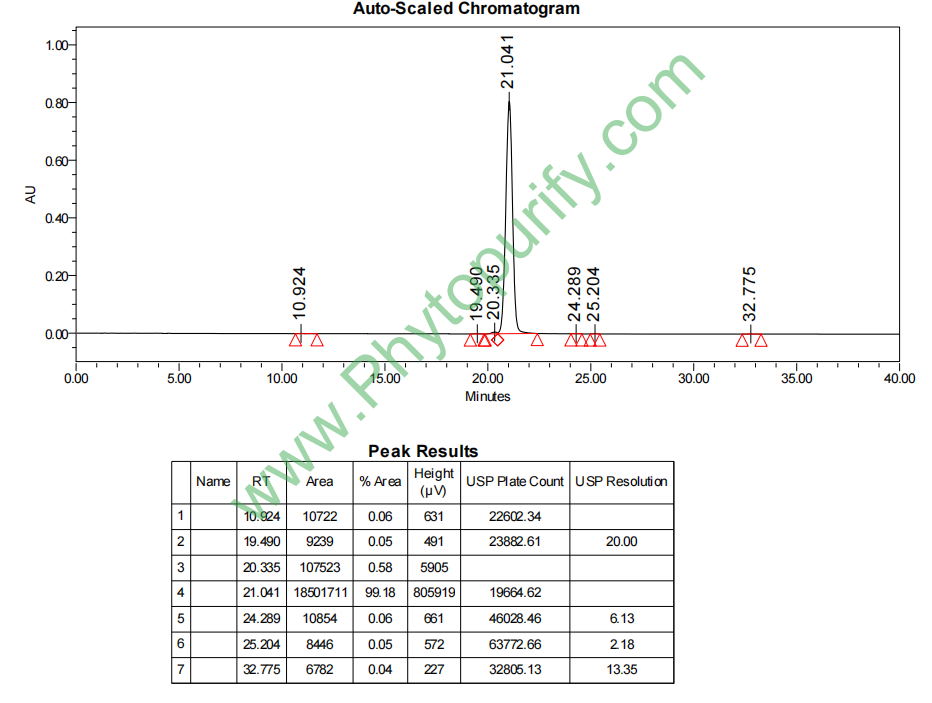
Purity: 99%
Analysis Method: HPLC-DAD or/and HPLC-ELSD
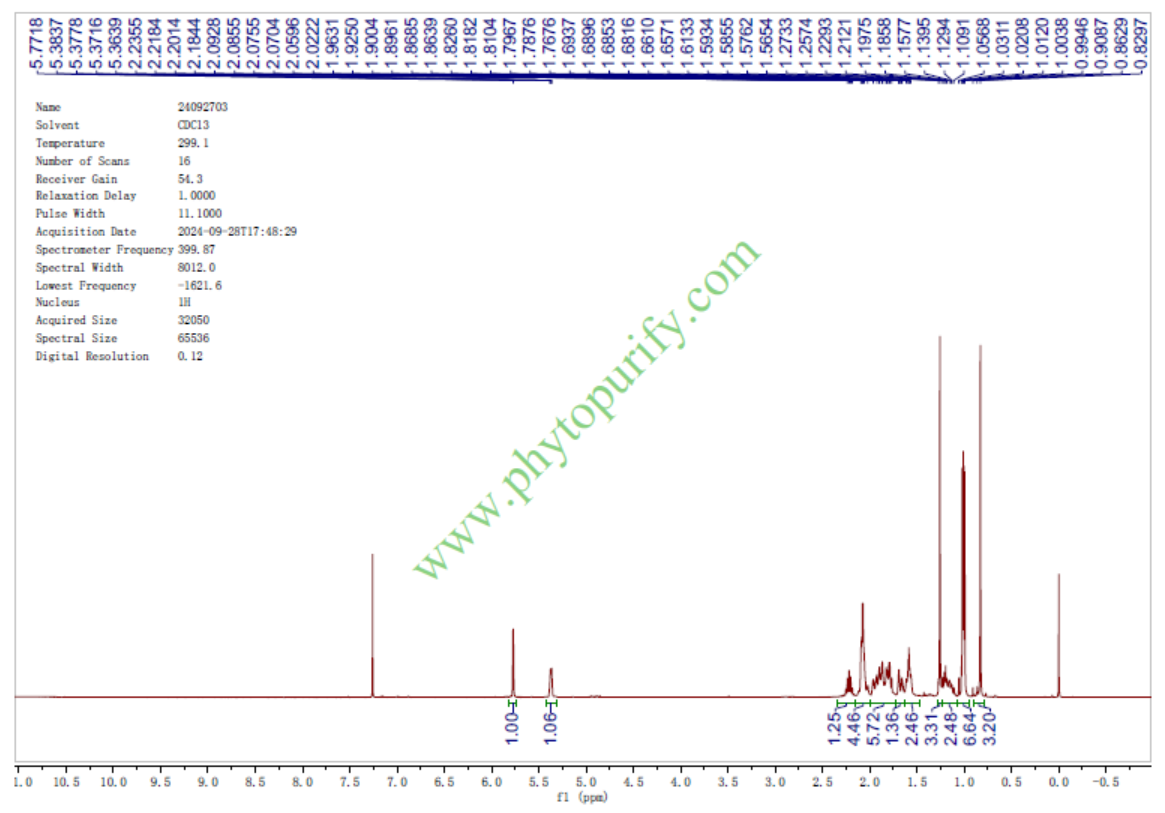
Identification Method: Mass, NMR
Packing: Brown vial or HDPE plastic bottle
The product could be supplied from milligrams to grams. Inquire for bulk scale.
HPLC of Abietic acid
HNMR of Abietic acid
Storage conditions:Short-term storage at 2~8℃, long-term storage at -20 ~ -80℃
37.3000
5.2319
3.4037
.0089
6.5934
16.7509
High
93.1704
4.1708
No
Yes
No
No
No
No
0.0
No
No
Yes
Yes
Natural products have always been an important source of drug discovery and development, and their structural diversity and unique biological activity provide abundant lead compounds for modern pharmacological research. Among numerous natural diterpenoid compounds with biological activity, abietic acid (CAS number: 514-10-3) has attracted much attention due to its extensive pharmacological effects and potential clinical application value. Rosin acid is an orally effective diterpenoid resin acid isolated from resin secreted by pine family plants such as Pinus massoniana and Pinus massoniana. As one of the main components of rosin, abietic acid has a long history of application in traditional medicine and is commonly used to treat diseases such as skin inflammation and wound infections.
Modern pharmacological research has revealed that abietic acid has various biological activities, including significant anti proliferative, anti-inflammatory, anti obesity, antibacterial, cell cycle arrest, and pro apoptotic activities. Specifically, abietic acid can inhibit lipoxygenase activity, thereby playing a regulatory role in allergic reactions; It can also promote the migration and tubular formation of human umbilical vein endothelial cells (HUVECs), demonstrating the potential to induce angiogenesis, which is closely related to the upregulation of extracellular signal regulated kinase (ERK) and p38 expression. In inflammatory disease models, abietic acid inhibits the activation of the nuclear factor kappa B light chain enhancer (NF - κ B) pathway, suppresses M1 macrophage polarization, and thus alleviates sepsis induced lung injury. In addition, abietic acid exhibits a good protective effect against liver injury by reducing inflammation and ferroptosis. In terms of skin repair, abietic acid has been shown to accelerate wound healing in mouse skin wound models, improve psoriasis like inflammation, and regulate mouse gut microbiota. Of particular importance, abietic acid significantly reduces the proliferation and growth of non-small cell lung cancer (NSCLC) cells by inhibiting IKK β, indicating its potential value in tumor therapy.
Given the broad research prospects of rosin acid in non-small cell carcinoma, lung injury related diseases, and psoriasis, this article will provide a systematic review of the research progress of rosin acid from the aspects of chemical structure and physicochemical properties, plant sources and extraction methods, pharmacological activity research, mechanism of action and molecular targets, drug evaluation and pharmacokinetics, as well as clinical application prospects and prospects, in order to provide reference for the in-depth development and utilization of this compound.
Rosin acid belongs to the diterpenoid class, and its chemical structure has a typical tricyclic diterpenoid skeleton. Specifically, the structural core of abietic acid is abietane, which is composed of three six membered rings (A, B, C) fused together, with the C ring containing an isopropyl side chain. The molecular formula of rosin acid is C ₂₀ H ∝₀ O ₂, with a molecular weight of 302.4580 g/mol. Its structure contains a carboxyl group (- COOH) and a conjugated double bond system (located between C7-C8 and C9-C11), which endow rosin acid with unique chemical reactivity and biological activity.
From the perspective of physical and chemical properties, abietic acid is a compound with strong lipophilicity, with a lipid water partition coefficient (LogP) of 5.2319, indicating its high lipophilicity. This property makes rosin acid easy to penetrate biofilms, but also results in poor water solubility, with a measured water solubility of only 0.0089 mg/mL. The topological polar surface area (TPSA) is 37.3000 Å ², which is relatively low, indicating that the compound has good cell membrane permeability. It is worth noting that blood-brain barrier (BBB) penetration assessment shows that abietic acid has high penetration, which means it may act on central nervous system targets, but at the same time may also bring risks of central nervous system related side effects. In terms of safety assessment, the hERG inhibition test result was negative, indicating a low risk of heart QT interval prolongation caused by abietic acid; The Ames test result is 0.0, indicating that it did not show significant mutagenicity in the bacterial recovery mutation test, and the preliminary safety is good.
Rosin acid mainly comes from the resin secretion of Pinaceae plants, namely rosin. Rosin is a viscous protective substance secreted by pine plants (such as Pinus massoniana, Pinus elliottii, Pinus tabuliformis, etc.) when subjected to mechanical damage or invasion by pests and diseases. The total content of resin acid in rosin can reach over 90%, and rosin acid is one of the most important resin acid components, usually accounting for 30% -40% of the total rosin content. In addition, abietic acid is also present in the resin of other coniferous tree species, such as Picea and Larix plants.
The traditional method for extracting rosin acid mainly relies on solvent extraction and acid-base separation. Due to the carboxyl group and weak acidity of rosin acid, its solubility differences under different pH conditions can be utilized for separation and purification. The typical extraction process is as follows: first, the rosin raw material is crushed and extracted with organic solvents (such as ethanol, acetone, or petroleum ether) to obtain the crude extract. Then dissolve the crude extract in an alkaline aqueous solution (such as sodium hydroxide or sodium carbonate solution) to convert the rosin acid into a water-soluble carboxylate, while neutral impurities remain in the organic phase and are removed. Subsequently, inorganic acids (such as hydrochloric acid or sulfuric acid) are added to the aqueous phase to acidify to pH 2-3, and the rosin acid precipitates. By filtering, washing, and drying, crude rosin acid can be obtained. Further purification can be achieved by column chromatography (such as silica gel column chromatography), recrystallization, or preparative high-performance liquid chromatography (HPLC) to obtain high-purity rosin acid monomers.
In recent years, with the promotion of green chemistry concepts, supercritical fluid extraction (especially supercritical CO ₂ extraction) technology has also been applied to the extraction of rosin acid. This method has the advantages of high extraction efficiency, no residual organic solvents, and environmental friendliness, but the equipment cost is relatively high. In addition, molecular distillation technology can also be used for the separation and purification of rosin acid, especially for the separation of thermosensitive components.
The anti-inflammatory activity of rosin acid is one of its most concerned pharmacological effects. Research has shown that abietic acid can significantly inhibit lipopolysaccharide (LPS) - induced macrophage inflammatory response and reduce the release of pro-inflammatory cytokines such as tumor necrosis factor - α (TNF - α), interleukin-6 (IL-6), and interleukin-1 β (IL-1 β). In the sepsis induced lung injury model, abietic acid reduces polarization of M1 macrophages by inhibiting the activation of the NF - κ B pathway, thereby alleviating lung inflammation and alveolar damage. In addition, abietic acid can inhibit the activity of lipoxygenase (LOX) and reduce the production of inflammatory mediators such as leukotrienes, which makes it potentially therapeutic in allergic inflammation.
Rosin acid exhibits anti proliferative and pro apoptotic activities in various tumor cell lines. Of particular note is that abietic acid has a significant inhibitory effect on non-small cell lung cancer (NSCLC) cells. Mechanism studies have shown that abietic acid can directly bind to and inhibit the activity of I κ B kinase β (IKK β), thereby blocking the conduction of the NF - κ B signaling pathway and inhibiting the proliferation and colony formation of NSCLC cells. In addition, abietic acid can induce cell cycle arrest in the G0/G1 phase and promote tumor cell apoptosis by upregulating the expression of pro apoptotic proteins (such as Bax and cleaved caspase-3) and downregulating the expression of anti apoptotic proteins (such as Bcl-2).
Unlike most anti angiogenic compounds, abietic acid exhibits activity in promoting angiogenesis. In the HUVECs model, abietic acid can promote cell migration and tubular structure formation, which is related to the activation of the ERK and p38 mitogen activated protein kinase (MAPK) signaling pathways. In a mouse skin wound model, local application of abietic acid can accelerate wound closure, promote granulation tissue formation and neovascularization, showing a good promoting effect on wound healing. This characteristic makes it potentially applicable in the fields of trauma repair and regenerative medicine.
Rosin acid also exhibits certain regulatory effects in metabolic diseases. Research has found that abietic acid can inhibit adipocyte differentiation and lipid accumulation, and reduce the expression of adipogenic genes such as PPAR γ and C/EBP α. In a diet induced obese mouse model, treatment with abietic acid can reduce weight gain, improve insulin sensitivity, and lower serum triglyceride and cholesterol levels. These effects may be related to the regulation of AMPK signaling pathway and inhibition of adipose tissue inflammation by abietic acid.
Rosin acid has inhibitory effects on various bacteria and fungi. Its antibacterial mechanism mainly involves disrupting the integrity of microbial cell membranes, increasing membrane permeability, and leading to the leakage of intracellular substances. In addition, abietic acid can inhibit the formation of bacterial biofilms and enhance the bactericidal effect of traditional antibiotics. These characteristics make it have potential for development in the field of anti infection, especially against drug-resistant strains.
Rosin acid has a protective effect on chemical liver injury. In the liver injury model induced by carbon tetrachloride (CCl ₄) and acetaminophen (APAP), pretreatment with abietic acid can significantly reduce serum transaminase levels, alleviate liver cell necrosis and inflammatory infiltration. Mechanism studies have shown that the protective effect of abietic acid is related to its inhibition of oxidative stress, reduction of inflammatory response, and inhibition of ferroptosis. Iron dependent programmed cell death is a form of ferroptosis, in which abietic acid regulates the expression of iron metabolism related proteins such as GPX4 and SLC7A11, inhibits lipid peroxidation, and protects liver cells from iron dependent cell death damage.
In the mouse psoriasis model induced by imiquimod, local administration of abietic acid can significantly alleviate pathological manifestations such as skin erythema, scales, and thickening. Organizational analysis shows that abietic acid can reduce epidermal thickness, inhibit excessive proliferation of keratinocytes, and reduce inflammatory cell infiltration. In addition, abietic acid can regulate the composition of the gut microbiota in mice, increase the abundance of beneficial bacteria (such as lactobacilli), and reduce the proportion of harmful bacteria, suggesting that it may exert anti psoriasis effects through the "gut skin axis".
The pleiotropic pharmacological activity of abietic acid originates from its regulatory effects on multiple molecular targets and signaling pathways. The following will elaborate on several key pathways and targets.
NF - κ B is a core transcription factor for inflammation and immune response, playing a critical role in various diseases including cancer, inflammatory diseases, and autoimmune diseases. Rosin acid can directly bind and inhibit the kinase activity of IKK β, preventing the phosphorylation and degradation of I κ B α, thereby inhibiting the nuclear translocation and transcriptional activity of NF - κ B. This mechanism is the basis for the anti-inflammatory, anti-tumor, and anti psoriasis effects of abietic acid. In NSCLC cells, abietic acid inhibits cell proliferation and induces apoptosis by suppressing the IKK β/NF - κ B pathway, downregulating the expression of downstream target genes such as cyclin D1, Bcl-2, and MMP-9.
The mitogen activated protein kinase (MAPK) pathway includes three main branches: ERK, JNK, and p38, which are involved in regulating cell proliferation, differentiation, migration, and apoptosis. The regulation of MAPK pathway by abietic acid is cell type and context dependent. In HUVECs, abietic acid upregulates the phosphorylation levels of ERK and p38, promotes cell migration and tubular formation, and plays a role in promoting angiogenesis. In some inflammatory cells, abietic acid may inhibit the activation of p38 and JNK, thereby reducing the production of inflammatory factors.
Signal transducer and activator of transcription factor 3 (STAT3) plays an important role in inflammation and tumorigenesis. Rosin acid can inhibit the phosphorylation and dimerization of STAT3, reducing its transcriptional activity. In the psoriasis model, abietic acid improves skin lesions by inhibiting the STAT3 signaling pathway, reducing abnormal proliferation of keratinocytes, and releasing inflammatory factors. In addition, STAT3 is also an important target related to dermatitis, and the inhibitory effect of abietic acid on STAT3 may help alleviate inflammatory skin diseases such as atopic dermatitis.
Iron induced cell death is a novel programmed cell death mode characterized by iron dependent lipid peroxidation accumulation. Rosin acid enhances the antioxidant capacity of cells and inhibits lipid peroxidation by upregulating the expression of glutathione peroxidase 4 (GPX4) and solute carrier family 7 member 11 (SLC7A11), thereby protecting liver cells from iron death damage. This mechanism provides a theoretical basis for the application of abietic acid in liver injury and neurodegenerative diseases.
Rosin acid can directly inhibit the activity of lipoxygenase (LOX), reduce the production of arachidonic acid metabolite leukotrienes, and exert anti allergic effects. In addition, abietic acid also has a regulatory effect on the expression of inflammation related genes such as TNF, PTGS2 (COX-2), IL6, IL1B, CXCL8, IL17A, IL22, and DEFB4A. These targets collectively participate in the pathological process of inflammatory diseases such as dermatitis and psoriasis.
From the perspective of medicinal chemistry, abietic acid has some ideal pharmaceutical properties, but there are also some challenges. Its molecular weight is 302.46 Da, which falls within the typical range of small molecule drugs (<500 Da). The LogP value is 5.23, which is beneficial for membrane permeability, but excessive lipid solubility may lead to poor water solubility (0.0089 mg/mL), thereby affecting oral absorption and bioavailability. The TPSA is 37.30 Å ², below the threshold of 140 Å ², indicating its good oral absorption potential. The blood-brain barrier has high penetrability, which is both an advantage (possibly for central nervous system diseases) and a risk (possibly causing central side effects). The hERG inhibition and Ames test results were both negative, indicating a low risk of cardiac toxicity and genetic toxicity, and preliminary safety was good.
However, the extremely poor water solubility of rosin acid is the main bottleneck in the development of its medicinal properties. To improve this deficiency, formulation techniques such as nanoemulsions, liposomes, cyclodextrin inclusion complexes, or solid dispersions can be used to enhance their solubility and oral bioavailability. In addition, modifying the structure of rosin acid, such as introducing polar groups (hydroxyl, amino, or sugar) or preparing prodrugs (such as carboxylic acid ester derivatives), is also an effective strategy to improve its pharmacokinetic properties.
At present, there is relatively limited pharmacokinetic research on rosin acid, but there are some preliminary data available. After oral administration, the absorption of abietic acid in the gastrointestinal tract may be limited by its low water solubility. Due to its high lipid solubility, abietic acid may be widely distributed in adipose tissue and lipid rich organs (such as the liver and brain) in the body. In terms of metabolism, the carboxyl and double bonds of abietic acid may serve as sites for phase I metabolism (such as oxidation and reduction) and phase II metabolism (such as glucuronic acid binding and sulfuric acid binding). The liver may be its main metabolic organ. The main excretion pathways may be bile excretion and fecal excretion, with less excretion by the kidneys.
It is worth noting that the high penetration of abietic acid into the blood-brain barrier suggests that it may reach effective concentrations in the central nervous system, providing possibilities for its application in neuroinflammation and neurodegenerative diseases, but potential central nervous system toxicity also needs to be monitored.
Rosin acid significantly inhibits the proliferation and growth of NSCLC cells by suppressing the IKK β/NF - κ B pathway, providing strong evidence for its potential as an anti-tumor candidate drug. Future research can further explore the combined effect of rosin acid with existing chemotherapy drugs (such as cisplatin, paclitaxel) or targeted drugs (such as EGFR inhibitors), in order to improve efficacy and reduce drug resistance. In addition, the development of oral or inhaled formulations of rosin acid for local or systemic treatment of lung cancer is also a direction worth exploring.
Rosin acid has shown good therapeutic effects in psoriasis and dermatitis models, and can regulate the gut microbiota, suggesting that it may exert its effects through a multi-target mechanism. Since psoriasis is a chronic disease requiring long-term management, rosin acid, as a natural product, has relatively high safety and is suitable for development as a topical preparation (such as ointment, cream or gel). More preclinical toxicology studies and clinical trials are needed in the future to evaluate the safety and efficacy of its long-term use.
Rosin acid protects liver cells by inhibiting inflammation and ferroptosis, while also having anti obesity and improved insulin sensitivity effects, making it potentially valuable in the treatment of non-alcoholic fatty liver disease (NAFLD) and non-alcoholic steatohepatitis (NASH). There is currently a lack of effective therapeutic drugs for NAFLD/NASH, and the pleiotropic effect of abietic acid may provide a new treatment strategy for it.
The angiogenic and wound healing activities of rosin acid make it promising for application in the field of wound repair. It can be developed into wound dressing materials or local sprays for the treatment of chronic wounds (such as diabetes foot ulcers). In addition, combining tissue engineering and biomaterial technology, loading rosin acid into scaffold materials may promote tissue regeneration and repair.
Although abietic acid has various pharmacological activities and good preliminary safety, its drug development still faces many challenges. Firstly, poor water solubility and low oral bioavailability are its main shortcomings, which need to be improved through pharmaceutical methods or structural modifications. Secondly, the high penetration of the blood-brain barrier may lead to central nervous system side effects, which require special attention in subsequent research. In addition, although the multi-target effect of abietic acid is beneficial for exerting pleiotropy, it may also increase the risk of off target effects, and its selective toxicity needs to be systematically evaluated.
Future research should focus on the following aspects: (1) in-depth elucidation of the pharmacokinetic characteristics and metabolic pathways of abietic acid in vivo; (2) Design and synthesize rosin acid derivatives using medicinal chemical methods to improve their solubility and targeting properties; (3) Conduct systematic toxicology research, especially long-term toxicity and reproductive toxicity assessments; (4) Explore the synergistic effects of rosin acid with other drugs and develop combination therapy plans; (5) Advance clinical trials to validate its efficacy and safety in specific diseases such as psoriasis and NSCLC.
Rosin acid, as a natural diterpenoid compound isolated from rosin, has shown broad clinical application prospects due to its various pharmacological activities such as anti-inflammatory, anti-tumor, pro angiogenic, anti obesity, antibacterial, hepatoprotective, and anti psoriasis. Its mechanism of action involves multiple key signaling pathways such as NF - κ B, MAPK, STAT3, as well as novel cell death modes such as ferroptosis, reflecting the multi-target and multi pathway characteristics of natural products. Although there are still challenges in drug formulation such as poor water solubility and low oral bioavailability, these issues are expected to be resolved through formulation optimization and structural modification. With a deeper understanding of the pharmacological mechanism and pharmacokinetic properties of rosin acid, as well as the continuous advancement of modern drug development technology, rosin acid and its derivatives are expected to become candidate drugs for the treatment of complex diseases such as non-small cell lung cancer, inflammatory skin diseases, liver injury, and metabolic disorders in the future. The research process of rosin acid from natural resins to modern drugs once again confirms the irreplaceable value of natural products in drug discovery.
