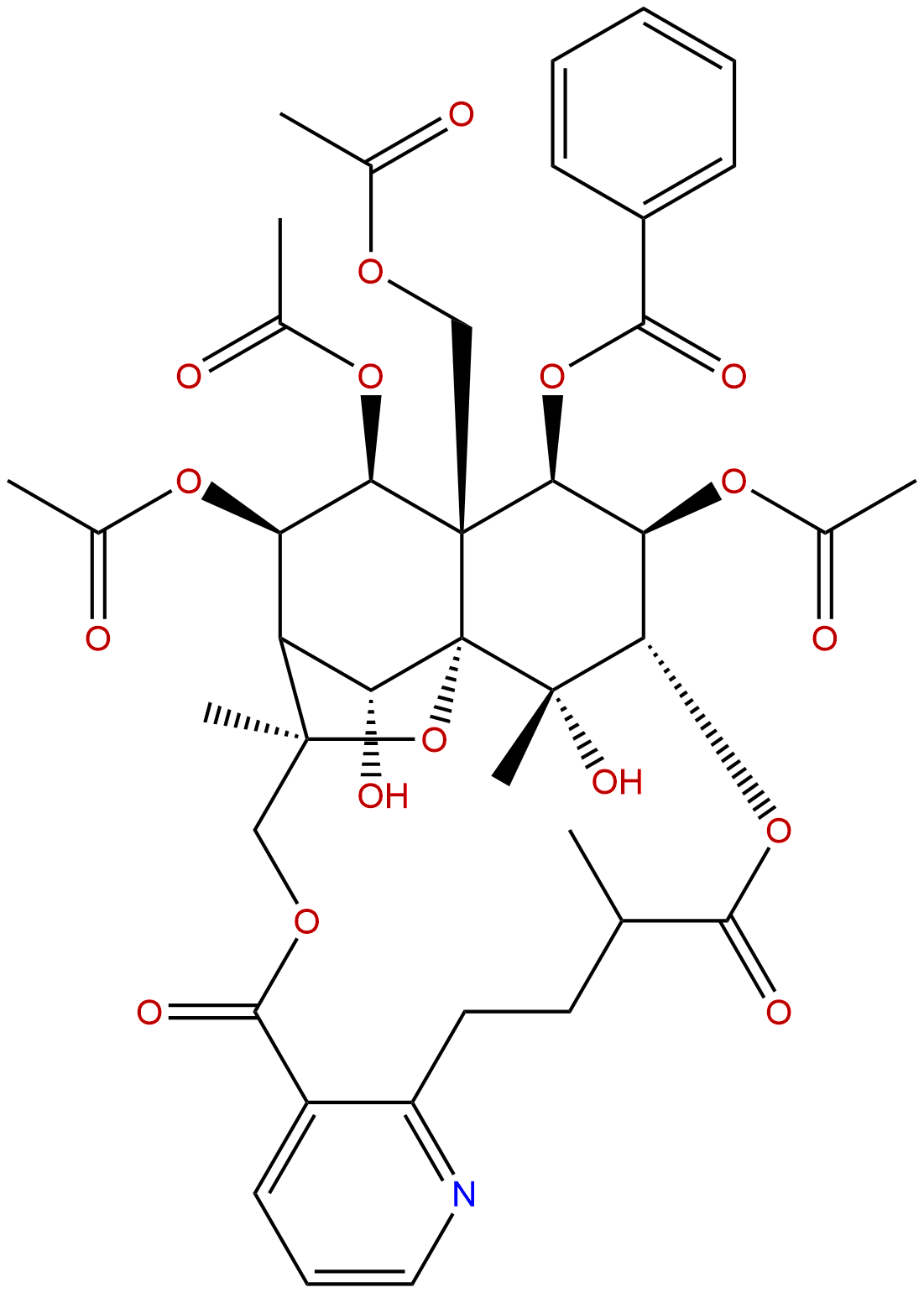


Storage conditions:Short-term storage at 2~8℃, long-term storage at -20 ~ -80℃
246.6800
1.9609
1.9609
.0193
.7183
2.6738
Low
80.3947
7.4498
No
No
No
No
No
No
0.0
Yes
No
Yes
Yes
Neurodegenerative diseases such as Alzheimer's disease, Parkinson's disease, etc. have become major global public health challenges. This type of disease is characterized by progressive loss and functional decline of neurons, and its pathogenesis is complex, involving multiple pathological links such as β - amyloid deposition, excessive phosphorylation of Tau protein, mitochondrial dysfunction, oxidative stress, and neuroinflammation. At present, clinical treatment drugs mainly focus on symptom relief, making it difficult to effectively delay or reverse the disease progression. Therefore, finding new lead compounds with multi-target and multi pathway regulatory potential from natural products is an important direction for current drug development.
As an important source of traditional medicinal plants, plants in the family Euonymus have diverse chemical compositions, especially rich in novel and biologically active sesquiterpene alkaloids, which have shown great potential in anti-inflammatory, anti-tumor, neuroprotective and other aspects. Euojaponine D (CAS: 128397-42-2) is a sesquiterpene alkaloid isolated from plants in this family. Early studies have revealed that extracts from plants in the family Celastraceae have strong insecticidal activity, suggesting that their components may act on the nervous system. In recent years, with the deepening of research on Euojaponine D, its pharmacological activity beyond insecticidal activity and targeting complex neurodegenerative disease pathological networks has gradually been revealed. This article aims to provide a systematic review of the chemical structure, plant origin, pharmacological activity, mechanism of action, and pharmacological properties of Euojaponine D, and to explore its potential applications in the treatment of neurodegenerative diseases.
Euojaponine D is a complex sesquiterpene alkaloid with a molecular weight of 825.8170 Da. Its structural skeleton combines sesquiterpene units with alkaloid groups, forming a highly oxidized polycyclic system. This unique hybrid structure is the material basis for its diverse biological activities. From a chemical classification perspective, it belongs to the characteristic "Thunder God Vine" or "South Snake Vine" alkaloids of the family Euonymus. Its structure often contains multiple ether bonds, hydroxyl groups, and possible ester bonds, forming its specific three-dimensional spatial conformation, which is crucial for its recognition and binding with biomolecules.
Based on the calculated physicochemical parameters, a preliminary evaluation of the drug properties of Euojaponine D can be conducted. Its lipid water partition coefficient (LogP) is 1.9609, indicating that the compound has moderate lipophilicity, which is beneficial for its penetration of cell membranes. However, excessive lipophilicity may also lead to rapid metabolism or poor distribution, and this value is around the ideal range (usually considered 1-3 to be optimal). Its topological polar surface area (TPSA) is as high as 246.68 Å ², mainly attributed to the presence of a large number of oxygen atoms (from hydroxyl, ether bonds, etc.) in the molecular structure. High TPSA usually means that the molecule has strong polarity, which is not conducive to passive transmembrane transport, especially through the blood-brain barrier. This prediction is consistent with the assessment of "blood-brain barrier permeability: low" and is a key property that needs to be considered and optimized when developing central nervous system drugs. The water solubility data (0.0193, usually measured in mg/mL or mol/L, where the value is lower) further confirms that although it has a certain lipophilicity, its overall molecular weight is large, there are many polar groups, and it may form intramolecular hydrogen bonds, resulting in limited solubility in water, which may affect its oral bioavailability. In the preliminary safety screening, its hERG inhibitory activity was "no", which is a positive signal indicating that it may not have a significant risk of cardiac toxicity; The Ames test result is 0.0, indicating that it has no mutagenicity in this testing system, but a more comprehensive genetic toxicity assessment is needed.
Euojaponine D mainly comes from plants in the family Euonylaceae. The Celastraceae family is a globally distributed large family that includes about 100 genera and over 1300 species of plants, many of which belong to genera such as Tripterygium wilfordii, Celastraceae, and Menispermaceae. They have a long history of application in traditional medicine in Asia and the Americas and are commonly used to treat arthritis, fever, tumors, and parasitic infections.
The extraction and separation of this compound follow the conventional process of natural product chemistry, but optimization is needed for its characteristics. Firstly, collect specific parts of the plant (such as root bark, stem bark, or leaves), dry and crush them. Preliminary extraction usually uses moderately polar organic solvents (such as methanol, ethanol, or acetone) for cold soaking or heating reflux to fully extract alkaloids and terpenes with high polarity, including Euojaponine D. The obtained crude extract was subjected to solvent partitioning (usually using chloroform, ethyl acetate, n-butanol, and water for gradient partitioning), and enriched using the good solubility of Euojaponine D in chloroform or ethyl acetate.
The subsequent separation and purification are key steps in obtaining high-purity monomers. Due to the high molecular weight and complex structure of Euojaponine D, as well as the presence of a series of structurally similar analogues in plants, multiple chromatographic techniques are required for precise separation. Normal phase silica gel column chromatography is commonly used for initial fractionation, followed by reverse phase high performance liquid chromatography (RP-HPLC, using C18 column and methanol water or acetonitrile water as mobile phase) for final purification. During the separation process, thin layer chromatography (TLC) combined with specific color reagents (such as Dragendorff reagent, which specifically develops alkaloids) can be used for rapid tracking of target components. Modern mass spectrometry (MS) and nuclear magnetic resonance (NMR) techniques, especially 1H NMR, 13C NMR, 2D NMR such as COSY, HSQC, HMBC, are indispensable for identifying the planar structure and stereoconfiguration of Euojaponine D. The acquisition of its CAS number (128397-42-2) is based on the confirmation of its structure. At present, the content of this compound in plants is usually low. How to improve its acquisition efficiency through plant tissue culture, synthetic biology, or total/semi synthetic pathways is a challenge that future research needs to face.
Although the early research background of Euojaponine D was related to its insecticidal activity, pharmacological studies in recent years have shifted their focus towards its therapeutic potential for major human diseases, especially in the field of neurodegenerative diseases, demonstrating multifaceted protective effects.
1. Neuroprotective and anti apoptotic activity: In various in vitro neural cell injury models, such as PC12 cells, SH-SY5Y cells, or primary neuronal injury induced by β - amyloid protein, hydrogen peroxide, glutamate, or rotenone, Euojaponine D exhibits a significant increase in cell survival rate. Its mechanism is closely related to the inhibition of mitochondrial pathway induced cell apoptosis, which can reduce the expression of pro apoptotic proteins, stabilize mitochondrial membrane potential, and decrease the activity of apoptosis executing proteins such as caspase-3.
2. Antioxidant and free radical scavenging activity: Oxidative stress is one of the core pathological processes in neurodegenerative diseases. Research has shown that Euojaponine D can directly scavenge free radicals such as DPPH and ABTS, and enhance the endogenous antioxidant defense system of cells, such as upregulating the activity of superoxide dismutase (SOD) and glutathione peroxidase (GSH Px), reducing the level of lipid peroxidation product malondialdehyde (MDA), and thus alleviating oxidative damage to neurons.
3. Anti neuroinflammatory effect: Chronic neuroinflammation exacerbates the development of the disease. In the model of microglia activated by lipopolysaccharide (LPS) or beta amyloid protein (such as BV2 cells), Euojaponine D can effectively inhibit the overactivation of microglia and significantly downregulate the production of key pro-inflammatory mediators such as tumor necrosis factor - α, interleukin-1 β, interleukin-6, nitric oxide, and prostaglandin E2. This suggests that it has the potential to regulate the brain immune environment and alleviate inflammation related neurotoxicity.
4. Effects on protein homeostasis: Preliminary studies have shown that Euojaponine D may affect the generation and metabolism of β - amyloid protein and regulate the phosphorylation status of Tau protein, two pathological markers of Alzheimer's disease. Although the specific strength of its effect still needs to be further quantified, this provides clues for its intervention in protein misfolding and aggregation diseases.
5. Other potential activities: Based on the traditional use of its plant origin and reports of structurally similar compounds, Euojaponine D may also have anti-tumor and immune regulatory activities, but these aspects have been relatively less studied within the framework of neurodegenerative diseases.
The multiple pharmacological activities of Euojaponine D stem from its synergistic intervention in the complex signaling network of neurodegenerative diseases. Existing research has preliminarily revealed its effects on multiple key molecular targets and pathways:
1. AMPK (PRKAA1) signaling pathway activation: AMP activated protein kinase is a core regulator of cellular energy metabolism. Euojaponine D has been shown to activate AMPK. The activation of AMPK can bring a series of neuroprotective benefits: promoting autophagy to clear misfolded proteins and damaged organelles; Inhibit the signal of mammalian rapamycin target protein complex 1 and reduce abnormal protein synthesis; Enhance mitochondrial biosynthesis and function; And it has anti-inflammatory effects. This may be the pivotal mechanism by which Euojaponine D exerts its core protective effect.
2. Regulation of apoptosis related targets: It upregulates the expression of anti apoptotic protein Bcl-2 and may downregulate the levels of pro apoptotic proteins such as Bax, thereby restoring the balance of Bcl-2/Bax, inhibiting the release of cytochrome C from mitochondria, and blocking the apoptotic cascade reaction.
3. Regulation of Alzheimer's disease-related targets:
* APP/ABCA1 pathway: It may indirectly regulate the processing of amyloid precursor proteins and reduce the production of β - amyloid by upregulating the expression of ATP binding cassette transporter A1, promoting cholesterol efflux, and affecting the composition of cell membrane lipid rafts.
* Inhibition of β - secretase 1 (BACE1): As a key rate limiting enzyme for the generation of β - amyloid protein, BACE1 is an important drug target. Research suggests that Euojaponine D may inhibit the activity or expression of BACE1.
* APP Metabolism: May affect the non starch source processing pathways of the APP.
4. Inhibition of anti-inflammatory signaling pathway:
* TLR4/NF - κ B pathway: Euojaponine D may inhibit the activation of Toll like receptor 4, thereby blocking the transduction of nuclear factor kappa B signaling pathway, which is one of its main mechanisms for inhibiting the production of pro-inflammatory cytokines by microglia.
* JAK2/STAT3 pathway: Signal transduction and transcription activator 3 is an important inflammatory and cell survival regulatory factor. Euojaponine D may inhibit its phosphorylation activation, thereby downregulating downstream inflammatory gene expression.
5. Neurotransmitter system and other targets:
* Monoamine oxidase A (MAOA): Inhibition of MAOA can reduce the degradation of monoamine neurotransmitters (such as serotonin and norepinephrine) and decrease the production of hydrogen peroxide during degradation, which is beneficial for improving depressive symptoms and antioxidant activity.
* Estrogen receptor beta (ESR2): ESR2 has neuroprotective, anti-inflammatory, and synaptic plasticity promoting effects in the central nervous system. Euojaponine D may act as its regulator, mediating partial protective effects.
In summary, Euojaponine D does not act on a single target, but synergistically regulates multiple pathological processes such as energy metabolism, cell apoptosis, inflammatory response, protein homeostasis, etc. through a "multi-target, multi pathway" mode, which is in line with the treatment strategy needs to address the complexity of neurodegenerative diseases.
Although Euojaponine D has shown encouraging pharmacological activity in vitro models, its successful development as a drug heavily relies on systematic drug efficacy evaluation and pharmacokinetic studies. At present, there is insufficient public data in this area, but preliminary analysis can be conducted based on its physical and chemical properties and relevant parameters.
1. Prediction and challenges of absorption, distribution, metabolism, and excretion (ADME):
* Absorption: A moderate LogP value is beneficial for its penetration into intestinal epithelial cell membranes, but high TPSA and low water solubility may limit its solubility and passive diffusion efficiency, resulting in lower oral bioavailability. It may require improvement through formulation techniques such as nanocrystals, liposomes, solid dispersions, or structural modifications (preparation of prodrugs).
* Distribution: The biggest challenge lies in its "low" prediction of blood-brain barrier permeability. High TPSA and high molecular weight are the main obstacles. Future research needs to verify its actual brain entry ability through in vivo experiments and explore enhancing its brain targeted delivery through chemical modifications (such as reducing polarity, introducing carrier mediated transport targets) or using drug delivery systems (such as nanoparticles, exosomes).
* Metabolism and excretion: As a complex natural product, Euojaponine D is likely to undergo extensive phase I (such as cytochrome P450 enzyme catalysis) and phase II (such as glucuronic acid binding and sulfation) metabolism in the liver. The activity and toxicity of its metabolites need to be clarified. The preliminary hERG and Ames negative results are a good start, but a comprehensive assessment of subacute, chronic, and reproductive toxicity is essential.
2. Preliminary safety signals: The prediction of 'hERG inhibition: no' reduces the likelihood of its triggering the risk of QT interval prolongation in the heart, which is an important reason for many drug development failures. The Ames test: 0.0 also provides preliminary genetic safety support. But these computer predictions and preliminary experimental results must undergo rigorous experimental verification.
3. Pharmacokinetic research requirements: It is urgent to conduct systematic preclinical pharmacokinetic studies, including: measuring the blood drug concentration time curve after administration in different animal models (rats, mice), calculating key parameters such as half-life, clearance rate, distribution volume, and bioavailability; Study its distribution in major tissues (especially brain tissue); Identify its main metabolites and metabolic pathways; Examine whether there is a risk of drug drug interactions caused by enzyme induction or inhibition.
Euojaponine D, as a natural product with unique structure and multi-target activity, has shown unique application prospects in the prevention and treatment of neurodegenerative diseases, but its transformation path is still full of challenges and opportunities.
1. Potential application directions:
* Multi targeted treatment strategies for Alzheimer's disease: Its ability to simultaneously intervene in A β production, Tau phosphorylation, neuroinflammation, and oxidative stress makes it a potential candidate molecule for AD disease modifying drugs, which may have advantages over single target drugs.
* Treatment of Parkinson's disease and other neurodegenerative diseases: Its powerful antioxidant, anti apoptotic, and anti-inflammatory activities are also applicable to diseases with similar pathological mechanisms such as PD and Huntington's disease.
* The components of combination therapy: Due to its complementary mechanism of action, Euojaponine D may be used in combination with existing acetylcholinesterase inhibitors, NMDA receptor antagonists, or other new drugs under development in the future to produce synergistic effects, reduce their respective dosages and side effects.
* Structural optimization of lead compounds: Using it as the parent nucleus, systematic structural modification and structure-activity relationship studies are conducted through medicinal chemical methods, aiming to improve activity, enhance pharmacokinetic properties (especially BBB permeability and oral bioavailability), reduce potential toxicity, and obtain better clinical candidate compounds.
2. Challenges faced:
* Pharmacokinetic bottleneck: As mentioned earlier, low BBB permeability and potentially poor oral bioavailability are the primary obstacles.
* Accurate analysis of complex mechanisms of action: Further research is needed to clarify which of its numerous targets are the main functional targets, the spatiotemporal order of its network regulation, and whether there are off target effects.
* Source and supply issues: The low content in plants, high extraction and separation costs, and extremely complex total synthesis routes may limit their large-scale pharmacological evaluation and subsequent development.
* Comprehensive preclinical safety evaluation: A complete set of safety pharmacology and toxicology studies that meet the requirements for drug registration needs to be completed.
3. Future research prospects:
* In depth mechanism research: Identify its direct target using chemical biology methods such as affinity fishing and molecular probes; Using omics techniques (transcriptome, proteome, metabolome) to comprehensively reveal its regulatory network.
* Strengthen research on pharmacokinetics and formulations: Prioritize the establishment of sensitive and reliable in vitro and in vivo analysis and detection methods; Actively exploring new brain targeted delivery systems; Conduct systematic ADME research.
* Expand research model: Shift from cellular models to more complex transgenic animal models and organoid models to validate their therapeutic effects in a more human pathological environment.
* Exploring biosynthetic and synthetic biology pathways: Analyze the biosynthetic pathways within the plant body and attempt heterologous expression in microorganisms or plant cells to provide solutions for sustainable production.
Euojaponine D, as a sesquiterpene alkaloid derived from plants in the family Euonylaceae, has become an attractive lead compound in the field of neurodegenerative disease drug development due to its novel chemical structure and multiple pharmacological activities in neuroprotection, antioxidant, anti-inflammatory, and protein homeostasis regulation. Its mechanism of synergistic action through multiple targets such as AMPK, Bcl-2, TLR4, BACE1, etc., is in line with the current multidimensional treatment concept for complex diseases. However, its inherent pharmacological defects, especially the prediction of low blood-brain barrier permeability and unclear pharmacokinetic characteristics in vivo, are the main obstacles that hinder its transition from laboratory to clinical practice. Future research needs to focus on overcoming these bottlenecks through rational drug design, advanced drug delivery techniques, or clever combination therapy strategies, based on a deep understanding of their molecular mechanisms. Despite the long road ahead, the strategy represented by Euojaponine D to search for multi-target neuroprotective agents from natural products undoubtedly provides new ideas and hope for overcoming the century old problem of neurodegenerative diseases.
Batch can search by a CAS number,one per line
