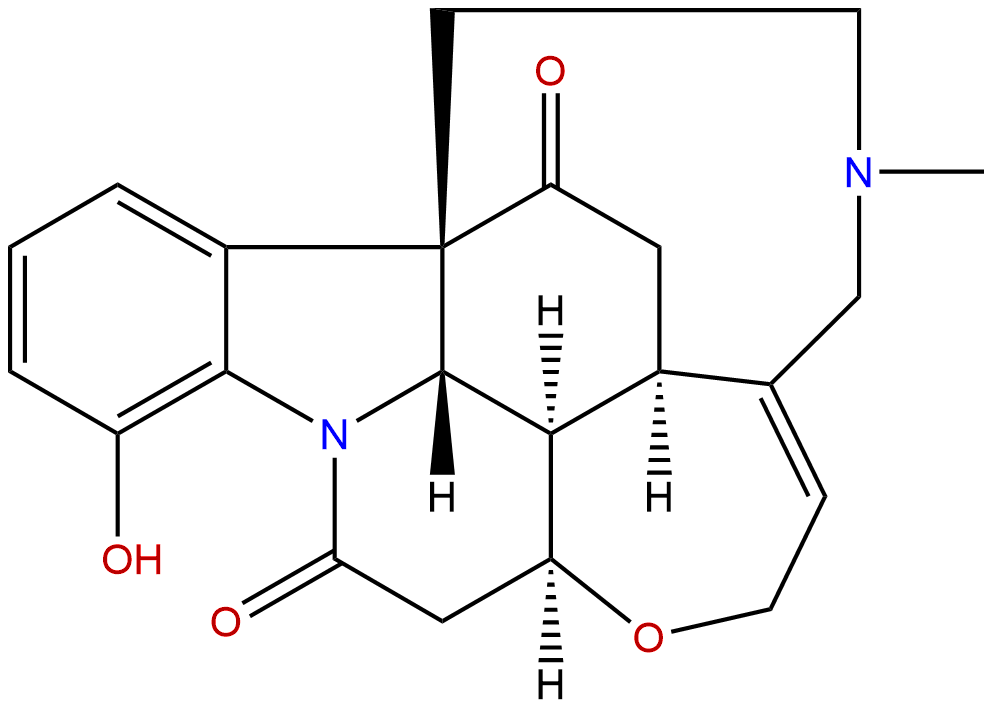


Synonym name: Strychnicine; Struxine
Catalogue No.: BP1450
Cas No.: 125-15-5
Formula: C22H24N2O4
Mol Weight: 380.444
Botanical Source: Alkaloid from Strychnos nux-vomica (leaves and seeds) and Strychnos icaja (Strychnaceae)
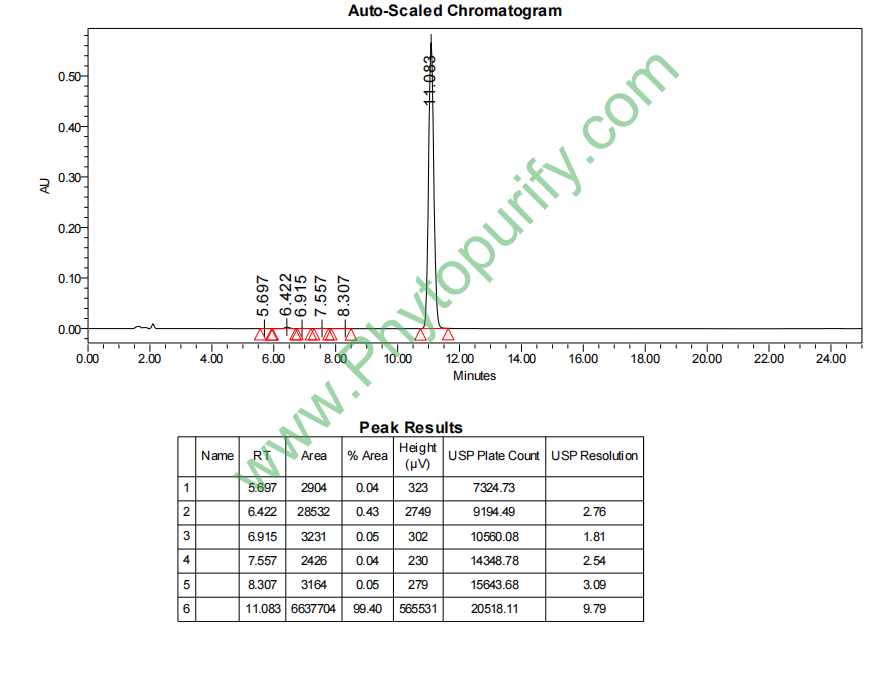
Purity: 95%~99%
Analysis Method: HPLC-DAD or/and HPLC-ELSD
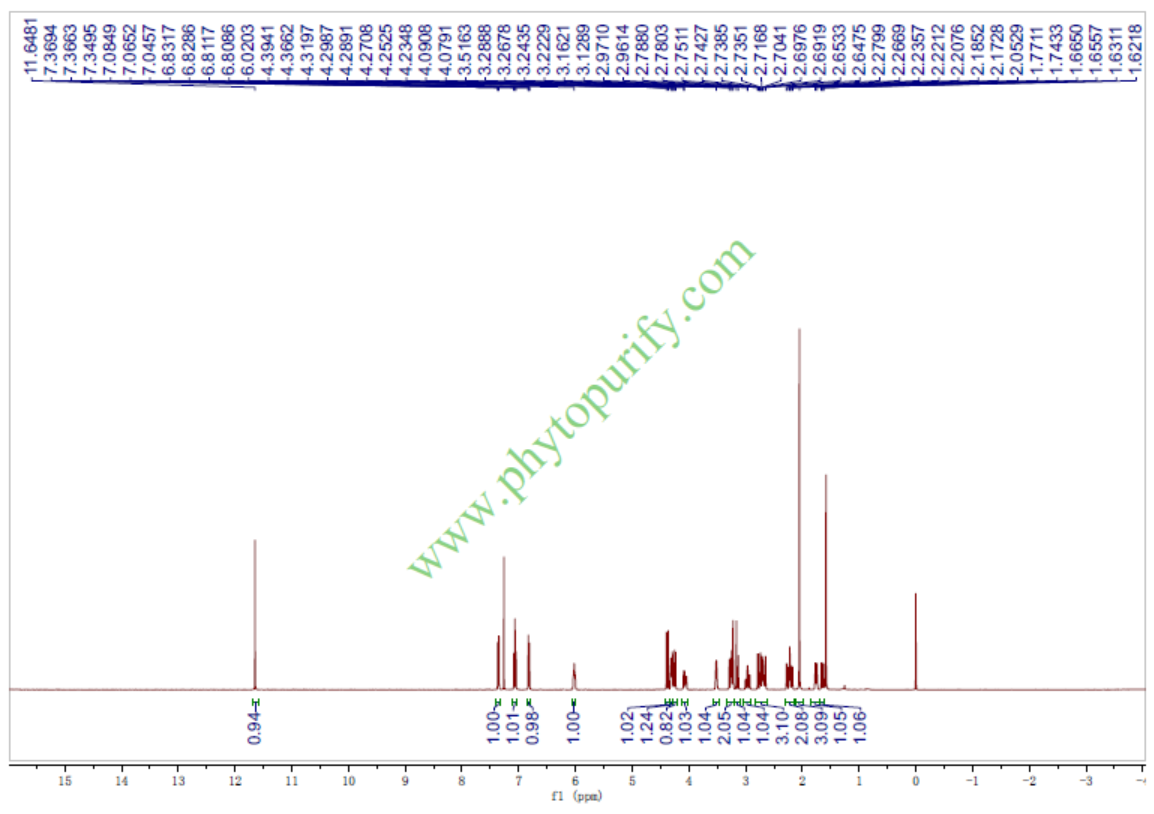
Identification Method: Mass, NMR
Packing: Brown vial or HDPE plastic bottle
Can be supplied from milligrams to grams.
For Reference Standard and R&D, Not for Human Use Directly.
Inquire for bulk scale.
HPLC of Vomicine
HNMR of Vomicine
Storage conditions:Short-term storage at 2~8℃, long-term storage at -20 ~ -80℃
70.0800
1.1780
.8522
1.6177
3.2659
12.0644
High
49.3184
6.6437
No
Yes
No
No
Yes
No
0.6
Yes
No
Yes
Yes
Vomicine (CAS 125-15-5) is a traditional medicinal plant derived from the Chinese chestnut(Strychnos nux-vomica L. Monoindole alkaloids isolated from seeds. For a long time, Strychnine and its main toxic component, Strychnine, have attracted much attention due to their central nervous system excitability and strong spastic toxicity, and their clinical applications have been strictly limited. However, as a structurally similar compound, the toxicity of strychnine is significantly lower than that of strychnine, and it has gradually become a new focus of natural product pharmacology research in recent years. Modern pharmacological research has revealed that strychnine exhibits a wider range of biological activities beyond traditional understanding, particularly its regulatory effects on anti-inflammatory signaling pathways, such as the cGAS-STING-TBK1 axis, providing new molecular clues for the treatment of inflammation related diseases. Meanwhile, its potential interactions with various neurotransmitter system targets such as MAOA, DRD1/2, SLC6A4, etc. suggest that it may have untapped potential in the field of neuropsychiatric disorders. This article aims to systematically review the chemical properties, plant sources, pharmacological activities, molecular mechanisms of action, pharmacological characteristics, and clinical application prospects of strychnine, in order to provide a comprehensive scientific perspective for the modern research and development of this ancient alkaloid.
The molecular formula of strychnine is C22H24N2O4, with a molecular weight of 380.4440. Its chemical structure belongs to monoindole alkaloids, and its core skeleton is composed of an indole ring system fused with a complex polycyclic bridging ring system. Compared with muscovite, muscovite has key structural differences, mainly due to its hydroxyl substitution at the C-16 position, while muscovite is a ketone carbonyl group at that position. This structural modification not only significantly reduces its toxicity, but also profoundly affects its physicochemical properties and biological activity.
Based on the analysis of the parameters related to drug properties, the alkaloid from the Chinese soft shelled turtle exhibits a certain degree of lipophilicity. The calculated LogP value is 1.1780, indicating that it has a moderate lipid water partition coefficient, which is conducive to transmembrane transport. Its topological polar surface area (TPSA) is 70.0800 Å ², which is relatively moderate, indicating that its membrane permeability is still acceptable. The water solubility parameter is 1.6177 mg/L, indicating that it belongs to compounds that are slightly soluble to poorly soluble in water, which may require consideration of solubilization strategies in formulation development. It is particularly crucial that its blood-brain barrier (BBB) permeability is predicted to be "high", which is related to its moderate molecular weight, appropriate LogP value, and structural characteristics, indicating its ability to effectively enter the central nervous system. This provides an important material basis for its potential central nervous system activity, such as regulating neuroarousal related targets. In addition, preliminary in vitro safety screening showed that the hERG inhibition risk was "no", and the Ames test result was 0.6 (usually considered to increase the risk of mutagenicity when the value is close to or greater than 1, and 0.6 indicates a lower potential risk), providing preliminary positive signals for further safety evaluation.
The main source of strychnine in Chinese soft shelled turtles comes from the Loganiaceae plant, Malvaceae(Strychnos nux-vomica L. Dry and mature seeds. Ma Qian Zi is mainly produced in India, Sri Lanka, Vietnam, and Yunnan, China. It is a traditional Chinese medicinal herb with a long history of application but severe toxicity. Traditionally, it is used topically to treat injuries caused by falls, abscesses, swelling, and pain. When taken orally, it must be strictly processed and the dosage controlled to a very small extent. It is used for unblocking collaterals, relieving pain, dispersing nodules, and reducing swelling.
Alkaloids are the main active and toxic components in the seeds of Malvaceae, with the highest content of strychnine and brucine, while the content of strychnine is relatively low and often exists as a secondary alkaloid. Traditional extraction methods often use solvent extraction. The general process is to reflux or extract the powder of horse chestnut seeds with suitable organic solvents (such as methanol, ethanol, or acidified alcohol water solution), concentrate the extract, dissolve it in acidic water, alkalize it, and repeatedly extract it with organic solvents such as chloroform or dichloromethane to obtain total alkaloids. Subsequently, modern separation and purification techniques such as silica gel column chromatography, high performance liquid chromatography (HPLC), or preparative thin layer chromatography (PTLC), combined with pH gradient extraction, can effectively separate muscovite alkaloids from total alkaloids. In recent years, new technologies such as supercritical fluid extraction and high-speed countercurrent chromatography have also been applied to the separation of alkaloids from Malvaceae to improve the purity and yield of target products. Due to the structural similarity between strychnine and strychnine, as well as strychnine, the separation and purification process requires precise condition control to achieve effective separation.
In recent years, research has gradually revealed the diverse pharmacological activities of strychnine, transforming it from a "minor toxic ingredient" to an active molecule with potential therapeutic value.
anti-inflammatory activity This is one of the most highly regarded activities of strychnine. Research has shown that strychnine can dose dependently inhibit the production of nitric oxide (NO), prostaglandin E2 (PGE2), and pro-inflammatory cytokines (such as TNF - α, IL-1 β, IL-6) in various in vitro inflammatory models, such as the lipopolysaccharide induced macrophage RAW264.7 model. It has also shown anti-inflammatory effects in animal models, such as reducing ear swelling and paw swelling in mice. Its anti-inflammatory effect is believed to be closely related to its regulation of key inflammatory signaling pathways.
Potential for bidirectional regulation of the nervous system Although the central excitotoxicity of strychnine itself is much lower than that of strychnine, its chemical structure determines its natural affinity with nervous system targets. Research suggests that it may regulate neurotransmitter levels by affecting targets such as monoamine oxidase A (MAOA), dopamine receptors (DRD1, DRD2), serotonin transporter (SLC6A4), and 5-HT1A receptor (HTR1A). This multi-target characteristic suggests that it may have regulatory potential in diseases such as depression, anxiety, or cognitive impairment, but whether it manifests as excitation, inhibition, or more complex steady-state regulation requires further research. Its impact on CREB1 and BDNF signaling is also associated with neuroplasticity and neuroprotection.
Other potential activities There are sporadic studies reporting that strychnine may have antibacterial and anti malaria activities, but these studies are not yet systematic, and its effectiveness and mechanism of action need to be further confirmed.
The pharmacological effects of strychnine, especially its anti-inflammatory activity, are closely related to its regulation of specific molecular targets and signaling pathways.
Core anti-inflammatory mechanism: Regulating the cGAS-STING-TBK1 signaling pathway The cGAS STING pathway is a core innate immune pathway that senses cytoplasmic DNA (such as pathogen DNA or self damage related DNA) within cells and initiates the production of type I interferon and pro-inflammatory cytokines. After recognizing DNA, cGAS synthesizes the second messenger cGAMP, activates STING protein, recruits and phosphorylates TBK1, and ultimately activates transcription factors IRF3 and NF - κ B. Research has shown that strychnine can intervene in this pathway. The specific mechanism may include inhibiting the activation of STING or interfering with the interaction between STING and TBK1, thereby blocking the phosphorylation of TBK1 and the activation of downstream IRF3 and NF - κ B. This role makes it theoretically promising for the treatment of autoimmune diseases and chronic inflammations driven by abnormal DNA perception, such as systemic lupus erythematosus, Aicardi Gouti è res syndrome, and certain types of arthritis.
Multi target effects related to neural excitability The potential impact of strychnine on the nervous system involves a complex target network.
In summary, the mechanism of action of strychnine in soft shelled turtles exhibits a "multi pathway multi target" characteristic. Its anti-inflammatory effect is mainly achieved by inhibiting the cGAS-STING-TBK1 pathway, while its impact on the nervous system may be mediated by regulating neurotransmitter metabolic enzymes, receptors, and downstream signaling molecules.
Based on its physical and chemical parameters and preliminary biological data, the pharmacological characteristics of strychnine present both opportunities and challenges.
Advantage aspects:
1. Good blood-brain barrier penetration ability This is its greatest advantage as a potential therapeutic candidate for central nervous system diseases, enabling it to achieve effective concentrations at central targets.
2. Moderate lipid solubility LogP is approximately 1.18, which is beneficial for its oral absorption and tissue distribution.
3. Preliminary in vitro safety signals There is no significant risk of hERG channel inhibition (indicating a low risk of cardiac toxicity), and preliminary Ames test results suggest a low risk of mutagenicity.
Challenges and Unknown Fields:
1. Poor water solubility The water solubility is only 1.62 mg/L, which may result in low oral bioavailability and irregular absorption in vivo. In the development of formulations, it may be necessary to use solid dispersions, nanocrystals, cyclodextrin inclusion or prodrug strategies to improve their solubility and dissolution rate.
2. Lack of pharmacokinetic data At present, the systematic pharmacokinetic studies of strychnine (including absorption, distribution, metabolism, and excretion processes) are extremely limited in public literature. The key parameters such as oral absorption degree, plasma protein binding rate, major metabolic organs, metabolites, and elimination half-life are still unclear. Given the presence of an indole ring and multiple potential metabolic sites in its structure, it is speculated that it may be metabolized in the liver by cytochrome P450 enzyme systems (such as CYP3A4, CYP2D6). These pieces of information are crucial for determining dosing regimens and evaluating drug interactions.
3. The treatment window needs to be clearly defined Although less toxic than strychnine, the window between the effective dose and toxic dose of strychnine, as an alkaloid, still needs to be determined in more comprehensive toxicological studies, especially for chronic toxicity and reproductive toxicity of long-term administration.
4. The double-edged sword effect of multi-target characteristics Multi targeted effects may bring synergistic therapeutic benefits, but they may also increase the risk of off target side effects, requiring detailed in vivo pharmacological and toxicological studies to balance.
The unique pharmacological properties of muscovite alkaloids provide imaginative space for their application in multiple disease fields, but solid research is still needed to pave the way for their transformation.
Inflammation and autoimmune diseases As a novel regulator of the cGAS-STING-TBK1 pathway, strychnine has the greatest potential in treating diseases caused by excessive activation of this pathway. This includes some refractory self inflammatory diseases, certain viral inflammations, and the use of STING agonists as "brakes" in tumor immunotherapy to control immune related adverse reactions. Developing local topical formulations (such as for treating skin inflammation) or targeted delivery systems for specific organ inflammations may be a feasible pathway to reduce systemic toxicity and rapidly validate their clinical value.
Neuropsychiatric disorders Its high BBB permeability and potential effects on MAOA and monoamine receptors/transporters make it a potential candidate molecule for mood disorders such as depression and anxiety. However, research in this direction must be extremely cautious. Firstly, it is necessary to thoroughly elucidate its net effect on neural excitability to ensure that it does not cause serious side effects such as seizures. Secondly, it is necessary to validate its antidepressant/anti anxiety effects in reliable animal models and compare them with existing drugs. Its ability to regulate the CREB/BDNF pathway also suggests that it may have neuroprotective potential in neurodegenerative diseases such as Alzheimer's disease, but this requires more basic research support.
Combination therapy strategy Considering its multi-target nature, strychnine may not be suitable as a monotherapy for pursuing strong efficacy, but rather as part of a combination therapy. For example, combining with low-dose traditional anti-inflammatory drugs to enhance efficacy and reduce side effects; Or combined with more specific neuropsychiatric drugs to regulate the neurotransmitter system and improve treatment resistance.
Future research directions:
Caryophylline, a natural alkaloid that has long been hidden in the highly toxic plant Malvaceae, is gradually shedding its mysterious veil with the deepening of modern pharmacological research. It is no longer just an attenuated version of strychnine, but an active molecule with independent pharmacological properties and a clear molecular mechanism of action, particularly in regulating the cGAS-STING-TBK1 anti-inflammatory pathway. Its excellent blood-brain barrier penetration ability and potential regulatory effects on multiple neural targets provide a unique chemical basis for its interdisciplinary application in the fields of inflammation and neurological and psychiatric disorders. However, its poor solubility, unclear pharmacokinetic characteristics, and potential complexity of multi-target effects are the scientific challenges that it must face on its path to drug conversion. In the future, through interdisciplinary collaboration and in-depth elucidation of its mechanism of action, systematic optimization and evaluation of its pharmacological properties will be carried out, and the alkaloid of Chinese soft shelled turtle is expected to transform from an ancient traditional toxic ingredient into a novel candidate drug for treating modern refractory inflammation and neurological diseases, fully demonstrating the eternal value of natural products as a source of innovative drugs.
