Introduction/Overview
Natural products have always been an important source of drug discovery and development, especially in the fields of anti-cancer and neurological disease treatment, where plant derived alkaloids play an irreplaceable role. Hat pillar wood genus(Mitragyna speciosa Korth., Commonly known as "katong", it is a traditional medicinal plant that has been used for a long time in Southeast Asia to relieve pain, treat opioid addiction, and boost energy. Its pharmacological activity is mainly attributed to a series of structurally unique indole and hydroxyindole alkaloids. Among numerous active ingredients, Isomitrachulline, as a key indole alkaloid, has attracted widespread attention in the international natural product pharmacology community in recent years due to its significant and multi effect pharmacological activities, particularly its strong anti-cancer potential and ability to intervene in pathological processes related to Alzheimer's disease (AD).
Isodendrobine is not the most abundant alkaloid in Quercus acutissima (usually with the highest content of Mitragynine), but its unique chemical framework and biological activity spectrum make it a highly promising lead compound for development. Early research mainly focused on its immunomodulatory and anti-inflammatory effects, while recent studies have revealed its enormous potential in inducing tumor cell apoptosis, inhibiting angiogenesis, and regulating key targets of neurodegenerative diseases. In particular, it exhibits potential regulatory effects on the core pathological mechanisms of Alzheimer's disease, including beta amyloid (A β) production, tau protein hyperphosphorylation, and neuroinflammation. Combined with its excellent blood-brain barrier penetration ability, it has become a "multi-target" candidate drug for the treatment of complex multifactorial diseases such as cancer and AD. This article aims to provide a systematic review of the chemical properties, plant sources, pharmacological activities, mechanisms of action, pharmacological evaluation, and clinical application prospects of isocaproic acid, in order to provide comprehensive scientific basis for the in-depth research and development of this natural product.
Chemical structure and physicochemical properties
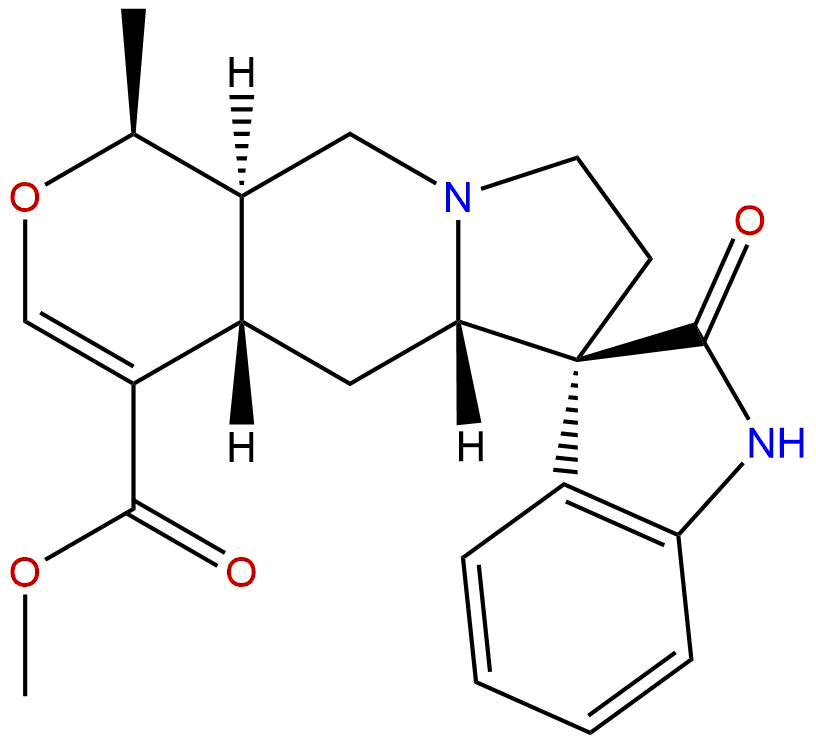
Isomitrachulline belongs to the family of indole alkaloids, characterized by a core skeleton of indole formed by the rearrangement of indole epoxidation. Compared with Mitragynine, another major hydroxyindole alkaloid in Quercus acutissima, isoQuercus acutissima is its C-3 stereoisomer, meaning that there is a difference in the configuration of the C-3 chiral center between the two. This subtle stereochemical difference leads to significant differences in their biological activity, receptor binding affinity, and pharmacokinetic behavior.
From a chemical structure perspective, the molecular formula of isocapped lignin is C ₂₂ H ₂₈ N ₂ O ₄, with a molecular weight of 368.4330 g/mol. Its core structure consists of a four ring system: a hydroxyindole ring (A, B rings) fused with a pyridine ring (C ring), and connected to a side chain containing methoxy and vinyl groups (D ring portion). Specifically, its structure contains a key spirocyclic quaternary carbon (C-7), which is a characteristic structural unit of indole alkaloids. The multiple functional groups present in the molecule, such as phenolic hydroxyl (or methoxy), lactam carbonyl, and tertiary amine nitrogen atoms, provide the structural basis for their interactions with various biological targets.
In terms of physicochemical properties, isocapped lignin exhibits moderate lipophilicity, with a calculated oil-water partition coefficient (LogP) of 1.9057, indicating that it can achieve a good balance between lipids and aqueous phase, which is beneficial for its transmembrane transport and in vivo distribution. Its topological polar surface area (TPSA) is 67.8700 Å ², which is lower than the recommended upper limit of 140 Å ² for oral drugs, indicating its good oral absorption potential. In terms of water solubility, its calculated water solubility value is 0.5410 mg/mL, which belongs to the category of slight solubility. This may limit its bioavailability to some extent, but it can be improved through formulation methods such as nanocarriers and cyclodextrin inclusion complexes. It is particularly important that its blood-brain barrier (BBB) penetration ability is evaluated as "high", which is crucial for the development of drugs to treat central nervous system diseases such as Alzheimer's disease. In addition, preliminary toxicological predictions indicate that isocaproic acid has a low risk of inhibiting hERG potassium channels (hERG inhibition: No), and the Ames test result is 0.6 (usually considered negative if less than 0.5, indicating weak mutagenicity that needs further verification), indicating that its cardiotoxicity and genotoxicity risks are relatively controllable, but need to be rigorously evaluated in subsequent studies.
Plant sources and extraction methods
The main source of alkaloids from the Rubiaceae family, the genus Rubiaceae, is the genus Rubiaceae(Mitragyna speciosa Korth.), Commonly known as Kratom. This plant is native to Southeast Asia, including Thailand, Malaysia, Indonesia, and Papua New Guinea. Although the leaves of Quercus acutissima are rich in various alkaloids, the content of isoquercetin is usually much lower than that of the main alkaloids Mitragynine and 7-Hydroxymitragynine. Its content is influenced by various factors, including plant geographical origin, harvest season, leaf age (with significant differences between tender and old leaves), and drying method. Research has shown that in certain specific strains in Thailand and Malaysia, the content of isoresin may be relatively high, especially in old leaves or samples after specific drying treatments.
Except for Mitragyna speciosa Isocamptothecin or its stereoisomers may also be present in small amounts in other plants of the Rubiaceae family, such as Uncaria Genus (Gouteng) plants. Gouteng(Uncaria rhynchophylla)It is a commonly used medicinal herb in traditional Chinese medicine for treating hypertension and neurological diseases. It also contains various indole alkaloids, including Corynoxin and Corynoxin B, which have a similar structure to isocaproic alkaloids. However, the current commercial and research standards for isoresin mainly come from Mitragyna speciosa Separation and purification in the middle.
The extraction of alkaloids from Eucommia ulmoides usually follows the classic alkaloid extraction process. The basic steps include:
1. Raw material processing After crushing the dried leaves of the hat pillar wood, wet them with an alkaline solution (such as ammonia or lime water) to allow the alkaloids to exist in the form of free bases.
2. Solvent extraction Using organic solvents such as methanol, ethanol, chloroform, or ethyl acetate for cold soaking, percolation, or Soxhlet extraction. Acidic alcohol solutions (such as ethanol containing 0.1% hydrochloric acid) are also commonly used to improve extraction efficiency.
3. Purification and Separation After concentrating the crude extract, dissolve it in acidic water (such as 2% hydrochloric acid) and filter to remove non alkaloid impurities. After washing the filtrate with organic solvents (such as ether or chloroform) to remove neutral impurities, adjust it to alkaline with alkaline solution (such as ammonia), and then extract free alkaloids with organic solvents. This step yields a total alkaloid extract.
4. chromatographic separation Due to the coexistence and low content of structural analogues such as isocapped lignin and 7-hydroxycapped lignin, efficient chromatographic techniques are required for separation and purification. Common methods include:
- Column chromatography Use silica gel, alumina, or C18 reverse phase silica gel as the stationary phase, and employ gradient elution (such as chloroform methanol or hexane ethyl acetate system).
- High performance liquid chromatography (HPLC)Preparation HPLC is a key method for obtaining high-purity isocapped lignin (>98%), typically using a C18 reverse phase column with acetonitrile water or methanol water (containing small amounts of triethylamine or ammonium formate) as the mobile phase.
- High Speed Counter Current Chromatography (HSCCC)As a liquid-liquid distribution chromatography technique, HSCCC has unique advantages in separating alkaloids with similar structures, which can avoid irreversible adsorption of samples on solid stationary phases.
In recent years, with the deepening understanding of the pharmacological activity of isoresin, the development of efficient, environmentally friendly, and scalable extraction processes has become a research hotspot. Green extraction techniques such as supercritical fluid extraction (SFE) and microwave-assisted extraction (MAE) are being explored to improve extraction efficiency and selectivity while reducing the use of organic solvents.
Pharmacological activity research
The pharmacological activity spectrum of Eucommia ulmoides alkaloids is very broad, covering multiple aspects such as anti-cancer, neuroprotective, anti-inflammatory, and immune regulation. Among them, anti-cancer and anti Alzheimer's disease activities are the most concentrated areas of research.
anticancer activity
Isocamptothecin has been described as having "strong anti-cancer activity," based on multiple in vitro and in vivo studies. Its anti-cancer mechanism presents the characteristics of multi-target and multi pathway:
- Inducing cell apoptosis Research has shown that isocaproic acid can induce apoptosis in various cancer cells through endogenous (mitochondrial) and exogenous (death receptor) pathways. For example, in human leukemia cells (HL-60) and breast cancer cells (MCF-7), it can up regulate the pro apoptotic proteins Bax and Bad, and down regulate the anti apoptotic proteins Bcl-2 and Bcl xL, resulting in the loss of mitochondrial membrane potential, the release of cytochrome c, and then activate caspase-9 and caspase-3 cascade reactions. Meanwhile, it can also increase the expression of the death receptor Fas.
- Inhibit cell proliferation Isocamptothecin can inhibit cancer cell proliferation by blocking the cell cycle. Research has shown that it can block human colon cancer cells (HCT-116) in the G0/G1 phase, and its mechanism may be related to downregulating the expression of cyclin D1 and cyclin dependent kinase 4 (CDK4).
- Angiogenesis inhibition The growth and metastasis of tumors depend on the formation of new blood vessels. It has been found that isocaproic acid can inhibit the proliferation, migration, and luminal formation of human umbilical vein endothelial cells (HUVEC) induced by vascular endothelial growth factor (VEGF). In the in vivo chicken embryo chorioallantoic membrane (CAM) experiment, it also showed significant anti angiogenic activity.
- Reverse multidrug resistance Multidrug resistance (MDR) of tumor cells is the main cause of chemotherapy failure. Preliminary studies suggest that isocaproic acid may partially reverse MDR by inhibiting the efflux function of P-glycoprotein (P-gp) and increasing the accumulation of chemotherapy drugs in drug-resistant cancer cells.
Anti Alzheimer's disease activity
Based on its excellent blood-brain barrier penetration, the potential of isocannabine in the treatment of Alzheimer's disease (AD) is highly anticipated. The pathological features of AD include senile plaques formed by A β deposition, neurofibrillary tangles formed by excessive phosphorylation of tau protein, neuroinflammation, and oxidative stress.
- Inhibit the generation of A βA β is produced by the sequential cleavage of amyloid precursor protein (APP) by β - secretase 1 (BACE1) and γ - secretase. It has been confirmed that isoresin can inhibit the activity of BACE1, thereby reducing the production of A β 40 and A β 42. In addition, it may also promote non amyloid protein production pathway (alpha secretase pathway) by regulating the processing pathway of APP.
- Regulating tau protein phosphorylation Overphosphorylation of tau protein is another core pathology of AD. Research has shown that isocaproic acid can inhibit the activity of key tau protein kinases such as glycogen synthase kinase-3 β (GSK-3 β) and cyclin dependent kinase 5 (CDK5), thereby reducing the phosphorylation level of tau protein at Ser404, Ser396, and maintaining microtubule stability.
- Anti neuroinflammation The excessive activation of microglia and astrocytes mediates neuroinflammation, which plays a crucial role in the progression of AD. Isodendrobine can inhibit the activation of microglia stimulated by lipopolysaccharide (LPS) or A β, reduce the release of pro-inflammatory cytokines (such as TNF - α, IL-1 β, IL-6) and nitric oxide (NO). The mechanism may be related to the inhibition of NF - κ B and MAPK signaling pathways.
- anti-oxidative stress Oxidative stress is an early event in Alzheimer's disease. Isocamptothecin has been found to scavenge free radicals, enhance the activity of intracellular antioxidant enzymes such as superoxide dismutase (SOD) and glutathione peroxidase (GPx), and protect neurons from A β - induced oxidative damage.
Other pharmacological activities
- immunomodulation Early studies have shown that isocaproic acid has immunostimulatory effects, which can enhance the phagocytic function of macrophages and the proliferation of T lymphocytes.
- Anti inflammatory and analgesic In addition to its role in neuroinflammation, isocaproic acid also exhibits anti-inflammatory activity in classic inflammatory models such as carrageenan induced rat foot swelling, and its mechanism may be related to the inhibition of cyclooxygenase-2 (COX-2) and prostaglandin E2 (PGE2) production.
Mechanism of action and molecular targets
The pharmacological activity of isocaproic acid is derived from its interactions with multiple molecular targets, reflecting the characteristic of natural products with multiple targets and pathways of action. Regarding its two main research directions - anti-cancer and anti Alzheimer's disease, its mechanism of action and targets can be summarized as follows:
Mechanism and targets of anticancer action
-
Regulation of apoptotic pathway:
- mitochondrial pathway Targeting Bcl-2 family proteins, downregulating Bcl-2/Bcl xL, upregulating Bax/Bad, leading to mitochondrial outer membrane permeabilization (MOMP), releasing cytochrome c and Smac/DIABLO, activating Caspase-9, and subsequently activating downstream execution of Caspase-3/7.
- Death receptor pathway Upregulation of Fas and FasL expression, activation of Caspase-8.
- Key kinases Inhibit the PI3K/Akt/mTOR survival signaling pathway, activate the JNK and p38 MAPK stress signaling pathways, and promote apoptosis.
-
cell cycle arrest:
- target Downregulate Cyclin D1 and CDK4/6, upregulate CDK inhibitors such as p21 and p27.
- effect Block the cell cycle at G0/G1 phase, inhibit DNA synthesis and cell division.
-
Angiogenesis inhibition:
- target Inhibit the binding and activation of VEGF and its receptor VEGFR2, and block downstream PI3K/Akt and MAPK/ERK signaling pathways.
- effect Inhibit endothelial cell proliferation, migration, and luminal formation.
-
Reverse multidrug resistance:
- target Directly bind and inhibit the efflux function of P-glycoprotein (P-gp/ABCB1).
- effect Increase the concentration of chemotherapy drugs within cells and restore the sensitivity of drug-resistant cells to drugs.
Mechanism and targets of anti Alzheimer's disease action
-
Inhibit the generation of A β:
- Direct targetβ - secretase 1 (BACE1). Isocamptothecin may competitively inhibit its cleavage of APP by binding to the active site of BACE1.
- Indirect target Regulating enzymes and proteins related to APP metabolism, such as ADAM10 (alpha secretase) and PSEN1 (presenilin 1, gamma secretase component). Reduce A β production by downregulating PSEN1 expression or activity.
-
Inhibit excessive phosphorylation of tau protein:
- target Inhibit tau protein kinases such as GSK-3 β and CDK5. Isocamptothecin may exert its effects by activating Akt (inactivating GSK-3 β) or directly binding to GSK-3 β.
- effect Reduce the phosphorylation of tau protein at AD related sites such as Ser199/202, Ser396, Ser404, and maintain the binding ability of tau protein to microtubules.
-
Anti neuroinflammation:
- target Inhibition of Toll like receptor 4 (TLR4) and downstream signaling molecules such as myeloid differentiation factor 88 (MyD88), NF - κ B, and MAPK (p38, JNK, ERK) in microglia and astrocytes.
- effect Reduce the release of pro-inflammatory cytokines (TNF - α, IL-1 β, IL-6), chemokines (MCP-1), and neurotoxic substances (NO, ROS).
-
anti-oxidative stress:
- target Activate the nuclear factor E2 related factor 2 (Nrf2)/antioxidant response element (ARE) pathway.
- effect Upregulate the expression of downstream antioxidant enzymes (HO-1, NQO1, SOD, GPx) to enhance the cell's ability to resist oxidative damage.
In addition, allopurine may also affect other pathological processes related to AD, such as synaptic dysfunction and lipid metabolism disorders, by interacting with SNCA (alpha synuclein) and APOE (apolipoprotein E). Its direct or indirect interaction with PSEN1 also suggests that it may affect the activity of gamma secretase, thereby regulating the production of A β.
Evaluation of drug properties and pharmacokinetics
To develop isocaproic acid from a natural product into a clinical candidate drug, a systematic evaluation of its drug like and pharmacokinetic (ADME) properties is required.
Drugability assessment
Based on Lipinski's "Rule of Five" and other pharmacological parameters, evaluate isocaproic acid alkaloids:
- molecular weight 368.43 Da (<500, compliant)
- LogP: 1.91 (<5, compliant)
- hydrogen bond donor: 1 (<5, compliant, from possible phenolic hydroxyl or lactam NH)
- Hydrogen bond acceptor: 5 (<10, compliant, including 4 O atoms and 1 N atom)
- TPSA 67.87 Å ² (<140 Å ², compliant)
- Number of rotatable keys: 4 (<10, compliant)
From these parameters, it can be seen that isocaproic acid fully complies with Lipinski's rule, indicating its good oral bioavailability potential. Its LogP value is moderate, ensuring membrane permeability while avoiding issues such as rapid metabolism and high toxicity caused by excessive lipophilicity. A low TPSA value is beneficial for its penetration through the blood-brain barrier. However, its water solubility (0.541 mg/mL) is relatively low, belonging to BCS class II (low solubility, high permeability) drugs, which may be the limiting step of its oral absorption. Improving its dissolution rate and apparent solubility through formulation techniques such as solid dispersions, lipid nanoparticles, and phospholipid complexes is a key strategy for enhancing its oral bioavailability.
Pharmacokinetic (ADME) characteristics
At present, there is relatively limited systematic research on the pharmacokinetics of isocaproic acid in vivo. However, based on the study of its structural analogues (such as isocaproic acid) and preliminary animal experimental data, some of its characteristics can be inferred
- absorb Expected to have good oral absorption, but the first pass effect may be significant. The oral bioavailability of berberine is relatively low (about 20-30%), mainly attributed to first pass metabolism in the liver. Isoresin may face similar situations, and its metabolic stability needs to be carefully investigated.
- distribution Due to its high lipid solubility and good BBB penetration (indicated as "high" in the pharmacological parameters), isocaproic acid can be widely distributed throughout the body tissues, including the brain. This is an important prerequisite for its central nervous system activity. Its apparent distribution volume (Vd) may be relatively large.
- Metabolism Isocamptothecin is mainly metabolized by the liver cytochrome P450 enzyme system (CYP450), especially CYP3A4 and CYP2D6. The main metabolic pathways include O-demethylation, N-demethylation, and oxidation reactions. Its metabolites may have different pharmacological activities or toxicity. Similar to pilocarpine, its metabolites (such as demethylated products) may have stronger μ - opioid receptor agonistic activity, which requires attention in development.
- excretion Isoresin and its metabolites are mainly excreted through urine and feces. Its half-life (t1/2) is not yet clear, but the half-life of camptothecin in the human body is about 24 hours, suggesting that isocamptothecin may also have a longer duration of action.
safety evaluation
The preliminary toxicological prediction results are optimistic:
- HERG inhibition Negative, indicating a lower risk of causing QT interval prolongation and apical torsion type ventricular tachycardia in the heart.
- Ames test The result is 0.6, which is near the critical value. This suggests that there may be a slight risk of genetic toxicity, which must be rigorously validated through standard in vitro and in vivo genetic toxicity tests such as chromosome aberration tests and micronucleus tests.
- Other toxicities The research on long-term toxicity, reproductive toxicity, carcinogenicity, etc. is still blank. Considering the history of abuse and potential addiction of plants in the genus Aquilaria (mainly attributed to the potent excitatory effect of 7-hydroxyAquilarine on μ - opioid receptors), whether isoAquilarine has opioid like activity or dependency potential is a key question that must be answered in safety evaluation. Existing studies have shown that isocaproic acid has a much lower affinity for μ - opioid receptors than caproic acid and 7-hydroxycaproic acid, but its metabolites may pose risks.
Clinical application prospects and prospects
Due to its unique chemical structure, multi effect pharmacological activity, and good preliminary evaluation of its pharmacological properties, isoresin has shown broad clinical application prospects, especially in the following two fields with the greatest potential:
1. Anti tumor therapy
The potential of isocannabine as a novel anti-cancer candidate drug is enormous. Its multi-target mechanism of action (inducing apoptosis, inhibiting proliferation, anti angiogenesis, reversing drug resistance) makes it promising to overcome the limitations of traditional single target chemotherapy drugs. Future research directions include:
- combination therapy Exploring the synergistic effect of isocaproic acid alkaloids with existing chemotherapy drugs (such as cisplatin, paclitaxel, doxorubicin) or targeted drugs (such as imatinib, sorafenib), in order to reduce chemotherapy dosage, alleviate toxic side effects, and overcome drug resistance.
- Indications expansion: On the basis of leukemia, breast cancer and colon cancer that have shown activity, systematically evaluate their efficacy in lung cancer, liver cancer, prostate cancer, glioblastoma and other solid tumors.
- Nanoformulation development Using nanotechnology (such as liposomes, polymer micelles, mesoporous silica nanoparticles) to encapsulate isocapped lignin, improving its water solubility, targeted delivery efficiency, and bioavailability, achieving precise release from tumor sites.
2. Treatment of Alzheimer's disease
Isocamptothecin can simultaneously act on multiple key pathological processes in AD (A β, tau, neuroinflammation, oxidative stress) and effectively penetrate the blood-brain barrier, making it an ideal lead compound for developing Disease Modifying Therapy (DMT). Future research focus:
- In vivo efficacy verification In transgenic AD animal models (such as APP/PS1, 3xTg AD, 5xFAD mice), a systematic evaluation was conducted on the improvement of cognitive function, A β plaque load, tau pathology, neuroinflammation, and synaptic plasticity after long-term administration of isocaprylic acid.
- target validation Using techniques such as gene knockout/knock in, chemical probes, and surface plasmon resonance (SPR), accurately verify its direct binding mode with key targets such as BACE1, GSK-3 β, and Nrf2.
- structural optimization Using isocapped lignin as the parent nucleus, structural modifications were carried out through medicinal chemical methods to enhance its selectivity towards specific targets (such as increasing its inhibitory activity against BACE1 and reducing its potential effect on opioid receptors), improve metabolic stability, and reduce potential toxicity.
Outlook and Challenges
Despite the bright prospects, the clinical translation of isocaproic acid still faces many challenges:
1. Source issue As a minor alkaloid in the cap pillar wood, its natural content is low and the extraction cost is high. Efficient and economical chemical synthesis or semi synthesis routes must be developed, as well as the use of synthetic biology techniques such as yeast or plant cell factories for heterologous production, to meet future research and clinical needs.
2. Pharmacokinetic optimization The poor water solubility and potential first pass effect are the bottlenecks for oral administration. It is necessary to develop appropriate formulation strategies and systematically study their metabolite profiles and activities.
3. safety assessment The critical result of Ames test needs clarification. Comprehensive preclinical toxicology studies must be conducted, including long-term toxicity, reproductive toxicity, neurotoxicity, and most importantly, addiction assessment. It is necessary to clarify its interaction with opioid receptors to avoid repeating the mistakes of opioid drugs.
4. Regulatory supervision The regulatory status of hat pillar wood (card pain) is complex and controversial in multiple countries around the world, including the United States and some European countries. As one of its components, isocaproic acid must follow strict drug regulatory pathways in its drug development, distinguishing it from regulatory issues related to plant raw materials.
Conclusion
Isodendrobine, a hydroxyindole alkaloid derived from the traditional medicinal plant Eucommia ulmoides, is gradually moving from a minor component to the forefront of natural product drug development. Its unique chemical structure endows it with multiple pharmacological activities, especially in the fields of anti-cancer and anti Alzheimer's disease, making it a bridge connecting traditional plant pharmacology with modern precision medicine. Its good drug properties that comply with Lipinski's rules, especially its excellent blood-brain barrier penetration ability, provide innate advantages for its development into drugs for treating central nervous system diseases.
However, the road from laboratory discovery to clinical application is still long and challenging. Future research must focus on addressing key bottlenecks such as their sources, pharmacokinetic deficiencies, and potential safety risks. Through interdisciplinary collaboration, integrating the latest achievements in natural product chemistry, medicinal chemistry, pharmacology, toxicology, pharmacy, and synthetic biology, it is expected to develop isocaproic acid or its optimized derivatives into innovative drugs for the treatment of major diseases such as cancer and Alzheimer's disease. The in-depth study of isoquinoline alkaloids will not only enrich our understanding of the structure-activity relationship of indole alkaloids, but also provide valuable examples and inspirations for discovering new "multi-target" drugs from traditional medicinal plants.