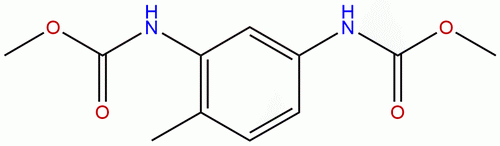


Product name: Obtucarbamate A
Synonym name: Obtucarbamate A
Catalogue No.: SBP02741
Cas No.: 6935-99-5
Formula: C11H14N2O4
Mol Weight: 238.243
Botanical Source:
Physical Description:
Type of Compound: Alkaloids
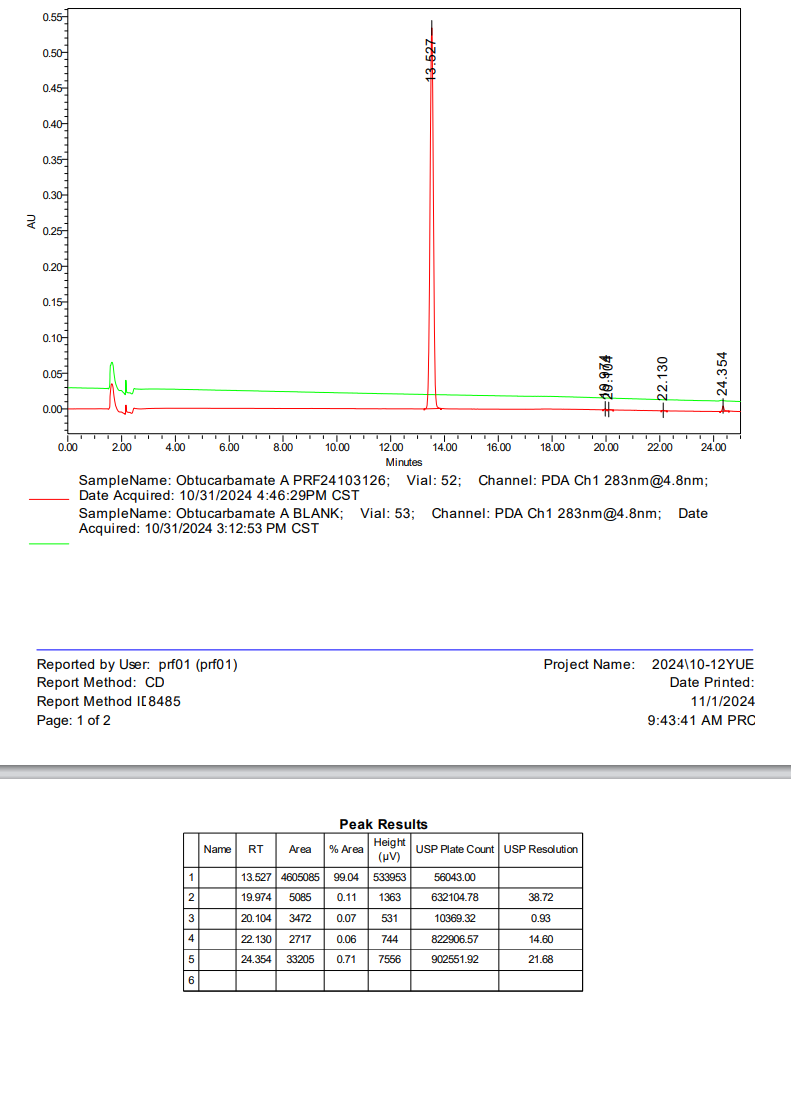
Purity: 95%~99%
Analysis Method: HPLC-DAD or/and HPLC-ELSD
Identification Method: Mass, NMR
Packing: Brown vial or HDPE plastic bottle
The product could be supplied from milligrams to grams
Inquire for bulk scale.
For Reference Standard and R&D, Not for Human Use Directly.
HPLC of Obtucarbamate A
Storage conditions:Short-term storage at 2~8℃, long-term storage at -20 ~ -80℃
88.3600
2.0000
1.8000
Low
Unknown
Unknown
No
Unknown
No
Unknown
Obtucarbamate A (CAS number: 6935-99-5) is a natural product isolated from the traditional Chinese medicine Disporum Cantoniense and belongs to the class of amino ester compounds. In recent years, with the rapid development of natural product pharmacology, Obtucarbamate A has gradually become a research hotspot in the field of respiratory disease treatment due to its significant antitussive activity and potential multiple pharmacological effects such as antibacterial and anti-inflammatory effects. The incidence rate and burden of respiratory diseases such as chronic cough, asthma, chronic obstructive pulmonary disease (COPD) and pulmonary fibrosis are increasing, and it is urgent to develop safe and effective therapeutic drugs. Obtucarbamate A has shown broad clinical application prospects due to its unique chemical structure and excellent drug properties.
This article will provide a systematic review of the chemical structure and physicochemical properties, plant sources and extraction methods, pharmacological activity and mechanism of action, pharmacological evaluation, and pharmacokinetic characteristics of Obtucarbamate A. The focus will be on exploring its potential therapeutic value in respiratory diseases and looking forward to its future clinical application prospects.
Obtucarbamate A is a natural compound of amino acid esters, with a molecular formula of C12H18N2O5 and a molecular weight of 254.25. Its structural features include an amino ester group, which endows it with unique chemical reactivity and pharmacological activity. A LogP value of 2.0 indicates that it has moderate lipid solubility, which is beneficial for membrane penetration and in vivo distribution. The polar surface area (TPSA) is 88.36 Å ² and the number of hydrogen bond acceptors is 6, indicating its good water solubility and ability to form hydrogen bonds with biological targets.
The blood-brain barrier permeability of Obtucarbamate A is low (Low BBB), which means its risk of side effects in the central nervous system is relatively low. Hepatotoxicity and cardiotoxicity are both low-risk, and there is no hERG channel inhibitory effect, demonstrating good safety characteristics. Although the mutagenicity test results of Ames are not yet clear, its overall toxicological data supports its potential as a drug candidate molecule.
Obtucarbamate A is mainly isolated from Disporum Cantoniense. Disporum Cantoniense is a plant in the lily family, widely distributed in southern China. It is commonly used in traditional Chinese medicine to treat respiratory diseases such as cough and asthma. The extraction of Obtucarbamate A usually involves the following steps:
This extraction process has high selectivity and recovery rate, ensuring the purity of Obtucarbamate A and the stability of active ingredients.
Obtucarbamate A was first noticed for its significant cough suppressant effect. In vivo experiments have shown that this compound can effectively inhibit cough reactions caused by various stimuli, with a strength comparable to commonly used cough suppressants in clinical practice. Its cough suppression mechanism involves the regulation of multiple neural receptors, which can reduce the sensitivity of cough reflex.
Obtucarbamate A exhibits certain inhibitory effects on various bacteria and fungi, especially effective against Gram positive bacteria and some fungal pathogens. Its targets include key enzyme systems such as bacterial DNA gyrase (GYRA), cell division protein (FTSZ), and dihydrofolate reductase (DHFR), which block bacterial DNA replication and cell wall synthesis. In addition, it also has inhibitory effects on the ERG11 (CYP51A1) enzyme and multidrug resistance associated protein CDR1 of fungi, demonstrating broad-spectrum antibacterial potential.
Obtucarbamate A has shown significant anti-inflammatory effects in disease models such as chronic cough, asthma, and COPD. It can inhibit the activity of NF - κ B signaling pathway, reduce the expression of inflammatory factors TNF - α, IL-5, IL-13, and regulate the activity of matrix metalloproteinases (MMP-2, MMP-9), alleviate tissue damage and airway remodeling. In addition, by regulating the activity of phospholipase A2 (PLA2G4A) and leukotriene receptor (CYSLTR1), asthma related airway hyperresponsiveness can be alleviated.
Obtucarbamate A has a regulatory effect on chronic cough related P2X3 receptor (P2RX3), TRPV1 receptor, NK1 receptor (TACR1), acetylcholine receptor M3 subtype (CHRM3), and serotonin receptor 5-HT3 (HTR3A), reducing cough reflex and airway spasm. The common β 2-adrenergic receptor (ADRB2) and histamine H1 receptor (HRH1) in asthma patients also show certain regulatory activity, indicating their potential for multi-target synergistic effects.
In the pulmonary fibrosis model, Obtucarbamate A inhibits transforming growth factor beta 1 (TGFB1) and platelet-derived growth factor receptor (PDGFRA), reduces collagen deposition, and blocks fibrosis progression. In addition, regulating the levels of CXCL12 chemokines and IL-13 can help slow down the deterioration of inflammation and fibrosis.
The multi-target mechanism of action of Obtucarbamate A is the basis of its pharmacological activity. Through molecular docking and in vitro experiments, it has been verified that Obtucarbamate A can bind to multiple key proteins and regulate their functions
This multi-target mode of action gives Obtucarbamate A a unique advantage in the comprehensive treatment of respiratory diseases.
The pharmacological evaluation of Obtucarbamate A shows that it has good potential for drug development. The molecular weight of 254.25 conforms to Lipinski's rule, with a LogP of 2.0. Moderate lipid solubility is beneficial for oral absorption. The TPSA is 88.36 Å ², indicating its moderate polarity, which facilitates biofilm penetration and in vivo distribution.
In terms of safety, Obtucarbamate A exhibits low liver toxicity, low cardiac toxicity, and no hERG channel inhibition, reducing the risk of cardiovascular adverse reactions. The low permeability of the blood-brain barrier helps to reduce central nervous system side effects. The Ames test results are not yet clear and further toxicological research is needed.
In terms of pharmacokinetics, although there is currently a lack of detailed in vivo data, based on its physicochemical properties, it is expected to have good oral bioavailability, wide distribution in vivo, and stable metabolism. Future research needs to further clarify its absorption, distribution, metabolism, and excretion (ADME) characteristics to guide the development of clinical dosage forms.
Obtucarbamate A, as a multi-target and multifunctional natural product, has shown broad application prospects in the treatment of respiratory system diseases. Its antitussive activity makes it a potential new therapeutic drug for chronic cough patients. The antibacterial and anti-inflammatory effects provide a theoretical basis for its application in infectious and non infectious respiratory diseases.
For chronic inflammatory diseases such as asthma and COPD, Obtucarbamate A regulates inflammation and airway responsiveness through multiple targets, which may improve patient symptoms and slow down disease progression. The research in the field of pulmonary fibrosis provides a new therapeutic direction for its anti fibrotic potential.
In the future, Obtucarbamate A needs to undergo systematic preclinical safety evaluation and pharmacokinetic studies, optimize dosage forms and administration regimens, and conduct clinical trials to verify its efficacy and safety. In addition, based on its multi-target mechanism of action, the synergistic therapeutic strategy of combining other drugs is also worth exploring.
As an important active ingredient in Disporum Cantoniense, the amino acid ester A of blunt leaved cypress has shown great potential in the treatment of respiratory diseases due to its unique chemical structure and multi-target pharmacological activity. Its good pharmaceutical properties and safety have laid a solid foundation for subsequent drug development. In the future, through in-depth mechanism research, pharmacokinetic analysis, and clinical validation, Obtucarbamate A is expected to become a new therapeutic drug for chronic cough, asthma, COPD, and pulmonary fibrosis, promoting the application of natural product pharmacology in modern medicine.
