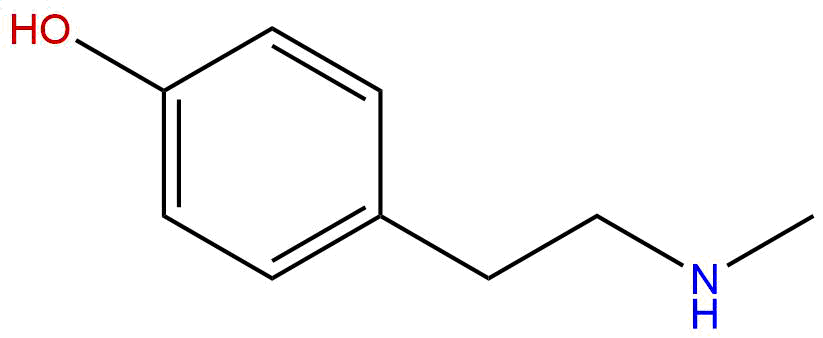


Product name: N-methyltyramine
Synonym name: 4-Hydroxy-N-methylphenethylamine;N-Methyl-p-tyramine
Catalogue No.: BP4990
Cas No.: 370-98-9
Formula: C9H13NO
Mol Weight: 151.209
Botanical Source:
Type of Compound: Alkaloids
Purity: 95%~99%
Analysis Method: HPLC-DAD or/and HPLC-ELSD
Identification Method: Mass, NMR
Packing: Brown vial or HDPE plastic bottle
Storage: Store in a well closed container, protected from air and light. Put into refrigerate or freeze for long term storage.
Whenever possible, you should prepare and use solutions on the same day. However, if you need to make up stock solutions in advance, we recommend that you store the solution as aliquots in tightly sealed vials at -20℃. Generally, these will be useable for up to two weeks.
The product could be supplied from milligrams to grams
Inquire for bulk scale.
For Reference Standard and R&D, Not for Human Use Directly.
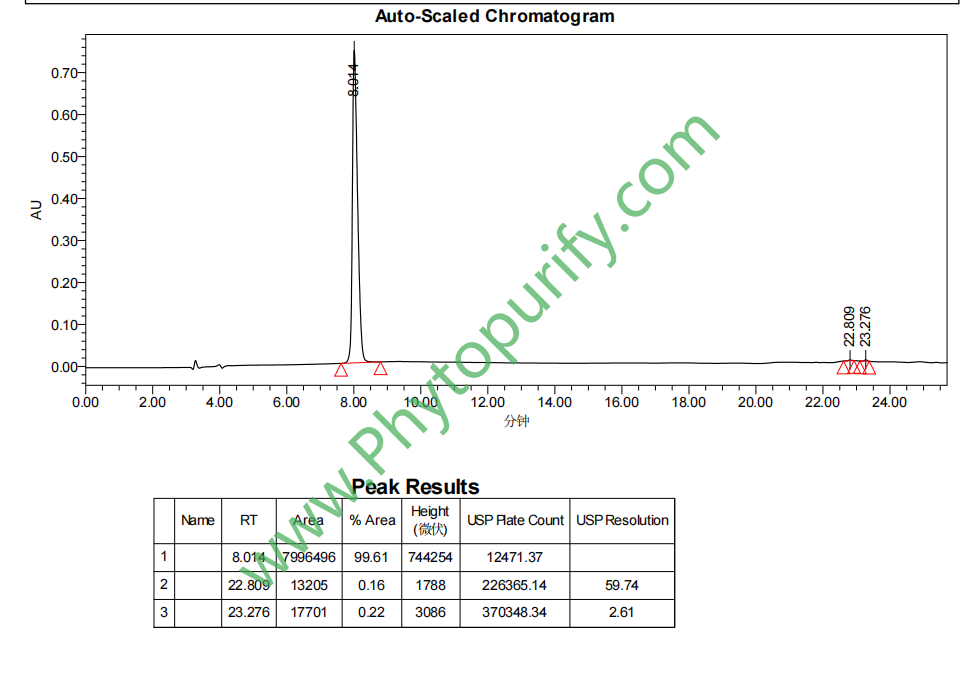
HPLC of N-methyltyramine
Storage conditions:Short-term storage at 2~8℃, long-term storage at -20 ~ -80℃
32.2600
1.4213
-.6145
17.2444
1.3584
18.7988
Low
23.4071
1.6752
No
Yes
No
No
No
No
0.0
No
Yes
No
No
Natural products, as an important source of drug discovery, have long contributed numerous lead compounds with novel structures and unique activities to human health. Among the diverse natural products, alkaloid compounds have attracted much attention due to their significant physiological activities. N-methyltyramine (NMT), as a relatively simple alkaloid, has gradually entered the field of researchers in recent years. This compound was first isolated and identified from various plants, and its chemical structure belongs to the phenylethylamine derivative, which is the N-methylation product of tyramine. Despite its small molecular weight, N-methyltyramine exhibits diverse biological activities, particularly in the cardiovascular system, digestive system, and neurotransmitter regulation, demonstrating unique roles.
From a chemical classification perspective, N-methyltyramine belongs to the trace amines family. Trace amines are a class of amine substances with extremely low levels in living organisms but strong physiological functions. They regulate the release and metabolism of neurotransmitters by interacting with specific G protein coupled receptors - Trace Amine Associated Receptors (TAARs). N-methyltyramine, as an α 2-adrenergic receptor antagonist, can block the α 2-adrenergic receptor on the presynaptic membrane, thereby affecting the negative feedback regulation of norepinephrine. This mechanism is closely related to its pressor effect. In addition, studies have found that N-methyltyramine can stimulate gastrin and pancreatic secretion, enhance appetite and food digestion, and have a relaxing effect on the smooth muscle of the small intestine in mice, inhibiting small intestinal peristalsis. These findings suggest that N-methyltyramine may have potential value in the treatment of digestive system diseases.
With the deepening development of modern pharmacology and medicinal chemistry, research on N-methyltyramine has expanded from the initial plant chemical isolation to multiple levels such as molecular target identification, drug evaluation, and exploration of clinical application prospects. This article will provide a systematic review of the research progress of N-methyltyramine from the aspects of chemical structure, plant origin, pharmacological activity, mechanism of action, medicinal properties, and clinical application prospects, in order to provide reference for the in-depth research and development of this natural product.
The chemical name of N-methyltyramine is 4- (2-methylaminoethyl) phenol, with a molecular formula of C ₉ H ₁ ∝ NO and a molecular weight of 151.2090 g/mol. Structurally, N-methyltyramine belongs to the phenylethylamine class of compounds, with its core skeleton consisting of a benzene ring and an ethylamine side chain. The para connection of the benzene ring has a hydroxyl group (- OH), and the terminal nitrogen atom of the ethylamine side chain has a methyl group (- CH ∝), so its complete chemical structure can be represented as HO-C ₆ H ₄ - CH ₂ - CH ₂ - NH CH3. This structural feature gives it both the properties of phenolic compounds and the characteristics of amine compounds.
The difference between N-methyltyramine and tyramine lies in the methylation modification on the nitrogen atom. The nitrogen atom of casein is connected to two hydrogen atoms (- NH ₂), while the nitrogen atom of N-methyltyramine is connected to one hydrogen atom and one methyl group (- NHCH ∝). The slight structural changes significantly altered the lipophilicity and receptor binding properties of the compound. The introduction of methyl groups increases the hydrophobicity of the molecule, thereby affecting its transmembrane transport ability and interaction mode with target proteins.
In terms of physicochemical properties, the oil-water partition coefficient (LogP) of N-methyltyramine is 1.4213, indicating that the compound has a certain degree of lipophilicity, but overall it still tends to be hydrophilic. This value enables it to be moderately distributed on biological membranes, facilitating transmembrane transport and interaction with membrane receptors. The topological polar surface area (TPSA) is 32.2600 Å ², which is relatively small, indicating that the compound has good cell membrane permeability. The water solubility parameter is 17.2444 mg/mL, indicating that N-methyltyramine has a high solubility in water, which provides favorable conditions for its absorption and distribution in vivo. It is worth noting that the blood-brain barrier penetration assessment showed "low", which means that N-methyltyramine is not easily able to enter the central nervous system, and its pharmacological effects may be mainly limited to peripheral tissues. This characteristic is of great significance for the development of peripheral selective drugs, which can avoid central nervous system related side effects.
In terms of chemical stability, the phenolic hydroxyl group of N-methyltyramine gives it a certain antioxidant capacity, but also makes it prone to oxidation under alkaline conditions. In addition, as a primary amine compound, N-methyltyramine is relatively stable under acidic conditions, but is easily degraded in the presence of strong oxidants. In terms of storage conditions, it is usually recommended to store in a low temperature, dark, and dry environment to prevent oxidation and moisture absorption.
N-methyltyramine, as a naturally occurring alkaloid, is widely distributed in various plants. The earliest research found that this compound is present in plants of the Rutaceae family, such as the fruit of Citrus aurantium L., which is relatively abundant. As a traditional Chinese medicine, Fructus Aurantii is commonly used to treat digestive disorders, gastrointestinal bloating, and other diseases. One of its active ingredients is N-methyltyramine. In addition, the presence of N-methyltyramine has also been detected in Fabaceae plants such as Cytisus scoparius. In recent years, with the advancement of analytical techniques, researchers have also discovered this compound in Ephedra plants, Cactaceae plants, and certain algae.
The content of N-methyltyramine varies greatly among different plants, depending on factors such as plant species, growth environment, harvest season, and tissue location. Taking Fructus Aurantii as an example, the content of N-methyltyramine in immature fruits is usually higher than that in mature fruits, and the content in the peel is higher than that in the flesh. In ephedra plants, N-methyltyramine often coexists with phenylethylamine alkaloids such as ephedrine and pseudoephedrine, forming a complex alkaloid lineage. This co-occurrence phenomenon suggests that these compounds may share similar biosynthetic pathways, namely generated through decarboxylation and methylation reactions of phenylalanine or tyrosine.
In terms of extraction methods, the extraction of N-methyltyramine usually adopts the classic alkaloid extraction strategy. Due to its weak alkalinity, the compound can be extracted using acid water extraction method: soaking plant powder in dilute hydrochloric acid or sulfuric acid solution to dissolve N-methyltyramine in the form of hydrochloride or sulfate salt in water. After filtration, alkalize the acidic extract with ammonia or sodium hydroxide solution to pH 9-10, allowing N-methyltyramine to precipitate as a free base, and then extract with organic solvents such as chloroform, ethyl acetate, or n-butanol. After drying with anhydrous sodium sulfate, the extract can be concentrated under reduced pressure to obtain the crude extract.
In order to improve extraction efficiency and purity, modern extraction techniques have also been widely used for the separation of N-methyltyramine. Ultrasound assisted extraction (UAE) utilizes the cavitation effect of ultrasound to destroy plant cell walls, accelerate the dissolution of target compounds, significantly shorten extraction time, and improve yield. Microwave assisted extraction (MAE) rapidly increases the internal temperature of plants through microwave radiation, promoting the release of alkaloids. In addition, supercritical fluid extraction (SFE) uses carbon dioxide as the solvent and achieves selective extraction by adjusting pressure and temperature, which has the advantages of green environmental protection and no solvent residue, and is particularly suitable for the extraction of thermosensitive compounds.
In terms of purification, column chromatography is the most commonly used method. Silica gel column chromatography using chloroform methanol ammonia system as the mobile phase can effectively separate N-methyltyramine from other alkaloids. For finer separations, high-performance liquid chromatography (HPLC) or preparative liquid chromatography (Prep HPLC) are widely used. In recent years, high-speed countercurrent chromatography (HSCCC), as a liquid-liquid distribution chromatography technique, has also shown good results in the purification of N-methyltyramine. Its advantage lies in avoiding irreversible adsorption between the sample and the solid stationary phase, and achieving high recovery rate.
The pharmacological activity research of N-methyltyramine covers multiple fields such as cardiovascular system, digestive system, nervous system, and metabolic regulation, demonstrating diverse biological effects.
The most notable activity of N-methyltyramine in the cardiovascular system is its pressor effect. Animal experiments have shown that intravenous injection of N-methyltyramine can cause a rapid increase in blood pressure, and its intensity of action is positively correlated with the dose. This effect is mainly attributed to its antagonistic effect on α 2-adrenergic receptors. By blocking the α 2 receptor on the presynaptic membrane, N-methyltyramine inhibits the negative feedback regulation of norepinephrine, leading to an increase in norepinephrine concentration in the synaptic cleft, which in turn activates the α 1 and β 1 receptors on the postsynaptic membrane, causing vasoconstriction and increased heart rate, ultimately resulting in an increase in blood pressure. It is worth noting that the pressor effect of N-methyltyramine has the characteristics of rapid onset and short duration, which may make it suitable for correcting acute hypotension in clinical practice.
In terms of the digestive system, N-methyltyramine exhibits promoting digestion and regulating gastrointestinal motility. Research has found that N-methyltyramine can stimulate the secretion of gastrin, an important gastrointestinal hormone that promotes gastric acid secretion and gastric mucosal growth. At the same time, the compound can enhance the exocrine function of the pancreas, promote the secretion of pancreatic enzymes and bicarbonate, thereby synergistically promoting the digestion and absorption of food. In addition, N-methyltyramine has a significant relaxing effect on mouse small intestinal smooth muscle and can inhibit small intestinal peristalsis. This effect may be achieved by activating certain receptors on smooth muscle cells or affecting calcium ion channels. For diseases characterized by gastrointestinal motility abnormalities such as functional dyspepsia or irritable bowel syndrome, the dual regulatory effect of N-methyltyramine - promoting digestive fluid secretion while inhibiting excessive peristalsis - may have unique therapeutic value.
In terms of the nervous system, although N-methyltyramine has low blood-brain barrier penetration, its role in the peripheral nervous system cannot be ignored. As an alpha 2-adrenergic receptor antagonist, N-methyltyramine can regulate neurotransmitter release from sympathetic nerve endings. In addition, the interaction between this compound and TAAR1 receptor is also worth paying attention to. TAAR1 is expressed in both the central and peripheral nervous systems, and is involved in regulating the release and reuptake of monoamine neurotransmitters such as dopamine and serotonin. N-methyltyramine, as a ligand for TAAR1, may affect mood, appetite, and cognitive function through this receptor. However, due to the limitations of the blood-brain barrier, the central effect may be relatively limited.
In terms of metabolic regulation, preliminary studies have shown that N-methyltyramine may affect energy metabolism and fat breakdown. Some in vitro experiments have shown that this compound can activate lipolysis in adipocytes and promote the release of free fatty acids. This effect may be related to the activation of β - adrenergic receptors, but the specific mechanism still needs further investigation.
The pharmacological effects of N-methyltyramine involve multiple molecular targets and signaling pathways, and the complexity of its mechanism of action reflects the compound's characteristics as a multi-target natural product.
Firstly, N-methyltyramine, as an alpha 2-adrenergic receptor antagonist, is the main molecular basis for its cardiovascular effects. Alpha 2-adrenergic receptors are mainly distributed in the presynaptic membrane of sympathetic nerve endings. When activated by norepinephrine, they inhibit further release of norepinephrine, forming negative feedback regulation. N-methyltyramine competitively antagonizes the α 2 receptor, blocking this negative feedback pathway and leading to increased release of norepinephrine. The release of norepinephrine into the synaptic cleft subsequently activates the α 1-adrenergic receptor (ADRA1) and β 1-adrenergic receptor (ADRB1) on the postsynaptic membrane, causing vascular smooth muscle contraction and increased myocardial contractility, ultimately leading to elevated blood pressure and heart rate. This mechanism is similar to the classical α 2 receptor antagonist yohimbine, but the chemical structure of N-methyltyramine is simpler and may have different selectivity spectra.
Secondly, the interaction between N-methyltyramine and trace amine associated receptor 1 (TAAR1) has been a hot research topic in recent years. TAAR1 is a G protein coupled receptor that can be activated by various trace amines, such as tyramine and β - phenylethylamine. N-methyltyramine, as an agonist of TAAR1, can activate the receptor and initiate downstream signaling cascades. The activation of TAAR1 is usually coupled with the Gs protein, leading to an increase in adenylate cyclase activity and intracellular cAMP levels, which in turn activate transcription factors such as protein kinase A (PKA) and cAMP response element binding protein (CREB). In the nervous system, activation of TAAR1 can regulate the function of dopamine transporter (DAT) and serotonin transporter (SERT), affecting the reuptake of monoamine neurotransmitters. In peripheral tissues, activation of TAAR1 may be involved in regulating gastrointestinal motility and secretion function.
Thirdly, the regulatory effect of N-methyltyramine on dopamine D1 receptor (DRD1) is also worth paying attention to. DRD1 is an important subtype of dopamine receptors in the central nervous system, involved in motor control, cognitive function, and reward mechanisms. Although N-methyltyramine has low blood-brain barrier penetration, DRD1 is also expressed in peripheral tissues and participates in regulating vascular tone and renal function. N-methyltyramine may affect the activity of DRD1 directly or indirectly, partially explaining its pressor and diuretic effects.
In addition, the interaction between N-methyltyramine and catechol-O-methyltransferase (COMT) is also of great significance. COMT is a key enzyme involved in the metabolism of catecholamine neurotransmitters such as dopamine and norepinephrine, responsible for their methylation and inactivation. N-methyltyramine, as a substrate or inhibitor of COMT, may affect the metabolic rate of catecholamines, indirectly regulating the concentration and signal intensity of neurotransmitters. This mechanism may be related to its pressor effect and neural regulatory effect.
In summary, N-methyltyramine forms a complex pharmacological network by acting on multiple targets such as α 2-adrenergic receptors, TAAR1, DRD1, COMT, as well as ADRB1 and ADRA1. This multi-target mode of action is not only a typical feature of natural products, but also provides a molecular basis for their potential applications in the treatment of various diseases.
The evaluation of drug properties is a crucial step in determining whether natural products can be transported from the laboratory to clinical applications. The pharmacological parameters of N-methyltyramine show that it has some advantageous features, but there are also aspects that need to be optimized.
From the perspective of physical and chemical properties, the molecular weight of N-methyltyramine is 151.2090 g/mol, far below the upper limit of the "five rules" of 500 Da, which is beneficial for oral absorption and membrane permeability. The LogP value is 1.4213, which is within the ideal lipophilic range (0-3), ensuring sufficient membrane permeability while avoiding solubility differences and metabolic instability caused by excessive lipophilicity. The TPSA is 32.2600 Å ², below the threshold of 140 Å ², indicating that the compound has good intestinal absorption potential. The water solubility is 17.2444 mg/mL, which is a high solubility compound, providing convenience for its formulation development.
In terms of safety evaluation, the hERG inhibition test result was negative, indicating that N-methyltyramine does not pose a risk of prolonging the QT interval, which is an important advantage in cardiovascular safety. The Ames test result is 0.0, indicating that the compound has no mutagenicity and a low risk of genetic toxicity. These safety data lay a solid foundation for the further development of N-methyltyramine.
The blood-brain barrier penetration assessment is rated as' low ', which has a dual nature. From a positive perspective, low penetration implies a lower risk of central nervous system side effects, which is advantageous for the development of peripheral selective drugs, such as those used in the digestive or cardiovascular systems. However, if we hope to develop drugs for central nervous system indications in the future, we need to improve blood-brain barrier penetration through structural modifications.
In terms of pharmacokinetics, there is currently insufficient research on the in vivo processes of N-methyltyramine, but reasonable speculation can be made based on its physicochemical properties and structural characteristics. After oral administration, N-methyltyramine is expected to be rapidly absorbed in the gastrointestinal tract, and the absorption site may mainly be in the small intestine. Due to its small molecular weight and moderate lipophilicity, it may be mainly transported across membranes through passive diffusion. After absorption, the compound may be widely distributed in tissues throughout the body, but its central distribution is limited due to the limitations of the blood-brain barrier.
In terms of metabolism, N-methyltyramine may undergo multiple metabolic pathways. Phenolic hydroxyl groups may undergo glucuronic acid or sulfuric acid binding reactions, generating metabolites with higher water solubility that are beneficial for renal excretion. In addition, the methyl group on the nitrogen atom may undergo oxidative demethylation reaction, producing casein. Tyramine itself also has biological activity and can be further metabolized by monoamine oxidase (MAO). Therefore, the metabolites of N-methyltyramine may contribute to its overall pharmacological effects. The excretion pathway may be mainly through the kidneys, and the prototype drug and its metabolites are excreted from the body through urine.
It is worth noting that N-methyltyramine, as a monoamine compound, requires special attention to its interaction with MAO. If MAO inhibitors are taken simultaneously, it may lead to impaired metabolism of N-methyltyramine, increased blood drug concentration, and increased risk of cardiovascular events. This drug interaction is a key safety consideration that needs to be evaluated during the development process.
Based on the pharmacological activity and pharmacological characteristics of N-methyltyramine, it has potential clinical application prospects in multiple therapeutic fields.
In the cardiovascular field, the pressor effect of N-methyltyramine makes it a potential candidate drug for treating hypotensive states such as orthostatic hypotension and post anesthesia hypotension. Compared with existing vasopressors such as norepinephrine and dopamine, N-methyltyramine has a unique mechanism of action as an alpha 2 receptor antagonist, which may provide different hemodynamic effects. In addition, its rapid onset and short duration of action make it suitable for clinical scenarios that require precise blood pressure control. However, how to balance the pressor effect with the potential risk of arrhythmia is a problem that needs to be addressed in clinical translation.
In terms of digestive system diseases, N-methyltyramine has a dual effect of promoting digestive fluid secretion and inhibiting small intestinal peristalsis, making it potential for the treatment of functional dyspepsia, gastroparesis, irritable bowel syndrome, and other diseases. Especially for patients with functional dyspepsia characterized by bloating, early satiety, and loss of appetite, N-methyltyramine may improve digestive function by stimulating gastrin and pancreatic secretion, while relieving abdominal pain and discomfort by relaxing the smooth muscles of the small intestine. This mode of action is different from existing prokinetic drugs such as domperidone and mosapride, and may provide patients with new treatment options.
In terms of metabolic diseases, the promoting effect of N-methyltyramine on fat breakdown suggests its potential for anti obesity. By activating lipolysis in adipose tissue, this compound may promote fat mobilization and energy expenditure. However, this effect requires further in vivo experimental validation and evaluation of its potential impact on the cardiovascular system.
From the perspective of drug development strategy, the simple chemical structure of N-methyltyramine provides convenience for its structural modification. Through chemical synthesis methods, a series of derivatives of N-methyltyramine can be prepared to optimize their pharmacological activity and pharmacokinetic properties. For example, introducing different substituents on the benzene ring may alter its selectivity towards different subtypes of adrenergic receptors; Alkylation modification of nitrogen atoms may affect their metabolic stability and blood-brain barrier penetration. These structure-activity relationship studies will provide guidance for developing better candidate drugs.
In addition, N-methyltyramine, as a natural product, has abundant sources and mature extraction processes, which provides a guarantee for its large-scale production. Combining modern biotechnology, such as microbial fermentation or enzyme catalyzed synthesis, may achieve green and efficient production of N-methyltyramine, reduce production costs, and promote its industrialization process.
However, the clinical translation of N-methyltyramine still faces some challenges. Firstly, although its multi-target mode of action provides multiple therapeutic possibilities, it also increases the risk of side effects. For example, the pressor effect may limit its use in patients with digestive system diseases, especially for those with concomitant hypertension. Secondly, there is currently very limited clinical research data on N-methyltyramine, and its human pharmacokinetics, dose-response relationship, and long-term safety all require systematic evaluation. Finally, as monoamine compounds, their interactions with MAO inhibitors, antidepressants, and other drugs need to be rigorously evaluated.
N-methyltyramine, as a structurally simple natural alkaloid, has gained a place in the field of natural product pharmacology due to its unique pharmacological activity and multi-target mechanism of action. From the discovery of phytochemistry to the identification of molecular targets, from the observation of cardiovascular effects to the regulation of digestive system function, researchers have gradually revealed the biological mysteries of this small molecule compound. Its multiple roles as an alpha 2-adrenergic receptor antagonist, TAAR1 agonist, and COMT substrate demonstrate the ingenious design of natural products at the molecular level.
At present, research on N-methyltyramine is still in its early stages, and many key questions need to be answered: what is its precise mechanism of action under different physiological and pathological conditions? How to optimize target selectivity through structural modification? What are the pharmacokinetic characteristics of it in the human body? The answers to these questions will determine whether N-methyltyramine can move from the laboratory to clinical practice.
Looking ahead, with the cross fusion of systems pharmacology, chemical biology, and medicinal chemistry, breakthrough progress is expected in the research of N-methyltyramine. On the one hand, through omics techniques and network pharmacology methods, its functional network and biological functions can be comprehensively analyzed; On the other hand, structure based drug design strategies will help develop safer and more effective derivatives. We have reason to believe that this molecule from nature will play its rightful role in human health.
