Progress in Pharmacological Research and Prospects for Medicinal Properties of 3-C-Glucoside Irishinone: A Natural Antioxidant
Introduction/Overview
Natural products, as an important source of drug discovery, have long played an irreplaceable role in human health maintenance and disease treatment. Among numerous natural compounds, phenolic ketone compounds have attracted much attention due to their unique chemical structures and extensive biological activities. Iriflorenone 3-C-glucoside (CAS number: 104669-02-5) is a C-glucosylphenone compound isolated from the legume Cyclopia genistoides, and is a derivative of natural benzophenones. Since its discovery, this compound has attracted widespread interest among natural product chemists and pharmacologists due to its significant antioxidant activity.
Cyclopia plants, commonly known as "Honeybush", are a unique medicinal plant resource in South Africa. They have long been used by local residents as traditional herbs to treat various diseases, including respiratory infections, digestive disorders, and skin problems. In recent years, with the systematic study of the chemical composition of Cyclopia plants, 3-C-glucoside of irisinone has gradually revealed its pharmacological value as one of its main active ingredients. Research has shown that this compound not only has direct antioxidant capacity, but also exerts biological effects by regulating multiple signaling pathways and targets related to oxidative stress, demonstrating potential application value in the prevention and treatment of oxidative stress-related diseases.
Oxidative stress is a state of imbalance between the oxidation and antioxidant systems of the body. Excess reactive oxygen species (ROS) and reactive nitrogen species (RNS) can lead to lipid peroxidation, protein oxidation damage and DNA damage, and then participate in the occurrence and development of a variety of chronic diseases, including cardiovascular diseases, neurodegenerative diseases, diabetes and its complications, inflammatory diseases and tumors. Therefore, the search for efficient and low toxicity natural antioxidants has always been a hot topic in drug development. Irishinone 3-C-glucoside, as a natural antioxidant with a unique C-glucoside structure, not only helps to elucidate the traditional medicinal value of Cyclopia plants, but also provides important lead compounds for the development of new antioxidant drugs.
This article will provide a systematic review of the research progress on 3-C-glucoside of iridone from the aspects of chemical structure and physicochemical properties, plant sources and extraction methods, pharmacological activity research, mechanism of action and molecular targets, pharmacological evaluation and pharmacokinetics, clinical application prospects and prospects, in order to provide reference for the in-depth research and development of this compound.
Chemical structure and physicochemical properties
Chemical structural characteristics
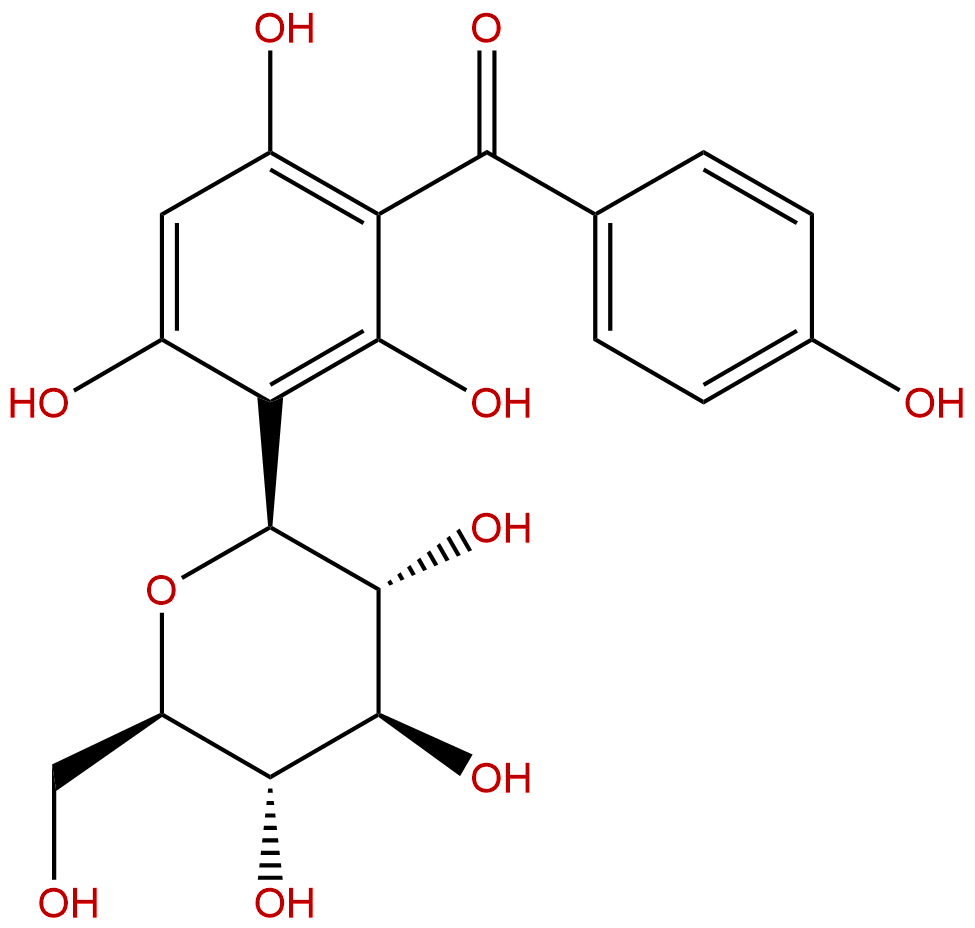
The chemical name of Iriflorenone 3-C-glucoside is Iriflorenone 3-C-glucoside, and its core skeleton is a benzophenone structure, where two benzene rings are connected by a carbonyl group. Specifically, the parent nucleus of the compound is Iriflorenone, which belongs to phenolic ketone compounds characterized by multiple hydroxyl substituents at specific positions of the benzophenone skeleton. In 3-C-glucoside of iridone, a glucose molecule is connected to the third carbon atom of the mother nucleus through a C-C bond (C-glycosidic bond), forming a stable C-glucoside structure.
From the structural analysis, the molecular formula of the compound is C ₁₉ H ₂₀ O ₁₀, with a molecular weight of 408.3590 g/mol. Its structure contains multiple phenolic hydroxyl groups (- OH), which are key functional groups that endow the compound with antioxidant activity. Phenolic hydroxyl groups can neutralize free radicals by providing hydrogen atoms or electrons, thereby blocking free radical chain reactions. In addition, C-glucoside bonds have higher chemical and enzymatic stability compared to O-glucoside bonds, which may be one of the important reasons why this compound can maintain a longer half-life and better bioavailability in vivo.
Physical and chemical property parameters
According to computational chemistry and experimental data, 3-C-glucoside of iridone has the following key physicochemical properties:
Lipid water partition coefficient (LogP): -0.0590. This value indicates that the compound has a slight hydrophilicity, and the distribution between the aqueous and lipid phases tends to be balanced. A lower LogP value suggests that the compound has good solubility in aqueous environments, which is beneficial for distribution in blood and extracellular fluid, but may also limit its ability to passively diffuse through cell membranes.
Topological Polarity Surface Area (TPSA)188.1400 Å ². TPSA is a parameter used to measure the polarity and hydrogen bonding ability of compounds, and it is generally believed that compounds with a TPSA greater than 140 Å ² are difficult to pass through the blood-brain barrier. The TPSA value of 3-C-glucoside of iridone is relatively high, which is related to multiple phenolic hydroxyl and glycosyl groups in its structure. This suggests that the compound may be mainly distributed in the blood and surrounding tissues, and difficult to enter the central nervous system.
Water solubility: 1.9407 (LogS). This value indicates that the compound has moderate to good water solubility, which is consistent with its LogP value. Good water solubility is beneficial for oral absorption and intravenous administration of drugs.
Blood-brain barrier permeability: Low. Combining TPSA and LogP data, the compound has a low ability to cross the blood-brain barrier, which may be advantageous in specific therapeutic scenarios (such as when avoiding central nervous system side effects), but also limits its potential application in the treatment of neurodegenerative diseases.
HERG inhibition: No. HERG potassium channel inhibition is an important indicator of drug cardiac toxicity, and this compound does not inhibit hERG channels, indicating a low risk of cardiac toxicity and a good safety basis.
Ames test 1.2. The Ames test is used to evaluate the mutagenicity of compounds, and this value indicates that 3-C-glucoside of iridone is negative or weakly positive in the Ames test, suggesting a low risk of genetic toxicity.
Based on the above physical and chemical properties, 3-C-glucoside of iridone has good pharmacological characteristics, especially low toxicity and good water solubility, which lays the foundation for its subsequent development.
Plant sources and extraction methods
Plant-based
Irishinone 3-C-glucoside was initially isolated from Cyclopia genistoides. Cyclopia plants belong to the Fabaceae family and are mainly distributed in the Fynbos vegetation area of the Western and Eastern Cape provinces in South Africa. There are about 20 species of plants in this genus, among which Cyclopia genistoides, Cyclopia subternata, and Cyclopia intermedia are the most common species, widely used in the production of honey tree tea.
Honey tree tea has a long history of consumption and medicinal use in South Africa, traditionally used to treat cough, cold, indigestion, skin inflammation, and menopausal symptoms. Modern research has shown that Cyclopia plants are rich in various phenolic compounds, including benzophenones, flavonoids, isoflavones, xanthones, and phenolic acids. Among them, benzophenone compounds such as 3-C-glucoside of irisophenone, irisophenone and its glycoside derivatives are one of the characteristic components of this genus of plants.
It is worth noting that 3-C-glucoside of iridone is not unique to Cyclopia plants, and subsequent studies have also found the presence of this compound in other plants, such as certain Iris and Dracaena plants. However, Cyclopia genistoides remains the most abundant and primary natural source of this compound.
extraction method
The extraction of 3-C-glucoside from iridone is usually carried out using classical natural product chemistry methods, combined with modern extraction techniques to improve efficiency and purity.
Traditional solvent extraction method The most commonly used method is to extract dried plant materials using polar solvents such as water, methanol, ethanol, or their mixed solvents. Due to the presence of multiple phenolic hydroxyl and sugar groups in the compound and its high polarity, highly polar solvent systems (such as 70% -80% methanol aqueous solution or ethanol aqueous solution) typically achieve good extraction efficiency. The extraction process is usually carried out at room temperature or under heating conditions, and the time ranges from several hours to several days. The crude extract is obtained by filtering and concentrating the extract under reduced pressure.
Modern extraction techniques In recent years, researchers have adopted various modern extraction techniques to improve extraction efficiency and reduce solvent consumption. Ultrasonic assisted extraction utilizes the cavitation effect of ultrasound to destroy plant cell walls, promote the release of target compounds, significantly shorten extraction time, and improve yield. Microwave assisted extraction utilizes the penetration and selective heating properties of microwaves to accelerate the penetration of solvents into plant substrates and the dissolution of solutes. In addition, pressurized solvent extraction and supercritical fluid extraction (especially using CO ₂ and polar modifiers) have also been attempted for the extraction of this compound, but their applications are not yet widespread.
Separation and purification Purification of 3-C-glucoside from crude extract of iridone usually requires the combination of multiple chromatographic techniques. Liquid liquid extraction is a commonly used method for preliminary separation, which uses different solvents (such as petroleum ether, ethyl acetate, n-butanol, etc.) to perform graded extraction of crude extracts, and can enrich the target compounds in specific polar regions. Subsequently, further separation was performed using column chromatography, with commonly used stationary phases including silica gel, reverse phase C18 silica gel, Sephadex LH-20, etc. The elution system is usually a mixture of organic solvents and water in different proportions (such as methanol water, acetonitrile water, etc.). For mixtures that are difficult to separate, high-performance liquid chromatography (HPLC) or preparative HPLC are effective means of obtaining high-purity compounds.
Structural Identification The purified compound was structurally confirmed by spectroscopic methods, including ultraviolet spectroscopy (UV), infrared spectroscopy (IR), mass spectrometry (MS), and one-dimensional/two-dimensional nuclear magnetic resonance spectroscopy (NMR, including ¹ H-NMR, ¹ ³ C-NMR, HSQC, HMBC, etc.). Among them, HMBC spectrum is particularly crucial for determining the connection position of C-glycosidic bonds. By observing the remote correlation signal between the sugar end proton and the parent nucleus carbon atom, the connection site of glucose can be identified.
Pharmacological activity research
antioxidant activity
The antioxidant activity is the most prominent and earliest discovered pharmacological activity of 3-C-glucoside of iridone. Multiple in vitro experiments have confirmed that the compound has significant ability to scavenge free radicals.
Chemical antioxidant evaluation In the classic DPPH (1,1-diphenyl-2-trinitrophenylhydrazine) free radical scavenging experiment, irisinone 3-C-glucoside exhibited concentration dependent free radical scavenging activity, with an IC ₅₀ value at the micromolar level, comparable or slightly better than positive controls such as vitamin C or Trolox. In the ABTS ⁺ · radical scavenging experiment, the compound also showed strong antioxidant capacity. In addition, the iron ion reduction ability (FRAP) and oxygen radical absorption ability (ORAC) experiments further confirmed its reduction ability and total antioxidant activity.
Study on antioxidant activity in cell models At the cellular level, 3-C-glucoside of irisinone can effectively protect various cells from oxidative stress damage. For example, in human keratinocytes (HaCaT cells), pre-treatment with this compound can significantly alleviate the decrease in cell viability and lactate dehydrogenase (LDH) release induced by hydrogen peroxide (H ₂ O ₂) or ultraviolet light (UVB), reduce intracellular ROS levels, and inhibit the production of lipid peroxidation product malondialdehyde (MDA). In liver cell (such as HepG2 cells) and endothelial cell (such as HUVEC cells) models, this compound also exhibits protective effects, reducing oxidative stress-induced cell apoptosis and mitochondrial dysfunction.
Other related pharmacological activities
Based on its antioxidant activity, 3-C-glucoside of irisinone has shown potential therapeutic effects in multiple disease models associated with oxidative stress.
Skin protective effect In the skin photoaging model, 3-C-glucoside of irisinone can inhibit the expression and activity of matrix metalloproteinases (MMPs, especially MMP1 and MMP3) induced by UVB, reduce the degradation of collagen, and thus delay the process of skin photoaging. In addition, the compound can inhibit the activity of tyrosinase (TYR) and reduce the production of melanin, indicating its potential application value in whitening and skincare products.
anti-inflammatory activity Oxidative stress is closely related to inflammatory response. Research has shown that 3-C-glucoside of iridone can inhibit the production of pro-inflammatory cytokines (such as TNF - α, IL-6, IL-1 β) and reduce the expression of inducible nitric oxide synthase (iNOS) and cyclooxygenase-2 (COX-2) in a macrophage model stimulated by lipopolysaccharide (LPS). These anti-inflammatory effects may be partially attributed to their antioxidant capacity, but may also involve direct regulation of specific signaling pathways.
Cardiovascular protective effect: In the endothelial cell injury model induced by oxidized low density lipoprotein (ox LDL), ironstone 3-C-glucoside can reduce endothelial dysfunction, inhibit the expression of adhesion molecules, reduce the adhesion of monocytes to endothelial cells, suggesting its potential value in the prevention and treatment of atherosclerosis. In addition, the protective effect of the compound on myocardial cells has also been preliminarily validated in hypoxia/reoxygenation injury models.
Mechanism of action and molecular targets
The pharmacological mechanism of action of 3-C-glucoside of iridone involves multiple levels, including direct clearance of free radicals, regulation of endogenous antioxidant enzyme systems, and modulation of oxidative stress-related signaling pathways.
Directly eliminate free radicals
As a polyphenolic compound, the phenolic hydroxyl group of 3-C-glucoside can directly provide hydrogen atoms or electrons to free radicals, converting them into stable products and terminating the free radical chain reaction. This mechanism is the basis of its antioxidant activity and also the starting point for other biological effects.
Regulating the endogenous antioxidant enzyme system
More importantly, irisinone 3-C-glucoside can upregulate the expression of a series of antioxidant enzymes by activating the nuclear factor E2 related factor 2 (NFE2L2/NRF2) signaling pathway. NRF2 is a key transcription factor for cells to cope with oxidative stress, which normally binds to Kelch like ECH associated protein 1 (KEAP1) and is anchored in the cytoplasm. When cells are subjected to oxidative stimulation or NRF2 activators, NRF2 dissociates from KEAP1 and translocates into the nucleus, binding to antioxidant response elements (ARE) and initiating transcription of downstream target genes.
Irishinone 3-C-glucoside has been shown to promote nuclear translocation of NRF2, thereby upregulating the expression of various antioxidant enzymes, including:
- Superoxide dismutase (SOD1 and SOD2)Catalytic dismutation of superoxide anion radicals into hydrogen peroxide and oxygen.
- Catalase (CAT)Decompose hydrogen peroxide into water and oxygen.
- Glutathione peroxidase 1 (GPX1)Reduce hydrogen peroxide and organic hydroperoxides using glutathione.
- Heme oxygenase 1 (HMOX1)Catalytic degradation of hemoglobin produces biliverdin, carbon monoxide, and iron ions, among which biliverdin and its metabolite bilirubin have antioxidant activity.
By enhancing the expression of these endogenous antioxidant enzymes, 3-C-glucoside of irisinone can improve the overall antioxidant defense ability of cells, thereby more effectively responding to oxidative stress.
Inhibit oxidative stress-related enzymes and signaling pathways
In addition to activating protective pathways, 3-C-glucoside can also inhibit certain enzymes and signaling pathways associated with oxidative damage.
Inhibition of Tyrosinase (TYR)Tyrosinase is a key rate limiting enzyme in melanin synthesis, and its activity is regulated by the redox state. Irishinone 3-C-glucoside can directly inhibit the activity of tyrosinase and reduce the production of melanin. This effect may be related to its chelation of copper ions in the active center of tyrosinase, or it may be achieved by scavenging free radicals generated during the reaction process.
Inhibition of matrix metalloproteinases (MMP1 and MMP3)MMPs are a class of zinc dependent endopeptidases that participate in the degradation and remodeling of extracellular matrix. During the process of skin photoaging, UV radiation-induced oxidative stress can activate the expression of MMPs, leading to the degradation of collagen and elastin. Irishinone 3-C-glucoside can inhibit the expression of MMP1 and MMP3 induced by UVB, which may be achieved by inhibiting the activation of mitogen activated protein kinase (MAPK) pathway and/or nuclear factor kappa B (NF - κ B) pathway.
Multi target synergistic effect
It is worth noting that the biological effects of 3-C-glucoside of iridone are not mediated by a single mechanism, but are achieved through the synergistic action of multiple targets and pathways. Its antioxidant activity includes both immediate effects of directly scavenging free radicals and persistent effects of upregulating antioxidant enzyme expression through activation of the NRF2 pathway. Meanwhile, the inhibitory effect on TYR and MMPs endows them with unique value in skin protection and whitening. This multi-target mode of action is in line with the characteristics of natural products being "multi-component, multi-target", and also represents its potential as a lead compound for drug development.
Evaluation of drug properties and pharmacokinetics
Drugability assessment
Based on the aforementioned physical and chemical properties, 3-C-glucoside of iridone exhibits good pharmacological characteristics.
Analysis of drug properties According to Lipinski's "Rule of Five", the molecular weight of the compound (408.36) is less than 500, the LogP (-0.059) is less than 5, and the number of hydrogen bond donors (phenolic hydroxyl and sugar hydroxyl groups, totaling about 8) and hydrogen bond acceptors (about 10) meet the requirements, but the number of hydrogen bond donors is slightly higher than the threshold of 5. However, considering the specificity of natural products and the stability of C-glycosidic bonds, this deviation is acceptable. In addition, the Veber rule states that compounds with good oral bioavailability typically have lower rotational bond numbers (≤ 10) and lower TPSA (≤ 140 Å ²). The TPSA (188.14 Å ²) of 3-C-glucoside in irisinone is slightly higher than 140 Å ², indicating that its oral absorption may be limited to some extent, but not an absolute obstacle.
safety evaluation A negative hERG inhibition indicates a low risk of cardiac toxicity; The Ames test results indicate a low risk of genetic toxicity. These preliminary security data provide favorable conditions for subsequent development. However, a comprehensive safety evaluation is still needed, including experiments on acute toxicity, subchronic toxicity, reproductive toxicity, and carcinogenicity.
Pharmacokinetic characteristics
At present, there is insufficient research on the in vivo pharmacokinetics of 3-C-glucoside of iridone, but some characteristics can be inferred based on its physicochemical properties and studies of similar compounds.
absorb Due to its moderate molecular weight and good water solubility, this compound may be absorbed by the intestine through passive diffusion or carrier mediated transport. However, its high polarity (low LogP) and high TPSA may limit its transmembrane ability, resulting in low oral bioavailability. In addition, although C-glycosidic bonds are stable to acid hydrolysis, they may be metabolized by the gut microbiota, affecting their absorption and metabolic fate.
distribution This compound is mainly distributed in blood and highly perfused tissues such as the liver and kidneys. Due to the low permeability of the blood-brain barrier, the distribution of the central nervous system is limited. The plasma protein binding rate is not yet clear, but polyphenolic compounds typically have higher protein binding rates.
Metabolism Metabolism may occur in the liver and intestines. The main metabolic pathways may include II phase metabolic reactions such as glucuronidation, sulfation, and methylation. It is worth noting that C-glycosidic bonds typically have resistance to glycosidases in mammalian bodies, so this compound may mainly exist in the form of prototypes or II complexes.
excretion Due to its high polarity, this compound and its metabolites may be mainly excreted in the form of urine through the kidneys, or may be excreted into the intestine through bile, and some may be reabsorbed to form enterohepatic circulation.
Structural modification and optimization
Given the potential limitations of 3-C-glucoside in oral absorption, structural modification of it is an important strategy to enhance its pharmacological properties. Possible modification directions include:
1. Prodrug design Esterification or etherification modification of phenolic hydroxyl groups can improve lipid solubility, promote absorption, and release raw materials through enzymatic interpretation in vivo.
2. Glycosylation modification Changing the type of sugar group (such as galactose, xylose) or connection mode may affect its pharmacokinetic characteristics and biological activity.
3. Mother nucleus modification Introducing other substituents onto the benzophenone nucleus to regulate its physicochemical properties and target selectivity.
Clinical application prospects and prospects
Potential application areas
Based on the pharmacological activity and safety characteristics of 3-C-glucoside of iridone, it has potential clinical application prospects in the following fields:
Skin Health and Beauty This compound has antioxidant, tyrosinase inhibitory, and MMPs inhibitory activities, making it valuable for development in skin whitening, anti-aging, and sunscreen products. It can be developed as a topical preparation, such as cream, gel or essence, to prevent and improve skin photoaging, pigmentation and wrinkles.
Adjuvant therapy for chronic diseases related to oxidative stress: In view of its strong antioxidant and anti-inflammatory activities, 3-C-glucoside of iris ketone can be used as a dietary supplement or auxiliary treatment drug for the prevention and treatment of cardiovascular disease, diabetes complications, non-alcoholic fatty liver disease and other oxidative stress related diseases. By activating the NRF2 pathway and enhancing the body's own antioxidant defense capabilities, it may have a positive impact on disease prevention and progression delay.
Functional foods and beverages Cyclopia plants (honey tree tea) have been used as health drinks themselves, and 3-C-glucoside iridone, as one of its main active ingredients, can be developed as functional food additives or health food ingredients for daily antioxidant health care.
Challenges and Solutions Faced
Despite its promising prospects, the clinical translation of 3-C-glucoside of irisinone still faces several challenges:
The issue of bioavailability As mentioned earlier, oral bioavailability may be low. The solution strategy includes developing new drug delivery systems (such as liposomes, nanoparticles, phospholipid complexes, etc.) to improve absorption, or adopting non oral delivery routes (such as transdermal delivery, nasal delivery, etc.).
In depth elucidation of the mechanism of action Although it is known that this compound can activate the NRF2 pathway, its direct interaction with KEAP1 and the presence of other upstream targets (such as PI3K/Akt, PKC, etc.) still require further investigation. In addition, its selectivity towards multiple targets and whether there are off target effects also need to be systematically evaluated.
Systematic preclinical research Currently, research is mostly focused on in vitro and preliminary in vivo models, lacking systematic pharmacokinetic, pharmacodynamic, and toxicological studies. Standardized preclinical studies are needed, including dose-response relationships in animal models, repeated administration toxicity, reproductive toxicity, etc., to lay the foundation for clinical trials.
Large scale production and quality control Extracting and purifying from natural plants has a high cost and is influenced by plant sources and seasons. In the future, efficient chemical or biological synthesis methods (such as genetically engineered microbial production) need to be developed to ensure a stable supply of compounds. At the same time, establish strict quality control standards to ensure consistency between different batches of products.
Future research directions
- In depth mechanism research Using techniques such as molecular docking and surface plasmon resonance (SPR), elucidate the direct binding mode of the compound with target proteins such as NRF2, KEAP1, TYR, etc; Utilize omics techniques (transcriptomics, proteomics) to comprehensively reveal its functional network.
- Drug delivery system development Design and optimize delivery systems such as nanocarriers, liposomes, and microemulsions to improve their oral bioavailability and targeting.
- Research on Structure Activity Relationship Synthesize a series of structurally similar compounds, systematically study the effects of parent substituents, sugar types, and connection modes on activity and pharmacokinetics, and search for better candidate compounds.
- Combination therapy research Explore the synergistic effects of this compound with other antioxidants (such as vitamin C, vitamin E, glutathione) or clinical drugs in order to achieve better therapeutic outcomes.
- Clinical translational research After completing sufficient preclinical research, conduct small-scale clinical trials, first in the field of skin health (such as whitening, anti-aging) for concept validation, and then gradually expand to other disease areas.
Conclusion
Irishinone 3-C-glucoside, as a natural C-glucosinolate compound isolated from the traditional medicinal plant Cyclopia genistoides in South Africa, has attracted attention for its significant antioxidant activity. This compound not only directly scavenges free radicals, but more importantly, upregulates the expression of various endogenous antioxidant enzymes by activating the NRF2 signaling pathway, while inhibiting the activity of enzymes related to oxidative damage such as tyrosinase and matrix metalloproteinases, exhibiting multi-target and multi-level pharmacological effects.
From the perspective of medicinal properties, this compound has good water solubility, low cardiac toxicity, and low genetic toxicity, providing a safety guarantee for its subsequent development. Although oral bioavailability may face challenges, this issue is expected to be addressed through structural modifications and the development of novel drug delivery systems. In terms of application prospects, 3-C-glucoside of iridone has potential development value in skin health, prevention and treatment of chronic diseases related to oxidative stress, and functional food fields.
However, the road from laboratory discovery to clinical application is still long. In the future, it is necessary to conduct more systematic and in-depth mechanism research, pharmacokinetic research, and toxicological research, and explore efficient synthetic or biological production technologies. With the continuous deepening of research, 3-C-glucoside of irisinone is expected to become a new star in the development of natural antioxidant drugs and contribute to human health. Meanwhile, the study of this compound also provides useful reference and inspiration for the development of other natural C-glycosides.