| Catalog No | Package | Original Price | Price | Inventory | Quantity | Operating |
|---|---|---|---|---|---|---|
| BP4952-5mg | 5mg | $630.00 | Sign in |
|


Storage conditions:Short-term storage at 2~8℃, long-term storage at -20 ~ -80℃
242.1300
-.0267
-.0658
4.1533
.4120
.2159
Low
69.5367
4.6681
Yes
No
No
No
Yes
No
1.2
Yes
No
Yes
Yes
Natural products have always played an irreplaceable role in the history of drug discovery, especially anthraquinone compounds, which have attracted much attention due to their structural diversity and wide range of biological activities. Physcion, as one of the main active ingredients in traditional Chinese medicines such as rhubarb and Polygonum cuspidatum, has been proven to have various pharmacological effects such as diarrhea, anti-inflammatory, and anti-tumor. However, natural anthraquinone compounds often exist in the form of glycosides in plants, and their glycosylation modifications not only affect the physicochemical properties of the compounds, but also profoundly alter their pharmacokinetic characteristics and biological activity spectrum.
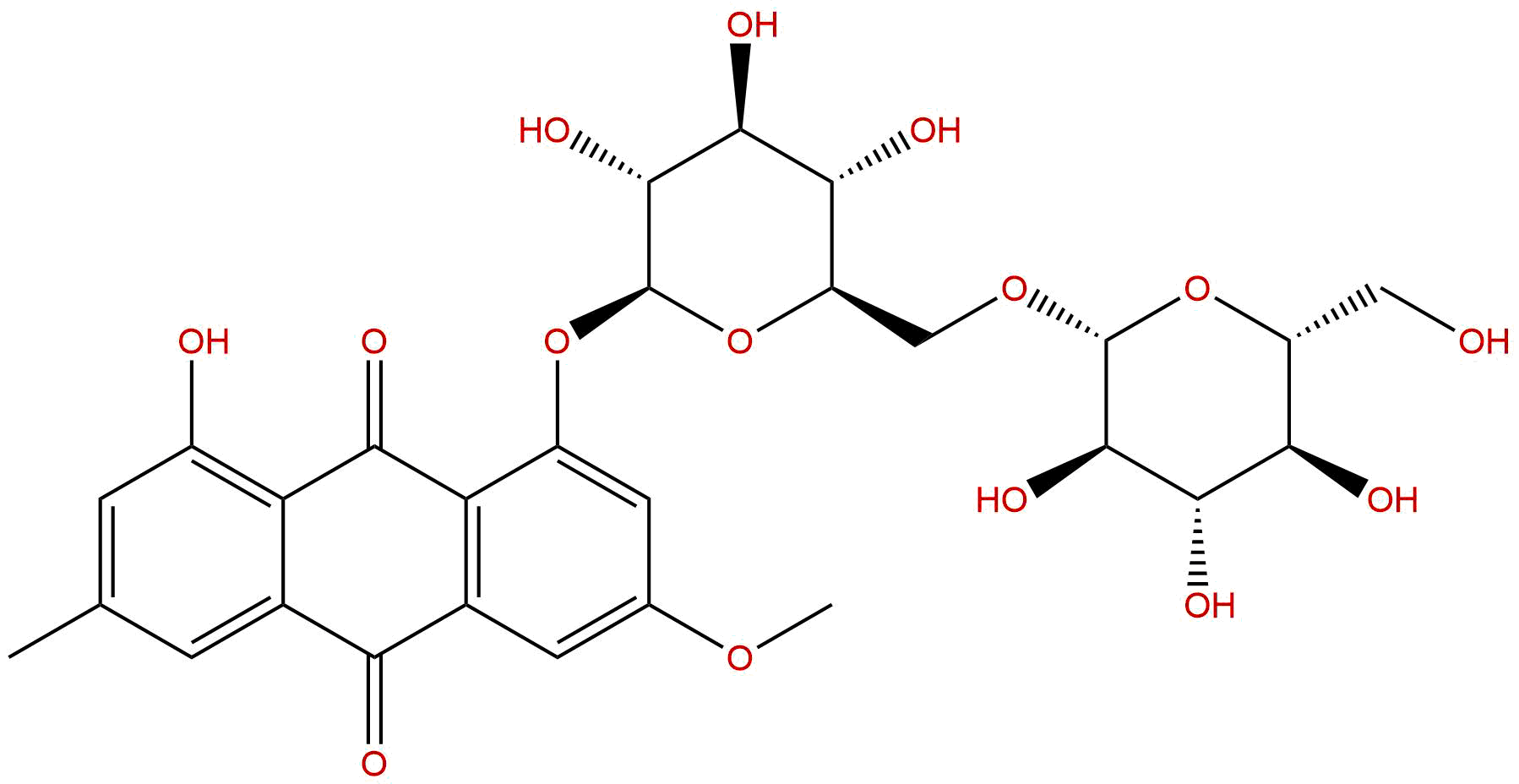
Physcion-8-O - β - gentiobiose (CAS number: 84268-38-2) is a glycoside formed by the 8-hydroxyl group of emodin methyl ether and gentiobiose (β - D-glucopyranosyl - (1 → 6) - β - D-glucopyranosyl). This compound belongs to the disaccharide derivatives of monohydroxyanthraquinone, characterized by a rare β -1,6-linked disaccharide unit in the glycosylation part. This unique glycosylation pattern gives it a special place in the natural anthraquinone glycoside family. From a chemical classification perspective, it belongs to gentian diglycoside, monohydroxyanthraquinone, and disaccharide derivatives, and is closely related in function to emodin methyl ether, but exhibits significantly different biological characteristics due to its glycosylation modification.
In recent years, with the deepening of research on the glycosidic components of natural products, emodin monomethylene-8-O - β - gentiopicroside has gradually attracted the attention of researchers. Especially in terms of its potential application in diarrhea, as well as the molecular mechanism of regulating intestinal water and electrolyte transport related targets (such as SLC5A1, CFTR, AQP3, etc.), it provides new ideas for the development of novel and mild diarrhea drugs. This article will provide a systematic review of the compound from multiple dimensions, including chemical structure, plant origin, pharmacological activity, mechanism of action, pharmacological evaluation, and clinical application prospects, in order to provide reference for subsequent research and development.
The chemical structure of emodin monomethylene-8-O - β - gentiopicroside consists of a glycoside moiety and a glycosyl moiety. The aglycone is emodin methyl ether (1,8-dihydroxy-3-methoxy-6-methylanthraquinone), and its parent nucleus is an anthraquinone structure with a typical 9,10-anthraquinone diketone skeleton. There is a hydroxyl group at positions 1 and 8 of the anthraquinone ring, a methoxy group at position 3, and a methyl group at position 6. It is worth noting that the hydroxyl group at position 8 forms an O-glycosidic bond with gentian disaccharide, which is a key structural feature of this compound.
Gentian disaccharide is a disaccharide composed of two molecules of D-glucose linked by a β -1,6-glycosidic bond. Unlike the more common β -1,4-linked cellobiose or β -1,2-linked sophorose, β-1, The 6-linkage endows gentian disaccharides with unique spatial conformation and chemical properties. This connection method gives the disaccharide chain greater flexibility and rotational freedom, which may affect the interaction mode between glycosides and biological targets.
From the perspective of stereochemistry, the glycosidic bond is in the β - configuration, where the 8th hydroxyl group of the aglycone is connected to the anomeric carbon of gentian disaccharide through a β - glycosidic bond. This configuration determines the sensitivity of the compound to β - glucosidase and also affects its metabolic fate in vivo.
According to computational chemical analysis, the key physicochemical parameters of Emodin Methyl Ether 8-O - β - Gentianacide are as follows:
molecular weight 608.5490 Da. This molecular weight is in the transition zone between small and medium molecules of natural products, slightly higher than traditional small molecule drugs (usually<500 Da), but still within the acceptable range for oral medication.
Lipid water partition coefficient (LogP): -0.0267. This nearly zero LogP value indicates that the compound has an almost balanced hydrophilicity lipophilicity. Compared with aglycone emodin methyl ether (LogP of approximately 2.5-3.0), glycosylation significantly reduces the lipophilicity of the compound, making it more prone to distribution in aqueous environments. This characteristic is particularly advantageous for drugs with local effects in the intestine, such as laxatives, as they are not easily absorbed by intestinal epithelial cells and can maintain high local concentrations in the intestinal lumen.
Polarized surface area (TPSA)242.1300 Å ². This value is much higher than the recommended upper limit of TPSA for oral medications (140 Å ²), mainly due to the large number of hydroxyl groups in the sugar moiety. A high TPSA value means that the compound is difficult to passively diffuse through the cell membrane, and its transmembrane transport may mainly rely on active transport mediated by transport proteins or cell bypass pathways.
Water solubility 4.1533 (predicted value, unit may be mg/mL or logS). Combining LogP and TPSA data, the compound exhibits good water solubility, which is consistent with its polyhydroxyglycoside structure. Good water solubility is beneficial for formulation development and intestinal administration.
Blood-brain barrier penetrability: Low. The combination of high TPSA and low LogP determines that the compound is difficult to penetrate the blood-brain barrier, which to some extent reduces the risk of central nervous system toxicity and is a beneficial characteristic for laxative drugs targeting the gut.
HERG inhibition: No. HERG potassium channel inhibition is an important predictor of drug cardiac toxicity. This compound is predicted to have no hERG inhibitory effect, indicating a low risk of cardiac safety.
Ames test 1.2 (may be a predictive value for mutagenicity, usually<2.0 is considered negative). This result suggests that the compound may not have significant genetic toxicity, but further experimental verification is needed.
Emodin methyl ether 8-O - β - gentiopicroside is mainly found in Polygonaceae plants, especially in the Rheum genus(Rheum)And the Tiger Staff genus(Polygonum)Plants. Plants reported to contain this compound include:
Palm leaf rhubarb(Rheum palmatum)As one of the authentic rhubarb products included in the Chinese Pharmacopoeia, the rhizome of Rheum palmatum contains abundant anthraquinone compounds, including various glycoside derivatives of emodin methyl ether.
Tanggu Extra Large Yellow(Rheum tanguticum)Also known as chicken claw rhubarb, it is another important medicinal variety of rhubarb, and its anthraquinone glycoside composition is similar to that of palmar rhubarb.
Medicinal rhubarb(Rheum officinale)Also included in the pharmacopoeia, this compound is also present in the roots and rhizomes.
Tiger Staff(Polygonum cuspidatum Now renamed as Reynoutria japonica)The rhizome of Polygonum cuspidatum is another important source of anthraquinone compounds. In addition to glycosides such as emodin and emodin, it also contains various glycoside derivatives.
Other plants Some Rhamnaceae plants, such as the Rhamnaceae genus(Rhamnus)This compound may also exist in certain species and Fabaceae plants.
It is worth noting that the content of this compound in plants is usually low, and it often coexists with other glycosides of emodin methyl ether (such as 8-O - β - D-glucoside), which increases the difficulty of separation and purification.
Solvent extraction method Based on the moderate polarity characteristics of the compound, commonly used extraction solvents include methanol, ethanol, or their aqueous solutions. Usually, cold soaking or reflux extraction methods are used, using 70% -80% ethanol aqueous solution as the solvent, with a solid-liquid ratio of 1:10-1:20, extraction temperature of 60-80 ° C, extraction time of 1-3 hours, and repeated extraction 2-3 times. Due to the heat sensitivity of glycosides, the temperature should not be too high and the time should not be too long to avoid hydrolysis of glycosidic bonds.
Ultrasound assisted extraction Ultrasound technology can significantly improve extraction efficiency and shorten extraction time. At 40-60 ° C, ultrasound power of 200-500W, extraction for 30-60 minutes can achieve extraction rates comparable to traditional reflux extraction.
Microwave assisted extraction Microwave extraction utilizes the rapid vibration of polar molecules in a microwave field to achieve efficient extraction, especially suitable for glycosides with high polarity. However, attention should be paid to controlling the microwave power and time to prevent local overheating from causing compound degradation.
Macroporous adsorption resin chromatography One of the most commonly used methods for separating anthraquinone glycosides. The crude extract is loaded onto D101, HPD100, or AB-8 macroporous resins. Strong polar impurities such as polysaccharides and proteins are removed by washing with water, followed by gradient elution with ethanol water solutions of different concentrations (20% -80%). The target compound is usually enriched in the 40% -60% ethanol elution site.
Silica gel column chromatography Use solvent systems such as chloroform methanol water (8:2:0.1 to 6:4:0.5) or ethyl acetate methanol water for gradient elution. Due to the high polarity of glycosides, a small amount of water or acid (such as formic acid) needs to be added to the mobile phase to improve separation efficiency.
High performance liquid chromatography (HPLC)Preparation HPLC is the ultimate method for obtaining high-purity samples. The commonly used C18 reverse phase column uses acetonitrile water or methanol water as the mobile phase, and 0.1% formic acid or ammonium acetate can be added to improve the peak shape. The detection wavelength is usually selected as 254 nm or 280 nm (characteristic absorption of anthraquinone parent nucleus).
High Speed Counter Current Chromatography (HSCCC)As a liquid-liquid distribution chromatography technique, HSCCC is particularly suitable for the separation of glycoside compounds, which can avoid irreversible adsorption of samples on the stationary phase. The solvent system can choose ethyl acetate n-butanol water (2:1:3), etc.
The laxative effect is the most concerned pharmacological activity of emodin monomethylene-8-O - β - gentiopicroside. Traditionally, the laxative effect of rhubarb is mainly attributed to anthraquinone glycosides (such as emodin and rhein), but increasing evidence suggests that anthraquinone glycosides play a more important role in laxative action.
Compared with aglycones, anthraquinone in glycoside form has the following characteristics: ① better water solubility and can be evenly distributed in the intestine; ② Not easily absorbed by the small intestine, but can reach the large intestine to exert its effect; ③ It can be metabolized by gut microbiota, slowly releasing active aglycones and producing a mild and long-lasting diarrhea effect. Research has shown that the strength of the laxative effect of emodin methyl ether -8-O - β - gentiopicroside may be lower than that of emodin methyl ether aglycone, but the effect is milder and less irritating, which is in line with the development trend of modern laxative drugs pursuing "mild and effective".
In addition to its laxative effect, based on the commonality of anthraquinone compounds, this compound may have the following activities:
anti-inflammatory activity Anthraquinone compounds typically have the ability to inhibit the release of inflammatory mediators such as TNF - α, IL-6, IL-1 β. Glycosylation modification may alter the strength and selectivity of its anti-inflammatory activity.
antioxidant activity The phenolic hydroxyl group in the anthraquinone nucleus has the ability to scavenge free radicals. Although the sugar moiety does not directly participate in antioxidant activity, it can improve the water solubility and bioavailability of compounds.
Antibacterial activity Emodin methyl ether and its derivatives have inhibitory effects on various Gram positive and Gram negative bacteria. Glycoside forms may affect the antibacterial spectrum by altering cell membrane permeability.
Antitumor activity Some anthraquinone glycosides exhibit inhibitory effects on the proliferation of specific cancer cells, which may be related to inducing apoptosis, inhibiting angiogenesis, and other mechanisms.
It should be pointed out that there are currently few direct research reports on the above-mentioned activities of this compound, and most conclusions are based on extrapolation from similar compounds, which still requires systematic experimental verification.
The laxative effect of emodin monomethylene-8-O - β - gentiopicroside involves multiple molecular targets and signaling pathways, mainly focusing on the regulation of intestinal water and electrolyte transport. The following targets have been confirmed or predicted to be involved in its mechanism of action:
SLC5A1 (Sodium Glucose Co Transporter 1)SLC5A1 is a key protein on the apical membrane of intestinal epithelial cells responsible for active transport of glucose and sodium ions. This compound may increase intestinal osmotic pressure and promote water secretion into the intestine by inhibiting the function of SLC5A1, reducing the absorption of sodium ions and glucose.
CFTR (cystic fibrosis transmembrane conductance regulator)CFTR is a cAMP regulated chloride ion channel that plays a central role in chloride ion secretion in intestinal epithelial cells. Research has shown that anthraquinone compounds can activate CFTR, increase chloride ion secretion, and drive passive secretion of sodium ions and water, resulting in a diarrhea effect. This compound may achieve this effect by upregulating cAMP levels or directly activating CFTR channels.
AQP3 (aquaporin 3)AQP3 is one of the main aquaporins expressed in intestinal epithelial cells, responsible for the transmembrane transport of water. This compound may increase fecal water content by downregulating the expression of AQP3 or inhibiting its function, reducing intestinal reabsorption of water.
KCNJ13 (inward rectifying potassium channel Kir7.1)This potassium channel is involved in maintaining the membrane potential of intestinal epithelial cells, indirectly affecting ion transport. This compound may affect the function of other ion channels and transporters by modulating the activity of KCNJ13, altering the electrochemical gradient of cells.
SLC12A2 (Na-K-2Cl cotransporter 1, NKCC1)NKCC1 is a key transporter protein on the basal lateral membrane of intestinal epithelial cells, responsible for transporting sodium, potassium, and chloride ions into cells and providing substrates for chloride ion secretion in the apical membrane. This compound may reduce chloride ion secretion by inhibiting NKCC1, but its exact role in diarrhea still needs further investigation.
KCNMA1 (Large Conductivity Calcium Activated Potassium Channel, BK Channel)BK channels play an important role in regulating cellular calcium signaling and membrane potential. This compound may activate BK channels, causing cell hyperpolarization, affecting calcium ion influx and subsequent secretion reactions.
SCNN1B (epithelial sodium channel beta subunit, ENaC)ENaC is a key channel responsible for sodium ion reabsorption on the apical membrane of intestinal epithelial cells. This compound may indirectly promote water retention in the intestinal lumen by inhibiting ENaC and reducing sodium ion reabsorption.
The above targets do not function independently, but form a complex regulatory network. This compound may comprehensively regulate intestinal water and electrolyte balance through a synergistic mode of "multi-target, multi pathway": on the one hand, it inhibits the absorption of sodium ions and water (through SLC5A1, AQP3, ENaC), on the other hand, it promotes the secretion of chloride ions and water (through CFTR, NKCC1), while maintaining ion balance through potassium channels (KCNJ13, KCNMA1). This multi-target mode of action may explain its mild and effective laxative properties, as well as lower risk of side effects compared to traditional stimulant laxatives such as senna glycosides.
It is worth noting that anthraquinone glycosides may be metabolized by the gut microbiota. The β - glucosidase produced by intestinal bacteria can hydrolyze glycosidic bonds, releasing the aglycone emodin methyl ether. Therefore, the in vivo action of this compound may be a combined effect of the prototype drug and metabolites. This "prodrug" characteristic gives it sustained release and localization properties, which is beneficial for achieving colon targeted drug delivery.
Based on the aforementioned physicochemical parameters, the medicinal properties of this compound have the following characteristics:
Advantage:
-Good water solubility, beneficial for formulation development
-Low blood-brain barrier penetration, reducing the risk of central toxicity
-No hERG inhibition, good cardiac safety
-Predict no genetic toxicity
-Multi targeted mechanism of action may have a better balance between efficacy and safety
challenge:
-The molecular weight is relatively large (608.5 Da), which may affect oral absorption
-High TPSA (242 Å ²), poor passive diffusion ability
-LogP is close to zero, with insufficient lipid solubility, which may affect cell membrane penetration
-The chemical stability of glycosidic bonds may be influenced by gastrointestinal pH and enzymes
absorb After oral administration, the absorption of this compound in the small intestine may be limited, mainly due to its high polarity and large molecular weight limiting passive diffusion. Partial absorption may be achieved through active transport mediated by sugar transporters (such as SGLT1) on intestinal epithelial cells. The unabsorbed portion will reach the colon, exerting local effects or being metabolized by the microbiota.
distribution Due to its high polarity and low fat solubility, the distribution volume of this compound may be small, mainly distributed in extracellular fluid and intestinal tissue. The plasma protein binding rate is not yet clear, but based on structural speculation, it may be lower.
Metabolism Metabolism mainly occurs in the intestine and liver. The β - glucosidase of gut microbiota can gradually hydrolyze glycosidic bonds, first producing emodin monomethyl-8-O - β - D-glucoside, and finally releasing emodin monomethyl ether aglycone. Phase II metabolic enzymes in the liver, such as UDP glucuronosyltransferase, may glucuronide glycosides and promote excretion.
excretion The prototype drug and its metabolites are mainly excreted through feces, with a small amount excreted through urine. Due to the characteristics of local intestinal action, fecal excretion may be the main pathway.
Compared with emodin methyl ether glycoside, this glycoside has the following pharmacokinetic advantages:
-Longer intestinal retention time is beneficial for local effects
-Lower systemic exposure and reduced systemic toxicity
-Gentler intensity of action, reducing irritability
-More controllable metabolic release, achieving sustained release effect
Functional constipation is a common digestive system disease that affects a significant proportion of the global population. The commonly used laxatives in clinical practice include volumetric laxatives, osmotic laxatives, stimulant laxatives, and prokinetic laxatives. Among them, although stimulant laxatives (such as senoside and bisaconitine) have definite effects, long-term use may lead to adverse reactions such as intestinal melanosis, electrolyte imbalance, and drug dependence.
Emodin methyl ether 8-O - β - gentiopicroside, as a natural anthraquinone glycoside, has a mild laxative effect and multi-target mechanism, making it an ideal candidate for developing novel laxative drugs. Compared with traditional stimulant laxatives, its advantages lie in:
-Mild in effect, with minimal irritation
-Multi target synergy, less likely to develop tolerance
-Local intestinal effects, low systemic exposure
-Natural source, relatively safe
The following formulation strategies can be considered for the pharmaceutical challenge of this compound:
Prodrug design By chemically modifying the sugar moiety, lipid solubility is improved and oral absorption is enhanced. For example, acetylation of glycosyl hydroxyl groups can release the prototype drug under the action of intestinal enzymes.
Colon targeted delivery Using pH sensitive or time-dependent coating materials to achieve colon specific release, maximizing local effects and reducing systemic exposure.
nano-formulation Preparation of liposomes, polymer nanoparticles, or solid lipid nanoparticles to improve bioavailability and achieve sustained release effects.
Compound preparation When used in combination with osmotic laxatives (such as polyethylene glycol) or prebiotics, it exerts a synergistic effect and reduces the dosage of single drugs.
Despite its broad prospects, the research and development of this compound still face many challenges:
Pharmacodynamic validation At present, there is a lack of systematic in vitro and in vivo pharmacological research, and it is necessary to establish suitable animal models (such as constipation models) to verify their laxative effects and compare them with existing drugs.
toxicological evaluation Although the predicted safety is good, systematic acute toxicity, long-term toxicity, and reproductive toxicity studies are still needed, especially to evaluate the effects of long-term use on gut microbiota and intestinal mucosa.
Pharmacokinetic study A sensitive LC-MS/MS analysis method needs to be established to conduct absorption, distribution, metabolism, and excretion studies after oral administration, and to clarify the contributions of prototype drugs and metabolites.
mechanism research Using gene knockout animals or specific inhibitors, verify the specific contributions of each target in diarrhea and elucidate the molecular mechanism of multi-target synergy.
structural optimization Based on structure-activity relationship research, modify the sugar moiety to search for derivatives with stronger activity and higher selectivity.
clinical translation After completing preclinical studies, conduct clinical trials to evaluate its efficacy and safety in patients with functional constipation.
Emodin methyl ether 8-O - β - gentiopicroside, as a natural anthraquinone glycoside, has shown significant value in the field of natural product drug development due to its unique chemical structure and potential pharmacological activity. Its molecular mechanism of exerting mild laxative effects by regulating intestinal water and electrolyte transport related targets (SLC5A1, CFTR, AQP3, KCNJ13, SLC12A2, KCNMA1, SCNN1B) provides new ideas for the development of novel and safe laxative drugs.
From a chemical perspective, the gentian disaccharide group of this compound not only endows it with unique physicochemical properties (good water solubility, low fat solubility, high polar surface area), but also determines its special pharmacokinetic characteristics (intestinal local action, low systemic exposure, microbiota mediated metabolic release). These characteristics make it potentially safer than traditional stimulant laxatives while maintaining its laxative efficacy.
However, the road from laboratory research to clinical application is still long. Currently, our understanding of this compound is mainly based on chemical analysis and computer prediction, and systematic pharmacological, toxicological, and pharmacokinetic research is yet to be carried out. Future research needs to focus on confirming its in vitro and in vivo efficacy, elucidating multi-target mechanisms of action, evaluating long-term drug safety, and optimizing formulation processes to improve bioavailability.
Today, with the increasingly popular concepts of "returning to nature" and "green medicine", discovering and developing natural product drugs with clear mechanisms of action and good safety from traditional Chinese medicine has become an important direction for new drug research and development. Emodin methyl ether 8-O - β - gentiopicroside, as a representative compound in this field, deserves continuous attention and in-depth exploration by researchers. I believe that with the continuous deepening of research, this natural anthraquinone glycoside is expected to provide new options for the treatment of functional constipation and other diseases, and contribute to the cause of human health.
Batch can search by a CAS number,one per line
