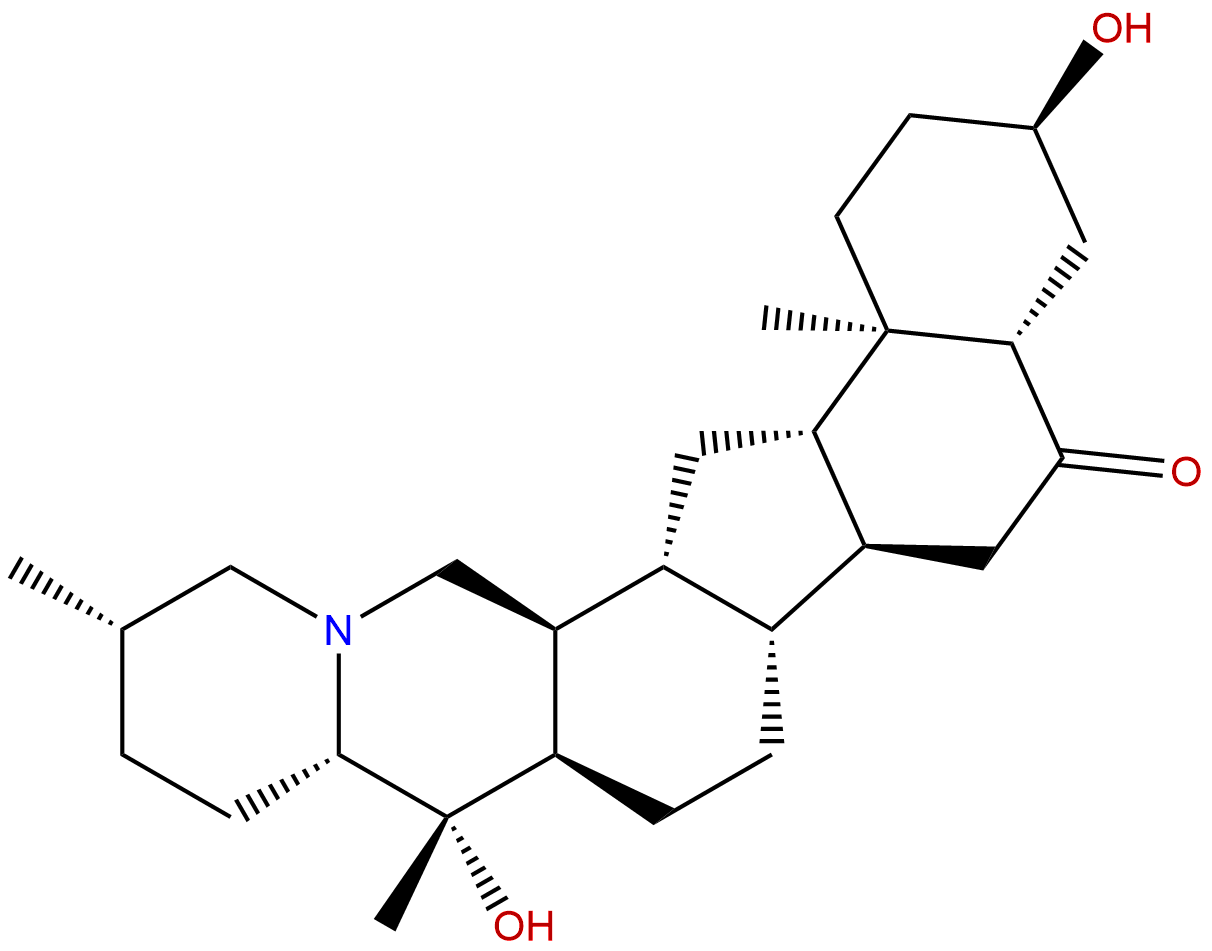


Product name: Yubeinine
Synonym name:
Catalogue No.: BP3425
Cas No.: 157478-01-8
Formula: C27H43NO3
Mol Weight: 429.645
Botanical Source:
Physical Description:
Type of Compound: Alkaloids
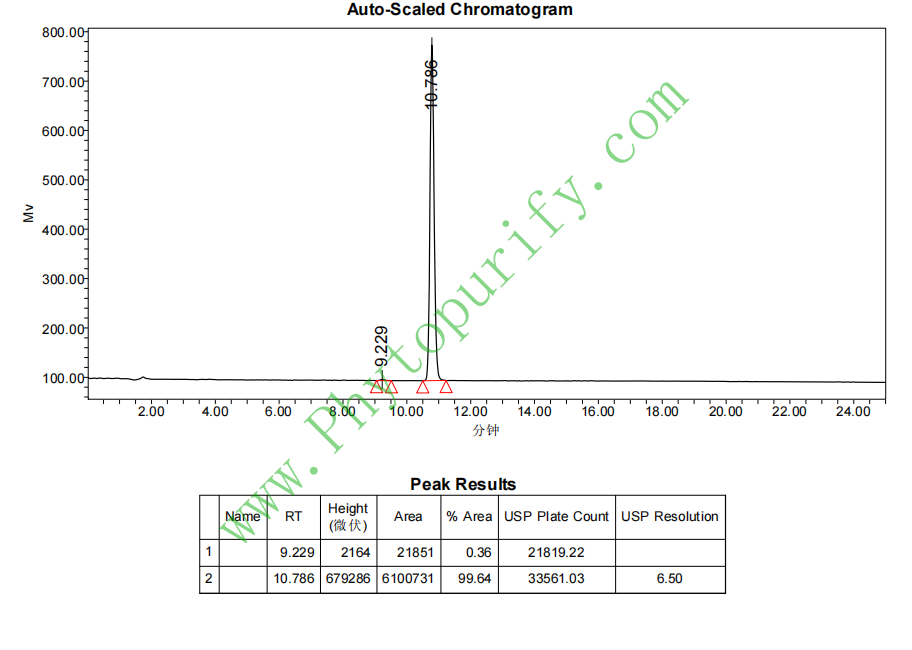
Purity: 95%~99%
Analysis Method: HPLC-DAD or/and HPLC-ELSD
Identification Method: Mass, NMR
Packing: Brown vial or HDPE plastic bottle
The product could be supplied from milligrams to grams. Inquire for bulk scale.
We provide solution to improve the water-solubility of compounds, thereby facilitating the variety of activity tests and clinic uses.
For Reference Standard and R&D, Not for Human Use Directly.
HPLC of Yubeinine
Storage conditions:Short-term storage at 2~8℃, long-term storage at -20 ~ -80℃
60.7700
3.3142
2.3222
.0837
3.3015
10.2278
High
68.8269
5.0115
No
No
No
No
No
No
0.0
No
No
No
No
Natural products have always been an important source of innovative drug discovery, among which alkaloid compounds have attracted much attention due to their structural diversity and significant biological activity. Yubeinine (CAS number: 157478-01-8), as a alkaloid with tracheal relaxation properties, has gradually entered the field of pharmacological researchers in recent years. Its preliminary pharmacological activity suggests that it has potential therapeutic value in respiratory diseases, especially those related to airway hyperresponsiveness and inflammation (such as asthma, chronic obstructive pulmonary disease). More importantly, subsequent studies have revealed the regulatory effects of Yubeijia on multiple key inflammatory targets and signaling pathways, making its anti-inflammatory pharmacological activity a new research hotspot. Inflammation is a common pathological basis for many chronic diseases, such as autoimmune diseases, neurodegenerative diseases, metabolic syndrome, and cancer. Therefore, exploring natural small molecules with multi-target anti-inflammatory activity has important scientific significance and application prospects. This article aims to systematically review the chemical properties, plant sources, pharmacological activities, especially its anti-inflammatory effects and complex molecular mechanisms of Yubeijia, and provide a preliminary evaluation of its pharmacological properties, in order to provide comprehensive academic references for the in-depth research and development of this compound.
Yubeisu is a complex alkaloid with a molecular weight of 429.6450. Its specific chemical structure belongs to the derivatives of isoquinoline or other complex cyclic alkaloids (the specific parent nucleus structure needs to be determined based on further spectral and crystallographic data, but its structure can be inferred to be more complex based on its alkaloid properties and molecular weight). Its LogP value is 3.3142, indicating that the compound has moderate to high lipophilicity, which facilitates its penetration of cell membranes and interaction with intracellular targets, but may also affect its water solubility and formulation development. Its topological polar surface area (TPSA) is 60.7700 Å ², which is relatively low, further confirming its good membrane permeability. The water solubility value is 0.0837, indicating that Yubeijia Su has poor solubility in water and belongs to a poorly soluble compound. This is a key consideration in the design of subsequent drug delivery systems.
In terms of key preliminary parameters for drug efficacy, Yubeijia Su exhibits some advantageous properties. Its blood-brain barrier (BBB) permeability is predicted to be "high", indicating that it may have central nervous system activity, which provides a theoretical basis for its application in the study of neuroinflammatory related diseases such as Alzheimer's disease, Parkinson's disease, and neuropathic pain. In addition, the hERG inhibitory prediction is' no ', which is a very positive signal indicating that Yubeijia may not have a significant risk of cardiac toxicity at conventional doses, reducing its potential risk of inducing fatal arrhythmias such as apical torsion ventricular tachycardia. The Ames test predicted a value of 0.0, indicating that it may not have direct genetic toxicity and has a promising safety outlook. These physicochemical and preliminary ADMET (absorption, distribution, metabolism, excretion, and toxicity) properties lay the foundation for its subsequent development.
Yubei Jia Su mainly comes from specific plant species, and its name "Yubei" is likely to refer to its original plant genus or species name, such as possibly derived from Yubei Belonging to or specific Fritillaria species(Fritillaria)Plants. Traditionally, the bulbs of many Fritillaria plants have been used in traditional Chinese medicine to treat cough, asthma, and bronchitis, which is highly consistent with the tracheal relaxation effect of berberine. Therefore, Yubeijia is likely to be one of the active ingredients isolated from such medicinal plants.
Its extraction and separation usually follow the standard process of natural product chemistry. Firstly, dry plant materials (such as bulbs, roots, or whole plants) are crushed and subjected to extraction or reflux extraction using appropriate organic solvents (such as methanol, ethanol, or chloroform methanol mixture) to maximize the extraction of lipid soluble components, including alkaloids. Due to the fact that alkaloids often exist in the form of salts, the extraction process is sometimes supplemented with acidic or alkaline water treatment, known as the "acid extraction alkali precipitation" method: first soak the alkaloids in dilute acidic water to dissolve them into salts, and then alkalize the filtrate to precipitate free alkaloids. After obtaining the total alkaloid extract, it needs to be purified through a series of chromatographic separation techniques, such as silica gel column chromatography, reverse phase column chromatography (such as ODS), high performance liquid chromatography (HPLC), etc. Thin layer chromatography (TLC) or liquid chromatography-mass spectrometry (LC-MS) are often used for tracking and identification during the separation process. The planar and stereochemical structures were ultimately determined using techniques such as nuclear magnetic resonance (NMR), mass spectrometry (MS), and X-ray single crystal diffraction. Optimizing the extraction process, such as using modern technologies such as ultrasound assisted extraction, microwave-assisted extraction, or supercritical fluid extraction, can help improve the yield and purity of berberine.
The pharmacological activity research of Yubeijia initially focused on its respiratory system effects and gradually expanded to a wide range of anti-inflammatory and related fields.
Tracheal relaxation effect This is the core activity of Yubeijia Su that was first reported. In ex vivo tracheal smooth muscle experiments (such as guinea pig or rat tracheal ring experiments), Yubeijia can dose dependently antagonize tracheal contractions induced by histamine, acetylcholine, or potassium chloride, exhibiting a non selective smooth muscle relaxation effect. Its strength of action may be superior or similar to some classic bronchodilators, indicating its potential as an anti asthmatic drug.
anti-inflammatory activity This is the deepening and expansion of pharmacological research on Yubeijia su. Yubeijia has shown significant anti-inflammatory effects in various animal models of acute and chronic inflammation.
Analgesic activity Inflammation is closely related to pain. Given the potential effects of Yubei Jia Su on TRPV1 and TRPA1 (both important pain receptors and involved in the inflammatory process), it may have analgesic effects in inflammatory and neuropathic pain models, which requires experimental confirmation.
Potential other activities Based on the diversity of its targets, Yubeijia may also have activities that regulate immunity, resist oxidative stress, and even affect cell proliferation and apoptosis (through targets such as STAT3 and CASP1), which constitute the extension direction of its future research.
The pharmacological effects of Yubeijia, especially its strong anti-inflammatory activity, stem from its multidimensional and networked regulation of multiple inflammation related signaling pathways and molecular targets. Its known and potential targets form a complex network of interactions:
Inhibiting the classical pro-inflammatory signaling pathway:
Regulating inflammasome activity CASP1 (Caspase-1) is a key effector protein activated by inflammasomes such as NLRP3 inflammasome, responsible for cleaving pro-IL-1 β and pro-IL-18 into their active forms. The inhibition of yubei A on CASP1 can directly reduce the maturation and release of IL-1 β and IL-18, which provides a new idea for the treatment of diseases related to excessive activation of inflammatory bodies (such as gout, type 2 diabetes, Alzheimer's disease).
Affects pain and neurogenic inflammation:
Regulating the metabolism of eicosanoids PTGS1 (cyclooxygenase-1, COX-1) is the rate limiting enzyme for the synthesis of inflammatory mediators such as prostaglandins. The inhibition of PTGS1 by Yubeijia can reduce the production of prostaglandins (such as PGE2), thereby exerting anti-inflammatory, antipyretic, and analgesic effects. Unlike selective COX-2 inhibitors, inhibition of COX-1 also suggests that it may affect physiological processes such as platelet function.
Directly antagonize key pro-inflammatory factors The inhibition of TNF (tumor necrosis factor - α) production is a direct manifestation of the anti-inflammatory effect of Yubeijia. TNF is an early and core cytokine in the inflammatory cascade response, and inhibiting its production or activity is an effective strategy for treating diseases such as rheumatoid arthritis and inflammatory bowel disease.
In summary, Yubeijia Su forms a multi-target synergistic anti-inflammatory network by simultaneously acting on multiple key nodes of the inflammatory response (transcription factors, proteases, ion channels, enzymes), which may be the molecular basis for its efficient anti-inflammatory and potential reduction of drug resistance.
Based on the given calculation parameters and pharmacological properties, a preliminary evaluation of the pharmacological properties of Yubeijia Su is conducted
Yubeijia Su has demonstrated various clinical application potentials, with broad development prospects but also facing challenges.
Potential application areas:
1. Respiratory system diseases As a tracheal relaxant and potent anti-inflammatory agent, Yubei Jia Su is a potential candidate drug for the treatment of asthma and chronic obstructive pulmonary disease (COPD), which may be developed in the form of inhalation or oral formulations, with dual effects of rapid symptom relief and long-term inflammation control.
2. pain management In particular, inflammatory pain (such as arthritis pain) and neuropathic pain (such as diabetes peripheral neuralgia, chemotherapy induced neuralgia) can achieve multi mechanism analgesia by acting on TRPV1/TRPA1 and inflammatory pathways.
3. Neurodegenerative diseases Its high BBB permeability and anti neuroinflammatory activity (inhibition of STAT3, NF - κ B, inflammasome) make it of exploratory value in the treatment of Alzheimer's disease, Parkinson's disease, and multiple sclerosis.
4. Autoimmune and inflammatory diseases For diseases such as rheumatoid arthritis, inflammatory bowel disease, psoriasis, etc., their multi-target anti-inflammatory properties may provide new treatment options.
5. Other Inhibition of NOS2 may be beneficial for septic shock; Inhibition of STAT3 may also have potential applications in tumor immunity and cancer-related inflammation.
Challenges faced and future research directions:
1. structural optimization Chemical modification based on its parent nucleus structure can improve water solubility, metabolic stability, or target selectivity while maintaining or enhancing activity, reducing potential toxicity.
2. Formulation development Overcome the problem of low water solubility and develop efficient delivery systems suitable for different routes of administration (oral, inhalation, injection, transdermal).
3. Deep analysis of mechanism More biochemical and cell biology experiments (such as eutectic structure, surface plasmon resonance, gene knockout/knockdown techniques) are needed to accurately verify its direct interactions, binding sites, and affinity with various targets, and clarify the synergistic or secondary relationships between its multiple targets.
4. System efficacy and PK/PD research Validate its overall efficacy in complex animal models closer to human diseases and establish its pharmacokinetic pharmacodynamic (PK/PD) model to guide clinical administration.
5. Preclinical and clinical research After completing the GLP toxicology study of the system, gradually advance clinical trials to verify its safety, tolerability, and efficacy in humans.
Yubeijia, as a natural plant derived alkaloid, has been shown to exert extensive anti-inflammatory effects by regulating key targets such as IL-6/STAT3, NF - κ B, inflammasomes, TRP channels, and COX-1, from its initial discovery of tracheal relaxation to its current discovery. Its research process reflects the typical pathway of natural product drug discovery, from phenotypic activity to deep exploration of molecular mechanisms. Its good blood-brain barrier permeability, absence of hERG inhibition, and preliminary prediction of genotoxicity provide positive signals for its drug development. Although further exploration is needed in terms of solubility, specific metabolism, and overall toxicity, Yubeijia is undoubtedly a highly valuable lead compound for development. It is not only a potential new drug for treating respiratory diseases such as asthma and COPD, but also provides new molecular tools and candidate drugs for the treatment of major diseases such as neuroinflammation, autoimmune diseases, and chronic pain due to its multi-target anti-inflammatory properties. In the future, through interdisciplinary collaboration and the combination of medicinal chemistry, pharmacy, pharmacology, and clinical medicine, Yubeijia Su is expected to move from the laboratory to clinical practice, contributing its unique value to the cause of human health.
