

Storage conditions:Short-term storage at 2~8℃, long-term storage at -20 ~ -80℃
72.7200
2.5179
1.0461
1.6210
1.1329
4.7021
Low
71.0220
2.6062
No
Yes
No
No
No
No
0.0
No
No
No
No
Dobutamine hydrochloride (CAS number: 49745-95-1) is a synthetic catecholamine drug widely used in the treatment of cardiovascular diseases, especially in acute heart failure and postoperative support. As a selective β 1-adrenergic receptor (β 1-AR) agonist, dobutamine hydrochloride can significantly enhance myocardial contractility, increase cardiac output, and improve hypoperfusion and tissue ischemia. Its effects on α 1-AR and β 2-AR are relatively weak, giving it better cardiac selectivity and lower vasoconstrictive side effects.
Although dobutamine hydrochloride is a synthetic product, its structure and function mimic natural catecholamines, reflecting the combination of natural product pharmacology and modern medicinal chemistry. In recent years, with the in-depth study of the molecular mechanism of heart failure, the mechanism of action of dobutamine hydrochloride and its interactions with various molecular targets have gradually been revealed, providing a theoretical basis for its clinical application and new drug development. This article will provide a systematic review of the chemical structure and physicochemical properties, pharmacological activity, mechanism of action, drug evaluation, and clinical application and future prospects of dobutamine hydrochloride in diseases such as heart failure.
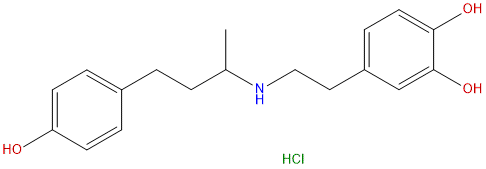
The chemical name of dobutamine hydrochloride is (±) -4- [2- [[3- (4-hydroxyphenyl) -1-methylpropyl] amino] ethyl] phenol hydrochloride, with the molecular formula C18H23NO3 · HCl and a molecular weight of 301.3860. Its structure contains a catechol group (3,4-dihydroxyphenyl) and a butylamine side chain with an amino group, reflecting typical characteristics of catecholamine molecules. The hydroxyl groups in the molecule endow it with high polarity and water solubility, while the hydrochloride form further enhances its water solubility and drug stability.
In terms of physical and chemical properties, the LogP value of dobutamine hydrochloride is 2.5179, indicating its moderate lipid solubility, which is beneficial for transmembrane absorption but not prone to excessive accumulation in the lipid environment. The topological polar surface area (TPSA) is 72.72 Å ², indicating moderate polarity and meeting the requirements for drug molecules to penetrate biofilms. The water solubility is 1.6210 (unit not specified, usually referring to mg/mL or mol/L level), indicating its good solubility in water, making it easy to prepare injectable formulations. The blood-brain barrier has a lower ability to penetrate, reducing the risk of central nervous system side effects. The negative result of hERG channel inhibition experiment indicates a low risk of arrhythmia. The Ames mutagenicity test result is 0, indicating that its genotoxicity risk is extremely low and meets the requirements for safe drug use.
Dobutamine hydrochloride is a fully synthetic catecholamine drug that is not directly derived from natural plant extracts. However, its structural inspiration comes from naturally occurring catecholamines such as dopamine and adrenaline, which are mainly found in the nervous system and adrenal medulla of mammals. The biosynthetic pathway and structural characteristics of catecholamine natural products provide a theoretical basis for the design of dobutamine hydrochloride.
In the field of natural product pharmacology, the extraction of catecholamines is usually achieved through methods such as water extraction, alcohol extraction, and liquid-liquid distribution from plant or animal tissues. Although dobutamine hydrochloride is not directly extracted from plants, its synthetic route and structural optimization draw on the chemical properties of natural catecholamines, reflecting a paradigm of natural product inspired drug design.
The main pharmacological activity of dobutamine hydrochloride is reflected in its selective activation of cardiac β 1-adrenergic receptors. By activating β 1-AR, dobutamine hydrochloride promotes an increase in intracellular cyclic adenosine monophosphate (cAMP) levels in cardiomyocytes, activates protein kinase A (PKA), enhances calcium ion influx, thereby increasing myocardial contractility (positive inotropic effect) and heart rate (positive frequency effect), significantly improving cardiac output.
Compared with dopamine and adrenaline, dobutamine hydrochloride has a weaker excitatory effect on α 1-AR, resulting in a lighter vasoconstrictive effect and reducing the increase in peripheral resistance, which is beneficial for improving tissue perfusion. Its effect on β 2-AR is also weak, avoiding excessive vasodilation and the risk of hypotension.
Animal experiments and clinical studies have confirmed the efficacy of dobutamine hydrochloride in acute heart failure, postoperative cardiac function support, and cardiogenic shock. It can quickly improve the pumping function of the heart, correct hypoperfusion, and reduce organ ischemia damage. In addition, the regulatory effect of dobutamine hydrochloride on myocardial metabolism has also been studied, and some studies suggest that it may improve myocardial energy supply by regulating the activity of energy metabolism related enzymes in myocardial cells.
The core mechanism of action of dobutamine hydrochloride is to activate β 1-AR, regulate intracellular signaling pathways in cardiomyocytes, and enhance myocardial contractility and pumping efficiency. β 1-AR belongs to G protein coupled receptors. After activation, it promotes adenylate cyclase activity through G protein, increases cAMP production, activates PKA, and regulates calcium channels and actin myosin interactions.
In addition to the classic β 1-AR signaling pathway, dobutamine hydrochloride also involves multiple molecular targets in the treatment of heart failure:
AMPK(PRKAA1)As a key regulator of cellular energy metabolism, AMPK regulates the energy balance of myocardial cells. Dobutamine hydrochloride may indirectly activate AMPK through β 1-AR signaling, promote myocardial cell metabolic adaptation, and alleviate energy metabolism disorders.
EHMT2 (Histone Methyltransferase)Participate in epigenetic regulation of myocardial cells, affecting myocardial remodeling and fibrosis. The cardioprotective effect of dobutamine hydrochloride may be partially achieved by regulating gene expression mediated by EHMT2.
APP (amyloid precursor protein)Research has shown that APP is expressed in cardiac tissue and participates in cellular signaling and stress response. Dobutamine hydrochloride may affect APP related pathways, regulate myocardial cell survival and function.
PTPN1 (protein tyrosine phosphatase 1B)Regulating multiple signaling pathways, including insulin signaling and myocardial cell metabolism. Its regulatory effect may affect the pharmacological effects of dobutamine hydrochloride.
MAOA (monoamine oxidase A)Participate in the metabolism of catecholamines, regulate the levels of catecholamines in the myocardium, and affect cardiac function.
ESR2 (estrogen receptor beta)The expression of estrogen receptors in cardiac tissue is closely related to myocardial protection, and dobutamine hydrochloride may exert cardioprotective effects by regulating ESR2 mediated signaling.
ABCB1 and ABCG2 (ATP binding cassette transporters)Participate in drug efflux and myocardial cell drug tolerance, affecting the pharmacokinetics and intracellular concentration of dobutamine hydrochloride.
ALOX15 (Lipoxygenase 15)Participate in lipid metabolism and inflammatory response, which may affect the process of myocarditis and fibrosis.
FEN1 (ribozyme 1)Involved in DNA repair and cell proliferation, it may play a role in the stress response of myocardial cells.
In summary, dobutamine hydrochloride not only exerts positive inotropic effects on the heart through the classical β 1-AR signaling pathway, but may also participate in multiple mechanisms such as myocardial metabolism, inflammation, remodeling, and cell survival by regulating multiple molecular targets, reflecting its complex pharmacological network of action.
Dobutamine hydrochloride has good pharmacological properties and possesses multiple advantageous drug properties for clinical application. Its molecular weight is 301.3860, which conforms to the Lipinski rule for drug molecules. LogP is 2.5179, indicating moderate lipid solubility, which is beneficial for drug distribution and cell membrane penetration in the body. The TPSA is 72.72 Å ², indicating moderate polarity and suitability for oral absorption (although intravenous administration is commonly used in clinical practice).
Good water solubility, easy to prepare water-soluble injections, meeting the medication needs of emergency and intensive care. Low blood-brain barrier penetration ability reduces the risk of central nervous system side effects. The hERG channel inhibition experiment was negative, reducing the possibility of drug-induced arrhythmia. The Ames test showed no mutagenicity, indicating a high level of genetic safety.
In terms of pharmacokinetics, dobutamine hydrochloride is administered intravenously and quickly reaches the peak plasma concentration, with fast onset and suitable for short-term treatment of acute heart failure. Its half-life is relatively short, about 2 minutes, and continuous infusion is required to maintain efficacy. Mainly metabolized by the liver, metabolites are excreted by the kidneys. Its metabolic pathways mainly involve monoamine oxidase (MAO) and catechol-O-methyltransferase (COMT), which have a fast metabolic rate and reduce the risk of accumulation and toxicity in the body.
The interaction between drugs and multiple transporters (such as ABCB1, ABCG2) affects their distribution and excretion, indicating the need to pay attention to potential drug interactions in multi drug combination therapy.
Dobutamine hydrochloride, as the preferred medication for acute heart failure and postoperative cardiac function support, has clear clinical efficacy and safety. Its ability to rapidly improve cardiac output and correct hypoperfusion makes it one of the irreplaceable drugs in intensive care and emergency treatment.
In the future, with the deepening of research on the pathological mechanism of heart failure, the application scope and administration strategy of dobutamine hydrochloride are expected to be further optimized. For example, combining AMPK agonists or anti-inflammatory drugs may enhance their cardioprotective effects, delay myocardial remodeling and functional deterioration. A precise medication strategy based on molecular targets will help improve treatment efficacy and reduce side effects.
In addition, the structural basis of dobutamine hydrochloride provides a template for the design of novel catecholamine drugs. By modifying the structure to enhance selectivity, prolong half-life, or improve pharmacokinetic properties, it is expected to develop safer and more effective cardiac inotropic drugs.
In the context of personalized medicine and pharmacogenomics development, research on patient specific molecular targets and metabolic enzyme polymorphisms will promote individualized dose adjustment and efficacy prediction of dobutamine hydrochloride, and improve clinical treatment levels.
Dobutamine hydrochloride, as a synthetic catecholamine drug, has become an important drug for the treatment of heart failure and related heart diseases due to its selective β 1-AR agonist effect and good drug properties. Its pharmacological mechanism of action not only covers the classical β 1-AR signaling pathway, but also involves multiple molecular targets, reflecting a complex network of drug action. In the future, through in-depth analysis of its molecular mechanism, optimization of drug design, and personalized application, dobutamine hydrochloride and its derivatives will play a greater role in the treatment of cardiovascular diseases, benefiting more patients.
