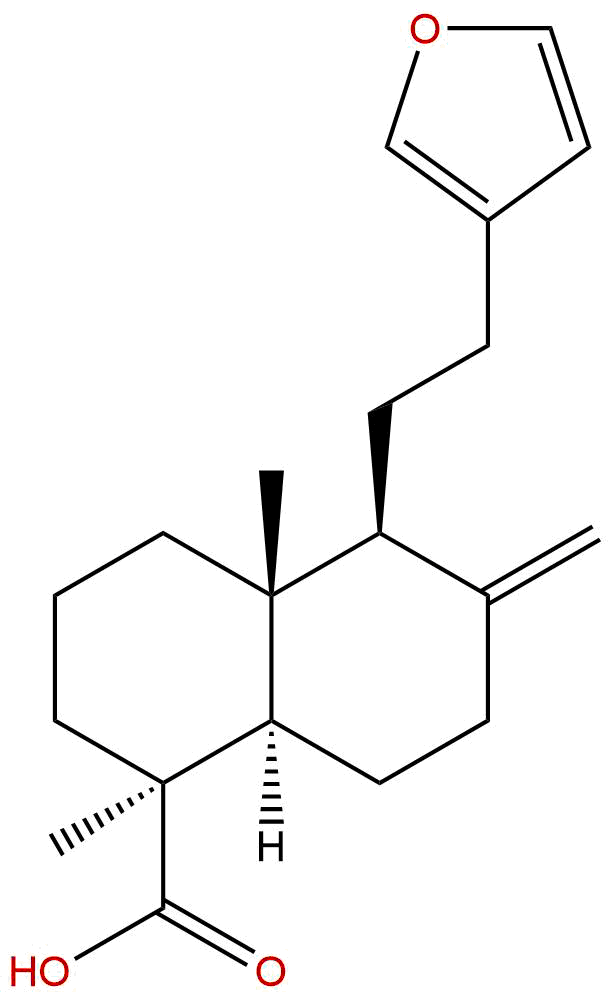


Product name: Lambertianic acid
Synonym name: (+)-Daniellic acid
Catalogue No.: BP2434
Cas No.: 4966-13-6
Formula: C20H28O3
Mol Weight: 316.441
Botanical Source: Pinus armandi
Type of Compound: Diterpenoids
Purity: 95%~99%
Analysis Method: HPLC-DAD or/and HPLC-ELSD
Identification Method: Mass, NMR
Packing: Brown vial or HDPE plastic bottle
Storage: Store in a well closed container, protected from air and light. Put into refrigerate or freeze for long term storage.
Whenever possible, you should prepare and use solutions on the same day. However, if you need to make up stock solutions in advance, we recommend that you store the solution as aliquots in tightly sealed vials at -20℃. Generally, these will be useable for up to two weeks.
The product could be supplied from milligrams to grams
Inquire for bulk scale.
Lambertianic acid is a biologically active diterpene with anti-allergic, antibacterial and anti-cancer activities. Lambertianic acid can reduce the levels of androgen receptor protein, prostate-specific antigen in cells and secretion. Lambertianic acid also inhibits cell proliferation by inducing G1 phase arrest, down-regulating CDK4/6 and cyclin D1, activating p53, p21 and p27. Lambertianic acid induces apoptosis and promotes the expression of related proteins, including cleaved caspase-3/9, c-PARP and BAX, while inhibiting BCL-2. Lambertianic acid is expected to be used in the research of prostate cancer.
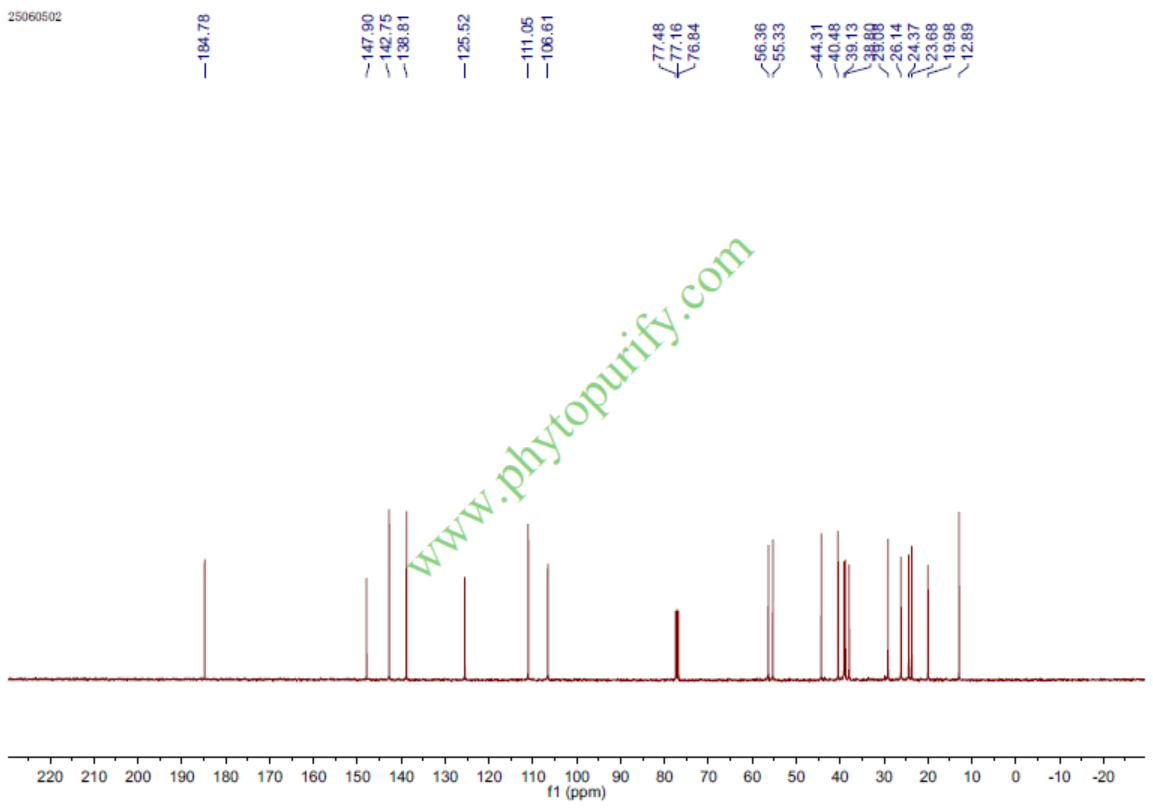
NMR of Lambertianic acid
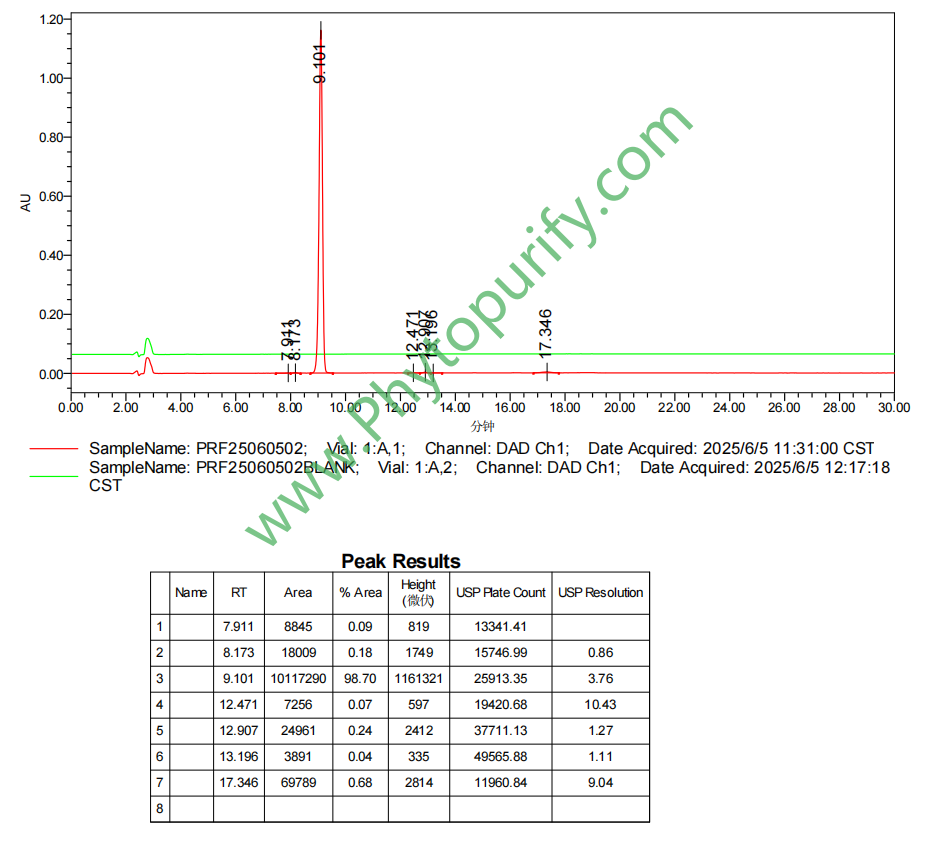
HPLC of Lambertianic acid
Storage conditions:Short-term storage at 2~8℃, long-term storage at -20 ~ -80℃
57.5300
4.5700
Unknown
Unknown
Unknown
Unknown
Unknown
Unknown
Unknown
Unknown
Natural products, as an important source of drug discovery, play an irreplaceable role in the long history of human struggle against diseases. From classic aspirin and paclitaxel to the highly anticipated artemisinin in recent years, the rich chemical structures found in nature provide endless inspiration and lead compounds for modern pharmacological research. Among the numerous biologically active natural product families, diterpenes have attracted much attention due to their structural diversity and extensive pharmacological activities. Lambertianic acid (LA), as a diterpenoid acid originating from the Pinaceae family, has gradually entered the field of researchers in recent years, exhibiting unique chemical structures and potential biological activities.
Lambertic acid, also known as (1R, 4aS, 4bR, 10aR) -1,4-dimethyl-7-methyl-1,2,3,4,4a, 4b, 5,6,7,9,10,10-dodechydro-1-phenanthroic acid, belongs to the Abietane type of diterpenoid compounds. Its CAS number is 4966-13-6, and its molecular formula is C ₂₀ H ₂₈ O3. This compound originated from North American white pine(Pinus strobus)It was isolated from the resin of Pinus plants and its name also comes from this. However, for a long time, research on lanbosetinic acid has been relatively limited, and information on its pharmacological activity, mechanism of action, and medicinal properties is relatively scattered. With the advancement of modern separation and analysis techniques and biological activity screening methods, the re understanding and in-depth exploration of "dormant" natural products such as lanbosetinic acid has become an important direction in the interdisciplinary field of natural product chemistry and pharmacology.
This article aims to systematically review the research status of lanbosetinic acid, and provide a comprehensive overview of the compound from multiple dimensions such as chemical structure, plant sources, extraction processes, pharmacological activity, mechanism of action, pharmacological evaluation, and clinical application prospects. By integrating existing literature data and theoretical analysis, this article aims to provide a solid theoretical foundation and clear scientific clues for the further in-depth research, development, and utilization of lanbosetinic acid, revealing the potential value and challenges of this natural diterpenoid acid in drug development.
Lambertic acid belongs to tricyclic diterpenoid acids, and its core skeleton is of the rosin alkane type. The skeleton is composed of three hexagonal rings (A, B, C) fused together, with A and C rings in a chair like conformation and B ring in a semi chair like conformation. This rigid structure gives the molecule a specific three-dimensional spatial orientation. Specifically, the chemical structural characteristics of Lambertic acid include the presence of a gem dimethyl structure at the C-4 position, a methyl group connected to the C-10 position, a methylene group (=CH ₂) at the C-7 position, and a carboxyl group (- COOH) at the C-18 position (according to the rosin numbering rule). In addition, there is a double bond in the molecule located between C-8 and C-14 (Δ ⁸¹⁴), which is also a common feature of rosin terpenes. The double bond forms a conjugated diene structural unit with the methylene group at the C-7 position, which may affect its UV absorption and chemical reactivity.
From the perspective of physical and chemical properties, the molecular weight of Lambertic acid is 316.4300 g/mol, which belongs to the category of medium molecular weight compounds. The lipophilic water partition coefficient (LogP) of this compound is 4.5700, indicating strong lipophilicity, which is highly consistent with its tricyclic diterpene skeleton structure. A higher LogP value indicates that the solubility of lanbosetinic acid in water may be poor, while it has good solubility in organic solvents or lipid environments, which has important implications for its bioavailability, in vivo distribution, and design of administration methods. The polar surface area (TPSA) is 57.53 Å ², which is lower than the commonly recognized threshold for good oral absorption (about 140 Å ²), indicating that it may have some potential for oral absorption, but it needs to be comprehensively judged in conjunction with other parameters. The number of hydrogen bond acceptors is 3, mainly derived from the two oxygen atoms in the carboxyl group and the possible presence of hydroxyl groups (if present in the structure). It is worth noting that key pharmacological parameters such as blood-brain barrier permeability, hepatotoxicity, cardiotoxicity (such as hERG inhibition), and genotoxicity (Ames test) of lanbosetinic acid are currently labeled as "Unknown". This reflects a gap in the systematic pharmacological evaluation of the compound and is also a key direction that needs to be filled in future research.
Overall, lanbosetinic acid has typical physicochemical characteristics of diterpenoid acid compounds: moderate molecular weight, strong lipophilicity, and small polar surface area. These properties determine that it may have good membrane permeability, but at the same time, they also bring potential problems such as poor water solubility and metabolic instability. Therefore, in subsequent medicinal chemistry research, structural modification of functional groups such as carboxyl groups, or the use of novel drug delivery systems such as nanomaterials and liposomes, may be effective strategies to improve their drug properties.
Lambertic acid is mainly found in the resin, bark, and needles of Pinaceae plants, especially in the pine genus(Pinus)Plants are a typical source. The earliest plant to report this compound was North American white pine(Pinus strobus)In addition, in various pine trees such as European red pine(Pinus sylvestris)Coastal Pine(Pinus pinaster)Wetland pine(Pinus elliottii)And some Abies species(Abies)It has also been found in plants. It is worth noting that the content of lanbosetinic acid in plants is usually low, and it often coexists with other diterpenoid acids (such as turpentine acid, dehydroabietic acid, isoabietic acid, etc.) to form complex natural product mixtures. The complexity of this coexistence poses challenges for selective extraction and separation purification.
The traditional extraction method is mainly based on organic solvent extraction. Due to its lipophilicity, commonly used extraction solvents include petroleum ether, n-hexane, ether, ethyl acetate, chloroform, or methanol. Usually, dried plant materials such as pine resin and bark powder are crushed and subjected to multiple extractions using a Soxhlet extractor or cold soaking method. After concentration of the extract, crude extract is obtained. However, the crude extract contains a large amount of lipid soluble impurities (such as fatty acids, waxes, and other terpenes), which require further purification steps.
Modern separation techniques are widely used to obtain high-purity lanbosetinic acid. Column chromatography is the most commonly used separation method, often using silica gel column chromatography with gradient elution of petroleum ether ethyl acetate or n-hexane ethyl acetate systems in different ratios. In addition, reversed-phase silica gel column chromatography (such as C18 column), gel column chromatography (such as Sephadex LH-20) and high performance liquid chromatography (HPLC) are also used for fine separation. In recent years, high-speed countercurrent chromatography (HSCCC) has shown advantages as an efficient liquid-liquid distribution chromatography technique in separating natural products with similar polarity, and has also been successfully applied to the separation of turpentine acid compounds. In terms of detection, thin layer chromatography (TLC) combined with ultraviolet light or sulfuric acid ethanol color reagents is commonly used to monitor the separation process, while HPLC-UV or HPLC-MS are used for qualitative and quantitative analysis.
It is worth noting that the choice of extraction method directly affects the yield and purity of lanbosetinic acid. For example, using supercritical carbon dioxide extraction (SC-CO ₂) technology, it is possible to selectively extract lipophilic components at lower temperatures, avoiding the degradation of thermosensitive compounds, while improving extraction efficiency and reducing residual organic solvents. In addition, pre-treatment steps such as degreasing and saponification are sometimes necessary for viscous samples such as pine resin. Overall, establishing an efficient, green, and scalable extraction and purification process is a key step in promoting the practical application of lanbosetinic acid from laboratory research.
Although the pharmacological activity research of lanbosetinic acid is still in its early stages, existing literature has revealed its potential activities in multiple biological systems, mainly including anti-inflammatory, antioxidant, anti-tumor, antibacterial, and neuroprotective aspects.
1. Anti inflammatory activity
Inflammation is an important defense response of the body against injury and infection, but excessive or persistent inflammation can lead to various diseases. Research has shown that lanbosetinic acid can inhibit the production of nitric oxide (NO) in macrophages (such as RAW264.7 cells) induced by lipopolysaccharide (LPS). NO is an important inflammatory mediator, and its excessive production is closely related to the pathological process of inflammation. In addition, the compound can downregulate the mRNA expression levels of pro-inflammatory cytokines such as tumor necrosis factor - α (TNF - α), interleukin-6 (IL-6), and interleukin-1 β (IL-1 β). These effects suggest that lanbosetinic acid may exert anti-inflammatory effects by inhibiting key inflammatory signaling pathways such as nuclear factor kappa B (NF - κ B) or mitogen activated protein kinase (MAPK).
2. Antioxidant activity
Oxidative stress is a common pathological basis for many chronic diseases, such as cardiovascular disease, neurodegenerative diseases, and cancer. The conjugated diene system and carboxyl group in the molecular structure of Lambertic acid may endow it with certain free radical scavenging ability. In vitro experiments (such as DPPH and ABTS free radical scavenging assays) have shown that lanbosetinic acid has moderate antioxidant activity, can effectively scavenge free radicals, and inhibit lipid peroxidation. This antioxidant activity may be associated with its anti-inflammatory, neuroprotective, and other effects.
3. Antitumor activity
There have been preliminary reports on the anti-tumor activity of lanbosetinic acid. It was found that the compound showed certain cytotoxicity to some human cancer cell lines (such as human hepatoma cell HepG2, human breast cancer cell MCF-7, human lung cancer cell A549, etc.), and its IC ≮ ₀ value was usually in the micromolar level. The mechanism of action may involve inducing cell apoptosis (such as by activating caspase-3, upregulating Bax/Bcl-2 ratio), inducing cell cycle arrest (such as G0/G1 phase or G2/M phase arrest), and inhibiting tumor cell migration and invasion. However, these studies are mostly in vitro experiments, and the anti-tumor activity and selective toxicity in vivo still need further validation.
4. Antibacterial activity
Lambertic acid also exhibits inhibitory activity against certain bacteria and fungi. For example, there are studies reporting its effects on Staphylococcus aureus(Staphylococcus aureus)And Bacillus subtilis(Bacillus subtilis)Gram positive bacteria have a certain inhibitory effect, but their activity against Gram negative bacteria (such as Escherichia coli) is weak. In addition, it also exhibits antifungal activity against certain plant pathogenic fungi, such as Fusarium. These findings suggest that it has potential value in the development of new antibacterial drugs or agricultural chemicals.
5. Neuroprotective activity
Given its antioxidant and anti-inflammatory properties, the potential of lanbosetinic acid in neuroprotection has also attracted attention. Preliminary studies have shown that the compound can alleviate damage to neuronal cells (such as PC12 cells or primary neurons) induced by glutamate or hydrogen peroxide, and improve cell survival rate. The mechanism may be related to inhibiting oxidative stress, reducing neuronal apoptosis, and regulating the expression of neurotrophic factors. These findings provide new candidate molecules for the treatment of neurodegenerative diseases such as Alzheimer's disease and Parkinson's disease.
It should be pointed out that most of the pharmacological activities mentioned above are based on in vitro cell experiments or preliminary animal models, and their in vivo efficacy, dose-response relationship, toxicological characteristics, and clinical translational potential still require extensive and in-depth research. In addition, the activity intensity reported in different studies may vary, which may be related to factors such as compound purity, cell line differences, and experimental conditions.
A deep understanding of the mechanism of action of lanbosetinic acid is key to transforming it from a natural product into a candidate drug. Based on existing research, its mechanism of action may involve multiple molecular targets and signaling pathways, exhibiting characteristics of multiple targets and pathways.
1. Anti inflammatory mechanism: NF - κ B and MAPK pathway
NF - κ B is the core transcription factor of inflammatory response. In the resting state, NF - κ B binds to the inhibitory protein I κ B and exists in an inactive form in the cytoplasm. When stimulated by LPS, TNF - α, etc., I κ B kinase (IKK) is activated, leading to phosphorylation and degradation of I κ B, releasing NF - κ B into the nucleus and initiating transcription of pro-inflammatory genes. Research has shown that lanbosetinic acid can inhibit LPS induced phosphorylation and degradation of I κ B α, thereby preventing nuclear translocation of NF - κ B and ultimately downregulating the expression of inflammation related genes such as TNF - α, IL-6, iNOS, and COX-2. In addition, the MAPK pathway (including ERK, JNK, p38) is also involved in the regulation of inflammatory responses. Lambertinic acid may further weaken the transmission of inflammatory signals by inhibiting the phosphorylation of p38 and JNK.
2. Antioxidant mechanism: Nrf2/ARE pathway
Nuclear factor E2 related factor 2 (Nrf2) is a key transcription factor for cells to cope with oxidative stress. Under oxidative stress conditions, Nrf2 dissociates from Keap1 protein and enters the nucleus to bind with antioxidant response elements (ARE), initiating the expression of a series of antioxidant enzymes such as HO-1, NQO1, SOD, CAT. Lambertic acid may enhance cellular antioxidant defense by activating the Nrf2/ARE pathway, thereby reducing oxidative damage. This mechanism synergizes with its anti-inflammatory effect, jointly exerting a cell protective effect.
3. Antitumor mechanism: inducing apoptosis and cycle arrest
In tumor cells, lanbosetinic acid may induce apoptosis through multiple pathways. For example, it may activate the mitochondrial pathway (endogenous pathway), leading to a decrease in mitochondrial membrane potential, release of cytochrome c, and subsequently activate caspase-9 and caspase-3, ultimately triggering cell apoptosis. Meanwhile, it may also exert its effects through the death receptor pathway (exogenous pathway). In addition, cell cycle arrest is another important mechanism in anti-tumor treatment. Lanberpine acid may inhibit tumor cell proliferation by upregulating the expression of cell cycle inhibitory proteins such as p21 and p27, or downregulating the expression of cyclin D1 and CDK4, thereby blocking cells in the G0/G1 phase.
4. Potential molecular targets
In addition to the aforementioned signaling pathways, lanbosetinic acid may also directly interact with certain proteins. For example, its carboxyl functional group may make it a potential inhibitor of certain enzymes such as cyclooxygenase-2 and lipoxygenase. In addition, given its structural similarity to other rosin terpenes, it may also bind to nuclear receptors (such as PPAR γ, LXR) or ion channels (such as TRP channels), thereby exerting a wider range of biological effects. However, these speculations still need to be validated through experimental techniques such as molecular docking, surface plasmon resonance (SPR), and drug affinity responsive target stability (DARTS).
Overall, the mechanism of action of lanbosetinic acid exhibits networked regulation rather than a single target. This multi-target characteristic is not only the advantage of natural products (which may produce synergistic effects and reduce drug resistance), but also brings complexity to their mechanism research. In the future, combining systems biology, chemical biology, and omics technologies such as transcriptomics and proteomics will help to comprehensively reveal its functional network and identify its key, high affinity molecular targets.
The evaluation of drug properties is a crucial step in determining whether natural products can enter preclinical research. As mentioned earlier, the key pharmacological parameters of lanbosetinic acid, such as blood-brain barrier permeability, hepatotoxicity, cardiotoxicity, and genotoxicity, are currently unknown, which constitutes the main bottleneck in its development process. However, based on its physicochemical properties and limited pharmacokinetic data, we can conduct preliminary analysis and prediction.
1. Physical and chemical properties and drug like properties
According to the Lipinski Five Rules, the molecular weight (316.43<500), LogP (4.57>5, slightly exceeding the standard), number of hydrogen bond donors (1, assuming carboxyl is the donor,<5), and number of hydrogen bond acceptors (3<10) of lanberpine acid basically meet the requirements of drug likeness. However, the high LogP value suggests that it may have poor water solubility and metabolic instability. A high LogP value also means that its binding rate with plasma proteins (such as albumin) may be high, thereby affecting the concentration and distribution volume of free drugs. The TPSA is 57.53 Å ², indicating good membrane permeability, but it may not be sufficient to completely avoid the role of efflux transporters such as P-glycoprotein (P-gp).
2. Pharmacokinetic characteristics (prediction and preliminary data)
At present, there is a severe lack of in vivo pharmacokinetic studies on lanbosetinic acid. In theory, after oral administration, its absorption may be limited by poor water solubility. Once it enters the systemic circulation, due to its high lipophilicity, it may be widely distributed in tissues, especially adipose tissue and liver. In terms of metabolism, diterpenoid acid compounds are usually mainly oxidized in the liver through cytochrome P450 enzyme systems (such as CYP3A4, CYP2C9), and may also undergo glucuronic acid binding reactions. Its metabolites may have different biological activities or toxicity. The main excretion pathway may be bile excretion, with some being excreted through the kidneys.
3. Toxicity prediction and safety
Due to the lack of experimental data, it is currently impossible to make a clear judgment on the hepatotoxicity, cardiotoxicity (hERG inhibition), and genotoxicity of lanbosetinic acid. However, due to the presence of conjugated dienes and carboxyl groups in its structure, there is theoretically a possibility of forming active metabolites (such as epoxides), which can cause liver toxicity or allergic reactions. In addition, many diterpenoid compounds have cytotoxicity, so their therapeutic window may be narrow. The risk assessment of hERG inhibition is crucial for any compound that may affect cardiac repolarization and must be determined through experimental methods such as patch clamp technology.
4. Strategies for improving drug properties
The following strategies can be adopted to address the potential shortcomings in the pharmacological properties of lanbosetinic acid:
- Prodrug design Esterification of carboxyl groups can enhance lipid solubility (or water solubility, such as introducing phosphate esters), improve oral absorption, and release the active ingredient through enzymatic interpretation in vivo.
- Structural modification Introducing polar groups (such as hydroxyl, amino, and sugar groups) into molecules to reduce LogP values and improve water solubility; Meanwhile, reducing metabolic rate and toxicity through structural optimization.
- New formulations Using nanotechnology (such as liposomes, polymer nanoparticles, solid lipid nanoparticles) or cyclodextrin inclusion technology to improve their water solubility, bioavailability, and targeting.
- combination therapy Combined use with P-gp inhibitors or metabolic enzyme inhibitors may increase their bioavailability.
In summary, lanbosetinic acid has a certain pharmacological basis, but its poor water solubility, unstable metabolism, and lack of safety data urgently need to be addressed. Future research should prioritize conducting systematic pharmacokinetic experiments (including absorption, distribution, metabolism, excretion) and comprehensive toxicological evaluations (including acute toxicity, chronic toxicity, genetic toxicity, cardiac toxicity, etc.) to clarify its potential and risks for drug development.
Although the research on lanbosetinic acid is still in its early stages, its unique chemical structure and various pharmacological activities have provided an exciting blueprint for its application prospects in multiple disease fields.
1. Anti inflammatory and immune regulation
Given its significant anti-inflammatory activity, lanbosetinic acid is expected to be developed as a candidate drug for the treatment of chronic inflammatory diseases, such as rheumatoid arthritis, inflammatory bowel disease, asthma, etc. Its mechanism of action by inhibiting the NF - κ B and MAPK pathways is similar to many marketed anti-inflammatory drugs, such as nonsteroidal anti-inflammatory drugs and glucocorticoids, but may have a different spectrum of side effects. In the future, through structural optimization, it is expected to obtain new anti-inflammatory molecules with higher selectivity and fewer side effects.
2. Anti tumor
The inhibitory activity of lanbosetinic acid on various cancer cell lines makes it a potential anti-tumor lead compound. Especially its ability to induce apoptosis and cycle arrest suggests that it may be effective for certain tumors that are resistant to traditional chemotherapy drugs. Future research should focus on its in vivo anti-tumor activity, synergistic effects with existing chemotherapy drugs, and targeting specific tumor targets such as EGFR and VEGFR. In addition, using it as a chemotherapy sensitizer or adjuvant therapy drug is also a direction worth exploring.
3. Neuroprotection
In the field of neurodegenerative diseases, the antioxidant and anti-inflammatory properties of lanbosetinic acid give it the potential to protect neurons. The pathological processes of Alzheimer's disease and Parkinson's disease both involve oxidative stress, neuroinflammation, and neuronal apoptosis. Therefore, this compound may delay disease progression through a multi-target mechanism. However, whether it can effectively cross the blood-brain barrier is the key to determining its neuroprotective application. If its blood-brain barrier permeability is poor, it needs to be improved through structural modification or nano delivery systems.
4. Antibacterial and antiviral
The inhibitory activity of lanbosetinic acid on certain bacteria and fungi suggests its potential in the development of new antibiotics, especially in addressing the increasingly serious problem of antibiotic resistance. In addition, considering that many diterpenoid compounds have antiviral activity (such as anti influenza virus, anti HIV), the antiviral potential of lanbosetinic acid is also worth exploring.
5. Challenges and Future Directions
Despite its broad prospects, the clinical translation of lanberpine acid still faces many challenges:
- Resource issues Natural sources have low content and high extraction costs. It is necessary to develop efficient and green fully synthetic or semi synthetic routes, or utilize biotechnology (such as genetic engineering, cell culture) to achieve large-scale production.
- Drug bottleneck Poor water solubility, unstable metabolism, and unknown safety are the main obstacles. These issues must be prioritized for resolution.
- Mechanism unclear The exact molecular targets and network of action are still unclear, which limits structure based drug design.
- Insufficient in vivo validation Currently, the vast majority of research remains at the in vitro level, lacking systematic in vivo pharmacological and pharmacokinetic studies.
Looking ahead to the future, research on lanbosetinic acid should focus on the following directions: firstly, establishing efficient and scalable synthetic methods; Secondly, conduct systematic pharmacokinetic and toxicological studies to clarify their ADME/T properties; Thirdly, identify its high affinity targets using chemical biology methods; Fourthly, based on the target structure, rational drug design should be carried out to optimize its activity and drug properties; Fifth, validate its in vivo efficacy in various animal models of diseases.
Lambertic acid, as a natural diterpenoid acid originating from the Pinaceae family, occupies a place in the field of natural product drug discovery due to its unique rosin skeleton and diverse biological activities. This article provides a systematic review of the compound from multiple dimensions, including chemical structure, plant origin, extraction methods, pharmacological activity, mechanism of action, pharmacological evaluation, and clinical application prospects. Existing studies have shown that lanbosetinic acid has various pharmacological activities such as anti-inflammatory, antioxidant, anti-tumor, antibacterial, and neuroprotective effects. Its mechanism of action involves multiple key signaling pathways such as NF - κ B, MAPK, and Nrf2, exhibiting multi-target regulation characteristics.
However, the overall research on this compound is still in its infancy, especially in terms of drug efficacy evaluation and in vivo efficacy verification, where there are significant gaps. The main obstacles to its transition from laboratory to clinical practice are the poor water solubility, metabolic instability, and unknown toxicological characteristics caused by its high lipophilicity. Therefore, future research requires collaborative efforts from multiple disciplines such as chemistry, biology, pharmacology, and pharmacy, with a focus on addressing core scientific issues such as resource acquisition, structural optimization, mechanism analysis, and safety evaluation.
Despite the numerous challenges ahead, the unique chemical space and biological activity potential demonstrated by lanberpine acid undoubtedly provide valuable natural templates for the development of innovative drugs. With the continuous advancement of modern drug research technology, we have reason to believe that this ancient natural product will eventually radiate new vitality and contribute to the cause of human health. The in-depth study of lanbosetinic acid is not only an exploration of a specific compound, but also a wake-up and tribute to countless "silent" treasures in the treasure trove of natural products.
