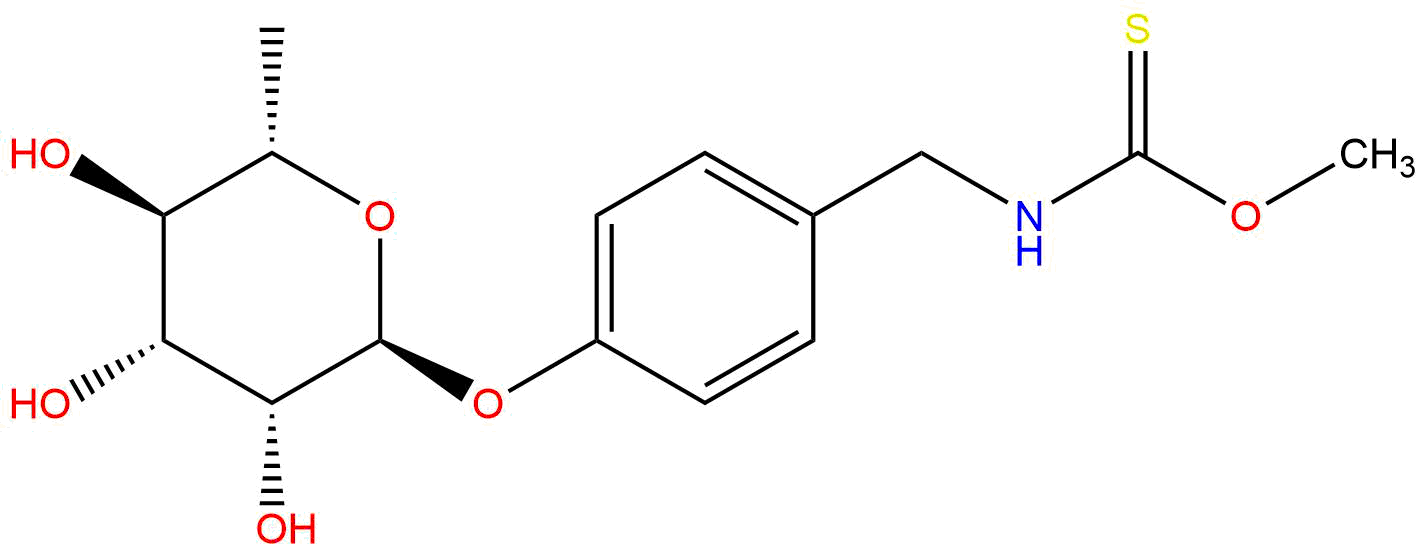


Product name: Niazinin
Synonym name:
Catalogue No.: BP2162
Cas No.: 147821-57-6
Formula: C15H21NO6S
Mol Weight: 343.394
Botanical Source: Moringa Seeds.
Type of Compound:
Purity: 95%~99%
Analysis Method: HPLC-DAD or/and HPLC-ELSD
Identification Method: Mass, NMR
Packing: Brown vial or HDPE plastic bottle
Storage: Store in a well closed container, protected from air and light. Put into refrigerate or freeze for long term storage.
Whenever possible, you should prepare and use solutions on the same day. However, if you need to make up stock solutions in advance, we recommend that you store the solution as aliquots in tightly sealed vials at -20℃. Generally, these will be useable for up to two weeks.
The product could be supplied from milligrams to grams
Inquire for bulk scale.
For Reference Standard and R&D, Not for Human Use Directly.
References:
Isolation and structure elucidation of novel hypotensive agents, niazinin A, niazinin B, niazimicin and niaziminin A + B from Moringa oleifera: the first naturally occurring thiocarbamates
Journal of the Chemical Society, Perkin Transactions 1 Pub Date : 1992 , DOI: 10.1039/p19920003237
Abstract
Novel hypotensive principles, niazinin A 1, niazinin B 2, niazimicin 4 and niaziminin A and B 6+7, have been obtained from the ethanolic extract of the fresh leaves of Moringa oleifera, employing a bioassay-guided isolation procedure. Their structures have been elucidated through spectroscopic (including 2D NMR techniques) and chemical methods. These compounds are mustard oil glycosides which are very rare in Nature and are also the first examples of naturally occurring thiocarbamates.
Pharmacological studies on hypotensive and spasmolytic activities of pure compounds from Moringa oleifera
Phytotherapy Research Volume8, Issue2 March 1994 Pages 87-91
Abstract
Bioassay directed fractionation of an ethanolic extract of Moringa oleifera (MO) leaves resulted in the isolation of four pure compounds, niazinin A (1), niazinin B (2), niazimicin (3) and niaziminin A + B (4 + 5). Intravenous administration of either one of the compounds (1–10 mg/kg) produced hypotensive and bradycardiac effects in anaesthetized rats. Pretreatment of the animals with atropine (1 mg/kg) completely abolished the hypotensive and bradycardiac effects of acetylcholine (ACh), whereas cardiovascular responses to the test compounds remained unaltered, ruling out the possible involvement of muscarinic receptor activation. In isolated guinea‐pig atria all the compounds (50–150 μg/mL) produced negative inotropic and chronotropic effects. Each compound inhibited K+ ‐induced contractions in rabbit aorta as well as ileal contractions induced by ACh or histamine at similar concentrations. Spontaneous contractions of rat uterus were also inhibited equally by all compounds. These data indicate that the direct depressant action of these compounds exhibited on all the isolated preparations tested is probably responsible for its hypotensive and bradycardiac effects observed in vivo. Moreover, spasmolytic activity exhibited by the constituents of the plant provides a scientific basis for the traditional uses of the plant in gastrointestinal motility disorders.
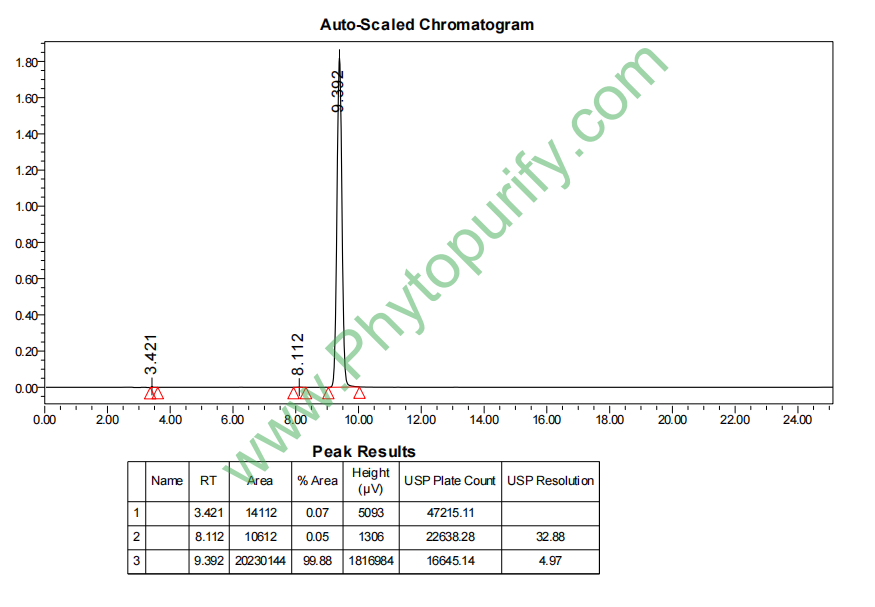
HPLC of Niazinin
Storage conditions:Short-term storage at 2~8℃, long-term storage at -20 ~ -80℃
100.4100
.5083
.5079
3.1706
.5979
.6225
Low
56.0628
3.6076
Yes
No
No
No
No
No
0.0
Yes
Yes
Yes
Yes
Natural products, as an important treasure trove for drug discovery and development, play an irreplaceable role in the long history of human fight against diseases. From ancient herbal experiences to modern target based precision drug design, natural products and their derivatives have always been an important source of innovative drugs. Among numerous natural molecules with potential, thiocarbamate glycosides have attracted much attention due to their unique chemical structures and extensive biological activities. Niazinin (CAS number: 147821-57-6) is one of them, which was initially discovered due to its presence in traditional medicinal plants and gradually demonstrated remarkable multi-target pharmacological activity.
The research value of Niazinin is first reflected in its significant anti parasitic activity, especially its inhibitory effect on Leishmania spp. Its IC50 value reaches 5.25 μ M, indicating its potential as a novel anti leishmania drug. Leishmaniasis is a neglected tropical disease, and existing drugs have problems such as high toxicity and increased resistance, which urgently require new treatment options. In addition, the study also revealed that Niazinin has anti-inflammatory and antipyretic activities, which may be consistent with its application in traditional medicine for treating fever and inflammation. More notably, recent studies have found through molecular docking and other methods that Niazinin has potential interactions with various key target proteins associated with major diseases, especially multiple signaling pathway proteins closely related to the occurrence and development of colon cancer, such as AMPK, STAT3, BCL-2 family proteins, etc. This greatly expands the research scope of Niazinin, transforming it from a natural molecule with antiparasitic activity to a lead compound with in-depth exploration value in multiple fields such as anti-tumor and anti-inflammatory.
This article aims to provide a systematic review of Niazinin, starting from its chemical nature and plant sources, and elaborating on its reported pharmacological activities, with a focus on analyzing its potential mechanisms of action and molecular target network. At the same time, based on its pharmacological parameters, an objective evaluation of its development prospects is conducted in order to provide comprehensive scientific references for the subsequent research and drug development of the compound.
Niazinin is a structurally unique thiocarbamate glycoside. Its core skeleton consists of a glycosidic moiety connected to a side chain containing a thiocarbamate group (- NH-C (=S) - O -) via an oxygen atom. This thiocarbamate structure is relatively rare in natural products and is one of the key pharmacophores for its biological activity. The glycoside moiety is usually glucose or other six carbon sugars, and its linking position and configuration have a significant impact on the activity and stability of the compound. The precise stereochemical structure needs to be further confirmed through techniques such as nuclear magnetic resonance (NMR) and X-ray single crystal diffraction.
According to the provided pharmacological parameters, the molecular weight of Niazinin is 343.4010 g/mol, which belongs to the category of small molecule compounds and meets the basic requirements of the Rule of Five. This provides a favorable physical and chemical basis for its oral absorption. The logarithmic value of its lipid water partition coefficient (LogP) is 0.5083, indicating that the compound has moderate lipophilicity, neither too hydrophobic to dissolve in water nor too hydrophilic to transport across membranes, which is beneficial for its distribution in organisms. The topological polar surface area (TPSA) is 100.41 Å ², which is at a moderate level and is typically associated with certain membrane permeability. Its predicted water solubility is 3.1706 mg/mL, which belongs to the range of slightly soluble to soluble, which to some extent ensures its solubility in the gastrointestinal tract or body fluids, and is one of the prerequisites for oral bioavailability.
Based on these physical and chemical parameters, Niazinin exhibits preliminary characteristics of ideal drug like properties. Moderate molecular weight, LogP, and TPSA give it the potential to become an orally active drug. However, these computational parameters still need to be validated through experiments and their actual behavior in complex biological environments needs to be further investigated.
Niazinin is mainly isolated from plants of the Moringa genus, especially Moringa oleifera Lam Moringa, also known as the drumstick tree, is a perennial tropical tree native to the Indian subcontinent. It is known as the "miracle tree" due to its leaves, fruits, seeds, and root bark being rich in various bioactive compounds such as isothiocyanates, flavonoids, phenolic acids, etc. It is widely used in traditional medical systems in Asia, Africa, and the Americas for anti-inflammatory, anti infection, hypoglycemic, and nutritional supplementation.
Niazinin mainly exists in Moringa Leaves and seeds In the middle. Its extraction and separation usually follow the conventional process of natural product chemistry. Firstly, extract the dried plant material (such as leaf powder) using polar organic solvents. Common solvents include methanol, ethanol, or methanol water mixed solvents, which can effectively extract polar components including glycosides. After obtaining the crude extract, it is separated and purified through a series of chromatographic techniques. The initial separation is often carried out using normal or reverse phase silica gel column chromatography, followed by fine purification using high-performance liquid chromatography (HPLC) or preparative thin layer chromatography (PTLC) to obtain high-purity Niazinin monomer compounds. Structural identification involves the comprehensive use of spectroscopic methods such as mass spectrometry (MS), nuclear magnetic resonance (1H-NMR, 13C-NMR, and 2D-NMR such as COSY, HSQC, HMBC).
It is worth noting that the content of Niazinin in plants may be affected by factors such as place of origin, harvest season, plant parts, and storage conditions. Therefore, establishing a stable, efficient, and scalable extraction and purification process is the foundation for future in-depth pharmacological research and potential development. In addition, exploring the acquisition of Niazinin or its analogues through synthetic biology or chemical synthesis pathways is also a research direction to address plant source limitations and achieve sustainable supply.
Numerous in vitro and in vivo studies have revealed the diverse pharmacological activities of Niazinin, providing phenotypic evidence for its multi-target properties.
1. Anti Leishmania parasite activity:
This is the earliest reported and well studied activity of Niazinin. Leishmaniasis is caused by Leishmania parasites, and existing drugs such as antimony and amphotericin B have toxicity or resistance issues. Research has shown that Niazinin exhibits inhibitory activity against both flagellar and non flagellar forms of Leishmania parasites, with an IC50 value of 5.25 μ M, indicating significant activity. In vitro models, it can induce parasite mitochondrial membrane potential loss, generate reactive oxygen species (ROS), and ultimately lead to apoptosis like cell death. Its unique thioamino ester structure may interfere with the parasite's specific thiol dependent metabolic enzyme system, thereby exerting selective toxicity.
2. Anti inflammatory and antipyretic activities:
In traditional medicine, Moringa is commonly used to treat fever and inflammation. Niazinin, as one of its active ingredients, has demonstrated these effects in experimental animal models. In the rat paw edema model induced by carrageenan or acetic acid, Niazinin can dose dependently reduce tissue swelling. In the yeast induced rat fever model, it also showed significant antipyretic effects. Its anti-inflammatory mechanism may be related to the inhibition of pro-inflammatory mediators such as prostaglandins, leukotrienes, tumor necrosis factor - α (TNF - α), and interleukin-6 (IL-6), which is consistent with its potential inhibitory effect on inflammation related enzymes or signaling pathways such as cyclooxygenase (COX) and lipoxygenase (LOX).
3. Potential anti-tumor activity (with a focus on colon cancer):
Although direct anti-tumor experimental data is still lacking, based on its predicted binding affinity with multiple key targets in colon cancer, Niazinin has shown great potential in the field of anti colon cancer. The occurrence and development of colon cancer involve multiple links such as uncontrolled cell proliferation, apoptosis escape, inflammatory microenvironment, invasion and metastasis, and multidrug resistance. Niazinin may exert synergistic anti-tumor effects by simultaneously acting on multiple related targets. For example, activating AMPK can inhibit the mTOR pathway, thereby suppressing cell growth and metabolism; Inhibiting the phosphorylation of STAT3 can block the transcription of downstream pro proliferative and anti apoptotic genes; Regulating proteins such as BCL-2/MCL1 can directly initiate the apoptosis program of cancer cells. These multi-target characteristics make it promising to overcome the resistance problem of single target drugs.
4. Other potential activities:
Given its binding affinity with 3CL protease (one of the main proteases of coronaviruses), Niazinin is also worth exploring in the field of antiviral, especially in the fight against coronaviruses. In addition, its antioxidant and antibacterial activities may also exist, which need further research to reveal.
The multiple pharmacological activities of Niazinin stem from its interactions with multiple key protein targets within the organism. Combined with computational simulations (such as molecular docking) and partial experimental verification, the mechanism network is gradually becoming clearer.
1. Anti Leishmania parasite mechanism:
The core mechanism may involve inhibition of parasite specific enzyme systems. Thiocarbamate groups are potential electrophilic groups that can covalently or non covalently bind to the thiol (- SH) groups of cysteine residues in proteins. Some key enzymes of Leishmania parasites, such as trypsin reductase (a core enzyme that maintains parasite redox balance, homologous to mammalian glutathione reductase but structurally different) or cysteine protease, may become targets of Niazinin, leading to oxidative stress imbalance and metabolic disorders in parasites.
2. Anti inflammatory and immune regulatory mechanisms:
The anti-inflammatory effect of Niazinin may be achieved through multiple pathways:
* Inhibiting the synthesis of inflammatory mediators: It is possible to reduce the production of potent inflammatory mediators such as prostaglandins and leukotrienes by inhibiting the activity of cyclooxygenase-2 (COX-2) and 5-lipoxygenase (ALOX5). The provided target list includes ALOX5, which supports this possibility.
* Regulating inflammatory signaling pathways: May inhibit the nuclear factor kappa B (NF - κ B) signaling pathway. NF - κ B (whose key subunit is RELA/p65) is the core transcription factor of inflammatory response. Niazinin may downregulate the expression of cytokines such as TNF - α and IL-6 by inhibiting I κ B kinase (IKK) or preventing NF - κ B nuclear translocation. The existence of the target RELA suggests this mechanism.
* Regulating immune cell function: The target LCK (lymphocyte specific protein tyrosine kinase) is a key kinase in T cell receptor signaling. Niazinin may play a role in immune related inflammation by affecting LCK activity, regulating T cell activation and proliferation.
3. Potential multi-target mechanism network for anti colon cancer:
This is the most attractive research direction for Niazinin. It may act on colon cancer cells through a synergistic network:
* Energy and metabolic regulation (AMPK activation): AMPK (PRKAA1) is a cellular energy sensor and metabolic regulator. Niazinin may directly or indirectly activate AMPK, thereby inhibiting the mTORC1 pathway, leading to inhibition of protein synthesis and cell proliferation, while inducing autophagy.
* Inhibition of survival signals (STAT3, BCL-2/MCL1): STAT3 is an important oncogenic transcription factor that is continuously activated in colon cancer. Niazinin may inhibit the phosphorylation of STAT3 (possibly by affecting upstream kinases such as JAK or MAPK1), block its nuclear translocation and transcriptional activity, and downregulate the expression of anti apoptotic proteins (such as BCL-2, MCL1) and cell cycle proteins. At the same time, it directly acts on BCL-2 and MCL1 proteins, disrupting their balance with pro apoptotic proteins such as BAX and BAK, and promoting cell apoptosis through the mitochondrial pathway.
* Inducing DNA damage (TOP1 inhibition): Topoisomerase I (TOP1) plays a crucial role in DNA replication and transcription. Certain thiocarbamate compounds can inhibit TOP1, leading to the accumulation of DNA single strand breaks, triggering DNA damage reactions and cell death.
* Overcoming multidrug resistance (ABCB1 inhibition): ABCB1 (P-glycoprotein) is the main efflux pump of multidrug resistance in tumors. Niazinin may act as an inhibitor or substrate of ABCB1, reducing the pumping of chemotherapy drugs out of cells, thereby reversing drug resistance and enhancing the efficacy of traditional chemotherapy drugs.
* Inhibition of invasion and metastasis (MAPK1 regulation): MAPK1 (ERK2) is a key effector of the MAPK/ERK pathway, involved in cell proliferation, differentiation, and migration. Inhibiting ERK signaling can suppress the invasion and metastasis ability of cancer cells.
4. Binding with 3CL protease:
Molecular docking studies have shown that Niazinin can effectively embed into the active pocket of 3CL protease, binding to key amino acid residues through hydrogen bonding, hydrophobic interactions, etc., suggesting that it may be a potential coronavirus 3CL protease inhibitor, providing new clues for antiviral research.
Based on computational predictions and preliminary drug like parameters, a preliminary evaluation of the pharmacological properties of Niazinin can be conducted.
Advantages:
1. Ideal molecular properties: The molecular weight (343.4) is less than 500, and the LogP (~0.5) is within the ideal range (-0.4 to+5.6). The number of hydrogen bond donors and acceptors (inferred from their structure) may comply with the five rules of drug class, indicating that it has good oral absorption potential.
2. Acceptable solubility and permeability: The predicted water solubility (>3 mg/mL) is acceptable, and the TPSA (100.4 Å ²) is moderate, suggesting that it may have some membrane permeability, balancing the requirements for dissolution and absorption.
3. Preliminary security tips: The predicted hERG inhibition is' no ', which is an important positive signal as hERG channel blockade is associated with prolonged QT interval and the risk of fatal arrhythmias in the heart. The Ames test predicted a value of 0.0, indicating that there may be no direct genetic toxicity risk. Although these predictions require experimental verification, they reduce the main security risk concerns in early development.
4. Low blood-brain barrier (BBB) permeability: For drugs primarily targeting peripheral diseases such as leishmaniasis, colon cancer, and inflammation, low BBB permeability can reduce potential side effects on the central nervous system (CNS) and increase the treatment window.
Challenges and unknowns:
1. Lack of pharmacokinetic (PK) data: At present, there is almost no research on the in vivo absorption, distribution, metabolism, and excretion (ADME) of Niazinin. The key PK parameters such as oral bioavailability, plasma protein binding rate, metabolic stability (especially the stability of glycosidic and thiocarbamate bonds in the intestine and liver), major metabolites, and elimination half-life are unknown. Thiocarbamate structures may be easily hydrolyzed or undergo glutathione binding reactions.
2. Insufficient validation of in vivo drug efficacy: Most of the activity data comes from in vitro experiments, and there is an urgent need to validate its in vivo effectiveness and dose-response relationship in suitable animal disease models, such as leishmaniasis infection models, colon cancer xenograft models, and inflammation models.
3. Toxicological research gap: The preclinical safety evaluation of acute toxicity, subchronic toxicity, and reproductive toxicity of the system has not yet been conducted. Although the predicted results are optimistic, the actual toxicity must be determined through experiments.
4. Formulation development challenges: Although its water solubility is still acceptable, in order to improve its bioavailability, it may still be necessary to develop suitable formulation technologies, such as solid dispersions, nanocrystals, or liposomes.
Niazinin, as a natural lead compound with multiple targets and activities, has broad clinical application prospects but is also full of challenges.
Potential application directions:
1. Development of anti leishmaniasis drugs: This is the most direct application direction. Given its clear in vitro activity and potential novel mechanisms of action, Niazinin or its structurally optimized derivatives have the potential to be developed as novel, low toxicity, and resistant oral anti leishmaniasis drugs. Consider combining with existing drugs to improve efficacy and shorten treatment duration.
2. Adjuvant therapy or chemoprophylaxis for colon cancer: Its multi-target anti colon cancer properties are highly attractive. It may be developed as a sensitizer in combination with standard chemotherapy (such as 5-fluorouracil, oxaliplatin) to reverse drug resistance and enhance efficacy by inhibiting targets such as ABCB1 and STAT3; ② Chemical prophylaxis for high-risk populations, which inhibits the development of precancerous lesions through anti-inflammatory and modulation of cellular signaling pathways; ③ Deep development of single or dual target small molecule inhibitors targeting specific targets, such as STAT3.
3. Anti inflammatory and immune modulators: Used to treat chronic inflammation related diseases, such as inflammatory bowel disease (IBD, associated with colon cancer risk), arthritis, etc. Its antipyretic activity also supports its potential application in fever management.
4. Lead compounds for antiviral research: Based on the binding characteristics of 3CL protease, structural modifications can be made to optimize its anti coronavirus (including SARS-CoV-2) activity, in order to reserve candidate molecules for possible future epidemics.
Future research prospects:
1. In depth study of the mechanism of action: Direct interactions and downstream biological effects with key targets such as AMPK, STAT3, BCL-2 must be confirmed through experiments such as surface plasmon resonance (SPR), isothermal titration calorimetry (ITC), eutectic structure analysis, gene knockdown/overexpression, reporter gene experiments, etc.
2. Preclinical development of the system: Prioritize pharmacokinetic and toxicological studies to clarify their in vivo fate and safety window. Establish a stable in vivo pharmacological model to validate its therapeutic potential.
3. Structural optimization and structure-activity relationship (SAR) research: Systematic chemical modification based on the parent nucleus structure of Niazinin. For example, modifying the glycoside portion to improve metabolic stability; Modifying the side chain of thiocarbamate to enhance selectivity and affinity for specific targets; Simplify the structure to facilitate synthesis. Through SAR research, derivatives with better activity and drug properties were discovered.
4. Explore combination therapy strategies: Given its multi-target nature, exploring the synergistic effect of Niazinin in combination with existing drugs may be an effective pathway to rapidly achieve its clinical translation.
Niazinin is a structurally novel thiocarbamate glycoside isolated from the traditional medicinal plant Moringa oleifera. It not only inherits the traditional medicinal value of anti-inflammatory and antipyretic effects from plant sources, but also demonstrates excellent anti Leishmania activity and remarkable multi-target anti colon cancer potential through modern scientific research. Its mechanism of action involves multiple key pathways such as energy metabolism, cell apoptosis, inflammatory signaling, and multidrug resistance, forming a synergistic network. The preliminary pharmacological calculation prediction shows that it has good drug like characteristics and low risks of cardiac toxicity and genetic toxicity, laying an optimistic foundation for its further development.
However, the road from lead compounds to candidate drugs and even marketed drugs is still long. The current research still mainly relies on computer prediction and in vitro experiments, lacking key in vivo efficacy, pharmacokinetics, and toxicology data. The core of future research should shift towards experimental validation of its molecular targets, elucidation of its in vivo processes, evaluation of its safety and efficacy, and based on this, rational structural optimization. Niazinin, as a natural molecular template with multi-target effects, provides a valuable starting point and unique approach for the development of new drugs for the treatment of leishmaniasis, colon cancer, and inflammatory diseases. With the continuous deepening of research, it is expected to shine brighter on the stage of innovative drug discovery.
