Pharmacological research progress and prospect of pharmacological properties of natural product Chaparrinone
Introduction/Overview
Natural products, as an important source of drug discovery, play an irreplaceable role in the long history of human fight against diseases. Among the numerous biologically active natural product families, lignin compounds (Quassinoids) have attracted much attention due to their significant anti malarial, anti-tumor, and anti-inflammatory activities. Bitterlignin is a highly oxidized triterpenoid lactone compound, mainly distributed in plants of the Simaroubacheae family. Its unique chemical structure and diverse biological activities make it a hot topic in natural product chemistry and pharmacology research.
Chaparrinone, as an important member of the bitter lignin family, was first isolated and identified from plants in the bitter lignin family. Its chemical structure has typical bitter lignin skeleton characteristics. In recent years, with the increasing demand for natural anti-tumor and antimalarial drugs, berberine has been found to be effective against malignant malaria parasites(Plasmodium falciparum)The potent inhibitory activity exhibited by various tumor cell lines has re entered the field of researchers. Especially its cytotoxic effect on P-388 mouse leukemia cell line (IC50 of 0.34 μ g/mL) and inhibitory effect on malaria parasite (IC50 of 0.037 μ g/mL) demonstrate the enormous potential of this compound in the fields of anti-tumor and anti malaria.
This article aims to provide a systematic review of the chemical structure characteristics, plant sources and extraction methods, pharmacological activities, mechanisms of action, pharmacological evaluation, and clinical application prospects of jatrophinone, in order to provide comprehensive academic references for the in-depth research and development of this natural product.
Chemical structure and physicochemical properties
Chemical structural characteristics
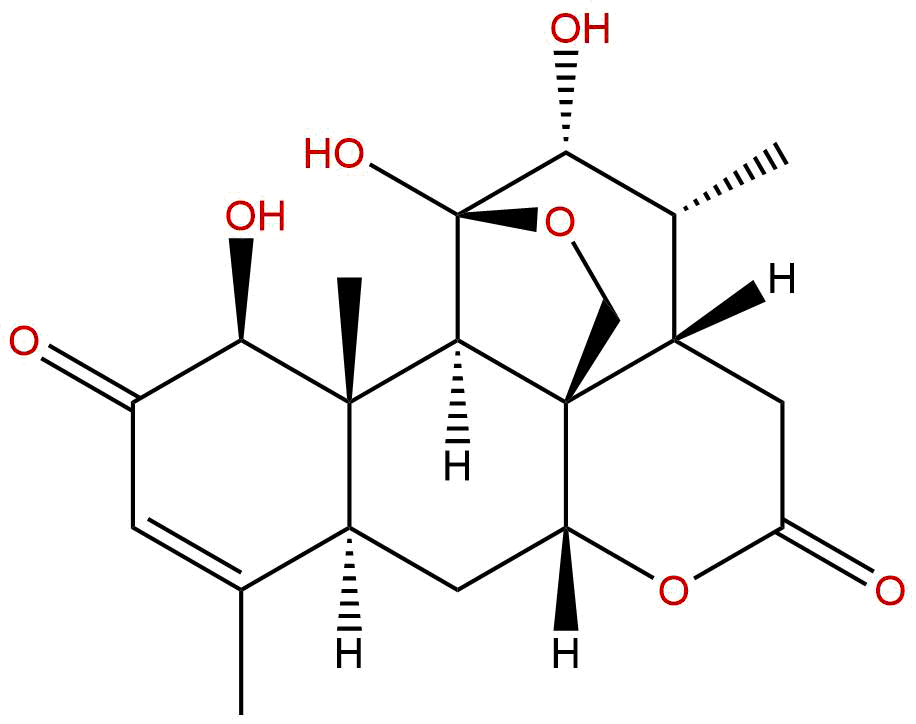
The chemical structure of jatrophinone belongs to the typical class of bitter lignin compounds, with a core skeleton of C20 bitter lignin type (picrasane type) triterpenoid lactone structure. The molecular formula of the compound is C20H26O7, with a molecular weight of 378.4210 g/mol. From the perspective of structural characteristics, Zanthoxylum bungeanum has the following key structural units:
-
Tetracyclic triterpenoid skeleton It contains four ring systems: A, B, C, and D. Among them, ring A is a six membered ring, ring B is a seven membered ring, ring C is a six membered ring, and ring D is a five membered lactone ring. This unique ring arrangement endows lignin compounds with a unique spatial configuration.
-
Characteristics of high oxidation The molecule contains multiple hydroxyl and carbonyl functional groups, including a delta lactone ring (D ring) and a cyclohexanone structural unit. These oxygen-containing functional groups not only determine the polarity and reactivity of the compound, but also serve as key pharmacophores for its interaction with biological targets.
-
Chiral center There are multiple chiral carbon atoms in the molecule, forming a specific stereoconfiguration. Research has shown that the biological activity of lignin compounds is closely related to their stereochemical configurations, and specific chiral arrangements are necessary to maintain their precise binding with target proteins.
Physical and chemical property parameters
According to computational chemistry and experimental measurement data, the main physicochemical properties of jatrophinone are as follows:
-
Lipid water partition coefficient (LogP): 0.5521. This value indicates that berberine has moderate lipophilicity, which can maintain a certain solubility in aqueous environments and penetrate biological membrane structures. This characteristic is of great significance for its oral absorption and cellular uptake.
-
Topological Polarity Surface Area (TPSA)113.29 Å ². A higher TPSA value reflects the presence of a large number of polar functional groups in the molecule, which is usually associated with good water solubility but may also affect its ability to penetrate the blood-brain barrier.
-
Water solubility:0.4788 mg/mL。 Zha Pa Ren ketone exhibits moderate water solubility, which provides a basis for its distribution and metabolism in organisms, but also suggests that solubilization strategies may need to be considered in formulation development.
-
Blood-brain barrier penetrability Predicted as high. This characteristic deserves special attention. On the one hand, it suggests that jatrophinone may have the potential to treat central nervous system diseases. On the other hand, it is also necessary to be alert to its potential central nervous system toxicity.
-
HERG inhibition: Negative. HERG potassium channel inhibition is an important predictor of drug cardiac toxicity, and the negative results of berberine reduce its risk of causing QT interval prolongation and arrhythmia, which is a positive signal in its pharmacological evaluation.
-
Ames test The result is 0.0, indicating that the compound did not exhibit mutagenicity in the bacterial recovery mutation test and had a low risk of genetic toxicity.
Plant sources and extraction methods
Main plant sources
Zha Pa Ren ketone is mainly isolated and obtained from plants in the Simaroubacheae family, among which the most important source plants include:
-
Eurycoma harmandiana This is currently the main plant source of jatrophinone reported. This plant belongs to the genus Ari in the family Sapindaceae(Eurycoma)Shrubs or small trees are mainly distributed in Southeast Asia, such as Thailand, Laos, Cambodia, and other places. In traditional medicine, the roots and stem bark of this plant are used to treat fever, malaria, and digestive system diseases.
-
Other bitter wood plants Research has shown that jatrophinone may also be present in other bitter wood plants, such as Simarouba glauca、Brucea javanica(Brucella) and so on. These plants also have a long history of application in folk medicine, mainly used to treat diseases such as malaria, dysentery, and tumors.
Extraction and Separation Purification Methods
The extraction and purification of jatropenone usually follow the classic process of natural product chemistry, combined with modern chromatographic techniques for efficient separation:
-
Raw material pretreatment Collect plant roots or stem bark, dry and crush them, and extract them using organic solvents. Common extraction solvents include methanol, ethanol, or their mixed solvents, which are used to preliminarily extract lignin compounds based on their good solubility.
-
Crude extraction Using cold soaking or Soxhlet extraction method, the plant powder is fully contacted with the solvent, and the extraction time is usually 24-72 hours. The extract was concentrated under reduced pressure to obtain the total extract.
-
Liquid-liquid distribution Suspend the total extract in water and extract it sequentially with solvents of different polarities such as petroleum ether, ethyl acetate, and n-butanol to achieve preliminary component separation. Zha Pa Ren ketone is usually enriched in the ethyl acetate extraction site.
-
Column chromatography separation: Use silica gel column chromatography, ODS reverse phase column chromatography or Sephadex LH-20 gel column chromatography for further separation. The commonly used elution systems include gradient elution systems such as chloroform methanol and ethyl acetate methanol. The separation of berberine usually requires a combination of thin-layer chromatography (TLC) monitoring and high-performance liquid chromatography (HPLC) analysis.
-
Purification and identification High purity berberine monomer was obtained by preparative HPLC, and its structure was confirmed using spectroscopic techniques such as nuclear magnetic resonance spectroscopy (NMR), mass spectrometry (MS), infrared spectroscopy (IR), and ultraviolet spectroscopy (UV).
It is worth noting that the content of quercetin in plants is usually low and coexists with various structurally similar lignin compounds, which poses challenges for its large-scale separation and purification. In recent years, the introduction of new separation methods such as high-speed countercurrent chromatography (HSCCC) and molecular imprinting technology has provided a new approach for the efficient preparation of berberine.
Pharmacological activity research
Antimalarial activity
Malaria is a serious parasitic disease caused by malaria parasites, and there are still hundreds of millions of infected cases worldwide every year. Zha Pa Ren ketone against Plasmodium falciparum(Plasmodium falciparum)It exhibits extremely strong inhibitory activity, with an IC50 value as low as 0.037 μ g/mL (approximately 98 nM), which is much higher than the activity of traditional antimalarial drug chloroquine against certain drug-resistant strains.
Further mechanistic studies suggest that berberine may exert its antimalarial effects through the following pathways:
-Inhibit protein synthesis of malaria parasites
-Interference with the nucleic acid metabolism of malaria parasites
-Inducing oxidative stress response in malaria parasites
It is worth noting that berberine exhibits similar activity against both chloroquine sensitive and resistant strains, suggesting that its mechanism of action may be different from chloroquine, providing important clues for the development of new antimalarial drugs.
Antitumor activity
Zha Pa Ren ketone exhibits significant cytotoxic effects on various tumor cell lines, with an IC50 of 0.34 μ g/mL for P-388 mouse leukemia cell line. In addition, the study also found that it has inhibitory activity against the following tumor cell lines:
-
leukemia cell In addition to P-388, it also exhibits inhibitory effects on K562 (human chronic myeloid leukemia) and HL-60 (human promyelocytic leukemia) cells.
-
Solid tumor cells: Including breast cancer cells (MCF-7, MDA-MB-231), lung cancer cells (A549), liver cancer cells (HepG2) and colon cancer cells (HT-29).
-
Drug-resistant tumor cells Preliminary studies have shown that berberine still maintains certain activity against multidrug-resistant (MDR) tumor cell lines, suggesting its potential to overcome tumor resistance.
Other pharmacological activities
In addition to its anti malaria and anti-tumor activities, jatrophinone also exhibits the following biological activities:
- anti-inflammatory activity Plays anti-inflammatory effects by inhibiting the production of inflammatory mediators such as NO, PGE2, and pro-inflammatory cytokines.
- Antibacterial activity Has inhibitory effects on certain Gram positive bacteria and fungi.
- Immune regulatory activity May affect immune response by regulating T cell and macrophage functions.
Mechanism of action and molecular targets
Mechanism of anti-tumor action
The anti-tumor effect of Zanthoxylum bungeanum involves multiple molecular targets and signaling pathways, and its multi-target characteristic is an important advantage of natural products:
- Inducing cell apoptosis:
- MCL1 and BCL2 regulation MCL1 and BCL2 are key anti apoptotic proteins in the Bcl-2 family. Research has shown that berberine can downregulate the expression levels of MCL1 and BCL2, disrupt the integrity of mitochondrial outer membrane, promote cytochrome c release, activate caspase cascade reaction, and induce tumor cell apoptosis.
-
STAT3 signal suppression STAT3 is an important transcription factor that is continuously activated in various tumors. Zha Pa Ren ketone can inhibit tumor cell proliferation and induce apoptosis by suppressing the phosphorylation and nuclear translocation of STAT3, downregulating the expression of downstream target genes such as Survivor, Cyclin D1, and VEGF.
-
Inhibit tumor invasion and metastasis:
-
MMP2 inhibition Matrix metalloproteinase-2 (MMP2) plays a crucial role in tumor invasion and metastasis. Zha Pa Ren ketone can inhibit the expression and activity of MMP2, reduce the degradation of extracellular matrix, and thus inhibit the migration and invasion ability of tumor cells.
-
Topoisomerase inhibition:
-
TOP1 and TOP2A inhibition Topoisomerase is a key enzyme in DNA replication and transcription processes. Zha Pa Ren ketone can act as a topoisomerase inhibitor, stabilizing DNA topoisomerase complexes, causing DNA strand breaks, interfering with the DNA replication and transcription processes of tumor cells, and ultimately inducing cell death.
-
Regulation of hypoxic signaling pathway:
-
HIF1A inhibition Hypoxia inducible factor 1 alpha (HIF1A) plays a central role in tumor adaptation to hypoxic environments. Zha Pa Ren ketone can inhibit the protein expression and transcriptional activity of HIF1A, reduce the expression of downstream target genes such as VEGF and GLUT1, thereby inhibiting tumor angiogenesis and glucose metabolism reprogramming.
-
MAPK signaling pathway regulation:
-
MAPK1 (ERK2) regulation The MAPK/ERK signaling pathway plays an important role in cell proliferation and differentiation. Zha Pa Ren ketone may inhibit tumor cell proliferation by regulating the phosphorylation level of MAPK1, affecting the activity of downstream transcription factors.
-
Hormone related targets:
- ESR1 and CYP19A1 regulation: For hormone dependent tumors (such as breast cancer), hawpalonone may interfere with estrogen synthesis and signal transduction by regulating the expression of estrogen receptor α (ESR1) and the activity of aromatase (CYP19A1), and play an anti-tumor role.
Mechanism of antimalarial action
The anti malarial mechanism of jatrophinone may involve:
-Inhibiting protein synthesis in malaria parasites, particularly affecting translation initiation and elongation processes
-Disrupting the fatty acid metabolism and membrane structural integrity of malaria parasites
-Inducing oxidative stress in malaria parasites, leading to lipid peroxidation and membrane damage
Multi target synergistic effect
The multi-target action characteristic of jatrophinone is its significant advantage over single target drugs. By simultaneously acting on multiple key signal nodes, jatrophinone can:
-Reduce the possibility of tumor cells developing drug resistance
-Realize synergistic anti-tumor effects at lower concentrations
-Reduce compensatory signal activation that may be caused by single target inhibition
Evaluation of drug properties and pharmacokinetics
Analysis of drug properties parameters
Based on computational chemistry and early experimental data, the pharmacological characteristics of jatrophinone are as follows:
- Drug Evaluation:
- Molecular weight (378.42 Da) conforms to Lipinski's five rules (<500 Da)
- LogP (0.5521) is within the ideal range (0-3)
- Moderate number of hydrogen bond donors and acceptors
-
Reasonable number of rotatable keys and moderate molecular flexibility
-
Security prediction:
- HERG inhibition negative, low risk of cardiac toxicity
- Ames test negative, low risk of genetic toxicity
-
The blood-brain barrier has high penetrability, and attention should be paid to the safety of the central nervous system
-
Metabolic stability:
- There are multiple hydroxyl and carbonyl groups in the molecule, which may serve as metabolic modification sites
- The lactone ring structure may be hydrolyzed by esterases, affecting metabolic stability
Pharmacokinetic characteristics
At present, there is insufficient research on the in vivo pharmacokinetics of jatrophinone, but based on its physicochemical properties and studies of similar compounds, the following characteristics can be inferred:
-
absorb Moderate water solubility and moderate lipophilicity are beneficial for oral absorption, but may be affected by first pass effects. The bioavailability may be low and requires formulation optimization.
-
distribution A higher blood-brain barrier penetration suggests a better distribution in the central nervous system, but it may also pose a risk of neurotoxicity. The plasma protein binding rate needs to be experimentally determined.
-
Metabolism The main metabolic pathways may include hydroxylation, glucuronidation, and lactone ring hydrolysis. The CYP450 enzyme system may be involved in its oxidative metabolism.
-
excretion It is speculated that it is mainly excreted through bile and urine, and further pharmacokinetic studies are needed to determine the specific excretion pathway and half-life.
Formulation development strategy
The following formulation strategies can be considered for the pharmacological characteristics of Zanthoxylum bungeanum:
- Solubilization technology Using cyclodextrin inclusion, liposome encapsulation, or solid dispersion techniques to improve water solubility
- Prodrug design Esterification modification of hydroxyl groups to improve oral absorption and metabolic stability
- Targeted delivery Using nanocarriers to achieve targeted delivery of tumors and improve treatment index
Clinical application prospects and prospects
Prospects of anti-tumor applications
The multi-target anti-tumor mechanism of Zanthoxylum bungeanum has potential application value in the following fields:
-
Leukemia treatment The strong activity of P-388 and K562 cells suggests their potential in leukemia treatment, especially for patients with relapsed/refractory leukemia.
-
Solid tumor treatment The activity of breast cancer, lung cancer, liver cancer and other common solid tumors, combined with its ability to inhibit tumor metastasis, makes it a potential anti-tumor candidate drug.
-
Overcoming drug resistance The multi-target action characteristics make it potentially effective against tumors resistant to traditional chemotherapy drugs and can be used as a component of combination therapy.
Prospects of antimalarial application
Given the increasingly severe issue of global malaria drug resistance, jatrophinone, as a natural antimalarial compound with a novel mechanism of action, has the following advantages:
-Effective against chloroquine resistant strains
-Possible synergistic effect with existing antimalarial drugs
-Can be used as lead compounds for antimalarial drugs for structural optimization
Challenges and Solutions Faced
- Source restrictions Low natural content and limited plant resources. The solution strategy includes:
- Establish plant cell culture and hairy root culture systems
- Developing fully synthetic or semi synthetic routes
-
Using biosynthetic genetic engineering to increase yield
-
Pharmacokinetic optimization The oral bioavailability and metabolic stability need to be improved. It can be improved through structural modification and formulation technology.
-
Toxicity evaluation Systematic in vivo toxicity studies are needed, especially on the impact on the central nervous system.
-
In depth mechanism of action Further clarification is needed on its detailed mechanism of action at the molecular level, particularly its binding patterns with various targets and signal network regulation.
Future research directions
-
Research on Structure Activity Relationship Systematically study the contributions of various functional groups of Zanthoxylum bungeanum to its biological activity, providing guidance for structural optimization.
-
Derivative synthesis Design and synthesize a series of derivatives based on the skeleton of Zanthoxylum bungeanum, and screen for candidate compounds with better activity and lower toxicity.
-
Combination therapy research Explore strategies for combined use with chemotherapy drugs, targeted drugs, or immune checkpoint inhibitors.
-
Pharmacodynamic evaluation in vivo Establish multiple animal models of tumors and malaria, and systematically evaluate their in vivo efficacy and safety.
-
Analysis of biosynthetic pathways Elucidate the biosynthetic pathway of jatrophinone in plants, providing a foundation for heterologous expression and metabolic engineering.
Conclusion
As a representative compound of lignin natural products, jatrophinone has attracted widespread attention in the academic community due to its unique chemical structure and significant anti malarial and anti-tumor activities. Its potent inhibitory activity against Plasmodium falciparum (IC50 0.037 μ g/mL) and cytotoxicity against P-388 leukemia cells (IC50 0.34 μ g/mL) indicate that this compound has the potential to become a lead compound for novel antimalarial and anti-tumor drugs.
From a molecular mechanism perspective, jatrophinone exerts multi pathway and multi-level anti-tumor effects by regulating multiple key targets such as MCL1, BCL2, STAT3, MMP2, TOP1, TOP2A, HIF1A, MAPK1, ESR1, and CYP19A1. This multi-target action feature not only endows it with unique therapeutic advantages, but also provides the possibility for it to overcome tumor drug resistance. In terms of medicinal properties, Zanthoxylum bungeanum exhibits good drug like characteristics, low hERG inhibition risk, and genetic toxicity, laying the foundation for its further development.
However, the research on jatrophinone still faces many challenges, including limitations in natural sources, optimization needs for pharmacokinetic properties, and systematic evaluation of in vivo toxicity. Future research should focus on in-depth analysis of structure-activity relationships, development of efficient synthetic routes, innovation in formulation technology, and systematic evaluation of preclinical pharmacodynamics and toxicology. With the continuous deepening of synthetic chemistry, medicinal chemistry, and pharmacology research, jatrophinone and its derivatives are expected to play an important role in anti-tumor and antimalarial treatment, and contribute to human health.
The history of natural product drug discovery tells us that every biologically active natural product is a precious treasure bestowed upon humanity by nature. The study of berberine not only helps to reveal the pharmacological nature of lignin compounds, but also provides important lead compounds for the development of new anti-tumor and antimalarial drugs. We look forward to the near future when jatrophinone can move from the laboratory to clinical practice and become another powerful tool for treating human diseases.