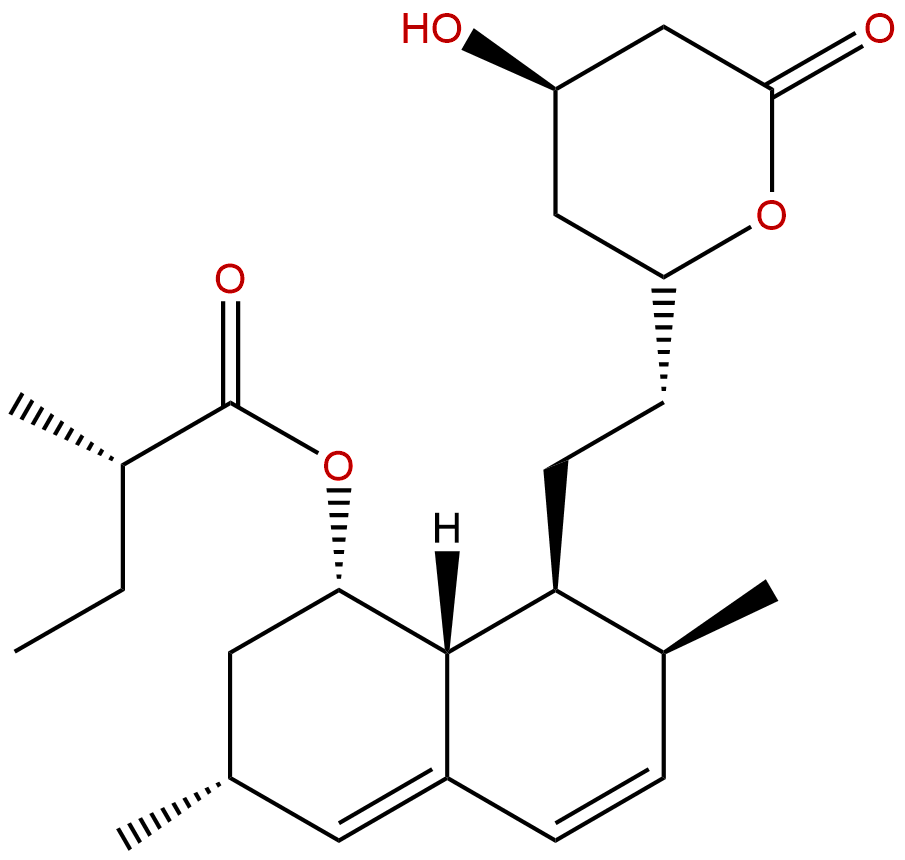


Product name: Lovastatin
Synonym name:
Catalogue No.: BP3441
Cas No.: 75330-75-5
Formula: C24H36O5
Mol Weight: 404.547
Botanical Source:
Physical Description: White cryst.
Type of Compound: Diterpenoids
Purity: 95%~99%
Analysis Method: HPLC-DAD or/and HPLC-ELSD
Identification Method: Mass, NMR
Packing: Brown vial or HDPE plastic bottle
The product could be supplied from milligrams to grams. Inquire for bulk scale.
We provide solution to improve the water-solubility of compounds, thereby facilitating the variety of activity tests and clinic uses.
For Reference Standard and R&D, Not for Human Use Directly.
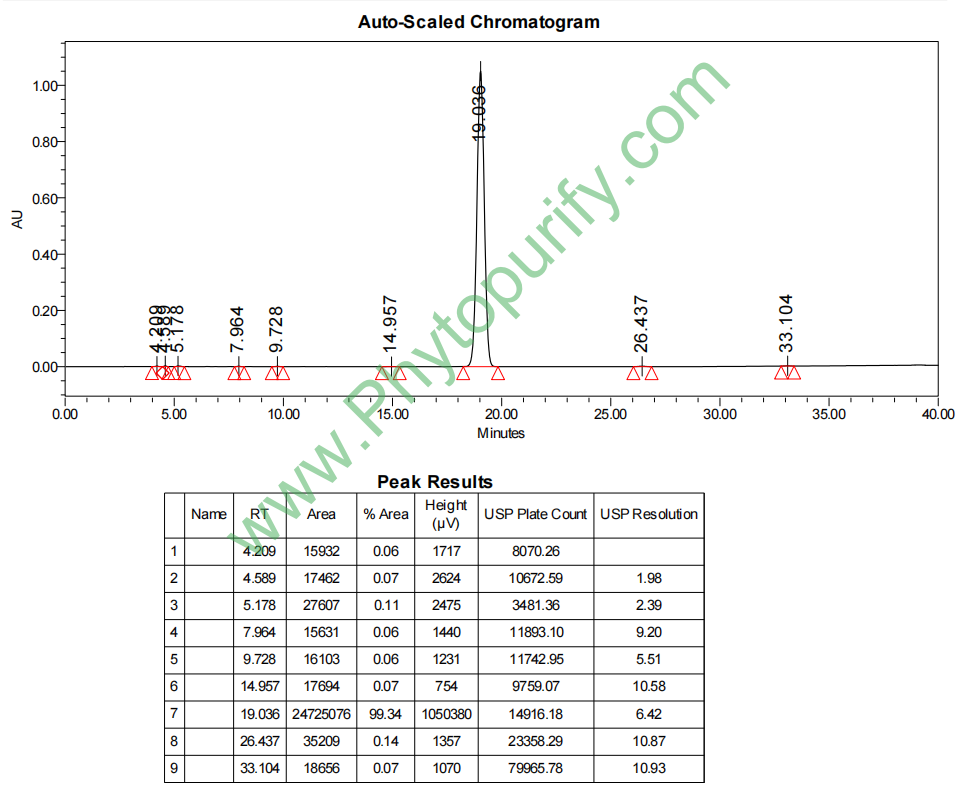
HPLC of Lovastatin
Storage conditions:Short-term storage at 2~8℃, long-term storage at -20 ~ -80℃
72.8300
4.2845
4.2848
.0292
3.0145
3.1755
High
90.1714
4.6903
No
Yes
No
No
No
Yes
0.0
No
Yes
Yes
Yes
Cardiovascular disease is the leading cause of death worldwide, with hypercholesterolemia, particularly elevated levels of low-density lipoprotein cholesterol, being recognized as a key risk factor. Therefore, developing safe and effective lipid-lowering drugs has always been one of the core areas of pharmaceutical chemistry and pharmacology research. In the 1970s, Japanese scientist Akira Endo discovered the first compound with inhibitory activity against hydroxymethylglutaryl-CoA reductase from Penicillium purpureum, Mervastatin, marking the beginning of the era of "statin" drugs. As the first statin approved by the US Food and Drug Administration for marketing, lovastatin not only successfully transformed from natural products to clinical drugs, but also completely changed the pattern of prevention and treatment of hypercholesterolemia and atherosclerotic cardiovascular disease. Lovastatin is derived from secondary metabolites of fungi, and its discovery is a classic example of successful use of natural products as lead compounds. This article aims to systematically review the chemical structure, sources, pharmacological activities, mechanisms of action, drug properties, and clinical applications of lovastatin, and to look forward to its future development.
The chemical name of lovastatin is (1S, 3R, 7S, 8S, 8aR) -1,2,3,7,8a-hexahydro-3,7-dimethyl-8- [2- [(2R, 4R) -4-hydroxy-6-oxo-2H-tetrahydropyran-2-yl] ethyl] -1-naphthyl (2S) -2-methylbutanoate, CAS number 75330-75-5. Its molecular formula is C24H36O5 and its molecular weight is 404.5470.
Structurally, lovastatin is a partially hydrogenated naphthalene ring (decahydronaphthalene) skeleton, connected by a β - hydroxy - δ - lactone ring (hexagonal lactone) and a 2-methylbutyrate side chain. This structure is highly similar in conformation to hydroxymethylglutarate, a key intermediate in the cholesterol synthesis pathway in the human body, which is the structural basis for its competitive inhibition of HMG CoA reductase. Its lactone ring form is a prodrug, which undergoes hydrolysis and ring opening in the body to generate a pharmacologically active beta hydroxy acid form.
Its physical and chemical properties have a profound impact on its medicinal properties. The calculated LogP value is 4.2845, indicating that lovastatin has high lipophilicity. The topological polarity has a relatively low surface area of 72.83 Å ². These characteristics determine its extremely low water solubility, approximately 0.0292 mg/mL, making it a poorly soluble drug. High lipophilicity also leads to its high blood-brain barrier permeability, which may be related to reports of rare central nervous system side effects observed in clinical applications, such as sleep disorders. It is worth noting that in the initial screening of drug critical toxicity, lovastatin showed a good safety signal: its hERG inhibition risk was negative, indicating a low potential risk of arrhythmia; The Ames test result is 0.0, indicating that there is no mutagenicity in this testing system, providing preliminary support for its long-term safety.
Lovastatin is not derived from higher plants, but is a typical secondary metabolite of fungi. Its main producing strains include Aspergillus terreus and certain edible fungi, such as shiitake mushrooms. These fungi will initiate the synthesis pathway of related polyketide compounds under specific fermentation conditions (such as carbon source limitation, stress conditions), producing lovastatin as their defense or regulatory substance.
Early extraction and production mainly relied on solid or liquid fermentation techniques. By optimizing the fermentation medium (such as carbon source, nitrogen source, pH, dissolved oxygen) and fermentation process parameters using Aspergillus terreus as the production strain, the yield of lovastatin can be significantly increased. After fermentation, the mycelium and lovastatin in the fermentation broth need to undergo a series of separation and purification steps. The typical extraction process includes: organic solvent extraction (such as methanol, ethanol, ethyl acetate), transferring lovastatin from the mycelium or fermentation broth to the organic phase; Subsequently, high-purity lovastatin was obtained through repeated purification using chromatographic techniques such as silica gel column chromatography and high-performance liquid chromatography. With the development of molecular biology and synthetic biology, high-yield engineering strains have been successfully constructed through in-depth research and metabolic engineering of gene clusters responsible for lovastatin biosynthesis in Aspergillus terreus, such as lova loVI, achieving industrial and efficient production of lovastatin. This is also a model for modern natural product drug production.
The core pharmacological activity of lovastatin is its potent lipid-lowering effect. It significantly reduces endogenous cholesterol synthesis by specifically inhibiting the rate limiting enzyme of cholesterol synthesis in liver cells, thereby feedback upregulating the expression of low-density lipoprotein receptors on the surface of liver cells, accelerating the clearance of low-density lipoprotein and its precursors in plasma, and ultimately achieving the therapeutic effect of reducing total cholesterol and low-density lipoprotein cholesterol. In addition, it can moderately increase high-density lipoprotein cholesterol and reduce triglycerides.
In addition to its classic lipid-lowering effect, a large number of preclinical studies have revealed the multifaceted pharmacological activities of lovastatin
1. Improve endothelial function By upregulating the expression and activity of endothelial nitric oxide synthase, the bioavailability of nitric oxide is increased, thereby promoting vasodilation, inhibiting platelet aggregation, and leukocyte adhesion.
2. anti-inflammatory effect Inhibit the activation of inflammatory signaling pathways such as nuclear factor kappa B and reduce the production of inflammatory factors such as C-reactive protein and interleukin-6.
3. Stable atherosclerotic plaque By reducing the lipid content of the lipid nucleus, inhibiting macrophage activity, and increasing the collagen content of the plaque fibrous cap, the plaque tends to stabilize and the risk of rupture is reduced.
4. Anti proliferation and induction of apoptosis: In a variety of tumor cell lines (such as breast cancer, prostate cancer, glioma, etc.), lovastatin blocks the synthesis of isoprenoid intermediates (such as farnesyl pyrophosphate, geranylgeranyl pyrophosphate) by inhibiting the mevalonate pathway. These intermediates are necessary for post-translational modifications (isoprenoidization) of many small G proteins (such as Ras, Rho, Rac), which are crucial for cell proliferation, survival, and migration. Therefore, lovastatin can induce tumor cell cycle arrest and apoptosis, and inhibit their invasion and metastasis. This characteristic has led to extensive research in the fields of tumor chemoprevention and adjuvant therapy.
5. Immune regulation and neuroprotection There are also studies reporting its potential benefits in autoimmune and neurodegenerative disease models, which may be related to inhibiting small G protein function and regulating immune cell activity.
The core mechanism of action of lovastatin is the competitive inhibition of the rate limiting enzyme of the mevalonate pathway, HMG CoA reductase. The β - hydroxy acid structure after its opening is very similar in spatial conformation to the natural substrate HMG CoA of HMG CoA reductase, thus reversibly occupying the active site of the enzyme and preventing HMG CoA from being reduced to mevalonate.
This initial inhibitory effect triggered a series of downstream molecular events involving multiple key targets related to lipid metabolism:
* HMGCR Directly targeting the target. Inhibition leads to a decrease in cholesterol synthesis within liver cells.
* LDLR The intracellular cholesterol level decreases, activating the steroid regulatory element binding protein pathway, and feedback upregulating the gene transcription and protein expression of LDLR on the surface of liver cell membrane. The increase in LDLR quantity greatly enhances its ability to uptake and clear circulating lipoproteins rich in apolipoprotein B, mainly LDL.
* APOB & APOE APOB is the main structural protein of LDL, while APOE is a ligand for chylomicron residues and very low-density lipoprotein residues. LDLR mediates the endocytic clearance of these lipoprotein particles by recognizing APOB100 and APOE. Lovastatin indirectly enhances the metabolism of lipoproteins carrying APOB and APOE by upregulating LDLR.
* PCSK9 This is a protein that negatively regulates LDLR. Statins not only upregulate LDLR, but also upregulate the expression of PCSK9 to a certain extent, which promotes the degradation of LDLR and partially offsets the therapeutic effect of statins. This explains why the combination of PCSK9 inhibitors can produce a stronger LDL-C lowering effect.
* PPARA Studies have shown that statins can activate peroxisome proliferator activated receptor alpha, thereby promoting fatty acid oxidation and lipoprotein lipase expression, which helps explain their role in reducing triglycerides.
* CETP Cholesterol ester transporters participate in lipid exchange between high-density lipoprotein and triglyceride rich lipoprotein. Some studies suggest that statins may mildly inhibit CETP activity, but this effect is not the main mechanism.
Its anti-tumor and other "pleiotropic" effects are mainly attributed to the depletion of downstream products of the mevalonate pathway, especially farnesyl pyrophosphate and geranyl geranyl pyrophosphate, which in turn affect the membrane localization and function of GTP binding proteins such as Ras, Rho, Rac, and interfere with the proliferation, survival, migration, and angiogenesis signaling pathways of tumor cells.
Lovastatin, as a prodrug, has typical pharmacokinetic characteristics. After oral administration, the lactone ring form is absorbed in the gastrointestinal tract with an absorption rate of about 30%, showing a significant first pass effect, mainly metabolized by the liver cytochrome P450 enzyme system (especially CYP3A4 isoenzymes). The lactone ring is hydrolyzed by carboxylesterase in the liver into an active open-loop β - hydroxy acid form, which is the direct agent for inhibiting HMG CoA reductase.
Due to its high lipophilicity, lovastatin has a large distribution volume and can be widely distributed in tissues such as the liver and kidneys. Its plasma protein binding rate is relatively high (>95%). The half-life of the active open-loop form of plasma is relatively short, about 1-2 hours. However, its inhibitory effect on HMG CoA reductase lasts much longer than its plasma half-life, which may be related to the irreversibility of enzyme inhibition or active metabolites with longer half lives. Lovastatin is mainly excreted through bile, with a small amount excreted through the kidneys.
In clinical applications, its advantages and disadvantages in drug formulation are obvious. The advantages are clear mechanism of action, precise lipid-lowering efficacy, and convenient oral administration. The main disadvantages include: ① poor water solubility, which affects the development of formulations; ② The first pass effect is significant, but the absolute bioavailability is low; ③ Mainly metabolized by CYP3A4, there is a significant risk of interaction with numerous drugs that metabolize or inhibit/induce this enzyme (such as cyclosporine, macrolide antibiotics, azole antifungal drugs, grapefruit juice, etc.), which may increase the risk of myopathy or rhabdomyolysis; ④ Lipophilicity makes it easier for it to enter non liver tissues, theoretically increasing the incidence of muscle toxicity, although its tolerability is generally good in clinical practice.
Since its launch in 1987, lovastatin and its active metabolite simvastatin have accumulated overwhelming evidence-based medical evidence in reducing the incidence rate and mortality of cardiovascular events, and are still the cornerstone drugs for primary and secondary prevention of cardiovascular diseases.
Currently, the clinical application prospects and research directions of lovastatin mainly focus on the following aspects:
1. Generic drugs and formulation optimization As a drug that has passed its patent period, generic drugs of lovastatin are widely available, which improves the economic viability of the drug. New formulation technologies, such as solid dispersions, nanocrystals, self microemulsions, etc., are being used to improve their water solubility and bioavailability, which may lead to better therapeutic effects and lower doses.
2. Multi effect expansion and exploration of new indications Based on its "multiple effects" such as anti-inflammatory, immune regulation, and anti proliferation, researchers are actively exploring its potential therapeutic value in non-alcoholic fatty liver disease, multiple sclerosis, Alzheimer's disease, and various malignant tumors (as adjuvant therapy or chemopreventive agents). However, most of these studies are in the preclinical or early clinical stages and require large-scale randomized controlled trials to validate their risk benefit ratios.
3. Combination therapy strategy The combination use of lovastatin with other lipid-lowering drugs such as ezetimibe, PCSK9 monoclonal antibody, and eicosapentaenoic acid ethyl ester has become an important strategy for treating high-risk or statin intolerant patients, achieving more potent and safer lipid-lowering goals.
4. Individualized medication and safety monitoring With the development of pharmacogenomics, research on genes related to statin metabolism, transport, and effector effects (such as SLCO1B1, ABCG2, APOE, etc.) can help identify high-risk populations for myopathy, achieve personalized dose adjustments, maximize treatment benefits, and minimize adverse reactions.
5. From drugs to tool molecules Lovastatin, as a classic tool for studying the mevalonate pathway and its role in cell biology, will continue to play an important role in basic life science research.
Lovastatin emerged from fungal fermentation broth and successfully ushered in the era of statins for the prevention and treatment of cardiovascular diseases through its clear HMG CoA reductase inhibition mechanism. It is not only an efficient lipid-lowering drug, but also a valuable probe that reveals the complex relationship between cholesterol metabolism, cell signal transduction, and human diseases. The discovery of its "pleiotropy" has broadened our understanding of the broad biological effects that single target drugs may have. Despite the continuous emergence of new generation lipid-lowering drugs, lovastatin still holds an important clinical position globally due to its excellent efficacy, rich clinical evidence, and good cost-effectiveness. In the future, through innovative formulations, expanded indications, and the application of precision medicine, this classic natural product derived drug is expected to continue contributing to human health. The success history of lovastatin is the best interpretation of the research value of natural products, and it continues to inspire scientists to search for more keys to disease treatment in nature.
