| Catalog No | Package | Original Price | Price | Inventory | Quantity | Operating |
|---|---|---|---|---|---|---|
| SBP02254-5mg | 5mg | $590.00 | Sign in |
|


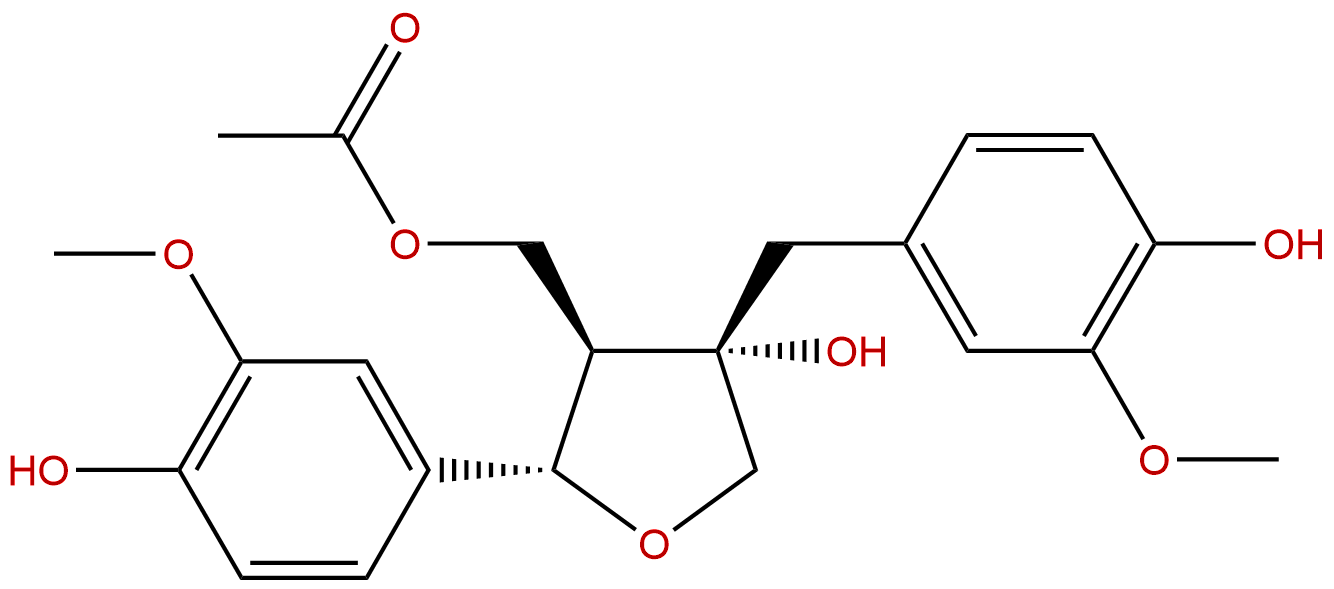
Product name: Olivil monoacetate
Synonym name:
Catalogue No.: SBP02254
Cas No.: 1016974-78-9
Formula: C22H26O8
Mol Weight: 418.442
Botanical Source:
Type of Compound:
Purity: 95%~99%
Analysis Method: HPLC-DAD or/and HPLC-ELSD
Identification Method: Mass, NMR
Packing: Brown vial or HDPE plastic bottle
Storage: Store in a well closed container, protected from air and light. Put into refrigerate or freeze for long term storage.
Whenever possible, you should prepare and use solutions on the same day. However, if you need to make up stock solutions in advance, we recommend that you store the solution as aliquots in tightly sealed vials at -20℃. Generally, these will be useable for up to two weeks.
The product could be supplied from milligrams to grams
Inquire for bulk scale.
For Reference Standard and R&D, Not for Human Use Directly.
Storage conditions:Short-term storage at 2~8℃, long-term storage at -20 ~ -80℃
114.6800
1.9661
1.9627
.2022
3.7120
.8262
Low
87.0791
3.7022
No
No
No
No
No
No
0.0
Yes
No
No
No
Neurodegenerative diseases such as Alzheimer's disease (AD), Parkinson's disease (PD), and Huntington's disease have become major health challenges facing aging societies worldwide. The core pathological features of these diseases include progressive loss of neurons, abnormal protein aggregation, oxidative stress damage, mitochondrial dysfunction, and neuroinflammatory response. Despite some progress in drug development targeting single targets such as acetylcholinesterase and β - amyloid protein over the past few decades, clinical efficacy is limited and often accompanied by significant side effects. Therefore, the search for multi-target natural products that can simultaneously act on multiple pathological processes and have good safety has become an important direction for the development of neuroprotective drugs.
Natural products have always been an important source of new drug discovery due to their structural diversity and wide range of biological activities. Among the numerous active ingredients derived from plants, lignans have attracted much attention due to their significant antioxidant, anti-inflammatory, and neuroprotective activities. Olivil monoacetate (CAS number: 1016974-78-9) is a compound derived from the plant Sapindaceae in the family Celastraceae(Maytenus Natural lignin derivatives isolated from species. This compound was initially identified for its significance in plant chemical taxonomy, but in recent years, with further research on its pharmacological activity, particularly its potential in neuroprotection, olivine resin 9-acetate is transforming from a relatively niche natural product to a promising lead compound.
This review aims to systematically review the chemical properties, plant sources, pharmacological activities, mechanisms of action, and pharmacological evaluation of oleoresin 9-acetate, and explore its clinical application prospects as a neuroprotective candidate molecule, in order to provide comprehensive academic references for further research and development of this compound.
Olive resin 9-acetate belongs to the lignan class compounds, and its basic skeleton is composed of two phenylpropanoid units (C6-C3) connected by the β - β 'position. Specifically, the compound is the product of acetylation modification of the 9th hydroxyl group of olivil resin. Its molecular formula is C22H26O8 and its molecular weight is 418.4420 g/mol. Structurally, the molecule contains a tetrahydrofuran ring core, with aromatic rings attached on each side (one of which is 3,4-dimethoxyphenyl and the other is 4-hydroxy-3-methoxyphenyl), and an acetoxy substitution at position C-9. This structure endows the molecule with a certain degree of rigidity and multiple modifiable sites, providing a foundation for subsequent research on the structure activity relationship.
According to computational chemistry predictions, the lipid water partition coefficient (LogP) of olive resin 9-acetate is 1.9661, indicating that it has moderate lipophilicity and theoretically can penetrate cell membranes well. Its topological polar surface area (TPSA) is 114.68 Å ², which is slightly higher than the recommended upper limit of 140 Å ² for oral medications, indicating that it may be absorbed through passive diffusion, but the absorption efficiency may be limited to some extent. In terms of water solubility, the predicted water solubility value is 0.2022 mg/mL, which belongs to low water solubility compounds. This may require the use of formulation technologies (such as nanoemulsions, liposomes, or cyclodextrin inclusion) to improve their bioavailability in practical applications.
It is worth noting that the predicted result of blood-brain barrier (BBB) penetration is "low". This characteristic is both a challenge and an opportunity for neuroprotective drugs: low BBB penetration means that the compound's direct exposure to the central nervous system may be limited, but it may also reduce the risk of adverse reactions to the central nervous system after peripheral administration. However, to achieve effective neuroprotective effects, it may be necessary to enhance its brain delivery efficiency through structural modifications or special delivery systems.
Olive resin 9-acetate is mainly derived from Camellia oleifera(Maytenus Separated from species. Cicha Meidenmu belongs to the Celastraceae family and the Meidenmu genus. This genus of plants is widely distributed in tropical and subtropical regions, especially in tropical rainforests in Africa, South America, and Asia. The plants of the family Celastraceae are known for their rich secondary metabolites, including alkaloids, terpenes, lignans, and quinones, many of which have significant anti-tumor, anti-inflammatory, and antibacterial activities. Cicha Meidenmu is often used in traditional medicine to treat inflammatory diseases, gastrointestinal discomfort, and skin diseases. The study of its chemical composition began in the 1970s, when the main focus was on its anti-tumor active ingredients - Meidenmu lignin compounds.
The content of olive resin 9-acetate in plants is usually low and belongs to trace components. Its biosynthetic pathway is speculated to be related to the phenylpropanoid metabolic pathway, forming a lignin skeleton through oxidative coupling of pine bark alcohol or mustard alcohol, followed by modification steps such as hydroxylation, methylation, and acetylation to generate the final product. The physiological function of this compound in plants is not fully understood, but it may participate in plant defense responses to resist the invasion of pathogenic microorganisms or herbivores.
The extraction of olive resin 9-acetate is usually carried out using organic solvent extraction method. The classic extraction process includes crushing the dried root bark or stem bark of Camellia sinensis and repeatedly leaching it with methanol or ethanol at room temperature or heating conditions. After vacuum concentration, the extract was subjected to liquid-liquid extraction fractionation using petroleum ether, ethyl acetate, and n-butanol in sequence. Olive resin 9-acetate is mainly enriched in the ethyl acetate extraction site.
Further separation and purification usually rely on column chromatography technology. The commonly used stationary phases include silica gel, reverse phase C18 silica gel, and Sephadex LH-20. The target compound can be initially enriched by gradient elution using n-hexane ethyl acetate or chloroform methanol system as the mobile phase. Subsequently, olive resin 9-acetate monomer with a purity greater than 95% can be obtained by preparative high performance liquid chromatography (HPLC) using a C18 reverse phase column and isocratic or gradient elution in acetonitrile water or methanol water systems. Its structural identification is usually confirmed by comparing with known literature data using nuclear magnetic resonance spectroscopy (1H-NMR, 13C-NMR, HMBC, HSQC) and high-resolution mass spectrometry (HR-ESI-MS) data.
It is worth noting that due to the low content of this compound in plants, large-scale extraction faces challenges of low yield and high cost. In recent years, some green extraction techniques such as supercritical fluid extraction (SFE) and microwave-assisted extraction (MAE) have been attempted to improve the extraction efficiency of lignin compounds, but there are still few specialized studies on olive resin 9-acetate. In the future, achieving sustainable production through plant cell culture or synthetic biology methods may be a potential way to solve the source problem.
The most notable pharmacological activity of oleoresin 9-acetate is its neuroprotective effect. Existing studies have shown that this compound exhibits protective effects in various neural cell injury models. In oxidative stress models induced by hydrogen peroxide (H2O2) or 6-hydroxydopamine (6-OHDA), oleoresin 9-acetate can significantly increase the survival rate of nerve cells (such as SH-SY5Y cells and primary cortical neurons), reduce lactate dehydrogenase (LDH) release and cell apoptosis rate. In addition, in the Alzheimer's disease cell model induced by β - amyloid (A β) oligomers, this compound can alleviate the neurotoxicity of A β and protect synaptic structure and function.
It is worth noting that oleoresin 9-acetate exhibits activity at low micromolar concentrations (1-10 μ M), and its protective effect is dose-dependent. Compared with positive control drugs such as vitamin E and N-acetylcysteine, this compound showed better or comparable neuroprotective effects at the same concentration, suggesting that it may have a unique molecular mechanism.
Oxidative stress and neuroinflammation are the two core pathological mechanisms of neurodegenerative diseases. Olive resin 9-acetate has shown strong free radical scavenging ability in vitro experiments, including its ability to scavenge DPPH free radicals, ABTS cationic free radicals, and superoxide anions. Its antioxidant activity may stem from the presence of phenolic hydroxyl groups in the molecule, which can directly supply hydrogen or electrons, neutralize free radicals, and thus block the chain reaction of lipid peroxidation.
In terms of anti-inflammatory effects, this compound can inhibit the production of nitric oxide (NO) and prostaglandin E2 (PGE2) in microglia (such as BV-2 cells) stimulated by lipopolysaccharide (LPS), and downregulate the expression of pro-inflammatory cytokines such as tumor necrosis factor - α (TNF - α), interleukin-1 β (IL-1 β), and interleukin-6 (IL-6). These effects are closely related to the inhibition of the activation of the nuclear factor kappa B (NF - κ B) signaling pathway, suggesting that oleoresin 9-acetate may exert indirect neuroprotective effects by regulating the neuroinflammatory microenvironment.
In addition to neuroprotection, preliminary studies also suggest that oleoresin 9-acetate may have other biological activities. For example, moderate cytotoxicity was observed in tumor cell lines such as HeLa and MCF-7, but their selectivity index (IC50 ratio for normal cells to tumor cells) still needs further evaluation. In addition, there have been sporadic reports on the antibacterial and antiviral activities of this compound, but the evidence is still insufficient. These findings suggest that oleoresin 9-acetate may be a pleiotropic natural product, but its main pharmacological value is still concentrated in the field of neuroprotection.
The neuroprotective effect of olive resin 9-acetate is not achieved through a single target, but involves a complex molecular regulatory network. Based on existing research, its key targets and signaling pathways can be summarized as follows:
1. Anti apoptotic pathway: BCL2 and CASP9 regulation
Olive resin 9-acetate can upregulate the expression of anti apoptotic protein BCL2, while inhibiting the mitochondrial translocation of pro apoptotic protein BAX, thereby maintaining mitochondrial membrane potential and reducing the release of cytochrome c. This effect further inhibits the activation of CASP9 (cysteine aspartic protease 9) and blocks the mitochondrial mediated endogenous apoptosis pathway. In neurons treated with A β, this compound significantly reduces the activation of CASP9 and downstream CASP3, ultimately protecting cells from apoptosis.
2. Oxidative stress defense: NFE2L2/ARE pathway
NFE2L2 (nuclear factor E2 related factor 2, also known as Nrf2) is the main transcription factor for cellular antioxidant defense. Olive resin 9-acetate can promote the dissociation of NFE2L2 from Keap1 protein in the cytoplasm, causing it to translocate to the nucleus and bind to antioxidant response elements (ARE), initiating the expression of a series of downstream antioxidant enzyme genes, including heme oxygenase-1 (HO-1), quinone oxidoreductase-1 (NQO1), glutathione S-transferase (GST), and superoxide dismutase (SOD). The activation of this pathway significantly enhances the antioxidant capacity of cells and reduces oxidative stress damage.
3. Starch like protein metabolism: APP and BACE1 regulation
One of the core pathological features of Alzheimer's disease is the abnormal deposition of beta amyloid protein (A β). Olive resin 9-acetate can regulate the processing of amyloid precursor protein (APP). Research has shown that this compound can reduce the activity of β - secretase 1 (BACE1), decrease the β - site cleavage of APP, and thus reduce the generation of A β. At the same time, it may promote the non amyloid protein generation pathway (alpha secretase pathway) of APP, increase the release of soluble APP alpha (sAPP alpha), which has neurotrophic and synaptic protective effects. This dual regulatory mechanism gives it a unique advantage in the development of anti AD drugs.
4. Tau protein phosphorylation: GSK3B and MAPT regulation
The excessive phosphorylation of Tau protein leads to the formation of neurofibrillary tangles, which is another pathological marker of AD. Olive resin 9-acetate can inhibit the activity of glycogen synthase kinase-3 β (GSK3B), which is a key enzyme in Tau protein phosphorylation. By inhibiting GSK3B, the compound reduces the phosphorylation level of Tau protein at Ser396, Ser404 and other sites, thereby maintaining microtubule stability and protecting axonal transport function. In addition, the compound may indirectly promote the dephosphorylation of Tau by activating protein phosphatase 2A (PP2A).
5. Energy metabolism and epigenetic regulation: SIRT1 and MAPK1
SIRT1 is an NAD+- dependent deacetylase involved in regulating cellular energy metabolism, stress resistance, and aging processes. Olive resin 9-acetate can upregulate the expression and activity of SIRT1, thereby regulating downstream target proteins such as PGC-1 α, FOXO, and p53 through deacetylation modification, improving mitochondrial function, and enhancing cellular stress tolerance. Meanwhile, the compound can regulate the phosphorylation level of MAPK1 (ERK2), promote the expression of brain-derived neurotrophic factor (BDNF) by activating the ERK/CREB pathway, and support neuronal survival and synaptic plasticity.
The computer-aided drug design method provides a powerful tool for understanding the multi-target mechanism of action of oleoresin 9-acetate. Molecular docking studies have shown that the compound can enter the active pockets or conformational sites of target proteins such as BCL2, BACE1, GSK3B, and NFE2L2 with reasonable binding energies. For example, its acetoxy side chain can form hydrogen bonds with the catalytic sites Asp32 and Asp228 of BACE1, while the aromatic ring undergoes π - π stacking with hydrophobic residues, thereby inhibiting enzyme activity. Network pharmacology analysis further revealed that the compound may exert neuroprotective effects by regulating multiple KEGG pathways such as "neuroactive ligand receptor interactions," "MAPK signaling pathway," "PI3K Akt signaling pathway," and "neurotrophic factor signaling pathway.
Based on Lipinski's five rules (molecular weight<500, LogP<5, hydrogen bond donor<5, hydrogen bond acceptor<10), oleoresin 9-acetate (molecular weight 418.44, LogP 1.97, hydrogen bond donor 3, hydrogen bond acceptor 8) fully meets the drug classification criteria. Its TPSA is 114.68 Å ², slightly higher than the recommended upper limit of 140 Å ² for oral medications, but still within an acceptable range. In addition, the compound does not contain known toxic groups (such as acyl halides, epoxides, nitro groups, etc.), and the Ames test result is negative (0.0), indicating that it does not have significant mutagenicity. The prediction of hERG inhibition is' no ', indicating a low risk of cardiac toxicity. These data preliminarily support the potential of oleoresin 9-acetate as an oral candidate drug.
Despite the positive evaluation results of its drug properties, olivine resin 9-acetate still faces several challenges in terms of pharmacokinetics. Firstly, its low water solubility (0.2022 mg/mL) may lead to incomplete oral absorption and limited bioavailability. Secondly, the blood-brain barrier penetration is predicted to be 'low', which is a significant barrier for neuroprotective drugs that need to act in the central nervous system. This compound may enter brain tissue through passive diffusion or transporter mediated pathways, but with lower efficiency. In addition, as an ester compound, oleagine-9-acetate may be rapidly hydrolyzed by esterases in the body to produce oleagine-9-acetate and acetic acid, thereby affecting its pharmacological duration and metabolic stability.
To overcome the pharmacokinetic limitations mentioned above, the following strategies can be considered:
- Formulation technology Using delivery systems such as liposomes, nanoparticles, or phospholipid complexes to improve the oral bioavailability of poorly water-soluble drugs; The use of surfactants such as polysorbate 80 or vitamin E TPGS can enhance the solubility and intestinal permeability of drugs.
- Prodrug design Phosphorylation, amino acid esterification or PEGylation modification of phenolic hydroxyl or carboxyl groups to improve water solubility and metabolic stability; Design prodrugs targeting brain transporters such as GLUT1 and LAT1 to improve brain delivery efficiency.
- Structural modification Introducing polar groups (such as amino and carboxyl groups) or reducing molecular flexibility while maintaining the core pharmacophore to improve water solubility and BBB penetration; Explore alternative modifications of the C-9 acetyl group to balance activity and metabolic stability.
Olive resin 9-acetate acts on multiple pathological processes such as A β production, Tau phosphorylation, oxidative stress, neuroinflammation, and apoptosis through a multi-target regulatory network, making it uniquely advantageous in the treatment of complex neurodegenerative diseases such as Alzheimer's disease. Compared with single target drugs currently used in clinical practice, such as donepezil and memantine, multi-target natural products may provide more comprehensive disease modification effects and delay disease progression. In addition, its excellent safety features (no hERG inhibition, no mutagenicity) further enhance its clinical translational potential.
Considering the complexity of neurodegenerative diseases, combination therapy may be the future treatment trend. The synergistic effect of oleoresin 9-acetate with existing AD treatment drugs (such as acetylcholinesterase inhibitors, NMDA receptor antagonists) or emerging therapies (such as anti-A β monoclonal antibodies) is worth exploring. For example, this compound reduces A β production by inhibiting BACE1, and may have a synergistic effect when combined with antibody drugs that clear A β. In addition, its antioxidant and anti-inflammatory activities may alleviate the side effects of other drugs and improve overall treatment tolerance.
Despite encouraging existing research, the development of olive resin 9-acetate is still in its early stages and there are many research gaps:
1. Pharmacodynamic validation in vivo Currently, most pharmacological data comes from in vitro cell experiments and lacks systematic animal model studies. In the future, it is necessary to validate its neuroprotective effects in transgenic AD mice (such as APP/PS1, 3xTg AD), PD models (MPTP, 6-OHDA), and cerebral ischemia models, and evaluate its long-term safety and tolerability.
2. Pharmacokinetics and metabolomics Systematic in vivo pharmacokinetic studies are required, including oral bioavailability, tissue distribution (especially cerebrospinal fluid and brain tissue concentrations), metabolic pathways, and excretion modes. Metabolomics analysis can reveal the impact of the compound on the overall metabolic network of the body.
3. Structure Activity Relationship (SAR)Based on the skeleton of olive resin 9-acetate, a series of structurally similar compounds were synthesized, and the effects of various substituents (such as acetyl position and aromatic ring substitution mode) on activity and pharmacokinetic properties were systematically studied to search for candidate compounds with better activity and drug properties.
4. toxicological evaluation Although the Ames test and hERG prediction results are good, systematic acute and chronic toxicity studies are still needed, including their effects on liver and kidney function, gastrointestinal and reproductive systems, as well as possible immunotoxicity.
5. Clinical translational research After completing sufficient preclinical studies, phase I clinical trials may be considered to evaluate its safety, tolerability, and pharmacokinetic characteristics in healthy volunteers, laying the foundation for subsequent efficacy validation.
Olive resin 9-acetate, as a natural lignan derivative derived from Camellia sinensis, has shown remarkable potential in the field of neuroprotection due to its unique chemical structure and multi-target regulatory ability. This compound synergistically combats oxidative stress, neuroinflammation, A β deposition, and Tau protein lesions by regulating the BCL2/CASP9 apoptosis pathway, activating NFE2L2 antioxidant defense, inhibiting BACE1 and GSK3B activity, and upregulating SIRT1 expression through multiple mechanisms, providing a new chemical entity for the treatment of complex neurodegenerative diseases such as Alzheimer's disease.
However, the conversion of oleoresin 9-acetate from natural products to clinical drugs still faces many challenges, especially its low water solubility and limited BBB penetration. Future research should focus on in vivo efficacy validation, pharmacokinetic optimization, and exploration of structure-activity relationships, overcoming these bottlenecks through rational formulation design or structural modification. With the continuous deepening of understanding of the molecular mechanisms of neurodegenerative diseases and the widespread acceptance of multi-target drug design concepts, oleoresin 9-acetate and its derivatives are expected to become important candidate molecules in the field of neuroprotective drug development, bringing new therapeutic hope to billions of neurodegenerative disease patients worldwide.
Batch can search by a CAS number,one per line
