| Catalog No | Package | Original Price | Price | Inventory | Quantity | Operating |
|---|---|---|---|---|---|---|
| BP5051-5mg | 5mg | $420.00 | Sign in |
|


Storage conditions:Short-term storage at 2~8℃, long-term storage at -20 ~ -80℃
104.0600
2.1033
1.7652
.1656
3.3483
2.8865
Low
85.3864
2.4181
Yes
No
No
No
Yes
Yes
1.2
Yes
No
Yes
No
As a mental disorder with high incidence rate and high disability rate, depression has become a major challenge in the field of global public health. According to the World Health Organization, approximately 350 million people worldwide suffer from depression, and this number continues to rise. Although existing antidepressants such as selective serotonin reuptake inhibitors (SSRIs) and monoamine oxidase inhibitors (MAOIs) have achieved certain results in clinical application, they generally have limitations such as delayed onset, significant side effects, and high treatment resistance. Therefore, searching for novel structures, unique mechanisms of action, and higher safety antidepressant candidate compounds from natural products has become an important direction in the field of drug development.
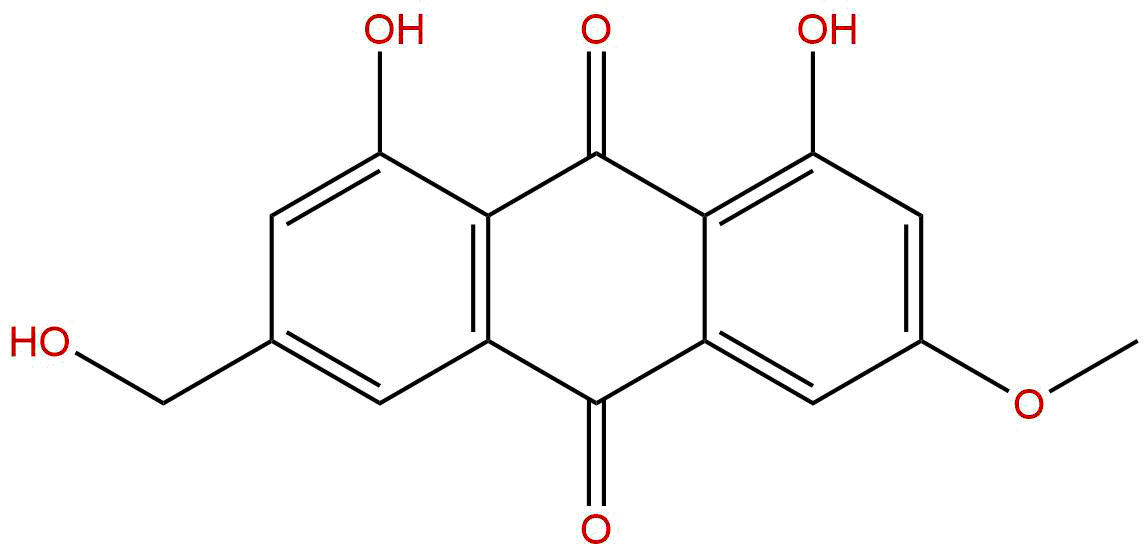
Natural anthraquinone compounds have attracted much attention due to their diverse biological activities and are widely present in medicinal plants such as rhubarb, Polygonum cuspidatum, and madder. Fallacinol, also known as 1,8-dihydroxy-3-hydroxymethyl-6-methoxyanthraquinone, is a typical natural anthraquinone derivative. In recent years, studies have found that enchanting alcohol exhibits unique advantages in antidepressant activity, with targets including monoamine oxidase A/B (MAOA/MAOB), glycogen synthase kinase 3 β (GSK3B), 5-hydroxytryptamine transporter (SLC6A4), 5-hydroxytryptamine 1A receptor (HTR1A), gamma aminobutyric acid type A receptor alpha 1 subunit (GABRA1), cAMP response element binding protein 1 (CREB1), brain-derived neurotrophic factor (BDNF), and catechol-O-methyltransferase (COMT), among other key molecules, demonstrating the potential for multi-target synergistic regulation. This article will provide a systematic review of the research progress on enchanting alcohols from the aspects of chemical structure, plant origin, pharmacological activity, mechanism of action, medicinal properties, and clinical application prospects.
Fallacinol belongs to the class of hydroxy anthraquinone compounds, with a chemical structure of 9,10-anthraquinone as the parent nucleus. It has one hydroxyl substituent at positions 1 and 8, a hydroxymethyl group at position 3 (- CH ₂ OH), and a methoxy group at position 6 (- OCH ∝). Its molecular formula is C ₁₆ H ₁₂ O ₆, and its molecular weight is 300.2660 g/mol. From the perspective of structural characteristics, enchanting alcohols possess both phenolic and alcohol hydroxyl groups, endowing them with excellent hydrogen bond donor and acceptor abilities, which is conducive to the formation of interactions with biological targets.
In terms of physicochemical properties, the lipophilic water partition coefficient (LogP) of enchanting alcohol is 2.1033, indicating its moderate lipophilicity and favorable transmembrane transport. Its topological polar surface area (TPSA) is 104.0600 Å ², which is slightly higher than the recommended upper limit of 140 Å ² for oral medications, indicating the possible existence of a polarity barrier. In terms of water solubility, the predicted water solubility value of enchanting alcohol is 0.1656 mg/mL, which belongs to low water solubility compounds, which may pose challenges to its oral absorption and bioavailability. It is worth noting that the blood-brain barrier (BBB) penetration assessment shows "low", which has a dual nature in antidepressant drug design: on the one hand, it may limit the direct action of central nervous system targets, and on the other hand, it may also reduce peripheral side effects. In addition, hERG inhibition prediction is negative, indicating a low risk of cardiac toxicity; The Ames test result is 1.2, indicating a potential genetic toxicity risk that needs further validation.
Enchanting alcohol mainly comes from certain species in the Polygonaceae and Rubiaceae families. Among them, the most typical sources include Rheum spp. such as Rheum palmatum, Rheum tanguticum, and medicinal Rheum officinale. In addition, they have also been found in Polygonum cuspidatum and Rubia cordifolia. These plants are often used in traditional Chinese medicine for the treatment of diarrhea, clearing heat, and promoting blood circulation, and anthraquinone compounds are considered as one of their pharmacological substances.
From the perspective of extraction methods, the separation and purification of enchanting alcohols usually use organic solvent extraction combined with chromatographic separation techniques. The classic extraction process includes crushing dry plant materials, leaching or reflux extraction with methanol or ethanol at room temperature or heating conditions, and crude extraction obtained by vacuum concentration of the extraction solution. Subsequently, liquid-liquid extraction (such as petroleum ether, chloroform, ethyl acetate and other polar solvents) was used for preliminary separation. The anthraquinone rich components were purified by silica gel column chromatography, Sephadex LH-20 gel column chromatography, preparative high-performance liquid chromatography (prep HPLC) and other means. Due to its structural similarity with other anthraquinone compounds such as emodin, chrysophanol, and rhein, gradient elution or isocratic elution strategies are often used during the separation process, combined with thin-layer chromatography (TLC) or high-performance liquid chromatography (HPLC) for monitoring.
In recent years, with the promotion of green chemistry concepts, new technologies such as ultrasound assisted extraction, microwave-assisted extraction, and supercritical fluid extraction have also been applied to the extraction of anthraquinone compounds. These methods have shown advantages in improving extraction efficiency, shortening extraction time, and reducing the use of organic solvents. However, the efficient and large-scale extraction process for enchanting alcohols still needs further optimization.
The antidepressant activity of enchanting alcohol is its most widely studied pharmacological effect. Multiple in vitro and in vivo experiments have shown that enchanting alcohol can significantly improve depressive like behavior. In the classic chronic unpredictable mild stress (CUMS) mouse model, long-term administration of enchanting alcohol can effectively reverse depression like manifestations such as decreased sugar water preference caused by stress, prolonged immobility time in tail suspension and forced swimming experiments. It is worth noting that its antidepressant effect is dose-dependent, and no significant motor function damage was observed within the effective dose range, indicating its specificity in action.
In addition to behavioral improvement, enchanting alcohol also exhibits significant neuroprotective activity. In the cortical ketone induced neuronal injury model, pretreatment with mannitol can significantly improve cell survival rate, reduce lactate dehydrogenase (LDH) release, and inhibit the production of reactive oxygen species (ROS). Further research has found that enchanting alcohol can upregulate the expression level of BDNF, which plays a crucial role in neuronal survival, synaptic plasticity, and neurogenesis as an important member of the neurotrophic factor family. This discovery provides an important molecular basis for the antidepressant mechanism of enchanting alcohol.
Monoamine oxidase (MAO) is a key enzyme that degrades monoamine neurotransmitters such as serotonin, norepinephrine, and dopamine. Its subtypes MAOA and MAOB play important roles in the pathogenesis of depression. In vitro enzyme activity assays showed that enchanting alcohol has inhibitory activity against both MAOA and MAOB, with slightly higher selectivity for MAOA than MAOB. This dual inhibition mode is similar to classical MAOIs drugs such as phenylhydrazine, but the inhibitory activity of enchanting alcohol is relatively mild, which may help reduce the risk of adverse reactions such as the "cheese effect".
In addition to its antidepressant effects, enchanting alcohol also exhibits anti-inflammatory, antioxidant, and anti-tumor activities. For example, in the lipopolysaccharide (LPS) - induced macrophage inflammation model, magnolol can inhibit the release of pro-inflammatory factors such as tumor necrosis factor - α (TNF - α) and interleukin-6 (IL-6). These additional activities may have a synergistic effect with their antidepressant effects, as neuroinflammation has been shown to be one of the important pathological mechanisms of depression.
The antidepressant mechanism of enchanting alcohol involves multiple signaling pathways and molecular targets, exhibiting typical multi-target regulatory characteristics. The main targets and mechanisms of action will be elaborated in detail below.
The dual inhibition of MAOA and MAOB by enchanting alcohol is the main way in which it regulates the monoaminergic system. MAOA mainly metabolizes serotonin, norepinephrine, and dopamine, while MAOB preferentially metabolizes phenylethylamine and dopamine. By inhibiting MAO activity, enchanting alcohol can increase the concentration of monoamine neurotransmitters in synaptic cleft, thereby enhancing monoamine neurotransmission. In addition, the regulation of SLC6A4 (5-hydroxytryptamine transporter) by enchanting alcohol is also worth paying attention to. SLC6A4 is responsible for reuptake of serotonin from synaptic cleft to presynaptic neurons and is a classic target of SSRIs drugs. Preliminary research suggests that enchanting alcohol may further increase the availability of serotonin by inhibiting SLC6A4 function. Meanwhile, its regulatory effect on HTR1A (5-hydroxytryptamine 1A receptor) may affect the self receptor feedback mechanism of 5-hydroxytryptamine neurons, thereby finely regulating neurotransmitter release.
Glycogen synthase kinase 3 β (GSK3B) is a serine/threonine protein kinase involved in various cellular processes, including neurogenesis, synaptic plasticity, and apoptosis. GSK3B activity is often abnormally elevated in patients with depression and animal models. Enchanting alcohol has been found to inhibit the activity of GSK3B, and its mechanism may involve Akt mediated phosphorylation of the GSK3B Ser9 site. Inhibition of GSK3B can lead to the stabilization and nuclear translocation of β - catenin, thereby activating the Wnt/β - catenin signaling pathway, promoting neural stem cell proliferation and neuronal differentiation. This mechanism is similar to the action mode of lithium salt (a classic mood stabilizer), suggesting that enchanting alcohol may have dual effects of antidepressant and mood stabilization.
CAMP response element binding protein 1 (CREB1) is an important transcription factor whose phosphorylation activation can initiate the transcription of downstream target genes, among which BDNF is one of the most critical target genes. BDNF activates downstream MAPK/ERK and PI3K/Akt signaling pathways by binding to tyrosine kinase receptor B (TrkB), promoting neuronal survival, synaptic formation, and neuroplasticity. Research has shown that enchanting alcohol can significantly increase the phosphorylation level of CREB1 in the hippocampus and prefrontal cortex, and upregulate the expression of BDNF mRNA and protein. The activation of this signaling axis is considered to be the core mechanism by which enchanting alcohol exerts long-term antidepressant effects and neuroprotective effects.
Gamma aminobutyric acid (GABA) is the main inhibitory neurotransmitter in the central nervous system, and its functional abnormalities are closely related to anxiety and depression. GABRA1 encodes the alpha 1 subunit of GABAA receptors and is a key component of GABAergic synaptic transmission. The regulation of GABRA1 by enchanting alcohol may enhance GABAergic inhibitory transmission, thereby regulating neuronal excitability balance and alleviating depression related anxiety symptoms. In addition, there is a complex interaction between the GABAergic system and the monoaminergic system, and the dual regulation of both by magnolol may produce a synergistic antidepressant effect.
Catechin-O-methyltransferase (COMT) is an important enzyme class that degrades dopamine and norepinephrine, particularly playing a critical role in the frontal cortex. Excessive COMT activity can lead to a decrease in dopamine levels in the prefrontal cortex, which is associated with cognitive dysfunction and depressive symptoms. The inhibitory effect of enchanting alcohol on COMT can reduce the degradation of catecholamine neurotransmitters in children, further enhancing the function of the monoaminergic system. It is worth noting that COMT gene polymorphism (such as Val158Met) is associated with susceptibility to depression, and the regulation of COMT by enchanting alcohol may have personalized therapeutic potential.
In summary, enchanting alcohol forms a multidimensional regulatory network covering monoaminergic, neurotrophic, GSK3B signaling, and GABAergic systems by simultaneously acting on multiple targets such as MAOA/MAOB, GSK3B, SLC6A4, HTR1A, GABRA1, CREB1, BDNF, and COMT. This multi-target mode of action not only helps improve antidepressant efficacy, but may also reduce the risk of common resistance and side effects of single target drugs.
Based on the pharmacological parameters provided earlier, the molecular weight of enchanting alcohol is 300.2660, which meets the requirement of Lipinski's "Five Rules" that the molecular weight should be less than 500. The LogP value is 2.1033, which is within the ideal range (1-3), indicating moderate lipophilicity and favorable for oral absorption and transmembrane transport. The TPSA is 104.0600 Å ², slightly higher than the recommended upper limit of 140 Å ² for oral medications, but still within an acceptable range, suggesting that it may be absorbed through active transport or paracellular pathways. The water solubility is 0.1656 mg/mL, which is a low solubility compound, which may be a key factor limiting its oral bioavailability.
The assessment of blood-brain barrier penetration is' low ', which is both a challenge and an opportunity for central nervous system drugs. Low BBB penetration may mean that the concentration of enchanting alcohols in the central nervous system is lower, requiring higher dosages or longer dosing cycles to achieve effective concentrations. However, this may also reduce the risk of central side effects after peripheral administration. It is worth noting that the pathological mechanism of depression not only involves the central nervous system, but also peripheral inflammation and metabolic disorders. Therefore, the peripheral effects of glucocorticoids also have therapeutic significance.
The negative prediction of hERG inhibition indicates a lower risk of cardiac toxicity, which is an important safety advantage. The Ames test result is 1.2, indicating the possibility of weak mutagenicity, but this result needs to be comprehensively evaluated in conjunction with in vivo genotoxicity experiments. Overall, the pharmacological parameters of enchanting alcohol basically meet the requirements of lead compounds, but water solubility and BBB penetration are the directions that need to be optimized.
At present, there is insufficient systematic research on the pharmacokinetics of enchanting alcohols, but preliminary speculation can be made based on their physicochemical properties and studies of similar compounds. After oral administration, enchanting alcohol may be absorbed in the small intestine through passive diffusion, but its absorption rate and degree may be limited due to its low water solubility. The first pass effect of the liver may be another important factor affecting its bioavailability, as anthraquinone compounds often undergo phase II metabolic reactions such as glucuronidation and sulfation.
In terms of distribution, due to the low BBB penetration, the distribution of magnolol in the central nervous system may be limited, but its distribution in peripheral tissues such as the liver, kidneys, and intestines may be more extensive. Metabolic pathways may include oxidation of hydroxymethyl groups (forming carboxylic acid derivatives), demethylation of methoxy groups, and binding reactions of phenolic hydroxyl groups. The main excretion pathways may be bile and urine, and some metabolites may undergo enterohepatic circulation.
Regarding the pharmacological defects of enchanting alcohols, the following structural optimization strategies can be considered: firstly, introducing hydrophilic groups (such as phosphate esters and amino acid esters) to improve water solubility while maintaining or enhancing target affinity; Secondly, design prodrug strategies, such as esterification or etherification of hydroxymethyl groups, to improve oral absorption and release of the original drug through enzymatic interpretation in the body; Thirdly, through molecular simulation and pharmacophore modeling, optimize the binding mode with targets such as MAO and GSK3B to improve selectivity and activity; Fourth, explore new delivery systems such as nanomaterials, liposomes, or phospholipid complexes to improve bioavailability and brain targeting.
The multi-target mode of action of enchanting alcohol makes it an ideal lead compound for developing novel antidepressant drugs. Compared with existing single target drugs, multi-target drugs may have advantages such as faster onset, more comprehensive efficacy, and lower treatment resistance. Especially its regulation of the GSK3B and CREB-BDNF pathways suggests that it may have both neuroprotective and neurotrophic effects, which is of great significance for improving cognitive dysfunction and neurodegenerative changes in patients with depression.
Given the complementarity between the target of enchanting alcohol and existing antidepressants, its combination application with SSRIs, SNRIs, or atypical antipsychotic drugs is worth exploring. For example, the inhibitory effect of enchanting alcohol on MAO may enhance the serotonergic effect of SSRIs, while the inhibition of GSK3B may compensate for the deficiency of SSRIs in terms of neural nutrition. However, caution should be exercised regarding drug interactions when using combination therapy, especially as the combination of MAOIs and SSRIs may induce serotonin syndrome.
The impact of COMT gene polymorphism on the therapeutic effect of enchanting alcohol is a direction worthy of attention. The COMT Val158Met polymorphism affects enzyme activity, with individuals with Met/Met genotypes having lower COMT activity and individuals with Val/Val genotypes having higher activity. The inhibitory effect of enchanting alcohol on COMT may be more effective in patients with Val/Val. This provides the possibility for genotype based personalized therapy. In addition, the upstream variable repeat sequence (uVNTR) polymorphism of the MAOA gene may also affect the efficacy of magnolol.
Despite its excellent antidepressant potential, Charm Alcohol still faces many challenges from the laboratory to clinical practice. Firstly, its low water solubility and low BBB penetration need to be improved through medicinal chemistry or formulation methods. Secondly, the positive results of Ames test should be taken seriously and safety assessment must be conducted through in vivo genetic toxicity experiments and long-term toxicity studies. Thirdly, although its multi-target mode of action has obvious advantages, it also increases the complexity of pharmacology, requiring more in-depth systematic pharmacology research to clarify the synergistic and antagonistic relationships between various targets.
Future research directions should include: 1) establishing more comprehensive pharmacokinetic pharmacodynamic (PK-PD) models to guide the design of dosing regimens; 2) Developing highly selective and active derivatives using structural biology and computer-aided drug design techniques; 3) Conduct long-term toxicity studies and reproductive toxicity evaluations to lay a safe foundation for clinical trials; 4) Explore its potential applications in other neurological and psychiatric disorders such as bipolar disorder, anxiety disorder, and Alzheimer's disease.
As a natural anthraquinone compound, enchanting alcohol has shown significant value in the field of antidepressant drug development due to its unique mechanism of multi-target regulation of the monoaminergic system, GSK3B signaling pathway, CREB-BDNF axis, and GABAergic system. Its pharmacological parameters basically meet the requirements of lead compounds, but water solubility and blood-brain barrier penetration are key factors that need to be optimized. Through rational structural modification and formulation design, enchanting alcohols and their derivatives are expected to become the next generation of multi-target antidepressant drugs. However, the road from natural products to clinical drugs is long and arduous, requiring interdisciplinary collaboration in pharmacology, medicinal chemistry, pharmacy, toxicology, and other fields. With the continuous deepening of understanding of the pathological mechanism of depression and the continuous progress of drug development technology, the active ingredient of enchanting alcohol, an ancient plant, is expected to radiate new vitality in the field of mental illness treatment.
Batch can search by a CAS number,one per line
