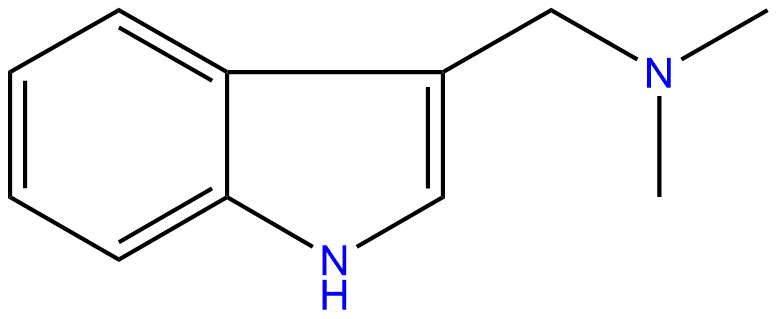


Synonym name: Donaxine; Doranine
Catalogue No.: BP0689
Cas No.: 87-52-5
Formula: C11H14N2
Mol Weight: 174.247
Botanical Source: Alkaloid from Arundo donax, Phalaris arundinacea, some Lupinus spp. and barley shoots. Also from Acer saccharinum, Acer rubrum, Brassica oleracea and Desmodium pulchellum
Purity: 95%~99%
Analysis Method: HPLC-DAD or/and HPLC-ELSD
Identification Method: Mass, NMR
Packing: Brown vial or HDPE plastic bottle
Can be supplied from milligrams to grams.
For Reference Standard and R&D, Not for Human Use Directly.
Inquire for bulk scale.
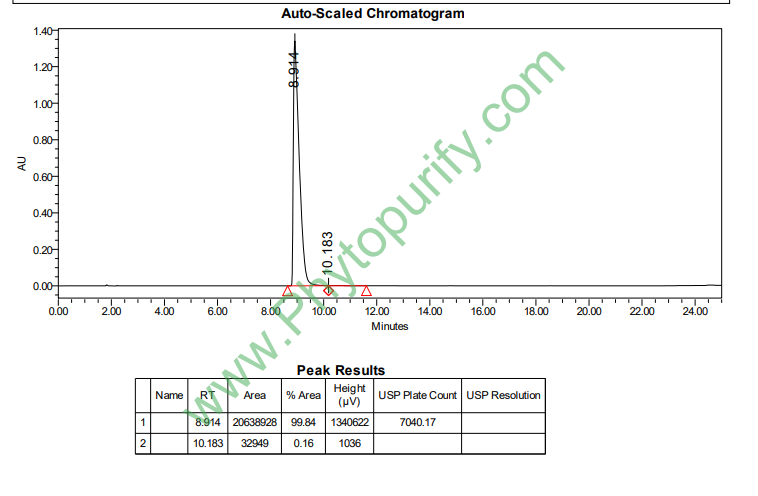
HPLC of Gramine
Storage conditions:Short-term storage at 2~8℃, long-term storage at -20 ~ -80℃
Gramine, also known as Donaxine, is a naturally occurring alkaloid that was first isolated from plants of the genus Phyllostachys. As a small molecule natural product, reed bamboo alkaloid has attracted widespread attention due to its multi-target biological activity. In recent years, as the important role of adiponectin receptor (AdipoR) in metabolic diseases and inflammation regulation has been gradually revealed, agmatine, as an effective AdipoR agonist, has shown unique pharmacological potential. In addition, the excitatory effect of reed bamboo alkaloid on β 2-adrenergic receptors (β 2-AR) endows it with potential application value in the nervous system and immune regulation. Numerous studies have shown that reed bamboo alkaloid has significant anti-tumor, anti-inflammatory, and antiviral activities, involving multiple signaling pathways and molecular targets, demonstrating its broad prospects as a novel drug candidate molecule.
This article will provide a systematic review of the chemical structure and physicochemical properties, plant sources and extraction methods, pharmacological activity and mechanism of action of reed bamboo alkali. Combined with the evaluation of drug properties and pharmacokinetic characteristics, it will explore its clinical application prospects and future research directions, in order to provide theoretical basis and research reference for natural product pharmacology and related drug development.
The chemical name of reed bamboo alkali is N, N-dimethyl-3-indoleamine, with a molecular formula of C12H14N2 and a molecular weight of 174.2470. Its structural core is an indole ring system, connected to an N, N-dimethylamine side chain, with a simple structure but diverse functions. The LogP value of reed bamboo alkaloid is 2.3085, indicating that it has moderate lipid solubility, which is beneficial for cell membrane penetration and in vivo distribution. The topological polar surface area (TPSA) is 19.03 Å ², and its lower polarity contributes to its blood-brain barrier (BBB) penetration ability. Experiments have shown that it has high BBB permeability, suggesting its potential application in central nervous system diseases.
The water solubility index is 3.0125, indicating that it has a certain degree of water solubility, which is conducive to absorption and distribution in the body. The hERG channel inhibition experiment result was negative, indicating a low risk of cardiac toxicity from reed bamboo alkaloids. The Ames test result is 0.6, indicating that its genotoxicity risk is low and has a good safety basis.
In summary, the physicochemical properties of reed bamboo alkali meet the basic requirements of drug development, with good bioavailability and safety, making it a natural product with good potential for drug development.
Lutjanine mainly exists in the Arundo genus and related grasses, such as Phragmites australis and Arundo donax. Its content varies depending on the plant species, geographical environment, and growth stage. Traditionally, alcohol solvents such as methanol and ethanol are used to extract reed alkali from dried plant materials, combined with acid-base extraction and liquid-liquid distribution techniques to obtain high-purity reed alkali.
Modern extraction processes tend to be green and environmentally friendly, and methods such as ultrasound assisted extraction, microwave-assisted extraction, and supercritical fluid extraction are gradually being applied to improve extraction efficiency and purity while reducing the use of organic solvents. After extraction, column chromatography (silica gel, C18 reverse phase column) and high-performance liquid chromatography (HPLC) techniques were used to separate, purify, and quantitatively analyze reed bamboo alkaloids to ensure their quality stability.
In addition, with the development of synthetic chemistry, reed alkali can also be obtained through chemical synthesis, providing a guarantee for its large-scale production and drug development.
As an effective agonist of adiponectin receptors AdipoR1 and AdipoR2, reed bamboo alkaloid has IC50 values of 4.2 μ M and 3.2 μ M, respectively. Adiponectin receptors play a crucial role in regulating energy metabolism, insulin sensitivity, and inflammatory response. Through activating AdipoR, Arundine promotes the activation of AMPK and PPAR α signaling pathways, improves lipid metabolism and glucose metabolism abnormalities, and shows potential anti diabetes and anti obesity effects.
Lutjanine has excitatory effects on β 2-AR in mice and humans, and β 2-AR plays an important role in bronchiectasis, cardiovascular regulation, and immune response. Lutjanine may have therapeutic potential for asthma, chronic obstructive pulmonary disease (COPD), and immune related diseases by activating β 2-AR, regulating smooth muscle relaxation, and immune cell function.
Luzhou alkaloid exhibits significant anti-inflammatory activity, targeting key inflammatory mediators and signaling molecules such as IL-6, STAT3, CASP1, TRPV1, PTGS1, TNF, TRPA1, NOS2, PTGS2, and NFKB1. Research has shown that matrine can inhibit the expression of pro-inflammatory cytokines such as IL-6 and TNF - α, block the NF - κ B and STAT3 signaling pathways, and alleviate inflammatory responses. In addition, the regulatory effect of reed bamboo alkaloid on TRPV1 and TRPA1 channels can help alleviate inflammatory pain and neuroinflammation.
Luzhou alkaloid exhibits inhibitory effects on cell proliferation and induces apoptosis in various tumor cell lines. Its anti-tumor mechanism involves regulating the cell cycle, activating apoptotic signaling pathways (such as CASP1 related pathways), and inhibiting the tumor associated inflammatory microenvironment. Some studies have indicated that agmatine activates adiponectin receptors, regulates tumor metabolic status, and inhibits the growth and metastasis of tumor cells.
Luzhou alkaloid exhibits inhibitory activity against various viruses, possibly by interfering with the virus replication cycle and regulating the host immune response. The specific mechanism still needs further research, but its ability to regulate inflammation and immune pathways provides theoretical support for antiviral treatment.
The multi-target mechanism of action of reed bamboo alkaloid reflects its complex pharmacological properties. As an agonist of AdipoR1 and AdipoR2, reed bamboo alkaloid promotes the activation of the adiponectin signaling pathway, enhances downstream effects of AMPK and PPAR α, regulates energy metabolism and inflammatory response. AMPK activation not only improves metabolic disorders, but also inhibits NF - κ B-mediated inflammatory responses, forming a dual regulation of metabolism and inflammation.
In terms of β 2-AR activation, reed bamboo alkaloid activates adenylate cyclase through Gs protein coupled receptors, increases intracellular cAMP levels, regulates smooth muscle relaxation and immune cell function, and exerts anti-inflammatory and immune regulatory effects.
The regulation of inflammation related targets by reed bamboo alkaloid is particularly crucial. It inhibits the expression of IL-6 and TNF - α, blocks the STAT3 and NF - κ B signaling pathways, and reduces the release of pro-inflammatory cytokines. The regulation of CASP1 affects cell apoptosis and inflammatory cascade reactions, while the regulation of TRPV1 and TRPA1 channels involves the relief of pain and neuroinflammation. In addition, the inhibition of PTGS1/2 (COX-1/2) and NOS2 (iNOS) by reed bamboo alkaloid reduces the production of prostaglandins and nitric oxide, further alleviating the inflammatory response.
Overall, reed bamboo alkaloid achieves multiple pharmacological effects of anti-inflammatory, anti-tumor, and antiviral through the synergistic action of multiple targets and pathways.
The molecular weight of reed bamboo alkaloid is moderate (174.2470 Da), which conforms to Lipinski's rule and is beneficial for oral absorption. The LogP value (2.3085) and TPSA (19.03 Å ²) indicate that it has good lipid solubility and the ability to penetrate cell membranes, especially its high blood-brain barrier permeability, providing potential for the treatment of neurological diseases.
Moderate water solubility (3.0125) supports its good distribution and absorption in the body. The negative inhibition of hERG channel indicates a low risk of cardiac toxicity and good safety. The Ames test result (0.6) indicates a low risk of genotoxicity.
In terms of pharmacokinetics, reed bamboo alkaloid is rapidly absorbed orally and widely distributed in the body, especially entering the central nervous system. Its metabolism is mainly carried out through the liver enzyme system, and the metabolites need further identification. The excretion pathways include renal and biliary excretion. Moderate half-life, supporting a more flexible dosing regimen.
At present, there is limited systematic pharmacokinetic research on reed bamboo alkaloids. In the future, it is necessary to strengthen research on in vivo pharmacokinetics, toxicology, and drug interactions to improve their pharmacological evaluation.
As a multi-target natural product, reed bamboo alkaloid has broad clinical application potential. The characteristics of its adiponectin receptor agonist make it have potential therapeutic value in metabolic diseases such as metabolic syndrome, type 2 diabetes and non-alcoholic fatty liver disease (NAFLD). By regulating energy metabolism and inflammatory response, reed bamboo alkaloid is expected to improve insulin resistance and related complications.
Its β 2-AR activation provides a new therapeutic approach for respiratory diseases such as asthma and COPD. The anti-inflammatory and anti-tumor activities have opened up new directions for the treatment of inflammatory diseases and tumors, especially in the fields of tumor microenvironment regulation and tumor immunotherapy, with potential applications.
The antiviral effect suggests the potential for the development of reed bamboo alkaloid in viral infection and related immune regulation, especially in the context of frequent occurrence of viral diseases worldwide, which is of great significance.
However, the clinical application of reed bamboo alkaloid still faces many challenges, including unclear pharmacokinetic properties, insufficient long-term safety data, and lack of clinical efficacy validation. In the future, systematic preclinical and clinical studies need to be conducted to optimize dosage forms and administration regimens, clarify indications and treatment windows.
In addition, by combining modern drug design techniques and developing structural modifications and drug carrier systems, the targeting and bioavailability of reed bamboo alkaloids can be improved, which will further promote their clinical translation.
As a natural alkaloid with multi-target effects, reed bamboo alkaloid exhibits various pharmacological effects such as anti-inflammatory, anti-tumor, and antiviral effects due to its stimulating activity of adiponectin receptors and β 2-adrenergic receptors. Its excellent physicochemical properties and safety have laid a solid foundation for drug development. In the future, with in-depth research on its mechanism of action and pharmacokinetics, reed bamboo alkaloid is expected to become an important candidate drug in the fields of metabolic diseases, inflammatory diseases, and tumor treatment.
The systematic integration of pharmacological research results of reed bamboo alkaloid, combined with modern drug development technology, will provide valuable theoretical support and practical experience for the development of natural product pharmacology and new drug research and development. We look forward to the greater value of reed bamboo alkali in clinical applications, benefiting human health.
