Introduction/Overview
Natural products, as an important source of drug discovery, play an irreplaceable role in the long history of human fight against diseases. Especially in the field of tumor treatment, active compounds isolated from plants, such as paclitaxel, camptothecin, vinblastine, etc., have become the cornerstone of clinical chemotherapy regimens. Euphorbiaceae plants are known for their rich secondary metabolites and significant biological activity, many of which have a long history of medicinal use. Gan Sui(Euphorbia kansui T.N. Liou ex S.B. Ho), As a traditional Chinese medicine herb known for its ability to expel water, its dried tubers are often used to treat conditions such as edema and pleural and abdominal effusion. Modern pharmacological research has revealed that extracts from Gansui have significant anti-tumor, antiviral, and anti-inflammatory activities, and their active ingredients are mainly a series of structurally unique macrocyclic diterpenoid esters.
Kansenin A, as one of the representative macrocyclic diterpenoid esters in Gansu, has attracted widespread attention from scholars at home and abroad since its isolation and identification due to its unique chemical skeleton and significant biological activity, especially its anti leukemia potential. This compound belongs to the Jatrophane type diterpenes, and its core structure is a highly oxidized five membered and twelve membered macrocyclic system with multiple acyl groups attached. This complex structure endows Gansui terpene ester A with unique chemical properties and biological activity. In recent years, with the deepening understanding of the molecular pathological mechanism of leukemia, especially the research on key driver gene mutations such as FMS like tyrosine kinase 3 (FLT3) and Janus kinase 2 (JAK2), Gansui terpenoid ester A has been found to intervene in the proliferation and survival of leukemia cells through multi-target and multi pathway approaches, demonstrating a mode of action different from traditional chemotherapy drugs. This article aims to comprehensively review the chemical structure, plant origin, pharmacological activity, mechanism of action, medicinal characteristics, and clinical application prospects of Gansui terpene ester A, in order to provide systematic references for the in-depth research and development of this natural product.
Chemical structure and physicochemical properties
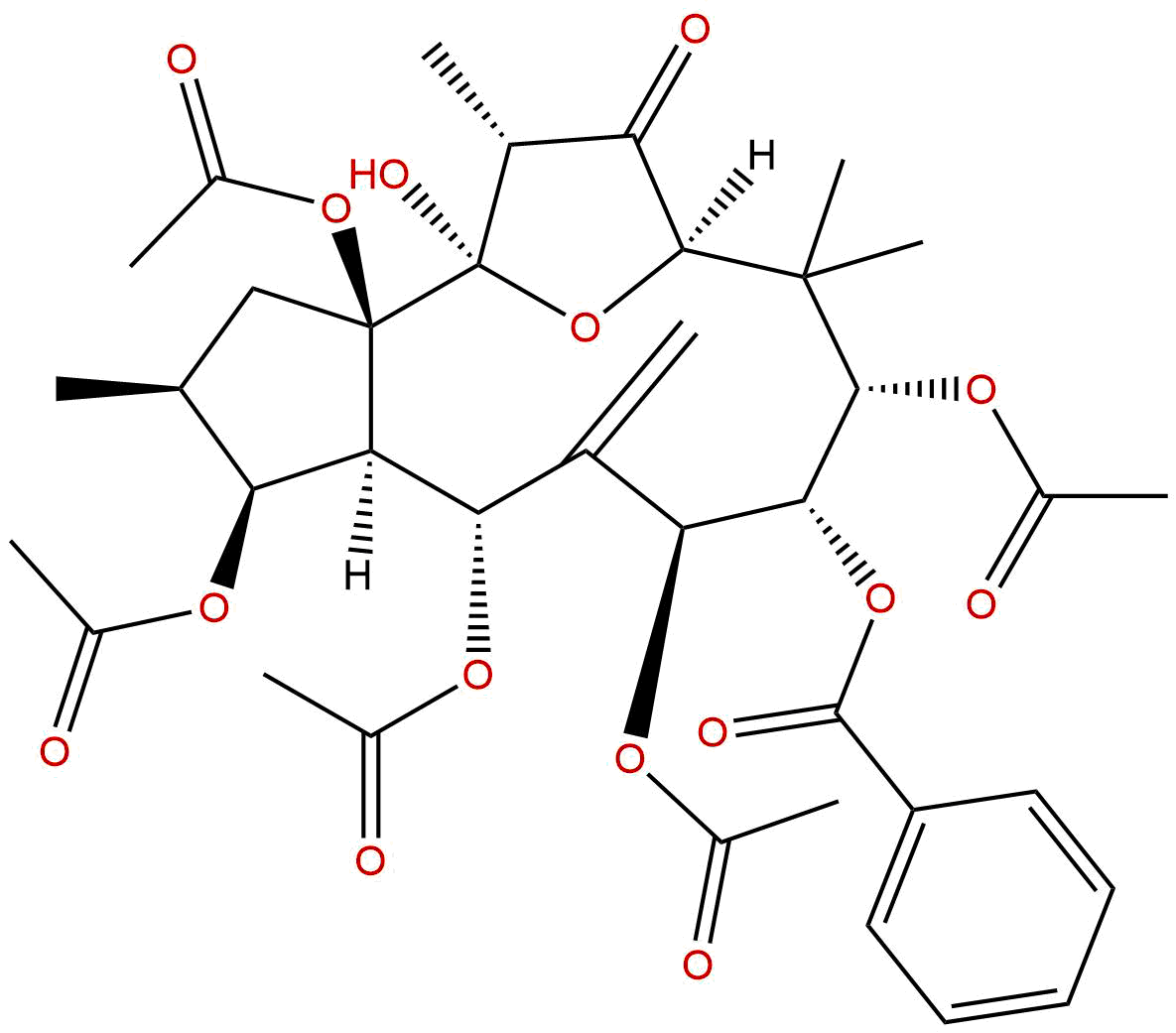
The chemical structure of Kansurinin A belongs to the Jatrophane type diterpenes, which are widely present and highly structurally diverse natural products in plants of the Euphorbia genus. Its core skeleton is composed of a 5/12 bicyclic system, which is formed by the combination of a cyclopentane (A ring) and a twelve membered macrocycle (B ring). This unique bridge ring structure endows the molecule with a certain degree of rigidity, while the flexibility of the macrocycle allows it to induce binding with various biological targets. The molecular formula of Gansui terpene ester A is C ∝₈ H ₄₂ O ₁₅, with a molecular weight of 730.7600 Da. Its structural feature is that multiple sites on the core skeleton (usually C-3, C-5, C-7, C-8, C-9, C-14, etc.) are replaced by hydroxyl or acyloxy groups, forming a highly oxidized mode. Specifically, the Gansui terpene ester A molecule is linked to multiple acyl groups, such as acetyl, benzoyl, and nicotinoyl. The types, quantities, and positions of these substituents collectively determine its unique chemical properties and biological activity.
From the perspective of physicochemical properties, Gansui terpene ester A exhibits typical natural product characteristics. Its oil-water partition coefficient (LogP) is 2.4654, indicating that the compound has a certain lipophilicity, which is beneficial for it to cross the phospholipid bilayer of the cell membrane, but may also affect its solubility and distribution in the aqueous phase. In fact, its water solubility is only 0.0117 mg/mL, making it a poorly soluble compound. This characteristic is a common challenge faced by many natural products in drug development, which may limit their oral bioavailability and flexibility of in vivo administration. The topological polar surface area (TPSA) is 204.33 Å ², which is a relatively high value and is usually associated with poor cell membrane permeability, but also suggests that it may not be a good substrate for efflux transporters such as P-glycoprotein (P-gp). In addition, the high TPSA value also explains its low ability to cross the blood-brain barrier (BBB), which may be a favorable factor for the development of non central nervous system targeted drugs, helping to reduce central neurotoxicity. Preliminary toxicological assessment shows that the compound has a low risk of inhibiting hERG potassium ion channels (hERG inhibition: No), and the Ames test result is negative (0.0), suggesting that it may not have direct genetic toxicity. These preliminary pharmacological parameters provide important reference for subsequent drug chemical modifications and formulation development.
Plant sources and extraction methods
Gansui terpenoid ester A mainly comes from the Euphorbiaceae plant Gansui(Euphorbia kansui)Dry root tubers. Gan Sui, as a traditional Chinese medicine, is distributed and cultivated in China, Japan, South Korea and other places. Besides Gansui, this compound may also exist in other plants of the same genus, but Gansui is its main source. The harvest of Gansui is usually in spring or autumn, with autumn being the best season, when the accumulation of effective ingredients in the root tubers is relatively high. After harvesting, the outer skin needs to be removed, fumigated with sulfur yellow, and dried to facilitate preservation and reduce toxicity.
Extracting and isolating Gansui terpenoid ester A from Gansui tubers is a typical natural product chemistry research process, which usually includes the following key steps:
-
Extract Grind the dried root tubers of Gansui and extract them using organic solvents. Due to the lipophilic characteristics of Gansui terpene ester A, methanol, ethanol, or their mixed solvents are often used for cold soaking or hot reflux extraction. Sometimes, medium polarity solvents such as ethyl acetate or chloroform are used for targeted extraction to enrich diterpenoid ester components. After filtration and vacuum concentration of the extract, the total extract is obtained.
-
Preliminary separation Total extract usually contains a large amount of fat soluble impurities (such as chlorophyll, wax) and various compounds with different polarities. Therefore, preliminary separation and purification are required. Common methods include solvent extraction (such as degreasing with petroleum ether, followed by extraction with ethyl acetate and n-butanol) or silica gel column chromatography (gradient elution with different ratios of petroleum ether ethyl acetate or chloroform methanol system), which divides the total extract into several fractions according to polarity.
-
Fine separation and purification The fraction containing Gansui terpene ester A needs to be separated by more sophisticated chromatographic techniques. High performance liquid chromatography (HPLC) is the preferred method for separating and purifying this compound, typically using a reverse phase C18 column with methanol water or acetonitrile water system as the mobile phase, eluted by isocratic or gradient elution, and monitored with a UV detector (typically detecting ester bond absorption at 210-230 nm). In addition, techniques such as preparative thin layer chromatography (PTLC) and high-speed countercurrent chromatography (HSCCC) can also be used for the separation of this compound. Through repeated column chromatography and recrystallization, high-purity Gansui terpene ester A monomer can ultimately be obtained.
-
Structural Identification The purified compound was structurally confirmed by modern spectroscopic techniques, including nuclear magnetic resonance spectroscopy (¹ H-NMR, ¹ ³ C-NMR, 2D-NMR such as COSY, HSQC, HMBC), high-resolution mass spectrometry (HR-MS), infrared spectroscopy (IR), and ultraviolet spectroscopy (UV). By comparing with known literature data, its chemical structure was ultimately determined.
It is worth noting that Gansui itself has certain toxicity, and its toxic components mainly come from diterpenoid esters. Therefore, during the extraction and operation process, researchers need to take necessary safety precautions.
Pharmacological activity research
The pharmacological activity research of Gansui terpenoid ester A mainly focuses on the field of anti-tumor, especially for leukemia. In recent years, multiple in vitro and in vivo studies have revealed its significant anti leukemia potential.
1. Anti leukemia activity
- In vitro cytotoxicity Gansui terpenoid ester A exhibits significant proliferation inhibition and cytotoxicity on various leukemia cell lines, including acute myeloid leukemia (AML) cell lines (such as MV4-11, MOLM-13, OCI-AML3) and chronic myeloid leukemia (CML) cell lines (such as K562). Its half maximal inhibitory concentration (IC ₅₀) is usually in the nanomolar to low micromolar range, exhibiting strong activity. It is worth noting that it is particularly sensitive to certain leukemia cells carrying specific gene mutations, such as MV4-11 cells with FLT3-ITD mutations.
- Inducing cell apoptosis Research has shown that Gansui terpenoid ester A can effectively induce apoptosis in leukemia cells. The mechanism involves activating endogenous (mitochondrial) and exogenous (death receptor) apoptotic pathways. Specifically, it leads to the loss of mitochondrial membrane potential (Δ PSI m), promotes the release of cytochrome c into the cytoplasm, and subsequently activates Caspase-9 and downstream Caspase-3/7; Meanwhile, it can also upregulate the expression of death receptors (such as Fas) and activate Caspase-8. Finally, the cell apoptosis program is performed by cleaving substrate proteins such as poly ADP ribose polymerase (PARP).
- cell cycle arrest Gansui terpenoid ester A can also block leukemia cells at specific cell cycle phases, thereby inhibiting their proliferation. Research has found that it mainly blocks cells in the G0/G1 phase or G2/M phase, and the specific effect may vary depending on the cell type and drug concentration. This cycle arrest effect is related to changes in the expression levels of cyclins and cyclin dependent kinases (CDKs) in cells.
2. Other pharmacological activities
- anti-inflammatory activity As the active ingredient of traditional Chinese medicine Gan Sui, Gan Sui terpenoid ester A also exhibits certain anti-inflammatory effects. Research has shown that it can inhibit the production of nitric oxide (NO) and prostaglandin E2 (PGE2) in macrophages stimulated by lipopolysaccharide (LPS), and downregulate the expression of inducible nitric oxide synthase (iNOS) and cyclooxygenase-2 (COX-2). The mechanism may be related to the inhibition of the activation of the nuclear factor kappa B (NF - κ B) signaling pathway.
- Antiviral activity Some diterpenoid esters of Euphorbiane type have been reported to have antiviral activity, but there is relatively little direct antiviral research on Gansui terpene ester A, which needs further exploration.
Mechanism of action and molecular targets
The anti leukemia mechanism of Gansui terpenoid ester A is multi-level and multi-target, with its core being the regulation of key signaling pathways in the occurrence and development of leukemia. Based on the relevant targets listed in the compound information, the outline of its mechanism of action can be outlined.
1. Targeted receptor tyrosine kinases (RTKs)
- FLT3 FLT3 is one of the most common mutated genes in AML, especially the internal tandem repeat (ITD) mutation, which leads to constitutive activation of FLT3 and drives downstream proliferation and survival signals. Gansui terpenoid ester A has been shown to effectively inhibit the phosphorylation and kinase activity of FLT3-ITD, thereby blocking its downstream signaling pathway. This is one of the core mechanisms of its anti AML activity.
- KIT KIT (CD117) is another RTK that frequently mutates in AML and mast cell leukemia. Gansui terpenoid ester A may also have an effect on this subtype of leukemia by inhibiting the activity of KIT.
2. Targeting non receptor tyrosine kinases
- JAK2 JAK2 is a key kinase in the JAK-STAT signaling pathway, and its mutations (such as JAK2 V617F) are extremely common in myeloproliferative neoplasms (MPNs) and are also seen in some AML cases. Gansui terpenoid ester A can inhibit the phosphorylation of JAK2, thereby blocking the activation of STAT3/5. STAT protein, as a transcription factor, regulates numerous genes related to cell proliferation, survival, and differentiation (such as...)Bcl-xL, Cyclin D1, c-Myc). Therefore, inhibiting the JAK-STAT pathway is another important mechanism by which Gansui terpenoid ester A exerts its anti leukemia effect.
- BCR-ABL BCR-ABL fusion protein is a pathogenic driver of CML and a constitutive activated tyrosine kinase. Although tyrosine kinase inhibitors (TKIs) such as imatinib are first-line treatments for CML, the issue of drug resistance is becoming increasingly prominent. Research has shown that Gansui terpenoid ester A has activity on K562 cells (expressing BCR-ABL), and its mechanism may involve inhibition of BCR-ABL and its downstream signals (such as PI3K/AKT, RAS/MAPK), suggesting its potential to overcome TKI resistance.
3. Targeting epigenetic regulatory factors
- DNMT3A DNMT3A is a DNA methyltransferase responsible for establishing new DNA methylation patterns during development and differentiation.DNMT3A Gene mutations are common epigenetic changes in AML and are associated with poor prognosis. Although there is currently insufficient evidence to directly demonstrate the binding of Gansui terpene ester A to DNMT3A protein, existing studies suggest that certain natural products can reverse abnormal DNA methylation by affecting the expression or activity of DNMT3A. Whether Gansui terpenoid ester A has similar effects is a direction worth exploring in depth.
4. Targeting nucleotide metabolizing enzymes
- DCK, CDA, NT5C2, RRM1, RRM2 These enzymes together form a network for intracellular nucleotide metabolism and deoxyribonucleic acid (DNA) synthesis and repair. Deoxycytidine kinase (DCK) is a key enzyme that activates many nucleoside analogue chemotherapy drugs, such as cytarabine; Cytidine deaminase (CDA) is responsible for its inactivation. 5 '- nucleotidase II (NT5C2) is involved in nucleotide degradation. Ribonucleotide reductase (RRM1/RRM2) is the rate limiting enzyme in DNA synthesis, converting ribonucleotides into deoxyribonucleotides. The effect of Gansui terpenoid ester A on these enzymes may enhance their sensitivity to chemotherapy drugs or directly exert cytotoxic effects by interfering with the nucleotide pool balance and DNA repair ability of leukemia cells. For example, downregulating the expression of RRM1/RRM2 can inhibit DNA synthesis, while upregulating DCK or downregulating CDA can enhance the efficacy of cytarabine. This regulation of nucleotide metabolism provides a theoretical basis for the combined application of Gansui terpenoid ester A with other chemotherapy drugs.
In summary, Gansui terpenoid ester A does not act on a single target, but rather forms a synergistic network effect by simultaneously intervening in multiple key signaling pathways and metabolic processes, effectively inhibiting the malignant phenotype of leukemia cells. This multi-target mode of action is its unique advantage over many single targeted drugs and may also help reduce or delay the development of drug resistance.
Evaluation of drug properties and pharmacokinetics
Although Gansui terpenoid ester A exhibits remarkable anti leukemia activity, its development as a clinical drug still faces many challenges, and its pharmacological evaluation is a key link in determining whether it can move from laboratory to clinical use.
1. Analysis of pharmacological parameters
According to the provided pharmacological parameters, Gansui terpenoid ester A has the following characteristics:
- molecular weight:730.76 Da, Far exceeding the limit of molecular weight less than 500 in Lipinski's Rule of Five, it belongs to macromolecular compounds. This usually indicates that its oral absorption and permeability may be poor.
- Lipid water partition coefficient (LogP)2.47 is within a relatively ideal range, indicating a balance between lipophilicity and hydrophilicity, which is conducive to transmembrane diffusion.
- Topological Polarity Surface Area (TPSA)204.33 Å ², much higher than the threshold of 140 Å ², suggests that its oral absorption and cell membrane permeability may be poor. High TPSA is usually associated with low passive diffusion rate.
- Water solubility:0.0117 mg/mL, Belongs to insoluble compounds. Low water solubility is one of the main obstacles in the development of oral drugs, which may lead to incomplete absorption, low bioavailability, and increased food effects and individual differences.
- Blood-brain barrier (BBB) permeability: Low. This may be an advantage for drugs used to treat leukemia, as it can avoid toxicity to the central nervous system. But for patients who need treatment for central nervous system leukemia, special delivery strategies may be required.
- HERG inhibition: No. This is a positive signal indicating a lower risk of causing QT interval prolongation and arrhythmia in the heart.
- Ames test: 0.0. The negative result indicates that the compound did not exhibit mutagenicity in the bacterial reverse mutation test, reducing its genetic toxicity risk.
Overall, the pharmaceutical challenge of Gansui terpenoid ester A mainly lies in its potential absorption issues caused by its large molecular weight, high polarity, and low water solubility. However, its excellent LogP, absence of hERG inhibition and Ames toxicity risk provide a foundation for further optimization.
2. Pharmacokinetic characteristics (speculation and challenges)
At present, detailed research reports on the pharmacokinetics (PK) of Gansui terpenoid ester A in vivo are relatively limited. Based on its physical and chemical properties, its PK characteristics can be inferred as follows:
- absorb After oral administration, its absorption may be very limited and irregular, with extremely low bioavailability. This is mainly due to its low water solubility and high TPSA, which limit its dissolution and transmembrane transport in the gastrointestinal tract. In addition, it may also be a substrate for intestinal efflux transporters such as P-gp, further limiting absorption.
- distribution Due to its lipophilicity, it may be widely distributed in tissues, especially in organs rich in lipids, after intravenous administration. The plasma protein binding rate may be high.
- Metabolism As a highly esterified molecule, Gansui terpene ester A is likely to be rapidly hydrolyzed by esterases in the body, producing a series of metabolites. In addition, the cytochrome P450 enzyme system may also be involved in its oxidative metabolism. Metabolic instability is another major challenge it faces.
- excretion Metabolites may be mainly excreted through bile and feces.
3. Strategies for improving drug properties
To overcome the above-mentioned barriers to drug formation, future research in medicinal chemistry and pharmacy can adopt the following strategies:
- Prodrug design By introducing hydrolyzable groups (such as phosphate esters and amino acid esters) into the molecule, its water solubility can be improved. The prodrug releases the original drug after enzymatic or chemical hydrolysis in the body.
- nano-formulation Using nano delivery systems such as liposomes, polymer nanoparticles, and micelles to encapsulate Gansui terpenoid ester A can significantly improve its water solubility, stability, and bioavailability, and achieve targeted delivery.
- Simplification and optimization of structure Through structure-activity relationship (SAR) studies, key pharmacophores in the molecule are identified and attempts are made to simplify the structure, remove unnecessary functional groups, reduce molecular weight and polarity, while maintaining or enhancing activity. For example, exploring whether simpler acyl substituents can replace complex benzoyl or nicotinoyl groups.
- Optimization of administration route Given the difficulty of oral absorption, the development of intravenous injection formulations may be considered. For certain indications, such as local treatment or targeting the bone marrow, other routes of administration can also be explored.
Clinical application prospects and prospects
Gansui terpenoid ester A, as a natural product derived from traditional Chinese medicine, has opened up new prospects for its application in leukemia treatment due to its unique chemical structure and multi-target mechanism of action, but it also comes with significant challenges.
1. Potential clinical application directions
- Treatment of FLT3 mutation positive AML Given the potent inhibitory effect of Gansui terpenoid ester A on the FLT3-ITD signaling pathway, its most promising application direction is as a candidate drug for the treatment of FLT3 mutation positive AML. It can be used as a monotherapy or in combination with standard chemotherapy (such as cytarabine, anthracycline drugs) and other targeted drugs (such as BCL-2 inhibitor vinaclor) to improve efficacy, overcome or delay drug resistance.
- Overcoming TKI resistance For CML patients with BCR-ABL TKI resistance, Gansui Terpenem A may provide a new treatment option. Its mechanism of action is different from TKI, and it may still be effective against drug-resistant cell lines carrying BCR-ABL kinase region mutations.
- Treatment of JAK2 mutation associated MPNs For JAK2 V617F positive MPNs such as polycythemia vera, primary thrombocytosis, and myelofibrosis, Gansui terpenoid ester A may exert therapeutic effects by inhibiting the JAK-STAT pathway.
- Combination therapy strategy Based on its regulatory effect on nucleotide metabolizing enzymes (DCK, CDA, RRM1/2), Gansui terpenoid ester A is expected to be used as a chemotherapy sensitizer in combination with nucleoside analogues such as cytarabine. For example, by upregulating DCK or downregulating CDA/RRM1/RRM2, the activity and cytotoxicity of cytarabine can be enhanced, achieving a synergistic effect of "1+1>2".
2. Challenges faced and future research directions
- Optimization of drug properties As mentioned earlier, low water solubility and potential metabolic instability are the biggest obstacles to the clinical translation of Gansui terpenoid ester A. The future research focus should be on improving its PK characteristics through drug chemical modifications (such as prodrugs, structural optimization) and novel formulation technologies (such as nanodelivery).
- Toxicity Studies Although the Ames test was negative, the in vivo toxicity profile of Gansui terpenoid ester A, as one of the toxic components of Gansui, such as potential toxicity to the liver, kidneys, and heart, needs to be comprehensively and systematically evaluated. Especially, its mechanism of action involves multiple targets, and off target effects may lead to unexpected toxicity. Further in vivo toxicology research is needed to determine its safety window.
- In depth elucidation of the mechanism of action Although it is known to act on multiple targets, further research is needed on the specific molecular binding patterns, interaction networks between targets, and how it regulates epigenetic factors such as DNMT3A. Elucidating its precise molecular mechanism can help guide more rational structural optimization and combination therapy regimens.
- Structure Activity Relationship (SAR) Study Systematically synthesizing a series of analogs of Gansui terpene ester A and studying the effects of different substituents (such as acyl type and position) on their activity, selectivity, and PK properties is key to discovering lead compounds with better pharmacological properties.
- Pharmacodynamic validation in vivo Current research is mostly focused on the in vitro cellular level. It is necessary to validate its in vivo anti-tumor activity and pharmacokinetic behavior in various leukemia animal models, such as xenograft models and genetically engineered mouse models, in order to provide a basis for clinical trials.
Conclusion
Gansui terpene ester A, a large cyclic diterpene ester derived from traditional Chinese medicine Gansui, has become a new star in the field of natural product drug research due to its unique chemical skeleton and remarkable anti leukemia activity. It exhibits a multi-target and systematic anti-tumor mode of action by simultaneously targeting key driver kinases such as FLT3, JAK2, BCR-ABL, and regulating nucleotide metabolism networks, providing new ideas for addressing the complex molecular heterogeneity and drug resistance issues of leukemia. However, as a candidate drug, it also faces typical challenges such as poor water solubility and metabolic instability in drug development. Future research needs to comprehensively utilize multidisciplinary approaches such as medicinal chemistry, pharmacy, and pharmacology, based on a deep understanding of its mechanism of action, in order to overcome these obstacles and optimize its drug properties. Despite the challenges ahead, the discovery of Gansui terpenoid ester A undoubtedly provides valuable insights for exploring new anti leukemia drugs from the treasure trove of traditional Chinese medicine. Continued in-depth research on it is expected to not only promote the birth of a new type of anti leukemia drug, but also further reveal the important value of natural products in the era of precision medicine.