Introduction/Overview
Natural products, as an important source of drug discovery, play an irreplaceable role in the long history of human struggle against diseases. One of the core tasks of modern medicinal chemistry and pharmacology research is to isolate and identify small molecule compounds with biological activity from traditional herbs, and elucidate their pharmacological mechanisms of action. Among the many plants with medicinal value, the genus Ilex(Ilex)Plants have attracted much attention due to their rich chemical composition and extensive biological activity. Among them, Mao Dongqing(Ilex pubescens)As a folk herb widely used in southern China, its roots are often used to treat cardiovascular diseases, inflammation and infectious diseases. In recent years, with the deepening of research on the chemical composition of Ilex mongolica, a series of structurally novel and highly active compounds have been discovered one after another, and Tortoside A is one of them.
Tortoside A is a naturally occurring lignan compound, originally extracted and isolated from the roots of holly. Lignin compounds are an important class of secondary metabolites in the plant kingdom, formed by the oxidative polymerization of phenylpropanoid units. They have diverse biological activities, including anti-tumor, anti-inflammatory, antioxidant, antiviral, and antibacterial properties. The discovery of Tortoside A not only enriches the structural diversity of lignin compounds, but also provides a new molecular basis for the traditional medicinal efficacy of Ilex mongolica. Preliminary pharmacological studies have shown that Tortoside A exhibits significant antifungal activity, which highlights its potential research value and application prospects in addressing the increasingly severe global fungal resistance problem. Fungal infections, especially invasive fungal infections, have become one of the main causes of death in immunocompromised patients (such as organ transplants, chemotherapy, HIV infected individuals). The existing antifungal drugs face challenges such as drug resistance, toxic side effects, and narrow antibacterial spectrum. Therefore, it is urgent to search for antifungal lead compounds with new mechanisms of action. The emergence of Tortoside A provides valuable candidate molecules for the development of novel antifungal drugs.
This article aims to provide a systematic review of the research status of Tortoside A, covering its chemical structure and physicochemical properties, plant sources and extraction methods, pharmacological activity, mechanism of action and molecular targets, pharmacological evaluation and pharmacokinetic characteristics. It also looks forward to its clinical application prospects, in order to provide comprehensive reference for the in-depth research and development of this compound.
Chemical structure and physicochemical properties
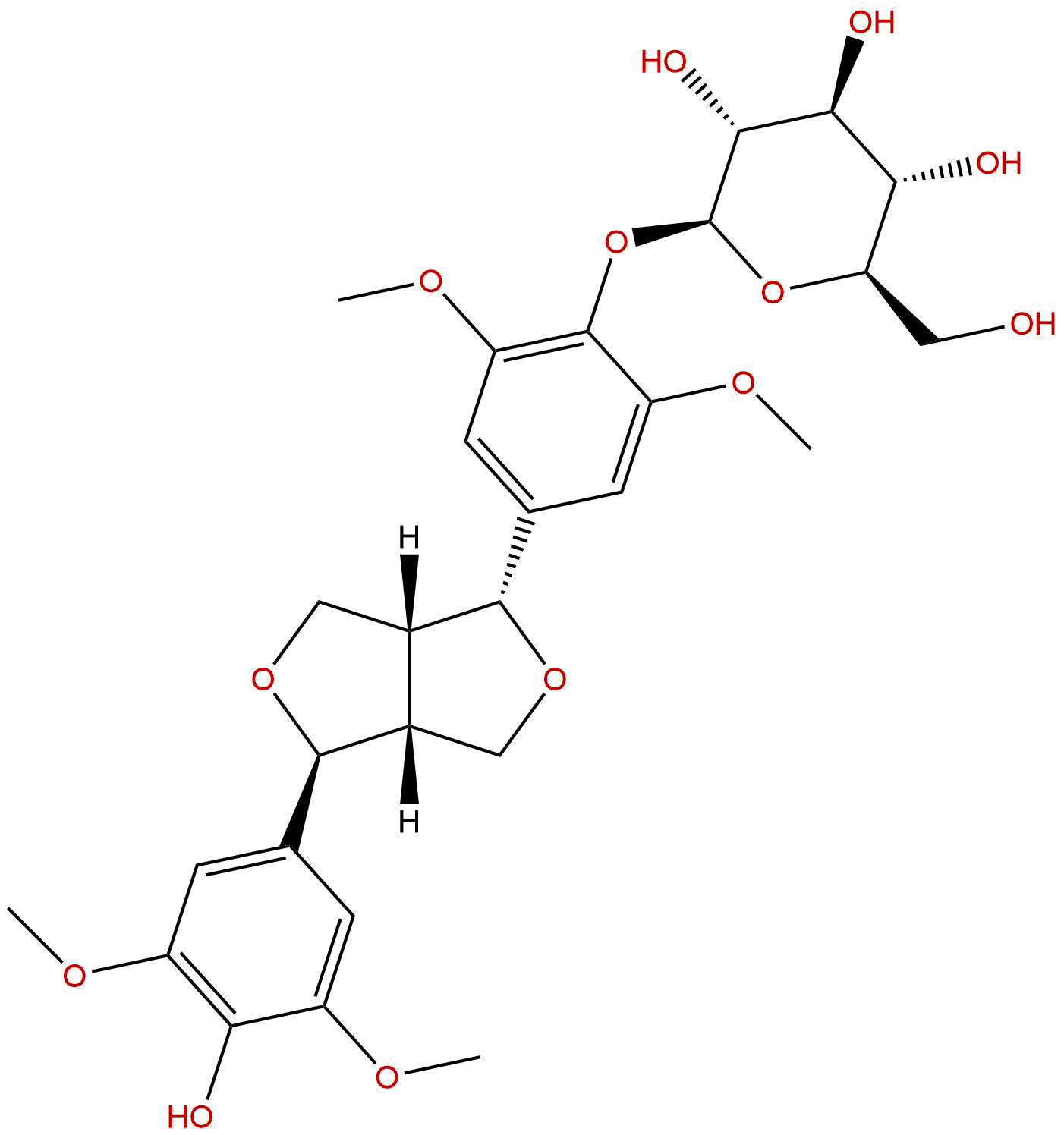
Tortoside A belongs to the bisepoxyllignan class of compounds, with its core skeleton consisting of two phenylpropanoid units connected by 8-8 'positions, forming two tetrahydrofuran ring structures. This unique cage like structure endows lignans with diverse stereochemical and biological activities. The chemical structure of Tortoside A typically contains multiple hydroxyl and methoxy substituents, which not only affect its polarity and solubility, but are also closely related to its interaction with biological targets.
According to the provided pharmacological parameters, the molecular weight of Tortoside A is 580.5830 Da, which is a medium-sized natural product molecule. Its lipid water partition coefficient (LogP) is 0.6275, indicating that the compound has moderate lipophilicity, neither completely hydrophilic nor highly lipophilic, which is beneficial for its transmembrane transport and distribution in organisms. The topologically polar surface area (TPSA) is as high as 174.9900 Å ², mainly attributed to the presence of multiple hydroxyl and ether oxygen atoms in the molecule. High TPSA values are typically associated with poor cell membrane permeability and oral bioavailability, but also indicate that they may not easily penetrate the blood-brain barrier (BBB), thereby reducing potential side effects in the central nervous system. In fact, the parameters clearly indicate that its blood-brain barrier penetration ability is "low", which is consistent with its high TPSA value. The water solubility parameter is 2.4453 (possibly a logS value in mol/L), indicating moderate water solubility. Overall, the physicochemical properties of Tortoside A exhibit a balanced state: moderate lipophilicity favors binding to target proteins, while higher polarity may limit its passive diffusion, suggesting that its absorption and distribution in vivo may depend on active transport or specific administration pathways. These properties provide important reference for its subsequent drug chemical modification and dosage form design. In addition, the hERG inhibition assessment was negative, and the Ames test result was 0.0, indicating that the compound has a low risk of cardiac toxicity and genetic toxicity, which is a positive signal for its development as a lead compound.
Plant sources and extraction methods
The main plant source of Tortoside A is the genus Ilex in the family Ilex, with the genus Ilex(Ilex pubescens Hook. et Arn.)。 Mao Dongqing is widely distributed in southern China, including Guangdong, Guangxi, Fujian, Jiangxi, and other places. Its roots are the traditional medicinal parts and have the effects of clearing heat, detoxifying, promoting blood circulation, and unblocking collaterals. Modern plant chemistry research has shown that the roots of Ilex mongolica contain various chemical components, including triterpenoid saponins, flavonoids, lignans, phenolic acids, etc. Among them, Tortoside A is one of its characteristic lignans. It is worth noting that Tortoside A is not unique to holly and may also exist in other closely related plants, but holly is currently its main known source.
The extraction of Tortoside A from the roots of holly usually follows the classic process of natural product chemistry, which mainly includes the following steps:
- Raw material pretreatment Collect fresh holly roots, wash and slice them, dry or shade them at low temperatures (such as 40-50 ° C), and grind them to a certain mesh size to improve subsequent extraction efficiency.
- Rough extraction Soak or percolate the dried powder with organic solvents for extraction. Due to the polarity of Tortoside A, commonly used extraction solvents include methanol, ethanol, or their aqueous solutions. Heating reflux extraction or ultrasound assisted extraction can significantly improve extraction efficiency. The extract was concentrated under reduced pressure to obtain the total extract.
- Liquid-liquid extraction Disperse the total extract in water and extract it sequentially with solvents of different polarities such as petroleum ether, ethyl acetate, n-butanol, etc. Tortoside A is usually enriched in the ethyl acetate extraction layer due to its moderate polarity.
- Column chromatography separation After vacuum concentration, the ethyl acetate extract was subjected to systematic column chromatography separation. Common stationary phases include silica gel, ODS (octadecylsilane bonded silica gel), Sephadex LH-20, etc. Usually, gradient elution is used, such as using solvent systems such as chloroform methanol, petroleum ether acetone, or methanol water.
- purification Combine the fractions containing Tortoside A through repeated column chromatography and thin-layer chromatography (TLC) detection. Finally, purification was performed using preparative high-performance liquid chromatography (Pre HPLC) to obtain high-purity Tortoside A monomer compounds.
- Structural Identification Using spectroscopic methods, including nuclear magnetic resonance (NMR, such as ¹ H-NMR, ¹ ³ C-NMR, 2D-NMR), mass spectrometry (MS, such as HR-ESI-MS), infrared spectroscopy (IR), and ultraviolet spectroscopy (UV), the isolated compounds were structurally confirmed.
The entire extraction and separation process requires comprehensive consideration of the stability and yield of the target compound, as well as optimization of parameters such as solvent, temperature, and time. With the promotion of green chemistry concepts, more efficient and environmentally friendly extraction techniques such as supercritical fluid extraction (SFE) or deep eutectic solvent (DES) extraction may be explored in the future for the preparation of Tortoside A.
Pharmacological activity research
The most notable pharmacological activity of Tortoside A is its antifungal activity. In the context of fungal infections becoming an increasingly global public health threat, the search for new antifungal drugs has important clinical significance. Existing studies have shown that Tortoside A has inhibitory activity against various pathogenic fungi.
-
Antifungal activity spectrum Preliminary research suggests that Tortoside A may have an impact on Candida species(Candida Spp. and Aspergillus genus(Aspergillus Common pathogenic fungi such as spp have inhibitory effects. Especially for Candida albicans(Candida albicans)This is one of the most common invasive fungal infection pathogens in clinical practice. Its antifungal activity is usually evaluated by measuring the minimum inhibitory concentration (MIC) and minimum bactericidal concentration (MFC). Compared with existing first-line antifungal drugs such as fluconazole and amphotericin B, the activity intensity of Tortoside A may be at a moderate level, but its unique mechanism of action gives it potential advantages in dealing with drug-resistant strains.
-
Preliminary exploration of antifungal mechanism The targets of antifungal drugs typically include cell wall synthesis (such as β - glucan synthase FKS1), cell membrane function (such as CYP51/ERG11 in the ergosterol synthesis pathway, and efflux pump CDR1/CDR2/MDR1), nucleic acid synthesis, and protein synthesis. The mechanism of action of Tortoside A seems to involve multiple targets, as evidenced by its list of related targets. It may block the synthesis of ergosterol and disrupt the integrity of the cell membrane by inhibiting ERG11/CYP51; At the same time, it may also interfere with the synthesis of cell walls by FKS1. In addition, intervention in efflux pumps such as CDR1, CDR2, and MDR1 may mean that Tortoside A can overcome fungal resistance caused by overexpression of efflux pumps. The potential role of CHS3 (chitin synthase) and ALS3 (lectin like sequence protein involved in biofilm formation) suggests that they may affect fungal morphogenesis and pathogenicity. This multi-target mode of action is a major advantage of natural products, which can reduce the probability of fungal resistance.
-
Other potential activities In addition to antifungal activity, as a lignan compound, Tortoside A may also have other biological activities. For example, many lignans exhibit significant antioxidant and anti-inflammatory activities. Considering that holly is used in traditional medicine to treat cardiovascular diseases, it is worth further exploring whether Tortoside A has vascular protection, antiplatelet aggregation, or anti-inflammatory effects. However, there are relatively few reports on the pharmacological activities of Tortoside A other than antifungal activity, which will be an important direction for future research.
Mechanism of action and molecular targets
A deep understanding of the mechanism of action of Tortoside A is key to pushing it towards preclinical research. According to the provided target information, the antifungal mechanism of Tortoside A exhibits complex features of multiple targets and pathways, which is consistent with the characteristics of many natural products.
-
Acting on the ergosterol synthesis pathway:
- ERG11 / CYP51 This is the classic target of azole antifungal drugs such as fluconazole and itraconazole. The wool sterol 14 α - demethylase encoded by ERG11 (CYP51A1 in mammals) is a key enzyme in ergosterol biosynthesis. Inhibiting this enzyme can lead to the accumulation of toxic 14 α - methylsterols and consume the necessary ergosterol in the cell membrane, thereby disrupting the fluidity and integrity of the cell membrane. Tortoside A may inhibit the activity of ERG11 through direct binding or conformational regulation, which is one of the core mechanisms of its antifungal activity.
-
Acting on cell wall synthesis:
- FKS1 FKS1 encodes β -1,3-glucan synthase, which is responsible for synthesizing the main structural component of fungal cell walls - β -1,3-glucan. Echinococcin antifungal drugs, such as caspofungin, exert their effects by inhibiting FKS1. The potential effect of Tortoside A on FKS1 suggests that it may simultaneously attack the cell wall and membrane of fungi, forming a synergistic killing effect.
- CHS3 Chitin is another important component of fungal cell walls, synthesized by chitin synthase (CHS) catalysis. CHS3 is the main chitin synthase in Candida albicans. Inhibiting CHS3 weakens the mechanical strength of the cell wall, leading to unstable cell osmotic pressure.
-
Interference resistance mechanism:
- CDR1 / CDR2 / MDR1 These genes encode ATP binding cassette (ABC) transporters and major facilitation superfamily (MFS) transporters, which are the main mechanisms of fungal multidrug resistance. They can pump drugs out of cells and reduce intracellular drug concentrations. Tortoside A may serve as a substrate or inhibitor for these efflux pumps. If it is an inhibitor, it can be used in combination with azole drugs to reverse the resistance of drug-resistant strains, which has important clinical significance.
-
Influencing virulence factors:
- ALS3 The lectin like sequence (ALS) protein family is an important adhesion protein of Candida albicans, mediating fungal adhesion to host cells and medical device surfaces, and is a key step in biofilm formation. ALS3 is one of the most important members among them. Inhibiting the expression or function of ALS3 can weaken the colonization ability and pathogenicity of fungi.
-
Other potential targets:
- MLS1 The target information is limited and may involve a certain metabolic pathway or signal transduction in fungi.
In summary, Tortoside A is not a single target inhibitor, but a multi-target natural product that can simultaneously act on fungal cell membranes, cell walls, resistance pumps, and virulence factors. This multi-target synergistic mode makes it difficult for fungi to develop complete resistance through a single gene mutation, providing a valuable molecular template for the development of new antifungal drugs that are less prone to developing resistance. Future research needs to validate these predicted targets one by one through experimental techniques such as molecular docking, surface plasmon resonance (SPR), drug affinity response target stability (DARTS), or thermal transfer analysis (TSA), and elucidate their specific binding modes and structure-activity relationships with Tortoside A.
Evaluation of drug properties and pharmacokinetics
Drug efficacy evaluation is a bridge connecting active compounds with clinical candidate drugs. Based on the provided parameters, we can conduct a preliminary evaluation of the pharmacological properties of Tortoside A.
-
Analysis of drug properties:
- Lipinski's Five Rules The molecular weight of Tortoside A (580.58 Da) exceeds the threshold of 500 Da, and LogP (0.63) is within a reasonable range. The number of hydrogen bond donors (from multiple hydroxyl groups) and hydrogen bond acceptors (from hydroxyl and ether oxygen groups) is likely to exceed the limits of 5 and 10. Therefore, Tortoside A does not fully comply with Lipinski's five rules, indicating a possible issue of poor oral bioavailability. However, many successful natural medicines such as paclitaxel and cyclosporine also exceed the scope of the five rules, so this is not an absolute rejection criterion.
- Polarized surface area (TPSA)The TPSA of 174.99 Å ² is much higher than the recommended upper limit of 140 Å ² for oral medication, which strongly suggests that its cell membrane permeability is poor and oral absorption may be limited. Meanwhile, high TPSA also explains its low blood-brain barrier penetration ability, which is a favorable feature for treating peripheral fungal infections and can avoid central neurotoxicity.
-
Pharmacokinetic characteristics (prediction):
- absorb Due to its high molecular weight and polarity, oral absorption of Tortoside A may be poor, and its bioavailability may be low. Its absorption may depend on active transport mediated by transport proteins on small intestinal epithelial cells, such as the organic anion transport peptide OATP. Therefore, intravenous injection may be a more effective route of administration.
- distribution Its moderate LogP value suggests that it may be distributed to various tissues throughout the body, but high TPSA limits its entry into the central nervous system. The plasma protein binding rate may be high.
- Metabolism Tortoside A contains multiple phenolic hydroxyl groups and ether bonds, and is a potential site of action for metabolic enzymes in the body, such as cytochrome P450 enzymes and glucuronosyltransferases UGTs. Its main metabolic pathways may include glucuronidation, sulfation binding reactions, and oxidative reactions such as O-demethylation. Metabolic stability is an important factor determining its half-life.
- excretion Due to its high polarity, Tortoside A and its metabolites may be primarily excreted through bile and urine.
-
safety assessment:
- HERG inhibition A negative result is a significant advantage, indicating a low risk of causing prolonged QT interval and fatal arrhythmias (such as apical torsion) in the heart.
- Ames test The result is 0, indicating that no mutagenicity was shown in the bacterial recovery mutation test, preliminarily ruling out the risk of genetic toxicity. This laid a solid foundation for subsequent animal toxicology experiments.
Optimization strategy for drug properties Given the potential shortcomings in oral absorption and metabolic stability of Tortoside A, future pharmaceutical chemistry research can focus on the following points:
- Prodrug design Esterification or phosphorylation modification of phenolic hydroxyl groups in molecules to produce prodrugs, in order to enhance their lipid solubility and oral absorption.
- Simplified structure Simplify the molecular structure, reduce molecular weight and polarity while retaining key pharmacophores such as the core of epoxy lignin.
- nano-formulation Using delivery systems such as liposomes and polymer nanoparticles to encapsulate Tortoside A, improving its solubility and bioavailability, and achieving targeted delivery.
- Structural modification Methylation of hydroxyl groups at specific positions or introduction of other lipophilic groups can improve LogP and TPSA while maintaining activity.
Clinical application prospects and prospects
As a natural lignan with unique multi-target antifungal activity, Tortoside A has broad clinical application prospects, but also faces many challenges.
prospect:
1. Lead compounds of novel antifungal drugs Faced with the increasingly severe global problem of fungal drug resistance, especially multi drug resistant Candida albicans and Candida auricula(Candida auris)And Aspergillus fumigatus(Aspergillus fumigatus)The emergence of drugs with new mechanisms of action is urgent. The multi-target mode of action of Tortoside A, particularly its potential inhibitory ability on drug-resistant pumps (CDR1/2, MDR1) and virulence factors (ALS3), makes it an ideal lead for the development of anti resistant fungal drugs. It can be developed independently or used as an "adjuvant drug" in combination with existing azole or echinocandin drugs to overcome drug resistance and achieve synergistic effects.
2. Treatment of fungal biofilm infections The formation of fungal biofilm is an important cause of clinical treatment failure and infection recurrence. The potential effects of Tortoside A on ALS3 and CHS3 suggest its potential ability to inhibit or disrupt fungal biofilms. This is of great significance for the treatment of Candida infections related to medical devices, such as catheter-related bloodstream infections and dental stomatitis.
3. The potential of local medication Given its potential poor oral bioavailability but good preliminary safety assessment, Tortoside A is highly suitable for development as a topical formulation, such as cream, ointment, lotion, or vaginal suppository, for the treatment of fungal infections on the skin and mucous membranes, such as dermatophytosis and vaginal candidiasis. Local administration can avoid potential toxicity caused by systemic absorption and directly achieve effective drug concentration at the lesion site.
4. As a probe tool The unique multi-target binding properties of Tortoside A make it a chemical biology probe for studying fungal cell biology, revealing the cross regulatory network between different targets, and deepening the understanding of fungal pathogenesis and drug resistance mechanisms.
Challenges and Prospects:
1. Pharmacokinetic optimization As mentioned earlier, the pharmacological weakness of Tortoside A lies in its poor oral absorption. Future research should focus on overcoming this obstacle through drug chemical modifications (such as prodrugs, structural simplification) or advanced drug delivery systems (such as nanocrystals, liposomes).
2. In depth elucidation of the mechanism of action Currently, information about its target of action is mostly based on prediction or preliminary screening. It is necessary to confirm its direct binding and inhibition mode with targets such as ERG11, FKS1, CDR1 through rigorous molecular biology and biochemical experiments, such as gene knockout/overexpression, enzyme activity assay, thermal shift analysis, X-ray eutectic structure analysis, etc. Clarifying its precise binding site and structure-activity relationship is the foundation for rational drug design.
3. In vivo pharmacological and toxicological studies Currently, research mostly remains at the in vitro level. Systematic in vivo pharmacological studies must be conducted to establish fungal infection models in mice or rats (such as systemic candidiasis, skin infection models), evaluate the therapeutic efficacy, pharmacokinetic characteristics, and acute/chronic toxicity of Tortoside A and its derivatives. Especially the potential toxicity to the liver and kidneys needs to be comprehensively evaluated.
4. Resource sustainability Currently, Tortoside A is mainly extracted from holly plants, and its content may be low, making it difficult to meet the needs of large-scale research and future clinical use. Therefore, it is necessary to develop efficient chemical total synthesis or semi synthesis routes, or utilize biotechnology (such as genetic engineering, cell culture) to sustainably produce the compound.
Conclusion
Tortoside A, as a natural bicyclic lignan derived from the traditional Chinese medicine Ilex mongolica, has shown significant research value in the field of natural product pharmacology due to its unique chemical structure and multi-target antifungal mechanism. It not only inhibits key synthetic enzymes (ERG11, FKS1) in fungal cell membranes and walls, but may also interfere with fungal resistance pumps (CDR1/2, MDR1) and virulence factors (ALS3). This multi pronged mode of action provides a new approach to addressing the challenging issue of fungal resistance in clinical practice.
Although Tortoside A has natural shortcomings in drug development, especially in oral bioavailability, its good initial safety (low hERG risk, no Ames mutagenicity) and low blood-brain barrier penetration provide the possibility for its development as a local antifungal drug or intravenous injection. At present, research on Tortoside A is still in its early stages, with a series of key scientific issues spanning from the confirmation of the mechanism of action, in vivo efficacy verification, pharmacokinetic optimization, and toxicological evaluation from active compounds to clinical candidate drugs.
In the future, with the interdisciplinary integration and collaborative research of medicinal chemistry, chemical biology, pharmacology, and pharmacy, we have reason to believe that through structural optimization and delivery system innovation of Tortoside A, it is expected to be developed into a new class of antifungal drugs with independent intellectual property rights, injecting new vitality into the global field of antifungal infection treatment. At the same time, in-depth research on Tortoside A will further reveal the rich biological activity of lignin compounds and provide valuable experience and examples for discovering innovative drugs from traditional Chinese medicine.