Introduction/Overview
Natural products, as an important source of drug discovery, play an irreplaceable role in the long history of human struggle against diseases. Isolating and identifying small molecule compounds with biological activity from traditional plant medicines, and elucidating their pharmacological mechanisms, is an important paradigm in modern medicinal chemistry and pharmacology research. Vasicinone, as a traditional medicinal plant derived from the duckbill flower(Adhatoda vasica The quinazoline alkaloids of Nees have attracted widespread attention from researchers in recent years due to their diverse biological activities, especially their protective effects in neurodegenerative diseases, inflammation, and ischemic disease models.
The duckbill flower has a long history of application in the Ayurvedic medical system of India, often used to treat respiratory diseases such as cough, asthma, and bronchitis. Its main active ingredients are believed to be Vasocine and Vasocinone. Compared to platyphylline, platyphylline ketone has an additional carbonyl group in its structure, which results in its unique pharmacological properties. Early research mainly focused on the bronchodilator and anti-inflammatory activities of duckbill alkaloid ketone. However, as research deepens, its potential neuroprotective, anti apoptotic, antioxidant, and energy metabolism regulating abilities are gradually revealed, making it a candidate compound for treating oxidative stress-related neurodegenerative diseases such as Parkinson's Disease (PD) and Alzheimer's Disease (AD), as well as ischemic stroke and chronic obstructive pulmonary disease (COPD). This review aims to systematically summarize the chemical properties, plant sources, pharmacological activities, mechanisms of action, and pharmacological evaluation of duckbill alkaloid ketone, in order to provide comprehensive scientific basis for the further development and clinical translation of this compound.
Chemical structure and physicochemical properties
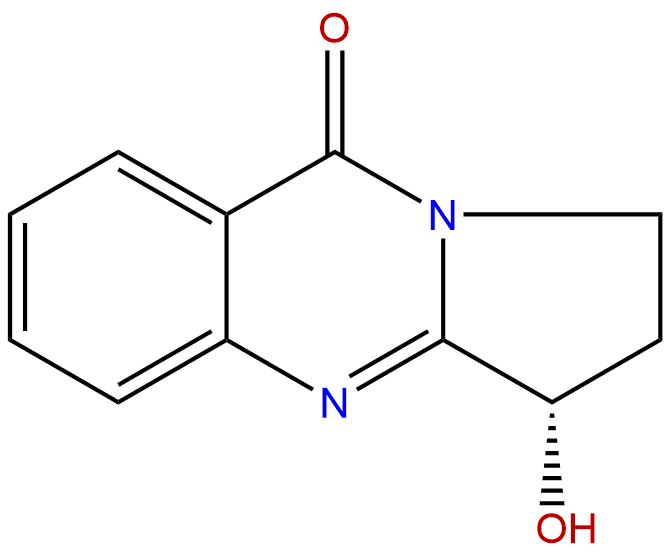
The chemical name of Vasilinone is (±) -3-hydroxy-2,3-dihydropyrrolo [2,1-b] quinazolin-9 (1H) - one, and its core skeleton is quinazolinone with a five membered pyrrole ring. Its chemical structure is characterized by a quinazolinone core fused with a dihydropyrrole ring, and a hydroxyl group attached to the 3rd position of the pyrrole ring. This structural feature distinguishes it from Vasiline (hydrogen at position 3), and the presence of this hydroxyl group is crucial for its antioxidant activity and interaction with certain targets. The duckbill alkaloid ketone has a chiral center (C-3 position), therefore it has two enantiomers, R and S. Natural sources of duckbill alkaloid ketone are usually racemic or have specific optical activity. Different isomers may have differences in biological activity, but current research mainly focuses on racemic forms.
From the perspective of physicochemical properties, the molecular weight of duckbill alkaloid ketone is 202.21 Da, which conforms to the typical characteristics of small molecule drugs. Its lipid water partition coefficient (LogP) is 0.4228, indicating that it has moderate lipophilicity, which allows it to dissolve in water and has a certain ability to penetrate biofilms. Its topological polar surface area (TPSA) is 55.12 Å ², which is lower than the threshold commonly considered for good oral absorption and blood-brain barrier penetration (approximately 140 Å ²), indicating its good oral absorption potential and central nervous system permeability. In fact, its blood-brain barrier penetration has been evaluated as' high ', providing a key pharmacokinetic basis for its neuroprotective effects. The water solubility (LogS) of duckbill alkaloid ketone is 5.0338, indicating that its solubility in water is acceptable and beneficial for formulation development. In addition, preliminary pharmacological evaluation shows that it does not have hERG potassium channel inhibitory activity, reducing the risk of cardiac toxicity; The Ames test result is 0.9, indicating a low risk of genetic toxicity. These physicochemical properties and preliminary safety data have laid a solid foundation for its subsequent development as a lead compound.
Plant sources and extraction methods
The main source of duckbill alkaloid ketone comes from the duckbill flower in the family Acanthaceae(Adhatoda vasica Nees, Also known as Justicia adhatoda L.)。 This plant is widely distributed in India, Sri Lanka, Nepal, and southern China, and is an evergreen shrub. In addition to duckbill flowers, some other Quercus plants, such as Adhatoda beddomei And some Justicia This compound is also present in plants. In duckbill flowers, the content of duckbill alkaloid ketone is usually lower than its main alkaloid, duckbill alkaloid. The two often coexist in different parts of the plant, especially in the leaves where the content is most abundant.
Traditional extraction methods are mostly based on the acid-base properties of alkaloids. Usually, dried plant powders are soaked or soaked in acidic aqueous solutions (such as dilute hydrochloric acid or dilute sulfuric acid) to dissolve alkaloids into salts. After filtration, the filtrate is alkalized with alkaline solution (such as ammonia or sodium hydroxide), and then extracted with organic solvents (such as chloroform, dichloromethane, or ethyl acetate). After recovering the solvent, the crude extract of total alkaloids is obtained. Subsequently, the crude extract was separated and purified using column chromatography techniques such as silica gel column chromatography and alumina column chromatography. By gradient elution, platyphylline and platyphylline ketone were obtained separately. High performance liquid chromatography (HPLC) technology is also commonly used for quantitative analysis and preparation separation of duckbill alkaloid ketone.
In recent years, in order to improve extraction efficiency and yield, some modern extraction techniques have also been applied to the preparation of duckbill alkaloid ketone, such as ultrasound assisted extraction, microwave-assisted extraction, and supercritical fluid extraction. These methods can shorten extraction time, reduce solvent usage, and potentially improve the yield of target compounds. In addition, due to the relatively simple structure of duckbill alkaloid ketone, a chemical total synthesis route has also been established. By starting from ortho aminobenzoic acid or its derivatives, constructing a quinazolinone skeleton through multiple reactions, and introducing pyrrole rings and hydroxyl groups, the synthesis of duckbill alkaloid ketone and its analogues can be achieved, providing a guarantee for further research on its structure-activity relationship and expanding drug sources.
Pharmacological activity research
The pharmacological activity spectrum of duckbill alkaloid ketone is relatively broad, covering multiple aspects such as neuroprotection, anti-inflammatory, antioxidant, anti apoptotic, and metabolic regulation, especially showing significant effects in disease models related to oxidative stress and inflammation.
1. Neuroprotective effect
This is currently the most focused area of research on duck billed ketone alkaloids. In Parkinson's disease models, duckbill ketone can effectively protect dopaminergic neurons from neurotoxins such as 6-hydroxydopamine and 6-OHDA; Or 1-methyl-4-phenyl-1,2,3,6-tetrahydropyridine (MPTP) damage. Research has shown that it can significantly reduce intracellular reactive oxygen species (ROS) levels, restore mitochondrial membrane potential, inhibit caspase-3 activation, and thereby alleviate neuronal apoptosis. In Alzheimer's disease models, it has been reported that duck billed ketone can inhibit the aggregation and fiber formation of β - amyloid protein (A β), and reduce A β - induced neurotoxicity. In addition, it can improve cognitive function in AD model mice by regulating autophagy and energy metabolism pathways. Its high penetration through the blood-brain barrier is an important prerequisite for its central nervous system protective effect.
2. Anti inflammatory and antioxidant activity
Inflammation and oxidative stress are the common pathological basis of various diseases. Duckbill alkaloid ketone has shown strong anti-inflammatory activity in various inflammatory models. In the macrophage model stimulated by lipopolysaccharide (LPS), it can significantly inhibit the production of pro-inflammatory cytokines such as tumor necrosis factor - α (TNF - α), interleukin-6 (IL-6), and nitric oxide (NO). The mechanism is closely related to the inhibition of the activation of the nuclear factor kappa B (NF - κ B) signaling pathway. At the same time, duckbill ketone itself has direct antioxidant capacity, which can clear various free radicals and activate the nuclear factor E2 related factor 2 (Nrf2)/antioxidant response element (ARE) pathway, upregulating a series of antioxidant enzymes such as heme oxygenase-1 and HO-1; The expression of quinone oxidoreductase 1 (NQO1) enhances the endogenous antioxidant defense system of cells.
3. Protective effect on ischemic stroke
Given its dual neuroprotective and anti-inflammatory activities, duckbill alkaloid ketone has also shown therapeutic potential in models of cerebral ischemia-reperfusion injury. Animal experiments have shown that administering platyphylline ketone before or after reperfusion can significantly reduce the volume of cerebral infarction, alleviate brain edema, and improve neurological function scores. Its protective effect involves multiple aspects: by activating the AMP activated protein kinase (AMPK) signaling pathway, it improves energy metabolism disorders after ischemia; By inhibiting the TLR4/NF - κ B pathway, inflammation response can be alleviated; Inhibiting neuronal apoptosis by upregulating Bcl-2 and downregulating Bax; At the same time, it can activate the Nrf2 pathway, enhance antioxidant defense, and alleviate oxidative damage.
4. Effects on respiratory system diseases
The traditional use of duckbill alkaloid ketone is to treat respiratory system diseases. Modern research has confirmed that it has bronchodilating, expectorant, and anti-inflammatory effects. In the chronic obstructive pulmonary disease (COPD) model, duckbill ketone can inhibit airway inflammation, mucus hypersecretion, and alveolar structural damage induced by cigarette smoke extract or elastase. The mechanism may involve inhibiting the STAT3 signaling pathway and regulating the generation of lipid mediators (such as through the ALOX5 pathway). In addition, its regulatory effect on TRPV1 and TRPA1 channels may also be related to its ability to alleviate airway hyperresponsiveness and cough reflex.
Mechanism of action and molecular targets
The pharmacological effects of duckbill alkaloid ketone are the result of multi-target and multi pathway synergistic effects, and its core mechanism revolves around regulating cell survival, inflammation, oxidative stress, and energy metabolism.
1. Regulating energy metabolism and cell survival: AMPK signaling pathway
AMPK is a key sensor for cellular energy homeostasis. Duckbill alkaloid ketone has been confirmed to be an activator of AMPK. In nerve cells and myocardial cells, it can activate AMPK through phosphorylation, thereby inhibiting the downstream mTOR signaling pathway, inducing autophagy, clearing damaged proteins and mitochondria, and maintaining cellular homeostasis. Meanwhile, the activation of AMPK can also improve mitochondrial function, reduce ROS production, upregulate the expression of anti apoptotic protein Bcl-2, inhibit the activity of pro apoptotic proteins Bax and Bad, thereby exerting a cellular protective effect. In AD and PD models, the activation of AMPK is considered one of the core mechanisms by which duckbill ketone exerts neuroprotective effects.
2. Inhibiting inflammatory response: NF - κ B and STAT3 signaling pathway
Duckbill alkaloid ketone is an effective anti-inflammatory molecule. It mainly inhibits the activity of I κ B kinase (IKK), prevents the phosphorylation and degradation of I κ B α, and thus suppresses the nuclear translocation and transcriptional activity of NF - κ B (especially p65 subunit, RELA). This leads to downregulation of downstream pro-inflammatory genes such as TNF - α, IL-6, iNOS, COX-2. In addition, duckbill alkaloid ketone can also inhibit the phosphorylation of STAT3, thereby weakening inflammatory signals mediated by cytokines such as IL-6. The dual inhibition of NF - κ B and STAT3 gives it a unique advantage in combating chronic inflammation.
3. Activate antioxidant defense: Nrf2/ARE signaling pathway
Duckbill alkaloid ketone can activate the transcription factor Nrf2. Under normal conditions, Nrf2 binds to Keap1 and is anchored in the cytoplasm. Duckbill alkaloid ketone may modify key cysteine residues on Keap1, promoting Nrf2 dissociation and translocation into the nucleus, binding to ARE, and initiating transcription of a series of antioxidant enzymes and phase II detoxifying enzymes (such as HO-1, NQO1, glutathione S-transferase, etc.). This mechanism greatly enhances the ability of cells to respond to oxidative stress and is an important supplement to their neuroprotective and anti-inflammatory effects.
4. Regulating apoptosis and autophagy: Bcl-2 family and Caspase
Duck billed ketone stabilizes mitochondrial membrane by regulating Bcl-2 family proteins (such as upregulating Bcl-2, downregulating Bax and Mcl-1), inhibiting the release of cytochrome c, thereby blocking the cascade activation of caspase-9 and caspase-3, and ultimately inhibiting cell apoptosis. Meanwhile, as mentioned earlier, it can also induce protective autophagy through the AMPK mTOR pathway, helping cells clear harmful substances and promote survival.
5. Other potential targets
The target spectrum of duckbill alkaloid ketone also includes inhibition of acetylcholinesterase (AChE) and butyrylcholinesterase (BuChE), which is related to its potential in AD treatment; Inhibiting monoamine oxidase A (MAO-A) may help regulate neurotransmitter levels; Regulating the activity of Toll like receptor 4 (TLR4) and affecting innate immune response; And regulate pain and cough reflexes by acting on TRPV1 and TRPA1 channels. In addition, its inhibitory effect on β - secretase 1 (BACE1) is also worth noting, as BACE1 is a key enzyme in A β production. These diverse target interactions together form a complex pharmacological network of duckbill alkaloid ketone.
Evaluation of drug properties and pharmacokinetics
Based on the aforementioned physicochemical properties (molecular weight<500, moderate LogP, reasonable TPSA) and preliminary safety assessment (no hERG inhibition, Ames negative), duckbill alkaloid ketone exhibits good drug like properties. Its high water solubility and high blood-brain barrier penetration are its two major advantages as a central nervous system drug.
Regarding the pharmacokinetic (ADME) properties, current research is incomplete, but there have been some important findings. Duckbill alkaloid ketone can be absorbed after oral administration, but its absolute bioavailability may be limited by first pass effects. It is widely distributed, especially able to effectively penetrate the blood-brain barrier and enter brain tissue, which is crucial for its neuroprotective effect. In terms of metabolism, duckbill alkaloid ketone is mainly metabolized in the liver, which may involve oxidative metabolism of cytochrome P450 enzymes (such as CYP450) and binding reactions of glucuronic acid or sulfuric acid. Its metabolites may still have biological activity or serve as the main form of excretion. Duckbill alkaloid ketone and its metabolites are mainly excreted through urine and bile.
Although the initial safety is good, the long-term toxicity, genetic toxicity, reproductive toxicity, and other aspects of duckbill alkaloid ketone still need to be comprehensively evaluated through systematic preclinical toxicology studies. In addition, its inhibitory or inducible effects on CYP450 enzymes, as well as the risk of interactions with other drugs, are also an indispensable part of drug efficacy evaluation. Future research requires the establishment of more sensitive and specific biological sample analysis methods (such as LC-MS/MS) to comprehensively elucidate their absorption, distribution, metabolism, and excretion (ADME) processes in vivo, providing a basis for clinical trial design.
Clinical application prospects and prospects
Due to its multi-target and multi pathway pharmacological properties, duckbill alkaloid ketone has shown broad clinical application prospects in multiple disease fields.
1. Neurodegenerative diseases: For Parkinson's disease and Alzheimer's disease, duckbill alkaloid ketone can simultaneously act on multiple pathological processes such as oxidative stress, mitochondrial dysfunction, neuroinflammation, and protein abnormal aggregation. This pleiotropy makes it a disease modification therapy that may be superior to single target drugs. Its high blood-brain barrier penetration is a key advantage for its application in central nervous system diseases. More animal model research is needed in the future, especially using genetically modified or aging models, to verify their long-term efficacy and safety.
2. Ischemic stroke: The protective effect of duckbill alkaloid ketone in cerebral ischemia-reperfusion injury suggests that it may become an acute phase neuroprotective agent. Its mechanism of action covers multiple aspects such as energy metabolism recovery, anti-inflammatory, anti apoptotic, and antioxidant, which meets the multi-target requirements of stroke treatment. However, the treatment time window, optimal administration route (intravenous or oral), and combined efficacy with other thrombolytic drugs (such as tPA) are areas that require focused research.
3. Chronic inflammatory diseases: Given its strong anti-inflammatory and antioxidant activity, duckbill alkaloid ketone also has potential in the treatment of chronic inflammatory diseases such as chronic obstructive pulmonary disease (COPD), asthma, and rheumatoid arthritis. Especially for COPD, it can not only anti-inflammatory, but also regulate airway secretion and dilate bronchi, which may become a comprehensive therapeutic drug.
4. Challenges and Prospects: Despite the bright prospects, the clinical translation of duckbill alkaloid ketone still faces challenges. Firstly, its pharmacokinetic properties need to be further optimized, such as through prodrug design or new dosage forms (such as nanoparticles, liposomes) to improve its oral bioavailability and targeting. Secondly, a more in-depth evaluation of its potential toxic side effects is needed, especially the safety of long-term medication. Thirdly, the activity differences and pharmacokinetic characteristics of its enantiomers need to be clarified in order to determine the optimal candidate molecules. Finally, based on its complex multi-target mechanism, using systems pharmacology and network pharmacology methods, constructing its "compound target disease" network will help to comprehensively understand its mechanism of action and provide guidance for precision medicine.
Conclusion
As a quinazoline alkaloid derived from traditional medicinal plants, the pharmacological activity of duckbill alkaloid ketone has far surpassed traditional respiratory system applications. Modern research has revealed its significant efficacy in neuroprotection, anti-inflammatory, antioxidant, and regulation of energy metabolism, particularly demonstrating enormous therapeutic potential in oxidative stress-related diseases such as Parkinson's disease, Alzheimer's disease, and ischemic stroke. Its mechanism of action involves multiple key signaling pathways and targets such as AMPK, NF - κ B, Nrf2, etc., reflecting the advantages of multi-target synergistic effects of natural products. Meanwhile, its excellent physicochemical properties and preliminary safety evaluation make it a highly valuable lead compound for development. Future research should focus on thoroughly elucidating its pharmacokinetic properties, optimizing its drug properties, clarifying its structure-activity relationship, and ultimately transforming the active molecules in this ancient plant into modern drugs that benefit human health through rigorous preclinical and clinical studies. The research process of duckbill alkaloid ketone once again confirms the core position of natural products in modern drug discovery, and provides a successful example for exploring new drugs for treating complex diseases from the treasure trove of traditional medicine.