| Catalog No | Package | Original Price | Price | Inventory | Quantity | Operating |
|---|---|---|---|---|---|---|
| SBP00622-5mg | 5mg | $490.00 | Sign in |
|


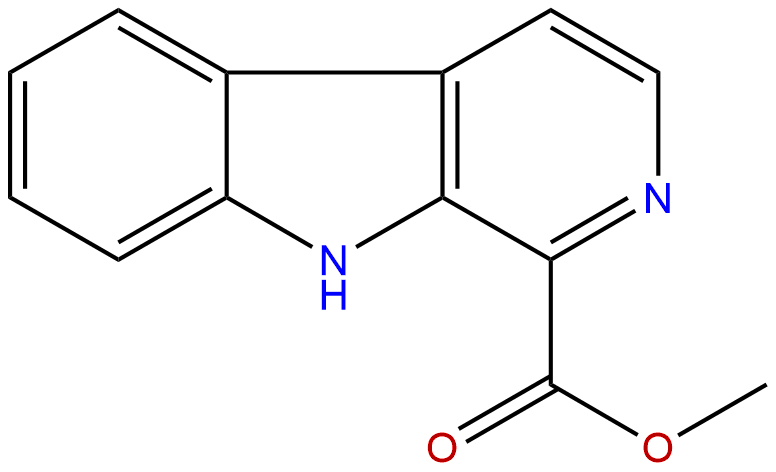
Product name: 1-Methoxycarbonyl-β-carboline
Synonym name: Kumujan B; 1-Methoxycarbonyl-beta-carboline
Catalogue No.: SBP00622
Cas No.: 3464-66-2
Formula: C13H10N2O2
Mol Weight: 226.235
Botanical Source:
Physical Description: Yellow powder
Type of Compound: Alkaloids
Purity: 95%~99%
Analysis Method: HPLC-DAD or/and HPLC-ELSD
Identification Method: Mass, NMR
Packing: Brown vial or HDPE plastic bottle
The product could be supplied from milligrams to grams. Inquire for bulk scale.
We provide solution to improve the water-solubility of compounds, thereby facilitating the variety of activity tests and clinic uses.
For Reference Standard and R&D, Not for Human Use Directly.
Storage conditions:Short-term storage at 2~8℃, long-term storage at -20 ~ -80℃
54.9800
2.4465
2.4463
.0120
2.0623
24.1274
High
87.2524
2.1068
No
Yes
Yes
No
Yes
Yes
1.2
Yes
No
Yes
Yes
Natural products, as an important source of drug discovery, play an irreplaceable role in the long history of human fight against diseases. Among them, β - carboline alkaloids are a family of natural compounds with unique structures, wide distribution, and diverse biological activities. Their core structure is composed of an indolo-pyridine ring system. These compounds have attracted much attention due to their significant anti-tumor, antiviral, anti-inflammatory, neuroprotective and other pharmacological activities. Among numerous β - carboline derivatives, 1-methoxycarbonyl - β - carboline, also known as camptothene B (CAS number: 3464-66-2), has become one of the hotspots in natural product pharmacology research in recent years due to its unique chemical structure and potential anti-tumor activity demonstrated in various tumor models.
Bitterwood alkaloid B originally originated from plants in the Simaroubacheae family, especially bitter wood(Picrasma quassioides)Separation and identification in the middle. As a traditional Chinese medicinal herb, bitter wood has a bitter taste and a cold nature. It has the effects of clearing heat, drying dampness, detoxifying and killing insects. It is commonly used in folk medicine to treat diseases such as dysentery, eczema, and boils. Modern pharmacological research has revealed that extracts of bitter wood and the β - carboline alkaloids they contain have significant anti-tumor, anti-inflammatory, and antibacterial activities. As a representative component of bitter wood alkaloid B, its anti-tumor effect is particularly prominent. Studies have shown that it has the ability to inhibit proliferation, induce apoptosis, and inhibit metastasis in various cancer cell lines.
This article aims to provide a comprehensive professional review of 1-methoxycarbonyl - β - carboline (bitter wood alkali B). The article will systematically explain its chemical structure and physicochemical properties, trace its plant origin and extraction methods, deeply explore its anti-tumor and other pharmacological activities, analyze its mechanism of action and molecular targets in detail, and conduct preliminary evaluation and pharmacokinetic analysis based on drug parameters. Finally, it will look forward to its clinical application prospects. Through multidimensional analysis of this compound, it is expected to provide valuable references for researchers in the fields of natural product chemistry, pharmacology, and drug development, and promote its transformation into clinical candidate drugs.
The chemical structure core of 1-methoxycarbonyl - β - carboline is the β - carboline skeleton, which is a tricyclic system formed by the fusion of an indole ring and a pyridine ring. The key structural feature is the presence of a methoxycarbonyl (- COOCH ∝) substituent attached to the carbon atom at position 1 of the β - carboline ring system. This substituent endows the molecule with unique chemical properties and biological activity. From the perspective of system nomenclature, its IUPAC name is methyl 9H-pyrido [3,4-b] indole-1-carboxylate. The molecular formula is C ₁∝ H ₁₀ N ₂ O ₂, with a molecular weight of 226.2350 g/mol.
In terms of physicochemical properties, matrine B exhibits typical alkaloid characteristics. Its lipid water partition coefficient (LogP) is 2.4465, indicating that the compound has moderate lipophilicity, which is beneficial for its penetration of cell membranes, but may also affect its solubility in aqueous phase. In fact, its water solubility parameter is only 0.0120 mg/mL, making it a compound that is difficult to dissolve in water. This low water solubility is one of the main challenges faced by many natural products in drug development, which may limit their oral bioavailability and the development of intravenous drug formulations. The polar surface area (TPSA) is 54.9800 Å ², which is lower than the commonly assumed passive diffusion threshold (about 140 Å ²), indicating good cell membrane permeability, consistent with the predicted "high" blood-brain barrier penetration ability in subsequent drug evaluation. In addition, the predicted result of hERG inhibition is' no ', indicating that its potential risk of causing cardiac QT interval prolongation and arrhythmia is low, which is a positive pharmacological signal. However, the Ames test result is 1.2 (usually considered positive if it is greater than 0.5), indicating that the compound may have a certain genetic toxicity or mutagenicity risk, which will be a key concern and issue to be addressed when entering the preclinical safety evaluation stage.
1-Methoxycarbonyl - β - carboline (bitter wood alkaloid B) mainly comes from plants in the family Simaroubacheae, among which bitter wood(Picrasma quassioides)The most famous. Bitterwood is widely distributed in China, Japan, the Korean Peninsula, and India. Its dried branches and leaves are the medicinal parts of the traditional Chinese medicine "Bitterwood". In addition to bitter wood, this compound also exists in other plants of the same genus, such as Picrasma javanica, as well as other genera of the Sapindaceae family, such as the Brucea genus(Brucea)Plants (such as Brucea javanica)In the middle. In addition, there are sporadic reports in some species of distant plant families and genera, such as Rubiaceae, indicating that although their distribution in the plant kingdom is not widespread, they have a certain representativeness.
The extraction of matrine B from plants usually follows the classic strategy of alkaloid extraction. Due to the fact that alkaloids often combine with organic acids in plants to form salts, the extraction process often utilizes their solubility differences under different pH conditions. The typical extraction process is as follows:
By the above method, various β - carboline alkaloids, including camptothecin B, can be isolated from bitter wood. Its structural identification usually relies on spectroscopic techniques such as ultraviolet spectroscopy (UV), infrared spectroscopy (IR), mass spectrometry (MS), and nuclear magnetic resonance spectroscopy (¹ H-NMR, ¹ ³ C-NMR, HMBC, HSQC, etc.), which are confirmed through comparison with literature data or single crystal X-ray diffraction analysis.
The pharmacological activity research of bitter wood alkaloid B mainly focuses on the field of anti-tumor, and also exhibits other potential activities such as anti-inflammatory, antiviral, and neuroprotective effects.
A large number of in vitro and in vivo studies have shown that matrine B has significant cytotoxic effects on various human cancer cell lines, with a wide spectrum of effects covering solid tumors and hematological tumors.
The anti-tumor effect of matrine B is not achieved through a single target, but through the synergistic effect of multiple targets and pathways. Its identified molecular targets mainly involve cell apoptosis regulation, signal transduction, transcriptional regulation, and cell cycle.
Bitter wood alkaloid B can directly or indirectly regulate the expression of B-cell lymphoma 2 (BCL-2) family proteins, thereby breaking the balance between pro survival and pro apoptotic signals in tumor cells.
* Downregulate MCL1 and BCL2 Myeloid leukemia sequence 1 (MCL1) and BCL2 are key anti apoptotic proteins that are highly expressed in various tumors and closely associated with chemotherapy resistance and poor prognosis. Research has shown that treatment with matrine B can significantly reduce the protein levels of MCL1 and BCL2 in various cancer cells, and its mechanism may involve transcriptional inhibition and/or accelerated protein degradation. The downregulation of MCL1 and BCL2 increases mitochondrial outer membrane permeability, promotes the release of cytochrome c, and initiates the Caspase cascade reaction.
* Upregulation of pro apoptotic proteins Meanwhile, matrine B may also upregulate the expression of pro apoptotic proteins such as Bax and Bak, or activate BH3 only proteins such as Bim and Bid, further enhancing the transmission of apoptotic signals.
Signal transducer and activator of transcription factor 3 (STAT3) is a key oncogenic transcription factor that is continuously activated in various tumors, promoting cell proliferation, survival, angiogenesis, and immune escape. Bitterwood alkaloid B has been proven to be an effective inhibitor of the STAT3 signaling pathway.
* Inhibition of STAT3 phosphorylation Bitterwood alkaloid B can inhibit the phosphorylation of the key tyrosine residue (Tyr705) of STAT3, thereby preventing its dimerization and translocation into the nucleus.
* Downregulate the expression of target genes The inactivation of STAT3 leads to downstream target genes, including anti apoptotic proteins(MCL1, BCL2, BCL-xL)Cell cycle proteins(Cyclin D1)And angiogenic factors(VEGF)The transcription level significantly decreased. This explains how matrine B simultaneously inhibits proliferation, induces apoptosis, and inhibits angiogenesis.
Matrix metalloproteinase 2 (MMP2) and MMP9 are key enzymes that degrade extracellular matrix (ECM) and play a central role in tumor invasion and metastasis. Bitterwood alkaloid B is downregulated at the transcriptional level by inhibiting the MAPK/AP-1 or NF - κ B signaling pathways MMP2 and MMP9 The expression of genes reduces their enzyme activity, effectively inhibiting the migration and invasion ability of cancer cells. This is directly related to its anti metastatic activity.
DNA topoisomerase is an important target for anti-tumor drugs. Research has shown that β - carboline alkaloids, including matrine B, can act as inhibitors of topoisomerase I (TOP1) and topoisomerase II α (TOP2A). They stabilize enzyme DNA cleavable complexes, prevent DNA replication and transcription, cause DNA damage, and ultimately induce cell apoptosis. The mode of action of this "topoisomerase toxin" is similar to the commonly used camptothecin (TOP1 inhibitor) and etoposide (TOP2 inhibitor) in clinical practice.
Hypoxia inducible factor 1 alpha (HIF-1 alpha) is a core transcription factor for tumors to adapt to the hypoxic microenvironment, driving the expression of genes related to angiogenesis, glycolysis, and metastasis. Bitterwood alkaloid B can inhibit the accumulation of HIF-1 α protein, possibly by accelerating its ubiquitination proteasome degradation or inhibiting its mRNA translation. The inhibition of HIF-1 α is the direct molecular basis of its anti angiogenic activity.
The mitogen activated protein kinase (MAPK) pathway, particularly ERK (MAPK1/3), JNK, and p38, plays an important role in cell proliferation, differentiation, and apoptosis. The effect of matrine B on the MAPK pathway is cell type dependent. In some cells, it may inhibit proliferation by suppressing ERK phosphorylation; In other cells, it may promote apoptosis by activating the JNK and p38 pathways. This complex regulatory network is the basis of its pleiotropic pharmacological effects.
For hormone dependent breast cancer, alkaloid B shows potential endocrine therapeutic activity. Research has shown that it can downregulate the expression of estrogen receptor alpha (ESR1) and inhibit the activity of aromatase (CYP19A1). Aromatase is a key enzyme that converts androgen into estrogen, especially in postmenopausal breast cancer patients. Therefore, bitter alkaloid B may inhibit the growth of breast cancer cells through a dual mechanism (antagonizing ER and inhibiting estrogen synthesis).
Based on the provided pharmacological parameters and existing literature, conduct a preliminary pharmacological evaluation of matrine B.
Advantage aspects:
* molecular weight:226.2 Da, Far below the upper limit of the "Five Rules for Drugs" of 500 Da, it meets the basic requirements of small molecule drugs.
* LogP 2.45 is in the ideal range of lipid water balance (1-3), which is beneficial for oral absorption and cell membrane penetration.
* TPSA 55.0 Å ², below 140 Å ², indicates good oral absorption potential and cell permeability.
* HERG inhibition Negative results greatly reduce the risk of cardiac toxicity, which is one of the main reasons why many candidate drugs are eliminated in the preclinical stage.
* Multi-target activity It acts on multiple targets closely related to tumor occurrence and development (such as STAT3, MCL1, TOP1), which may bring stronger efficacy and lower risk of drug resistance.
Challenges and Risks:
* Water solubility:0.0120 mg/mL, It belongs to extremely insoluble compounds. Low water solubility is the main obstacle to the development of oral solid preparations, which may lead to low oral bioavailability, significant food effects, and significant individual differences. Formulation techniques such as nanocrystals, liposomes, cyclodextrin inclusion complexes, and solid dispersions are needed to improve their dissolution and bioavailability.
* Ames test positive The Ames test results of 1.2 suggest that the compound or its metabolites may have mutagenicity. This is the "red light" signal in drug development, which requires more in-depth genetic toxicity assessment (such as in vivo micronucleus test, chromosome aberration test) to confirm the risk. If confirmed, it may be necessary to eliminate or reduce its genetic toxicity through structural modification while retaining its anti-tumor activity.
* High blood-brain barrier penetration For anti-tumor drugs, if the target is not in the central nervous system (CNS), high BBB penetration may lead to unnecessary CNS side effects. However, for the treatment of gliomas or brain metastases, this is actually an advantage. Therefore, it is necessary to weigh the expected clinical indications.
Pharmacokinetic characteristics (based on literature speculation):
At present, there are limited reports on detailed pharmacokinetic (PK) studies of matrine B. Based on its physicochemical properties and research on similar compounds, it can be inferred that:
* absorb Oral absorption may be better (LogP and TPSA are beneficial), but due to low water solubility, absolute bioavailability may not be high.
* distribution Due to its high lipophilicity and small molecular weight, its distribution volume may be large and can be widely distributed to various tissues, including brain tissue.
* Metabolism The β - carboline skeleton mainly undergoes oxidative metabolism mediated by cytochrome P450 enzymes (CYP450) in the liver, such as hydroxylation and demethylation, as well as glucuronic acid or sulfate binding reactions. Methyl ester groups may be hydrolyzed by esterases into carboxylic acids.
* excretion Metabolites and small amounts of prototype drugs are mainly excreted through bile and urine.
1-Methoxycarbonyl - β - carboline (bitter wood alkaloid B) has shown promising prospects in the field of drug development due to its unique chemical structure and multi-target pharmacological activity, particularly in the following aspects:
Development of anti-tumor drugs Given its inhibitory effect on multiple key oncogenic targets such as STAT3, MCL1, TOP1, etc., matrine B is expected to be developed as a novel, multi-target anti-tumor drug. Its potential indications include liver cancer, lung cancer, breast cancer, colorectal cancer and leukemia. Especially for refractory tumors with high expression of STAT3 or MCL1, matrine B may provide a new treatment option. Future research should focus on:
Treatment of neurodegenerative diseases Its high BBB penetration and reported neuroprotective effects make it a potential candidate molecule for treating neurodegenerative diseases such as Alzheimer's disease and Parkinson's disease. The mechanism may involve inhibition of β - amyloid protein aggregation, antioxidant stress, anti neuroinflammation, and inhibition of cholinesterase activity. More in vivo pharmacological studies and safety evaluations are needed in the future to validate this potential.
Anti inflammatory and immune regulation The anti-inflammatory activity of matrine B suggests that it may play a role in the treatment of chronic inflammatory diseases such as rheumatoid arthritis and inflammatory bowel disease. In addition, its inhibitory effect on STAT3 may also affect the immune cell function in the tumor microenvironment, with the potential for immune regulation.
prospect:
Despite its broad prospects, the clinical translation of matrine B still faces many challenges. The primary task is to address the genetic toxicity risk indicated by a positive Ames test. This requires systematic toxicological research to clarify the mechanism of its mutagenicity and dose-response relationship. If genetic toxicity is dose-dependent and there is a safety threshold, it is still possible to mitigate risks by controlling clinical doses. Otherwise, structural modifications must be carried out.
Secondly, improving its water solubility is the key to formulation development. The successful formulation strategy will directly determine its pharmacological properties. In addition, in-depth pharmacokinetic and metabolite identification studies are crucial for understanding its fate in vivo, predicting drug interactions, and optimizing dosing regimens.
In summary, 1-methoxycarbonyl - β - carboline (sophocarpine B) is a natural product lead compound with great potential for development. Through the collaborative research of modern medicinal chemistry, pharmacology, toxicology, and pharmacy, it is expected to overcome its existing shortcomings and transform it into safe and effective clinical therapeutic drugs, especially in the field of anti-tumor.
1-Methoxycarbonyl - β - carboline (bitter wood alkaloid B) is a representative β - carboline alkaloid derived from traditional Chinese medicine bitter wood. Its chemical structure is simple and unique, and its pharmacological activity is rich and profound. This article provides a comprehensive overview of its pharmacological activities and molecular mechanisms, including plant discovery, extraction and isolation, as well as anti-tumor effects. This compound exhibits multiple pathways and targets of anti-tumor effects by regulating numerous molecular targets closely related to tumor occurrence, development, metastasis, and drug resistance, such as MCL1, BCL2, STAT3, MMP2, TOP1, HIF-1 α, MAPK1, ESR1, and CYP19A1. This not only demonstrates its pharmacological advantages but also reflects the complexity of natural product effects.
However, its low water solubility and potential genetic toxicity are the two core obstacles on its path from "active compounds" to "clinical candidate drugs". Future research should focus on: 1) optimizing structures through systematic structure-activity relationship studies, improving physicochemical properties and reducing toxicity while retaining or enhancing activity; 2) Develop advanced drug delivery systems to overcome bottlenecks in solubility and bioavailability; 3) Conduct in-depth toxicology and pharmacokinetic studies to comprehensively evaluate its safety and in vivo behavior.
The research process of matrine B is a microcosm of the discovery of natural product drugs, which not only demonstrates the enormous creativity of nature, but also reveals the arduous challenges of transforming natural products into clinical drugs. With the continuous advancement of modern drug development technology, we have reason to believe that through continuous, in-depth, and systematic research on lead compounds such as matrine B, their therapeutic potential can ultimately be transformed into good drugs that benefit patients.
Batch can search by a CAS number,one per line
