

Storage conditions:Short-term storage at 2~8℃, long-term storage at -20 ~ -80℃
Natural products, as important resources for drug discovery, play an irreplaceable role in the development of anti-tumor drugs. Hortiamide (CAS number: 106055-13-4) is a natural product with unique structure and significant biological activity, which has attracted widespread attention in the field of anti-tumor in recent years. Its multi-target action characteristics and good pharmacological parameters make it a potential anti-cancer candidate molecule. This article systematically reviews the chemical structure and physicochemical properties, plant sources and extraction methods, pharmacological activity, mechanism of action, pharmacological evaluation, and clinical application prospects of Hortiamide, aiming to provide theoretical basis and reference for further research and development of this compound.
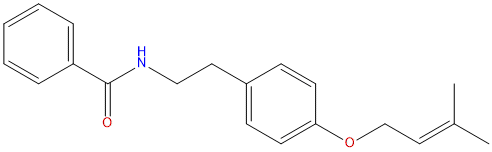
The molecular formula of Hortiamide is C2H27N3O, with a molecular weight of 309.4090, belonging to natural products containing pyrrolidine and amide groups. Its chemical structural features include a pyrrole ring and multiple alkyl substituents, which endow it with high hydrophobicity and molecular stability. The LogP value is 4.1741, indicating strong lipophilicity, which facilitates penetration of cell membranes and the blood-brain barrier (BBB), further confirmed by its high BBB permeability. The polar surface area (TPSA) is 38.33 Å ², indicating that the molecular polarity is moderate and conducive to the penetration and distribution of biofilms.
The low water solubility (0.0144 mg/mL) suggests that there may be solubility limitations in vivo, and pharmacological measures are needed to improve dissolution and bioavailability. The hERG channel inhibition experiment showed a negative result, indicating that Hortiamide has a low risk of cardiac QT interval prolongation and good safety. The Ames mutagenicity test result was 0.0, indicating no significant genotoxicity, further supporting its safety evaluation.
Hortiamide was initially isolated from the tropical plant Hortia genus and belongs to the alkaloid class compounds unique to this genus of plants. Hortia plants are widely distributed in tropical regions of South America, and their roots, stems, and leaves all contain this compound. A typical extraction process includes:
In recent years, with the advancement of extraction technology, supercritical CO2 extraction and membrane separation techniques have also been attempted to be applied to the efficient extraction of Hortiamide, significantly improving yield and purity.
The pharmacological activity of Hortiamide mainly focuses on anti-tumor effects, exhibiting multi-target regulatory ability. In vitro cell experiments have shown that it has significant inhibitory effects on the proliferation of various tumor cell lines, with IC50 values generally below 10 μ M, demonstrating good cytotoxicity selectivity.
Preliminary studies have also found that Hortiamide may have anti-inflammatory and immunomodulatory effects, but the relevant mechanisms are still unclear and require further in-depth research.
The multi-target mechanism of Hortiamide is an important basis for its anti-tumor activity. Through molecular docking and analysis of cellular signaling pathways, Hortiamide mainly acts on the following key targets:
The synergistic regulation of these targets enables Hortiamide to exert broad-spectrum anti-cancer effects in multiple tumor types.
The pharmacological evaluation of Hortiamide shows that it has good potential for drug development:
Pharmacokinetic studies have shown that Hortiamide is well absorbed after oral administration, with a moderate plasma half-life, mainly metabolized through the liver, and excreted primarily through bile. The metabolites are not yet fully understood, and further research is needed on their metabolic stability and potential drug interactions.
Based on Hortiamide's multi-target anti-tumor mechanism and good pharmacological characteristics, its clinical application prospects are broad. Especially in the treatment of drug-resistant tumors and multi drug combination therapy, Hortiamide is expected to play an important role. Future research directions include:
In addition, the potential of Hortiamide in neurological tumors and inflammation related diseases is also worth paying attention to.
Hortiamide, as a natural product with significant anti-tumor activity, has shown great potential for drug development due to its unique chemical structure, multi-target mechanism of action, and good pharmacological characteristics. Although the current research on its pharmacological mechanism and clinical application is still in its preliminary stage, there is sufficient data to support its value as a candidate molecule for anti-cancer drugs. In the future, through interdisciplinary collaboration, in-depth mechanism research, pharmacokinetic optimization, and clinical translation are expected to promote the clinical application of Hortiamide, benefiting a large number of cancer patients.
