Introduction/Overview
Lobelin hydrochloride (CAS number: 134-63-4) is a natural product derivative with significant cholinergic activity, belonging to organic molecular entities. It was initially isolated from the Lobelia spp. plant and has attracted widespread attention in the field of natural product pharmacology in recent years due to its unique pharmacological properties and potential clinical application value. As a respiratory stimulant, berberine hydrochloride mainly exerts its effects by regulating various neurotransmitter receptors and transporters, involving multiple molecular targets such as β 2 adrenergic receptor (ADRB2), glutamate receptor subtype 2 (GRIA2), norepinephrine transporter (SLC6A2), and nicotinic acetylcholine receptor subunits (CHRNB2, CHRNA4). Its excellent blood-brain barrier penetration and unique pharmacological activity have shown great research and development potential in respiratory diseases, neurological diseases, and smoking cessation adjuvant therapy.
This article provides a systematic review of the chemical structure and physicochemical properties, plant sources and extraction methods, pharmacological activity and mechanism of action, pharmacological evaluation and pharmacokinetic characteristics of berberine hydrochloride. Combined with the latest research progress, it explores its clinical application prospects and future development directions, aiming to provide comprehensive and authoritative reference materials for researchers and drug development in related fields.
Chemical structure and physicochemical properties
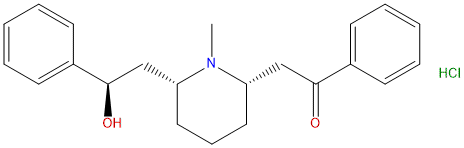
The chemical structure of berberine hydrochloride is based on its parent molecule, lobeline, and belongs to the alkaloid class of compounds. Its molecular formula is C22H28N2O2 · HCl, with a molecular weight of 337.4630. It contains two pyridine rings and one pyridine ring in its structure, and has a complex molecular structure with multiple chiral centers. The hydrochloride form improves its water solubility and stability, making it easier to develop pharmaceutical formulations.
In terms of physical and chemical properties, the LogP value of berberine hydrochloride is 2.9913, indicating its moderate lipid solubility, which is beneficial for penetrating cell membranes and the blood-brain barrier (BBB). Its topological polar surface area (TPSA) is 40.54 Å ², further supporting its excellent membrane permeability. The water solubility is 0.1729 mg/mL, which belongs to moderate solubility and is suitable for multiple routes of administration. It is worth noting that berberine hydrochloride exhibits hERG channel inhibitory activity, indicating a potential risk of cardiac toxicity and requiring special attention in drug development. The Ames test result is 0.0, indicating that it has no significant mutagenicity and relatively good safety.
Plant sources and extraction methods
Hydrochloric acid mountain stem alkaloids mainly come from plants of the mountain stem vegetable genus, especially species such as Lobelia inflata and Lobelia chinensis. Mountain stem vegetables are used in traditional Chinese medicine and North American indigenous herbs, mainly for treating respiratory diseases, smoking cessation assistance, and regulating the nervous system.
The traditional method for extracting berberine hydrochloride usually includes the following steps:
-
Raw material collection and pretreatment Select mature aboveground parts of mountain stem vegetables, dry them and crush them for later use.
-
Solvent extraction Using ethanol or methanol as extraction solvents, extract the total alkaloid mixture from plants through reflux or ultrasound assisted extraction.
-
Acid-base separation Using hydrochloric acid to adjust the pH value, converting alkaline components into hydrochloride form, improving their water solubility, and facilitating separation and purification.
-
Liquid liquid extraction and column chromatography Further purify berberine hydrochloride by organic solvent extraction and silica gel column chromatography separation.
-
Crystallization and drying Crystallize the purified product and dry it to obtain the finished product of berberine hydrochloride.
In modern research, supercritical fluid extraction and high-performance liquid chromatography (HPLC) techniques have been introduced to improve extraction efficiency and purity, reduce solvent usage, and promote the feasibility of industrial production.
Pharmacological activity research
The pharmacological activity of berberine hydrochloride mainly focuses on its role as a cholinergic drug, particularly in respiratory excitation and neural regulation.
Respiratory excitation effect
Hydrochloric acid berberine activates the respiratory center of the central nervous system, enhances respiratory frequency and depth, and exhibits significant respiratory excitatory effects. Its mechanism involves the regulation of multiple neurotransmitter systems, especially by acting on the subunits CHRNB2 and CHRNA4 of nicotinic acetylcholine receptors (nAChRs), promoting neuronal excitability and activating the respiratory center. In addition, berberine hydrochloride also affects the norepinephrine transporter (SLC6A2), regulates norepinephrine levels, enhances sympathetic nervous system excitability, and further promotes respiratory function.
Neurological regulation
The regulatory effect of berberine hydrochloride on the glutamate receptor subtype GRIA2 suggests that it may be involved in the regulation of excitatory neurotransmission and has potential neuroprotective and cognitive regulatory effects. Its effect on β 2 adrenergic receptors (ADRB2) may be involved in regulating the stress response and metabolic processes of the nervous system.
Smoking cessation assistance function
As a nicotine receptor agonist, berberine hydrochloride has been studied in smoking cessation adjuvant therapy to alleviate nicotine withdrawal symptoms and reduce smoking desire. Its partial mechanism of action is similar to nicotine, but with lower toxicity and fewer side effects, and it has certain clinical application potential.
Other pharmacological effects
Some studies have shown that berberine hydrochloride also has anti-inflammatory, analgesic, and antidepressant effects, but the relevant mechanisms are not fully understood and further in-depth research is needed.
Mechanism of action and molecular targets
The pharmacological effects of berberine hydrochloride depend on its interactions with multiple molecular targets, forming a complex signal regulatory network.
Nicotine acetylcholine receptors (CHRNB2, CHRNA4)
As an agonist of nAChR, berberine hydrochloride selectively acts on β 2 and α 4 subunits, activating receptors to promote calcium influx and enhance neuronal excitability. This mechanism not only promotes the excitation of the respiratory center, but also participates in the release of neurotransmitters and regulates the function of the nervous system.
Norepinephrine transporter (SLC6A2)
By inhibiting SLC6A2, berberine hydrochloride reduces the reuptake of norepinephrine, increases the concentration of norepinephrine in synaptic cleft, enhances sympathetic nervous system excitability, and promotes the regulation of respiratory and cardiovascular systems.
β 2 adrenergic receptor (ADRB2)
The regulatory effect of berberine hydrochloride on ADRB2 may be achieved through indirect mechanisms, enhancing β 2 receptor-mediated signaling, promoting bronchial smooth muscle relaxation, and improving respiratory function.
Glutamate receptor subtype 2 (GRIA2)
GRIA2, as an AMPA type glutamate receptor subunit, is involved in excitatory neurotransmission. The regulatory effect of berberine hydrochloride on GRIA2 may affect neuroplasticity and cognitive function, and has potential neuroprotective significance.
Other potential targets
Some studies suggest that berberine hydrochloride may affect dopamine receptors and serotonin receptors, but the evidence is not sufficient and further verification is needed.
Evaluation of drug properties and pharmacokinetics
The pharmacological evaluation of berberine hydrochloride comprehensively considers its physicochemical properties, safety, and in vivo behavior.
Physical and chemical properties and pharmacokinetics
- Molecular weight and lipid solubility The molecular weight is 337.46, with a LogP of approximately 3, which falls within the range of orally active molecules and facilitates membrane and blood-brain barrier penetration.
- Polarity and solubility TPSA is 40.54 Å ², with moderate water solubility, and supports multiple administration methods.
- Blood-brain barrier penetration High BBB penetration gives it an advantage in the treatment of central nervous system diseases.
safety assessment
- HERG inhibition Hydrochloric acid berberine exhibits hERG channel inhibitory activity, suggesting a potential risk of prolonged QT interval in the heart, and cardiac safety needs to be closely monitored in preclinical and clinical studies.
- Genotoxicity The Ames test is negative, indicating no mutagenic risk and good safety.
- Other toxicities Currently, the reported acute and subchronic toxicity is relatively low, but long-term toxicological data is not yet sufficient.
Pharmacokinetic characteristics
Hydrochloride mountain stem alkaloids have good oral absorption, moderate bioavailability, and are widely distributed in the body, especially at high concentrations in brain tissue. Metabolism mainly occurs through the liver enzyme system, and further research is needed on the activity and toxicity of metabolites. The main excretion pathway is the kidneys.
Clinical application prospects and prospects
As a natural product derivative with multi-target effects, berberine hydrochloride has shown great potential in clinical applications.
Respiratory system diseases
Its respiratory excitatory effect makes it potentially valuable in the treatment of respiratory depression, chronic obstructive pulmonary disease (COPD), sleep apnea syndrome, and other diseases. By enhancing the activity of the respiratory center, berberine hydrochloride is expected to improve patients' ventilation function and quality of life.
Neurological disorders
The regulatory effect of berberine hydrochloride on the central nervous system suggests its potential applications in cognitive impairment, neurodegenerative diseases, and depression. Especially its regulation of glutamate receptors may provide new therapeutic strategies for neuroprotection and neurological function recovery.
Smoking cessation adjuvant therapy
As a nicotine receptor agonist, berberine hydrochloride has shown good effects in alleviating withdrawal symptoms and reducing relapse rates, and has the potential to be developed as a smoking cessation medication.
Challenges and Future Directions in Drug Development
Although berberine hydrochloride has multiple pharmacological activities, the risk of cardiac toxicity caused by its hERG inhibition is a major obstacle in drug development. Future research needs to focus on structural optimization to reduce cardiac toxicity while maintaining or enhancing its pharmacological activity. In addition, in-depth analysis of its metabolic pathways and long-term safety, as well as conducting clinical trials, are key to achieving its clinical translation.
The new drug delivery systems (such as nanocarriers, sustained-release formulations) and combination therapy strategies also provide new possibilities for the clinical application of berberine hydrochloride. The introduction of multi-target drug design concept will promote its application in the treatment of complex diseases.
Conclusion
As a cholinergic drug derived from natural plants, berberine hydrochloride has shown broad application prospects in the fields of respiratory excitation, neural regulation, and smoking cessation assistance due to its unique chemical structure and multi-target mechanism of action. Its good blood-brain barrier penetration and non mutagenicity provide safety guarantees, but the risk of cardiac toxicity still needs to be highly valued.
Future research should focus on in-depth analysis of its molecular mechanism of action, optimization of drug structure, improvement of pharmacokinetics and toxicology evaluation, and promotion of its clinical application. With the continuous advancement of natural product pharmacology and modern drug development technology, berberine hydrochloride is expected to become an important candidate drug for the treatment of respiratory and neurological diseases, bringing new treatment hope to related patients.